NUCLEAR NEWZ
Europe’s Nuclear Plants Can’t Beat the Heat
- France is cutting output at up to five nuclear plants this week as record heat pushes river temperatures too high to cool reactors safely.
- Last month’s heat wave already knocked out power to 70,000 households on France’s hottest day ever, 44°C, and Germany and the UK both rely on French nuclear exports.
- More than 1,000 heat-related deaths in France and stalled EU adaptation funding show the grid crisis is outpacing the response.
Europe’s blistering heat wave is threatening energy security across the continent as power plants shut down and the risk of rolling blackouts rises. Electric grids are overstressed, and ecosystems are too. Rivers are greatly affected by soaring temperatures, which in turn impacts the energy industry and power plants that rely on that water supply for their cooling systems. Just this week, France announced that it will reduce production at as many as five nuclear power plants, with two already curbing output this week.
France is expected to receive the worst of a coming high-pressure heat dome over the next few weeks, with temperatures soaring to as high as 42 Celsius (107.6 Fahrenheit) in some parts of the country on Wednesday. When Europe experienced a similar heat wave last month, a transformer failed, leaving nearly 70,000 households without power as temperatures reached deadly levels. The country recorded its hottest day ever on record, with temperatures reaching a blistering 44 °C (111 °F).
These temperatures are not only deadly to humans, they are also a huge threat to the ecosystem. Rivers are growing hotter under these conditions, and one of the impacts of that change is that their waters are no longer as effective for cooling down nuclear power plants, which serve as the backbone of France’s energy mix. As a result, the country anticipates needing to curb production at plants around the country at the very same time that demand is surging
It’s a sad irony that just as electricity is needed more than ever to keep indoor temperatures at survivable levels, the power grid is most likely to fail. "As it gets hotter, things stop working quite so well," Iain Staffell, associate professor of sustainable energy at Imperial College London, was recently quoted by DW. "I think we do need to adapt the power system to cope with the changing weather," he went on to add.
The reduction of nuclear power output in France could greatly affect energy availability and affordability within France and in neighboring countries such as Germany and the United Kingdom, which import electricity generated by the nation’s sizable nuclear power sector. And nuclear is only part of the story. The heat wave is also impacting the output of hydropower and limiting the cooling abilities of coal and gas plants.
Europe can expect this kind of strain to be the new normal as global warming alters climatic patterns around the world and increases the frequency and intensity of extreme weather. Policies will need to be put into place, and enacted quickly, in order to prepare European grids to withstand these kinds of temperatures at regular intervals going forward.
“Utilities can adapt by planning for summer peaks, making cooling demand more flexible, reinforcing grids for high temperatures, deploying batteries and demand response, and climate-proofing power plants’ cooling systems,” Simone Tagliapietra, senior fellow at Bruegel, an economic and policy think tank, recently told MIT Technology Review via email.
However, all of these imperatives are massively costly and difficult to implement, leading to inaction on the part of European leadership and widespread vulnerabilities of the continent’s energy infrastructure. Last year, the European Environment Agency reported that all 27 countries in the European Union have climate adaptation plans, but noted that “insufficient long-term funding” has stifled implementation.
This has led to frustration and resentment amongst the public, not to mention over 1,000 unnecessary deaths. “Everyone is asking, why are we not ready?” Francois Gemenne, an environmental politics professor at French business school HEC Paris, recently told the New York Times. “We are becoming aware of our own vulnerability.”
By Haley Zaremba for Oilprice.com
Kansas Becomes Testing Ground for a Radical Nuclear Reactor Design
- Deep Fission's prototype reactor canister has arrived at its Kansas test site, moving the startup toward large-diameter drilling and its first proof-of-concept underground reactor.
- The company says burying its "gravity reactor" a mile underground could cut operational costs by up to 80% by using natural water pressure instead of costly surface pressure vessels.
- Critics argue the Trump administration's push for unproven next-gen reactors, including Deep Fission's project under Executive Order 14301, is distracting from the large-scale nuclear investment needed to quadruple U.S. capacity by 2050.
An unconventional approach to nuclear energy production just got one step closer to reality. A prototype reactor canister just arrived at its installation site in Kansas, where it will soon be part of a proof of concept for a first-of-its-kind underground small modular reactor system. California-based startup Deep Fission believes that by burying a small nuclear reactor deep under the ground, they can make nuclear energy cheaper and safer at a time when round-the-clock carbon-free energy is needed more than ever before.
“The prototype has completed fabrication, hydrostatic testing, and delivery, allowing the company to move into the next phase of non-nuclear testing as it prepares for large-diameter drilling at the Kansas site,” Interesting Engineering reports.
The proof-of-concept site is testing out a next-gen approach to nuclear energy that would place a modular reactor a mile underground, covered by pressurized water, which would help cool the system and maintain operating pressure. This “gravity reactor” design eliminates the need for an external cooling system and the huge and expensive surface pressure vessels found in standard nuclear power plants. Plus, the surrounding bedrock could offer a greater degree of safety for the system.
“The arrival of our prototype reactor canister at the Kansas site is a clear step forward in moving from design to deployed infrastructure,” Mark Pérès, Chief Nuclear Officer of Deep Fission, recently told Interesting Engineering. “Successfully manufacturing, testing, and delivering this hardware demonstrates performance of our design and supply chain capabilities.”
Deep Fission claims that this design could slash operational costs by as much as 80 percent when compared to conventional nuclear fission reactors. “By utilizing Earth’s natural geology, the design achieves several breakthroughs,” Interesting Engineering wrote in a February report. “At a depth of one mile, a column of water naturally provides the 160 atmospheres of pressure required for the reactor to function, which eliminates the need for massive and expensive surface pressure vessels.”
Deep Fission’s innovative design is part of a broader effort to reinvent nuclear energy in the United States and around the world. As the artificial intelligence boom pushes energy demand projections far past expected power capacity additions, nuclear energy has gained increasing attention for its potentially essential contribution to much-needed clean energy growth. As a result, we are seeing the beginnings of a global nuclear power renaissance, but traditional reactors are costly and time-consuming to develop.
This is where next-gen nuclear technologies come in. Scientists are hard at work trying to advance alternative designs like small modular reactors, underground reactors, and thorium reactors, which may make nuclear power expansion quicker and more cost-effective going forward. The Trump administration has been bullish about developing such technologies on U.S. soil in a bid to keep up with China, and to “produce lasting American dominance in the global nuclear energy market.”
The Deep Fission project is a beneficiary of Trump’s Executive Order 14301, which mobilizes resources from the U.S. Department of Energy’s Reactor Pilot Program to accelerate the testing and commercialization of advanced nuclear technologies in order to bring them to scale.
However, critics point out that a focus on next-gen technologies could be undermining the Trump administration’s broader goal of quadrupling U.S. nuclear energy capacity by 2050. A recent op-ed for the Wall Street Journal argued that “The administration is chasing unproven technology when it could encourage Wall Street investment in large-scale reactors,” and, as a result, Trump’s nuclear renaissance is stalling.
Indeed, more than a year after Trump signed a sheaf of executive orders aimed at “usher[ing] in a nuclear energy renaissance,” the United States has made little demonstrable progress toward adding nuclear energy production capacity. And while the administration has continued to create supportive policies, critics are equally doubtful about Trump’s most recent loan program aimed at kickstarting the sector.
By Haley Zaremba for Oilprice.com
India’s State Nuclear Firm In Search of Global Uranium Assets
Indian state-owned NTPC Ltd, the biggest utility in the country, is looking to acquire stakes in uranium assets globally to secure fuel for the expected massive expansion of India’s nuclear power capacity.
NTPC, currently the only nuclear power generator in the country, has issued a tender to hire consultants to help it identify potential uranium mines in which it could invest in uranium-producing countries, including Australia, Canada, Kazakhstan, and South Africa.
Bids are due by July 16, according to the tender document cited by Bloomberg.
India’s current supply of uranium comes from state-held Uranium Corporation of India (UCIL), which mines the nuclear fuel in the Jharkhand and Andhra Pradesh states.
As India is pushing to boost its nuclear power capacity tenfold over the next two decades, NTPC is getting ready to secure uranium supply from mines overseas.
“The scale of planned capacity addition necessitates securing a sustainable fuel supply of uranium,” NTPC said in the bid document, as carried by Bloomberg.
“Considering the limitations of domestic fuel and mining reserves, overseas exploration and the acquisition of uranium mines are required,” the state-owned firm said.
At the end of 2025, India’s government approved the landmark Atomic Energy Bill, which allows private companies to invest in its nuclear energy industry for the first time, as the country looks to boost its nuclear power capacity tenfold within two decades.
A panel set up by India’s power ministry has said in a report that India’s goal to boost its installed nuclear power capacity to 100 gigawatts (GW) by 2047, up from just 8.8 GW now, would require as much as 19.28 trillion Indian rupees, or $204 billion at current exchange rates, of cumulative capital.
NTPC is expected to account for 30% of the new nuclear power capacity installations by 2047, hence, the start of the search for uranium supply from mines overseas.
By Tsvetana Paraskova for Oilprice.com
Indian state-owned NTPC Ltd, the biggest utility in the country, is looking to acquire stakes in uranium assets globally to secure fuel for the expected massive expansion of India’s nuclear power capacity.
NTPC, currently the only nuclear power generator in the country, has issued a tender to hire consultants to help it identify potential uranium mines in which it could invest in uranium-producing countries, including Australia, Canada, Kazakhstan, and South Africa.
Bids are due by July 16, according to the tender document cited by Bloomberg.
India’s current supply of uranium comes from state-held Uranium Corporation of India (UCIL), which mines the nuclear fuel in the Jharkhand and Andhra Pradesh states.
As India is pushing to boost its nuclear power capacity tenfold over the next two decades, NTPC is getting ready to secure uranium supply from mines overseas.
“The scale of planned capacity addition necessitates securing a sustainable fuel supply of uranium,” NTPC said in the bid document, as carried by Bloomberg.
“Considering the limitations of domestic fuel and mining reserves, overseas exploration and the acquisition of uranium mines are required,” the state-owned firm said.
At the end of 2025, India’s government approved the landmark Atomic Energy Bill, which allows private companies to invest in its nuclear energy industry for the first time, as the country looks to boost its nuclear power capacity tenfold within two decades.
A panel set up by India’s power ministry has said in a report that India’s goal to boost its installed nuclear power capacity to 100 gigawatts (GW) by 2047, up from just 8.8 GW now, would require as much as 19.28 trillion Indian rupees, or $204 billion at current exchange rates, of cumulative capital.
NTPC is expected to account for 30% of the new nuclear power capacity installations by 2047, hence, the start of the search for uranium supply from mines overseas.
By Tsvetana Paraskova for Oilprice.com
Australia agrees to sell uranium to India during Modi visit

Australia has agreed to sell uranium to India for power generation in a landmark deal signed between the two nations during a visit to Melbourne by Prime Minister Narendra Modi.

The country will purchase uranium for exclusively peaceful purposes, the Indian Ministry of External Affairs said in a statement Thursday. The agreement comes as New Delhi seeks to boost its nuclear energy capacity. The statement did not provide details on how much uranium oxide, or yellowcake, the country would purchase or over what time frame.
“Today, we can confirm the signing of the administrative arrangement to enable uranium exports,” Australian Prime Minister Anthony Albanese said in a joint press conference in Melbourne. “The arrangement facilitates Australian uranium exports to India to help increase the share of non-fossil fuel power capacity, providing an additional market for the Australian resources sector.”
The agreement is the culmination of more than a decade of negotiations, including over safeguards to ensure the material can’t be used for nuclear weapons. The two countries signed an initial nuclear co-operation pact in 2014, soon after Modi became prime minister.
The deal will “pave the way for uranium supplies from Australia to India and give our clean energy objectives fresh momentum,” Modi said at the conference, through a translator. “We will also work on a critical minerals corridor.”
India’s goal is to expand generation capacity more than ten-fold to 100 gigawatts by 2047. Social and environmental challenges with expanding domestic uranium output necessitate imports.
The country currently imports uranium from Russia and Uzbekistan, and shipments from Canada’s Cameco Corp. will start next year, according to a deal signed in March.
While Australia holds the world’s biggest reserves of uranium there are only three operating mines, all in South Australia. Several other states ban uranium mining due to concerns the material could find its way into nuclear weapons.
Still, the country is the world’s fourth-largest producer of the radioactive metal, according to government figures. Exports over the 2025-2026 financial year were worth A$1.6 billion ($1.1 billion).
Australia’s largest producer of uranium oxide is BHP Group Ltd., which it produces as a byproduct from its Olympic Dam copper operations. Yellowcake from the remote mine is sent to customers mostly in France, Canada and the US, according to a company spokesperson.
“As India’s rapid growth continues, there will be growing demand for minerals like copper, potash and uranium,” BHP Australia President Geraldine Slattery said in emailed comments, adding the company saw “strong customer interest” from the country.
“BHP has supplied Indian customers for more than four decades, and India is now one of our largest customer markets globally,” she added.
Spot prices of uranium have hovered around $85 a pound this year, though briefly spiked to $94 in February, well above the $63 it fetched in early 2025.
(By Paul-Alain Hunt and Rajesh Kumar Singh)
Ukraine draft law on Chernobyl decommissioning to 2036 approved
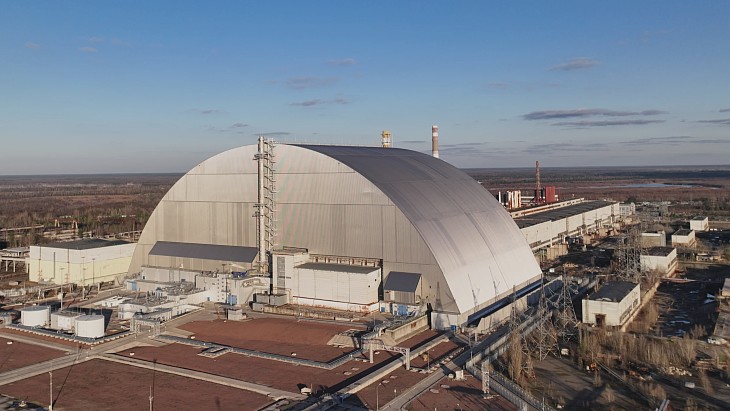
The funding allocated for the programme to 2036 amounts to UAH50.8 billion (USD1.1 billion), of which UAH45.6 billion is to be financed via the state budget and UAH5.2 billion from "international technical assistance".
According to the Ministry of Energy, the programme required updating following the completion of the shutdown and preparatory phases of the Chernobyl decommissioning process "to reflect current challenges" including additional measures to tackle the damage caused during the war by the month-long Russian occupation in 2022 and by a drone strike last year to the New Safe Confinement protective arch, "and the actual progress of projects" at the site.
"The next stage involves the direct decommissioning of the plant and the continued transformation of the Shelter Object into an environmentally safe system," a ministry statement said.
"Extending the programme will ensure the uninterrupted continuation of the Chornobyl NPP decommissioning process, support Ukraine's international commitments in the field of nuclear safety, and facilitate the mobilisation of international technical and financial assistance for projects at the plant," the ministry said. (Chornobyl is Ukraine’s preferred spelling). The draft law will now go to the Ukrainian parliament for consideration.
Read more: Chernobyl at 40
The accident, its impact and how it changed the world's nuclear energy industry
Life and science in the exclusion zone, and Chernobyl's place in popular culture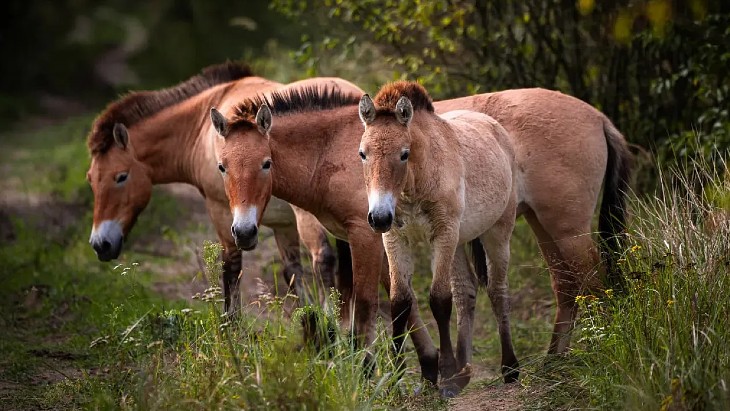
(Image: State Agency of Ukraine for Exclusion Zone Management)
The decommissioning challenge, and the plan for the future
Background
Chernobyl unit 4 was destroyed in the April 1986 accident (see links above for more details in features published to mark the 40th anniversary) with a shelter constructed in a matter of months to encase the damaged unit, which allowed the other units at the plant to continue operating. It still contains the molten core of the reactor and an estimated 200 tonnes of highly radioactive material.
However that shelter was not designed for the very long-term, and so the New Safe Confinement - the largest moveable land-based structure ever built - was constructed to cover a much larger area including the original shelter. The New Safe Confinement has a span of 257 metres, a length of 162 metres, a height of 108 metres and a total weight of 36,000 tonnes and was designed for a lifetime of about 100 years. It was built nearby in two halves which were moved on specially constructed rail tracks to the current position, where it was completed in 2019.
With the new NSC in place there were plans to make safe and dismantle the original shelter. But a drone strike on 14 February last year caused a 15-square-metre hole in the external cladding of the NSC, with further damage to a wider area of about 200-square-metres, as well as to some joints and bolts. It took about three weeks to fully extinguish smouldering fires in the insulation layers of the shelter.
Temporary repair work was carried out before the winter to prevent weather damage and assessments of the cost of restoring its full protective functions have been put at "in the order of" EUR500 million (USD577 million).
The other three units at Chernobyl closed down in 1991, 1996 and 2000 respectively. So in total there are four RBMK-1000 reactors, plus two almost-completed ones, being decommissioned.
Sizewell B lifetime extension terms agreed to 2055
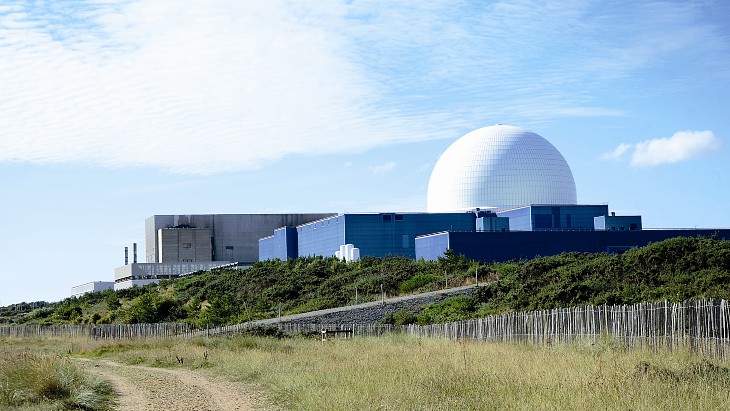
The pressurised water reactor, which came online in 1995, had an initial 40-year operating life to 2035. Following the agreement on financing, EDF will fund GBP800 million (USD1 billion) of refurbishment works to be carried out during planned outages over the next 15 years.
These works include installing a new environmental monitoring system and new automated plant monitoring systems, as well as replacing pipework, valves and pumps across the site.
The heads of terms for a contract for difference agreement includes a strike price of GBP70.50 per MWh for the period 2035 to 2055. That price is lower than the one agreed for Hinkley Point C, and below the current wholesale price, which is higher as a result of the impact of on-going global crises.
A contract for difference is where the operator is refunded the difference if the electricity price drops below the agreed strike price. If the electricity price is above that level the operator pays back the difference.
Simone Rossi, CEO of EDF UK, said: "Global events demonstrate time and again how vital it is for the UK to secure long-term, low-carbon, homegrown electricity which protects British households and businesses from market volatility. Extending the life of the plants we already have alongside building new ones is central to EDF's strategy."
UK Energy Secretary Ed Miliband said: "Nuclear power is vital for our energy security, and this extension will help produce the clean power our country needs."
Minister for Science, Innovation, Research and Nuclear Lord Vallance said: "This deal protects billpayers and boosts the country’s energy security by continuing to provide clean, secure power for millions of households."
Chris O'Shea, CEO of Centrica, said: "I'm delighted that Sizewell B, in which Centrica owns a 20% share, will continue to play a key role in the UK's energy system for decades to come. Generating around 3% of the UK's electricity, We welcome the constructive engagement with government in reaching this agreement, providing the certainty needed to support the required investment."
The agreement is subject to finalisation, which is expected to happen later this year.
What the regulator says
The Office for Nuclear Regulation said: "We regulate in an enabling manner, working constructively with EDF on their plans to extend the life of their nuclear plants by reviewing technical and safety case considerations while ensuring it achieves the required standards of safety and security in the most practical way.
"Although their plant life extension decisions do not need formal regulatory assessment or permissioning by ONR, it is a requirement of the site licence that operations be carried out under a valid safety case. Our regulatory activity evaluates the adequacy of both the safety case, the security plan and their implementation.
"Safety cases at Sizewell B are likely to require updating to achieve EDF's stated ambition, together with investment in plant to sustain equipment reliability, all while ensuring that the necessary people and skills are available throughout the extended lifetime. Security plans also require updating to ensure they remain robust and responsive to the evolving security landscape. The ongoing safety and security of operations at any nuclear site must be fully demonstrated to us as part of ongoing regulation which will be informed by our extensive, proportionate and targeted inspection and assessment regime."
Background
The UK generates about 15% of its electricity from about 5.9 GWe of nuclear capacity, however most existing capacity is to be retired at the end of the decade. The first of a new generation of nuclear plants is under construction at Hinkley Point C and a final investment decision has been confirmed for a second plant, Sizewell C, alongside Sizewell B. They are due to come online in 2030 and the late 2030s, respectively. There are also plans for small modular reactors. The UK is aiming for up to 24 GWe of new nuclear capacity by 2050 to provide about 25% of electricity.
EDF manages the UK's eight nuclear power plant sites, five that are operating (Sizewell B, Torness, Heysham 2, Heysham 1 and Hartlepool) and three that have entered decommissioning (Hunterston B, Hinkley Point B and Dungeness B). It took over the sites when it acquired British Energy in 2009. As well as extending their lives to 2030, subject to regular regulatory checks, it is also building the two new plants.
Sizewell B is the UK's only pressurised water reactor and has more potential for life extensions than the Advanced Gas Cooled Reactor (AGR) fleet. In the USA, a number of pressurised water reactors have had their operating licences extended twice, to 80 years. So far, Sizewell B has produced more than 270 terawatt-hours of electricity since 1995, enough to met the needs of every household in Suffolk and Norfolk for more than 100 years. About 900 people are employed at the plant.
Tom Greatrex, Chief Executive of the UK’s Nuclear Industry Association, said: "Sizewell B is the cleanest, most productive and most reliable plant in the whole country, so extending its life is one of the best things we can do to build an affordable and reliable clean power system. It will provide the vital baseload we need to stabilise the grid, cut gas imports, and cut bills."
Trilateral cooperation agreement on SMR deployment
_91007.jpg)
The memorandum was signed on Tuesday on the margins of the NATO Summit in Ankara, Turkey, by US Secretary of State Marco Rubio, Japan's Foreign Minister Motegi Toshimitsu, and South Korea's Foreign Minister Cho Hyun.
The memorandum "outlines opportunities for our three countries, which have complementary advantages in the civil nuclear field, to encourage mutually beneficial cooperation among their respective nuclear industries", the US Department of State said. "This framework aims to foster fleet deployment models that de-risk project development, achieve economies of scale, catalyse private investment, streamline licensing processes, and optimise supply chains.
"A coordinated trilateral approach positions American, Japanese, and Korean firms to provide partners in the region with more competitive alternatives to meet their growing energy demands and to uphold the highest standards of nuclear safety, security, and non-proliferation as new reactor technology increasingly comes online."
Under the memorandum, the three countries will identify third-party countries that are interested in small modular reactors (SMRs) in the Indo-Pacific region and will support the construction of multiple SMRs through a standard fleet and simplified contracting procedures. For that purpose, the partners will encourage the formation of consortiums by their respective nuclear industries and foster project development through mobilising financing and investment.
In support of this initiative, the USA is committing more than USD10 million in new funding for the Department of State's Foundational Infrastructure for Responsible Use of Small Modular Reactor Technology (FIRST) programme to provide technical support to countries in the Indo-Pacific region for the deployment of safe, secure, and reliable nuclear energy. It said the funds would advance SMR project development activities and establish an SMR Regional Training Hub for workforce development.
European BWRX-300 deployment
The USA also announced an industry initiative agreed upon by GE Vernova of the USA, Japan's Hitachi, Samsung C&T of South Korea, and Poland's SGE to advance deployment of the BWRX-300 SMR design across Europe. "This initiative will help achieve the ambitions set forth in the memorandum signed today and deepen government-industry partnerships to strengthen global energy security," the Department of State said.
The BWRX-300 is a 300 MWe water-cooled, natural circulation SMR with passive safety systems that leverages the design and licensing basis of GE Vernova Hitachi Nuclear Energy's (GVH's) US Nuclear Regulatory Commission-certified ESBWR boiling water reactor design and its existing, licensed GNF2 fuel design. GVH's first BWRX-300 is under construction at Ontario Power Generation's Darlington site in Canada, with completion expected by the end of the decade.
SGE - part of the MS Galleon Group - is a co-investor in the standard design for the BWRX-300 and is in the process of establishing SMR partnerships and projects in a number of Central and Eastern European countries, including the Czech Republic, Hungary, Bulgaria and Romania. Its flagship project is being implemented in Poland in collaboration with Orlen, with work under way at three sites and the first unit expected to be commissioned in 2032.
Last week, SGE and a deployment team including Samsung C&T, Laing O'Rourke, Aecon Group and Google Cloud outlined plans for the privately financed deployment of 14 BWRX-300 SMRs across three sites in the UK. SGE submitted the application under the UK's Advanced Nuclear Framework for reactors which could provide 4.2 GW of capacity, equivalent to 11% of current UK power demand.
NRC exempts Westinghouse from design certification renewal rule
_32779.jpg)
The regulator first certified the AP1000 design in 2006. That certification is valid until 2046.
Under current rules, companies can only apply for the renewal of a design certificate "not less than 12 nor more than 36 months before the expiration of the initial 40-year period".
On 7 April, Westinghouse submitted a request to the Nuclear Regulatory Commission (NRC) seeking a 40-year renewal of the certification while incorporating design changes approved during the construction and licensing of Vogtle Units 3 and 4, many of which represented departures from the original certified design. The submittal of Revision 20 of the AP1000 Design Control Document (DCD) to the NRC is part of Westinghouse's strategic plan to enable a fleet-scale deployment of the advanced AP1000 modular reactor and support President Donald Trump's vision to build a US fleet of large nuclear reactors, the company said. In order to apply for the early renewal of the AP1000 design certification (DC), Westinghouse submitted a request for exemption from the scheduling requirements of 10 CFR 52.57(a).
On 27 April, the NRC staff determined the exemption request contained sufficient information for the NRC staff to initiate a detailed technical review and accepted the exemption request for docketing. This exemption request has been considered separately from the AP1000 design certification renewal request and associated amendment.
The NRC has now determined that, pursuant to relevant regulation, "the exemption is authorised by law, will not present an undue risk to the public health and safety, and is consistent with the common defence and security". It noted that delaying submission of the AP1000 design certification renewal application until 2043 could lead to inefficiencies for both the NRC staff and applicants in connection with future combined licence application submittals that reference the AP1000 design certification.
"Therefore, the Commission hereby grants Westinghouse a one-time exemption from the requirement in 10 CFR 52.57(a) that an application for renewal of a DC must be submitted not less than 12 nor more than 36 months before expiration of the initial 40-year period, such that Westinghouse may apply for renewal of the AP1000 DC more than 36 months before the expiration of the initial 40-year period," the NRC said in a Federal Registry entry.
In addition to the Vogtle units, Westinghouse says four AP1000 reactors are currently in operation in China, with 12 additional reactors under construction. The design has been localised in China as the CAP1000.
Tender launched for dismantling of Ignalina cores
_11984.jpg)
The contract - worth about EUR400 million (USD457 million) - covers the entire project implementation cycle, including dismantling engineering, licensing, the supply of specialised dismantling equipment, dismantling of the reactor cores of both reactors, and radioactive waste management.
The reactor cores - the central parts of the reactors - comprise the graphite stack, the surrounding structures and their filler materials. The cores are located in shafts measuring 21 by 21 metres in cross-section and 25 metres in depth.
In total, about 25,000 tonnes of materials will be dismantled across both reactors. A significant proportion of the materials in these zones consists of long-lived radioactive waste, making the dismantling process dependent on specialised technological solutions, international expertise, and the strictest nuclear and radiation safety requirements.
Altra described the work as "the most important and technically demanding stage of the entire decommissioning megaproject".
"This tender is an invitation to the international nuclear community to contribute to a project that has never before been undertaken anywhere in the world," said Altra Director General Linas Baužys. "We look forward to attracting internationally experienced companies and working together to deliver one of the world's most complex nuclear reactor dismantling projects."
The tender is being conducted in two stages through the European Bank for Reconstruction and Development (EBRD) Electronic Procurement Portal. In the first stage, participants will submit technical proposals, followed by financial proposals in the second stage. Technical proposals from tender participants may be submitted until 5 November. The contract is expected to be awarded in 2027. From the date the contract enters into force, the project is expected to take approximately 16 years to complete.
The project is being financed by the European Commission through the Ignalina International Decommissioning Support Fund, administered by the EBRD.
The RBMK-1500 is an upgraded, higher-capacity version of the Soviet-designed graphite-moderated nuclear reactor. It was built exclusively at the Ignalina plant. By using less cooling water and a helical flow, it achieved a 1,500 MW electrical output. However, the reactors were later de-rated to 1,300 MWe.
Lithuania assumed ownership of the two units in 1991, after the collapse of the Soviet Union. It agreed to shut down the Ignalina plant as a condition of its accession to the European Union, with unit 1 shutting down in December 2004 and unit 2 in December 2009. The final cask of used fuel was transferred from the reactor buildings at Ignalina to an on-site interim storage facility in April 2022. The reactors are expected to be fully decommissioned by 2038, with most of the cost of the decommissioning being funded by the European Union via the EBRD and other funds.
"The dismantling of the Ignalina Nuclear Power Plant reactor cores is an unprecedented project that no country in the world has yet undertaken," said Acting Minister of Energy Žygimantas Vaičiūnas. "Lithuania will become the first country to dismantle RBMK-1500 reactors, and the experience we gain together with the technological solutions we develop will provide valuable knowledge for other countries facing similar challenges in the future. This is further proof that Lithuania is capable of delivering some of the world's most complex nuclear decommissioning projects while maintaining the highest safety standards."
Argentina announces privately-financed SMR plan
In a post on the X social media site the President's Official Spokesman said: "This is the first commercial version of this reactor, the first nuclear reactor financed 100% with private capital, and the largest investment in the history of the Argentine nuclear sector.
"The project envisions the creation of 2,000 direct jobs during the development, construction, commissioning, and operation stages, thereby generating an expansion of the nuclear sector like never before. This investment is the result of the modernisation of the nuclear sector and the joint work of government authorities."
The proposal is to build an ACR-300 small modular reactor, which has been under development by Argentina's INVAP and which is described as using "proven light‑water technology ... [with the] lowest physical construction burden per megawatt among grid‑scale SMRs".
Secretary of Nuclear Affairs Federico Ramos Napoli, also writing on X, said: "Argentina has more than 70 years of nuclear track record, top-level institutions, and talent recognised worldwide. That a private company chooses our country to build its first reactor confirms that this technical capital, with the right conditions, turns into investment, jobs, and baseload clean energy."
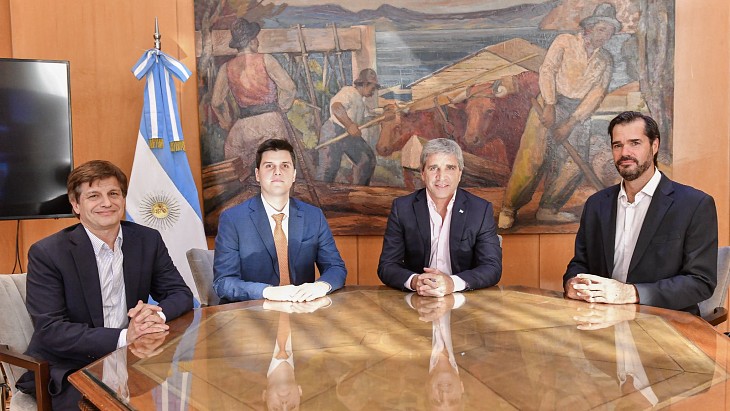
Economy Minister Luis Caputo, posted a picture on X of the meeting with Meitner Energy executives (see above), and said: "The project will have an estimated investment of USD1.2 billion and will be funded through US private capital based on an Argentine patent. It involves the ACR-300, an SMR reactor of Generation III+ and PWR technology, with an approximate power output of 300 MWe. This project will create around 2,000 direct jobs during the development, construction, commissioning, and operation phases."
Last year's national nuclear plan for Argentina included four of the ACR-300 SMRs to be located at the Atucha Nuclear Power Plant site. It said at the time it expected that the ACR-300 would have a construction timeline of five years.
Argentina currently has three operable nuclear power units - Atucha 1, connected in 1974, Atucha 2, which was connected in 2014 and Embalse which was connected to the grid in 1983. Between them they generate about 5% of the country's electricity. There had been plans for a fourth unit, as Atucha III, but it appears that has been superseded by the SMR plans.
Argentina has already had an SMR in development: the CAREM SMR - the name comes from Central Argentina de Elementos Modulares - a 32 MWe prototype and is Argentina's first domestically designed and developed nuclear power unit. First concrete was poured in 2014, but construction has since been suspended a number of times, most recently when about two-thirds complete. Work on it is widely reported to be currently halted and the privately financed ACR-300 SMR was described as "the centrepiece of the Nuclear Power Plan" last year.
Reactor vessel installed in El Dabaa's second unit
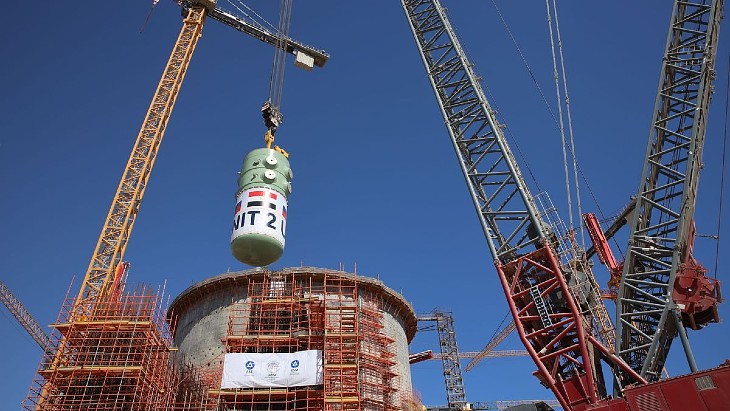
The milestone moment comes seven months after the reactor pressure vessel was installed in the first unit - which Rosatom Director General Alexei Likhachev said reflected the accelerated pace of progress on the project.
According to Strana Rosatom, Likhachev said: "More than 25,000 people are working on the construction site daily, over 18,000 of whom are Egyptian citizens. We will increase our workforce, and in the coming weeks, the number of workers should reach 30,000. Together with our Egyptian partners, we are making every effort to ensure the site is ready for the delivery of the first nuclear fuel in the first half of 2027 and the connection of the power units to the grid in 2028." He added that the next stage of work would be the welding of pipelines for the reactor's main cooling system.
Egypt's Prime Minister, Mostafa Madbouly, was among those attending the event, alongside International Atomic Energy Agency Director General Rafael Mariano Grossi, pictured below.
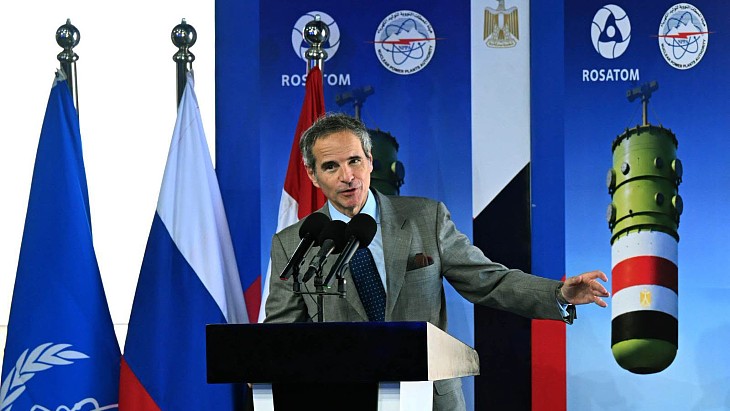
(Image: Egyptian government/Facebook)
The 330-tonne reactor vessel is about 13 metres long and 4.5 metres in diameter. The service life is for an initial 60 years, with possible extension to 80 years. It was delivered from Volgodonsk in Russia to El Dabaa in May as part of what Rosatom called the largest ever shipment to a single nuclear power plant.
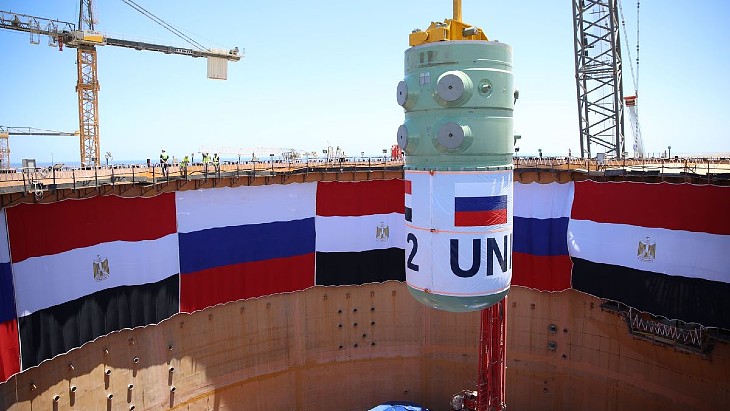
(Image: Rosatom)
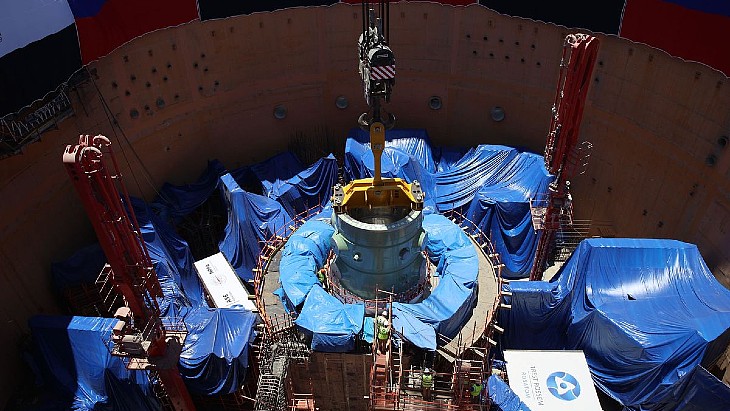
(Image: Rosatom)
The cylindrical steel reactor vessel, which houses the reactor core, ensures a hermetic seal and withstands high pressures and temperatures, ensuring the safety and reliability of the power unit.
Background
El Dabaa will be Egypt's first nuclear power plant, and the first in Africa since South Africa's Koeberg was built nearly 40 years ago. The Rosatom-led project, about 320 kilometres north-west of Cairo, will comprise four VVER-1200 units, like those already in operation at the Leningrad and Novovoronezh nuclear power plants in Russia, and the Ostrovets plant in Belarus.
Under the 2017 contracts, Rosatom will not only build the plant, but will also supply Russian nuclear fuel for its entire life cycle, including building a storage facility and supplying containers for storing used nuclear fuel. It will also assist Egyptian partners in training personnel and plant maintenance for the first 10 years of its operation. Rosatom has said it is aiming for a future service life of up to 100 years for nuclear power plants.
The four units are being built almost concurrently, with first concrete at unit 1 in July 2022, followed in turn by the others, concluding with first concrete at unit 4 in January 2024. Egypt's aim is for 9% of electricity to be generated by nuclear by 2030, which would be achieved by the commercial operation of the first two units by that time, directly displacing oil and gas.
No comments:
Post a Comment