Pakistan Begins Construction on its First Containership Since the 1980s
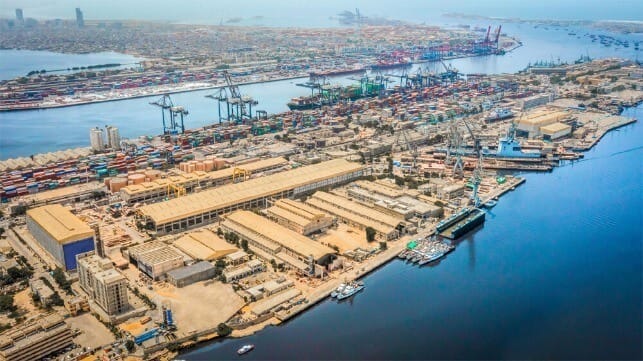
As part of a broader government initiative to leverage the country’s blue economy, Pakistan has begun the construction of its first large commercial ship, a containership, since the industry largely stalled in the 1980s. Assembly of the vessel has begun at the country’s only shipyard, and it is expected to contribute to the economy and save the country vital foreign exchange costs.
The Karachi Shipyard & Engineering Works is building the vessel, which will have a capacity of 1,100 TEU, for the state-run Pakistan National Shipping Corporation. The project was first announced in 2024, with a contract signing in February 2024, but it had stalled due to financial challenges in Pakistan. The government stepped in to help revive the project, and steel cutting began in January 2026.
Steel cutting for the vessel has now been completed, and assembly has begun. Reports indicate that the last commercial ship was built more than 40 years ago, with the yard mostly working on frigates, corvettes, fleet tankers, and logistics ships for the Pakistan Navy. However, it highlights that it has the capacity to build vessels up to 26,000 dwt, including bulkers, tankers, dredgers, ferries, fishing boats, and tugs.
The government launched a task force in 2024 to examine the opportunities to expand Pakistan’s maritime economy. Reports indicate that it identified 99 bottlenecks and so far has been able to implement solutions for 84 of the challenges.
The government recognized that there were large financial barriers, and it agreed to abolish a 22 percent sales tax on vessel purchases and shipbuilding materials. It highlights that neighboring countries, including India, subsidize shipbuilding by up to 30 percent. By reforming its financial policies, it hopes to make Pakistan more attractive to shipowners. It notes that the country’s largest owners have in the past registered ships in Panama and Liberia.
In addition to reviving commercial shipbuilding, the government reports it is working to modernize the country’s port operations. It has reduced the customs clearance times, deployed advanced container scanners, and introduced 24-hour port operations.
Another portion of the plan seeks to revive the sagging shipbreaking sector. The business, which was among the largest in the world, collapsed due to financial pressures and new environmental mandates. Pakistan has become a signatory to the Hong Kong Convention and reports that five of the breaker yards have achieved full compliance.
Domestic shipbuilding, it reports, will save foreign exchange, and it believes it has the potential to become an exporter of new ships. It also notes that revitalizing the broader sector will also create new jobs.
Chinese Shipyards Double Their New Order Volume in First Half of 2026
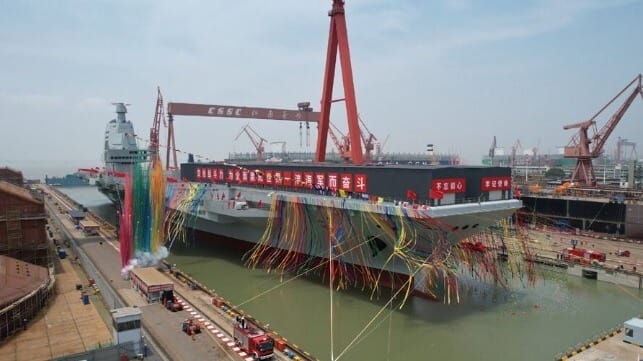
In the first half, China's shipyards took on twice as many new orders as they did during the same period in 2025, according to the latest numbers from Clarksons.
Out of a total of 1,481 vessels ordered worldwide during the period, China took in 1,131 orders totaling 31 million compensated gross tonnes - about 72 percent of total market share, roughly equivalent to its dominant position in the industry in 2025. China has secured the majority of global shipbuilding orders for the last four years running, and continues to solidify its wide lead over its nearest competitor, South Korea.
The large Korean shipyards brought in 195 vessel orders totaling about eight million CGT - 60 percent more than they won during the same period last year, but far behind China, with just a fifth of global market share for the first half of this year. China's market share lead over Korea is expected to widen to 53 percentage points for the full year in 2026.
However, Korean yards are optimizing for profit rather than volume, and have been selective in picking orders. The Korean Big Three have secured a much higher proportion of the more profitable vessel classes - like LNG carriers, a longtime Korean specialty. Korea holds about two-thirds of the global orderbook for LNGCs, according to Wood Mac.
China has picked up far more of the high-volume, low-complexity, low-margin classes like small boxships and bulkers, but it is also winning some of the world's biggest accounts. MSC, the world's leading container line, now has a 100% Chinese orderbook for its gigantic and growing fleet. Already in possession of more than 1,000 container ships, MSC has another 128 on order - all in Chinese yards, according to Clarksons data.
US Navy Issued RFIs to Korean Shipbuilders for Destroyers and Oilers
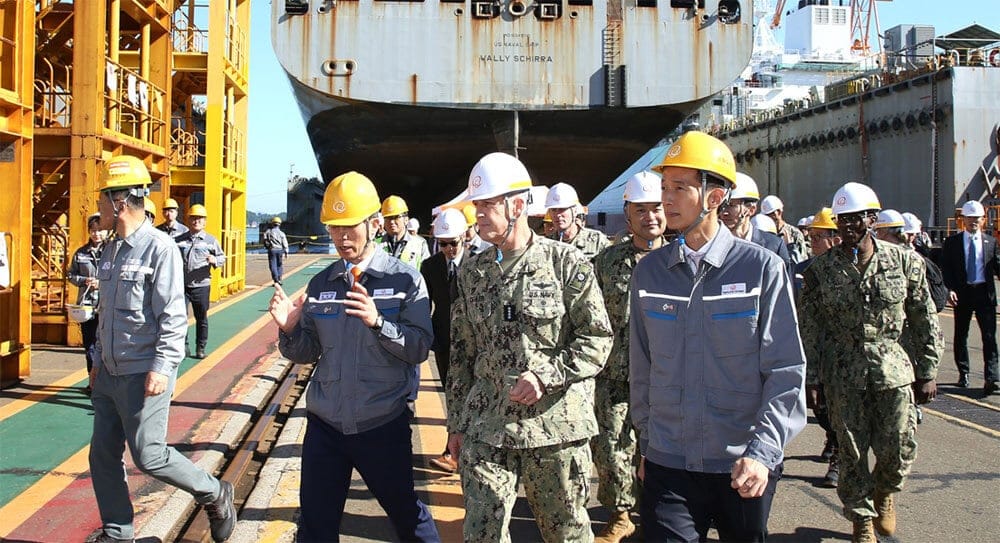
The United States Navy has formally requested information from South Korea’s leading shipbuilders regarding their capabilities to quickly build destroyers and oilers, according to media reports in Korea. The Korean news agency Yonhap revealed that the U.S. Navy had issued requests for information last month, marking the first formal requests since South Korea launched its “Make American Shipbuilding Great Again” commitments.
The RFIs reportedly came as Donald Trump asked South Korea’s President Lee Jae Myung, “Can you quickly build 10 U.S. warships?” The question was posed on the sidelines of the G7 summit in France in June. Media reports indicate that Trump and Lee met on the sidelines of the current NATO summit and agreed to launch a working-level consultation to explore the U.S. request for shipbuilding.
The RFIs were reportedly seeking details on the design capabilities and shipbuilding capacity of Korea’s leading shipbuilders. The U.S. government was gathering pricing information as well as delivery terms and other market information.
HD Hyundai Heavy Industries and Hanwha Ocean were asked to submit information for eight proposed destroyers. In a separate request, Samsung Heavy Industries, along with the two other yards, also responded with details for medium-sized naval tankers.
Yonhap quotes an industry source as saying, "We responded to the US RFIs by providing a comprehensive overview of the shipyards' capabilities, including their shipbuilding track record, design workforce and expertise, and annual shipbuilding capacity."
By Korea’s estimates, the U.S. Navy needs to add, on average, 12 ships a year to reach the Trump administration’s expansion plans. They report the U.S. Navy seeks to grow from its level of around 300 ships to 381 vessels by 2054. They estimate the U.S. will need to build 364 vessels over the next 30 years.
During the trade negotiations, Korea committed to a $150 billion investment into U.S. shipbuilding as part of a larger $350 billion investment in the United States. South Korea's government-backed policy banks moved forward last month with steps toward formalizing the financing plan for the initiative.
Reports indicate the Trump administration may be seeking ways to skirt around U.S. law, which currently prevents the building of navy ships overseas. The Byrnes-Tollefson Act from the 1960s says the U.S. Navy must build its ships in U.S. yards. The U.S. House Armed Services Committee took up the issue recently during its debate on the Defense Authorization Act and also reiterated that the Navy must use U.S. yards.
One possible action would be to use the yards in South Korea to work on the design and project plans and then have the companies work with their U.S.-based capabilities. Hanwha Ocean has already been seeking U.S. approval for building destroyers at the yard it acquired in Philadelphia, and it has announced plans for a large expansion of the yard and its capacity. Both HD Hyundai and Samsung formed partnerships in the United States. HD Hyundai is working with Huntington Ingalls Industries, and Samsung partnered with General Dynamics NASSCO.
The Korean shipyards have already begun work with the U.S. government. The yards have been carrying out maintenance and overhauls of USMSC vessels.
No comments:
Post a Comment