Bennito L. Kelty
July 10, 2026
July 10, 2026
RAW STORY
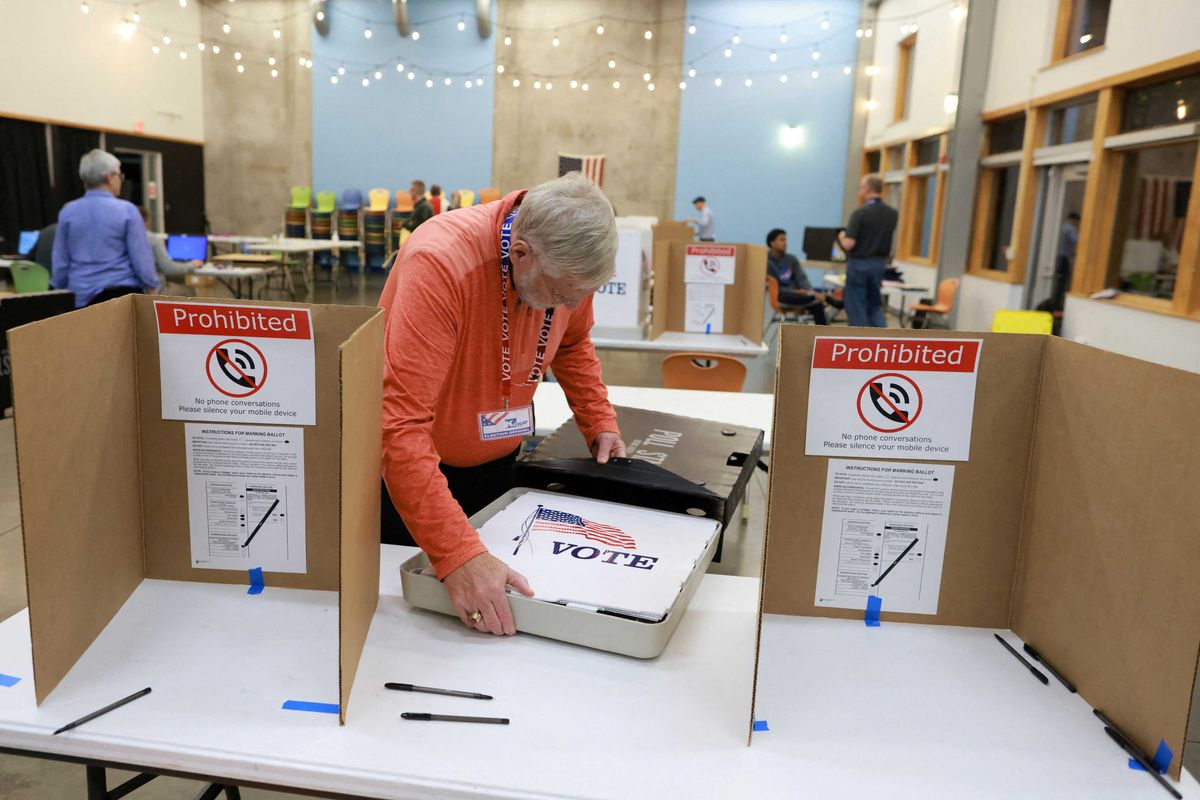
Marty Myers begins to put away the booths used for voting as Michigan polls close, in Kalamazzoo, Michigan, U.S., November 5, 2024. REUTERS/Carlos Osorio/File Photo
The Trump administration plotted ways to bypass an election agency before firing its leaders, according to reporting by Reuters.
According to four anonymous sources who spoke to Reuters, the White House "spent months" mulling ways around Election Assistance Commission guidelines for state voting machines. Earlier this week, Trump fired two Democratic members of the commission and allowed its lone Republican commissioner to resign just months before the midterms.
Some Trump White House officials wanted the EAC to add a proof-of-citizenship requirement for the national mail voter registration form. Others, as far back as last fall, considered whether to declare a national emergency, according to Reuters.
The idea of declaring a national emergency came from a recommendation by the Office of the Director of National Intelligence. The emergency declaration would be followed by the creation of a federal task force that would compel states to address vulnerabilities in their voting systems, sources told Reuters.
Reuters noted that the report with those recommendations was never published, and the ODNI did not respond to a request for comment. However, two sources told Reuters that complaints about the commission continued since those recommendations came up last fall.
Officials from the Department of Homeland Security, ODNI, and the White House also met with EAC leaders around the same time to discuss flaws in voting machines that they believed "could have contributed to abnormalities in 2020," sources told Reuters.
According to Reuters, the Trump administration has not made it immediately clear why it ousted the last remaining heads of the EAC, but Reuters' sources say that the administration was "frustrated" with how slowly the commissioners were updating voting machine guidelines.
‘A Pathetic Power Grab’: Trump Purges Bipartisan Election Assistance Commission
“This move undermines the integrity of nonpartisan election administration,” said Arizona’s secretary of state.
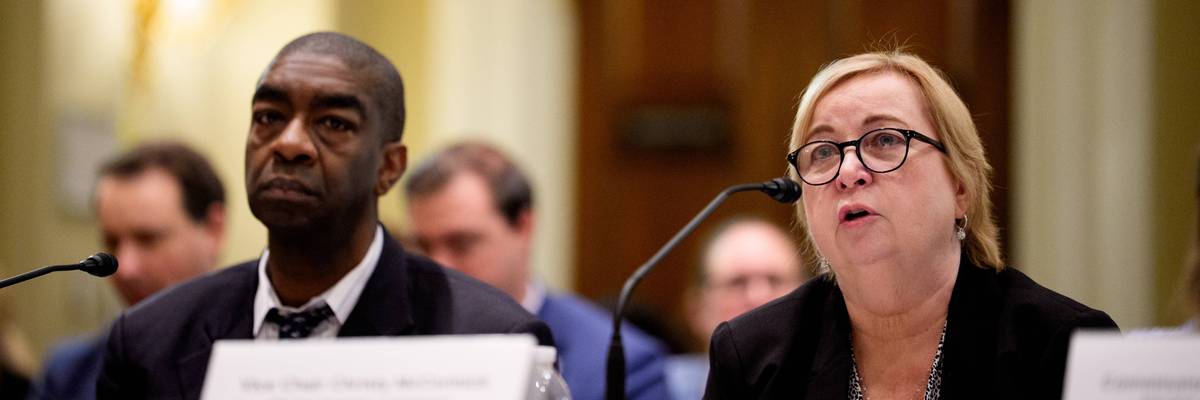
Election Assistance Commission officials Thomas Hicks and Christy McCormick appeared at a House hearing on May 20, 2026 in Washington, DC.
(Photo by Andrew Harnik/Getty Images)
Jake Johnson
Jul 10, 2026
COMMON DREAMS
US President Donald Trump late Thursday forced out the remaining three members of an independent, bipartisan commission that assists state election officials across the country, a move that critics condemned as a “pathetic power grab” ahead of the 2026 midterms.
The two Democratic members of the Election Assistance Commission (EAC), Benjamin Hovland and Thomas Hicks, were fired, and Republican Commissioner Christy McCormick resigned at the White House’s request, according to ProPublica. The agency, established by Congress more than two decades ago, now lacks leadership and any ability to make decisions, just months before the 2026 elections.
The EAC, as its website states, is “an independent, bipartisan commission whose mission is to help election officials improve the administration of elections and help Americans participate in the voting process.” In an executive order last year, Trump ordered the EAC to implement proof-of-citizenship requirements in the federal voter registration process, along with other changes. The president’s effort to impose his policy demands on the EAC was mostly blocked in federal court.
Trump, who has said he wants his administration to “take over” voting nationwide ahead of the 2026 midterms, has since taken other steps that watchdogs and Democratic lawmakers say amount to an attempt to preemptively subvert the coming elections, including a sweeping assault on mail-in voting—which is also facing legal challenges. Legislatively, Trump is pushing Republicans to pass the SAVE America Act, a bill that experts say would prevent millions of Americans from voting.
Michael Waldman, president and CEO of the Brennan Center for Justice, said Thursday’s EAC firings “are deeply concerning in light of President Trump’s relentless efforts to try to interfere in elections.”
“These removals leave the agency without leadership and unable to carry out its major responsibilities,” said Waldman. “The guardrails Congress placed on this agency are clear and must be followed: The Election Assistance Commission was designed to be bipartisan with four members, no more than two of which can be from the same political party. The agency cannot make any significant decisions or take any significant actions unless three confirmed commissioners agree. Until bipartisan replacements are confirmed, the agency cannot lawfully make any decisions that affect how Americans vote.”
Lisa Gilbert, co-president of Public Citizen, said Trump’s termination of EAC commissioners underscores that “he’s scared of the voting power of the American people.”
“This move is another pathetic attempt to sow doubt in our elections, which are safely and expertly run by states and localities,” said Gilbert. “This agency deserves a steady hand and expert leadership. That said, it is important for voters to know that states and localities, not the EAC, run our elections. Even more importantly, it is the voters who decide who takes office.”
The EAC firings came less than two weeks after the conservative-dominated US Supreme Court handed Trump the power to purge independent agencies at will with its Trump v. Slaughter ruling, erasing around 90 years of precedent.
Election law expert Rick Hasen warned in a blog post on Thursday that Trump “could try to direct the commissioner-less EAC to do his bidding, for example by stating that the EAC must amend the federal voter registration form that states must accept for federal elections to include documentary proof of citizenship.”
“Trump’s first voting-related EO tried to do this, and he was stymied. But that was acting through the commissioners and before the Slaughter case,” Hasen noted. “If he tries anything like this, it will be high-profile and very important litigation that will end up at the Supreme Court on the emergency docket over the summer.”
Adrian Fontes, Arizona’s Democratic secretary of state, said in a statement late Thursday that the EAC purge was “irresponsible and dangerous,” accusing the administration of remaining “dead set on causing chaos for our election officials across this country.”
“This move undermines the integrity of nonpartisan election administration,” Fontes added.
“This move undermines the integrity of nonpartisan election administration,” said Arizona’s secretary of state.
Election Assistance Commission officials Thomas Hicks and Christy McCormick appeared at a House hearing on May 20, 2026 in Washington, DC.
(Photo by Andrew Harnik/Getty Images)
Jake Johnson
Jul 10, 2026
COMMON DREAMS
US President Donald Trump late Thursday forced out the remaining three members of an independent, bipartisan commission that assists state election officials across the country, a move that critics condemned as a “pathetic power grab” ahead of the 2026 midterms.
The two Democratic members of the Election Assistance Commission (EAC), Benjamin Hovland and Thomas Hicks, were fired, and Republican Commissioner Christy McCormick resigned at the White House’s request, according to ProPublica. The agency, established by Congress more than two decades ago, now lacks leadership and any ability to make decisions, just months before the 2026 elections.
The EAC, as its website states, is “an independent, bipartisan commission whose mission is to help election officials improve the administration of elections and help Americans participate in the voting process.” In an executive order last year, Trump ordered the EAC to implement proof-of-citizenship requirements in the federal voter registration process, along with other changes. The president’s effort to impose his policy demands on the EAC was mostly blocked in federal court.
Trump, who has said he wants his administration to “take over” voting nationwide ahead of the 2026 midterms, has since taken other steps that watchdogs and Democratic lawmakers say amount to an attempt to preemptively subvert the coming elections, including a sweeping assault on mail-in voting—which is also facing legal challenges. Legislatively, Trump is pushing Republicans to pass the SAVE America Act, a bill that experts say would prevent millions of Americans from voting.
Michael Waldman, president and CEO of the Brennan Center for Justice, said Thursday’s EAC firings “are deeply concerning in light of President Trump’s relentless efforts to try to interfere in elections.”
“These removals leave the agency without leadership and unable to carry out its major responsibilities,” said Waldman. “The guardrails Congress placed on this agency are clear and must be followed: The Election Assistance Commission was designed to be bipartisan with four members, no more than two of which can be from the same political party. The agency cannot make any significant decisions or take any significant actions unless three confirmed commissioners agree. Until bipartisan replacements are confirmed, the agency cannot lawfully make any decisions that affect how Americans vote.”
Lisa Gilbert, co-president of Public Citizen, said Trump’s termination of EAC commissioners underscores that “he’s scared of the voting power of the American people.”
“This move is another pathetic attempt to sow doubt in our elections, which are safely and expertly run by states and localities,” said Gilbert. “This agency deserves a steady hand and expert leadership. That said, it is important for voters to know that states and localities, not the EAC, run our elections. Even more importantly, it is the voters who decide who takes office.”
The EAC firings came less than two weeks after the conservative-dominated US Supreme Court handed Trump the power to purge independent agencies at will with its Trump v. Slaughter ruling, erasing around 90 years of precedent.
Election law expert Rick Hasen warned in a blog post on Thursday that Trump “could try to direct the commissioner-less EAC to do his bidding, for example by stating that the EAC must amend the federal voter registration form that states must accept for federal elections to include documentary proof of citizenship.”
“Trump’s first voting-related EO tried to do this, and he was stymied. But that was acting through the commissioners and before the Slaughter case,” Hasen noted. “If he tries anything like this, it will be high-profile and very important litigation that will end up at the Supreme Court on the emergency docket over the summer.”
Adrian Fontes, Arizona’s Democratic secretary of state, said in a statement late Thursday that the EAC purge was “irresponsible and dangerous,” accusing the administration of remaining “dead set on causing chaos for our election officials across this country.”
“This move undermines the integrity of nonpartisan election administration,” Fontes added.
Trump wipes out entire election agency —and nobody's sure what happens next
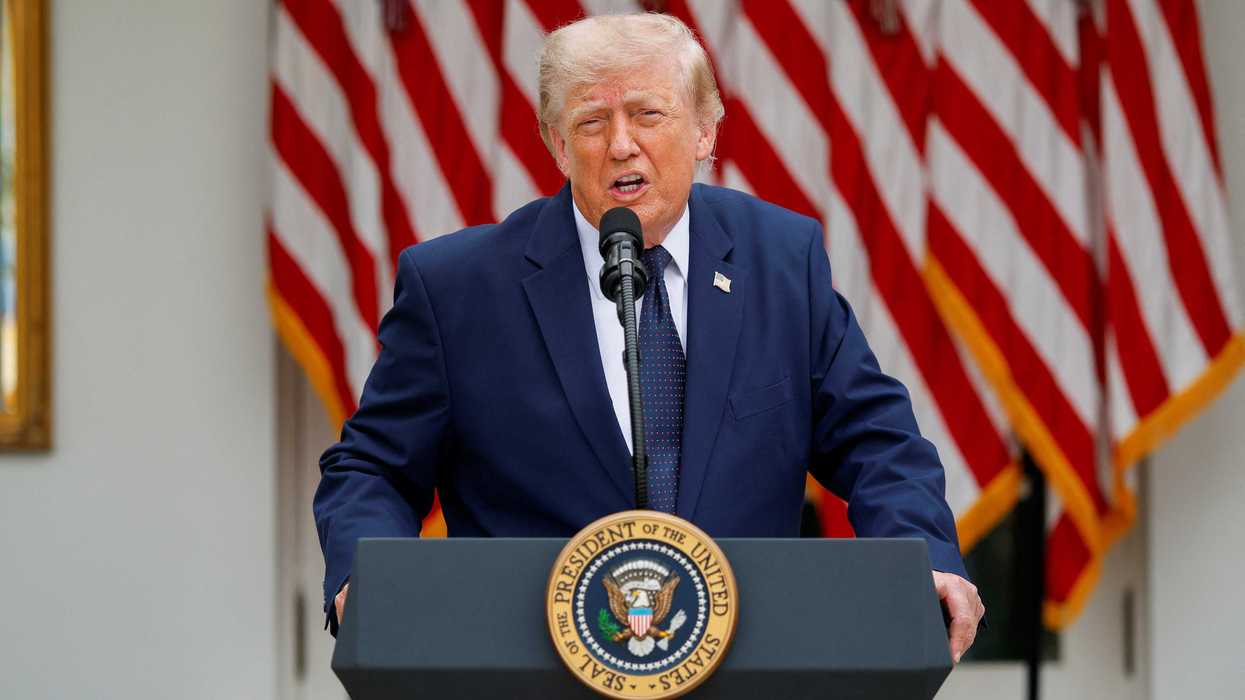
U.S. President Donald Trump speaks during a Rose Garden Club Lunch
U.S. President Donald Trump speaks during a Rose Garden Club Lunch
at the White House in Washington, D.C., U.S., July 6, 2026. REUTERS/Evan Vucci
July 10, 2026
President Donald Trump fired all three remaining members of the U.S. Election Assistance Commission on Thursday, abruptly disabling the only federal agency devoted solely to election administration at a moment when Trump has sought to reshape federal voting rules.
The two Democratic commissioners, Thomas Hicks and Benjamin Hovland, were notified by email. “On behalf of President Donald J. Trump, I am writing to inform you that your position as Commissioner of the Election Assistance Commission is terminated, effective immediately. Thank you for your service,” the email said. It was signed by Morgan DeWitt Snow, deputy director of presidential personnel in the Executive Office of the President.
The third commissioner, Republican Christy McCormick, was allowed to resign, according to three sources within the agency. McCormick declined to comment when reached by phone. The agency’s fourth commissioner, Republican Donald Palmer, voluntarily departed the agency earlier this year to join the Heritage Foundation.
The firings leave the four-member commission with no commissioners, meaning it cannot take official action until new members are installed. They also come days after the Supreme Court granted the president power to fire leaders of independent agencies, weakening a legal framework that for decades had insulated bipartisan federal commissions from direct White House control.
The EAC was created by Congress after the 2000 election to help states improve election administration without federalizing elections.Its role is mostly supportive: distributing federal election funds, maintaining the national mail voter registration form, testing and certifying voting systems, and offering best practices and guidance to state and local election officials.
Trump cannot simply install replacement EAC commissioners on his own. Commissioners must be nominated by the president and confirmed by the Senate, and no more than two can come from the same party.
Neither the White House nor the EAC immediately responded to a request for comment.
A possible legal test after Supreme Court rulings
The Supreme Court issued two major removal-power decisions at the end of its term in late June. In Trump v. Slaughter, the court overturned decades of precedent and said that the president may remove leaders of independent agencies, such as the Federal Trade Commission, which was the subject of the case.
In a separate case involving the Federal Reserve, however, the court recognized a different rule for Fed governors, pointing to the long historical independence of central banking institutions.
Whether bipartisan election agencies fall into the first category, the second, or some yet-undefined exception remains unresolved.
“It’s an open question about the EAC and the [Federal Election Commission],” said Rick Hasen, an election law professor at UCLA. “The question has not been tested as to whether political entities created with bipartisan balance might be subject to another exception.”
Earlier this year, Trump fired Ellen Weintraub, a Democratic commissioner on the FEC who had served for years in holdover status after her term expired. Weintraub did not sue, leaving unresolved whether the president can fire members of bipartisan election commissions at will.
If any of the fired EAC commissioners challenge their removals, the case could become the first direct test of whether the Supreme Court’s new removal-power doctrine extends to federal election agencies structured around bipartisan balance.
The Help America Vote Act, which created the EAC, says the president is supposed to consider recommendations from the Senate and House majority and minority leaders when nominating new EAC commissioners.
In practice, Hasen said, that means both parties typically work with the administration to identify nominees. But “that’s more a custom than something that’s in the statute itself.”
That means Trump could try to nominate Democrats acceptable to him, though they would still need Senate confirmation. HAVA does not appear to create a separate shortcut for temporary commissioners: Vacancies are filled “in the manner in which the original appointment was made,” meaning presidential appointment and Senate confirmation. A recess appointment could raise separate legal questions.
A bipartisan agency with no commissioners left
The EAC does not run elections or tell local officials how to run them, but the agency has long been politically contested. Congress designed it as a bipartisan commission, with no more than two members from the same party, but vacancies, partisan fights, and leadership turmoil have repeatedly limited its ability to act. Election officials and watchdogs have also criticized the agency at different points for failing to assert itself on election security, even as its responsibilities became more urgent after Russian interference in the 2016 election.
Hicks, the commission’s chair, had served on the EAC since 2014 and previously worked for Democrats on the House Administration Committee, which oversees federal election law and election administration. Hovland joined the commission in 2019 after being unanimously confirmed by the Senate and had previously served as acting chief counsel to the Senate Rules Committee and as a senior counsel on election matters.
McCormick had served on the EAC since 2014 and previously worked as a senior trial attorney in the voting section of the Justice Department’s Civil Rights Division.
What happens while the EAC is frozen
The immediate practical effect is clear: The EAC cannot act.
That could stall not only routine commission business, but also any attempt by the Trump administration to use the agency to alter the federal voter registration form or voting-system standards before the 2026 midterms.The EAC also oversees the federal testing and certification program for voting systems, accrediting labs and certifying whether machines meet federal standards known as the Voluntary Voting System Guidelines. Many states rely on that certification before allowing voting equipment to be purchased or used.
The EAC has been without a quorum before. For years, vacancies rendered the agency unable to perform major parts of its work, contributing to long delays in updating voting-system guidance. The agency regained stability only after the Senate confirmed new commissioners in 2019.
Now, with the 2026 election cycle underway, the agency is again frozen — this time not because commissioners resigned or terms expired, but because the president removed all of them at once.
Jessica Huseman is Votebeat’s editorial director and is based in Dallas. Contact Jessica at jhuseman@votebeat.org.
Votebeat is a nonprofit news organization covering local election integrity and voting access. Sign up for their newsletters here.
The two Democratic commissioners, Thomas Hicks and Benjamin Hovland, were notified by email. “On behalf of President Donald J. Trump, I am writing to inform you that your position as Commissioner of the Election Assistance Commission is terminated, effective immediately. Thank you for your service,” the email said. It was signed by Morgan DeWitt Snow, deputy director of presidential personnel in the Executive Office of the President.
The third commissioner, Republican Christy McCormick, was allowed to resign, according to three sources within the agency. McCormick declined to comment when reached by phone. The agency’s fourth commissioner, Republican Donald Palmer, voluntarily departed the agency earlier this year to join the Heritage Foundation.
The firings leave the four-member commission with no commissioners, meaning it cannot take official action until new members are installed. They also come days after the Supreme Court granted the president power to fire leaders of independent agencies, weakening a legal framework that for decades had insulated bipartisan federal commissions from direct White House control.
The EAC was created by Congress after the 2000 election to help states improve election administration without federalizing elections.Its role is mostly supportive: distributing federal election funds, maintaining the national mail voter registration form, testing and certifying voting systems, and offering best practices and guidance to state and local election officials.
Trump cannot simply install replacement EAC commissioners on his own. Commissioners must be nominated by the president and confirmed by the Senate, and no more than two can come from the same party.
Neither the White House nor the EAC immediately responded to a request for comment.
A possible legal test after Supreme Court rulings
The Supreme Court issued two major removal-power decisions at the end of its term in late June. In Trump v. Slaughter, the court overturned decades of precedent and said that the president may remove leaders of independent agencies, such as the Federal Trade Commission, which was the subject of the case.
In a separate case involving the Federal Reserve, however, the court recognized a different rule for Fed governors, pointing to the long historical independence of central banking institutions.
Whether bipartisan election agencies fall into the first category, the second, or some yet-undefined exception remains unresolved.
“It’s an open question about the EAC and the [Federal Election Commission],” said Rick Hasen, an election law professor at UCLA. “The question has not been tested as to whether political entities created with bipartisan balance might be subject to another exception.”
Earlier this year, Trump fired Ellen Weintraub, a Democratic commissioner on the FEC who had served for years in holdover status after her term expired. Weintraub did not sue, leaving unresolved whether the president can fire members of bipartisan election commissions at will.
If any of the fired EAC commissioners challenge their removals, the case could become the first direct test of whether the Supreme Court’s new removal-power doctrine extends to federal election agencies structured around bipartisan balance.
The Help America Vote Act, which created the EAC, says the president is supposed to consider recommendations from the Senate and House majority and minority leaders when nominating new EAC commissioners.
In practice, Hasen said, that means both parties typically work with the administration to identify nominees. But “that’s more a custom than something that’s in the statute itself.”
That means Trump could try to nominate Democrats acceptable to him, though they would still need Senate confirmation. HAVA does not appear to create a separate shortcut for temporary commissioners: Vacancies are filled “in the manner in which the original appointment was made,” meaning presidential appointment and Senate confirmation. A recess appointment could raise separate legal questions.
A bipartisan agency with no commissioners left
The EAC does not run elections or tell local officials how to run them, but the agency has long been politically contested. Congress designed it as a bipartisan commission, with no more than two members from the same party, but vacancies, partisan fights, and leadership turmoil have repeatedly limited its ability to act. Election officials and watchdogs have also criticized the agency at different points for failing to assert itself on election security, even as its responsibilities became more urgent after Russian interference in the 2016 election.
Hicks, the commission’s chair, had served on the EAC since 2014 and previously worked for Democrats on the House Administration Committee, which oversees federal election law and election administration. Hovland joined the commission in 2019 after being unanimously confirmed by the Senate and had previously served as acting chief counsel to the Senate Rules Committee and as a senior counsel on election matters.
McCormick had served on the EAC since 2014 and previously worked as a senior trial attorney in the voting section of the Justice Department’s Civil Rights Division.
What happens while the EAC is frozen
The immediate practical effect is clear: The EAC cannot act.
That could stall not only routine commission business, but also any attempt by the Trump administration to use the agency to alter the federal voter registration form or voting-system standards before the 2026 midterms.The EAC also oversees the federal testing and certification program for voting systems, accrediting labs and certifying whether machines meet federal standards known as the Voluntary Voting System Guidelines. Many states rely on that certification before allowing voting equipment to be purchased or used.
The EAC has been without a quorum before. For years, vacancies rendered the agency unable to perform major parts of its work, contributing to long delays in updating voting-system guidance. The agency regained stability only after the Senate confirmed new commissioners in 2019.
Now, with the 2026 election cycle underway, the agency is again frozen — this time not because commissioners resigned or terms expired, but because the president removed all of them at once.
Jessica Huseman is Votebeat’s editorial director and is based in Dallas. Contact Jessica at jhuseman@votebeat.org.
Votebeat is a nonprofit news organization covering local election integrity and voting access. Sign up for their newsletters here.
No comments:
Post a Comment