NUKE NEWZ
Trump's Nuclear Loan Program Won't Fix What's Really Broken
- The Trump administration's $17.5 billion loan scheme requires utilities to put up hundreds of millions of dollars of their own money first, and none have publicly signed on yet.
- China added 34 gigawatts of nuclear capacity in the past decade and can now build a new plant in about six years, versus more than a decade for Georgia's Plant Vogtle.
- The Energy Department already carries $37.6 billion to $44.5 billion in liabilities tied to having no long-term plan for managing spent nuclear fuel.
Donald Trump is trying to push forward a nuclear power renaissance in the United States as the AI boom presents the country with a major looming energy deficit. The federal government recently announced over $17 billion in federal loans as part of a scheme to encourage investment in revitalizing the nation’s ageing nuclear fleet. The move comes as part of a broader desire on the part of the Trump administration to “produce lasting American dominance in the global nuclear energy market.” However, it will take a lot more than a (complex and unusual) loan scheme to turn the United States’ beleaguered nuclear sector around.
The United States produces more nuclear energy than any other country in the world, and has been for over 50 years. But that reign is likely coming to an end as the country’s fleet ages out, and China continues a building spree that will jettison that country to the top of the list in just a few short years. Almost all of the United States’ nuclear reactors were built between 1967 and 1990. In the last ten years, only one nuclear power plant has been built in the United States – Georgia’s Plant Vogtle – and the project is considered by many to be a failure, after coming online years late and billions over budget.
Meanwhile, in the same ten years, China added a staggering 34 gigawatts of nuclear capacity, and plans on continuing its fast and furious growth rate. Beijing has prioritized the development of new nuclear reactors in its 15th Five Year Plan, and is on track to overtake both the United States and France to become the world’s largest nuclear producer in just five years.
“By a wide margin, China will have the world’s most dynamic and significant nuclear industry through 2035,” an analyst for Gavekal Technologies was recently quoted by the South China Morning Post. “Construction efficiencies mean China can build a new plant in about six years, compared with more than a decade for the latest Vogtle reactors in the US,” Ma went on to say.
Trump’s brand new $17.5 billion nuclear loan deal could be a step toward leveling the playing field with China – but experts also warn that it could fall flat. The “complex and unusual” policy involves helping utilities to buy the expensive components needed to build a specific kind of large reactor produced by Westinghouse in order to kickstart the country’s lagging nuclear energy supply chains. But the loans may be insufficient to reduce financial risk for would-be investors, insiders warn.
“Electric utilities would need to put up hundreds of millions of dollars of their own money to unlock the federal financing, and none have publicly announced their participation yet,” the New York Times recently reported. ‘While a number of utilities have expressed interest in building large new nuclear power plants to meet rising electricity demand, many have so far been deterred by the difficulty and financial risk of doing so.”
While nuclear energy is a promising option for offering clean, round-the-clock energy with proven technologies, the economics of building a new reactor are a huge deterrent – as demonstrated by what happened with Plant Vogtle. Plus, the United States is facing other major challenges both upstream and downstream of the reactors themselves.
Sourcing nuclear fuel is a hot-button geopolitical issue, as most global supply chains run through Russia, and raw uranium supplies are largely cornered by Russia and China. On the downstream end of things, managing spent nuclear fuel is also a huge and costly issue for which the United States government has no long-term plan. And that lack of plan is massively costing taxpayers and making nuclear energy less attractive overall. A 2024 financial audit found that the Department of Energy has incurred liabilities of $37.6 to $44.5 billion due to its lack of long-term spent fuel management strategy.
Earlier this year, Stanford Energy wrote that "U.S. nuclear energy faces fuel supply chain vulnerabilities, with tight uranium supplies, geopolitical risks, and rising costs threatening both existing reactors costs and advanced reactor development.” These pain points will be hard to overcome without coordinated policy efforts at the state and federal levels, and across the length of the nuclear supply China. It’s clear that a nuclear renaissance will not be solved through Trump's loan program alone.
By Haley Zaremba for Oilprice.com
Agreement could see prototype microreactor built at Berkeley
_93642.jpg)
In September last year, a planning application was submitted for a new nuclear energy-focused facility on a brownfield site that was once part of the Berkeley nuclear power plant in south-west England. Planning and development consultancy Turley submitted the outline planning application for the proposal, which would feature nuclear and clean energy research and development facilities, on behalf of Chiltern Vital Berkeley (CVB), part of Chiltern Vital Group (CVG).
The site comprises a parcel of previously developed land which formed part of the wider Berkeley nuclear power station. It is currently occupied by the Gloucestershire Science and Technology Park, acquired by CVB in 2024, and has an established history for nuclear, employment and education uses. If approved, the development will offer up to 600,000 square feet (5.6 hectares) of new R&D, laboratory, office, manufacturing, and education facilities, creating up to 1,000 jobs.
CVB says it is in final-stage negotiations with multiple nuclear and energy technology companies wishing to locate on the Berkeley Green site.
Cambridge Atomworks has now announced that it has signed a letter of intent with CVG on building its prototype Odin microreactor on the site.
The Odin microreactor is described as "a low-pressure, molten-salt-cooled, solid-fuel fission reactor integrated with power conversion and heat rejection systems, enabling substantial and compact, standalone electricity supply without external connections". Cambridge Atomworks plans to have an operational prototype by 2030.
"Cambridge Atomworks agreeing to site their prototype research and development facility at Berkeley represents another important step forward for the development of the Berkeley Green Science and Technology Park by Chiltern Vital Berkeley as a global zero-carbon energy technology, education and training hub within the Severn Edge Nuclear Supercluster," said Chris Turner, CEO of CVG and CVB.
Cambridge Atomworks said the agreement with CVG was "a major step forward in the regulatory development of the Odin microreactor and will provide key answers about the combined physics and thermal hydraulics of the microreactor required by regulators across the world".
Cambridge Atomworks CEO Ian Farnan said: "After our physics demonstration campaign has been completed, our objective is to use the Berkeley-based prototype reactor as a training facility for our global workforce and the UK nuclear workforce. Currently, there is no reactor training facility for this purpose in the UK."
Cambridge Atomworks was established in 2023, developing the Odin microreactor for the US firm NANO Nuclear on an outsourced consulting basis. Last year it bought back the intellectual property, with a letter of intent signed last September. In March this year, it signed a memorandum of understanding with engineering, management and development consultancy Mott MacDonald to work on the development of the Odin microreactor.
The company says the Odin microreactor is designed "with air as the ultimate heat sink and to be walk-away safe in any deployment scenario, ie, it does not need to be close to a water source. The reactor can be cooled via natural circulation both by the molten salt and the reactor auxiliary air cooling system".
Ampera makes 3D-printed microreactor module
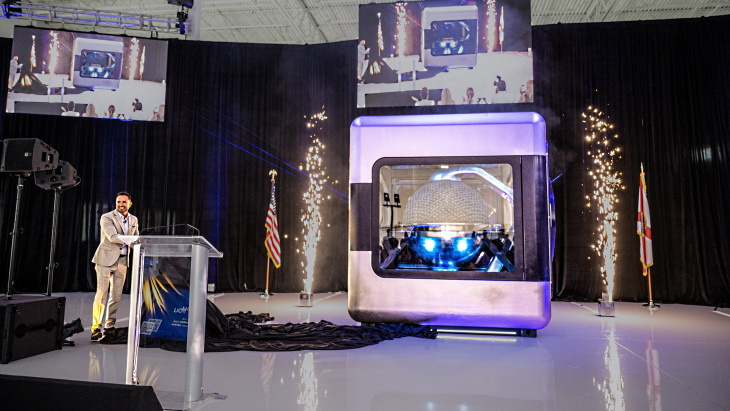
Ampera is developing subcritical thorium-based microreactor systems that are energy dense and do not require refuelling. Through its proprietary tri-structural isotropic (TRISO) fuel platform, neutron-source technology and advanced additive manufacturing, it aims to deliver scalable, factory-built, rapidly deployable, emission-free power for data centres, defence, industrial and maritime applications.
The company's first nuclear module unit, which includes the core and pressure vessel, was unveiled on 1 July at Ampera's innovation centre in Palm Beach Gardens, Florida, with more than 100 people, including local officials, business leaders and employees, in attendance.
"This next-generation nuclear core and pressure vessel sets the foundation for factory-built, mass-produced nuclear energy," said Ampera founder and CEO Brian Matthews. "The advanced technology and additive manufacturing used demonstrate a clear commercial path for new nuclear technology coming to market in an accelerated manner."
Ampera's spherical monolithic gyroid core is 3D printed with silicon carbide and designed for up to 30 years of life without refuelling.
In June, Ampera announced it established an Australian subsidiary to secure thorium supply and support US advanced nuclear fuel production.
The company said its core-for-life, ultra-safe modular nuclear systems are built with inherent stability by design. Safety is achieved through core design and physics characteristics, reducing reliance on active systems and operator intervention. Ampera's nuclear systems are expected to provide up to 30 MWe of power, with larger configurations planned.
"Our reactors are built for the markets that need power the most: AI data centres, defence, industrial and maritime," Matthews said. "We expect to be the first company to industrialise factory-built nuclear power with near-term deployment timelines."
In February, Ampera submitted a formal letter to the US Nuclear Regulatory Commission indicating its desire to begin the pre-application process for its factory-fabricated, containerised microreactor, and in April, it entered into a strategic collaboration with Monaco-based shipping company Scorpio Tankers Inc to jointly develop and commercialise advanced microreactors for marine, shipping and related maritime applications. The same month, Ampera opened its global headquarters in Florida. It has said it plans to produce TRISO thorium kernels at another location in the state.
Criticality for fourth US microreactor to meet 4 July deadline
_89651.jpg)
Austin, Texas-based Aalo was named in August last year by the Department of Energy (DOE) as one of 11 advanced reactor projects initially selected for support through its Nuclear Reactor Pilot Program, which aimed to see at least three of them achieve criticality by 4 July this year. The Reactor Pilot Program leverages DOE authorisation to expeditiously certify and construct first-of-a-kind advanced reactor designs for demonstration. The initiative is part of the Reforming Nuclear Reactor Testing at the Department of Energy executive order signed by President Donald Trump in May 2025.
Two weeks after being selected, the company broke ground on a plot of land at the border of Idaho National Laboratory (INL) to start construction of its first experimental extra modular nuclear reactor, the Aalo-X - a low-enriched uranium–fueled, sodium-cooled reactor.
Aalo announced that its Critical Test Reactor (CTR) achieved criticality at 00:20 (local time) on 4 July.
Criticality is the point at which a nuclear reactor sustains a controlled, self-supporting chain reaction. Although the initial criticality was achieved with a full-scale core load, this was a zero-power criticality.
"Our CTR went from groundbreaking to a sustained chain reaction in less than eight months - one of the fastest reactor builds in 80 years - and our company has gone from founding to fission in less than three years," Aalo said. "The CTR includes a full-scale core, demonstrating the nuclear components of our 10 MWe reactors, which will be deployed in 50 MWe Aalo Pods to power AI data centres.
"Criticality has validated our supply chain, reactor physics, control systems, and fueling procedures at commercial scale. We are now expanding into a one-million-square-foot factory to apply assembly-line manufacturing to reactor production, which will open the door to mass-producing the Aalo Pod, our fully modular nuclear plant purpose-built for AI data centres."
The company said it has already begun work on its second nuclear reactor for Project Ascension, a commercial-scale system located on the Aalo-X Campus at INL. The plan is for the new reactor to produce 10 MWe of electricity and power an on-site data centre in 2027.
"The hardest problem in nuclear was never the physics, our country simply forgot how to build. The success of the Department of Energy Reactor Pilot Program is proof America can execute again," said Yasir Arafat, President and CTO, Aalo Atomics. "We are proud to play a major role in America's nuclear renaissance."
Welcoming the milestone, US Energy Secretary Chris Wright said: "Last month I toured the Aalo facility at Idaho National Laboratory and was impressed by the company's determination to successfully demonstrate their technology by the Fourth of July. President Trump asked for three advanced reactors to be authorised and achieve criticality by the 250th anniversary of our great country. I'm pleased to share that through the dedication and hard work of Aalo, INL and DOE, we have surpassed that ask and delivered four."
Antares Nuclear's Mark-0 reactor became the first to reach initial criticality in early June, closely followed by Valar Atomics' Ward 250 reactor. Deployable Energy's Unity demonstration reactor achieved criticality on 1 July.
Skanska contracted for Swedish repository expansion work
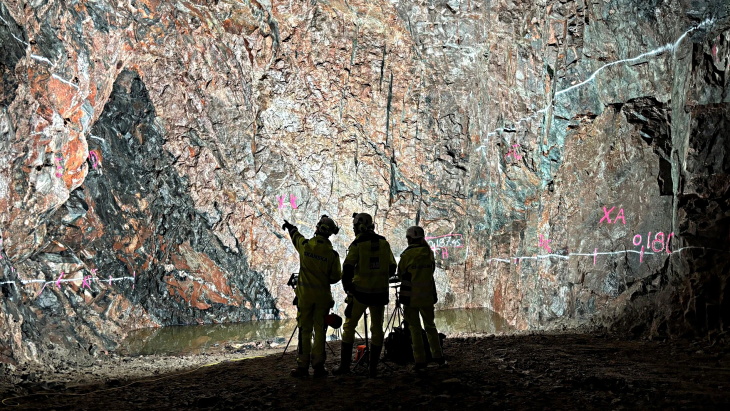
The SFR repository is situated 60 metres below the bottom of the Baltic Sea and began operations in 1988. The facility comprises four 160-metre-long rock vaults and a chamber in the bedrock with a 50-metre-high concrete silo for the most radioactive waste. Two parallel kilometre-long access tunnels link the facility to the surface. The facility currently has a total final disposal capacity of about 63,000 cubic metres of waste.
The plan is that the repository, when extended, will have six new rock vaults, 240-275 metres long. The intention is to construct the extension at a depth of 120-140 metres, level with the lowest part of the current SFR repository. On completion the facility will have a total storage capacity of about 180,000 cubic metres.
_728709db.jpg)
The blue area shows where SKB plans to extend the existing SFR repository (Image: SKB)
Svensk Kärnbränslehantering (SKB) signed a collaboration agreement with Skanska in July 2023 regarding the expansion of the SFR repository. The existing agreement for the design phase (phase 1) is now supplemented by a contract for the production phase (phase 2). The production phase is divided into several stages and separate contracts for each stage are signed successively.
The latest contract covers rock works, civil works, earthworks and water and sanitation works, and tunnel lining.
Construction of the new rock caverns is planned to start in the third quarter of 2026. The contract is expected to be completed in the fourth quarter of 2028, and the complete facility is expected to be ready for test operation in 2030-2031.
Rock construction work got under way in December 2024. Blasting work 45 metres below ground began in January 2025, marking the start of the expansion of the existing SFR repository.
Most of the short-lived waste deposited in the SFR comes from Swedish nuclear power plants, but radioactive waste from hospitals, veterinary medicine, research and industry is also deposited within it.
The project to expand the SFR is being carried out to create space for low- and intermediate-level operational and decommissioning waste from Sweden's nuclear power plants. Many Swedish nuclear power reactors have already been shut down and are to be dismantled and demolished. The decommissioning waste that contains radioactivity will be finally disposed of in the SFR. This includes reactor components, metal, concrete and other building materials.
Control room simulator launched for lead-cooled BREST-OD-300 reactor
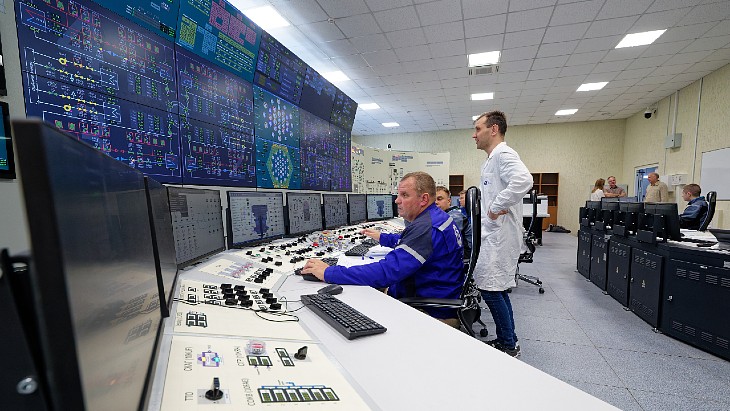
The simulator - see picture above - is in the Educational, Training and Information Centre of the Siberian Chemical Combine in Seversk, Tomsk Oblast in Russia.
The new unit
The BREST-OD-300 fast reactor is part of Rosatom's Proryv, or Breakthrough, project to enable a closed nuclear fuel cycle. The 300 MWe unit will be the main facility of the Pilot Demonstration Energy Complex at the Siberian Chemical Combine site, which is part of Rosatom's TVEL fuel division.
The complex will demonstrate an on-site closed nuclear fuel cycle with a facility for the fabrication/re-fabrication of mixed uranium-plutonium nitride nuclear fuel, as well as a used fuel reprocessing facility.
Construction of BREST-OD-300 began in June 2021. Recent progress updates included in May that concreting was taking place for the foundation of the turbine and generator, the news in October that the last roofing truss had been moved into place on the turbine hall and that the metal shell for the central cavity - which weighs 143 tonnes and is more than 14 metres tall with a diameter of 8 metres - had been installed. The four peripheral cavity shells were all installed during December.
Endurance testing of the prototype main circulation pump unit for the reactor is ongoing - the unit will pump 11 tonnes of molten lead per second at a temperature exceeding 420 degrees Celsius. At the time of construction starting, the target date for completion was 2026.
Initial operation of the demonstration unit will be focused on performance and after 10 years or so it will be commercially oriented. The plan has been that if it is successful as a 300 MWe (700 MWt) unit, a 1,200 MWe (2,800 MWt) version will follow - the BR-1200.
The control room simulator
Evgeny Adamov, scientific director of the Breakthrough project, said there were no similar simulators in the world, because of the unique design of the new unit, so it would "become a key technical tool for personnel training and licensing".
It was built by JSC VNIIAES, part of Rosatom's electric power division, which has developed more than 40 simulators for various Russian-designed power units.
Konstantin Artemyev, director general of JSC VNIIAES, said: "For VNIIAES, creating a unique simulator for the future power unit presented a real challenge. Only the coordinated work of professionals from all participating organisations made it possible to overcome this challenge. Ultimately, the team created not just a simulator, but an adaptive simulation platform that will evolve alongside the brand-new fourth-generation power unit."
Fuel loading completed at Mochovce 4
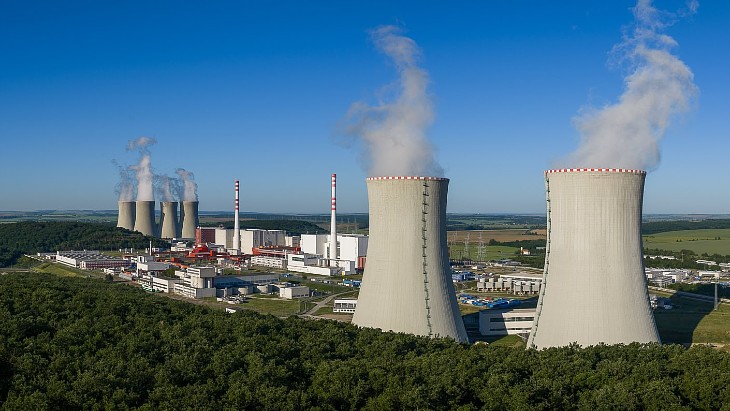
The loading of the fuel into the new reactor in Slovakia marks the transition from the construction phase to the start-up phase of a new nuclear power unit.
The VVER-440 unit will now move on to pre-criticality tests before the first controlled fission reaction takes place, all under the supervision of the Slovak Republic's Nuclear Regulatory Authority.
There will then be a series of tests to verify the properties of the reactor core before the unit's output is increased in small steps, with tests taking place at each stage before regulators clear an increase in power levels.
The 349 assemblies in the reactor are 312 fuel assemblies and 37 control assemblies. The fuel is uranium dioxide in the form of ceramic tablets, which each weigh about 5 grams and are in fuel rods. One fuel assembly includes 126 fuel rods. When fully loaded, the reactor contains about 42 tonnes of nuclear fuel, and fuel assemblies remain in the core for about five years, Slovenské elektrárne said.
Martin Mráz, Project Director Mochovec, Slovenské elektrárne, said: "The completion of fuel loading into unit 4 is another significant step on the way to completing the Mochovce project. With this unit, we are closing one of the most important chapters in the Slovak energy sector. The result will be a stable and reliable source of low-emission electricity for households, industry and future generations. It is the success of thousands of people who have been involved in the project for many years."
Background
Construction of the first two VVER-440 units at the four-unit Mochovce plant started in 1982. Work began on units 3 and 4 in 1986, but stalled in 1992. The first two reactors were completed and came into operation in 1998 and 1999, respectively, with a project to complete units 3 and 4 beginning ten years later at an estimated cost of EUR6.7 billion (USD7.6 billion).
Mochovce 3 entered commercial operation in October 2023. Each of the units can provide 13% of Slovakia's electricity needs when operating at full capacity and when the 471 MW-capacity unit 4 is operating, nuclear will be providing the equivalent of 77.5% of Slovakia’s electricity consumption, the highest proportion for any country.
Slovenské elektrárne's majority shareholder is Slovak Power Holding BV (SPH), which is owned by the Czech energy group Energetický a průmyslový. The second shareholder is the Slovak Republic, which has a 34% stake.
Slovakia currently has five nuclear reactors generating about half its electricity. As well as the Mochovce units, there are two at Bohunice, which went into commercial operation in 1984 and 1985, respectively. The Slovak government has plans for a new large unit at Bohunice, and has also been exploring the potential for small modular reactors in the country.
Second Taipingling unit begins supplying power
_74152.jpg)
Taipingling 2 received an operating licence from China's National Nuclear Safety Administration on 30 April. The loading of a total of 177 fuel assemblies was completed on 3 May. It attained a sustained chain reaction for the first time (referred to as first criticality) on 25 June.
CGN has now announced that the 1,116 MWe (net) pressurised water reactor was "successfully connected to the grid for the first time, generating its first kilowatt-hour of electricity" on 4 July.
"This marks a crucial step towards the commissioning of the second unit of the first Hualong One nuclear power base in the Guangdong-Hong Kong-Macao Greater Bay Area, signifying that it has officially gained the ability to transmit power to the grid," the company said. "After grid connection, on-site confirmation showed that the unit is operating well, and all technical indicators meet design expectations. A series of tests will be conducted as planned to further verify the unit's performance, and it is expected to officially commence power generation in the second half of 2026."
_ee16a982.jpg)
Taipingling units 1 and 2 (Image: CGN)
The Taipingling plant will eventually have six Hualong One reactors, with a total investment exceeding CNY120 billion (USD17 billion). The construction of the first and second units began in 2019 and 2020, respectively. Hot testing of unit 1 was completed in September 2024, with that of unit 2 completed in July 2025. Unit 1 attained first criticality on 3 February this year and was connected to the grid on 13 February. It entered commercial operation on 19 April.
Construction of the second phase of the Taipingling plant - units 3 and 4 - was approved by China's State Council in December 2023, with construction of unit 3 getting under way in June last year. The first nuclear safety-related concrete for the reactor building of unit 4 was poured in May.
Once all six units are completed and put into operation, the annual power generation will exceed 55 billion kilowatt-hours, CGN said. It will also reduce standard coal consumption by about 16.65 million tonnes and carbon dioxide emissions by about 50.82 million tonnes annually.
Palisades enters final stage of work before restart
_34185.jpg)
Among the final accomplishments in this 'project phase' of restart was placement of the plant's turbine-generator on turning gear following extensive inspections, maintenance, testing, and refurbishment activities. Holtec said another major achievement was installation and testing of a new state-of-the-art fuel handling machine, completing the upgraded fuel handling system.
"Together, these projects represent the culmination of a series of major efforts carried out across the station," Holtec said. "They mark an important transition in the Palisades restart, which included reactor vessel inspections and replacement of reactor head penetrations, primary system chemical decontamination and passivation, steam generator tube refurbishment and secondary-side cleaning, fuel receipt and inspection, operator training and requalification, and numerous equipment upgrades and modernisation projects. Throughout this phase, our focus has been ensuring that Palisades is ready to support decades of safe, reliable operation."
_2c9329ca.jpg)
The new fuel handling machine (Image: Holtec)
Enterprise Unit Head Steven Soler and Site Vice President Michael Schultheis said: "These accomplishments reflect the tremendous amount of work performed across the station throughout the restart effort. "We're now focused on safely executing the remaining testing, verification, and operational readiness activities required before startup. The plant is coming back together, and the professionalism and dedication demonstrated by our workforce continue to move the project forward."
With the projects phase successfully completed, the plant's managers, superintendents, and supervisors have shifted their focus to the remaining work through the Operations Command Centre and several dedicated coordination teams, where work is being managed around the clock to prepare the plant for startup.
Holtec noted that, although more 5,000 individual work activities remain, "this transition represents an important milestone in the historic restart effort".
"As we enter the final phase of this historic effort, we are grateful for the support provided by our federal, state, and community partners, whose collaboration has helped make this pioneering effort possible," said Holtec Chairman and CEO Kris Singh. "The Palisades restart will forever serve as lasting evidence of what can be accomplished when government and private industry work together to achieve an important national objective."
Palisades, a single-unit pressurised water reactor, ceased operations in May 2022 and was defuelled the following month, although it was licensed to operate until March 2031. The unit's licence was transferred from previous operator Entergy Nuclear Operations to Holtec Decommissioning International, LLC and Holtec Palisades, LLC, for decommissioning, but in late 2023, Holtec began the process of obtaining the licensing approvals needed to return the plant to operational status for the remainder of its licensing term.
Holtec notified the US Nuclear Regulatory Commission in 2024 that it intends to apply for a second, or subsequent, licence renewal for the plant. This would extend the plant's operating period by a further 20 years, to 2051
International safety review of Finnish SMR design completed
_29695.jpg)
The Finnish Radiation and Nuclear Safety Authority (STUK) conducted a preliminary safety assessment of the LDR-50 last year. In June 2025, STUK said the draft concept assessment for Steady Energy's LDR-50 found that "nuclear and radiation safety, security arrangements, emergency arrangements and nuclear material safeguards solutions are such that they can be designed to meet safety requirements". Concept assessment is a procedure proposed in the new Nuclear Energy Act in which STUK assesses whether the power plant could meet safety requirements in general terms. It is separate to the construction permit process for the nuclear power plant. STUK said it used the draft concept as a basis for its assessment.
STUK launched the Joint Early Review of the LDR-50 concept in October 2025 with the nuclear safety authorities of four countries: the Czech State Office for Nuclear Safety (SÚJB) - together with its technical safety organisation State Scientific and Technical Center for Nuclear and Radiation Safety (SSTC NRS) and the State Institute of Radiation Protection (SURO) - Poland's National Atomic Energy Agency (PAA), the Swedish Radiation Safety Authority (SSM), and the State Nuclear Regulatory Inspectorate of Ukraine (SNRIU). The review made use of the early assessment of the plant concept completed by STUK.
The review is a voluntary cooperation process in which each authority independently assessed the plant concept based on its national requirements. The review is not part of the licensing procedure and does not produce binding decisions or a joint position on the plant concept. The key objective of the review is to support nuclear facility design at an early stage and to provide non-binding feedback to support the facility design process.
STUK has now published a summary report compiling the key observations and experiences related to the plant concept by the nuclear safety authorities. It noted the conclusions drawn by the authorities in different countries were broadly in line with each other.
Several strengths were identified in the safety solutions of the LDR-50 nuclear power plant concept, such as a defence-in-depth safety approach (several successive safety levels that secure each other) and the utilisation of passive safety solutions. In the early planning phase, the concept was considered largely appropriate, but not yet sufficient from a licensing perspective.
None of the authorities involved in the Joint Early Review identified any fundamental obstacles in the areas examined that would prevent the further development of the concept. At the same time, the reviews emphasised that the actual licensing phases require significantly more detailed analyses, justifications and more detailed planning, for example in connection with safety analyses, handling of emergencies and plant-level impacts.
"The work showed that leveraging a national safety assessment in other countries is not straightforward but requires significant preparations and clear approaches," said Teemu Soukki, inspector responsible for the project at STUK. "Making leverage possible must be taken into consideration already at the point of preparing the national assessment."
Steady Energy was spun out of Finland's VTT Technical Research Centre in 2023. The LDR-50 SMR, with a thermal output of 50 MW, is designed to operate at around 150°C. Unlike most SMRs being developed around the world, it is not designed to generate electricity - or electricity and heat. Instead, it is designed to only produce heat and is focused on district heating, as well as industrial steam production and desalination projects.
Welcoming the completion of the Joint Early Review, Steady Energy CEO Tommi Nyman said: "This is a highly encouraging outcome for Steady Energy. Our ambition is to bring the LDR-50 to international markets, and it is a very positive signal that the nuclear safety authorities participating in the review did not identify any fundamental obstacles to implementing the reactor concept in accordance with their national safety requirements."
The company has already signed agreements for 15 reactors in Finland, with its reactor design currently being assessed by STUK. The aim is for construction of the first plant - to be the clean energy source for a district heating scheme - to begin in 2029.
TRISO fuel delivered for Kaleidos reactor experiment
_33536.jpg)
The tri-structural isotropic (TRISO) fuel was fabricated by Standard Nuclear to Radiant's specifications earlier this year. It will be used to power Radiant's Kaleidos reactor to conduct a full-power, full-temperature test this summer, the company said, starting months of rigorous testing and validation. With fuel now on site, the company said it is "poised to bring Kaleidos online".
Radiant is to carry out a five-phase reactor development testing programme at the facility to collect critical reactor and fuel performance data, which it says will help accelerate the commercial licensing process with the US Nuclear Regulatory Commission. It will progress through zero-power criticality, 1 MW thermal, full power, and full heat, before operating for a minimum of 150 hours at full power without operator intervention, a crucial milestone in proving commercial readiness.
The Demonstration of Microreactor Experiments test bed - DOME for short - is a 100 feet (30 metres) tall and 80 feet in diameter facility that uses the containment structure of the Experimental Breeder Reactor-II (EBR-II) which operated from 1964 to 1994. It provides a safe environment to test experimental reactor concepts and gather performance data that can be used to inform future commercial licensing applications, helping to accelerate development timelines and ultimately saving money and reducing project risk.
_19e7842e.jpg)
Radiant designed, validated and performed the safety analysis of its own system for transporting the fuel (Image: Radiant)
"We are de-risking a commercial product that will be manufactured and delivered within 18 months," Radiant Chief Nuclear Officer Rita Baranwal said. "Receipt of our freshly fabricated, modern-pedigree, custom-made fuel is a key milestone toward that goal. Radiant has been very disciplined with our testing program at the DOME; we are testing our prototypic fuel, coolant, and power levels to validate our product and ensure success for our customer deployment by 2028."
Data collected from DOME will also play a key role in supporting Radiant's Part 70 licence application for its R-50 manufacturing facility in Tennessee, which is in accelerated review by the NRC. Once approved, the licence will enable Radiant to handle and load fuel for its Kaleidos reactors before shipping to customers across the United States, unlocking standardized mass production.
Kaleidos is a high-temperature gas-cooled reactor using TRISO fuel, helium gas coolant, and prismatic graphite blocks. The transportable microreactor will be fully contained in a single shipping container, and is designed to generate 3MW thermal or and around 1MW electrical. The Nuclear Regulatory Commission has been conducting pre-application activities for the reactor with Radiant since 2022. Kaleidos is one of three microreactor designs selected in 2023 to receive US federal funding or front-end engineering and experiment design at DOME.
IAEA highlights Uzbekistan's nuclear infrastructure progress
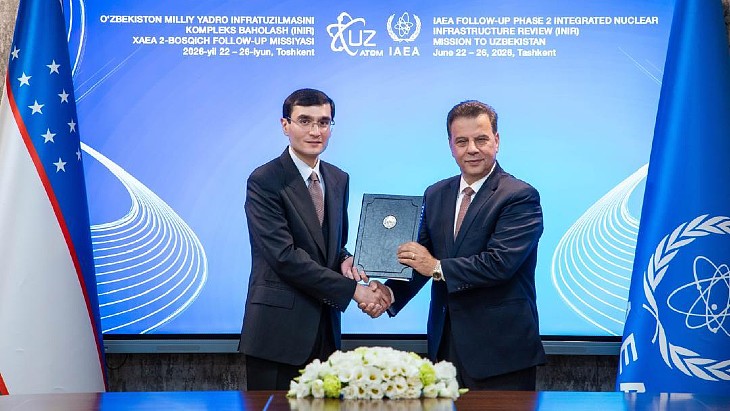
Uzbekistan has embarked on its first nuclear power plant with Russia, which will feature two RITM-200N small modular reactors and two VVER-1000 large reactors. Concrete was poured for the first SMR last month, marking the official start of construction.
The follow-up IAEA Integrated Nuclear Infrastructure Review mission, which comprised experts from Brazil, Turkey and two IAEA staff, took place from 22 to 26 June and reviewed progress since a previous mission in 2021.
Mission team leader John Haddad, of the IAEA's Nuclear Infrastructure Development Section, said: "Uzbekistan has demonstrated commitment to develop a safe, secure and sustainable nuclear power programme. It has worked actively to address the recommendations and suggestions from the 2021 mission and develop a sound infrastructure for the implementation stage of its programme."
He added: "The world is eager to learn from Uzbekistan's experience in nuclear power plant construction. Uzbekistan is one of the few countries building small modular reactors outside the country where they are built. This experience will be invaluable. Everyone will be watching you: how you did it, what you accomplished, and what lessons you learned. Get ready to play a significant role in the global nuclear landscape."
The IAEA said the mission praised progress made in Uzbekistan, saying the country had "joined the relevant international legal instruments, revised its national nuclear legislation, and developed its regulations for licensing and oversight, management systems and the necessary electrical grid studies and enhancement plans".
It also noted that "further work is needed to complete ongoing actions to strengthen the nuclear regulatory body and finalise feasibility studies".
Atomic Energy Agency - Uzatom - Director Azim Akhmedkhadjaev said the mission was "a vital tool for open professional dialogue, allowing us to objectively assess the ongoing work to develop our national nuclear infrastructure, compare the results achieved with international standards and IAEA recommendations, and identify further practical steps".
Integrated Nuclear Infrastructure Review missions are held at the invitation of the host country and are based on the IAEA's Milestones Approach "with its 19 infrastructure issues, three phases (consider, prepare and construct) and three milestones (decide, contract and operate)".
Following the mission, the preliminary report was submitted to the Uzbek side. It will be reviewed and a final report published by the IAEA in due course.
Background
Uzbekistan has a long nuclear-related history with considerable mineral deposits - it is the world’s fifth-ranking uranium supplier. It has also had two research reactors, a 10 MW tank type - WWR-SM - which has been operating since 1959 at the Institute of Nuclear Physics, Uzbek Academy of Sciences near Tashkent, and a small 20 kW one operated by JSC Foton in Tashkent which was decommissioned between 2015-19.
It has had long-term plans to develop nuclear energy capacity and a contract was signed in May 2024, during a visit to the country by Russian President Vladimir Putin. It was originally for the construction of a 330 MW capacity nuclear power plant featuring six units of the RITM-200N water-cooled small modular reactor (SMR), which is adapted from nuclear-powered icebreakers' technology, with thermal power of 190 MW or 55 MWe and with an intended service life of 60 years. The first unit was scheduled to go critical in late 2029 with units commissioned one by one.
In 2025, a supplemental agreement to the contract for the new nuclear power plant - in the Jizzakh region - covered the decision to change its contents to two gigawatt-scale VVER-1000 units and two SMRs. This increased the proposed capacity to more than 2,100 MWe, compared with the previous 330 MWe.
Excavation work began in October last year for the pit for the first of the SMRs at the site. About 1.5 million cubic metres of soil were excavated during the digging of a pit 13 metres deep. In March this year, Rosatom said that about 900 cubic metres were being poured during the concrete foundation work for the reactor building. That was due for completion in April and it said that the foundation has since been levelled and waterproofed before the pouring of the first concrete for the reactor building's foundation slab, which took place in June. It is the first export order for Russia's SMR. The first land-based version is currently being built in Yakut, Russia, with the launch of the first unit scheduled for 2027.
Nuclear can play its part in decarbonising shipping, says IMO chief
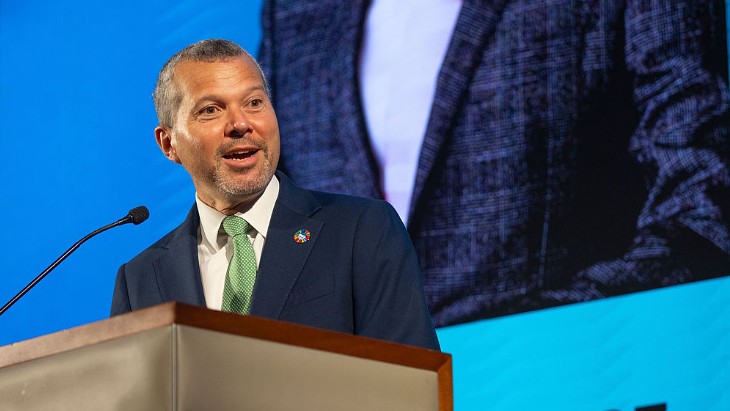
Speaking at the Accelerating Nuclear for Energy Generation and Shipping conference in London, he said that the International Maritime Organization (IMO) had a long-standing agnostic view on the different fueling options to decarbonise shipping, subject to retaining the key goals of "safe, secure and environmentally-sound shipping".
He said that in looking at fuels as a source of energy "we're starting with the life-cycle assessment. In the recent discussions this year, there was a lot of interest in nuclear propulsion, whether it's going to be propulsion that will support shipping from the shore or the ports' infrastructure, providing clean energy, or is it going to be on-board vessels. Now, we don't have the answer to that. But we're open to all the development, the technical aspects, the practicalities of how this can become a reality".
The main goal of the IMO, he said, was ensuring safety and security in shipping, and said the organisation would be partnering with the International Atomic Energy Agency on the ATLAS (Atomic Technologies Licensed for Applications at Sea) project which is due to launch in August in the USA.
"We need to review the safety code for nuclear vessels that was adopted back in 1981," he told the conference, organised by Core Power, on 17 June. "It is in the pipeline and there is a lot interest in the IMO on how this work is going to progress."
He said that work towards decarbonisation was already under way with interim guidelines for the use of fuels such as ammonia, hydrogen and methanol. "Nuclear is the next step - it's been discussed together with renewable energy sources, like solar batteries and wind. But I can tell you that the main focus of the discussions this year were actually on nuclear and how we're going to take that next step forward."
One area that he highlighted was the need to provide training for seafarers, so that the safety aspects of nuclear propulsion can be discussed alongside the training requirements. A further issue was a liability convention, which is currently being worked on for autonomous vessels, with plans for one for alternative fuels.
Dominguez also said that an important area was "how we're going to deal with public perception … somehow, when we talk about nuclear, especially what's happening right now, it tends to be linked to conflict, and that's not what we want. But the sooner we go out and demonstrate, not only the benefits or how we also address any safety concerns, the quicker they will help us to bring civil society on board with us". As an example he said that many ports around the world had initially resisted the idea of liquefied natural gas propulsion, but those concerns had been transformed.
"So it's how we engage not only the people in the sector, not only those that know what we're talking about, but how we take it to those who have a different perspective and point of view," he said.
And linked to that idea of needing "to bring everyone involved" together, he said that shipping was a global industry and needs global regulations. Developing countries needed to be involved in the discussions about the transition and the benefits that could flow from nuclear propulsion.
Core Power CEO Mikal Bøe said he had been steering a mission to mainstream maritime nuclear for almost a decade and watched it grow and "become the only long-term viable solution … to meet both the environmental challenges and the economic challenges that we face".
He said that a rethink was needed on the idea of "shutting down industrial production, exporting emissions overseas and ceding energy security in the name of net zero". Nuclear energy is "a central pillar of protecting the planet and the prosperity of future generations", he said.
He added that they were encouraging governments, non-governmental organisations and the IMO and International Atomic Energy Agency to revise and modernise the safety and security standards to include floating nuclear power plants and nuclear ships.
"We've learnt that there are key conditions embedded in the regulatory framework and the law, that must sit at the centre of every concept of operations. Some come from the maritime side, whilst others come from the nuclear side. Now we're blending those together into a perfectly logical framework for licensing, export controls and nuclear safeguards … the entire system of how that is actually going to work. This is a framework which has never existed before, laying the foundation for maritime nuclear in a truly modern context.
"The resulting harmonised regulatory framework for maritime nuclear will become the platform on which an entire new industry … can strive to solve our climate challenge and boost our economic competitiveness … and those conditions will dictate how business models are developed for ship-based nuclear power and nuclear ships."
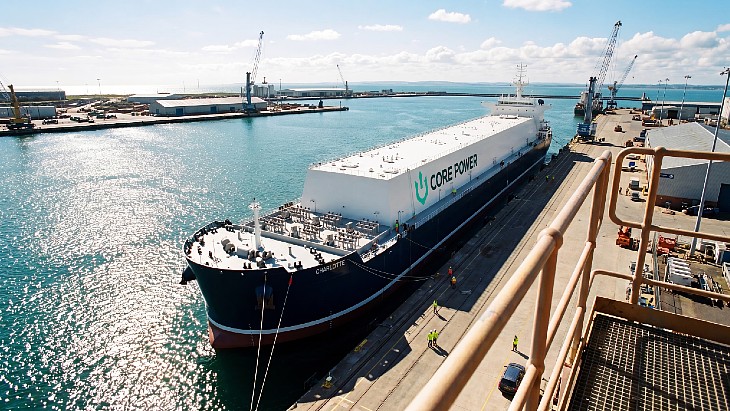
(Image: Core Power)
At the same event Core Power announced it had launched a feasibility study into using BWX Technologies' mPower small modular reactors in floating nuclear power plants (see picture above for how one might look).
The mPower small modular reactor (SMR) is an integral pressurised light-water design with 195 MWe or 575 MWt capacity. The feasibility study "will cover baseline information exchange, systems engineering, concept of operations development, product requirements definition, regulatory pathway assessment, marine integration studies and techno-economic analysis".
The IAEA says the ATLAS project aims to bring the maritime and nuclear industries together "to identify and address the key challenges and obstacles to using civil nuclear applications at sea, which will support Member State establishment of a robust framework that promotes and supports the deployment of these technologies. This could include recommendations for revisions to IAEA safety standards and nuclear security guidance and strengthening international cooperation to ensure effective safety, security, and safeguards throughout the lifetime of such vessels and facilities".
SGE-led team targets 14 BWRX-300 SMRs in UK
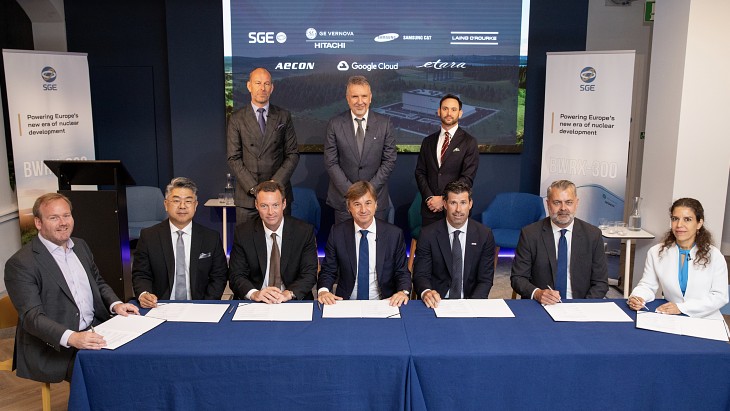
SGE (formerly Synthos Green Energy) submitted the application under the UK's Advanced Nuclear Framework for reactors which could provide 4.2 GW of capacity, equivalent to 11% of current UK power demand.
SGE, which has BWRX-300 projects under way in Poland and elsewhere in Europe, said it has already invested GBP50 million (USD66 million) to get to the stage of submitting the UK project application, which included more than 1,500 pages. It has established SGE SMR UK Ltd as its UK-based project vehicle.
At a signing ceremony before submitting the application, SGE said that its aim was for the project to enter the UK's Advanced Nuclear Pipeline in November, with site selection and government support scheme negotiations in the first half of 2027, a final investment decision in 2030 and commercial operation of the first unit targeted for 2034.
The plan is for the initial site to host six of the 300 MW small modular reactors (SMRs), with four each at two subsequent sites. The locations of the proposed sites, and the proposed operator of the units, are said to be going to be released "in the near future", pending final negotiations.
Michał Sołowow, founder of SGE, said: "We are focused on delivering efficient, safe, affordable, and clean nuclear energy power at fleet scale. The UK is home to one of the world's most experienced nuclear workforce and the British Government has provided a clear path to market with the Advanced Nuclear Framework. Because of this, I am confident we will set a new standard for nuclear development by combining our disruptive business model with the BWRX-300's tenth generation proven technology. We will rely strongly on the UK supply chain; it is a critical element for our project."
He stressed it was a commercial approach, saying they were not asking for money from the UK government, "we are asking for the opportunity", adding that it is "our risk, if we don’t deliver".
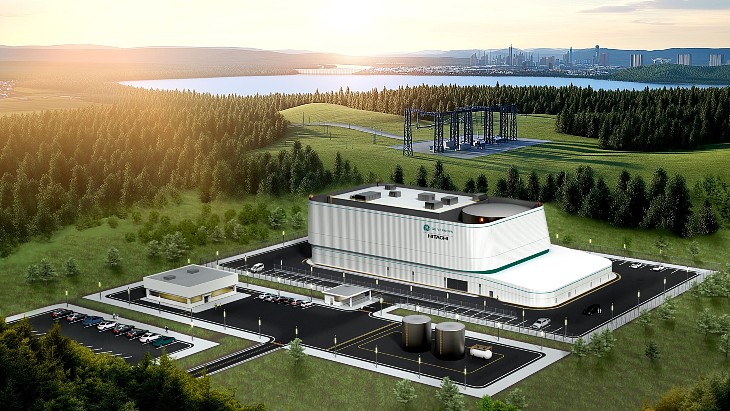
How a BWRX-300 could look (Image: GE Vernaova Hitachi)
Rafał Kasprów, CEO of SGE, said: "Standardisation, repetition, modularisation, and a fleet deployment strategy are the most effective ways to deliver new nuclear projects successfully, reducing costs, construction risk, and delivery times. We are committed to working with UK partners to provide secure, affordable, and clean electricity to millions of British households for generations to come."
Jason Cooper, CEO of GE Vernova Hitachi Nuclear Energy, said: "SGE's vision reflects the growing momentum behind new nuclear across Europe and the critical role SMRs can play in strengthening energy security while delivering reliable, lower-carbon electricity. With construction already under way at the Darlington New Nuclear Project in Ontario, Canada, the first commercial-scale SMR under construction in the Western world, the BWRX-300 offers the confidence that comes from real project execution."
John O’Connor, Group Commercial Director of Laing O’Rourke, said the company would bring nuclear experience and pioneering industrialised construction methods to the development of SMRs. Aaron Johnson, Senior Vice President, Nuclear, Aecon Group Inc, a leading partner on the Darlington BWRX-300 deployment in Canada, said "early involvement in this landmark project positions Aecon to leverage first-of-a-kind experience and tailor proven approaches for SGE in the UK and in other international markets".
Others involved in the project include Fermi Development, a UK-based developer with a decade of renewable energy development expertise, which says it has "screened more than 100 sites, with around 40 sites identified as potentially developable, enabling a fleet approach through application of a consistent model, which is central to schedule resilience, delivery and investor confidence".
Luba Kotzeva, founder and CEO of advisory and consultancy group Etara, whose team has had advisory roles on nuclear projects in 12 European countries, including the UK's Hinkley Point C, Sizewell C and Wylfa projects, said the proposed fleet-scale delivery was to capture learnings and to bring pricing down so "it is privately financeable and at affordable levels".
The project is proposing a Contract for Difference financing scheme - the type used for Hinkley Point C and preferred in European Union projects, but replaced by the regulated asset base model in the UK for the more recent Sizewell C project - which means an agreed price is set in advance for the electricity generated, with the power generator repaying the difference if the price goes above the agreed level, and the government subsidising the amount if the electricity price is below the agreed level. Under the Contracts for Difference system developers finance the construction of a nuclear project and only begin receiving revenue when the power plant starts generating electricity. Under the Regulated Asset Base funding model consumers contribute towards the cost of new nuclear power plants during the construction phase.
The project aims to learn from the experience of Contract for Difference schemes elsewhere in Europe and has proposed modifications to the Hinkley Point-style scheme to better enable private finance, with government asked to back provision of revenue support and risk sharing - including protection against future political changes of policy - "and for consumers providing a hedge for future power price shocks".
It is understood that the aim is for the level set for the Contract for Difference is to likely be in the same area as the current Hinkley Point C figure. The potential for power purchase agreements, which could also underpin financing, will also be included in the negotiations, as well as investment from the UK’s National Wealth Fund.
As to the likely cost per SMR, the project team aims that once they are in fleet mode, each SMR would cost about GBP2.2-2.5 billion (USD2.9-3.3 billion). There are plans to have some associated data centres with the SMRs, and although Google’s current role is as a technology partner SGE hopes they may become an investment partner on the data centre on the site.
Background
GE Vernova Hitachi's BWRX-300 small modular reactor is a 300 MWe water-cooled, natural circulation SMR with passive safety systems that leverages the design and licensing basis of GEH's ESBWR boiling water reactor. In December it passed Step 2 of the UK's Generic Design Assessment. The regulators said there are "no fundamental safety, security, safeguards or environmental protection shortfalls with the design that could prevent its deployment in Great Britain".
However before units could be built, the regulators would need to undertake a further period of detailed design assessment before safety-significant construction could begin and environmental permits could be issued. This assessment could be conducted on a generic basis with GE Vernova Hitachi, should the company choose to return to the GDA process to complete Step 3. Alternatively, it could be undertaken with a licensee or constructor as part of a site-specific development.
Orlen Synthos Green Energy applied to Poland's Minister of Energy last month for a Contract for Difference for the construction of a total of 14 BWRX-300 small modular reactors at three locations in Poland, the first phase of a broader OSGE programme, which ultimately includes the construction of 26 BWRX-300 units in line with the principal decisions obtained by the company from the Polish government. The aim is for the first unit to be operational in 2032.
The UK currently generates about 15% of its electricity from about 5.9 GWe of nuclear capacity. Most existing capacity is to be retired by the end of the decade, but the first of a new generation of nuclear plants is under construction at Hinkley Point C, and a final investment decision has been confirmed for a second plant at Sizewell C. Government plans call for up to 24 GWe of new nuclear capacity by 2050 to provide about 25% of electricity.
A selection contest was held for the UK government's first small modular reactor programme, which culminated last year with Rolls-Royce SMR being selected, with at least three and possibly eight of its 470 MW units set to be built at the Gwyndod site near the existing Wylfa site on Anglesey in North Wales.
No comments:
Post a Comment