WSJ just gave Trump a big economic reality check
Matthew Rozsa
Matthew Rozsa
July 09, 2026
ALTERNET
President Donald Trump frequently claims that his tariffs are saving America’s economy, but a recent opinion piece from The Wall Street Journal Editorial Board just gave him a big reality check.
The Journal opened by mentioning that Toyota recently announced plans to invest $3.6 billion in a second assembly line at a San Antonio facility to produce its Tacoma trucks, creating 2,000 jobs in the process. Trump claimed that this vindicates his tariff system, writing on social media that “Toyota is moving from Mexico to the United States (Texas!). A really big deal. Tariffs at work!”
According to the Journal’s editorial board, this is simply not true.
“A March report by Cox Automotive found that tariffs drove a 10.4% increase in the average suggested retail price of a new car,” the Journal wrote. “Sticker prices rose by an estimated $5,000 to $8,900 for imported vehicles and about $1,600 to $2,000 for U.S.-made cars. Auto dealers—most of which are small businesses—absorbed about 4.5 [percent] of the manufacturer’s price increase.”
It continued, “Auto makers have also reduced imports, and in some cases discontinued sales, of entry-level models because the tariff costs render them unaffordable. One result is that younger and middle-class Americans are struggling to afford new cars, especially on the heels of the Biden inflation.”
The Journal is not the first organization to argue that Trump’s tariffs have made life harder for businesses. The American Institute for Economic Research senior research fellow David Hebert, writing for the paper earlier this week, made the same point.
“The incentives that annual reviews create are predictable,” Hebert explained. “Industries seeking tighter rules of origin, higher domestic-content requirements and new carve-outs will have annual opportunities to lobby Washington. The benefits will accrue to those with the resources and connections to influence the process. Trade lawyers, lobbyists and consultants who bill by the hour have had their work extended and made more expensive. The costs will be dispersed across consumers, who will pay higher prices, and workers, who will see promotions, raises and opportunities delayed.”
He added, “No one represents the workers who might have found jobs at a factory that is never built.”
After pointing out that Trump’s tariffs have destabilized the international business community, it also explained how rising prices are prompting Americans to not spend as much money on cars.
“Many are driving clunkers for longer—and paying more for repairs if they break down—or buying used cars,” the Journal wrote. “New vehicle sales have averaged 15.9 million in the first half of this year, down from the 17 to 18 million in the five years before the pandemic. When people buy fewer cars, auto makers don’t need as many workers.”
It concluded, “The uncertainty hanging over the extension of the U.S.-Mexico-Canada trade agreement is delaying some investments since businesses don’t know what the trade rules or tariffs will be in a few years—or even tomorrow with Mr. Trump. His trade oscillations and border taxes are a major reason the economy hasn’t performed as well as during his first term, and why Americans are so unhappy.”
Earlier on Wednesday, a small business coalition called We Pay the Tariffs launched an interactive map showing that Trump’s tariffs have cost American businesses and consumers upward of $317 billion since March 2025.
President Donald Trump frequently claims that his tariffs are saving America’s economy, but a recent opinion piece from The Wall Street Journal Editorial Board just gave him a big reality check.
The Journal opened by mentioning that Toyota recently announced plans to invest $3.6 billion in a second assembly line at a San Antonio facility to produce its Tacoma trucks, creating 2,000 jobs in the process. Trump claimed that this vindicates his tariff system, writing on social media that “Toyota is moving from Mexico to the United States (Texas!). A really big deal. Tariffs at work!”
According to the Journal’s editorial board, this is simply not true.
“A March report by Cox Automotive found that tariffs drove a 10.4% increase in the average suggested retail price of a new car,” the Journal wrote. “Sticker prices rose by an estimated $5,000 to $8,900 for imported vehicles and about $1,600 to $2,000 for U.S.-made cars. Auto dealers—most of which are small businesses—absorbed about 4.5 [percent] of the manufacturer’s price increase.”
It continued, “Auto makers have also reduced imports, and in some cases discontinued sales, of entry-level models because the tariff costs render them unaffordable. One result is that younger and middle-class Americans are struggling to afford new cars, especially on the heels of the Biden inflation.”
The Journal is not the first organization to argue that Trump’s tariffs have made life harder for businesses. The American Institute for Economic Research senior research fellow David Hebert, writing for the paper earlier this week, made the same point.
“The incentives that annual reviews create are predictable,” Hebert explained. “Industries seeking tighter rules of origin, higher domestic-content requirements and new carve-outs will have annual opportunities to lobby Washington. The benefits will accrue to those with the resources and connections to influence the process. Trade lawyers, lobbyists and consultants who bill by the hour have had their work extended and made more expensive. The costs will be dispersed across consumers, who will pay higher prices, and workers, who will see promotions, raises and opportunities delayed.”
He added, “No one represents the workers who might have found jobs at a factory that is never built.”
After pointing out that Trump’s tariffs have destabilized the international business community, it also explained how rising prices are prompting Americans to not spend as much money on cars.
“Many are driving clunkers for longer—and paying more for repairs if they break down—or buying used cars,” the Journal wrote. “New vehicle sales have averaged 15.9 million in the first half of this year, down from the 17 to 18 million in the five years before the pandemic. When people buy fewer cars, auto makers don’t need as many workers.”
It concluded, “The uncertainty hanging over the extension of the U.S.-Mexico-Canada trade agreement is delaying some investments since businesses don’t know what the trade rules or tariffs will be in a few years—or even tomorrow with Mr. Trump. His trade oscillations and border taxes are a major reason the economy hasn’t performed as well as during his first term, and why Americans are so unhappy.”
Earlier on Wednesday, a small business coalition called We Pay the Tariffs launched an interactive map showing that Trump’s tariffs have cost American businesses and consumers upward of $317 billion since March 2025.
CNN unloads merciless supercut of Trump's so-called 'deals'
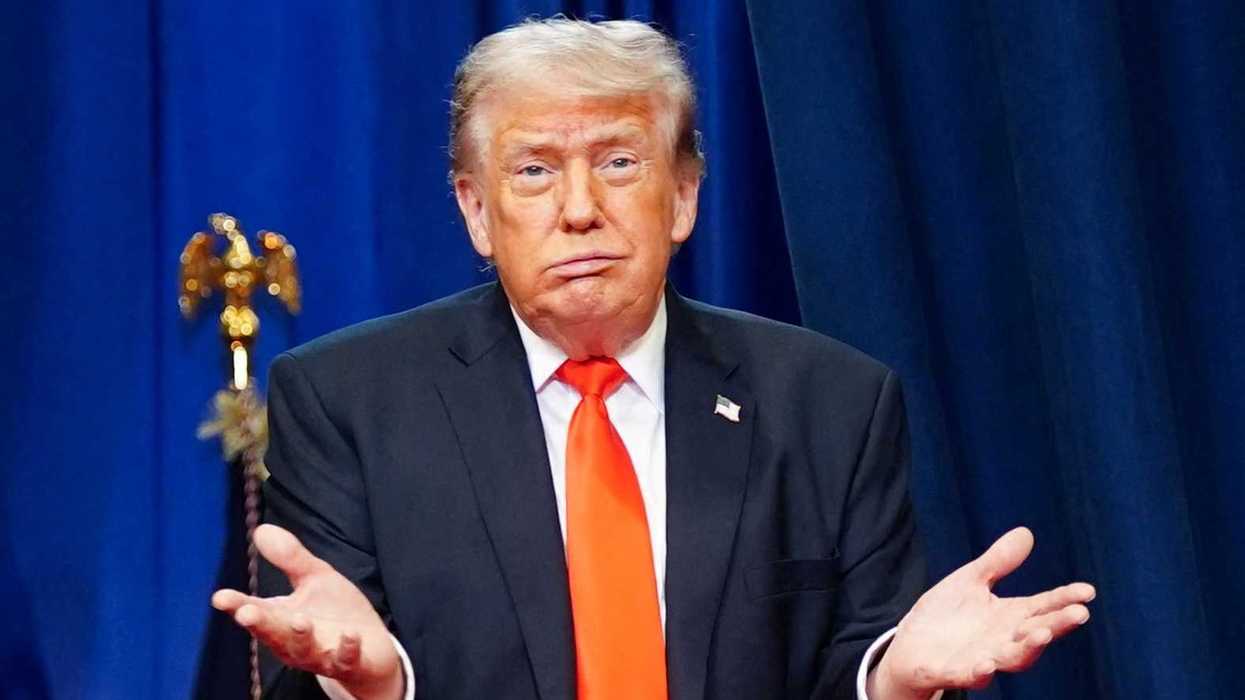
U.S. President Donald Trump gestures during an event at The Villages Charter School at The Villages, Florida, U.S., May 1, 2026. REUTERS_Nathan Howard
July 09, 2026
ALTERNET
CNN anchor Kasie Hunt appeared staggered by her own Thursday supercut that the network assembled of President Donald Trump’s countless claims of Iranian surrender.
Hunt played the massive clip after Trump’s latest claim on Wednesday that Iran’s leaders were yet again slavering for an end to the war that Trump began — despite the regime’s apparent acceptance of more U.S. air strikes and the closing of the pivotal Strait of Hormuz.
Trump claimed Wednesday that Iranian leaders had “called a little while ago,” and they wanted “to make a deal so badly.” But this boast was nothing new. And network videographers had plenty of material to choose from to prove it.
“We went back and took a look, of course, at what … Trump himself has said over the period of days. I want to play for you what that has sounded like over the course of the last several months,” said Hunt in a tone of warning.
And then it came.
“They want to make a deal.” — Trump, March 23
“… and they want to make a deal so badly.” — Trump, March 24
“They want to make a deal so badly.” — Trump, March 25
“I do see a deal in Iran.” — Trump, March 29
“It's looking very good that we're going to make a deal.” — Trump, April 16
“This process should go very quickly.” — Trump, April 17
“We're going to end that war very quickly.” — Trump, May 19
“We're in the final throes of what will be a very, very good deal.” — Trump, June 9
“And they want to make the deal a lot more than I do.” — Trump, June 11
“We have our deal done with Iran, and it should be successful.” — Trump, June 16
“We're, uh, making an amazing deal with Iran.” — Trump, June 23
“They want to make a deal with us very badly.” — Trump, June 25
“They're dying to make a deal. They're giving us a lot.” — Trump, June 26
“They want to make a deal so badly.” — Trump, July 8
With a short laugh, Hunt then turned to National Review Online founder and conservative pundit Jonah Goldberg.
“Uh, Jonah Goldberg, on that note. I mean, what kind of deal has the U.S. gotten out of this?”
“There's no deal,” Goldberg said flatly. “Even the MOU wasn't a deal. It was a deal to talk about coming up with a deal that was going to last 60 days, that was never going to be extended.”
Trump, meanwhile is catching mounting rage from American voters, legislators and the international community over the war he started, which is driving up global and U.S. energy prices. And as gas prices again creep up due to Iran’s willingness to close the Strait of Hormuz, Trump and the Republican Party’s chances of surviving the November mid-terms appears increasingly dicey.
CNN anchor Kasie Hunt appeared staggered by her own Thursday supercut that the network assembled of President Donald Trump’s countless claims of Iranian surrender.
Hunt played the massive clip after Trump’s latest claim on Wednesday that Iran’s leaders were yet again slavering for an end to the war that Trump began — despite the regime’s apparent acceptance of more U.S. air strikes and the closing of the pivotal Strait of Hormuz.
Trump claimed Wednesday that Iranian leaders had “called a little while ago,” and they wanted “to make a deal so badly.” But this boast was nothing new. And network videographers had plenty of material to choose from to prove it.
“We went back and took a look, of course, at what … Trump himself has said over the period of days. I want to play for you what that has sounded like over the course of the last several months,” said Hunt in a tone of warning.
And then it came.
“They want to make a deal.” — Trump, March 23
“… and they want to make a deal so badly.” — Trump, March 24
“They want to make a deal so badly.” — Trump, March 25
“I do see a deal in Iran.” — Trump, March 29
“It's looking very good that we're going to make a deal.” — Trump, April 16
“This process should go very quickly.” — Trump, April 17
“We're going to end that war very quickly.” — Trump, May 19
“We're in the final throes of what will be a very, very good deal.” — Trump, June 9
“And they want to make the deal a lot more than I do.” — Trump, June 11
“We have our deal done with Iran, and it should be successful.” — Trump, June 16
“We're, uh, making an amazing deal with Iran.” — Trump, June 23
“They want to make a deal with us very badly.” — Trump, June 25
“They're dying to make a deal. They're giving us a lot.” — Trump, June 26
“They want to make a deal so badly.” — Trump, July 8
With a short laugh, Hunt then turned to National Review Online founder and conservative pundit Jonah Goldberg.
“Uh, Jonah Goldberg, on that note. I mean, what kind of deal has the U.S. gotten out of this?”
“There's no deal,” Goldberg said flatly. “Even the MOU wasn't a deal. It was a deal to talk about coming up with a deal that was going to last 60 days, that was never going to be extended.”
Trump, meanwhile is catching mounting rage from American voters, legislators and the international community over the war he started, which is driving up global and U.S. energy prices. And as gas prices again creep up due to Iran’s willingness to close the Strait of Hormuz, Trump and the Republican Party’s chances of surviving the November mid-terms appears increasingly dicey.
REUTERS/Jonathan Ernst
July 07, 2026
ALTERNET
On Tuesday, at the opening of the NATO summit in Turkey, President Donald Trump made a claim about the U.S. economy under his leadership that a CNN reporter immediately called out as a “lie.”
"We've had probably the best year ever had by an American president,” Trump asserted during a press event with Turkish President Recep Erdogan. “We have the greatest economy we've ever had. We have $19.2 trillion being invested in the United States. It's a world record."
CNN reporter Daniel Dale wasn’t having it, posting, “For the many-th time, Trump's ‘$19.2 trillion’ figure is a lie. New foreign direct investment in the US — to acquire, create or expand businesses — was $232 billion in 2025. (Source) The White House's own website claims there've been $10.6 trillion (not $19.2 trillion) in ‘major investment announcements’ this Trump term — and even that's a wild exaggeration that includes vague pledges, vague statements that aren't even pledges, and pledges about trade between the US and other countries rather than investment in the US.”
Dale then attached a link to a CNN article from October 2025 in which he fact-checked Trump’s then-assertion that $17 trillion had been invested in the US during his term. His assessment: that “figure is fiction.”
At the time, the White House itself was only claiming $8.8 trillion in investments, but as CNN pointed out, a list of investments provided by the administration fell well short of that number, “and it would not comment on the record to address CNN’s specific questions about the many holes in the ‘$8.8 trillion’ figure.”
“Instead,” wrote Dale, “White House spokesperson Kush Desai said in an email that the media is doing ‘pointless and pedantic nitpicking’ and said, ‘The President is right: industry leaders have committed to investing trillions to make and hire in America, with trillions more to come.’ He added that the media would be ‘beclowned’ when Trump’s ‘policies take effect and investment commitments materialize into new factories and facilities."
Since then, these “new factories” have failed to appear. Rather than the manufacturing boom Trump promised, his policies have resulted in the loss of at least 100,000 manufacturing jobs so far. More recently, his decision not to renew the United States-Mexico-Canada Agreement has prompted concerns that doing business in the US will become even less predictable, reducing trade, further increasing prices, and killing jobs.
In fact, Trump’s economic performance has been so dismal that over the course of his second term, labor force participation has plunged dramatically, sinking the country is back to where it was in March 2021, before the post-pandemic recovery.
No comments:
Post a Comment