Germany and Italy clash over migrant rescue ships and returns
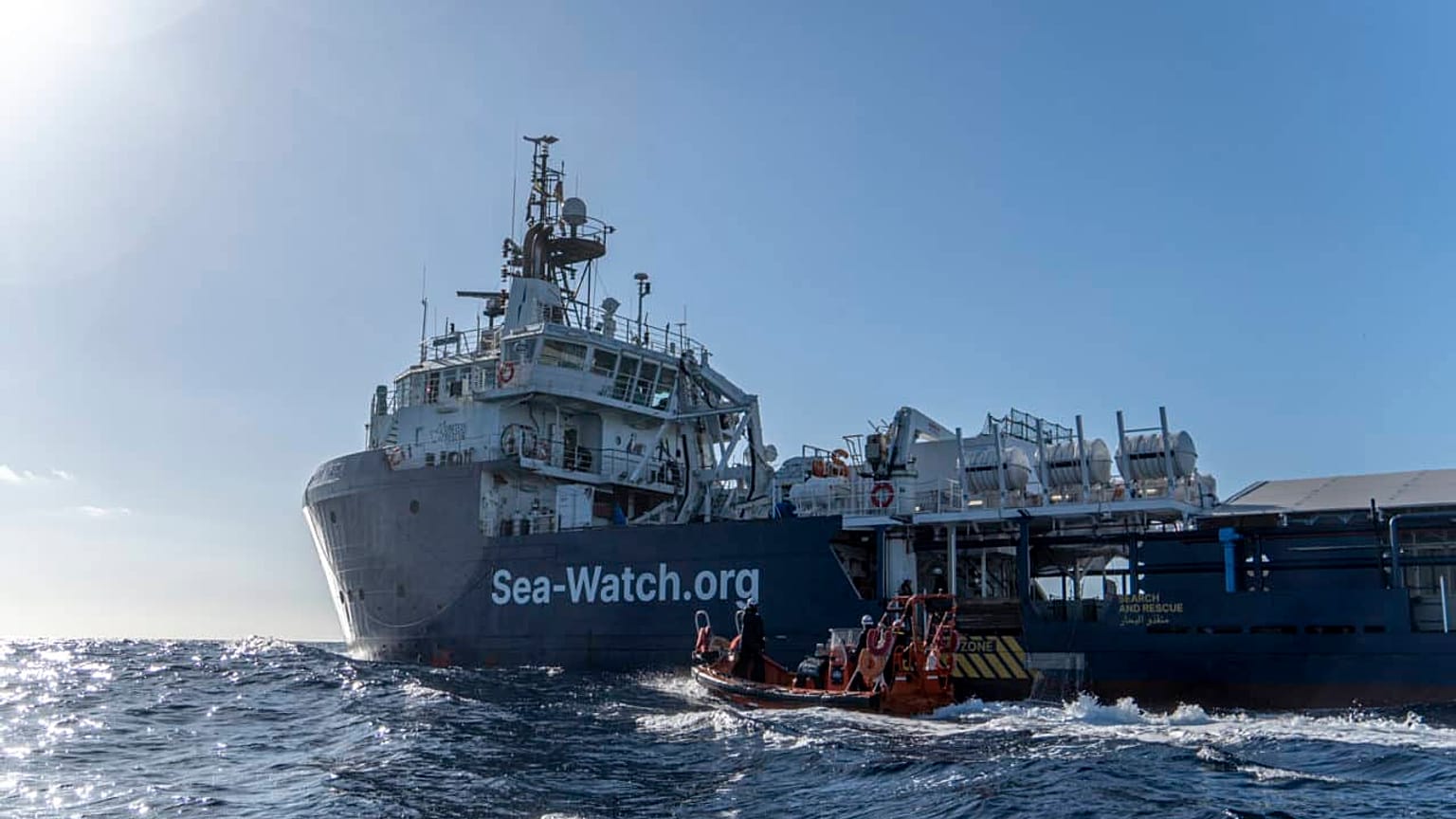
Berlin and Rome are increasingly at odds over who should rescue migrants in the Mediterranean — and which country should ultimately take responsibility for them. Are private rescue ships offering vital aid or ultimately helping people smugglers?
The detention of a German rescue ship in Italy has reignited a long-running dispute over the role of private vessels rescuing migrants in the Mediterranean. Italian authorities detained the Sea-Watch 5 for 45 days last weekend and fined the German organisation operating it €7,500.
On 13 August, the vessel rescued six people in the Mediterranean and, according to Sea-Watch, encountered an unidentified armed boat and documented the deaths of eight people.
The Italian Interior Ministry said the vessel was detained for failing to inform the Libyan coastguard about the rescue operation.
Sea-Watch said it planned to appeal against the detention, probably in the coming week.
"The detention of Sea-Watch 5 is based on the claim that the ship's crew failed to inform Libyan actors about the rescue in international waters. Yet the Italian Maritime Rescue Coordination Centre never instructed us to do so," Sea-Watch spokesperson Giulia Messmer said.
Messmer added that the Libyan coastguard was present at the scene following the rescue and had communicated with the Sea-Watch crew by radio.
The case is the latest in a long-running dispute between Italy and German sea rescue organisations operating in the Mediterranean.
Critics of the NGOs, including politicians from Germany's conservative CDU/CSU alliance and the Alternative for Germany (AfD), have accused rescue organisations of encouraging dangerous Mediterranean crossings and indirectly assisting people-smuggling networks.
The organisations reject such accusations and argue that their operations save lives on one of the world's deadliest migration routes.
A central point of contention is where people rescued at sea should be taken. NGO vessels generally bring those they rescue to European ports rather than returning them to Libya, which the United Nations does not consider a safe place for migrants to be returned to.
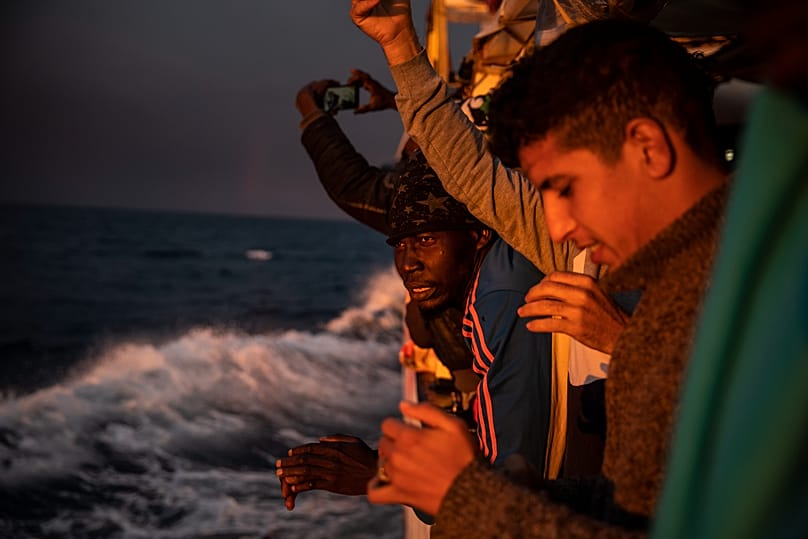
A conflict with a long history
The dispute over civilian rescue operations in the central Mediterranean dates back more than a decade.
Sea-Watch was founded in 2015, shortly after Italy ended its large-scale naval search-and-rescue mission Mare Nostrum in October 2014. It was succeeded by Triton, an EU border operation with a more limited search-and-rescue role.
German civilian sea rescue gained international attention in 2019, when Carola Rackete, captain of the Sea-Watch 3, entered the Italian port of Lampedusa with dozens of rescued migrants on board despite being denied permission to dock.
Rackete later entered the European Parliament for Germany's Left party in 2024, before resigning her seat in 2025.
Since Giorgia Meloni became prime minister in October 2022, Italy has tightened the rules governing private rescue vessels.
Under legislation introduced in 2023, commonly known as the Piantedosi decree, rescue vessels are required to head to an assigned port without delay after carrying out a rescue. NGOs have criticised the policy because the ports assigned by Italian authorities can be hundreds of kilometres from the rescue area, preventing ships from remaining at sea to respond to further emergencies.
Italy tightened the rules again in December 2024, extending potential liability beyond the captain to shipowners and operators in cases of repeated violations involving the same vessel within five years.
According to Sea-Watch, Italian authorities have detained civilian rescue ships 44 times since 2023, keeping them out of operation for a combined total of more than 960 days.
Organisations and funding
Alongside Sea-Watch, Sea-Eye, SOS Humanity and the smaller RESQSHIP operate their own vessels in the central Mediterranean. Several ships, including Sea-Watch 5 and Humanity 1, also serve as alliance ships for United4Rescue, a charity founded in 2019 that raises and distributes donations.
According to its own annual report, in 2025 Sea-Watch financed itself almost entirely through donations, with income of around €13.5 million from just under 59,200 supporters. United4Rescue raised around €1.5 million in 2024 from about 4,000 individual donors, organisations and municipalities.
Up to 2025, additional money came from the German state: In 2022, the Bundestag, under foreign minister Annalena Baerbock, approved €8 million for the years 2023 to 2026. In spring 2025, the new foreign minister Johann Wadephul (CDU) stopped this funding despite the ongoing Bundestag decision, arguing that it was not the task of his ministry.
Other European organisations are also active: the Franco-German SOS Méditerranée with the Ocean Viking; the Spanish Proactiva Open Arms, which according to the Süddeutsche Zeitung has one of the largest budgets in the sector; and the Italian Mediterranea Saving Humans, which has been operating the Mare Jonio since 2018.
Nevertheless, according to the Italian Interior Ministry, more than half of all migrants brought to Italy on private ships since October 2022 have been rescued by German organisations.
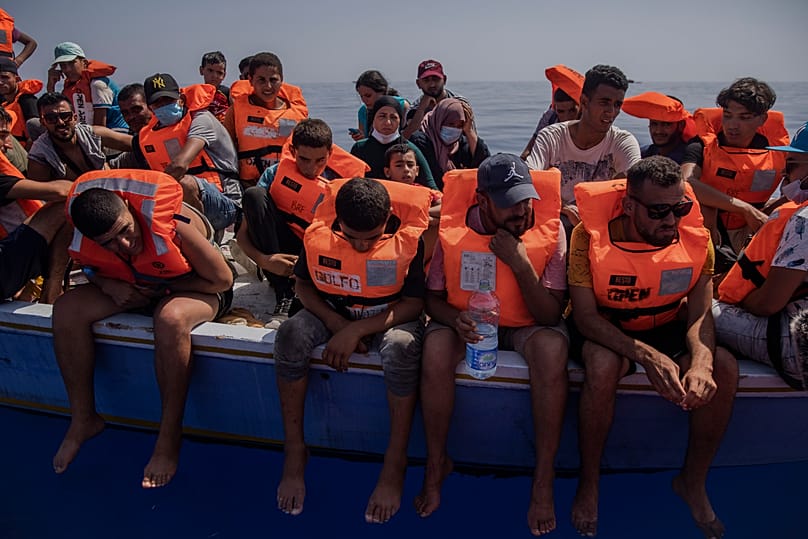
Do rescue ships encourage crossings?
German Chancellor Friedrich Merz has argued that sea rescue should be the responsibility of the state rather than private organisations.
Speaking on German television programme Maischberger in 2025, Merz said sea rescue was "not a task for private enterprise".
Foreign Minister Johann Wadephul has previously gone further. In 2023, when he was the CDU/CSU's foreign policy spokesman, he argued that rescue organisations were unintentionally helping people-smuggling networks.
"In practice, albeit unintentionally, the rescue organisations enable the inhuman smuggling gangs to run their business. No German tax money should be used for that," he said.
The AfD has called for an end to all state support for civilian rescue organisations and has repeatedly referred to them as "NGO smugglers".
Rescue organisations strongly reject the suggestion that their presence encourages people to attempt dangerous Mediterranean crossings.
SOS Humanity managing director Till Rummenhohl described Wadephul's claim as "fundamentally wrong", saying academic studies had repeatedly found no evidence that rescue ships cause increased migration across the Mediterranean.
Frontex executive director Hans Leijtens has also told Euronews that he had never seen evidence of such a "pull factor".
German parties divided
The issue has also exposed political divisions within Germany, including between Merz's conservative CDU/CSU and its coalition partner, the Social Democrats (SPD).
In April, 128 MPs from the SPD, Greens and Left signed an appeal calling on the German government to push for a state-funded EU sea rescue programme. The initiative also called for greater protection for civilian rescue organisations and ships operating under the German flag.
Green MP Jamila Schäfer has described sea rescue as "not an optional extra, but a humanitarian duty".
Clara Bünger, the Left's spokesperson on domestic and refugee policy, accused both Italy and Germany of double standards.
"Punishing people for saving lives while at the same time cooperating with Libyan actors accused of the most serious human rights violations is hypocrisy of the most repellent kind," she told Euronews.
Bünger is calling for a state-organised civilian sea rescue programme so that aid organisations no longer have to shoulder the responsibility alone.
The CDU/CSU takes a different position. The German government ended federal funding for civilian sea rescue organisations in 2025, a move supported by leading conservatives but opposed by some members of its SPD coalition partner.
Günter Krings, deputy leader of the CDU/CSU parliamentary group, also defended Italy's right to enforce its rules against NGO vessels.
"If ships are in Italian waters, they must comply with Italian law. That obviously also applies to NGO ships," he told Euronews.
"So, to begin with, I don't consider what has happened unusual. In any case, it is not something that should become a political scandal."
The far-right AfD goes further, arguing that the work of civilian rescue organisations is itself part of the problem.
"Italy is right to refuse to take responsibility for migrants arriving who have previously been picked up by German smuggler ships off the African coast and then proactively taken to Italy," the party's domestic affairs spokesman, Gottfried Curio, told Euronews.
The AfD has long called for migrants to be refused entry to Germany if they have travelled through a country it considers safe before reaching the country.
An additional strain: the dispute over returns
The Sea-Watch 5 case comes at a time of already strained relations between Germany and Italy over migration.
Since the EU's new migration and asylum rules came into force in June, Germany has been pushing for the return of so-called Dublin cases — asylum seekers for whom Italy is considered responsible because they first entered the EU there before travelling on to another member state.
Italy has resisted such transfers for years. Since 2023, it has rejected around 80,000 requests from European countries to take migrants back, citing pressure on its reception system. Since the new EU rules came into force, it has not taken back a single migrant from Germany.
Deputy Prime Minister Matteo Salvini said at a Lega party meeting in Trento that Italy would, for the time being, continue to refuse transfers from Germany.
"Germany has no right to send back even a single illegal immigrant to us as long as German NGO ships are operating in the Mediterranean to bring thousands of illegal immigrants ashore in Italy and Europe," he said.
Interior Minister Matteo Piantedosi has also called for Germany to compensate Italy for migrants brought ashore by German rescue organisations.
"My German counterpart and I share the view that the activities of the NGOs are a pull factor for irregular migration," Piantedosi said.
According to the Italian Interior Ministry, German organisations have brought around 22,500 migrants to Italy since Giorgia Meloni's government took office in October 2022, accounting for more than half of those brought ashore by private rescue vessels over the same period.
Piantedosi and German Interior Minister Alexander Dobrindt are expected to meet in the coming weeks in an attempt to resolve the dispute.
Bone of contention: the Libyan coastguard
Another central point of disagreement is the role of the Libyan coastguard.
Libya declared its own search-and-rescue region in the central Mediterranean in 2018, meaning its coordination centre is recognised by Italy as the relevant authority for rescues within that area. Italian rules require rescue organisations to cooperate with the authorities responsible for coordinating operations, with failure to do so potentially resulting in sanctions.
Sea-Watch and other rescue organisations challenge such cooperation, arguing that Libya cannot be considered a safe place for people rescued at sea and pointing to serious allegations of human rights abuses involving Libyan authorities.
Human rights organisations have also repeatedly challenged European cooperation with Libya. In July, 31 groups, including Human Rights Watch, called on the EU and its member states to end cooperation with Libyan authorities on migration control, citing widespread abuses against migrants and asylum seekers.
Sea-Watch and other NGOs have also stopped communicating with the rescue coordination centre in Tripoli, arguing that doing so legitimises authorities they accuse of endangering migrants and rescue crews.
The Italian government, by contrast, argues that its approach is helping to reduce irregular migration across the Mediterranean. Piantedosi has pointed to falling arrival numbers and credited cooperation with Libya and Tunisia as one factor behind the decline.


Newleftreview.org
No comments:
Post a Comment