'Missing' Epstein files report spurs Dem to accuse Todd Blanche of illegal activity
Alexander Willis
August 23, 2026
The supposed notes stem from a 2019 FBI interview with a South Carolina woman who accused President Donald Trump and Epstein of sexually and physically abusing her starting when she was 13 years old. Referred to as “Jane Doe 4,” the woman was interviewed by the FBI four times and was found credible by the agency, a Justice Department source told the Miami Herald.
Trump is not facing any criminal charges and has repeatedly denied any and all wrongdoing as it relates to his conduct with Epstein.
The Justice Department (DOJ) has not released the sought-after handwritten FBI notes, which are among the Epstein-related files being sought by former MSNBC host and attorney Katie Phang with her ongoing lawsuit. The agency has justified withholding Epstein-related files by describing them as “duplicative” of material already released.
On Saturday, however, data researcher and writer Rye Howard-Stone released a new report regarding nearly two dozen of the FBI notes – which he claimed had been uploaded by journalist Kaelan Deese of the conservative Washington Examiner. The notes themselves also revealed, according to Phang, that they were not, in fact, “duplicative” of any documents released thus far.
Lieu took to X to publicly call out Blanche.
“Dear [Blanche]: Please tell us the exception under the Epstein Files Transparency Act that allowed you to withhold the below FBI interview notes from the American people,” Lieu wrote Saturday in a social media post on X, tagging Blanche’s account on X and resharing commentary related to the discovery of the FBI notes.
“You can’t, because you are an unethical lawyer and illegally withheld those notes. November is coming.”
The Daily Beast’s Roger Stollenberger called the entire ordeal “inexcusable,” and said he’d “never seen something like this.”
‘Missing’ Epstein files containing major allegations against Trump discovered: reportAlexander Willis
August 23, 2026
RAW STORY
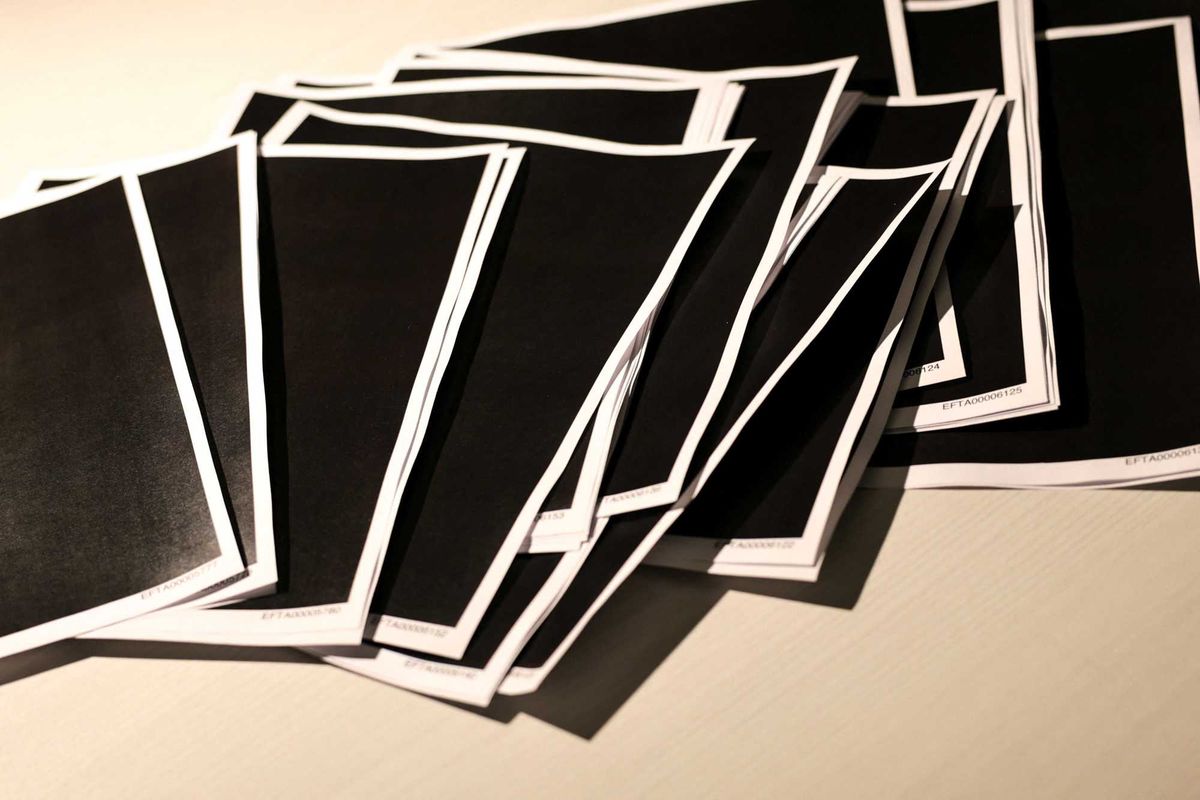
Newly-released documents from disgraced late financier and sex offender Jeffrey Epstein, including a sheaf of entirely redacted pages, are seen in this handouts released by the U.S. Justice Department and printed and arranged for a photograph by Reuters in Washington, D.C., U.S., December 19, 2025. REUTERS/Jonathan Ernst
Rep. Ted Lieu (D-CA) openly accused Attorney General Todd Blanche of illegal conduct Saturday on the heels of a new report that an alleged trove of “missing” handwritten FBI notes related to Jeffrey Epstein had been sitting online for months, fully unredacted, and accessible to anyone.
Newly-released documents from disgraced late financier and sex offender Jeffrey Epstein, including a sheaf of entirely redacted pages, are seen in this handouts released by the U.S. Justice Department and printed and arranged for a photograph by Reuters in Washington, D.C., U.S., December 19, 2025. REUTERS/Jonathan Ernst
Rep. Ted Lieu (D-CA) openly accused Attorney General Todd Blanche of illegal conduct Saturday on the heels of a new report that an alleged trove of “missing” handwritten FBI notes related to Jeffrey Epstein had been sitting online for months, fully unredacted, and accessible to anyone.
The supposed notes stem from a 2019 FBI interview with a South Carolina woman who accused President Donald Trump and Epstein of sexually and physically abusing her starting when she was 13 years old. Referred to as “Jane Doe 4,” the woman was interviewed by the FBI four times and was found credible by the agency, a Justice Department source told the Miami Herald.
Trump is not facing any criminal charges and has repeatedly denied any and all wrongdoing as it relates to his conduct with Epstein.
The Justice Department (DOJ) has not released the sought-after handwritten FBI notes, which are among the Epstein-related files being sought by former MSNBC host and attorney Katie Phang with her ongoing lawsuit. The agency has justified withholding Epstein-related files by describing them as “duplicative” of material already released.
On Saturday, however, data researcher and writer Rye Howard-Stone released a new report regarding nearly two dozen of the FBI notes – which he claimed had been uploaded by journalist Kaelan Deese of the conservative Washington Examiner. The notes themselves also revealed, according to Phang, that they were not, in fact, “duplicative” of any documents released thus far.
Lieu took to X to publicly call out Blanche.
“Dear [Blanche]: Please tell us the exception under the Epstein Files Transparency Act that allowed you to withhold the below FBI interview notes from the American people,” Lieu wrote Saturday in a social media post on X, tagging Blanche’s account on X and resharing commentary related to the discovery of the FBI notes.
“You can’t, because you are an unethical lawyer and illegally withheld those notes. November is coming.”
The Daily Beast’s Roger Stollenberger called the entire ordeal “inexcusable,” and said he’d “never seen something like this.”
Alexander Willis
August 22, 2026
RAW STORY
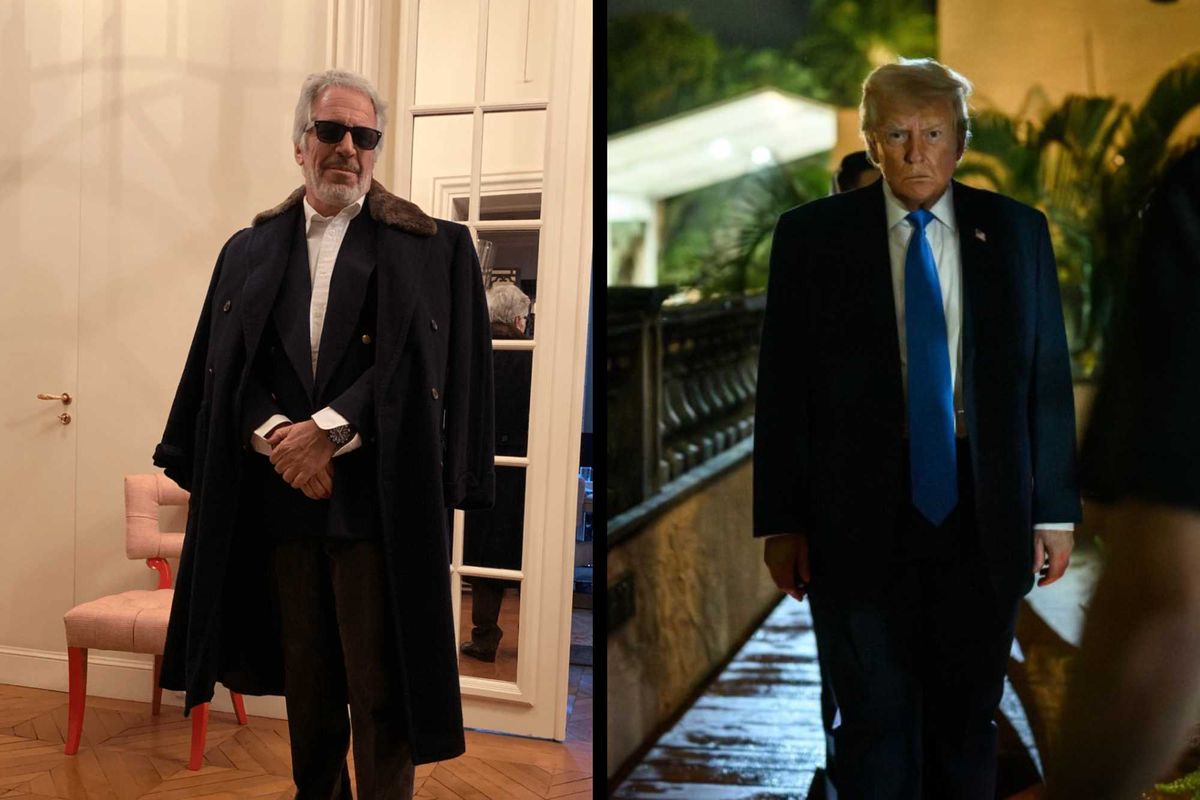
Left: Jeffrey Epstein in an undated photograph released by the Justice Department (DOJ).
Right: President Donald Trump addresses the nation on the shooting of two National Guard soldiers in Washington, D.C. (White House)
Supposed FBI files that have previously been referred to as “missing” were recently discovered sitting on an online document-sharing platform, files that former MSNBC host Katie Phang said Saturday contain “allegations of sexual abuse committed by Donald Trump” against a 13- to 15-year-old victim, according to a report published Saturday.
Back in February, the Justice Department (DOJ) announced it was investigating claims that it had withheld a select trove of files related to Jeffrey Epstein. The DOJ had justified withholding some of the files by describing them as "duplicative" of material already turned over, a characterization that has since come under scrutiny.
A growing number of critics increasingly pointed to a trove of 37 pages of FBI handwritten notes taken during a 2019 interview with “Jane Doe 4,” a South Carolina woman who accused Trump and Epstein of sexual and physical abuse beginning when she was 13 years old.
The woman was interviewed four separate times by the FBI and was found credible by the agency, according to a DOJ source who spoke with the Miami Herald. While some details of her account have since been verified, her specific allegations against Trump remain unsubstantiated, and Trump is not being criminally investigated and has denied any wrongdoing as it relates to Epstein.
The “missing” 37 pages were aggressively pursued by investigators, including Phang, whose ongoing lawsuit against the DOJ specifically sought the release of said pages, alongside a trove of foreign-language documents related to Epstein.
This week, however, New York-based writer Amy Gabrielle appeared to have uncovered an online archive containing some of the sought-after FBI files. Writer and data researcher Rye Howard-Stone picked up where Gabrielle left off and, in a detailed write-up published on his Substack Saturday, revealed the alleged source of the mysterious upload: Kaelan Deese, a journalist with the conservative outlet Washington Examiner.
The Washington Examiner published a report written by Deese on March 7 titled: “What’s still missing from the Epstein files,” but according to Howard-Stone, Deese had “quietly released” 22 pages of the missing 37 on Scribd – the online document-sharing platform – just one day before. Those pages would go unnoticed by major media outlets for months.
“This meant that, for the last five months, anyone with internet access could view the notes, which had Jane Doe 4’s real name all over them, as well as significant biographical details and the names of childhood friends and family members who she said could corroborate elements of her story – all of which she gave the FBI in confidence, and all of which the DOJ had redacted,” Howard-Stone wrote.
“But Deese, who regularly publishes articles with a favorable conservative gloss, was part of a small, select group of people that DOJ brass secretly decided were – unlike the public and members of Congress – able to be trusted with these allegedly ‘duplicative,’ ultra-sensitive files. Entirely unredacted.”
Howard-Stone claimed that while Deese “took the files down shortly after” he contacted a Washington Examiner editor, Deese had also shared additional FBI handwritten notes with “one random person who had discovered the posts.”
“We found that person, who shared his text message exchanges with Deese,” Howard-Stone wrote.
Phang was contacted for comment on the revelation, and told Howard-Stone that the “timing of the discovery and release of these unredacted handwritten notes” was “interesting,” and that it also undermined the DOJ’s rationale for withholding them.
“There also remains an open question as to the authenticity of these published notes. That question could be readily answered if the FBI would just comply with the Epstein Files Transparency Act and release the notes they’ve been legally required to do,” Phang said.
“Regardless, what these notes DO show is that they are not 'duplicative' of the FBI 302s as Blanche has asserted and they clearly contain allegations of sexual abuse and physical abuse committed by Donald Trump with a victim who was 13-15 years old at the time. So the Trump DOJ has no incentive to release them.”
Left: Jeffrey Epstein in an undated photograph released by the Justice Department (DOJ).
Right: President Donald Trump addresses the nation on the shooting of two National Guard soldiers in Washington, D.C. (White House)
Supposed FBI files that have previously been referred to as “missing” were recently discovered sitting on an online document-sharing platform, files that former MSNBC host Katie Phang said Saturday contain “allegations of sexual abuse committed by Donald Trump” against a 13- to 15-year-old victim, according to a report published Saturday.
Back in February, the Justice Department (DOJ) announced it was investigating claims that it had withheld a select trove of files related to Jeffrey Epstein. The DOJ had justified withholding some of the files by describing them as "duplicative" of material already turned over, a characterization that has since come under scrutiny.
A growing number of critics increasingly pointed to a trove of 37 pages of FBI handwritten notes taken during a 2019 interview with “Jane Doe 4,” a South Carolina woman who accused Trump and Epstein of sexual and physical abuse beginning when she was 13 years old.
The woman was interviewed four separate times by the FBI and was found credible by the agency, according to a DOJ source who spoke with the Miami Herald. While some details of her account have since been verified, her specific allegations against Trump remain unsubstantiated, and Trump is not being criminally investigated and has denied any wrongdoing as it relates to Epstein.
The “missing” 37 pages were aggressively pursued by investigators, including Phang, whose ongoing lawsuit against the DOJ specifically sought the release of said pages, alongside a trove of foreign-language documents related to Epstein.
This week, however, New York-based writer Amy Gabrielle appeared to have uncovered an online archive containing some of the sought-after FBI files. Writer and data researcher Rye Howard-Stone picked up where Gabrielle left off and, in a detailed write-up published on his Substack Saturday, revealed the alleged source of the mysterious upload: Kaelan Deese, a journalist with the conservative outlet Washington Examiner.
The Washington Examiner published a report written by Deese on March 7 titled: “What’s still missing from the Epstein files,” but according to Howard-Stone, Deese had “quietly released” 22 pages of the missing 37 on Scribd – the online document-sharing platform – just one day before. Those pages would go unnoticed by major media outlets for months.
“This meant that, for the last five months, anyone with internet access could view the notes, which had Jane Doe 4’s real name all over them, as well as significant biographical details and the names of childhood friends and family members who she said could corroborate elements of her story – all of which she gave the FBI in confidence, and all of which the DOJ had redacted,” Howard-Stone wrote.
“But Deese, who regularly publishes articles with a favorable conservative gloss, was part of a small, select group of people that DOJ brass secretly decided were – unlike the public and members of Congress – able to be trusted with these allegedly ‘duplicative,’ ultra-sensitive files. Entirely unredacted.”
Howard-Stone claimed that while Deese “took the files down shortly after” he contacted a Washington Examiner editor, Deese had also shared additional FBI handwritten notes with “one random person who had discovered the posts.”
“We found that person, who shared his text message exchanges with Deese,” Howard-Stone wrote.
Phang was contacted for comment on the revelation, and told Howard-Stone that the “timing of the discovery and release of these unredacted handwritten notes” was “interesting,” and that it also undermined the DOJ’s rationale for withholding them.
“There also remains an open question as to the authenticity of these published notes. That question could be readily answered if the FBI would just comply with the Epstein Files Transparency Act and release the notes they’ve been legally required to do,” Phang said.
“Regardless, what these notes DO show is that they are not 'duplicative' of the FBI 302s as Blanche has asserted and they clearly contain allegations of sexual abuse and physical abuse committed by Donald Trump with a victim who was 13-15 years old at the time. So the Trump DOJ has no incentive to release them.”
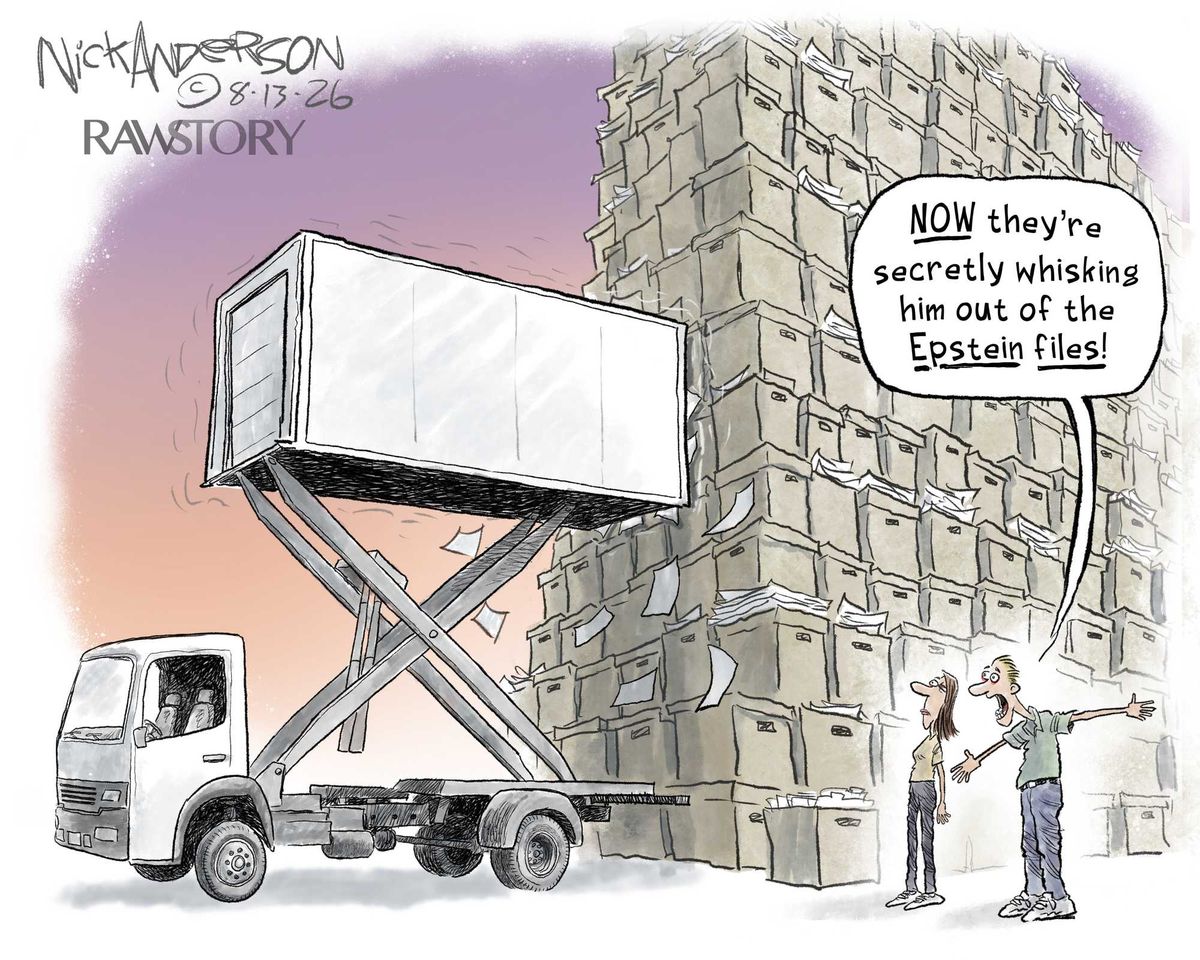
Trump makes his great escape from the Epstein files
Nick Anderson/Raw Story
Trump's escape trick is utilized to get him out of the Epstein files.
The latest from Raw Story's Nick Anderson, a Pulitzer Prize-winning editorial cartoonist.
Raw Story
August 20, 2026
August 20, 2026
Nick Anderson/Raw Story
Trump's escape trick is utilized to get him out of the Epstein files.
The latest from Raw Story's Nick Anderson, a Pulitzer Prize-winning editorial cartoonist.
No comments:
Post a Comment