Spanish PM Rebukes ‘Selfish’ EU Allies Over Ceuta Backlash
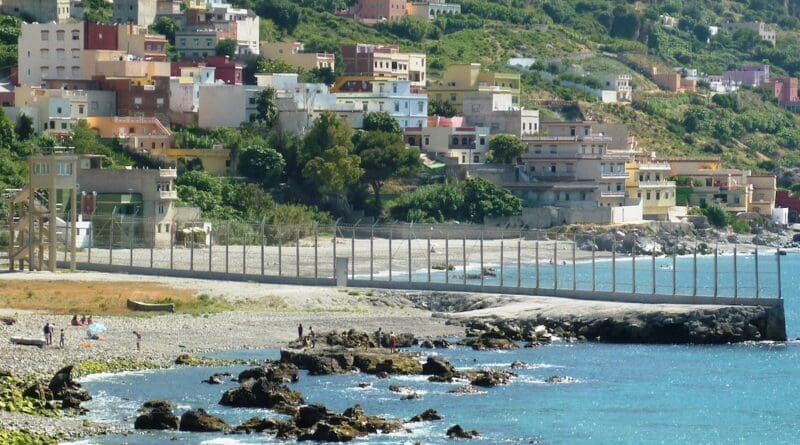
File photo of a fenced breakwaters between Moroccoa and Ceuta, Spain. Photo Credit: Mario Sánchez Bueno, Wikipedia Commons
Key Takeaways:
- Spanish Prime Minister Pedro Sánchez accused several EU governments of acting out of “prejudice” and undermining European solidarity after they pushed for internal Schengen border controls in response to the mass migrant arrivals in Ceuta.
- More than 50,000 migrants entered Ceuta from Morocco, but Spain says it restored control within 48 hours, provided humanitarian aid, and facilitated the voluntary return of nearly 48,300 people.
- Italy, Denmark, Finland and 20 other EU leaders called for stronger internal borders and criticized Spain’s migration policies, while Sánchez insisted external border security is a shared European responsibility.
(EurActiv) — Spanish Prime Minister Pedro Sánchez has accused several EU governments of acting out of “prejudice” and undermining European solidarity after they called for internal Schengen border controls in response to the mass arrival of migrants in Ceuta.
In a letter sent on Saturday to European Commission President Ursula von der Leyen, European Council President António Costa and Irish Prime Minister Micheál Martin, whose country currently holds the rotating Council presidency, Sánchez expressed his “serious concern” over the reaction of some European capitals.
Italy, Denmark and Finland were among the nations asking to impose internal borders after more than 50,000 migrants entered from Morocco into the Spanish overseas enclave of Ceuta, on the North African coast, between Thursday and Friday. Italy then went ahead and did so on Friday.
The Spanish leader said the response from some European capitals was “driven by prejudice, fake news, ignorance, or political interest… contrary to European law, humanitarian law, and the principles of solidarity that bind us together.”
Sánchez insisted Spain had already brought the situation under control.
“In less than 48 hours, my Government has succeeded in fully restoring control over the border, in providing extensive humanitarian assistance, in returning virtually all of the migrants who crossed irregularly, and in preventing any unauthorised onward movement towards continental Europe.”
Data released by the Spanish Interior Ministry on Friday revealed that nearly 48,300 people voluntarily returned to Morocco, largely due to severe food and water shortages caused by widespread business closures amid fears of looting and rioting.
Also on Saturday, Italy’s Giorgia Meloni and Denmark’s Mette Frederiksen penned a letter to the EU leadership, writing that a recent ruling by the Spanish Supreme Court has “been used to trigger this attack and abuse our migration and asylum system.”
“We cannot allow uncontrolled mass crossings, the instrumentalisation of migration or other hybrid threats to create the perception that illegal entry into the European Union is possible. That a migrant’s illegal entry can turn into legal stay,” the pair wrote.
The letter was also backed by 20 other leaders of EU countries, including Germany’s Friedrich Merz, Belgium’s Bart De Wever, and Poland’s Donald Tusk.
While the leaders acknowledged that no migrants had left Ceuta to reach the rest of the EU, they said they are ready to bolster the EU’s internal borders and introduce temporary controls there to “safeguard public order.”
The leaders also criticised Sánchez’s move to regularise hundreds of thousands of migrants in Spain, describing it as a pull factor.
Von der Leyen said she received the letter, and appeared to agree with its tone, writing in a social media post that “we need a lessons learned process to improve our European resilience.”
She also appeared to defend the European Commission’s attitude to Spain during the crisis, stating: “The Commission has offered support to Spain from the first moment.”
Bar Ireland, and Spain, the only countries that didn’t sign the leaders’ letter were France, Portugal, and Luxembourg.
Ireland will convene the EU’s interior ministers on Tuesday for an emergency videoconference to coordinate a European response, Martin announced on Saturday.
Tensions could well boil over at the meeting, between Spain and other countries.
In his letter, Sánchez said the online ministers’ meeting should “reaffirm that the security of our external borders is a shared responsibility of all Member States, and not only of those on the Union’s front line.”
But the 22 leaders, in their letter, wrote that the meeting was needed to consider strengthening support from EU border agency Frontex – something Spain has not requested – and consider the “effectiveness of EU cooperation with Morocco.”
EU countries’ ambassadors will meet for an online meeting on Monday to prepare the ministerial meeting.
Spain’s biggest migration crisis
Spain has faced its biggest migration crisis to date, with the army deployed in Ceuta, and borders closed in its other exclave of Melilla.
Sánchez said Spain’s “national integrity had been violated” and announced “all resources” will be deployed to restore normality in the small Spanish exclave.
While Madrid and Rabat officially blamed human trafficking networks for the crisis, Spanish experts accuse Morocco of intentionally allowing thousands to storm the border. Local media reported 67 deaths.
Despite this, Sánchez praised “close coordination” with Rabat, noting a lack of support from European allies.
Sánchez’s pro-migration policies have been criticised by other European capitals, particularly Rome. Ceuta – Europe’s only land border with Africa – is not part of the Schengen area and maintains its own border and security checks, the premier noted.
“In the current international context, the European Union cannot afford this kind of selfish, polarising and unlawful reaction,” he said.
Theophane Hartmann contributed reporting.
Sánchez slams Europe's lack of solidarity over Ceuta in letter to von der Leyen
In a letter, Sánchez laments what he describes as a lack of EU solidarity driven by "prejudice, misinformation and attacks" for political gain.
Spanish Prime Minister Pedro Sánchez has lamented what he describes as a lack of European solidarity over the Ceuta crisis in a letter to European Commission President Ursula von der Leyen, in which he points to misinformation, prejudice and petty politics.
The letter, sent on Saturday and seen by Euronews, comes after Sánchez described the arrival of 50,000 migrants from Morocco in Ceuta in a single day, after the double-fenced border was breached, as an "attack" and a "violation of Spain's territorial integrity".
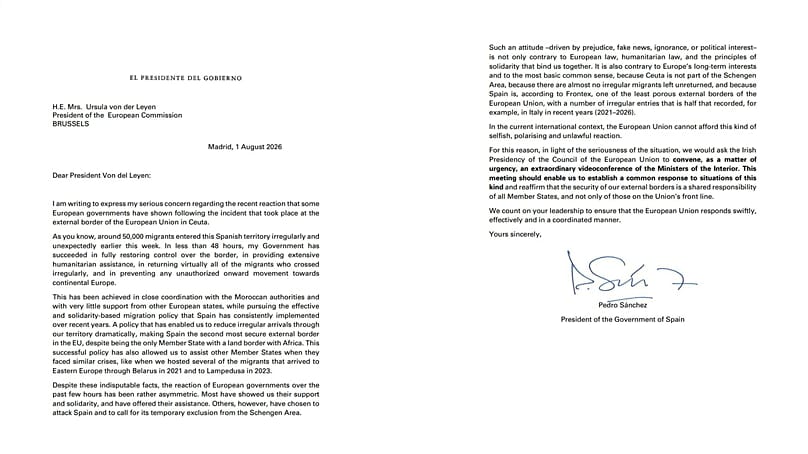
In the strongly worded letter, Sánchez describes the response from some EU partners as "rather asymmetric".
While breaches of national borders are always swiftly condemned by member states and often portrayed as hybrid attacks, several EU countries instead called for tighter controls on Spain, urging Madrid to restore order rather than expressing solidarity.
"Most have shown us their support and solidarity, and have offered their assistance," the Spanish premier writes in the letter.
"Others, however, have chosen to attack Spain and to call for its temporary exclusion from the Schengen Area," he continued, in an apparent reference to Italian Prime Minister Giorgia Meloni's government, which on Friday announced it would suspend freedom of movement with Spain, even as migrants were returning to Morocco.
It remains unclear what the measure would mean in practice.
Sánchez also appeared to hit back at Italy over irregular migration, arguing in the letter that Spain has "one of the least porous external borders of the European Union," citing Frontex data.
"In the current international context, the European Union cannot afford this kind of selfish, polarising and unlawful reaction," he added.
Madrid defends track record
Sánchez has come under scrutiny from conservative and right-wing governments over plans to regularise the status of 500,000 people living in Spain without legal permits.
Madrid has defended the decision, which was not consulted with the EU, arguing that these are people who already live and work in Spain and should be granted social rights. The European right has criticised the move as reckless, arguing that it would inevitably lead to a surge in irregular arrivals.
Still, Spanish sources say that conflating the regularisation process with the irregular crossings into Ceuta is short-sighted, arguing that the two episodes are unrelated. Madrid described the events in the enclave as an attack on its territorial integrity, rather than as a migrant crisis.
In his letter, Sánchez also defended the government's response to the crisis.
He said border control had been restored within 48 hours, humanitarian assistance had been provided to those who crossed, and almost all those who entered irregularly had been returned. On Friday, the EU said no illegal crossings had been recorded out of Ceuta into mainland Spain, and therefore the rest of member states.
Sánchez said these measures were carried out in coordination with the Moroccan authorities, with limited assistance from other European countries. The EU said Friday it was ready to deploy more means through Frontex, although this was not requested.
He added that Spain's had shown solidarity to EU countries facing similar challenges, including during the 2021 border crisis involving Belarus and several Eastern European countries, and the surge in migrant arrivals on the Italian island of Lampedusa in 2023.
It remains unclear what prompted the mass crossing of around 50,000 people from Morocco into Ceuta on Thursday, as border controls collapsed. Rabat has denied any instrumentalisation of migration for political reasons, although similar incidents have occurred in the past during periods of diplomatic tension between the two.
Even as border checks became overwhelmed, the EU praised Morocco's cooperation in managing migration flows. Spain said it had agreed with Rabat to accelerate returns. Footage from Ceuta showed many young Moroccans returning voluntarily on foot, as the city was practically put on lockdown and the Spanish army patrolled the streets.
Emergency meeting
Sánchez has formally asked the European Council to urgently convene a video conference of EU interior ministers. He said the meeting should aim to establish a common European response and to reaffirm the protection of the EU's external borders.
He said that is a shared responsibility, not just those on the front line in the south.
The Spanish prime minister ends the letter by calling on European Commission President Ursula von der Leyen to show leadership and ensure that the European Union responds to the situation in Ceuta "swiftly, effectively and in a coordinated manner."
While European Council chief Costa expressed solidarity with Spain, von der Leyen focused on returns, calling the scenes in Ceuta "unacceptable" and blaming human traffickers.
Separately, a group of 22 member states, led by Italy and Denmark, issued a letter on Saturday asking for emergency talks after the Ceuta crisis. They urged more common action to strengthen Europe's external borders, with internal checks if necessary.
Portugal and France, Spain's direct neighbours, did not adhere to the letter.
This story has been updated to reflect a new letter sent by a group of EU countries.
22 EU leaders call for emergency talks over Ceuta migrant crisis
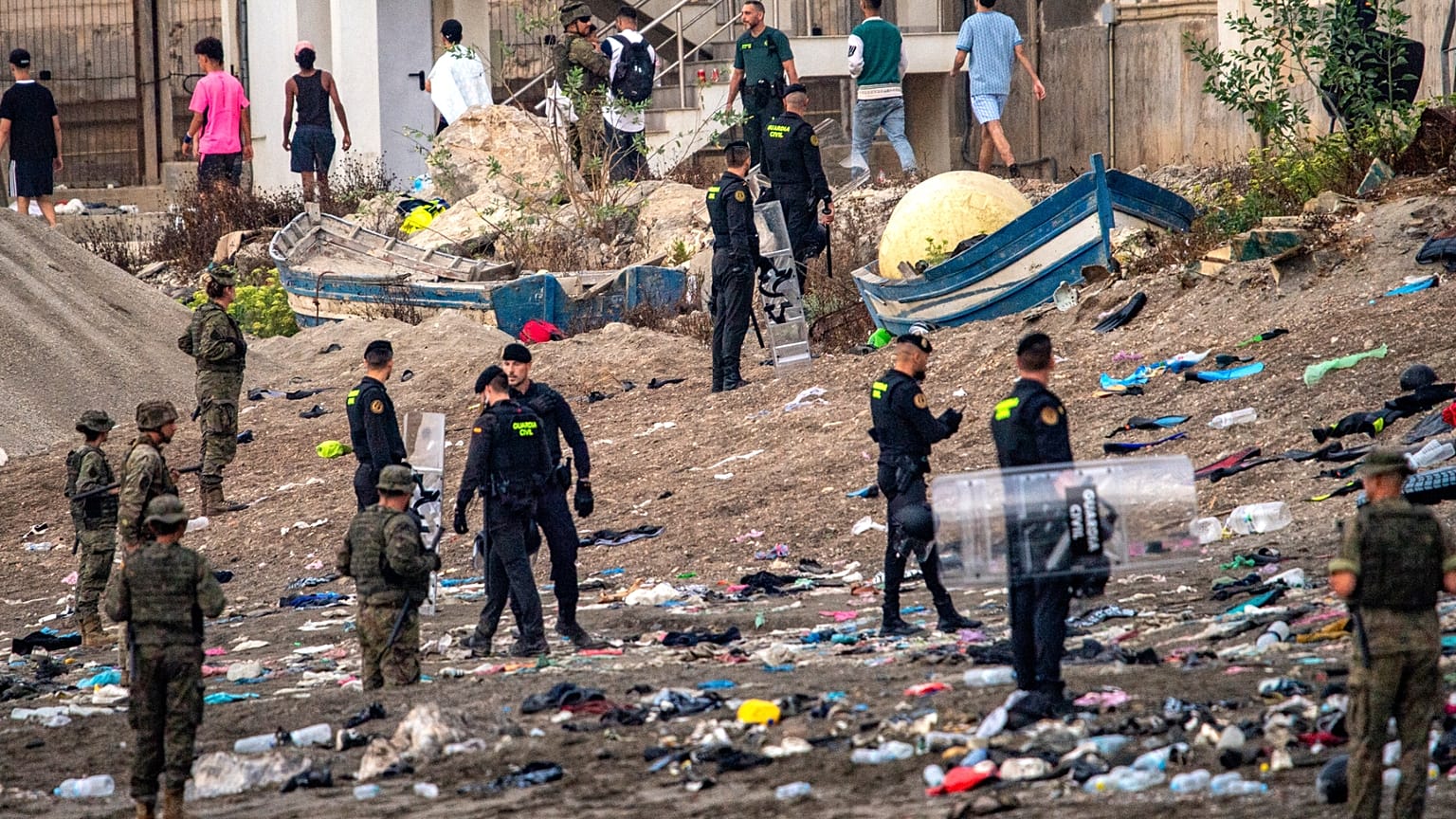 Copyright Copyright 2026 The Associated Press. All rights reserved.
The letter came as Spanish Prime Minister Pedro Sánchez hit out at some EU members over their response to the crisis.
Leaders from 22 European Union nations have called for an emergency meeting to discuss the bloc's response to the arrival of tens of thousands of migrants in the Spanish exclave of Ceuta in North Africa this week.
In the letter, which sources tell Euronews was initiated by Italy and Denmark, member states called for "an extraordinary videoconference of the Ministers of the Interior," describing it as a "matter of urgency."
While Madrid says that almost all of the roughly 50,000 migrants who crossed into Ceuta from Morocco on Thursday have been returned, the EU leaders said they reserved "serious" concerns over the situation.
Ireland, which currently holds the EU's rotating presidency, said a video meeting would take place on Tuesday.
"As Presidency holders, Ireland will convene a meeting on Tuesday of the EU Justice and Home Affairs Council... to discuss developments in Ceuta," Micheal Martin, prime minister of Ireland said in a post on X.
EU foreign policy chief Ursula von der Leyen welcomed the move, saying the bloc needed "a lessons learned process to improve our European resilience," while adding that "not a single person reached mainland Spain or the rest of the EU" during the influx.
French President Emmanuel Macron, Portuguese Prime Minister Luís Montenegro, and Luxembourg PM Luc Frieden did not sign the letter, which was addressed to European Commission President Ursula von der Leyen, European Council President António Costa, and Micheál Martin, the prime minister of Ireland. Ireland took over the presidency of the Council of the European Union in July.
The 22 leaders said the meeting should be used to form a "common assessment of the situation" in Ceuta and to reach an "agreement on a coordinated European response."
"We cannot allow uncontrolled mass crossings, the instrumentalisation of migration or other hybrid threats to create the perception that illegal entry into the European Union is possible," the signatories said, adding that they would consider "any necessary measures" to address such risks, "including through reinforcing or reintroducing temporary internal border controls."
"Such a perception would encourage further attempts, undermine confidence in our common migration policy and have repercussions for all Member States," the letter continues.
It also pointed to the Spanish government's move to grant legal status to some unauthorised migrants as a "pull factor" that may have sparked the crisis - something Madrid has challenged.
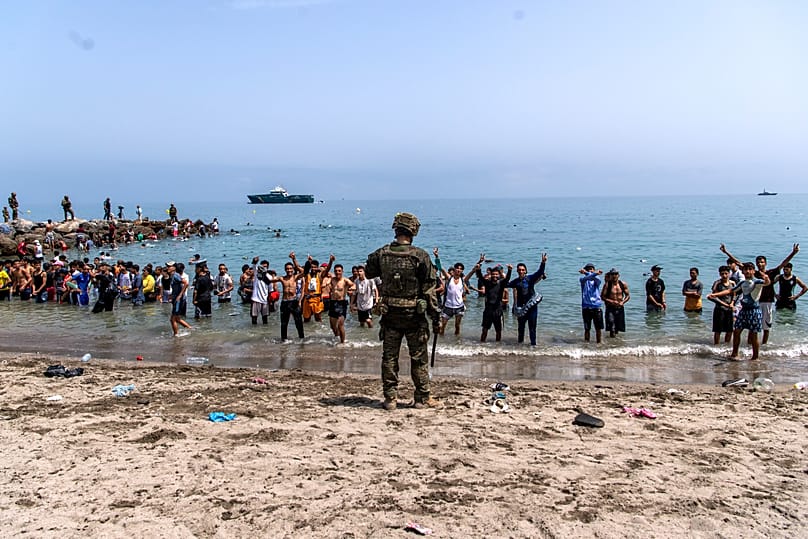 Spanish army soldiers block access to the beach for people crossing from Morocco into the Spanish enclave of Ceuta, Friday, July 31, 2026. Copyright 2026 The Associated Press. All rights reserved.
Leaders from 22 European Union nations have called for an emergency meeting to discuss the bloc's response to the arrival of tens of thousands of migrants in the Spanish exclave of Ceuta in North Africa this week.
In the letter, which sources tell Euronews was initiated by Italy and Denmark, member states called for "an extraordinary videoconference of the Ministers of the Interior," describing it as a "matter of urgency."
While Madrid says that almost all of the roughly 50,000 migrants who crossed into Ceuta from Morocco on Thursday have been returned, the EU leaders said they reserved "serious" concerns over the situation.
Ireland, which currently holds the EU's rotating presidency, said a video meeting would take place on Tuesday.
"As Presidency holders, Ireland will convene a meeting on Tuesday of the EU Justice and Home Affairs Council... to discuss developments in Ceuta," Micheal Martin, prime minister of Ireland said in a post on X.
EU foreign policy chief Ursula von der Leyen welcomed the move, saying the bloc needed "a lessons learned process to improve our European resilience," while adding that "not a single person reached mainland Spain or the rest of the EU" during the influx.
French President Emmanuel Macron, Portuguese Prime Minister Luís Montenegro, and Luxembourg PM Luc Frieden did not sign the letter, which was addressed to European Commission President Ursula von der Leyen, European Council President António Costa, and Micheál Martin, the prime minister of Ireland. Ireland took over the presidency of the Council of the European Union in July.
The 22 leaders said the meeting should be used to form a "common assessment of the situation" in Ceuta and to reach an "agreement on a coordinated European response."
"We cannot allow uncontrolled mass crossings, the instrumentalisation of migration or other hybrid threats to create the perception that illegal entry into the European Union is possible," the signatories said, adding that they would consider "any necessary measures" to address such risks, "including through reinforcing or reintroducing temporary internal border controls."
"Such a perception would encourage further attempts, undermine confidence in our common migration policy and have repercussions for all Member States," the letter continues.
It also pointed to the Spanish government's move to grant legal status to some unauthorised migrants as a "pull factor" that may have sparked the crisis - something Madrid has challenged.
Sánchez hits out at EU
It came as Spanish Prime Minister Pedro Sánchez accused some EU states of a "rather asymmetric" response to the crisis.
"Most have shown us their support and solidarity, and have offered their assistance," Sánchez wrote in his own letter to von der Leyen on Saturday.
"Others, however, have chosen to attack Spain and to call for its temporary exclusion from the Schengen Area," he continued, in an apparent reference to calls from Italian Prime Minister Giorgia Meloni's administration to suspend its visa-free Schengen travel arrangement with Spain.
It came as Spanish Prime Minister Pedro Sánchez accused some EU states of a "rather asymmetric" response to the crisis.
"Most have shown us their support and solidarity, and have offered their assistance," Sánchez wrote in his own letter to von der Leyen on Saturday.
"Others, however, have chosen to attack Spain and to call for its temporary exclusion from the Schengen Area," he continued, in an apparent reference to calls from Italian Prime Minister Giorgia Meloni's administration to suspend its visa-free Schengen travel arrangement with Spain.
Spain's African exclave Ceuta calms after mass crossing that killed at least 67

The Spanish enclave of Ceuta regained a measure of calm after a mass crossing of thousands of Moroccans that left at least 67 people dead, as arrivals from Morocco slowed to sporadic attempts, El País reported on August 1.
The crisis has exposed Spain to a fresh confrontation over migration policy and its management of the North African enclaves, straining relations with Rabat and igniting a domestic political row weeks after a Supreme Court ruling curbed summary returns.
Up to 60,000 Moroccans reached the enclave over several days, the highest numbers on record, with the peak on July 30 however the majority have been returned in recent hours, according to police authorities.
Migrants have been returning by the same route since July 31 they added, and Moroccan agents completed a closure of the border in the afternoon. Spanish security forces deployed a pneumatic barrier about 500 metres long beside the Tarajal border breakwater to slow further arrivals.
The mass entry left the city on edge, with the army deployed and the Civil Guard organising the flows. Shops, bars and petrol stations that had shut began to reopen cautiously.
Prime Minister Pedro Sánchez's government blamed the crisis in part on a Supreme Court ruling three weeks ago that barred summary returns of migrants intercepted at sea while trying to swim to the enclaves, and on trafficking networks.
Interior Minister Fernando Grande-Marlaska praised cooperation from Rabat, said Morocco was not a threat and said the government had reversed the situation within 24 hours.
Civil Guard maritime officers and divers worked to recover bodies off the Tarajal border, where the death toll continued to rise through the day.
"There are more dead in the sea," a police source said.
Humanitarian organisations warned that extending the barrier out to sea would force those attempting to swim across further into open water, raising the risk of more deaths.
Videos released from July 31 show dozens of men being ushered out in dumper trucks heading towards the Spanish border, leading several to suspect that the mass movement of people was deliberate and organised. Morocco claimed that "criminal gangs" organised the mass movement.
Ceuta trying to regain calm and return to normality 'with caution'
By Julián LópezPublished on
Ceuta's annual festivities in honour of its patron saint, the Virgin of Africa, were cancelled on Saturday as the city grappled with the aftermath of the migration crisis. After more than 24 hours of lockdown, shops and restaurants have cautiously reopened.
Euronews is reporting from Ceuta, where authorities are working to restore order after the unprecedented influx of migrants. Along the breakwater where at least 60,000 people crossed irregularly, workers have begun installing new protective barriers in an effort to prevent another mass arrival.
Despite those efforts, the effects of the crisis remain visible. Euronews found migrants still wandering the streets, while authorities believe an unknown number are hiding in the homes of friends and relatives.
Speaking to Euronews, one resident recalled the moment the crowds arrived.
"Honestly, it was frightening. When that whole crowd came rushing in... yes, we were scared. We really were. Then the Armed Forces arrived—thank God—and they managed to restore some order."
The Ceuta Business Confederation says local businesses have resumed operations, albeit "with caution", after residents spent more than 24 hours sheltering in their homes. During the lockdown, most shops remained closed, leaving parts of the city facing shortages of basic goods, including fresh bread.
Among those still in the city is a young migrant who told Euronews he came in search of a better future.
"I came here to find a new life. My father, my whole family, they're poor. Now we're here, trying to survive, sleeping on the streets. Life is really hard."
He said this is not his first time in Ceuta and that he has no intention of leaving for now.
Normally, the city would now be celebrating its Patron Saint festivities in honour of the Virgin of Africa. This year, however, the celebrations have been cancelled - an extraordinary decision that underlines the scale of the crisis. While authorities are trying to restore normality, the mood in Ceuta remains one of fear, uncertainty and anger, but also compassion, as the city continues to grapple with the aftermath of one of the largest irregular border crossings in its history.
Euronews is reporting from Ceuta, where authorities are working to restore order after the unprecedented influx of migrants. Along the breakwater where at least 60,000 people crossed irregularly, workers have begun installing new protective barriers in an effort to prevent another mass arrival.
Despite those efforts, the effects of the crisis remain visible. Euronews found migrants still wandering the streets, while authorities believe an unknown number are hiding in the homes of friends and relatives.
Speaking to Euronews, one resident recalled the moment the crowds arrived.
"Honestly, it was frightening. When that whole crowd came rushing in... yes, we were scared. We really were. Then the Armed Forces arrived—thank God—and they managed to restore some order."
The Ceuta Business Confederation says local businesses have resumed operations, albeit "with caution", after residents spent more than 24 hours sheltering in their homes. During the lockdown, most shops remained closed, leaving parts of the city facing shortages of basic goods, including fresh bread.
Among those still in the city is a young migrant who told Euronews he came in search of a better future.
"I came here to find a new life. My father, my whole family, they're poor. Now we're here, trying to survive, sleeping on the streets. Life is really hard."
He said this is not his first time in Ceuta and that he has no intention of leaving for now.
Normally, the city would now be celebrating its Patron Saint festivities in honour of the Virgin of Africa. This year, however, the celebrations have been cancelled - an extraordinary decision that underlines the scale of the crisis. While authorities are trying to restore normality, the mood in Ceuta remains one of fear, uncertainty and anger, but also compassion, as the city continues to grapple with the aftermath of one of the largest irregular border crossings in its history.
Spanish government received intelligence warnings of Ceuta migrant surge days before crisis
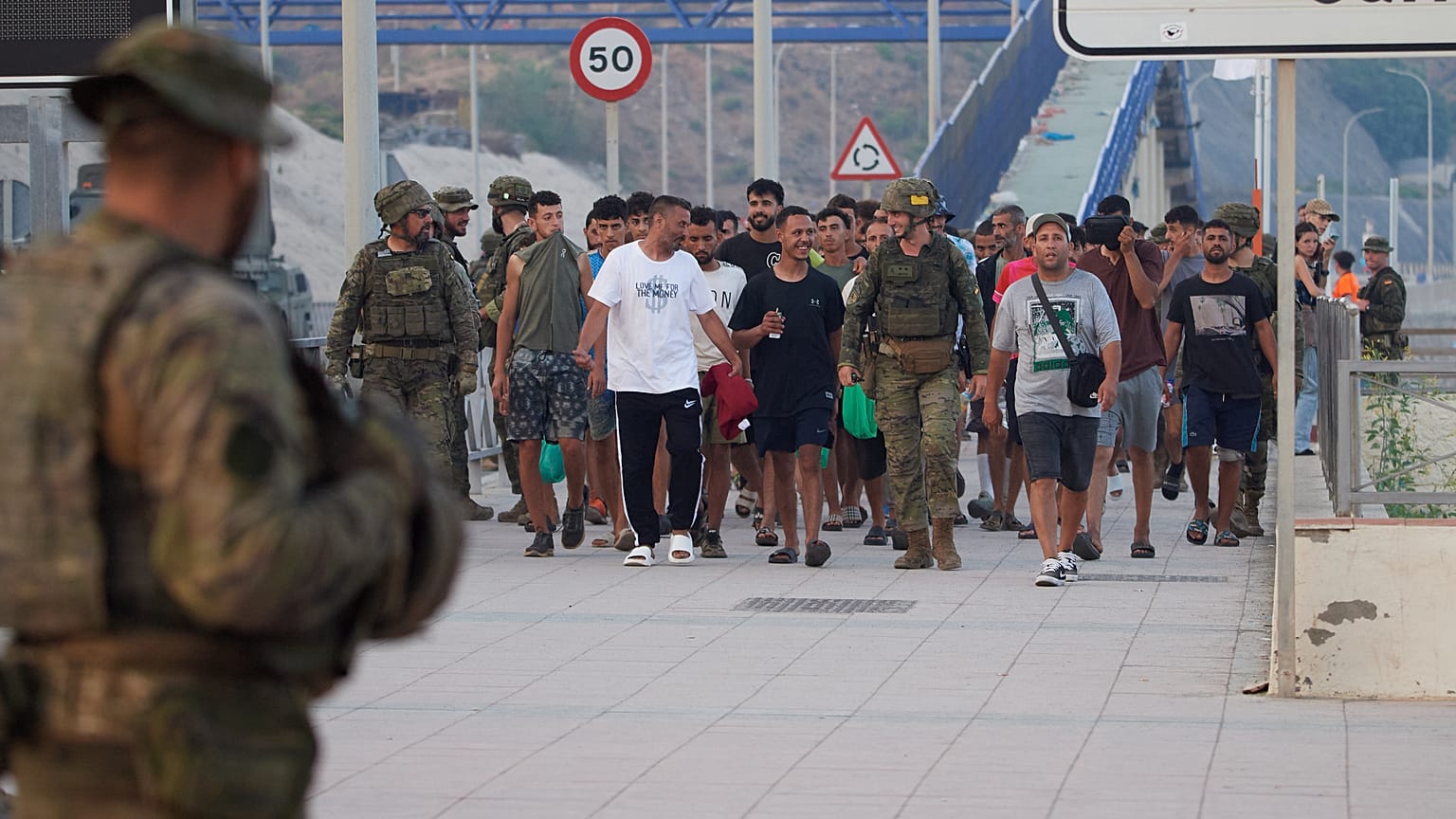
Spanish Prime Minister Pedro Sánchez has described the mass crossing of migrants as a "violation of Spain's territorial integrity" and has blamed the incident on people-smuggling networks.
New information from several military and civilian intelligence sources suggests that the Spanish government had advance warning of the risk of a mass arrival of migrants in the North African exclave of Ceuta this week.
Intelligence alerts were issued over several days, including in the hours immediately before tens of thousands of people crossed from Morocco, sources said.
Intelligence services had warned that King Mohammed VI was likely to make a "gesture of magnanimity" at the border to coincide with Morocco's Throne Day celebrations. Those initial warnings were followed by reports of migrants swimming across from Fnideq, known as Castillejos in Spanish, and buses carrying people from different parts of Morocco towards the border.
Over the course of around ten days, nearly 1,000 people swam into Ceuta. Intelligence officials reportedly viewed this as a test by Moroccan authorities and passed that assessment on to the government.
In the end, between 60,000 and 75,000 migrants crossed into Ceuta, marking the largest migration crisis in the autonomous city's history. According to Spain's Interior Ministry, about 53,000 people had returned to Morocco in the days that followed.
Border forces overwhelmed
The Civil Guard and National Police stationed at the Tarajal border crossing were unable to stop the influx of migrants and instead focused on assisting the injured, several sources said.
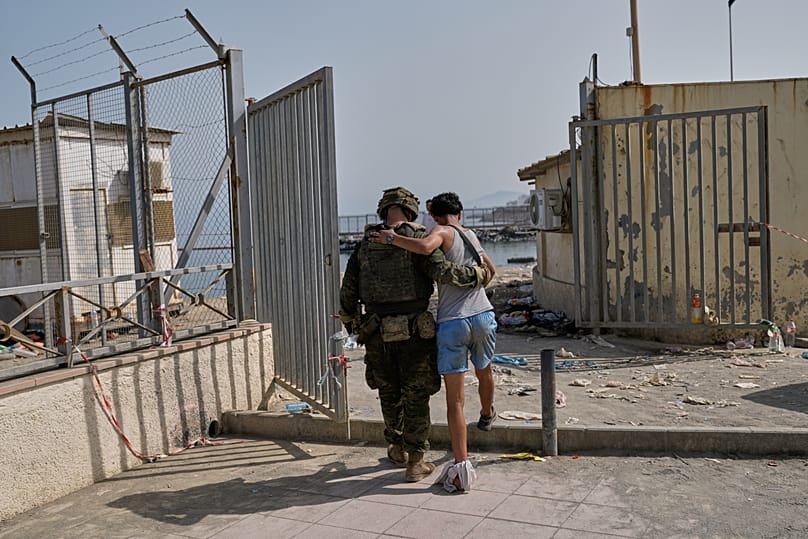
The same sources, speaking to The Objective, criticized Madrid for not deploying the army immediately, despite military units in both Ceuta and Melilla being on standby.
"They could have been mobilized without prior meetings, simply following a political decision and an order from the operations command,” they said.
Officers deployed in the area also reported that the Moroccan gendarmerie stood "with their arms folded" while migrants attempted the crossing, both along the breakwater and on the access road to the border crossing, where other people climbed over fences and roofs.
Civil Guard sources added that the current situation differs from that seen in May 2021, when Morocco relaxed its border controls in a diplomatic response to Spain's decision to admit the Polisario Front leader, Brahim Ghali.
This time, they say, the number of people swimming into Ceuta had already been rising for weeks, partly because of a Spanish Supreme Court ruling prohibiting the immediate return of migrants who reach Spanish territory by swimming.
The government's response
The Interior Ministry insisted hours later that cooperation with Morocco was "exemplary, loyal and permanent."
Spanish Prime Minister Pedro Sánchez described the mass entry as a "violation of Spain's territorial integrity" and blamed the incident on people-smuggling networks, arguing that they had exploited the Supreme Court ruling by encouraging thousands of people to attempt the crossing.
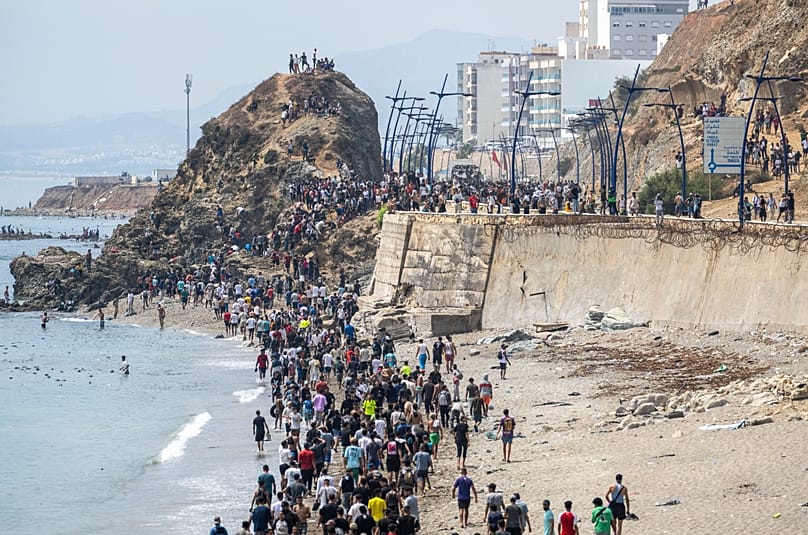
Sánchez also insisted that Moroccan authorities had cooperated "swiftly and consistently" from the outset, adding that Interior Minister Fernando Grande-Marlaska had reinforced border security as arrivals by sea increased.
That reinforcement ultimately resulted in about thirty additional officers and a boat that, a few days later, broke down.
Despite repeated warnings from intelligence agencies, the Ministry of the Interior did not order the deployment of reinforcements until late Thursday, when the army was called in along with additional personnel from the Civil Guard and the National Police.
Ceuta migrant crisis sparks strong reactions from all over Europe
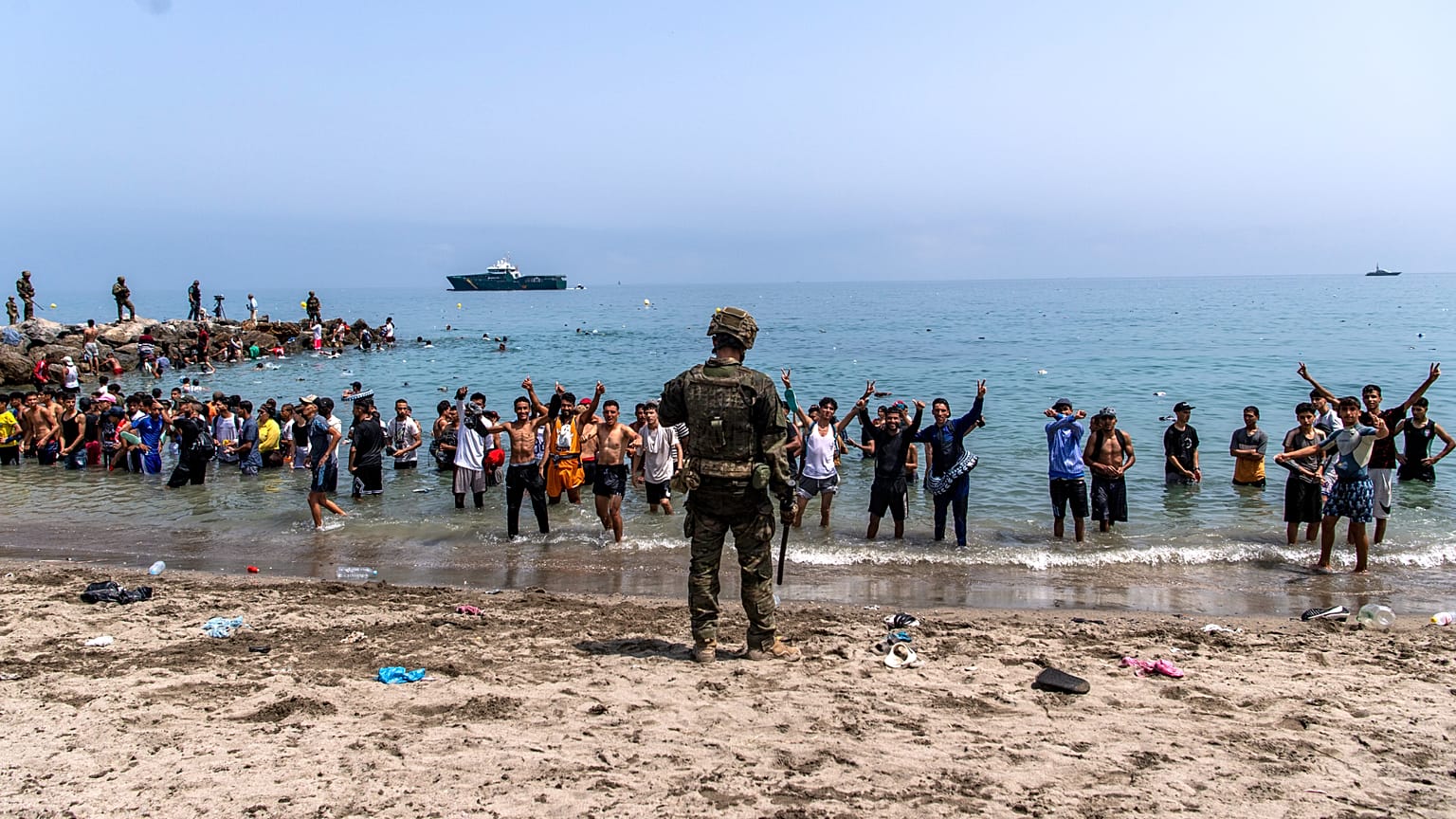
"We will not yield an inch", "a failure of EU's migration policies", "demagoguery": the migrant crisis in Ceuta has sparked strong reactions from EU countries and political figures. Some are calling for Spain's suspension from the Schengen zone, others call these "instrumental attacks".
Italy caused a stir when it called to shut Spain out of the EU's visa-free Schengen travel zone after the Spanish enclave of Ceuta in Morocco was overwhelmed this week by more than 60,000 migrant arrivals.
This crisis, during which 67 people died, is the largest surge of irregular arrivals ever recorded on a single day in EU territory. Although Ceuta is located in North Africa, this crisis has sparked vivid concerns among European governments.
Italian Prime Minister Giorgia Meloni on Thursday said Spain should be suspended from the Schengen area, as she described the images from Ceuta showing the migrants arriving as "shocking" and calling for "extraordinary measures" to be taken.
Spain blasted Italy's "demagoguery" and summoned the country's ambassador to Madrid to lodge a protest.
Finland and Denmark backed Italy's request while France, Portugal and Germany have been less offensive, calling for the "protection of the EU's borders".
'Suspension of Schengen cooperation'
"On illegal immigration, we will not yield an inch: defending the borders, stopping human traffickers, and ensuring effective repatriations will continue to be the line of this Government," Meloni wrote on X.
The hard-right Brothers of Italy party proposed the suspension of the Schengen area with Spain, and announced extraordinary measures to defend Italy's border. Statements that soon were backed by Denmark and Finland.
"It goes without saying that the EU must immediately take all necessary measures and consider all options, including a suspension of Schengen cooperation," Danish Prime Minister Mette Frederiksen said.
"Countries that do not fulfil their obligation to protect the external border cannot be members of Schengen," Finnish Interior Minister Mari Rantanen said.
Abundant right-wing reactions
"The images coming from Ceuta show how the Madrid Government's decision to grant Spanish, and therefore European, citizenship to over 500,000 irregular immigrants is profoundly wrong and encourages human trafficking," Italian Foreign Minister Antonio Tajani wrote on X.
The call was also echoed by leading right-of-centre figures across Europe.
"Appalling situation at the Spanish border. The devastating images are the direct consequence of the pull factor of massive regularisation doubled with instrumentalisation of illegal migration," Manfred Weber, German leader of the centre-right European People's Party (EPP), wrote on X.
"Spanish authorities have recorded 50,000 illegal border crossings [latest figures show it's 60,000] in Ceuta so far, with Germany likely the destination for most of these migrants," Alice Weidel, leader of the far-right Alternative for Germany, wrote on X. "Germany must prepare itself: borders must be secured and rejections rigorously enforced."
Jordan Bardella, France’s radical right leader who is the president of the Patriots for Europe Group in the European Parliament, sent a letter on Friday, seen by Euronews, asking President Roberta Metsola “to hold an urgent debate on the developments in Ceuta and on the failure of the European Union's migration policies.”
'Italy's position is unworthy'
For left-wing politicians in Spain and abroad, these attacks are opportunistic. The Ceuta crisis, they say, has simply given critics an excuse to target migrants and paint them as a threat.
"In Europe, right-wing attitudes have prevailed in picturing migrants as a threat," said Spanish left-wing S&D MEP Juan Fernando López Aguilar, a former justice minister under the Zapatero government.
"Italy’s position is unworthy of a European partner," S&D Spanish MEP Javi Lopez said on X. "When migration is weaponised, Europe answers with solidarity, not selfishness. After 700,000+ arrivals from Libya, Italy received European support, not lectures. Solidarity is not a one-way street."
"This is right-wing propaganda at its worst," Italian S&D MEP Cecilia Strada told Euronews. "Before a humanitarian emergency with tens of deaths and an unknown number of missing people, one would expect European solidarity rather than instrumental attacks aimed at political profiteering."
Milder reactions from France and Germany
Other countries chose not to call for a suspension of Spain from the EU visa-free zone. France reinforced its border controls with Spain but reminded that Ceuta has a particular status.
"Ceuta does not benefit from free movement to the rest of the Schengen Area," French President Emmanuel Macron said. "However, I asked the Interior Minister yesterday to step up checks at our border with Spain should this prove necessary: four mobile police units, aircraft and drones have been deployed."
French diplomatic source also says, "France is closely monitoring the situation in Ceuta [...] and will continue to coordinate with all of its European partners, first and foremost Spain, to which it expresses its support."
German Chancellor Friedrich Merz reacted on Friday to the crisis, calling for implementation "without delay" of the EU Return Regulation.
"Protecting the EU’s external borders is crucial to combating illegal migration," German Chancellor said on X. "I support Spain’s intention not to allow illegal migrants onto the European mainland."
The Portuguese Government reaffirmed that "the integrity of the Schengen system depends on strict border control and a determined fight against all forms of illegal immigration," without calling for Spain to be temporarily removed from the Schengen area.
Dutch Foreign Minister also reacted implicating Morocco saying "we count on Spain to do what is necessary to protect the EU's external borders and on Morocco to take the necessary steps as well."
EU rejects Italy's call
EU chief Ursula von der Leyen described the scenes in Ceuta as "unacceptable", and her executive team is in contact with Spain and Morocco.
A European official said the EU understood "some governments are concerned" but stressed the priority was "securing our external borders" while rejecting Italy's call to suspend Spain from the Schengen free-travel zone.
Brussels also noted the current crisis concerned the enclave of Ceuta, located on the African continent, and that additional checks are necessary for entry into mainland Europe, where no movement has been detected so far.
"It's not like they're landing in Spain and moving onto France," the official, seeking anonymity to speak openly, said.


Newleftreview.org
No comments:
Post a Comment