Brazil’s Congress approves bill establishing national policy on critical minerals
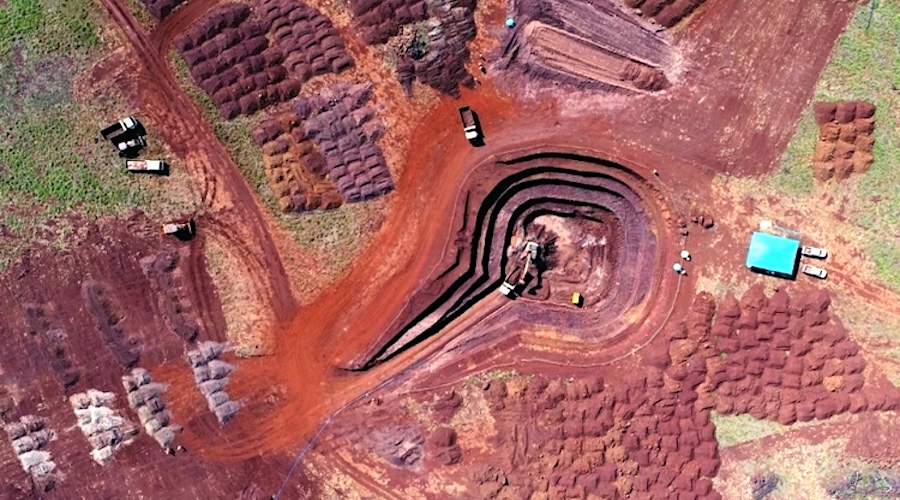
Brazil’s Congress on Wednesday approved a government-backed bill establishing a national policy on critical and strategic minerals, as President Luiz Inacio Lula da Silva moves to set a legal framework for a sector getting rising interest from foreign investors.

The bill establishes a guarantee fund with an initial amount of 2 billion reais ($392.7 million) from the government and provides for 5 billion reais in tax credits over five years.
Under the new proposal, the government will also create a federal council responsible for determining which minerals will be classified as critical and strategic.
Critics fear the council could bring overwhelming government intervention to the sector, creating obstacles to its development.
The bill, pending Lula’s sign-off and approved by the Senate after the lower house green-lit it in May, clarifies the legal definition of minerals including nickel, lithium and other rare earths.
Despite a modest production, Brazil has the world’s second-largest reserve of rare earths behind China.
The abundance has garnered interest from countries seeking to lower their dependence on the Asian country, such as the United States and the European Union.
Rare earths are considered essential for technology in key industries from renewable energy sources to electric vehicles and weapons.
($1 = 5.0929 reais)
(Reporting by Maria Carolina Marcello and Marta Nogueira; Writing by Fernando Cardoso, Editing by Iñigo Alexander)
Brazil Hands Government Control Over Mining Deals
- Brazil's Senate passed PL 2.780/2024 Wednesday, creating a presidential council that can block foreign takeovers of mining companies and review long-term supply contracts.
- The bill grew directly out of USA Rare Earth's $2.8 billion deal for Serra Verde, the only company outside Asia mining the full set of magnet rare earths at scale.
- Brazil still has no commercial magnet plant and refines almost none of what it mines; researchers put a fully domestic supply chain at six to nine years out, at best.
Brazil's Congress passed a bill Wednesday letting the government block foreign takeovers of mining companies and scrutinize who gets access to the country's mineral reserves…the thing is, though...Brazil still can't turn its rare earth ore into a single magnet, and won't be able to for years.
The Senate approved PL 2.780/2024 by voice vote, sending it to President Luiz Inácio Lula da Silva for signature. It creates a national policy on critical and strategic minerals, a guarantee fund starting at 2 billion reais, about $393 million, to back mining loans, and roughly 5 billion reais, about $980 million, in tax credits over five years for companies that process minerals inside Brazil instead of shipping raw ore abroad, according to Rio Times.
The part that has miners nervous sits elsewhere in the text, however…
A new council attached to the presidency can review, and potentially block, changes in ownership of companies holding mineral rights, along with the long-term supply contracts that finance new mines. Bloomberg reported the law hands Brasilia broader scrutiny over mining deals, over industry objections that the rules could scare off the same foreign capital Brazil is courting.
"If we scare off foreign investors, or any other investor, the sector locks up," Pablo Cesario, chief executive of the Brazilian Mining Institute, told the South China Morning Post. He said the council leaves too much discretion with the executive branch over decisions that used to be purely commercial.
In April, USA Rare Earth agreed to pay $2.8 billion for Serra Verde, the only company outside Asia mining the full set of magnet rare earths at commercial scale. Left-wing lawmakers pushed to fold the sector into a state-owned company along the lines of Petrobras, nicknamed Terrabras.
The Lula administration rejected that idea, but the new council was the compromise that survived, giving Brasilia a say over the next Serra Verde-style deal without nationalizing anything outright.
Here is what the law doesn't fix…
Brazil holds the world's second-largest rare earth reserves, but has no commercial magnet plant and refines almost nothing it mines. Andre Luis Pimenta de Faria, who runs the country's main magnet pilot plant for the industrial research group Senai, told a mining conference in Goias state last week that Brazil could produce a magnet from imported inputs by 2028 at the earliest.
A fully domestic chain, from ore to finished magnet, is more like 2032 to 2035, he said, in comments carried by the South China Morning Post. Cesario called even that timeline optimistic, putting the average gap between a proven Brazilian reserve and first production at 17 years.
So the fight Congress just settled, over who gets to buy into Brazilian mines and on what terms, is a fight over ore, not industry.
China still handles nearly all the processing that turns Brazilian rare earths into anything usable, and Serra Verde itself still ships its concentrate to Chinese refiners under contracts it renegotiated only last December.
By Michael Kern for Oilprice.com
No comments:
Post a Comment