Europe vows to stay united as hybrid war activity surges
Europe and Canada have said they won't succumb to the growing number of hybrid attacks from Russia. The show of unity comes as Germany takes the unprecedented step of formally blaming to the Kremlin for a drone incident at Leipzig airport last month.
European foreign ministers have said they're ready to stand firm against a surge of Russian hybrid war attacks across the continent, rallying behind Germany after its decision to formally hold Russia responsible for a drone incident at Leipzig airport last month.
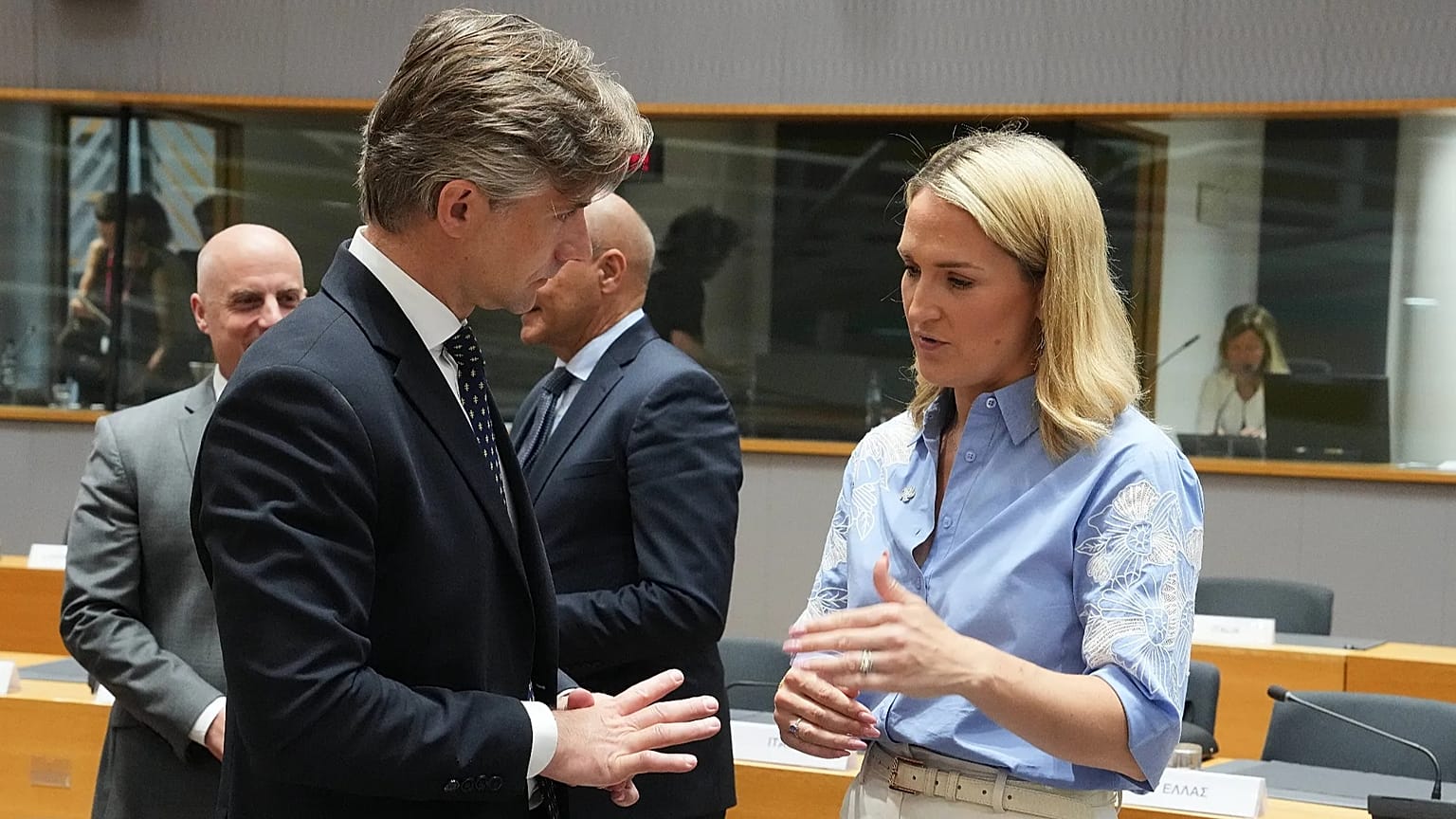
The show of unity came at a summit of EU foreign affairs ministers in Wicklow, Ireland, also attended by ministers from Ukraine, Canada, Switzerland and the United Kingdom.
The Leipzig airport incident on 4 August saw German authorities intercept a drone carrying military-grade explosives. Berlin has been unequivocal in attributing the incursion to the Kremlin.
"The means used – such as the drone configuration, components, explosives and detonation systems – are known to us from other hybrid operations by Russia," German Foreign Minister Johann Wadephul said on Tuesday, framing the attack as part of a "long series of destabilisation operations" against Europe.
In remarks condemning Russia's activities, British Foreign Secretary Ed Miliband referred to his country's experience of Russian attacks in recent years, such as the attempted chemical assassination of former Russian KGB operative Sergei Skripal in Salisbury.
"We stand in full solidarity with Germany and Ukraine," Miliband told journalists. "We know from the past from Russian attacks on our soil these attempts to divide us will not work, but this is a dangerous sign of attempt by Russia to divide us and to think they can send a chilling effect on European countries when it comes to their invasion of Ukraine."
Lithuanian Foreign Minister Kestutis Budrys, meanwhile said Russia appears to be dialling up the volume of hybrid attacks it is launching.
"We see they are expanding and quadrupled attacks against us in the last year," he said. "Our goal is to show these activities won't intimidate us or stop us supporting Ukraine."
Also on the agenda at the informal so-called Gymnich meeting are proposals that the European Commission could reopen the question of using immobilised Russian sovereign assets to fund Ukraine, an idea being pushed by Sweden, Spain and Poland and the Netherlands.
Finnish Minister for Foreign Affairs Elina Valtonen said that "Europe needs to support Ukraine ahead of the winter".
"This is a good space and time to talk about the frozen assets," she said ahead of the summit. "We need to explore all options on the table."
Russia behind attempted drone 'attack' at Leipzig airport, Berlin says
Germany has for months reported suspicious drone sightings over military and industrial sites, but an incident at Leipzig/Halle Airport on the night of 4-5 August raised the alarm as a drone found there carried explosives.
Berlin has blamed Russia for an attempted drone "attack" at Leipzig airport last month.
In a press conference on Tuesday, German Interior Minister Alexander Dobrindt said an assessment of the incident "fits the known pattern of Russian hybrid operations in Europe."
NATO member Germany, which supports Ukraine in its fight against Russia, has long accused Moscow of targeting it with a campaign of hybrid attacks involving espionage and sabotage, claims the Kremlin has rejected.
Germany has for months reported suspicious drone sightings over military and industrial sites, but an incident at Leipzig/Halle Airport on the night of 4-5 August raised the alarm as a drone found there carried explosives.
Police used a robot to defuse the device found near a Ukrainian cargo plane. Another drone was reportedly discovered weeks later near the airport, also with traces of an explosive substance.
The airport in eastern Germany plays a key role in the transport of military goods, including by the German military and NATO allies, and also serves as a base for Ukraine's Antonov Airlines.
Germany's Foreign Minister, Johann Wadephul, announced on Tuesday that Berlin would be taking action against Russia "as the perpetrator of the hybrid attack in Leipzig."
Wadephul said Russia's consulate in Bonn and its Berlin cultural centre would be closed as part of the German government's response to the incident.
"The Russian general consulate in Bonn will be closed by 18 September," he said, adding that there would also be tighter border controls for Russian nationals going forward and increased pressure on Russia's shadow fleet.
Germany is also reportedly planning to raise the Leipzig incident with the NATO Council. Bild newspaper, citing government sources, reported that Germany’s NATO ambassador is expected to formally address Russian hybrid attacks as soon as Wednesday.
The Russian embassy in Germany has issued a statement denying Berlin's claims and threatening "consequences" for the new sanctions.
The Russian ambassador, Sergey Nechayev, "categorically rejected the accusations made by Berlin as unsubstantiated, absurd, and contrary to common sense," it reads.
Referring to the German sanctions, it added: "He noted that the measures announced by the German side represent an unprecedented escalation in Russian-German relations and will not remain without consequences, for which the German government will bear full responsibility."

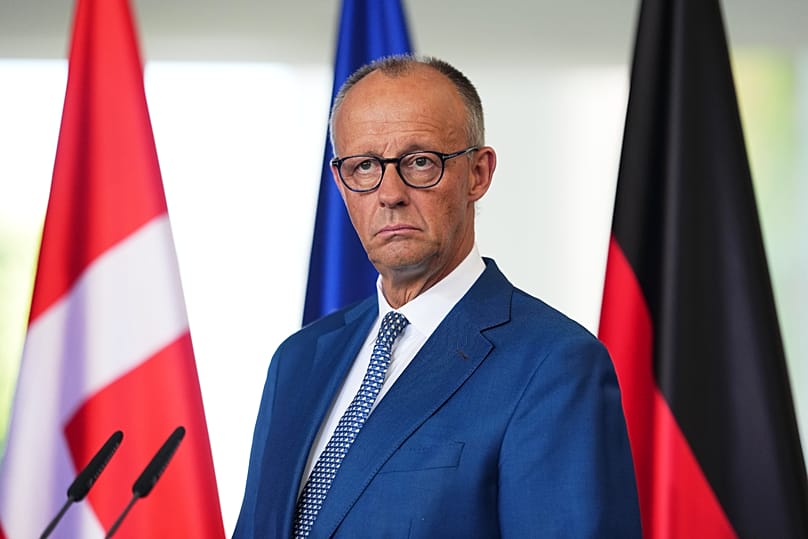
Chancellor Friedrich Merz previously said Germany had increasingly "found itself in the crosshairs of hybrid attackers."
But Berlin had initially refrained from blaming Russia for the incident while speaking only of the possible involvement of "foreign powers."
Merz had warned on 25 August that the perpetrators of hybrid attacks against Germany would "pay for them," without naming a target.
The Russian House of Science and Culture in Berlin, a seven-story building opened in 1984 in what was then East Berlin, is located near the Russian embassy.
Conservative lawmaker and security policy expert Roderich Kiesewetter recently told Welt TV that the facility is assumed to be a hub for espionage.
He said more than 100 people lived there "with no one knowing who they are" and the building's power consumption is disproportionately high.
It was "presumably filled with technical surveillance equipment", he said, and used by "people who are not well-disposed toward Germany."
Europe reacts
European Commission President Ursula von der Leyen said in a post on X that she had spoken with Merz about the Leipzig incident on Tuesday morning.
"I assured him that the EU stands in full solidarity with Germany in the face of this attack by Russia," she wrote, adding that she would also discuss the issue with NATO Secretary General Mark Rutte on Wednesday.
Speaking after a meeting of European Union defence ministers in Ireland earlier in the day, Kaja Kallas, the bloc's top diplomat, said Moscow was hitting Europe with increasing "kinetic hybrid attacks."
"With this, Russia wants to scare us away from supporting Ukraine. They will not succeed," she said.
"We will increase our support to Ukraine and invest in our own defence," she continued, adding that the EU was "planning the most far-reaching sanctions against Russia yet."
This is a developing story. Check back here for further details.
No comments:
Post a Comment