
Study: Generative AI succumbs to conversational misinformed pressure and argument
The results are in: Which AI model is the most fallible? Persuadable? Correctible?
University of Arizona research assessed seven different generative AI language learning models, or LLMs, for these three qualities during lengthy conversation. Their work, published in Nature's Scientific Reports, reveals intrinsic limitations that might go undetected during one-off interactions.
Among the seven LLMs tested – ChatGPT (GPT-3.5, GPT-4o, GPT-4o-mini), Claude 3.5, Sonnet, Gemini 1.5 Pro, Llama-3-70B, and DeepSeek-R1 – they found that:
- ChatGPT 3.5 was most vulnerable to reaffirming misinformation during a conversation containing repeated false statements; Claude 3.5 Sonnet was the least.
- All seven were more susceptible to misinformation on obscure topics, implying that more training data on a given topic leads to more robust resistance to misinformation.
- DeepSeek was the most persuadable, as measured by responses to increasingly argumentative prompts, mostly because of its tendency toward sarcastic answers, which could not be reliably interpreted.
- Four models – ChatGPT 4o, ChatGPT 4o-mini, Gemini 1.5 Pro, and DeepSeek – corrected errors 100% of the time when given a second opportunity.
"This underscores the need for careful human engagement and the danger of blind reliance," said senior study author Dr. Marvin Slepian, Regents Professor of medicine and biomedical engineering. "When generative AI came out in November 2022, there was a lot of regulation potential, but that has since fell by the wayside. People are recognizing the onus is now left to the users."
Many people are familiar with AI's limitations, such as a tendency toward sycophancy, or the tendency to agree with users, and hallucination, or confidently wrong answers, but there has been very little work on evaluating AI's limitations during what is called multi-turn conversations, in which answers are predicated on previous context. Such usage more closely mirrors the real-world, according to the research team.
"These limitations raise important safety concerns, particularly as generative AI systems are increasingly deployed in high-stakes settings," Slepian said.
The team also identified four different ways the models failed to affirm factual information. For example, some models oscillated between accepting and rejecting the same false statement during the conversation.
"If one were relying on the model for critical decision-making, one might – depending upon the phase of the oscillation – 'fire the missile' or 'cut off the leg,' or not, based simply on chance," Slepian said.
As a medical doctor, specifically a cardiologist member of the Sarver Heart Center, he characterizes such failures as "pathologies." This specific pathology was dubbed "reverberation."
"This is dangerous," said Slepian, who led the artificial intelligence subcommittee of the United States Patent and Trademark Office until last year. He is also a member of the James E. Rogers College of Law faculty. "How can we use fickle systems that are not reproducible? These need to be fixed, but this study has spanned three years, and there's still the same unfixed characteristics."
But, closed models, such as Chat and Claude, make it impossible to "peek under the hood" to diagnose and solve the problem.
However, as the founder and director of the Arizona Center for Accelerated Biomedical Innovation, or ACABI, Slepian and his team are beginning to develop diagnostic tools for open AI models as part of their AI Pathology Lab.
"I use AI and so does my team, but as scientist and physician, I have to understand the anatomy and physiology, then understand pathologies – what can go wrong – to diagnose and prevent them. The same goes for AI."
Co-authors on the study include the U of A's Jordan Rodgriguez, Zachary Hansen, Luis De Anda, Katelyn Rohrer and Camila Grubb – all computer science students and researchers in ACABI; as well as Mihai Surdeanu and Enrique Noriega of the Department of Computer Science.
Journal
Scientific Reports
Method of Research
Data/statistical analysis
Subject of Research
Not applicable
Article Title
Fallibility, persuadability, and correctability of large language models under sustained conversational misinformation pressure
Article Publication Date
1-Sep-2026
Will We Control AI—or Will AI Control Us?
The world is undergoing a transformation driven by the exponential growth of artificial intelligence (AI)—a pace of change unprecedented in human history. Consequently, many people fear massive unemployment, along with other implications that could affect their livelihoods and quality of life. Is this truly the case? Yes—or perhaps not entirely.
The purpose of this short article is to explore the potential benefits of AI and its implications for human society. It is still too early to fully assess the potential benefits of AI, but they could be enormous.
A Brief Look Back
History shows that technological inventions have continuously improved economic productivity, efficiency, and quality of life. Many inventions that were once considered luxuries eventually became essential parts of everyday life. Electricity, automobiles, airplanes, refrigerators, washing machines, medical technologies, farming equipment, and countless household devices have all contributed to greater comfort, efficiency, and convenience.
Consider the invention of the typewriter in the 18th century, which transformed business communication. In the 1960s, pocket-sized electronic calculators emerged, followed by computers and laptops. When we were graduate students in the late 1970s, our professors—many of whom had been trained in the United States—would proudly demonstrate regression results generated by computers in seconds, replacing hours of manual calculations.
Did these innovations create mass unemployment? Or did they enhance human productivity and quality of life?
The answer appears clear: they improved our lives. While some occupations disappeared or declined, workers generally moved into other sectors and new occupations emerged.
Modern inventions such as smartphones, the internet, and applications such as WhatsApp and Facebook have made communication instantaneous and inexpensive. They have even reduced the need for travel, allowing people to see and speak with loved ones almost whenever they wish.
Every time humanity experienced a major technological breakthrough, people often believed that we had reached the peak of progress. Yet progress continued—and it will likely continue for generations.
Should we expect the same from AI?
The Rise of AI
AI itself is not new. Its foundations were established in the 1940s and 1950s, with significant advances occurring in later decades. However, investment and development accelerated dramatically in the 2020s, driven by advances in computing, transformer architectures, and large language models (LLMs) such as ChatGPT.
These systems demonstrate capabilities that increasingly resemble aspects of human intelligence, including language understanding, reasoning, pattern recognition, information synthesis, and, in some cases, creativity. As a result, AI is rapidly becoming integrated into countless sectors of society.
This exponential growth has generated both excitement and concern.
Many fear that AI could lead to mass unemployment, reducing consumer spending and potentially slowing economic growth. Yet history suggests that technological innovation does not necessarily destroy employment permanently. Agricultural innovations increased productivity while shifting labor into other sectors. Industrial automation eliminated some occupations while creating others. Medical advances increased life expectancy and improved human productivity.
The important question is whether AI will follow the same historical pattern—or whether it represents something fundamentally different.
Will AI Be a Game Changer?
Some argue that AI is fundamentally different from previous inventions and could cause widespread unemployment. We cannot realistically stop the development of AI, nor should we necessarily try to. However, policymakers, economists, philosophers, educators, and academics must urgently consider how society should manage its economic, social, psychological, and cultural consequences.
AI is already performing tasks once handled by receptionists, telephone operators, analysts, writers, programmers, and many other professionals. Autonomous vehicles, drone delivery, robotic automation, and AI-assisted decision-making are advancing rapidly.
The potential impact could be far greater than anything we have experienced before.
Consider something as simple as ChatGPT. Ask a question and, within seconds, you can receive an enormous amount of organized information. If you want to improve your writing, you can copy and paste your text and ask AI to edit it. You can ask it to prepare a birthday message, a condolence message, a business letter, or almost anything else you can imagine. In seconds, you may receive several formal or informal versions of your original thoughts.
This is only the beginning.
More sophisticated AI models are being developed for energy forecasting, refinery optimization, environmental analysis, medicine, agriculture, manufacturing, finance, and virtually every other segment of society.
Imagine, for example, a strategic planning department in an oil and gas company. Today, a team of senior professionals may spend months developing forecasting models, key performance indicators (KPIs), business plans, and refinery optimization strategies. In the future, sophisticated AI systems may perform much of this work, perhaps requiring only one or two professionals to supervise, interpret, and implement the results.
The same principle could apply to education.
If AI can provide highly personalized instruction, explain complex subjects, generate study material, evaluate assignments, and assist students individually, will we still need traditional classrooms and large numbers of instructors in their current form?
Perhaps not.
And the same question can be asked across almost every sector.
This is where the unemployment concern becomes much more serious. In previous technological revolutions, displaced workers could generally move into other sectors that were less automated. But what happens if AI simultaneously transforms most sectors of the economy?
Will there be enough new occupations to absorb displaced workers?
It is difficult to know.
Therefore, policymakers must begin thinking beyond traditional economic solutions. If AI significantly reduces the need for human labor, society may need entirely new approaches to income distribution, education, employment, taxation, and social protection.
We may need to think outside the traditional economic framework.
Why AI May Be Fundamentally Different
My assessment is that AI is fundamentally different from many previous inventions.
In the past, we delegated physical labor and deterministic calculations to machines, but we generally did not delegate cognition itself. There were an input and an expected output, and humans understood and controlled the process.
That may no longer be the case.
We are entering an age in which machines can increasingly analyze information, generate ideas, recognize patterns, write, communicate, make recommendations, and perform tasks that once required human judgment.
For the first time, humanity may be developing an entity that could eventually become more capable than humans in an increasing number of intellectual domains.
That is something humanity has never experienced before.
In fact, many of the technological innovations we have adopted in recent years have already incorporated elements of AI, often without us consciously recognizing that we are interacting with intelligent systems.
Consider the devices in our homes. We may ask a voice assistant to play with the white noise or set a cooking timer or ask Siri to do certain tasks. Smart lighting systems automatically turn lights on and off. Irrigation systems can skip watering when rain is detected. Thermostats learn our habits and schedules and automatically adjust heating and cooling to maintain our preferred level of comfort.
Even our entertainment systems increasingly anticipate what we might want to watch.
Have you ever discussed something at home and then opened your phone or YouTube and noticed remarkably similar recommendations?
Whether this results from AI-based recommendation systems, search behavior, advertising algorithms, or other forms of data collection, the broader point remains: intelligent technology has already become deeply embedded in our daily lives.
How AI Models Learn
Consider a simple example.
I recently watched a television segment in which an artist was painting on the street while other playing music. People from a technology company approached the artist and asked how much he earned each day. They reportedly earn approximately $200 daily.
They offered them $500 a day if they would wear special gloves while continuing to paint and play music.
The gloves captured their hand movements and transmitted the data to a computer system. After collecting this information over time, the system could begin learning the relationship between the artist’s movements and the resulting artwork.
Eventually, AI could potentially reproduce similar movements and generate similar images and play similar music.
This is a simple illustration of a much more complicated process.
Developing sophisticated AI models requires enormous amounts of data, extensive computing power, testing, validation, and continuous refinement. This is already occurring in fields such as energy, refinery operations, environmental modeling, weather and demand forecasting, industrial production, agriculture, medicine, and many others.
The more relevant and high-quality data a system receives—and the better it is trained and evaluated—the more capable it can become.
AI: The Convergence of Human Progress
What makes AI particularly remarkable is that it appears to converge with many of the innovations that came before it.
Humanity has accumulated centuries of knowledge about how things work, how products are designed, how businesses operate, how diseases are treated, how energy is produced, how agriculture is managed, and how societies function.
AI has the potential to bring much of that accumulated knowledge together into systems capable of analyzing and applying it at extraordinary speed.
With time, as more data is collected, processed, evaluated, and incorporated into increasingly sophisticated models, AI may become an extraordinarily powerful tool for improving human life.
This is both exciting and frightening.
The Real Danger
The convenience of technology has already come with considerable costs.
Unlike previous revolutions, AI may also challenge the unique role humans have traditionally played in thinking, analyzing, and making decisions. We have experienced that if something is asked for or edited by ChatGPT or any other AI model we generally immediately accept the outcome produced by AI. That’s mean we are compromising our own abilities. Trust me as AI became more advanced we as humans most likely will become slaves of AI and lose our self-confidence and dignity.
Our memory capacity, for example, appears to be less actively used than in the past. We once memorized telephone numbers, spelling rules, directions, grammar, and other information. Today, we rely heavily on smartphones, search engines, GPS, and digital assistants to store and retrieve information.
Without realizing it, we have become dependent on these technologies—sometimes to the point where we may not even remember our own phone numbers.
More troubling is the potential erosion of independent human thinking.
We increasingly rely on technology for quick answers, analysis, recommendations, and even decision-making. If we stop exercising our own cognitive abilities because machines can do everything for us, those abilities may gradually weaken. I think very rightly Mayor of New York city Mayor Zohran Mamdani has announced a one-year moratorium on student use of generative AI in public schools, effective for the 2026–27 school year, affecting nearly 600,000 students in grades 2–K through 8th. I think it is a good decision and hopefully other States to follow soon.
The danger is not simply that AI becomes smarter.
The danger is that humans may become less capable because they stop thinking for themselves.
A major technological failure, cyberattack, systemic error, or malfunction in a highly interconnected AI-dependent society could have consequences far beyond anything we have experienced before.
Can We Control the Pace?
A moderate and balanced approach to AI development could allow society to adapt gradually rather than react in panic.
But uncontrolled development could create serious risks.
AI is advancing at extraordinary speed; billions of dollars are invested in data warehouses. At some point, its capabilities may exceed our ability to fully understand, predict, or control its behavior.
Science-fiction movies have long imagined machines becoming powerful enough to threaten human civilization. Those stories are fictional, but the underlying question is no longer purely fictional:
What happens when the systems we create become more capable than the people who created them?
We do not yet know the answer.
Perhaps humanity will adapt, as it has adapted to every previous technological revolution. Perhaps AI will become one of the greatest tools ever created for improving human civilization.
Or perhaps we will discover that intelligence itself is the most powerful technology humanity has ever developed—and therefore the one that requires the greatest responsibility.
Conclusion
AI should neither be feared blindly nor embraced uncritically.
Its potential benefits are enormous. It can improve productivity, accelerate scientific discovery, enhance medicine, transform education, optimize industries, improve resource management, and make everyday life easier.
But the risks are equally significant.
The possibility of widespread displacement of human workers, increasing dependence on machines, erosion of independent thinking, concentration of economic power, misinformation, privacy concerns, and loss of human control must all be taken seriously.
The objective should not be to stop AI.
Instead, humanity must learn how to develop, regulate, and use AI responsibly.
The central challenge may not be whether AI will change the world. It almost certainly will.
The real question is:
Will we control AI—or will AI ultimately control us?
Is this how the world ends?
Or will humanity, as it has done throughout history, adapt to a new reality and continue striving for a better and more comfortable life for future generations?
Only time will tell.
And, somewhat ironically, this article was also edited with the help of AI.
By Salman Ghouri for Oilprice.com
Ill Wind or Tailwind? AI is Sweeping the Maritime World
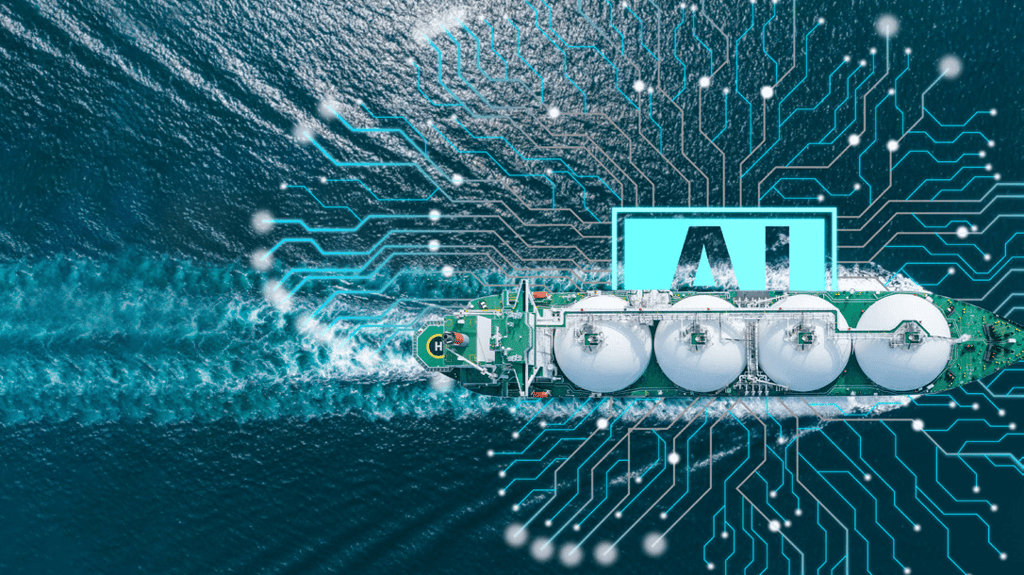
(Article originally published in July/Aug 2026 edition.)
The winds of the digital age and artificial intelligence seem like a tempest for the marine industry.
For those who are prepared and understand how to properly apply the various types of AI, it's like a magnificent tailwind pushing their fleet ahead and outpacing the competition in ways not previously seen. On the other hand, there will be owners and operators unwilling to shift sails in time to catch the benefits of digitalization and AI. Then it becomes an ill wind.
While it's necessary to maintain a healthy amount of skepticism and not go all-in for every new untested application, the consequences of being the last to properly use AI and the consequent loss of business are too great to risk.
The winds of digitalization and AI are blowing. The old way of operating is now obsolete.
TEAMING UP
Shipowners who have already caught the winds of digitalization and AI have likely teamed up with a partner who can embed AI into their day-to-day operational workflows – like Dubai-based Marcura, whose client list reads like a who's-who of the global maritime business.
Marcura's software solutions keep shipowners and operators ahead of the expected pace of maritime logistics by utilizing AI inside functions like chartering, voyage documentation, port calls and payment workflows. Why comb through contracts by hand looking for certain clauses or provisions – a process that can take hours – when a Marcura solution can find it in seconds by typing in a key phrase?
"In one case a dry bulk operator avoided potential losses of more than $120,000 when the system caught four critical clauses omitted from a draft agreement," states Janani Yagnamurthy, Senior Vice President for Product & Strategic Growth. "Our AI reads the same document in seconds and flags what's missing or risky with citations showing exactly where the problem sits. The same approach runs through operations. That includes automating the conversion of Bills of Lading into Letters of Indemnity, saving the equivalent of three month of operator time a year."
AI agents trained on the industry's largest datasets empower Marcura clients when making critical financial and operational decisions. Tough decisions are always easier to make when backed by solid quantifiable analytics. Marcura products such as CP Optimiser equip junior charterers with the quantifiable analytics needed to make the decisive call with the same level of confidence and efficiency as experienced charterers.
Marcura addresses the use of AI through three principles: applicability, explainability and auditability.
Applicability means ensuring AI is deployed for the right use and within the proper operational context rather than being applied indiscriminately.
Explainability is about ensuring users understand why AI has made a recommendation and the rationale behind it.
Auditability ensures the data is in the proper context and can be vetted in a way that can be easily interpreted by users. With Marcura products, every AI run can be traced and reviewed, giving users the ability to defend their decision.
FORCE MULTIPLIER
Another giant in the field is ABS Consulting.
"At ABS Consulting, we view AI as a force multiplier for technical expertise," explains Olivia Northrop, AI Solution Architect. "Ultimately, AI is a tool, and it's only valuable if it can fix the problems it's tasked with solving."
It's a very similar philosophy to that of Marcura.
"That's why our focus is on applied AI – using it to solve real operational problems by helping to improve productivity and turning large volumes of data and documents into actionable insights," she adds.
A subsidiary of the American Bureau of Shipping, ABS Consulting was founded over five decades ago to provide risk management services to clients in the maritime and offshore energy sectors. Today, it's helping clients harness the AI wind by developing tools that deliver real-world results.
In-house AI capabilities have already transformed ABS Consulting's own internal processes in ways that show measurable improvements in efficiency and better decision-making. ABS is using AI to automate workflows that are repetitive, document-heavy and predicated on data extraction and standardization.
Tasks that in the past necessitated hours of time, AI can do quickly, consistently and accurately, freeing up experts to focus on the needs of customers, not the minutia of the process. Organizations that team up with ABS Consulting benefit from more consistency in output, optimized use of data, scalable digital solutions and faster turnaround times.
Northrop warns that the biggest risk with AI is treating it as fully self-sufficient and not subject to data authentication, sound governance and human review. "Treat AI as a new colleague rather than unchecked automation," she advises. "It needs to be trained and supervised to perform in a trusted and reliable way."
THE LEGEND OF JOHN HENRY
There will be holdouts.
Some AI skeptics are reminiscent of the American folk hero John Henry. The legend of John Henry says he lived in the late 19th century and was unequalled when it came to swinging a hammer. He was the fastest human alive when it came to driving steel through mountains or spikes into railroad tracks. The legend recounts how the owner of a steam-powered drill challenged John Henry in a race to see who could carve a tunnel through a mountain fastest so that railroad tracks could be laid. As John Henry carved out the final piece of the tunnel to win the race, he died of exhaustion, proving that one person can win a battle against progress and technology, but in the end technology moves forward.
Industries and organizations must adapt. They must harness the winds of change.
The Association of Diving Contractors International (ADCI) is one such organization. Founded in 1968, it's a nonprofit association that promotes safety, sets standards and issues certifications for the commercial diving industry. As a commercial diver myself, I know it well.
It's the world's largest trade organization of its kind and has taken a defining stance by digitalizing the diver certification process. As of 2026, the ADCI has teamed up with maritime and dive safety subject matter experts at Skill N Depth to streamline the process of verifying diver credentials. Based in Switzerland, Skill N Depth is a blockchain-enabled, purpose-built platform for the commercial diving and marine contracting industry.
The Skill N Depth digital platform has enabled the ADCI to review, verify and issue a credential within 24 hours – a dramatic improvement over the six to eight weeks required for ADCI staff to manually review the myriad of documentation needed to authenticate each diver's actual qualification level.
It's also being used by dive schools to electronically log dives and by dive contractors to manage personnel data, but the overall intent is to be more than just a diver database. It's a tool that can be used throughout the maritime industry by ship managers, flag states, classification societies and even freelance individuals. Maritime trades like remote access testing and ROV operations can choose to team up with Skill N Depth to reduce administrative burdens, verify personnel more efficiently and mobilize competent teams faster.
"Skill N Depth is more than a digital platform," says CEO Anthony Greenwood. "It's an industry ecosystem and trust network that connects individuals, employers, training providers, certification bodies, medical providers and other industry stakeholders through verified professional records."
ILL WIND OR TAILWIND?
It'll be interesting to see what the future holds for organizations that choose the "John Henry route" of resisting progress. Dive and marine contractors who do not embrace digitalization or disregard consensus industry standards will find that their marketability is nonexistent or limited to a customer base that exists only on the margins.
Pat Zeitler is Dive Superintendent at the Orion Group in Houston.
This article appeared in the July/August issue of The Maritime Executive. To read the latest edition of the magazine, go to The Maritime Executive July/August 2026 Ship Management edition. To subscribe to the magazine, please go to https://www.maritime-executive.com/subscribe.
The opinions expressed herein are the author's and not necessarily those of The Maritime Executive.
AI could undermine managers' judgement unless used carefully, University of Bath-led study warns
Research finds over-reliance on generative AI may weaken moral insights, contextual understanding, and practical know-how at work
University of Bath
Generative artificial intelligence (Gen-AI) has become a routine part of working life but over-reliance on the technology may erode managers’ ability to build moral insights, contextual understanding and know-how to do get a job done, according to a new study from the University of Bath.
The research, published in the Academy of Management Review, explores how tools such as ChatGPT may affect what academics call “managerial phronesis” – the practical wisdom managers develop through real-world experience, reflection and human interaction.
“Gen-AI appeals because it can help people complete tasks more quickly. However, Gen-AI cannot replace the lessons learned through first-hand experience. Unlike humans, AI does not experience the world, understand the consequences of decisions, or grasp the social and emotional complexities in our workplaces. Instead, it produces responses based on patterns found in existing data,” said Professor Dirk Lindebaum of the University’s School of Management.
“This creates a significant risk for organisations – as managers increasingly outsource their thinking to Gen-AI for idea generation, or when a practical problem arises at work, they may rely less on their own judgement. Over time, this could reduce their ability to learn from experience, think critically, and to anticipate what kinds of actions are needed now to meet future goals”, he said.
The team of researchers from the Universities of Bath, Ohio, Lausanne and Cardiff identified the concept of “epistemic de-skilling” – a process in which people gradually lose knowledge-related capabilities because they outsource too much thinking to Gen-AI. They suggested this was most likely to happen when managers are under intense time pressure and use Gen-AI as a shortcut rather than engaging deeply with a problem themselves.
“In these situations, managers may stop asking important questions, seeking different perspectives or learning from real-world interactions. Instead of developing a nuanced understanding of employees, customers or organisational challenges, they may come to depend on AI-generated answers that lack the context and moral judgement needed for complex decisions,” Professor Lindebaum said.
The team also developed the of idea how Gen-AI may be used to develop the judgment of managers, although this is likely to prove more challenging for managers. Specifically, the researchers noted that Gen-AI can strengthen managerial judgement when Gen-AI is used as a tool for reflection, rather than a replacement for thinking. The researchers dubbed this process “epistemic up-skilling”.
“Rather than accepting AI outputs at face value, managers can use them to challenge assumptions, explore alternative scenarios and test the reasoning behind their own decisions. Because AI systems often struggle to explain why they produce particular answers, the gaps in those explanations can encourage people to think more deeply about their choices and the consequences of their actions,” Professor Lindebaum said, adding that “this requires persistent effort on the part of managers to fill these explanatory gaps themselves”.
The study suggested that this beneficial outcome is most likely when managers know they will be held accountable for their decisions. In workplaces where individuals must justify their actions and explain their reasoning, Gen-AI can become a trigger for deeper reflection instead of a substitute for judgement. “It is that which Gen-AI cannot satisfactorily explain that managers must explain to themselves and others”, Lindebaum adds.
“It is becoming increasingly clear that simply introducing AI tools will not automatically improve decision-making or organisational performance. Instead, organisations need to carefully design roles, responsibilities and workflows to ensure employees continue developing the human skills that AI cannot replicate,” Professor Lindebaum said.
The research team comprised Professor Dirk Lindebaum, Professor Natarajan Balasubramanian of Ohio State University, Dr Mehreen Ashraf of Cardiff University, and Dr Patrick Haack of the University of Lausanne. The study “A Process Model of Managerial Phronesis in the Age of Generative AI” can be read here.
ENDS/tr
Notes to editors:
- Please contact the University of Bath Press Office on press@bath.ac.uk
About the University of Bath
The University of Bath is one of the UK's leading universities, recognised for high-impact research, excellence in education, an outstanding student experience and strong graduate prospects.
- We are ranked among the top 10% of universities globally, placing 132nd in the QS World University Rankings 2026.
- We are ranked in the top 10 in The Sunday Times University Guide, The Complete University Guide, and The Guardian University Guide
- The University achieved a triple Gold award in the last Teaching Excellence Framework 2023, the highest awards possible, for both the overall assessment and for student outcomes and student experience. The Teaching Excellence Framework (TEF) is a national scheme run by the Office for Students (OfS).
- We are The Times and The Sunday Times Sport University of the Year 2026.
Research at Bath is shaping a better future through innovation in sustainability, health, and digital technologies. Find out all about our Research with Impact: http://bit.ly/3ISz1Wu
Research finds over-reliance on generative AI may weaken moral insights, contextual understanding, and practical know-how at work
University of Bath
Generative artificial intelligence (Gen-AI) has become a routine part of working life but over-reliance on the technology may erode managers’ ability to build moral insights, contextual understanding and know-how to do get a job done, according to a new study from the University of Bath.
The research, published in the Academy of Management Review, explores how tools such as ChatGPT may affect what academics call “managerial phronesis” – the practical wisdom managers develop through real-world experience, reflection and human interaction.
“Gen-AI appeals because it can help people complete tasks more quickly. However, Gen-AI cannot replace the lessons learned through first-hand experience. Unlike humans, AI does not experience the world, understand the consequences of decisions, or grasp the social and emotional complexities in our workplaces. Instead, it produces responses based on patterns found in existing data,” said Professor Dirk Lindebaum of the University’s School of Management.
“This creates a significant risk for organisations – as managers increasingly outsource their thinking to Gen-AI for idea generation, or when a practical problem arises at work, they may rely less on their own judgement. Over time, this could reduce their ability to learn from experience, think critically, and to anticipate what kinds of actions are needed now to meet future goals”, he said.
The team of researchers from the Universities of Bath, Ohio, Lausanne and Cardiff identified the concept of “epistemic de-skilling” – a process in which people gradually lose knowledge-related capabilities because they outsource too much thinking to Gen-AI. They suggested this was most likely to happen when managers are under intense time pressure and use Gen-AI as a shortcut rather than engaging deeply with a problem themselves.
“In these situations, managers may stop asking important questions, seeking different perspectives or learning from real-world interactions. Instead of developing a nuanced understanding of employees, customers or organisational challenges, they may come to depend on AI-generated answers that lack the context and moral judgement needed for complex decisions,” Professor Lindebaum said.
The team also developed the of idea how Gen-AI may be used to develop the judgment of managers, although this is likely to prove more challenging for managers. Specifically, the researchers noted that Gen-AI can strengthen managerial judgement when Gen-AI is used as a tool for reflection, rather than a replacement for thinking. The researchers dubbed this process “epistemic up-skilling”.
“Rather than accepting AI outputs at face value, managers can use them to challenge assumptions, explore alternative scenarios and test the reasoning behind their own decisions. Because AI systems often struggle to explain why they produce particular answers, the gaps in those explanations can encourage people to think more deeply about their choices and the consequences of their actions,” Professor Lindebaum said, adding that “this requires persistent effort on the part of managers to fill these explanatory gaps themselves”.
The study suggested that this beneficial outcome is most likely when managers know they will be held accountable for their decisions. In workplaces where individuals must justify their actions and explain their reasoning, Gen-AI can become a trigger for deeper reflection instead of a substitute for judgement. “It is that which Gen-AI cannot satisfactorily explain that managers must explain to themselves and others”, Lindebaum adds.
“It is becoming increasingly clear that simply introducing AI tools will not automatically improve decision-making or organisational performance. Instead, organisations need to carefully design roles, responsibilities and workflows to ensure employees continue developing the human skills that AI cannot replicate,” Professor Lindebaum said.
The research team comprised Professor Dirk Lindebaum, Professor Natarajan Balasubramanian of Ohio State University, Dr Mehreen Ashraf of Cardiff University, and Dr Patrick Haack of the University of Lausanne. The study “A Process Model of Managerial Phronesis in the Age of Generative AI” can be read here.
ENDS/tr
Notes to editors:
- Please contact the University of Bath Press Office on press@bath.ac.uk
About the University of Bath
The University of Bath is one of the UK's leading universities, recognised for high-impact research, excellence in education, an outstanding student experience and strong graduate prospects.
- We are ranked among the top 10% of universities globally, placing 132nd in the QS World University Rankings 2026.
- We are ranked in the top 10 in The Sunday Times University Guide, The Complete University Guide, and The Guardian University Guide
- The University achieved a triple Gold award in the last Teaching Excellence Framework 2023, the highest awards possible, for both the overall assessment and for student outcomes and student experience. The Teaching Excellence Framework (TEF) is a national scheme run by the Office for Students (OfS).
- We are The Times and The Sunday Times Sport University of the Year 2026.
Research at Bath is shaping a better future through innovation in sustainability, health, and digital technologies. Find out all about our Research with Impact: http://bit.ly/3ISz1Wu
Journal
Academy of Management Review
Academy of Management Review
DOI
Method of Research
Observational study
Observational study
Subject of Research
People
People
Article Title
A Process Model of Managerial Phronesis in the Age of Generative AI
A Process Model of Managerial Phronesis in the Age of Generative AI
New AI tool maps the hidden universe of small molecules
image:
Screenshot of AIMe tool.
view moreCredit: Frank Schroeder, Boyce Thompson Institute
The human body and its gut microbiome produce thousands of small molecules that shape how the body functions—influencing immunity, metabolism, and more. Identifying what those molecules actually are has been one of the biomedical sciences’ most persistent bottlenecks. More than 80% of compounds detected in a typical biological sample cannot be matched to any known structure using current methods.
Researchers at the Boyce Thompson Institute (BTI) and Cornell University have developed a tool that begins to change that. AIMe, short for AI Molecule Explorer, uses a form of artificial intelligence called neuro-symbolic AI to predict, organize, and search the mass spectra of the entirety of known small organic molecules, more than 100 million compounds—effectively building a vast searchable map of chemical space that can accelerate hypothesis generation and compound identification.
The work is a collaboration between Frank Schroeder, Professor at BTI and in Cornell's Department of Chemistry and Chemical Biology, and Carla Gomes, Professor of Computing and Information Science and director of Cornell's AI for Science Institute.
A different approach to an old problem
Mass spectrometry is the workhorse for small molecule identification used in a wide range of applications from toxicology to food analysis. When a compound is analyzed, the instrument fragments it and records the masses of the resulting pieces. That pattern of fragments, the tandem mass spectrum (or MS2 spectrum), functions as a molecular fingerprint. To identify an unknown compound, researchers compare its spectrum against a reference library of spectra from known compounds or develop hypotheses as to what the structure of a compound may be based on manual analysis of the fragmentation pattern.
The problem is that experimental reference libraries remain sparse, while expert, one-by-one interpretation is labor-intensive and slow. Collectively, available libraries cover fewer than 1% of known compounds, and resolving the structure of a single unknown can take days to months of iterative analysis and experimental validation. As a result, spectra without close library matches usually remain unannotated.
AIMe takes a different approach. Rather than waiting for experimental spectra to accumulate in libraries, it predicts spectra computationally—then organizes those predictions into a searchable resource called MS2KOSMOS. AIMe generated more than 800 million predicted spectra covering essentially all known small organic molecules in PubChem, the largest publicly available chemical database. That represents roughly a thousandfold expansion of searchable chemical space relative to existing experimental libraries.
“At the core of AIMe is DeepMS2Reasoner, a model that simulates how molecules fragment inside a mass spectrometer,” explained Gomes. “It builds fragmentation pathways step by step, using symbolic chemical rules to enumerate physically plausible fragmentation steps and a neural network to assign likelihoods to each step. The result is a predicted spectrum and an annotated map of how a molecule came apart—a feature that makes AIMe's outputs interpretable in chemical terms, not just computationally useful.”
From mouse gut to human biology
To demonstrate what AIMe can do in practice, the researchers applied it to a comparative metabolomics dataset from mice. The experiment compared germ-free mice, animals raised without any gut microbiota, against mice with a normal complement of gut bacteria. Several thousand chemical features differed between the two groups, and most of the abundant ones could not be identified using standard methods.
The team used AIMe to query MS2KOSMOS with spectra from the 111 most abundant unidentified microbiota-dependent compounds. For roughly a third, AIMe retrieved close predicted spectral matches and related structural candidates, providing chemically interpretable leads for follow-up. For the rest, AIMe mapped the unknown spectra to molecular neighborhoods—sets of structurally related compounds whose shared fragmentation patterns could inform hypotheses about what the unknowns might be.
“Two compounds in particular became a case study in what AI-guided structure elucidation can accomplish,” said Schroeder. “Both produced spectra that suggested they were polyamine derivatives, a well-studied class of molecules, but the fragment patterns didn't match anything previously described. Using AIMe's output as a guide, our team assembled candidate structures combinatorially, predicted spectra for each candidate, and used the comparison to narrow the field.”
For the first compound, the best candidate was a linear putrescine derivative, which was then easily verified by synthesizing an authentic standard. For the second, the predicted spectra of potential candidates consistently failed to explain two prominent peaks—until the team expanded the search to include cyclized variants.
Synthesis confirmed what the predictions suggested. The second compound turned out to be a structurally unusual macrocyclic polyamine—a ring-shaped variant unlike any previously reported from mouse or human biology. Searches of a large public mass spectrometry database subsequently found the same compound in samples of human origin, detected in 57 of 99 human fecal samples examined.
Polyamines occupy an important position in biology. They sit at the intersection of diet, the gut microbiome, and immune function—and these findings suggest that the catalog of microbiota-dependent polyamines is far less complete than scientists assumed.
Annotation at scale
The researchers also tested AIMe at repository scale, applying it to more than 7 million spectral clusters from the Global Natural Products Social Molecular Networking database, one of the largest publicly available repositories of mass spectrometry data. Prior annotation efforts had annotated roughly 416,000 of those clusters. AIMe returned putative annotations for approximately 2.69 million, using the same similarity threshold applied in that earlier effort.
AIMe is accessible at https://www.cs.cornell.edu/gomes/udiscoverit/kosmos/ and the source code will be made publicly available upon publication of the study. The preprint is available on bioRxiv (DOI: 10.64898/2026.08.05.743095).
How large language models are reshaping combinatorial optimization: three emerging pathways show where they help most
A new review from Tsinghua University and collaborators clarifies three roles LLMs can play in combinatorail optimization — modeling with solver feedback, heuristic design and control, and end-to-end solving —
image:
A review organizes LLM-assisted combinatorial optimization methods into three mainstream paradigms: LLM-assisted modeling and solver collaboration, LLM-assisted heuristics, and LLM-based end-to-end solvers—each suited to different requirements for feasibility, cost and scalability.
view moreCredit: Complex System Modeling and Simulation, Tsinghua University Press
From drug synthesis planning and production scheduling to facility location problem, combinatorial optimization (CO) tackles decision-making over discrete solution spaces under constraints. Despite decades of progress, high-performing CO solutions typically rely on expert-crafted formulations, specialized solvers, and time-consuming parameter tuning — costs that limit adaptability in complex, large-scale, and dynamic settings.
A new review by researchers from Tsinghua University, Beijing University of Technology, and the National University of Defense Technology synthesis how LLMs are being integrated into CO pipelines to reduce expert burden and improve adaptability. The review, titled “Advancec in LLM-Assisted Combinatorial Optimization,” is published in “Complex System Modeling and Simulation” [2026 Volume 6, Number 3]. Leveraging their ability to understand natural language specifications, generate executable code, and interact with external tools, LLMs are increasingly used as assistant components across the solver workflow.
The authors propose a methodology-oriented taxonomy that groups recent work into three mainstream paradigms:
- LLM-assisted modeling and solver collaboration, where an LM translate natural-language requirements into a formal optimization model or solver-ready code, and an external solver provides executable feedback (such as syntax errors, infeasibility, or objective quality) to guide iterative repair. This paradigm includes both inference-orchestration-based closed-loop refinement and parameter-adaptation-based approaches that fine-tune models to reduce trail-and-error at inference time.
- LLM-assisted heuristics, where LLMs help invent heuristic components, control search bu selecting operators or parameters, or execute as a module that proposes candidate updates — often with an outer loop that evaluates generated heuristics on benchmark instances and retains strong performers.
- LLM-based end-to-end solvers, which attempt to map an instance directly to a solution through learned inference, either by directly decoding solutions or by generating intermediate reasoning traces, aiming for fast amortized solving after training.
“Combinatorial optimization is widely used, but strong performance often still requires substantial expert intervention in modeling, algorithm design, and tuning,” said Ling Wang, professor in the Department of Automation at Tsinghua University and corresponding author of the review. “Our goal was to clarify where LLMs can enter the workflow, how they interact with solvers, and what trade-offs each integration pattern brings feasibility, scalability, and reliability.”
The review also highlights a fast-growing application landscape, including planning and scheduling, wireless network optimization, and engineering design optimization — areas where LLMs often work best as assistants that translate intent into formal structures, generate candidate strategies, and coordinate existing solvers rather than replacing them outright.
Looking ahead, the authors emphasize three practical bottlenecks: (1) missing pr incorrect constraints in automatic modeling; (2) high evaluation cost in heuristic-generation outer loops, and (3) limited reliability mechanisms such as uncertainty calibration and scalability to industrail-size instances. They argue that progress will likely depend on architectures that explicitly separate responsibilities: LLMs for high-level interpretation and strategy generation, and classical solvers or specialized controllers for fast, verifiable optimization.
The research team expects the review to offer a unified perspective on how LLMs can be effectively embedded into combinatorial optimization, and to guide future work toward more reliable and scalable integration. “LLM-assisted combinatorial optimization is opening a promising path toward more flexible, human-aligned decision-making, and we believe this interdisciplinary direction will continue to grow in both depth and practical impact,” said Ling Wang.
Other contributors include Chuyue Tian, Rui Li from Tsinghua University, Jingfang Chen from Beijing University of Technology, and Jianmai Shi from National University of Defense Technology.
This work was supported by the National Natural Science Foundation of China (Nos. U24A20273, 62273193, and 62403272).
DOI Link:
https://doi.org/10.23919/CSMS.2026.0007
Journal
Complex System Modeling and Simulation
Article Title
Advances in LLM-Assisted Combinatorial Optimization
Empowering polymeric materials discovery with artificial intelligence
The proposed workflow integrates multiple tools together in order to create an automated system that can refine and improve itself - and even run its own experiments
Peer-Reviewed Publicationimage:
This framework depicts a hierarchically integrated workflow that underpins data-driven polymer innovation. Starting from the Polymeric Materials Databases, which provide multiple types of data and regression models, which serve as decision engines to enable rapid structure-property prediction. MLIPs act as the physical foundation, bridging quantum and mesoscale material behaviors to expand cross-scale predictive capability. LLMs and intelligent agents further orchestrate scientific reasoning, inverse design, and full experimental workflows. The cycle is completed by AI-driven automated synthesis, where polymer candidates are synthesized and characterized, and real-time experimental data is fed back to update the databases and computational models. This iterative loop enables continuous self-optimization.
view moreCredit: Hao Li et al.
In the realm of materials science, there is a plethora of datasets and tools at our disposal - the issue is how to effectively make use of these resources in harmony. Researchers at the Advanced Institute for Materials Research (WPI-AIMR), Tohoku University, have identified major bottlenecks holding back artificial-intelligence-driven polymer innovation and created a system that integrates multiple tools (such as polymer databases, predictive models, AI agents and automated laboratories). The intricate system encompasses a self-automated workflow that could save valuable time, money, and even the environment.
The lab has previously researched ways to leverage closed-loop AI systems and large databases to improve our search for energy materials. In this study, they focus on a workflow that will make it easier to find and test new polymer material candidates which can be used for a multitude of everyday items. In fact, you are likely well-acquainted with the most ubiquitous polymer: plastic. Not only is it useful for household items, but biomedical polymers can be used in many places such as implants and for drug delivery. However, understanding the various interactions between polymers and complex, ever-changing biological systems is difficult to achieve without a sound strategy.
"Traditional trial-and-error polymer development is slow, resource-intensive, waste-generating, and often takes many years to deliver improved materials," remarks Distinguished Professor Hao Li. "If the proposed ecosystem can be realized, we'll be able to rapidly develop new high-performance, sustainable polymers - with fewer costly experimental failures."
This speeds up real-world benefits: safer high-energy-density batteries for electric vehicles, better medical biomaterials, greener degradable plastics, and more-efficient water-purification membranes. It also cuts lab resource consumption and material waste from repetitive blind testing, aligning with global carbon-neutrality goals.
The research team created a complete blueprint for building autonomous, closed-loop polymer-discovery ecosystems. Most existing AI-for-polymer work focuses only on isolated prediction tasks, without a sense of cohesion. They remain as open-loop concept proofs that need constant supervision.
This paper systematically unpacks six critical system-level failures in current workflows: fragmented databases lacking automatic feedback, insufficient physical constraints for AI models, disconnected simulation modules, incomplete agent-driven reasoning, one-way non-closed-loop automation labs, and poor interoperability across digital-experimental components. It further provides concrete, actionable roadmaps to overcome these barriers.
In this study, researchers point out bottlenecks and propose a new system that uses a multitude of tools working in unison in a self-running, automatic loop that continuously refines itself. This system could one day replace slow, waste‑heavy trial‑and‑error materials research with self‑improving digital‑experimental cycles to accelerate sustainable‑material innovation. The team plans to continue improving the capabilities of this conceptual framework so it can one day provide assistance not just for lab-scale experiments, but real-world industrial manufacturing.
The findings were published in JACS Au on August 14, 2026.
About the World Premier International Research Center Initiative (WPI)
The WPI program was launched in 2007 by Japan's Ministry of Education, Culture, Sports, Science and Technology (MEXT) to foster globally visible research centers boasting the highest standards and outstanding research environments. Numbering more than a dozen and operating at institutions throughout the country, these centers are given a high degree of autonomy, allowing them to engage in innovative modes of management and research. The program is administered by the Japan Society for the Promotion of Science (JSPS).
See the latest research news from the centers at the WPI News Portal: https://www.eurekalert.org/newsportal/WPI
Main WPI program site: www.jsps.go.jp/english/e-toplevel
Advanced Institute for Materials Research (AIMR) Tohoku University
Establishing a World-Leading Research Center for Materials Science
AIMR aims to contribute to society through its actions as a world-leading research center for materials science and push the boundaries of research frontiers. To this end, the institute gathers excellent researchers in the fields of physics, chemistry, materials science, engineering, and mathematics and provides a world-class research environment.
AIMR site: https://www.wpi-aimr.tohoku.ac.jp/en/
Journal
JACS Au
Article Title
Empowering Polymeric Materials Discovery by Artificial Intelligence
Classes of polymeric materials databases and their roles in AI-driven discovery. This schematic illustrates how three categories of polymer databases - experimental databases, computational databases, and integrated platforms - support machine learning (ML)-driven materials discovery.
Credit
Hao Li et al.
No comments:
Post a Comment