Initial observations of the floods found they were caused by glacial collapse, likely a result of the climate crisis.
By Chris Walker ,
September 10, 2026
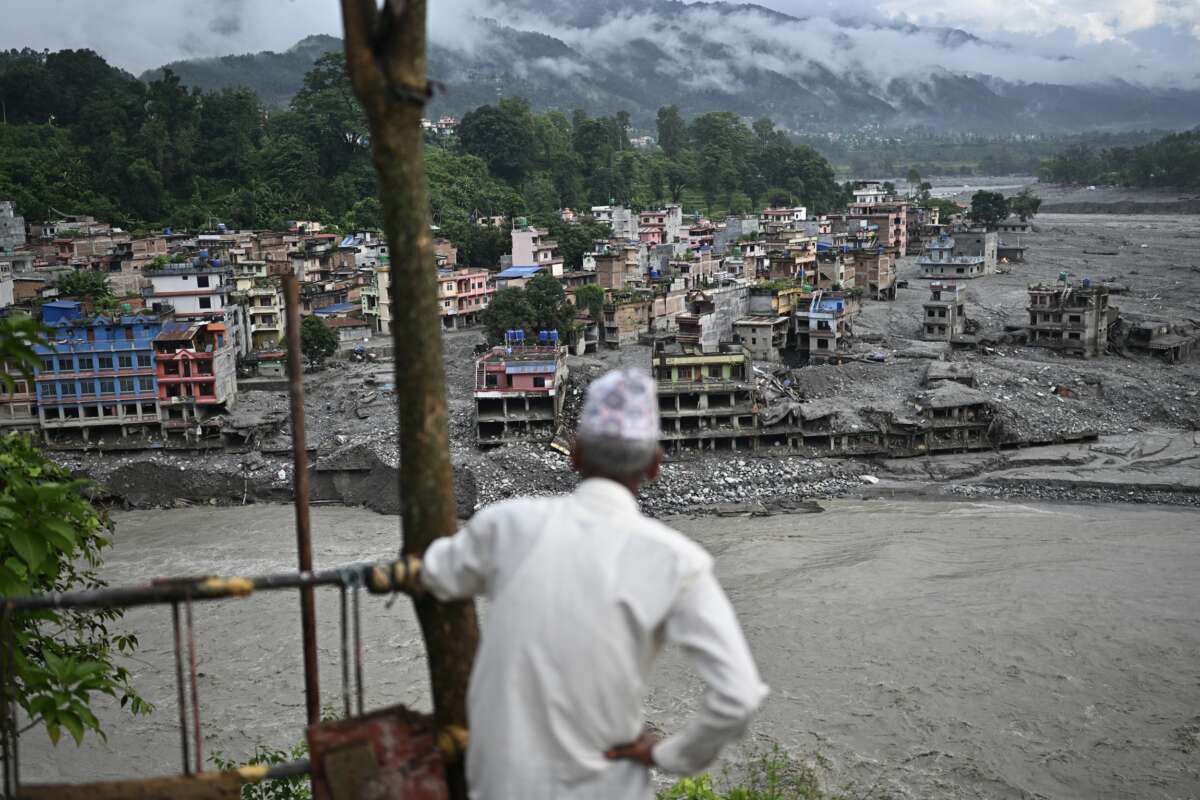
A man looks at the remains in the aftermath of flash floods at Trishuli in Nepal's Nuwakot district on September 7, 2026.Pedro Pardo / AFP via Getty Images
Government leaders from Nepal are calling for climate justice in the wake of devastating glacial floods last month that killed 1,300 people and left thousands more missing.
Preliminary investigations into the flooding determined that the disaster was likely due to glacial collapse, a phenomenon that is becoming more frequent and more likely to occur in the future due to the climate crisis. The impact of this specific collapse, which occurred in August, was so significant that it was initially incorrectly identified as an earthquake, registering a 5.2 rating on the Richter scale.
“We are paying the ultimate price for a global crisis we did not create … Support for Nepal should not be seen from an angle of aid or charity, but should be seen from the perspective of climate justice,” Nepal’s Foreign Minister Shishir Khanal told the AFP news agency.
Speaking to The Guardian, Khanal added:
The global community should not see this as one-off disaster; it should be viewed in the context of the changing climate in the Himalayas. We know it is going to be a recurring scenario that more and more communities, not just in Nepal but around the world, will have to face.
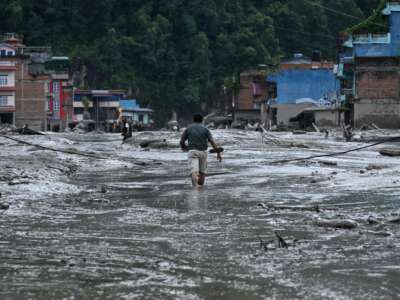
Nepal Floods Demonstrate Threat of Climate-Driven Glacier Collapse
“What happened yesterday is unfortunately the new normal,” one geoscientist said of the devastating floods.
In an address to the country, President Ramchandra Paudel made a similar call for a larger response to the climate crisis.
“I make a heartfelt appeal to the international community not only to listen to the voices of ecologically vulnerable countries, including Nepal, but also to take concrete and effective steps to ensure climate justice for them,” Paudel said.
Around 1,300 people have been documented as killed by the floods, according to recent estimates. Another 5,000 remain missing. The country’s leaders are seeking around $20 million from the global community to help respond to the disaster.
Aakriti Dotel, national network coordinator for the Nepalese Youth for Climate Action, also called for a proactive response from the international community.
The floods are a “painful reminder of the growing climate crisis facing Nepal and the Himalayas,” Dotel said. “As our glaciers melt and extreme weather events become increasingly unpredictable, communities living downstream are bearing the devastating consequences.”
“We mourn the lives lost and the livelihoods affected, and call for urgent global climate action,” Dotel added. “There must be stronger support for vulnerable mountain communities, and accountability from those most responsible for the climate crisis.”
Unfortunately, due to the effects of the climate crisis, disasters like these are more likely to happen in the future, experts say.
What happened to communities in Nepal and the surrounding region “is unfortunately the new normal,” said Jakob Steiner, a geoscientist at the University of Graz in Austria. “It’s going to get worse from here onwards.”
Government leaders from Nepal are calling for climate justice in the wake of devastating glacial floods last month that killed 1,300 people and left thousands more missing.
Preliminary investigations into the flooding determined that the disaster was likely due to glacial collapse, a phenomenon that is becoming more frequent and more likely to occur in the future due to the climate crisis. The impact of this specific collapse, which occurred in August, was so significant that it was initially incorrectly identified as an earthquake, registering a 5.2 rating on the Richter scale.
“We are paying the ultimate price for a global crisis we did not create … Support for Nepal should not be seen from an angle of aid or charity, but should be seen from the perspective of climate justice,” Nepal’s Foreign Minister Shishir Khanal told the AFP news agency.
Speaking to The Guardian, Khanal added:
The global community should not see this as one-off disaster; it should be viewed in the context of the changing climate in the Himalayas. We know it is going to be a recurring scenario that more and more communities, not just in Nepal but around the world, will have to face.
Nepal Floods Demonstrate Threat of Climate-Driven Glacier Collapse
“What happened yesterday is unfortunately the new normal,” one geoscientist said of the devastating floods.
In an address to the country, President Ramchandra Paudel made a similar call for a larger response to the climate crisis.
“I make a heartfelt appeal to the international community not only to listen to the voices of ecologically vulnerable countries, including Nepal, but also to take concrete and effective steps to ensure climate justice for them,” Paudel said.
Around 1,300 people have been documented as killed by the floods, according to recent estimates. Another 5,000 remain missing. The country’s leaders are seeking around $20 million from the global community to help respond to the disaster.
Aakriti Dotel, national network coordinator for the Nepalese Youth for Climate Action, also called for a proactive response from the international community.
The floods are a “painful reminder of the growing climate crisis facing Nepal and the Himalayas,” Dotel said. “As our glaciers melt and extreme weather events become increasingly unpredictable, communities living downstream are bearing the devastating consequences.”
“We mourn the lives lost and the livelihoods affected, and call for urgent global climate action,” Dotel added. “There must be stronger support for vulnerable mountain communities, and accountability from those most responsible for the climate crisis.”
Unfortunately, due to the effects of the climate crisis, disasters like these are more likely to happen in the future, experts say.
What happened to communities in Nepal and the surrounding region “is unfortunately the new normal,” said Jakob Steiner, a geoscientist at the University of Graz in Austria. “It’s going to get worse from here onwards.”
No comments:
Post a Comment