‘No time to issue a warning’: Experts on what caused Nepal flood and what’s needed to improve preparedness
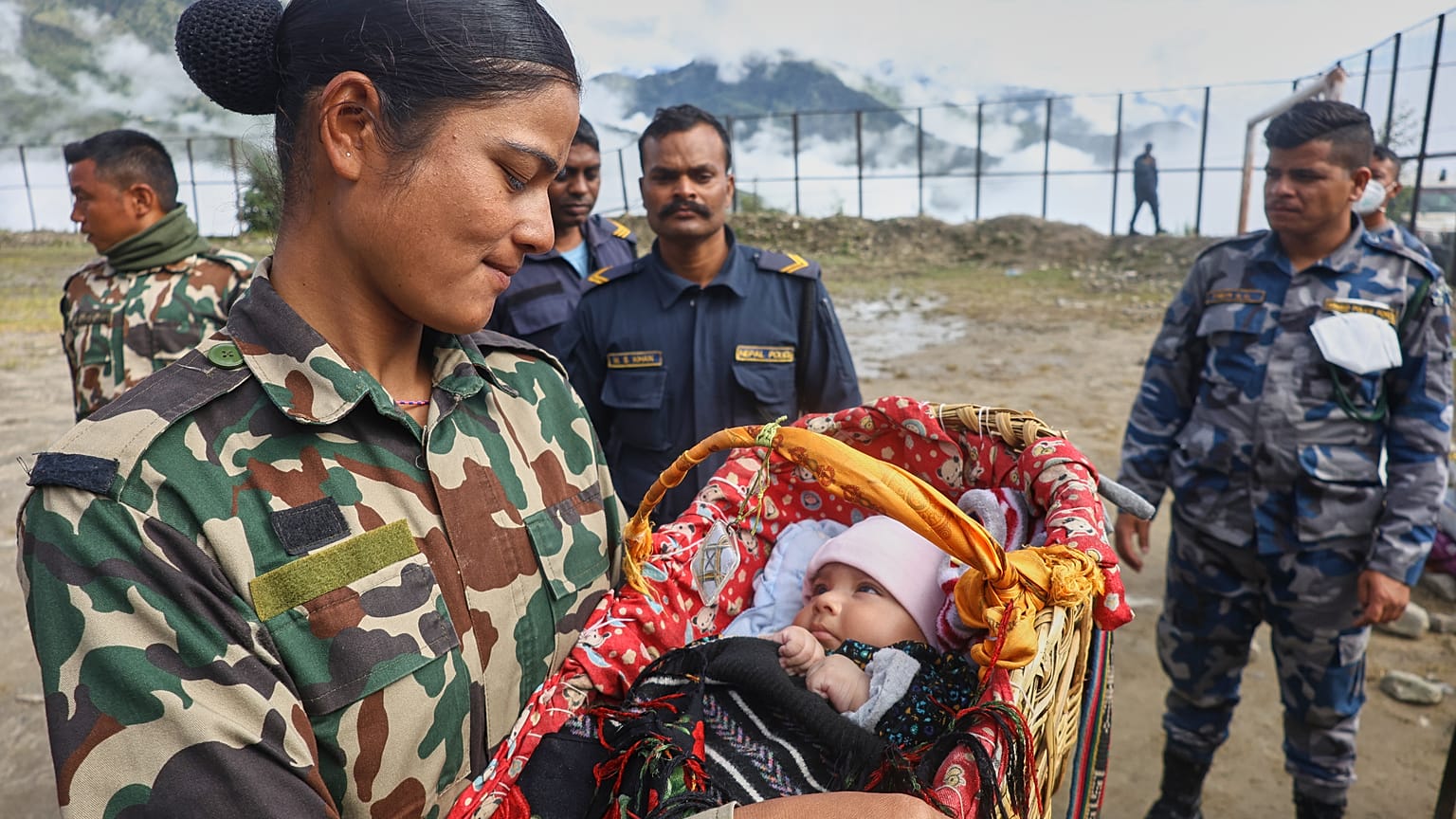
Nepal has contributed little to the emissions driving global warming yet it is suffering the worst consequences.
With the death toll over 1,000 and thousands still missing, the human tragedy of the Nepal flooding disaster is undeniable. Some estimate the costs of reconstruction could equal up to a tenth of the country’s entire economy.
Now attention is turning to what caused the disaster and how to prevent devastation on such a scale when “unprecedented” events like this happen again which, scientists say, they will.
Nepali Prime Minister Balendra Shah has linked the disaster to climate change, saying: “The flood in the Bhote Koshi River in Rasuwa was not an ordinary flood. It was one of the region’s major disasters, triggered by an avalanche of snow and ice in the Himalayan region.”
In the social media post, he went on to say, “It is now time for us to strongly raise with the international community the issue of the disasters we are experiencing as a result of climate change.”
It would be reasonable to assume he is referring to the rich, industrialised countries which are responsible for the vast majority of carbon emissions, unlike Nepal which is a largely rural country.
“Nepal is paying the price for a crisis it didn’t create. This is a moment for countries not just to understand how much climate impacts can play havoc but also how much is needed urgently in terms of putting climate action front and centre of development policy,” urges Aarti Khosla, director of research consultancy Climate Trends.
What caused the Nepal flood?
On 26 August, a sudden flood swept through Nepal’s Rasuwa district after a massive chunk of glacial ice and rock broke off from an altitude of about 5,200 metres and plunged roughly 1,200 metres into the valley below.
Inter-governmental body the International Centre for Integrated Mountain Development (ICIMOD), based in Kathmandu, has concluded that the flood was most likely triggered by an ice-rock avalanche, rather than a glacial lake outburst flood.
It’s important to remember that attribution studies take months and researchers are still examining the precise sequence of events and whether long-term changes such as permafrost degradation and rock-slope instability played a role.
Glacier at heart of disaster had been retreating for decades
It has emerged that the glacier that collapsed in Nepal had been in retreat for decades, like many glaciers across Europe.
“The failed glacier retreated by approximately 450m between 1990 and 2020, potentially reducing the mechanical support provided by the glacier to the underlying rock slope,” says Professor Maria Shahgedanova, a climate scientist researching climate impacts on mountain glaciers at the University of Reading in the UK.
It has been known for decades that climate change is causing glaciers to melt worldwide, increasing the risk of such disasters. Scientists say the Himalayas, the world’s highest mountain range, are losing ice faster than the global average.
“The event demonstrates how climate-driven changes in the cryosphere can change conditions that make hazards in high-mountain regions even more risky for people in the area. Such events cannot be prevented, but their impacts can be reduced through systematic hazard assessment and monitoring,” explains Shahgedanova.
UN Secretary-General Antonio Guterres, visiting Nepal in 2023, warned that Himalayan regions were struggling with rapidly melting glaciers and that the “rooftops of the world are caving in”.
Would early warnings have helped in Nepal?
It may be of some comfort to families and friends of the victims that experts believe that it would have been “very difficult” to predict the disaster. But better preparedness could have helped.
“This was an unprecedented and unexpected disaster. There was simply no detection and no time to issue a warning. The event was a sudden-onset hazard that could not be captured by conventional warning systems,” explains Dr Farooq Azam, senior cryosphere specialist and intervention manager at ICIMOD. “In such rock-ice avalanches, establishing a warning system is very difficult to ascertain the place of the breakpoints, which can sometimes be below the bedrock or glaciers and not easily visible with satellite or eyes.”
What does Nepal need to do to be more prepared for disasters?
ICIMOD says there are three immediate priorities to improve the region’s preparedness for global warming-related disasters. Firstly, make sure clear policies are in place that determine what land can be used for, particularly in areas close to rivers, slopes and mountains.
Secondly, assess how the environment can impact infrastructure using Environmental Impact Assessments before it is built, as well as assessing how environmental conditions could affect infrastructure over its lifetime.
Thirdly, bring Indigenous knowledge back into risk planning. Historically, communities often lived on higher ground and away from river channels, while newer development has increasingly moved closer to riverbanks and, in some cases, onto riverbeds. Indigenous knowledge should inform contemporary disaster-risk and land-use planning, ICIMOD says.
“If this heartbreaking tragedy can help countries realise the need for a shared approach – for building adaptation and resilience, early warning signals, and transboundary monitoring – that will be a step ahead for humanity in the fractured world order we are living in today,” says Khosla.
Mass burials of unidentified victims continue in Nepal as death toll exceeds 1,100 one week after flash floods
Nepali families were holding symbolic funeral ceremonies to "liberate the souls" of loved ones missing since deadly flash floods swept away their villages and homes in the Himalayan region a week ago.
Emergency teams have recovered more than 1,100 bodies, as nearly 4,000 people remain missing after the gigantic wave of freezing water, rocks and debris triggered by a high-altitude glacial collapse roared down the China-Nepal border on 26 August, causing grave damage to much of what was in its path.
After days of searching shelters and mortuaries, relatives of some of the missing lost hope and began conducting last rites.
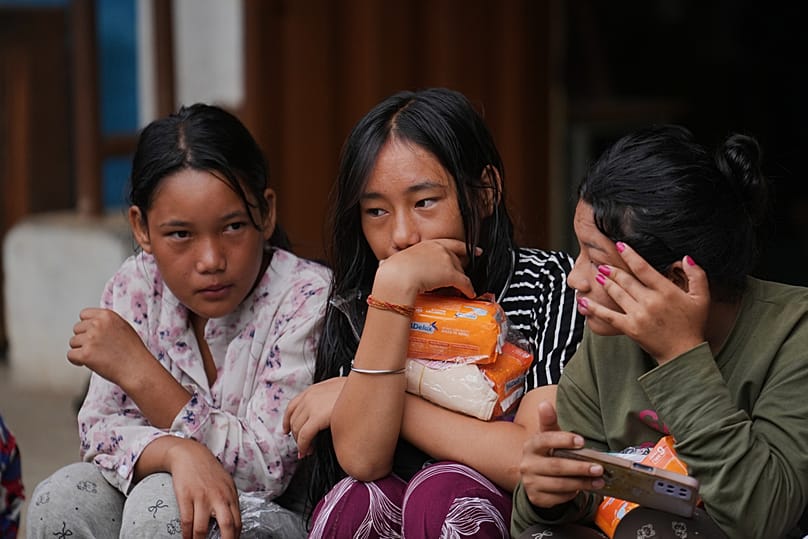
"We had to do this to set his soul free, so that he is at peace and happy wherever he is," said Dolma Newar Tamang, flanked by her sobbing son, at a funeral for her husband.
He had been en route to China when the disaster struck. "I saw the news and called him," she said. "I called repeatedly, but he never picked up."
A week after the colossal disaster, Nepali rescuers remained hopeful about finding survivors, particularly in multiple tunnels of hydropower plants across the region. So far, rescuers have recovered only bodies from tunnels blocked by sludge, but teams were still digging, drilling and blasting through debris in the hopes of reaching any potential survivors.
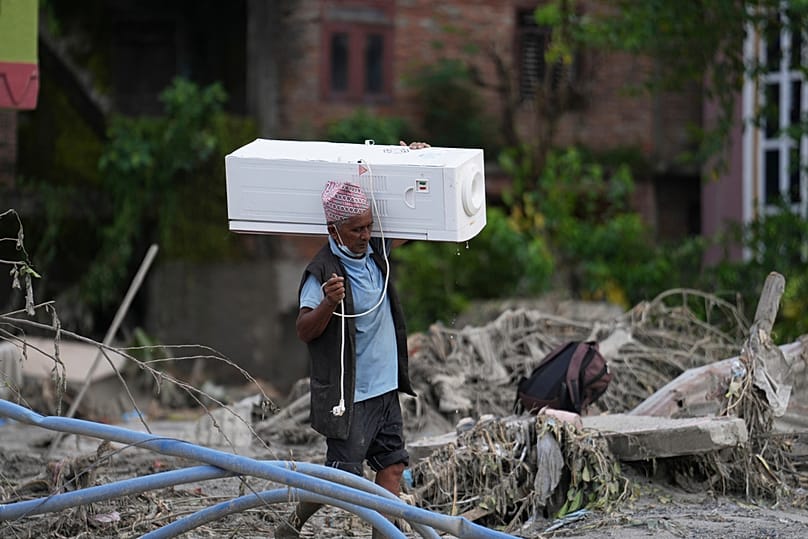
Nepal's Foreign Minister Shisir Khanal said he still hoped some of the thousands of people still reported missing could be alive.
"Miracles do happen," he said in an interview. "At this point, I do not want to completely give up hope."
Nepal's Prime Minister Balendra Shah said the catastrophe was "a serious indication that the risks we face in the Himalayan region are increasing alongside climate change".
"Climate change is a global contribution, and disaster response is also a global responsibility," he wrote in a post on Facebook.
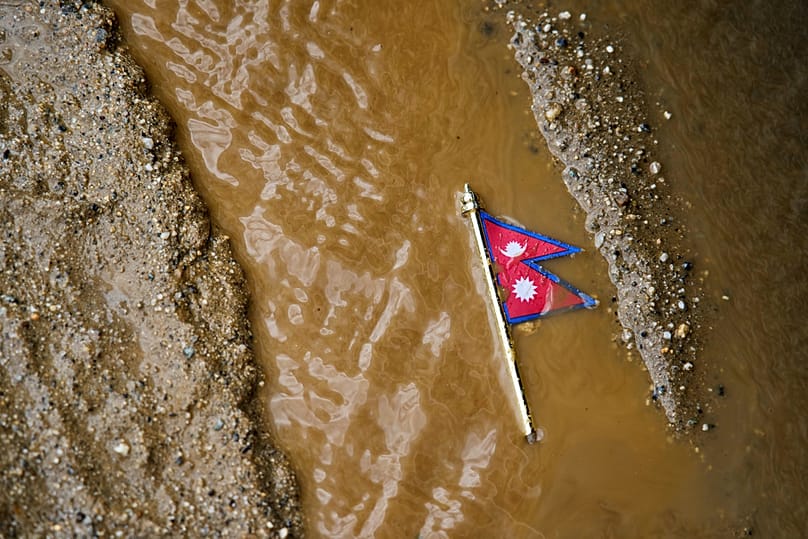
Scientists say the Himalayas, the world's highest mountain range, are warming rapidly as global temperatures rise, accelerating glacier melt.
Glaciers in the wider Himalayan and Hindu Kush ranges are a crucial water source for around 240 million people in the mountainous regions, as well as for another 1.65 billion people in the South and Southeast Asian river valleys below.
There is growing anger at the scale of destruction to hit Nepal, a largely rural nation of 30 million people. The country has contributed little to the greenhouse gas emissions driving global warming, but is among those suffering its consequences.
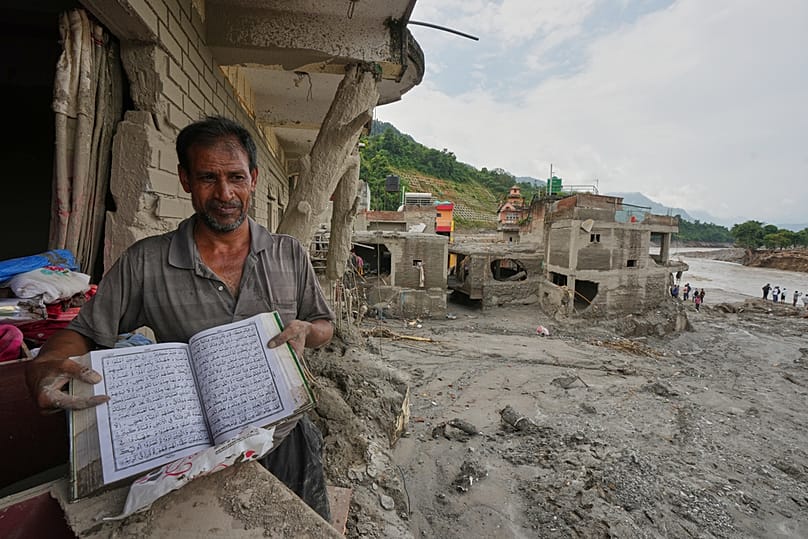
Kathmandu has warned reconstruction costs could run into the "billions of dollars". Nepal's economy is already strained, with limited resources to respond to a disaster of this scale.
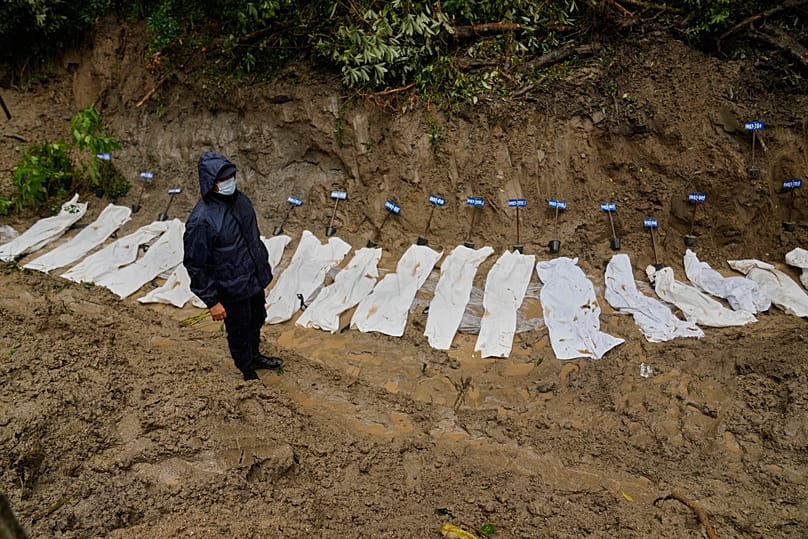
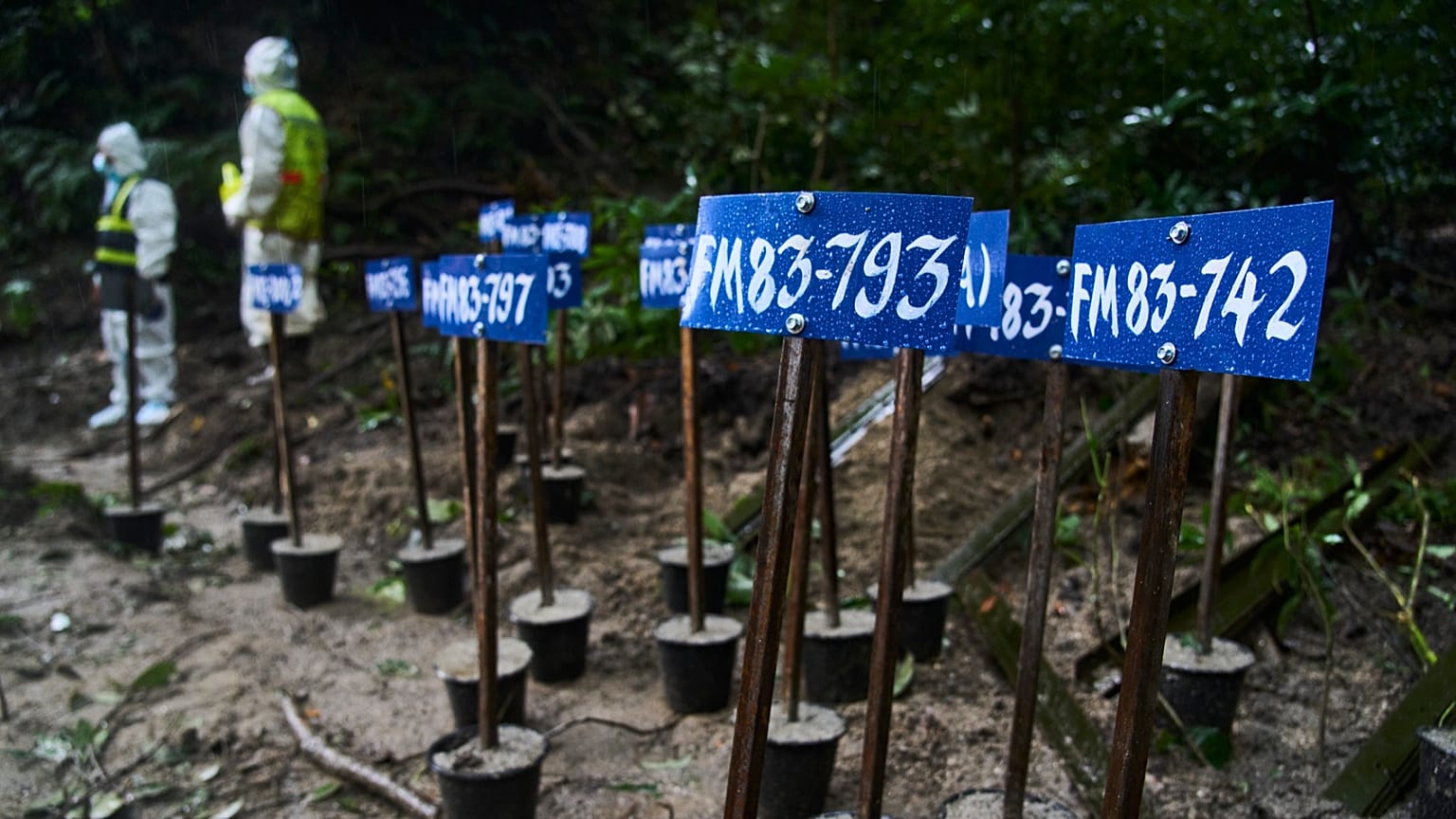
With mortuaries overflowing in Nepal, authorities have had to bury hundreds of unidentified bodies after DNA sampling in mass graves, sparking major uproar from the country’s largely Hindu community, who accused the government of ignoring religious burial rites.
The total number of confirmed deaths as of Wednesday morning sat at 1,114. The latest figures also show 3,916 people still missing.
Sources In Tibet And Nepal Reveal Stories Of Flood Destruction, Survival
Mud covers Nuwakot district in central-northern Nepal following devastating flash floods. Photo Credit: UNICEF/Laxmi Prasad Ngakhusi
September 2, 2026
By RFA
Key Takeaways:
Kyirong/Gyirong sources (anonymized) described a wave hitting near the customs office in about three minutes, ~30 people in one village, road crews among the dead, 15 homes wrecked, and 10 Lhasa-area pilgrimage guides missing from Dram/Zhangmu.
On Nepal’s Serthang/Timure side, residents described a sky-high surge, a 98-year-old mother swept away, and two minutes to lose a village; Kyirong town itself was farther off but water ran ~3 km upstream.
As the death toll from last week’s glacial flooding disaster at the Tibet-Nepal border surpassed 1,000 on Tuesday, sources inside Tibet told Radio Free Asia that a group of 10 Tibetan travel guides are among the missing.
AFP reported that more than 4,500 people were missing, but both the death toll and the number of missing could be higher, as exiled Tibetans and advocacy groups have accused China of underreporting casualty totals on the Tibetan side of the border.
Chinese authorities have forbidden journalists from entering the disaster zone or interviewing affected family members, and have punished those accused of “spreading rumors” about the disaster, New York-based Human Rights Watch reported.
Residents and officials of Kyirong County (Gyirong in Chinese), which borders Nepal’s Rasuwa district, witnessed entire villages destroyed, they told RFA Tibetan on condition of anonymity for security reasons.
“Within 3 minutes the flood reached the area near the Kyirong customs office, and no one who was there survived,” a Tibetan resident of Kyirong County told RFA. “There were about 30 people in the village.”
The resident said that many people from the area had been working in the area on road construction at the time of the disaster.
“Now, many of them are dead,” the resident said. “There is no hope left. It was like a dream. It came out of nowhere.”
A Chinese official in the same area confirmed that several people who were displaced by the disaster were able to find alternative lodging.
“A few people from the affected area have been kept in a guesthouse and in paying guest rooms in private homes,” the official told RFA. “I am not comfortable explaining other details.”
Missing guides
Ten Tibetan travel guides from the Tibetan capital Lhasa, the surrounding areas, and elsewhere have been missing since the flood, another Tibetan resident told RFA. The source said that the guides were stationed in the Dram (Zhangmu) area along the border.
“They usually take travellers and tourists from the Nepal-Tibet border and take them on excursions and pilgrimage to places like Mount Kailash and Lake Manasarovar,” the second resident said.
Two people from the village of Resuo survived the disaster according to a third Tibetan resident, also from Kyirong.
“Two people were able to run toward the mountain,” the third resident said. “Only if you can run toward a hilltop can you save yourself; otherwise it is very difficult to survive. The force of the water was so strong.”
According to the third resident, Kyirong county was largely spared because it is a bit farther from the affected area.
“But the water flowed about three kilometers upstream,” the third resident said. “About 15 families from the village had their homes completely destroyed”
The third resident said that many of the people who work there are in the military or are customs officials that work on the border.
“We … are also not allowed to visit the affected area,” the third resident said. “All we can do is console the family members.”
Stories of survival
On the Nepal side of the border several residents told RFA, on condition of anonymity to speak freely, that they witnessed the disaster as it happened.
“The flood came like a fall from the sky and felt like an earthquake,” a resident of Serthang, a subdistrict of the town of Timure in the affected area on the Nepal side, told RFA. “I saw the flood coming down and entering my home at the same time.”
The Serthang resident said that several villagers were at the family home to celebrate the birth of a son.
“Thankfully, we were all able to run and escape,” the Serthang resident said. “But there were many older people and children who could not escape because they lacked physical strength.”
A second Serthang resident told RFA that he saw his elderly mother washed away in the flood.
“Before the flood, my wife and I were with my 98-year-old mother,” the second Serthang resident said. “I had to leave my mother behind and saw her swept away by the water in front of my eyes. My wife barely escaped the floodwater.”
The second Serthang resident said that within two minutes the village was lost to the carnage.
“The electricity had gone out sometime before the flood came,” the second Serthang resident said. “Then suddenly, the whole village was filled with people shouting. In two minutes, the whole village was flooded. I was so scared that I had to run barefoot.”
A flood of this magnitude was unprecedented for the area, the second Serthang resident said.
“The height of the flood was as high as a tall building,” the second Serthang resident said. “It seemed like the water was in the sky. In the meantime, the house was no longer visible.”
About RFA
Radio Free Asia’s mission is to provide accurate and timely news and information to Asian countries whose governments prohibit access to a free press. Content used with the permission of Radio Free Asia, 2025 M St. NW, Suite 300, Washington DC 20036.
View all posts by RFA →
No comments:
Post a Comment