EU expected to lobby member states to give Patriot interceptors to Ukraine
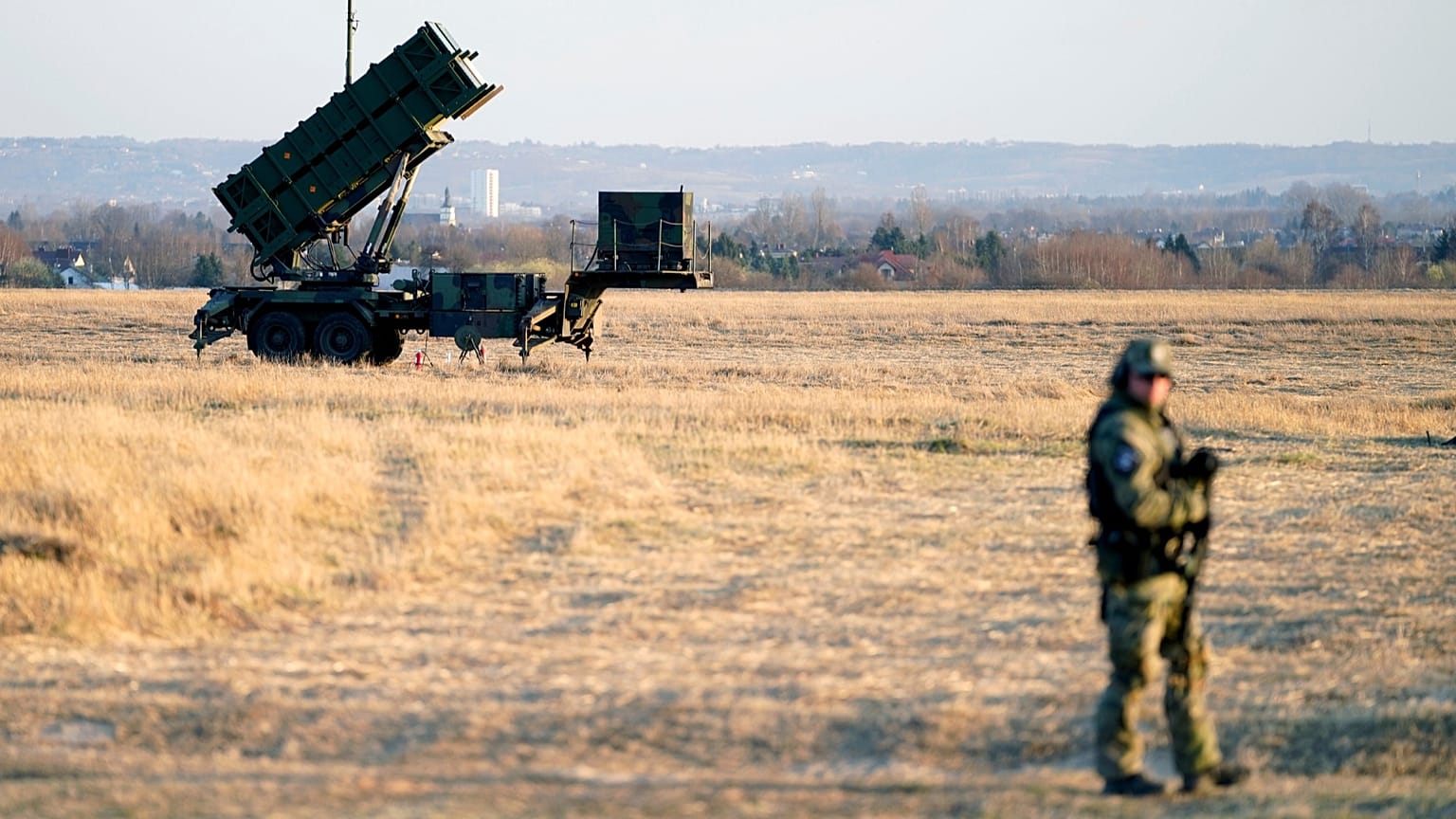
Ukraine is running out of Patriot interceptors to shoot down Russian missiles and other airborne threats. The EU executive is expected to put pressure on Mediterranean nations, like Greece and Spain, to give theirs up at a defence meeting on Tuesday.
European countries that still hold significant stocks of interceptor missiles are expected to face pressure from the European Commission to transfer them to Ukraine, as Kyiv’s need for air-defence systems grows increasingly urgent, EU officials told Euronews.
Spain and Greece, in particular, are expected to come under pressure at a defence meeting on Tuesday in County Wicklow, Ireland, to provide some of their stocks.
Ukrainian President Volodymyr Zelenskyy said late August that deliveries of Patriot interceptors had declined even as Russian missile attacks on Ukraine intensified. He said Kyiv needs an estimated 300 interceptors to fend off what is already shaping up to be a bitter winter battling another year of Russia's full-scale invasion.
The war with Iran has forced the US to draw heavily on its own Patriot reserves, shrinking the pool of interceptors available to replenish allies — including Ukraine — at precisely the moment Kyiv needs more.
Spanish Prime Minister Pedro Sánchez said earlier this year Madrid pledged to donate five Patriot missiles to Ukraine amid the shortage. Greek Prime Minister Kyriakos Mitsotakis said Athens has “resisted” pressure to transfer any of its six Patriot batteries to the war-torn nation in the past. He argued they are critical for defending the country’s own airspace.
One EU diplomat speaking to Euronews on condition of anonymity, due to the sensitivity of the matter, said the issue of Madrid and Athens keeping a tight grip on their Patriot interceptors is not new. But the issue is gaining pace with Zelenskyy voicing louder requests for interceptors, with the air defence system proving to be the “debate of the summer”, they said.
The European External Action Service (EEAS), the EU's diplomatic arm, is currently speaking with Japan and South Korea to convince them to share some of their stocks with Ukraine.
However, diplomats are wary that potential tensions with China are due to limit how much the two Asian countries are willing to share. Greece may also be reluctant to draw down its stockpile amid rising tensions with Turkey in recent months.
Three EU diplomats agreed that Ukraine’s shortage of Patriot interceptors is a “big issue” with broader questions about how to fill the gap. “What this will look like, I am not sure,” one EU diplomat said, adding that Tuesday's meeting is informal and therefore not expected to produce any formal conclusions.
The effectiveness of Europe’s own defences, particularly in the wake of a series of hybrid threats, is also expected to be a key focus of the talks.
Moldova, an EU candidate country, was recently rocked by a series of drone incursions. Five unmanned aerial vehicles entered the country’s airspace on 27 August, with the president Maia Sandu offering a defiant statement in response.
The meeting comes after media reports also reveal the director of the CIA, John Ratcliffe, embarked on a secret trip to Moscow.
In the wake of the visit, which reportedly centred on warning the Kremlin against any form of aggression towards Baltic nations, various leaders from the region have insisted their threat assessments of a Russian attack on Latvia, Estonia and Lithuania remains the same.
The former president of Estonia, Toomas Hendrik Ilves, went so far as to tell Euronews he is sceptical that Ratcliffe was dispatched to warn Russia against escalation. He argued that Washington remains more concerned about Iran
Meanwhile, one European Commission official revealed to Euronews that Kyiv is mulling whether to use the next funding envelope of the €90 billion support loan to purchase anti-ballistic systems, which could either be Patriots or the Franco-Italian version, the SAMP/T NG system.
To find other ways of plugging Ukraine’s anti-ballistic gap, the EU executive recently rubber-stamped a €6.1 billion defence procurement to supply the country with air and missile defence systems, missiles, ammunition and radars.
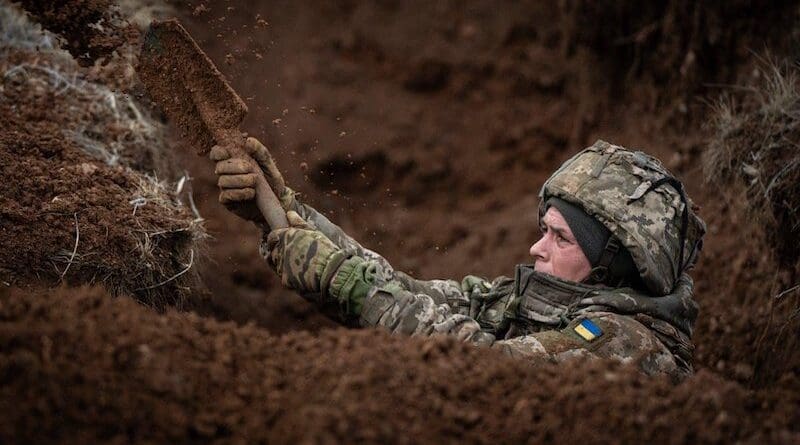
A Ukrainian soldier digs a trench. Photo Credit: Ukraine Defense Ministry
Observer Research Foundation
By Nandan Unnikrishnan and Aleksei Zakharov
Key Takeaways:
A late-June 40-day Ukrainian deep-strike campaign hit Crimea supply lines, distant refineries (Omsk is cited), warehouses, and Black Sea shipping; Russia answered with ports, grain terminals, petrol stations, and Kyiv-area raids as interceptor stocks run short.
The predicted endgame is a ceasefire on the line of contact, a heavily armed Ukraine outside NATO, and a fragile European security deal—only after both sides decide more fighting no longer pays.
There appears to be no endgame in sight after four-and-a-half years of fighting in Ukraine, with peace negotiations making no progress in 2026. If anything, with both Russia and Ukraine escalating strikes on energy facilities, logistics infrastructure, warehouses, as well as ports and vessels in the Black Sea, a protracted war looks increasingly likely.
The so-called “Anchorage formula”, or, as the Russians call it, “the spirit of Anchorage”, referring to the understandings Russia claims were reached at the 2025 Trump–Putin summit in Alaska, is firmly dead, while a new baseline for negotiations remains undefined. Both Moscow and Kyiv remain confident that they can sustain the war for several more months and gain the upper hand in negotiations through military pressure. So far, however, the escalation has produced no tangible results. Rather, it is creating a more dangerous situation in which the war could spill over into new territories and draw in new actors and domains.
A Stalled Battlefield
The dynamics across the line of contact have not seriously shifted over the past several months. Russian armed forces continue to inch forward but with little to suggest that Moscow will achieve its military goals anytime soon. Russia’s main objective remains the capture of the entire Donbas region, which still requires seizing some of the most heavily fortified settlements in Donetsk oblast. Even though Russian forward-deployed groups are, by various estimates, 5 to 15 kilometres from Kramatorsk and Sloviansk, Ukrainian defence lines there appear to be holding, and the scattered villages, together with natural obstacles such as rivers and hills, will only make it more difficult.
The Russian Ministry of Defence’s announcement of full control over Kostiantynivka (Konstantinovka), an important stronghold in the Donetsk oblast that has seen fierce fighting for more than ten months, has been contested by Ukraine. The same appears to be true for some other locations, which, despite Russian advances and Ukrainian counterattacks, remain largely in a grey zone that neither side has managed to bring under firm control.
The nature of warfare has also changed dramatically. Various types of drones dominate the so-called ‘kill zones’, making massive assaults not viable, and most forward movement is now carried out by small tactical groups. Even when such units succeed in advancing and planting their flag, the effect is not always lasting—they are quickly targeted with drones and forced to retreat.
Meanwhile, Ukraine has upped the cost of war for the Kremlin with spectacular strikes deep into Russian territory on refineries, warehouses, and military infrastructure. Russia has responded in kind. If anything, this tit-for-tat escalation is only blurring the lines between civilian and military targets.
This is not entirely new in the current conflict, as many major industrial sites, particularly military production facilities and dual-use infrastructure, have already been targeted. Russia had long been the more active party, owing to its capability to strike Ukrainian regions far from the frontline. This situation is now shifting.
An Economy Under Strain
In late June 2026, Kyiv launched a 40-day operation aimed at “pressuring Russia to end its war.” First, Ukraine has acquired mid-range strike drones, which have enabled it to hit supply chains into Crimea, effectively isolating the peninsula and exacerbating the food and energy situation there.
Second, Ukraine has made progress in developing drones capable of striking facilities deep inside Russian territory, as well as establishing stable satellite navigation access. This is evident in sustained attacks on energy infrastructure, particularly oil refineries. The longest-range strike of this campaign hit a refinery in the city of Omsk, almost 2,500 kilometres from the Russia-Ukraine border. Kyiv has also launched a series of attacks on warehouses belonging to Russia’s largest online retailers across several Russian regions and has disrupted the passage of oil tankers, grain-carrying bulk carriers and container ships travelling to and from Black Sea ports. This has impacted Russia’s exports of crude oil and grain, compelling it to rearrange supply chains.
The results of Kyiv’s operation have been mixed. It has definitely posed serious challenges to Russia’s wartime economy: sustained strikes on refineries have triggered a fuel crisis across the country, with refining capacity falling and Moscow being forced to import petrol and diesel from abroad. The growing number of drone strikes, and their ability to reach distant regions, have brought the war home to many ordinary Russians, with recent surveys showing that anxiety levels have risen markedly compared to earlier years of the conflict.
However, the 40-day operation has done little to change the situation on the ground. It has done economic damage to Russia but has not shaken Moscow’s resolve to end the war on its own terms. It has also provoked Russia into intensifying attacks on Ukrainian logistics.
In recent weeks, for instance, Russia has stepped up strikes against Ukrainian ports, grain terminals on the Black Sea and commercial vessels heading to them—dealing a heavy blow to Ukrainian agricultural exports, one of the country’s few remaining sources of income. Russia has also destroyed nearly 250 petrol stations across various Ukrainian regions, particularly in the frontline-adjacent areas of the Kharkiv, Dnipro and Zaporizhzhia oblasts. Finally, capitalising on the Ukrainian shortage of interceptors for Patriot air defence systems, Russian forces have escalated strikes on the greater Kyiv area, home to many military and industrial facilities.
If the current trend of escalation continues without new agreements, Russia and Ukraine may be facing a brutal winter, in which economic strain inevitably spills over into a humanitarian crisis.
A Possible Endgame
Although the outlook for peace remains bleak, with previous attempts to craft a peace framework failing, the broader contours of how the war will end are discernible. For one, this will be a ceasefire along the line of contact rather than any land swaps presumably envisaged by the US-Russia discussions in Anchorage last year. It is a different matter that Russia may gain more territory by the time an agreement is signed. Second, Ukraine will likely become one of the most militarised countries in Europe, closely tied to Western security arrangements, albeit without formal NATO membership.
Despite neither side achieving its objectives, both could claim a form of victory: Kyiv for preserving its sovereignty, independence, and potential to further integrate into the European space; Moscow for creating a buffer zone on its borders and preventing Western military deployment on Ukrainian soil. The latter, however, would hinge on security guarantees offered to Ukraine, likely to be a point of hard negotiation.
Beyond Ukraine, Russia and European nations will also need to coordinate a new framework for coexistence—one that cools mutual hostility and brings more pragmatism to the relationship. Without a solid agreement on the future of European security architecture—itself likely to be the subject of protracted negotiations that may ultimately fail—the relationship will remain fraught with the risk of a new conflict flaring up.
Additional factors that will keep any peace deal fragile include domestic developments in both Ukraine and Russia, two countries that will suffer a post-war hangover. The loss of territory will bedevil Ukraine’s domestic politics for years to come, fuelling a sense of revanchism among constituencies pushing to regain lost lands. An economically weakened Russia, having expended vast resources in the war, would also seek clear mutual guarantees or deterrence mechanisms from the West. Beyond long-term economic issues, the country is likely to face deep social challenges in reintegrating all the demobilised soldiers back into society—something the Soviet Union grappled with in the late 1980s following the war in Afghanistan. Additionally, the social contract—a relatively high standard of living in exchange for reduced political freedoms—will come under further pressure in post-war Russia.
Although the Russia-Ukraine war is at an obvious deadlock, the conditions for the endgame have not yet ripened. For the diplomatic path to prevail, both sides must come to feel that continuing the war—wasting lives and economic and military resources—serves no strategic or political purpose. Kyiv and Moscow clearly are not there yet: both still hope to turn the tide of war in their favour.
Whether this ‘escalate to de-escalate’ approach can force a peaceful solution remains to be seen. One thing is clear: the Russia-Ukraine war will end in an armistice or a peace agreement rather than a total victory for either side.
About the authors:
Source: This article was published at the Observer Research Foundation.
About Observer Research Foundation
ORF was established on 5 September 1990 as a private, not for profit, ’think tank’ to influence public policy formulation. The Foundation brought together, for the first time, leading Indian economists and policymakers to present An Agenda for Economic Reforms in India. The idea was to help develop a consensus in favour of economic reforms.
View all posts by Observer Research Foundation →

Russia's President Vladimir Putin. Photo Credit: Kremlin.ru
August 30, 2026
By Paul Goble
Key Takeaways:
He says those labeled Russian are politically, culturally, and even linguistically diverse; breaking that monopoly would weaken the regime more than treating all Russian-speakers as Moscow’s constituency.
His prescription is a Western strategy of institutional recognition—separate flags, seats, and voices for multiple “Russias” abroad—modeled on earlier shifts that recognized union republics and then non-Russian regions inside the federation.
Ever more people around the world recognize that the Russian Federation includes a variety of non-Russian nations who make up an increasing share of that country’s population and aspire to greater autonomy and in some cases even independence from Moscow.
But they still treat those whom the Russian census counts as “ethnic Russians” as an undifferentiated whole and even accept the idea that even those who speak Russian should be included part of that community. That is no small thing, and Denis Bilunov argues that it has given the Kremlin the ability to continue its war in Ukraine (region.expert/monopoly/).
The former editor of Kasparov.ru who is now a graduate student at Prague’s Charles University says that the Kremlin leader’s “monopoly on ‘Russianness’” is so strong that many in both the Russian Federation and the West accept it as somehow natural and fail to recognize that those called Russians are extremely diverse culturally and politically.
As long as Putin can successfully make this claim, his regime will remain stable and he will be able to conduct aggressive wars as now in Ukraine. But, Bilunov says, “if this monopoly can be challenged convincingly enough, the regime will lose its stability, and the chances for real change for the better will emerge.”
To that end, the West must adopt “a proactive strategy” aimed at challenging Putin’s claims to have a monopoly on the representation of ‘Russianness,’” depriving him of the chance to claim to speak for all Russians and Russian speakers and supporting the diversity of people lumped together as ethnic Russians so that these can lead to “an organic process capable of garnering mass support.”
These must involve first of all the recognition of how diverse those labelled ethnic Russian by Moscow in fact not only politically but culturally and even linguistically as well are and then on “institutional recognition” by such means as allowing representatives of these multiple Russias to compete under their own flags or have their own places in activities of various kinds abroad.
That is going to be difficult given Moscow’s media campaign and the inertia of western thinking, but the fact that there has been so much change first in recognizing that the union republics of the USSR were different and now in acknowledging that the non-Russian republics within the Russian Federation gives hope that Bilunov’s call will gain support.
No comments:
Post a Comment