“Thank you, Gloria, for showing the world what it means to speak up for women’s equality.”

WASHINGTON, DC - JANUARY 21: Gloria Steinem attends the Women's March on Washington on January 21, 2017 in Washington, DC.
(Photo by Noam Galai/WireImage)
Jon Queally
Sep 03, 2026
COMMON DREAMS
Progressive advocates, lawmakers, veteran journalists, labor leaders, and champions of feminism on Thursday are mourning the death of trailblazing women’s rights activist and author Gloria Steinem, who has passed away at the age of 92.
Steinem, regarded as an icon of the second-wave feminism that emerged in the 1960s and 70s and co-founder of Ms. Magazine, was known for decades as a leading voice on reproductive rights, women’s equality at work, and gender equity across society.
According to her representatives, Steinem died Wednesday at her home in New York City, surrounded by loved ones. An exact cause of death was not given.
“It is a moment of remembrance and celebration of this extraordinary woman. And it is too a moment of reflection.” —Agnes Callamard, Amnesty International
“Gloria’s near-century on earth was years well-lived, and she continued working for equality until the very end,” read a message posted to her Instagram account.
“Gloria’s greatest gift was her ability to listen to others, to make others feel seen and heard,” the message continued. “Her words, actions, and example gave people permission to be their truest selves. Gloria lived true to her independent spirit, always with curiosity and a great sense of humor.”
“Oh no,” declared Agnes Callamard, secretary general of Amnesty International, upon learning of Steinem’s passing.
“It is a moment of remembrance and celebration of this extraordinary woman. And it is too a moment of reflection,” Callamard said. “The fight for gender justice and women’s equality is at a critical juncture. The advancements of the last decades are attacked, threatened, mocked. We resist, fight back, build anew.”
The progressive advocacy group Our Revolution said that Gloria Steinem “understood that liberation is not something handed down from the powerful. It is something ordinary people organize and fight for.”
For more than 50 years, the group added, “she fought for women to have power over our bodies, our work, our lives and our futures. And she understood that the struggle for women’s liberation could never be separated from the struggles for racial justice, economic justice and human dignity. At a moment when women’s rights and fundamental freedoms are once again under attack, the best way we can honor Gloria is not simply by remembering her. It is by organizing. Rest in power, Gloria Steinem.”
According to the New York Times:
Steinem helped usher in sweeping cultural transformations across virtually every facet of American life, from the boardroom to the courtroom to the bedroom.
For more than half a century, she personified the women’s movement and became its most enduring symbol; her tinted aviator glasses and curtain of streaked-blond hair parted in the center made her one of the most recognizable women in the world.
A prolific writer, Steinem started her career as a journalist in the 60s and in 1972 she co-founded Ms. Magazine, a publication focused on women’s issues with the idea of translating “a movement into a magazine.”
Steinem, wrote CNN’s chief international anchor Christiane Amanpour, “will go down in history as one of the most important activists of all time, leading a movement for the equality of half the world: its women.”
“She lived a long and passionate life dedicated to this vital and basic cause,” Amanpour continued. “She did it with intellectual precision, emotional awareness, humor and beauty. May she rest in peace and may the cause thrive.”
In a video posted to social media, Rep. Becca Balint (D-Vt.) said that Steinem “always understood that gender equality was absolutely bound up with economic equality and racial justice and that has to continue to be our North Star.”
In 2017, after the first election of President Donald Trump, Steinem was one of the key leaders behind the Women’s March, which kicked off opposition to the far-right Republican, with marches in cities nationwide that helped galvanize resistance to the destructive policies to come.
At the time, Steinem warned that Trump’s arrival in the White House represented “disaster and a danger,” but added that the upside of his ascendancy could be the force brought together to galvanize against him.
“He’s made us see that everything is connected,” she said. “I’m a hope-aholic, nonetheless. I feel we’re beginning to approach the end of one structure and the beginning of another. It’s a time of both danger and possibilities.”
As the Associated Press reports:
On Jan. 21, 2017, when hundreds of thousands of women gathered in Washington in their pink “pussy hats” for the historic Women’s March, it surprised nobody that the keynote speaker, and the most rousing, was Steinem.
“We are linked,” she told the crowd. “And this is a day that will change us forever because we are together.”
For many women, Steinem was the galvanizing voice that day. She would go on to advocate fiercely. But, though many saw her as a singular figure in history, she often liked to say that if she hadn’t come along, someone else would have accomplished the same things.
By the same token, she said, it was less important that younger people listen to her, and more important that they listen to themselves.
“The primary thing is not that they know who I am,” she said, “but that they know who THEY are.”
As news of Steinem’s passing spread on Thursday, others offered their reflections on her life and accomplishments.
“Thank you, Gloria, for showing the world what it means to speak up for women’s equality,” said the National Organization for Women (NOW) in a statement. “Thank you for fighting for our rights so that every woman and every person can live with dignity, freedom, and equality.”
Democratic New York State Rep. Jessica Ramos said Steinem “spent her life refusing to accept a world where women were expected to settle for less.”
“She organized, challenged power, and helped turn women’s equality into a movement that changed America,” Ramos said. “We honor her legacy by refusing to go backward.”
“Gloria Steinem did not simply advocate for women; she changed what women believed was possible,” said Victoria Mancinelli, a member of the labor movement in Canada, in response to news of Steinem’s death.
“She confronted a world that expected women to remain quiet, accept less, and wait patiently for progress. Gloria refused. Through her journalism, activism, and unrelenting pursuit of equality, she helped transform deeply personal struggles into a powerful collective movement and forced institutions to recognize women as leaders, decision-makers, and agents of change.”
Kathleen Culliton
September 3, 2026
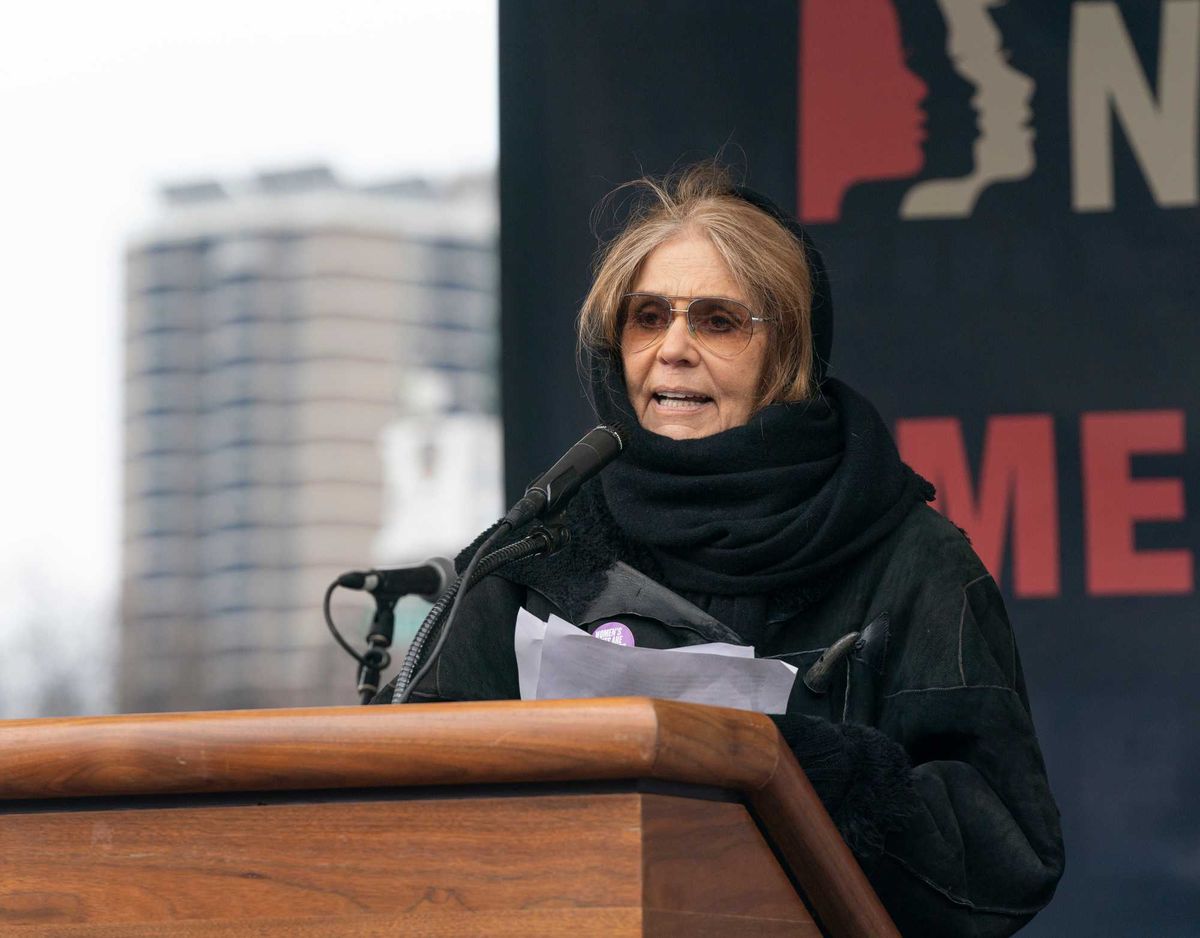
New York, NY - January 19, 2019: Feminist Gloria Steinem speaks during Women's Unity Rally at Foley Square as hundreds of people attend. Lev Radin | Shutterstock
Gloria Steinem — the iconic feminist journalist who revolutionized work for generations of women to come — has died. She was 92.
Steinem passed away in her New York City home on Wednesday, surrounded by those who loved her, The Gloria Steinem Foundation announced Thursday morning.
"Gloria’s greatest gift was her ability to listen to others, to make others feel seen and heard," the foundation stated. "Her words, actions, and example gave people permission to be their truest selves. Gloria lived true to her independent spirit, always with curiosity and a great sense of humor."
The cause of death was not revealed.
Steinem dedicated her life to causes such as reproductive freedom, domestic violence prevention and workplace gender inequalities.
She became a household name in 1963, when she went undercover as a Playboy bunny and exposed the poor conditions workers faced in Hugh Hefner’s clubs.
In her later years, Steinem hosted talking circles in her home and wrote a forthcoming book, "𝘈𝘯 𝘜𝘯𝘦𝘹𝘱𝘦𝘤𝘵𝘦𝘥 𝘓𝘪𝘧𝘦," according to the foundation.
"Gloria loved the tradition of lighting signal fires on hills to light the way to the other side of the mountain," they stated. "Lighting your own candle for Gloria makes you part of this global and celestial community circle."
Read more about her life and work here.
When Gloria Steinem identified as a Jew most
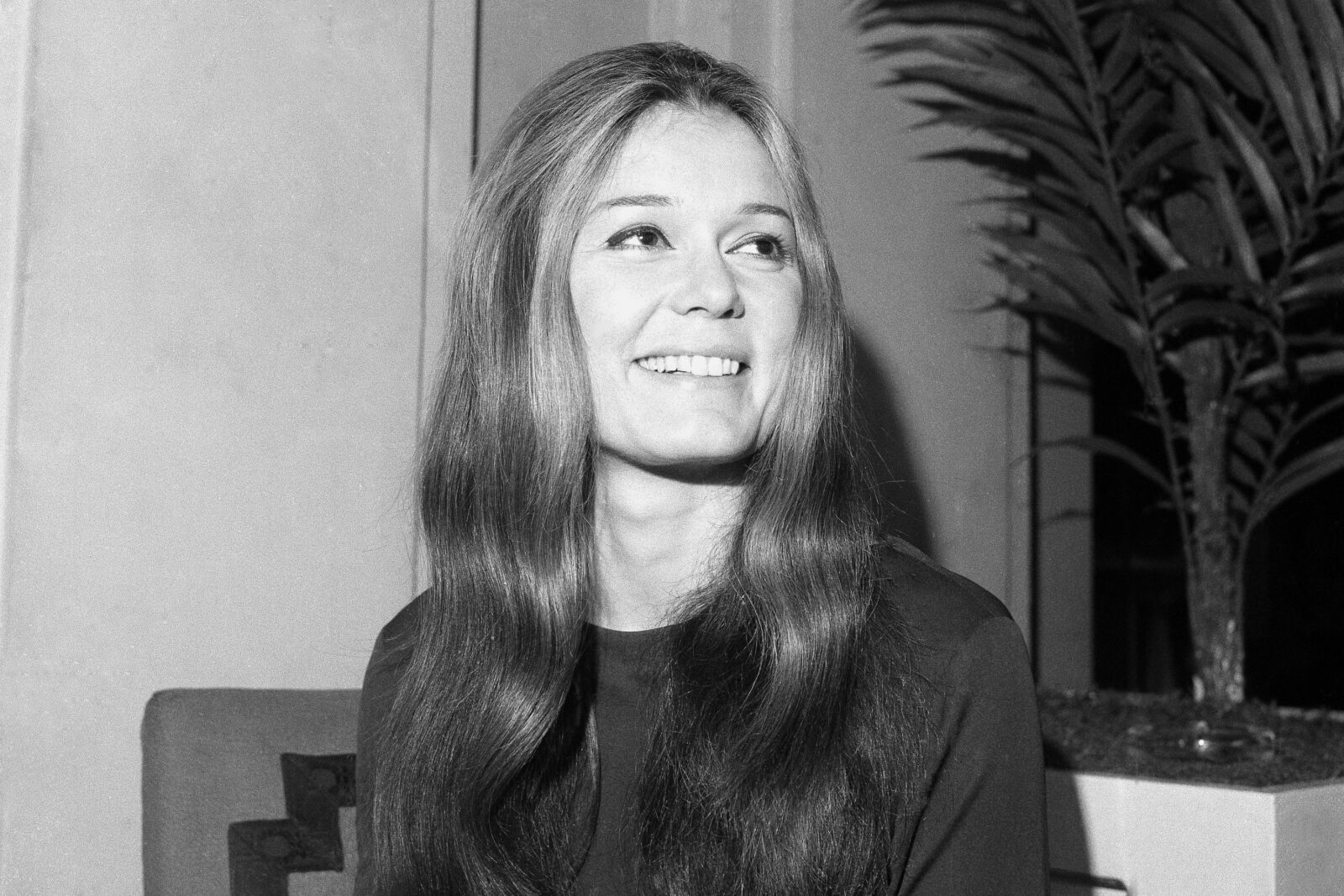
Gloria Steinem, the journalist and organizer who became the most recognizable face of America’s modern women’s movement, died Wednesday at her New York City home. She was 92.
For more than half a century, Steinem pushed American women to imagine lives beyond the limits society had set for them. She co-founded Ms. magazine, helped establish the National Women’s Political Caucus and turned phrases like “sexual harassment” from unnamed experiences into subjects of national debate.
Steinem was the daughter of a Jewish father, Leo Steinem, and a Protestant mother, Ruth Nuneviller. She was raised without much religion and generally described herself as secular, but she was unequivocal about where she stood when Jews were targeted: “Never in my life have I identified as a Christian,” she said, “but wherever there is antisemitism, I identify as a Jew.”
Her mother taught her to value her Jewish roots. Steinem told the Forward in 2015 that her father rarely discussed his heritage; it was her non-Jewish mother who presented Judaism to her as something positive — “She also told me Jewish men made better husbands” — and taught her about her paternal grandmother.
That grandmother was a feminist pioneer in her own right. Pauline Steinem, who kept kosher, was an educator, suffragist, delegate to the 1908 International Council of Women and the first woman elected to Toledo’s school board — and during the Nazi’s rise in the mid-1930s, she worked to rescue members of her family from Europe.
A feminist Seder became her strongest connection to Jewish ritual. Steinem participated for decades in an annual women’s Seder, calling it the first spiritually centered experience of her feminist life. What drew her to Judaism, she said, wasn’t the law — it was “the mystical part, the Kabbalah, the Shechinah.
She recognized how antisemitism and misogyny fed each other. In her memoir, Steinem recalled a cabdriver telling her that feminism was a Jewish plot to destroy the Christian family. Her response to such hatred was not to distance herself from Jews, but to identify with them more strongly.
That identification outlasted her. Gloria and her sister, Susanne, donated a catalog of jewelry seized from Nazi victims to the U.S. Holocaust Memorial Museum — in honor of their grandmother.
Steinem continued writing and advocating for equality into her 90s. Her final book, An Unexpected Life, is scheduled to publish later this month.
This story was originally published on the Forward.
.jpg)
No comments:
Post a Comment