US Plan Advances for 50-Ship Nuclear-Powered Merchant Fleet
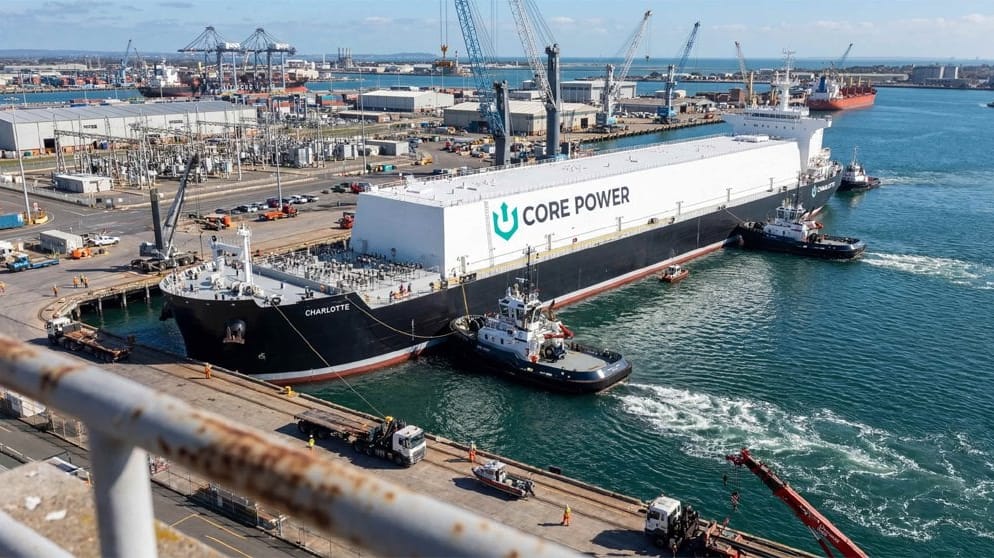
British-based nuclear energy company Core Power is pitching another proposal in the United States, seeking to commercialize nuclear energy propulsion plants for ships.
In February this year, Core Power was seeking a tie-up with the US Department of War to take advantage of simpler regulations governing the operation of nuclear power plants on board ships docking at defense-owned ports. Because the Pentagon has extensive experience of using small nuclear reactors afloat, with well-established protocols, use of this regulatory environment would allow much faster deployment of maritime nuclear energy applications than if deployments had to use the regulatory scheme applicable to civil nuclear energy.
Core Power sought to deploy a nuclear power station on board a vessel stationed in a military port, to bring a major power source close to where energy-hungry data centers might need it. To cover the costs of linking into a grid, the vessel would need to be committed to a particular port for a substantial period, but like an LNG FSPO it could be moved at the end of a contract period to a new task elsewhere. Core Power envisioned using either the Westinghouse 550MW A4W reactor, as used on the Nimitz Class aircraft carriers, or the Rolls Royce PWR2 nuclear submarine reactor, which is also the basis of Rolls Royce’s SMR design for small nuclear generation plants which has been adopted in the UK. In the end, however, Core Power has opted for a nuclear reactor produced by BWX Technologies for this application. In May 2025, the White House issued an Executive Order mandating the development of an advanced nuclear reactor at a military base by no later than September 30, 2028.
Core Power’s latest project is wrapped up in a seven-year agreement signed with the US Maritime Administration last week to build a fleet of 50 nuclear-powered merchant vessels. The fleet would be a mix of LNG tankers and container ships. At a unit cost of $700 million per ship, rather than $250 million for the equivalent tonnage of a conventionally powered ship, the vessels would be expensive – but would enjoy lower fuel costs, higher sea-time and cruising speeds, offering therefore higher utilization and cost efficiency, as well as a Net Zero-compliant complete reduction in sulfur fuel emissions. Core Power estimates that conventional merchant vessel tonnage would need to be 66 percent higher to haul the same volume of goods as could be carried on a nuclear-powered fleet.
US Secretary for Transportation Sean Duffy has shared his enthusiasm for the project, posting online about the ambition to build a nuclear-powered merchant fleet about the ambition to build a nuclear-powered merchant fleet, pitching such vessels as having:

Secretary Duffy regards the program as a response to Chinese competition. At the Marintec China conference in Shanghai in June, Chinese state-owned Jiangnan Shipyard, based in Shanghai, announced that it is to build a 25,000 TEU nuclear-powered containership.
Hulls for the US ships would be built in Japan and Korea, with the nuclear power plants fitted out in a yard to be developed in the United States. The yard could potentially be in Corpus Christi (TX), where Core Power has signed a preliminary agreement. The project is aiming for first ship delivery in 2033.
U.S. Army To Spend $2.2B On Nuclear Microreactors At Military Bases
- The U.S. Army plans to deploy around 20 portable nuclear microreactors, awarding up to $2.2 billion to bring the technology to military bases under its Janus Program.
- Microreactors could provide resilient, localized power without constant fuel deliveries, with companies including Radiant, Antares, BWXT, General Atomics and Westinghouse selected for deployments.
- The military push could accelerate commercial nuclear adoption, as Google, Amazon, Microsoft and Meta also pursue advanced nuclear power to meet soaring AI and data-center electricity demand.
Back in October 2025, the U.S. Army unveiled the Janus Program to supply portable nuclear microreactors to military bases by 2028. Whereas these reactors are much smaller than conventional nuclear plants, they typically generate 1-20 megawatts of electricity per reactor, significantly more than what the biggest portable generators can manage. That makes them ideal for the military, considering that major military bases consume as much power as a small city. The military logic is that in a conflict, transporting fossil fuels to remote front lines creates an easy target, while localized nuclear reactors can operate for years without refueling. To that end, the U.S. Army has awarded up to $2.2 billion over five years to both private and public companies to build, own, and operate commercial nuclear microreactors at five domestic military bases, estimating that 20 microreactors will be deployed under the program. Five vendors have already been selected to design and deploy the microreactors at specific installations, with Antares Nuclear slated to build a microreactor at Fort Bragg in North Carolina; BWXT Technologies (NYSE:BWXT) is slated for Fort Campbell in Kentucky, General Atomics Electromagnetic Systems will build one at Fort Hood in Texas, Radiant Industries is slated for Fort Benning in Georgia while Westinghouse Government Services will build one at Fort Drum in New York.
Nuclear startups Radiant Industries secured a contract worth up to $750 million to deploy 15 of its 1-MWe Kaleidos microreactors, starting with a three-unit installation, and Antares Nuclear will also deploy a three-unit group of its R1 microreactor (ranging from 100-kWe to 1-MWe per unit). The companies plan to deliver and deploy their microreactors in modular packs so they can ship the reactors via standard trucks, rail, air, or barge. The facilities will be factory-built to avoid drawn-out on-site construction, and Radiant's Kaleidos microreactor is designed to be fully transportable and plug-in ready, capable of powering up within 48 hours of arriving at a base.
Interestingly, the U.S. Army will be responsible for licensing the reactors rather than the U.S. Nuclear Regulatory Commission (NRC), which normally licenses commercial nuclear reactors.
But this particular arrangement has drawn heavy criticism. Alan J. Kuperman, associate professor at the Lyndon B. Johnson School of Public Affairs at the University of Texas, told AP that the idea of not involving the NRC in the licensing process is “a dangerous scam on many levels.” However, Jeff Waksman, principal deputy assistant secretary of the Army for installations, energy and environment, says the reactors are not intended to be Army-specific, but will rather be designed so that they can later transition easily to the commercial market, at which stage the NRC will be involved. Waksman says the Army will co-ordinate with the Energy Department to remove radioactive waste, with no plans for long-term storage on these installations.
While SMRs face high cost and supply-chain hurdles, they are increasingly viewed as vital for grid stability and the clean energy transition, with the U.S. government targeting a massive expansion to reach 300 GW of new nuclear power by 2050. If successful, the Janus microreactors could be among the first ever SMRs to be installed on U.S. soil.
Hordes of American Big Tech companies and hyperscalers have signed a flurry of deals involving SMRs and advanced nuclear energy to power their surging AI data center electricity demands.
Two years ago, Google signed a landmark deal with Kairos Power to purchase 500 megawatts of power from a new fleet of six to seven SMRs, with the first reactor targeted to come online by 2030. That same year, Amazon invested in SMR developer X-Energy (NASDAQ:XE) by leading a $500 million funding round and securing offtake rights for its reactors, alongside deals with utility consortium Energy Northwest in Washington State to develop advanced SMR projects. Meanwhile, Microsoft signed a massive deal with Constellation Energy (NASDAQ:CEG) in 2024 to restart Three Mile Island Unit 1 and has actively built an internal nuclear strategy team to deploy SMR solutions for its global data centers. Finally, Meta signed agreements with nuclear developers Oklo Inc. (NYSE:OKLO) and TerraPower in January 2026 to build multiple SMR and advanced reactor units.
By Alex Kimani for Oilprice.com
US Army selects five microreactor techs for deployment
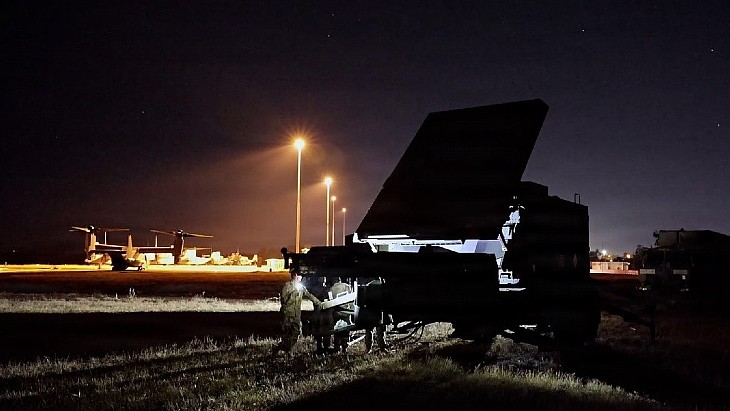
The technology and locations are: Antares Nuclear, at Fort Bragg, North Carolina; BWXT Advanced Technologies, at Fort Campbell, Kentucky; General Atomics Electromagnetic Systems, at Fort Hood, Texas; Radiant Industries, at Fort Benning, Georgia; and Westinghouse Government Services, at Fort Drum, New York.
The decision was taken with input on the technical risks, financial situation, and management capabilities of the solutions from a panel of nuclear "and technical experts from the Department of Energy, national laboratories and representatives across the services".
The Janus Program - launched last October - is a next-generation nuclear power programme aimed at delivering "resilient, secure, and assured energy to support national defence installations and critical missions". Executive Order 14299 - Deploying Advanced Nuclear Reactor Technologies for National Security - was signed by President Donald Trump in May 2025 and aims for operation of an Army-regulated nuclear reactor at a domestic military installation no later than 30 September 2028.
Dan Driscoll, Secretary of the Army, said: "Awarding these contracts accelerates our ability to deliver safe, reliable baseload power directly to our installations. We are building the energy resilience necessary to project combat power globally, without relying on potentially vulnerable external grids."
Jeff Waksman, principal deputy assistant secretary of the Army for Installations, Energy and Environment, said: "We are seeking not just reactors capable of turning on for a brief demonstration, but rather systems able to deliver power with high-capacity factors for years of operation. The Janus Program will be a complete success when, and only when, we have assisted multiple nuclear companies in developing truly reliable and affordable nuclear microreactors which they can sell to other buyers beyond just the military."
The Department of the Army says vendors will receive government funding contingent on successfully hitting specific technical goals, potentially up to USD2.2 billion across 2027-2031.
Owen West, director of the US Department of War Innovation Unit (DIU), said: "We need more power. We need it delivered faster and cheaper, and we need it to be more reliable. With Janus, DIU is assisting the Army's microreactor build - speeding military energy production to protect the nation."
The selected vendors
Antares' Mark-0 demonstration reactor was the first reactor to reach criticality under the Department of Energy's Reactor Pilot Program, in June. It is a sodium heat-pipe cooled microreactor technology, which uses tri-isostructural isotropic - or TRISO - fuel containing high assay low-enriched uranium (known as HALEU).
Jordan Bramble, CEO and founder of Antares, said: "We're grateful and proud to partner with the US Army and the Defense Innovation Unit on the Janus Program. Energy scarcity is constraining America's most critical defence systems. Through Janus, Antares will deliver clean, firm, resilient power for the warfighter."
BWX Technologies says it is targeting groundbreaking for site construction in late 2028 with reactor operations commencing in the early 2030s. The BWXT Advanced Nuclear Reactor (BANR) is a high-temperature, gas-cooled nuclear reactor that utilises TRISO fuel. It is designed for critical infrastructure, and the Janus Program involves a 20 MWe version.
Rex D Geveden, BWXT president and CEO, said: "As we commence work on the Janus Program, we are delivering the nation's most credible and reliable path to deployable nuclear power. BANR is purpose-built for mission success, and we are driving forward with the discipline, experience and proven capability that national security demands."
General Atomics is developer of the General Atomics Tactical Energy System, a liquid-metal-cooled microreactor with a baseline net output of approximately 5 MWe, potentially scalable to approximately 20 MWe. It is designed for remote, off-grid and extreme environments, with a design life of 40 years.
Scott Forney, President of General Atomics Electromagnetic Systems, said: "General Atomics draws on more than 70 years of nuclear innovation and reactor expertise to deliver microreactor technologies that provide safe, dependable and independent power for military installations. Our experience designing and deploying 68 reactors worldwide and supporting reactor technologies throughout their lifecycles positions us to deliver assured energy solutions that enhance operational resilience and strengthen mission readiness."
Radiant, which is developing the Kaleidos 1 MW transportable microreactor, said its agreement with the US Army and Defense Innovation Unit was worth up to USD750 million to develop and deploy up to 15 of its microreactors.
Tori Shivanandan, President and Chief Operating Officer of Radiant, said: "The numbers tell the story. This award shows confidence in Radiant's product and ability to manufacture, deploy, and safely operate nuclear microreactors for the American military."
Westinghouse Government Services has developed the eVinci microreactor, a heat-pipe reactor designed to provide resilient electricity 24 hours a day, 7 days a week for eight years without refuelling.
Rich Rademacher, President of Westinghouse Government Services, said: "The selection of the eVinci microreactor for the Janus Project highlights the important role advanced nuclear technology can play in providing resilient, long-duration power to the warfighter. Westinghouse is proud to support the Army’s efforts to strengthen energy security and deliver innovative capabilities."
No comments:
Post a Comment