Black Sea Oil Shipping Insurance Costs Surge to $2.5 Million
Insurance costs for ships transporting oil across the Black Sea have surged from approximately $200,000 to $2.5 million per vessel in recent months, increasing crude transportation costs and putting additional pressure on fuel prices in Bulgaria, according to the manager overseeing Lukoil's operations in the country, local media reported.
Evgeni Simeonov, Lukoil's special commercial manager in Bulgaria, told Bulgarian National Television on Monday that the increase reflects mounting risks to commercial shipping following repeated attacks on vessels and port infrastructure.
The figures represent a 12.5-fold increase in the quoted insurance cost, equivalent to an additional $2.3 million per vessel as described by Simeonov.
London's marine insurance market had already expanded its Black Sea high-risk reporting requirements in September to cover the entire basin. Voyages within the territorial waters of neighboring countries, including Bulgaria, Romania, Georgia and Turkey, remain exempt from notification requirements. Reuters reported that war-risk premiums were adding hundreds of thousands of dollars to shipping costs for seven-day voyages.
The threat is also expanding into Bulgaria's exclusive economic zone. On October 6, drones struck two commercial vessels, sinking the Togo-flagged Alfa Watan and damaging the Palau-flagged Able. All 18 crew members aboard the Able were rescued, according to the Associated Press.
Bulgarian authorities have not established who carried out the attacks. The sinking prompted Syria to request an independent investigation after ten crew members, including nine Syrians, went missing.
Shipping costs were already rising before the October attacks. Bloomberg reported in August that benchmark daily tanker earnings on the Novorossiysk-to-Augusta route had reached a record $440,948, based on 135,000-ton crude shipments. The assessment had increased 140% since early July.
Bulgaria's Burgas refinery has continued receiving crude shipments. Simeonov said the facility had not experienced any cancelled deliveries and had secured supplies through the beginning of December.
He also defended Bulgaria's decision to lift restrictions on diesel exports, arguing that preventing the refinery from selling surplus production abroad could force it to reduce crude processing as storage facilities fill.
Simeonov said the refinery produces more diesel than Bulgaria consumes and that restrictions on diesel exports could consequently reduce production of gasoline, aviation fuel and other petroleum products.
By Michael Kern for Oilprice.com
Bulgaria Reports One Ship Sunk, One Damaged in Latest Drone Strike
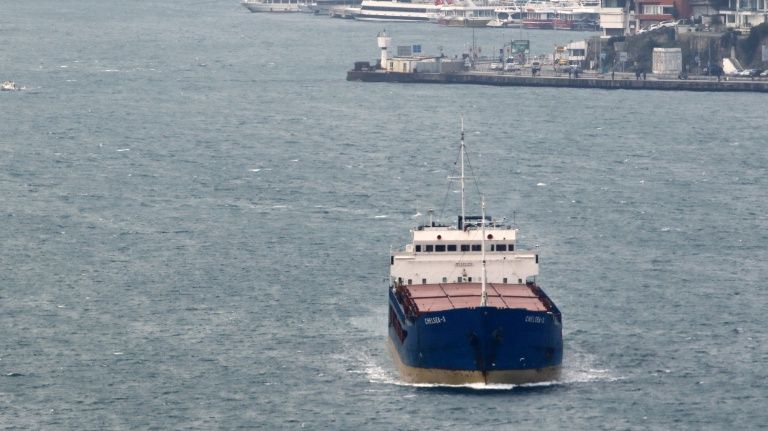
Early Tuesday, two more vessels were hit by suspected Russian drone strikes off the coast of Bulgaria, injuring five and sinking one ship. The attacks were the latest in a long string of strikes on Black Sea merchant shipping, dating back to early 2022 and increasingly employed by both sides of the conflict.
Bulgarian Prime Minister Rumen Radev announced the news of the latest attacks in a statement Tuesday. The vessels were hit outside of the nation's territorial seas, he claimed.
At about 0130 hours local time, the Ukrainian-operated coastal freighter Chelsea 3 made a distress call, reporting that it had been hit three times by aerial drones. The 15 crewmembers were evacuated and taken to the port of Varna, Radev said. Five of the seafarers were injured and needed medical care.
Additionally, Radev said that his ministers had been informed of a second vessel strike at a position about 17 nautical miles off Krapets. The as-yet-unnamed ship was sunk, he said. Only one crewmember from this vessel had been rescued at the time of his announcement early Tuesday.
Just last week, a suspected Russian drone strike sank a merchant ship off the Bulgarian coast, leaving all 12 crewmembers lost at sea. Another ship sustained serious damage but remained afloat. Russia has denied involvement in these earlier attacks.
While Bulgaria has denounced the kinetic strikes and has called for a cessation of the violence, its leaders have stopped short of naming a suspect just yet. "We do not have clear and conclusive evidence to attribute responsibility to either side. However, as I have already stated, the logic suggests that the outcome benefits the Russian Federation. I will therefore summon the Russian Ambassador for a meeting today," said Radev on Tuesday.
Last week, Bulgarian President Illiana Iotova called for greater cooperation on drone defense at sea among the three NATO members most affected - Romania, Bulgaria and Turkey. She has also suggested that other NATO member states should provide assistance in the form of maritime surveillance and counter-drone technologies to help defend the alliance's easternmost shores.
Top image: Chelsea 3 at Istanbul, 2016 (Cengiz Tokgoz / VesselFinder)
Bulgaria Sends Frigate to Search for Evidence in Attack on Vessels
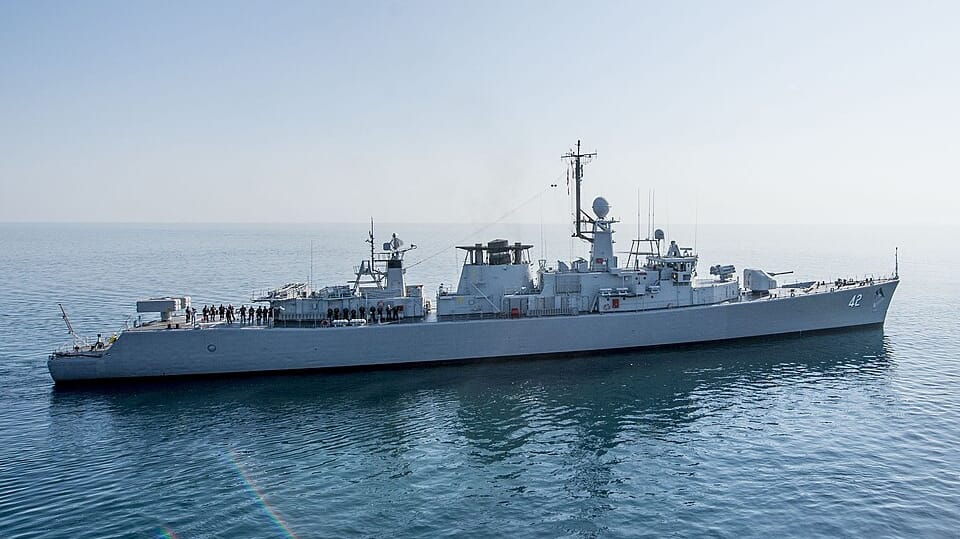
Bulgarian officials confirmed on Friday, October 9, that teams have been searching the area where the two cargo ships were struck this week for evidence. The teams boarded the abandoned, drifting cargo ship and also renewed a search in the Black Sea.
According to the reports, two members of the Bulgarian armed forces were able to spend approximately 30 minutes aboard the bulker Able on Friday to search for evidence. Military officials said the team was tasked with searching for drone debris, collecting any fragments, and photographing the wreck. He said the team was able to enter the ship despite extensive fire damage from what was termed an “extremely intense fire.”
Unfortunately, the team reported it was unable to locate any debris or fragments aboard the vessel or in the water. Bulgaria’s Minister of Defense said without evidence they would not speculate on the origins of the drone. He noted that both Ukraine and Russia have denied attacking the two vessels early on October 6.
Initially, Bulgaria had said it would not continue the search after declaring the 10 crewmembers from the cargo ship Alfa Watan missing. However, reports are that Syria, which had nine crewmembers aboard the missing vessel, has called for an independent investigation involving both Bulgaria and the International Maritime Organization. Bulgarian media also reported that officials in the European Union told the country that it had to do more if it wants to push for sanctions as a result of the attacks.
The frigate Verni was sent to the site on Thursday to locate the Able and determine the condition of the vessel. Maritime officials had speculated that the ship was very likely to sink, but it was located approximately 55 nautical miles northeast of Cape Emine. The Palau-flagged ship, which is 114 meters (approximately 374 feet) in length and 7,400 dwt, is reported stable. It is down by the stern after taking water through a breach in the hull. Officials said they assume the engine room is at least partially flooded.
The team from the Navy and Air Force returned to the ship on Friday with the frigate. They reported extensive fire damage aboard, but they were able to confirm the vessel was carrying wheat. At this point, they said it was impossible to determine if the ship would sink or continue to drift.
Bulgaria said it would continue to monitor the wreck, but it is still declining to identify the source of the attack.
Burgas Media is quoting a maritime expert who checked the details of the lost Alfa Watan. He said records showed the vessel loaded salt in Egypt, which was going to Romania. It was then going to load grain for a return trip to Egypt. The ship was 3,160 dwt and owned by Turkish interests.
No comments:
Post a Comment