
Traditional houseboats in Kerala, India. Photo Credit: Mohit Khare, Pexels
September 28, 2026
By Nikola Mikovic
Key Takeaways:
Kerala still leans on domestic visitors (25 million-plus in 2025 vs. ~822,000 foreign arrivals, up more than 11% year on year) and wants longer, higher-spend international trips from the UK, Europe, the U.S., Australia, and newer East and Southeast Asian markets.
Tourism Minister P.C. Vishnunadh, speaking around Kochi’s Sept. 24–27 Kerala Travel Mart, frames the pitch as experience, community value, and sustainability—beaches, backwaters, Western Ghats, culture, food, Ayurveda—not just postcard marketing.
Four international airports (Cochin solar-powered since 2015) need more long-haul flights; India-wide, WTTC put foreign spending at about 14% of tourism spend in 2025, so Kerala’s test is converting mart interest into seats, nights, and jobs.
For centuries, the southwestern Indian state of Kerala has maintained commercial, cultural and social links with countries across the Arabian Sea and the wider Indian Ocean. Today, those connections are taking on a new dimension as Kerala seeks to attract more international visitors and establish itself as a globally recognized tourism destination.
The state, however, remains heavily dependent on domestic tourism. In 2025, Kerala recorded more than 25 million domestic arrivals, compared with about 822,000 foreign tourist visits. Yet foreign arrivals grew by more than 11 percent from the previous year, suggesting that international tourism is becoming an increasingly important part of the state’s plans.
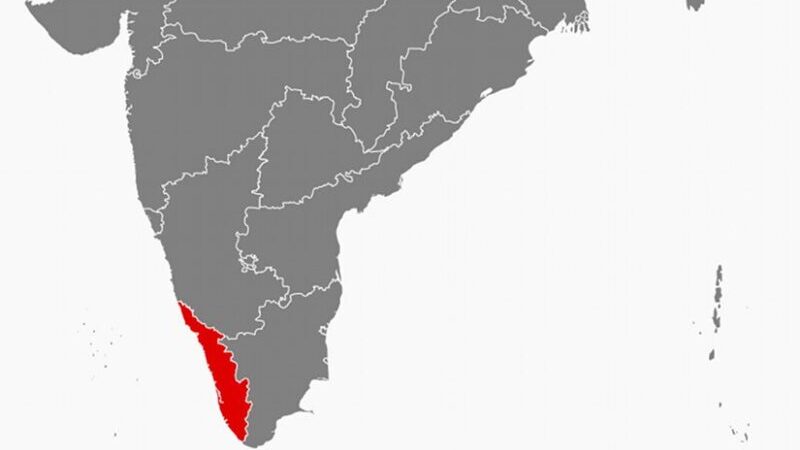
Location of Kerala in India. Source: Wikipedia Commons.
Kerala’s tourism authorities are therefore actively seeking to diversify the state’s international visitor base, with the UK, Europe, the United States and Australia remaining important markets while new opportunities are being explored in East and Southeast Asia.
“Our priorities are to increase international arrivals, improve the quality and length of stay, increase tourist spending, diversify tourism products and destinations, and create greater opportunities for employment, investment and local economic participation,” P.C. Vishnunadh, the minister for culture, cinema and tourism in the government of Kerala told this author in an interview.
As he emphasized, the larger shift is from marketing Kerala simply as a place to visit to positioning the southwest Indian state as a destination to experience, connect with and return to.
“We want Kerala to be recognized globally for the quality of its experiences, the value it creates for visitors and local communities, and its responsible and sustainable model of tourism,” Vishnunadh stressed.
Kerala once sent spices across the Arabian Sea and received merchants, ideas and cultures in return. Its people later travelled in large numbers to the Gulf and other parts of the world in search of work and opportunity. Now the state is trying to encourage the world to come to Kerala to experience its beaches, backwaters, mountains, culture, cuisine, as well as Ayurveda, India’s traditional system of medicine and wellness.
From September 24-27, the state’s commercial capital, Kochi, attracted hundreds of international and Indian tourism professionals to the Kerala Travel Mart, India’s largest business-to-business tourism event. It was an opportunity to showcase Kerala’s tourism offerings to international travel buyers, and also to demonstrate the state’s broader ambitions to strengthen its presence in global tourism markets.
As Kerala’s monsoon season draws to a close, international visitors are expected to arrive in greater numbers, staying in luxurious resorts, heritage properties and boutique hotels. From the beaches along its 590-kilometre coastline to the mountains and forests of the Western Ghats, Kerala offers a striking diversity of landscapes, experiences and cultural traditions.
But a diverse tourism offering is only part of the equation. For Kerala to attract more international visitors, good air connectivity will be equally important, particularly as the state seeks to expand its presence in distant markets such as Europe and North America.
“We are keen to work closely with airlines, airport authorities and the Union Government to strengthen international air connectivity from Kerala. We are also exploring opportunities for more direct and convenient connections to key European destinations, as our larger objective is to make Kerala more accessible to long-haul markets, particularly Europe, North America and other high-value international tourism markets,” Vishnunadh said.
Kerala has four operational international airports, with Cochin International Airport becoming the world’s first fully solar-powered airport in 2015. But its appeal extends beyond its infrastructure and natural attractions.
The state has long occupied an unusual position within India. It has built a reputation for relatively strong social indicators, high literacy and comparatively developed public services, while also maintaining a cultural landscape shaped by Hindu, Muslim and Christian traditions and centuries of interaction with foreign traders and communities.
“We want to build a high-value, sustainable and globally competitive tourism economy,” Vishnunadh stressed.
But this is not an ambition unique to Kerala. India more broadly is seeking to expand its international tourism sector and attract more visitors from abroad. Presently, international visitors remain a relatively small part of the country’s overall tourism expenditure. The World Travel & Tourism Council (WTTC) estimates that international visitor spending accounted for only about 14 percent of India’s total tourism spending in 2025. There is therefore significant scope for India to attract more foreign travelers and increase their contribution to the tourism economy.
Kerala is hoping to capture part of that opportunity, but the next challenge will be turning interest into actual growth. That means bringing in more airlines, reaching new markets and convincing international travelers to stay longer and spend more in Kerala, widely known as “God’s Own Country.”
For a state whose history has long been shaped by its connections with the outside world, attracting more of the world to Kerala could be the next chapter in that story.
Kerala’s tourism authorities are therefore actively seeking to diversify the state’s international visitor base, with the UK, Europe, the United States and Australia remaining important markets while new opportunities are being explored in East and Southeast Asia.
“Our priorities are to increase international arrivals, improve the quality and length of stay, increase tourist spending, diversify tourism products and destinations, and create greater opportunities for employment, investment and local economic participation,” P.C. Vishnunadh, the minister for culture, cinema and tourism in the government of Kerala told this author in an interview.
As he emphasized, the larger shift is from marketing Kerala simply as a place to visit to positioning the southwest Indian state as a destination to experience, connect with and return to.
“We want Kerala to be recognized globally for the quality of its experiences, the value it creates for visitors and local communities, and its responsible and sustainable model of tourism,” Vishnunadh stressed.
Kerala once sent spices across the Arabian Sea and received merchants, ideas and cultures in return. Its people later travelled in large numbers to the Gulf and other parts of the world in search of work and opportunity. Now the state is trying to encourage the world to come to Kerala to experience its beaches, backwaters, mountains, culture, cuisine, as well as Ayurveda, India’s traditional system of medicine and wellness.
From September 24-27, the state’s commercial capital, Kochi, attracted hundreds of international and Indian tourism professionals to the Kerala Travel Mart, India’s largest business-to-business tourism event. It was an opportunity to showcase Kerala’s tourism offerings to international travel buyers, and also to demonstrate the state’s broader ambitions to strengthen its presence in global tourism markets.
As Kerala’s monsoon season draws to a close, international visitors are expected to arrive in greater numbers, staying in luxurious resorts, heritage properties and boutique hotels. From the beaches along its 590-kilometre coastline to the mountains and forests of the Western Ghats, Kerala offers a striking diversity of landscapes, experiences and cultural traditions.
But a diverse tourism offering is only part of the equation. For Kerala to attract more international visitors, good air connectivity will be equally important, particularly as the state seeks to expand its presence in distant markets such as Europe and North America.
“We are keen to work closely with airlines, airport authorities and the Union Government to strengthen international air connectivity from Kerala. We are also exploring opportunities for more direct and convenient connections to key European destinations, as our larger objective is to make Kerala more accessible to long-haul markets, particularly Europe, North America and other high-value international tourism markets,” Vishnunadh said.
Kerala has four operational international airports, with Cochin International Airport becoming the world’s first fully solar-powered airport in 2015. But its appeal extends beyond its infrastructure and natural attractions.
The state has long occupied an unusual position within India. It has built a reputation for relatively strong social indicators, high literacy and comparatively developed public services, while also maintaining a cultural landscape shaped by Hindu, Muslim and Christian traditions and centuries of interaction with foreign traders and communities.
“We want to build a high-value, sustainable and globally competitive tourism economy,” Vishnunadh stressed.
But this is not an ambition unique to Kerala. India more broadly is seeking to expand its international tourism sector and attract more visitors from abroad. Presently, international visitors remain a relatively small part of the country’s overall tourism expenditure. The World Travel & Tourism Council (WTTC) estimates that international visitor spending accounted for only about 14 percent of India’s total tourism spending in 2025. There is therefore significant scope for India to attract more foreign travelers and increase their contribution to the tourism economy.
Kerala is hoping to capture part of that opportunity, but the next challenge will be turning interest into actual growth. That means bringing in more airlines, reaching new markets and convincing international travelers to stay longer and spend more in Kerala, widely known as “God’s Own Country.”
For a state whose history has long been shaped by its connections with the outside world, attracting more of the world to Kerala could be the next chapter in that story.

About Nikola Mikovic
Nikola Mikovic is a freelance journalist based in Serbia, reporting on geopolitics, energy, economics, tourism, and regional developments across Eurasia. His work has been featured in leading international outlets, including the South China Morning Post, CGTN, The Times of Central Asia, the Lowy Institute, Diplomatic Courier, and Byline Times, among others.
No comments:
Post a Comment