Artemis I: Crystals of experimental detectors record radiation doses near the Moon
The Henryk Niewodniczanski Institute of Nuclear Physics Polish Academy of Sciences
image:
A lithium fluoride crystal exposed to blue light, showing recorded tracks of ionizing particles under a fluorescence microscope.
view moreCredit: Source: IFJ PAN
Cracow, 22 October 2026
Do cosmic radiation doses near the Moon differ significantly from those received by astronauts in low Earth orbit? Experimental lithium fluoride detectors, installed aboard the Orion spacecraft during the Artemis I mission, have now made it possible to obtain preliminary estimates.
As the Orion capsule of the uncrewed Artemis I mission orbited the Moon in late November and early December 2022, more than ten thousand small crystals, embedded within two human phantoms, were collecting data on cosmic radiation doses. Among them were several dozen experimental fluorescent lithium fluoride detectors, developed at the Institute of Nuclear Physics of the Polish Academy of Sciences (IFJ PAN) in Cracow. A method for reading the information stored in these detectors, providing interesting insights into radiation doses and the properties of the detectors themselves, has now been presented in the scientific journal Radiation Measurements.
“The fluorescent radiation dose detectors based on lithium fluoride, developed at our institute, are passive in nature. In other words, they work like photographic film: once the crystals have been exposed to radiation, the tracks left by individual particles must be analyzed optically under a microscope,” explains Prof. Pawel Bilski (IFJ PAN), one of the co-authors of the paper.
The operating principle of passive radiation detectors based on lithium fluoride crystals is straightforward. As particles of ionizing radiation pass through a detector, they produce defects in the material's crystal lattice, which begin to act as color centers. During laboratory readout, these centers are excited by blue light and, as a result, emit red fluorescence, which can be observed under a microscope.
As part of the MARE (Matroshka AstroRad Radiation Experiment) experiment conducted during the Artemis I mission, several dozen experimental lithium fluoride detectors were installed in both human phantoms, some of them highly enriched in the lithium-7 isotope. However, IFJ PAN's overall contribution to the experiment was considerably greater, as Cracow physicists also supplied nearly 600 crystalline detectors of another type, namely thermoluminescent detectors.
Conventional passive track detectors made of plastic must undergo chemical etching before readout. Lithium fluoride crystals, by contrast, require no such cumbersome chemical treatment, and a standard fluorescence microscope is sufficient for observing the tracks. Reading the particle tracks recorded in the vicinity of the Moon was therefore quick and posed no difficulties for the researchers. Challenges arose when they attempted to extract quantitative information; this required the development of non-trivial methods for calibrating the results.
The fundamental difficulty stemmed from the nature of cosmic radiation. In typical physics experiments, detectors are irradiated with beams consisting of particles of the same type, all having well-defined energies and a precisely known direction of incidence. Cosmic radiation, however, arrives from all directions and contains all naturally occurring types of particles and atomic nuclei, spanning a very broad energy range. When observed under a microscope, the tracks therefore run in various directions. Consequently, in addition to the track segment within the focal plane (approximately one micrometer in size), the camera also captures a blurred glow from the remaining portions of the tracks. This affects the fluorescence intensity, the primary parameter used to assess ionization density. The analysis was further complicated by the fact that tracks left by highly ionizing particles appeared as continuous, clearly defined lines, whereas weakly ionizing particles could leave behind only a series of discrete, separated dots. This, too, affected the fluorescence intensity of the tracks.
“After applying a series of corrections and developing software to appropriately remove the background interfering with the measurements, our results differed by no more than 15% from those obtained using conventional track detectors across the entire overlapping range of energy deposition values. Moreover, we also recorded numerous particle tracks corresponding to energy deposits below the detection threshold of the detectors used to date,” Prof. Bilski emphasizes.
During the MATROSHKA experiment, conducted aboard the International Space Station more than a decade earlier, low-energy protons from the Van Allen radiation belts surrounding Earth accounted for part of the radiation dose deposited in the phantoms. These protons lost their energy at different depths within the phantoms, resulting in a non-uniform distribution of radiation doses throughout the mannequins. Near the Moon, however, the Van Allen belts are absent; instead, galactic radiation is more prominent. Its energies are so high that the particles can pass through the entire human body, depositing only part of their energy along the way. The radiation dose distribution recorded inside the phantoms during the Artemis I mission was therefore essentially uniform.
“Low-energy protons, trapped by our planet's magnetic field within the Van Allen belts, can account for the majority of the radiation dose received by astronauts in low Earth orbit. In the vicinity of the Moon, this substantial contribution disappears. Our measurements from the MARE experiment indicate that, although total radiation doses near the Moon are higher than those in Earth orbit due to the considerable levels of galactic radiation, the difference is not as large as one might intuitively expect,” Prof. Bilski notes.
The fluorescent lithium fluoride-based track detectors used during the Artemis I mission were grown using the Czochralski method. They were developed at IFJ PAN a decade ago and have been continuously improved ever since. Their main advantages include small size (on the order of millimeters rather than centimeters), which makes them convenient for people to wear; better track resolution than conventional chemically etched plastic detectors, allowing higher radiation doses to be recorded with clearly distinguishable tracks; and a broad range of detectable particle types and energies, enabling a better assessment of total radiation exposure. Furthermore, lithium fluoride detectors – particularly those enriched in the lithium-6 isotope – can be used to record neutron doses, since neutrons then undergo reactions with lithium nuclei, locally producing secondary charged particles that interact with the material in much the same way as external ionizing radiation.
The research conducted as part of the MARE project was supported by a grant from the National Science Centre, Poland (NCN), under its OPUS programme.
The Henryk Niewodniczański Institute of Nuclear Physics (IFJ PAN) is currently one of the largest research institutes of the Polish Academy of Sciences. A wide range of research carried out at IFJ PAN covers basic and applied studies, from particle physics and astrophysics, through hadron physics, high-, medium-, and low-energy nuclear physics, condensed matter physics (including materials engineering), to various applications of nuclear physics in interdisciplinary research, covering medical physics, dosimetry, radiation and environmental biology, environmental protection, and other related disciplines. The average yearly publication output of IFJ PAN includes over 600 scientific papers in high-impact international journals. Each year the Institute hosts about 20 international and national scientific conferences. One of the most important establishments of the Institute is the Bronowice Cyclotron Centre (CCB), which is an infrastructure unique in Central Europe, serving as a clinical and research centre in the field of medical and nuclear physics. In addition, IFJ PAN runs four accredited research and measurement laboratories. IFJ PAN is a member of the Marian Smoluchowski Kraków Research Consortium: “Matter-Energy-Future”, which in 2012-2017 enjoyed the status of the Leading National Research Centre (KNOW) in physics. In 2017, the European Commission granted the Institute the HR Excellence in Research award. As a result of the categorization of the Ministry of Education and Science, the Institute has been classified into the A+ category (the highest scientific category in Poland) in the field of physical sciences.
CONTACTS:
Prof. Paweł Bilski
Institute of Nuclear Physics, Polish Academy of Science
tel.: +48 12 6628414
email: pawel.bilski@ifj.edu.pl
SCIENTIFIC PUBLICATIONS:
“Application of LiF fluorescent nuclear track detectors for measurements of cosmic radiation at the lunar orbit within the MARE experiment”
P. Bilski, A. Kilian, M. Sankowska, T. Horwacik, T. Berger
Radiation Measurements 2026, 198, 107806
DOI: 10.1016/j.radmeas.2026.107806
LINKS:
The website of the Institute of Nuclear Physics, Polish Academy of Sciences.
Press releases of the Institute of Nuclear Physics, Polish Academy of Sciences.
IMAGES:
IFJ261022b_fot01s.jpg
HR: http://press.ifj.edu.pl/news/2026/10/22/IFJ261022b_fot01.jpg
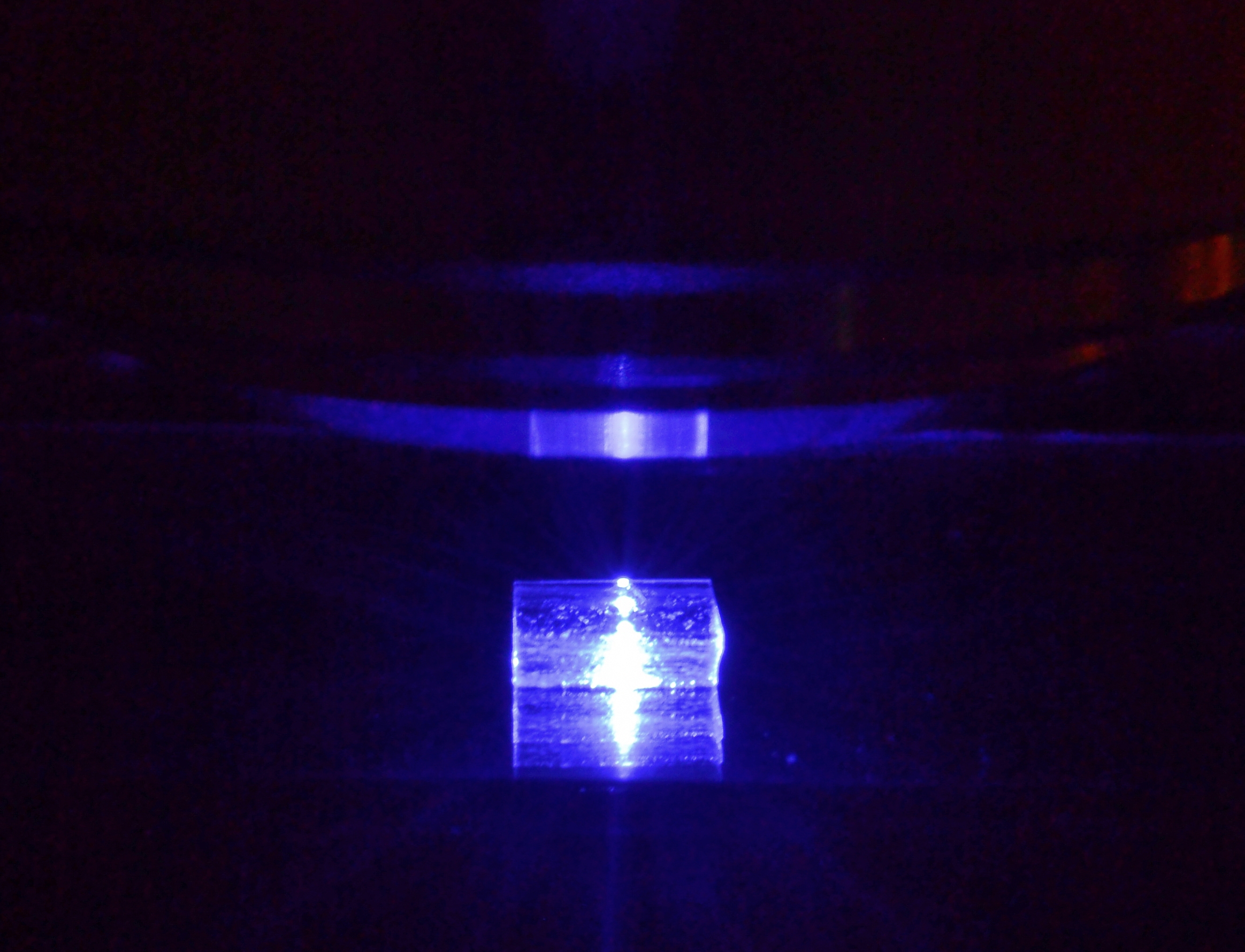
A lithium fluoride crystal exposed to blue light, showing recorded tracks of ionizing particles under a fluorescence microscope. (Source: IFJ PAN)
IFJ261022b_fot02s.jpg
HR: http://press.ifj.edu.pl/news/2026/10/22/IFJ261022b_fot02.jpg
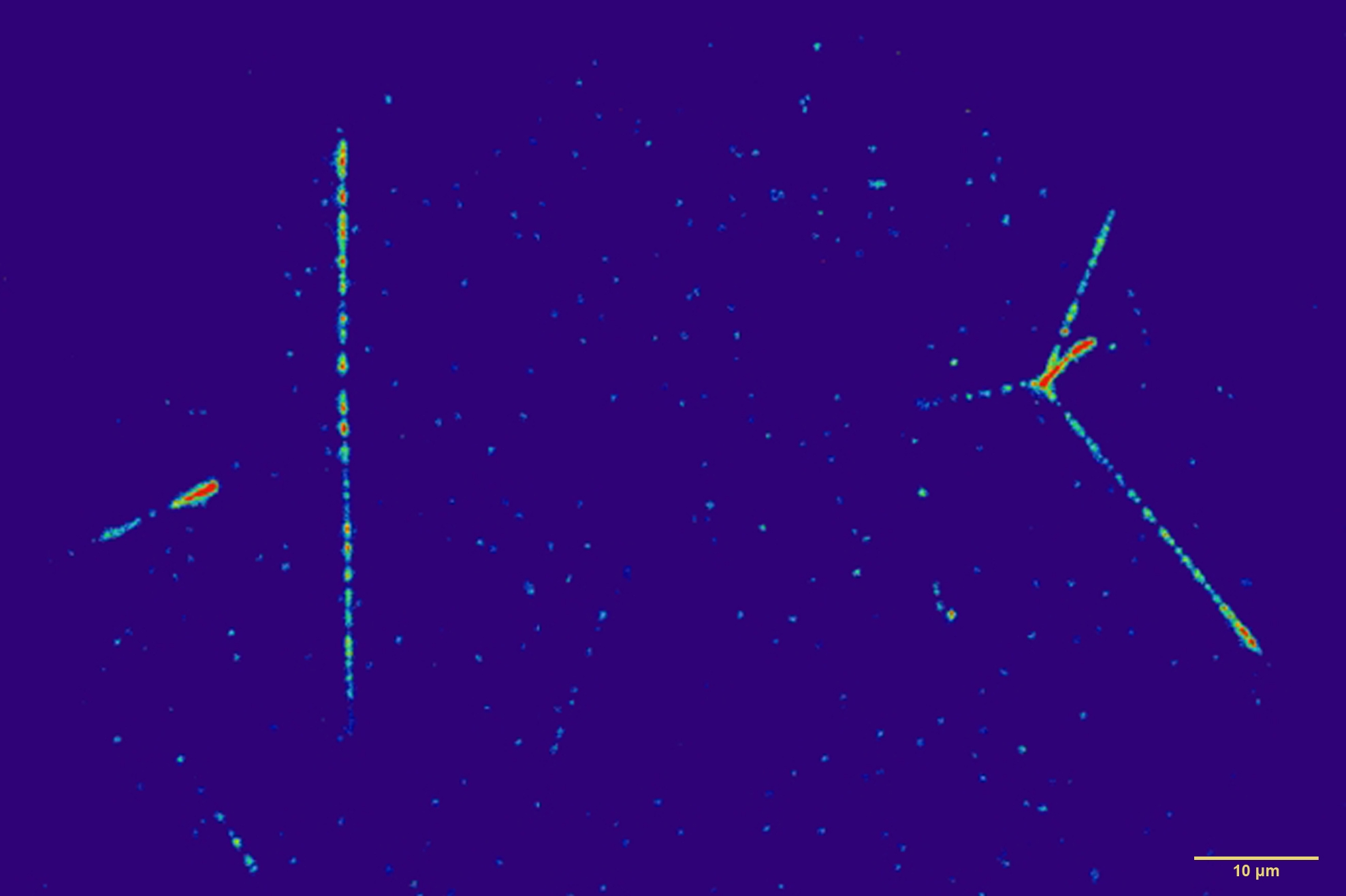
Tracks of cosmic radiation particles recorded in lithium fluoride crystal detectors during the Artemis I lunar flyby mission. (Source: IFJ PAN)
IFJ261022b_fot03s.jpg
HR: http://press.ifj.edu.pl/news/2026/10/22/IFJ261022b_fot03.jpg
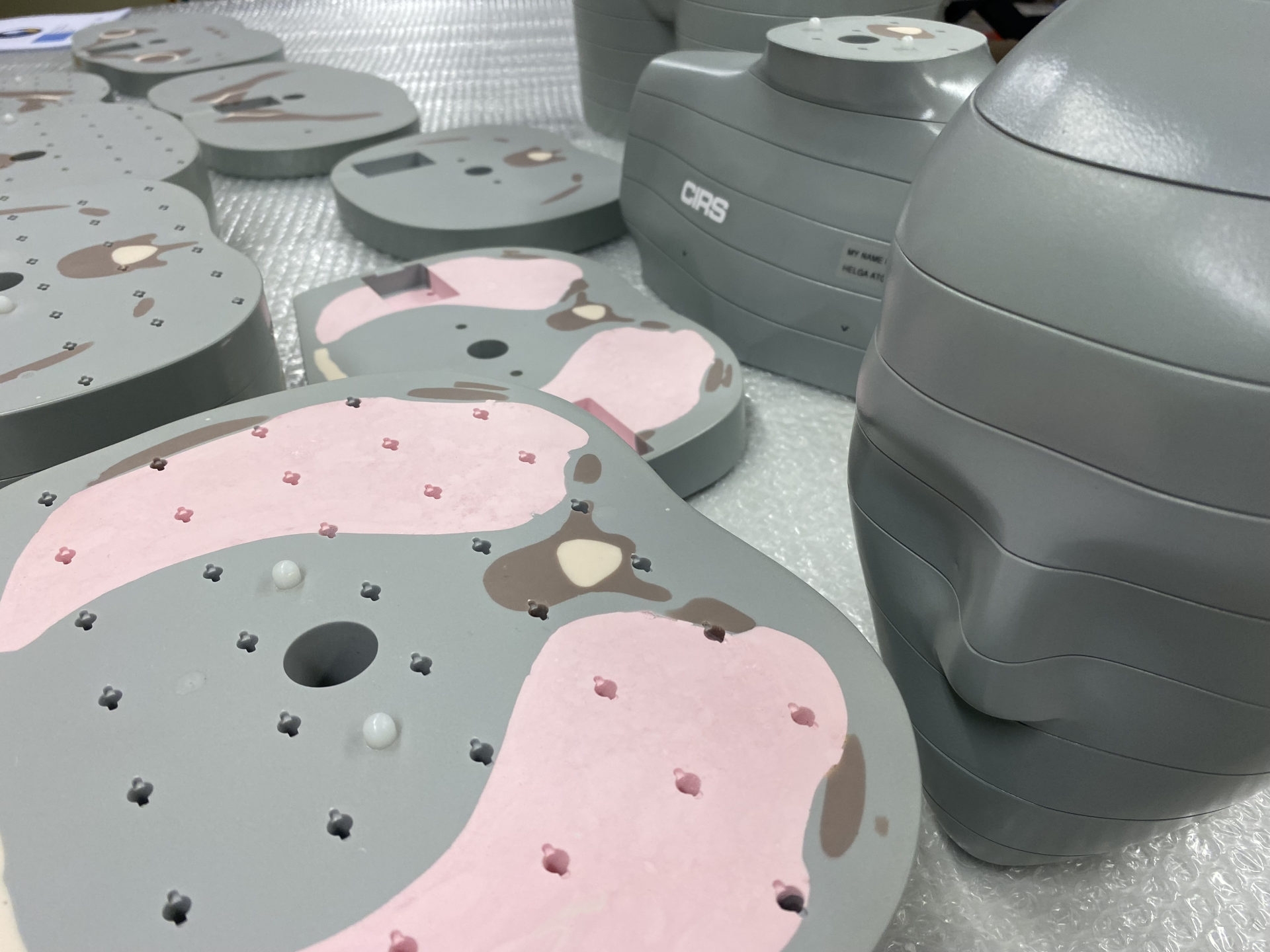
Cross-sections of the phantoms used in the Artemis I mission, showing the locations where radiation detectors were mounted. (Source: DLR)
IFJ261022b_fot04s.jpg
HR: http://press.ifj.edu.pl/news/2026/10/22/IFJ261022b_fot04.jpg
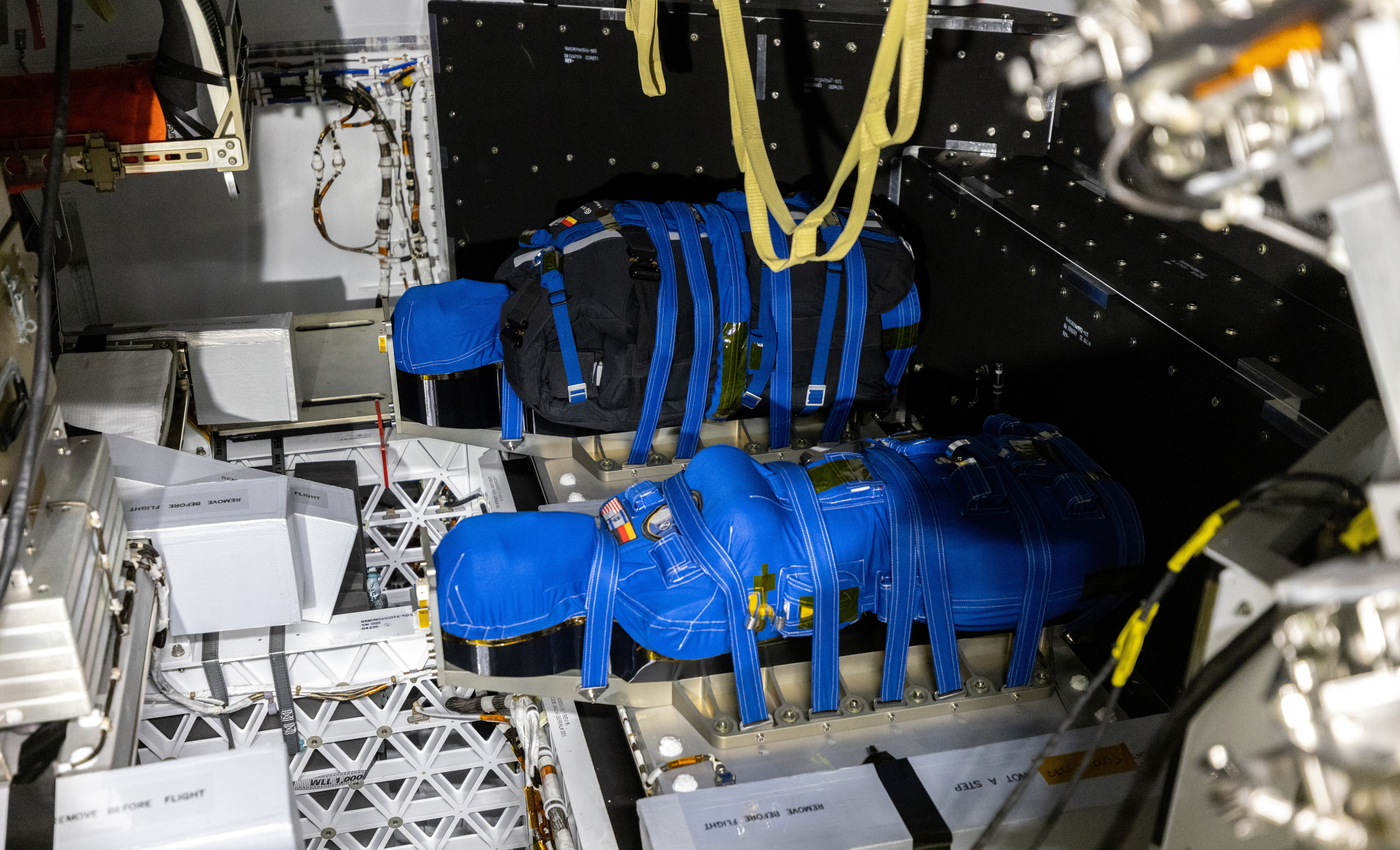
Phantoms equipped with radiation detectors, installed inside the Orion capsule during the Artemis I lunar mission. (Source: NASA)
Tracks of cosmic radiation particles recorded in lithium fluoride crystal detectors during the Artemis I lunar flyby mission.
Credit
Source: IFJ PAN
Cross-sections of the phantoms used in the Artemis I mission, showing the locations where radiation detectors were mounted.
Credit
Source: DLR
Phantoms equipped with radiation detectors, installed inside the Orion capsule during the Artemis I lunar mission.
Credit
Source: NASA
Journal
Radiation Measurements
Article Title
Application of LiF fluorescent nuclear track detectors for measurements of cosmic radiation at the lunar orbit within the MARE experiment
Penn Engineers turn everyday Mylar into a promising insulator for the moon
By stacking hundreds of sheets of Mylar, Penn Engineers have created a flexible, durable insulator that could help protect future lunar habitats
image:
A sample of the stacked Mylar sheets the researchers created, which could one day provide insulation on the moon.
view moreCredit: Bargatin Lab, Penn Engineering
Establishing a long-term presence on the moon will require solving challenges that are easy to overlook on Earth. Lunar temperatures, for instance, can vary from hundreds of degrees below zero to boiling, making effective insulation essential for lunar habitats.
But many materials that excel at slowing heat transfer are not designed to withstand the bumps, compression and repeated handling that would likely come with building and maintaining infrastructure on the moon.
Now, engineers at the University of Pennsylvania are exploring a surprisingly simple alternative: stacking hundreds of sheets of Mylar, the same lightweight plastic used as household food wrap and, when coated with aluminum, the shiny emergency blankets handed out after marathons to conserve runners’ body heat.
In a new paper in ACS Applied Materials & Interfaces, the team describes a novel way of assembling the film, which they call hybrid layered insulating film stacks (HyLIFS), and which join two properties that rarely co-occur: strong thermal insulation and mechanical durability.
“These stacks of Mylar can bend, withstand substantial compression and maintain their insulating performance,” says senior author Igor Bargatin, Associate Professor in Mechanical Engineering and Applied Mechanics (MEAM), “potentially allowing them to be packed, transported and survive rough treatment over many years of use.”
If the technology can scale from the lab to mass production, the material could prove essential for everything from lunar habitats to spacesuits and other technologies that must operate for long periods of time in the vacuum of space.
“The combination of thermal and mechanical robustness is critical for long-term use on the moon,” notes first author Danielle R. Levin, a recent Penn doctoral graduate in chemistry, who also received a master’s in MEAM. “This material could open a pathway to inexpensive, durable and reusable lunar insulation.”
When Good Insulation Isn't Strong Enough
For insulation designed to work in a vacuum, keeping heat from moving through the material is only part of the challenge.
Some of today's best-performing insulation materials are extremely fragile. Aerogels, for example, are lightweight materials composed largely of empty space. That structure makes them excellent insulators of everything from industrial pipelines to NASA’s Mars rovers, but can also leave them vulnerable to mechanical damage.
Other materials work well until they are compressed or damaged. Multilayer insulation, another technology commonly used in space, relies on reflective films separated by insulating spacers. It is highly effective at limiting heat transfer from radiation but is not designed to bear significant loads and tears easily when touched.
That creates a fundamental trade-off: Making an insulator mechanically stronger can come at the expense of its thermal performance. “For lunar infrastructure, we would ideally like both,” says Bargatin. “The ideal material is both resistant to damage and to the loss of heat.”
Stacking Layers of Mylar
The Penn team's approach starts with Mylar, formally known as biaxially oriented polyethylene terephthalate, or BoPET, a familiar polymer already widely used in aerospace applications, as well as the blankets given to marathon runners post-race. When combined with a metal like aluminum, Mylar blocks infrared radiation, trapping heat.
The researchers tested Mylar films of several thicknesses, coating some with an extremely thin layer of aluminum oxide, also known as alumina, to increase stiffness. They then stacked the films, one sheet at a time. "At the moment, the process is very time-consuming,” says Levin. “We use two pairs of tweezers and small weights to handle and stack the delicate films. Even breathing near the stack can send the layers flying.”
When tested in a vacuum, that simple construction produced a material with an unusual combination of properties. Compressed the way it would likely be in a lunar habitat that contains air at atmospheric pressure indoors, the best-performing stacks reached thermal conductivity comparable to other high-performance vacuum insulation technologies while remaining flexible.
In separate mechanical tests, coated stacks maintained their thermal performance even under the highest compressive dresses achievable with the lab's equipment. In other words, the researchers did not have to choose between making the material a good insulator and making it durable.
Putting the Layers Under Pressure
Even Levin did not expect the films to be quite so sturdy. The researchers repeatedly compressed samples to approximately 20 megapascals, roughly equivalent to concentrating 200 pounds onto the area of a fingertip. “We were concerned about the material failing under such high compressive stress," recalls Levin. "But the stacks didn't survive just one high stress cycle — they survived 10 in a row."
That durability could have an important practical benefit beyond outlasting an accidental impact in space. Anything needed for construction on the moon must first be transported there, making flexibility and reusability important considerations for lunar infrastructure.
“You could use these stacks to insulate a lunar habitation, but astronauts will inevitably have little accidents where they bump into them,” notes Bargatin. “When we're talking about long-term habitation on the moon, it's really important to have tough materials that can last long enough.”
A Tiny Particle With an Outsized Role
The study also revealed that an overlooked feature of commercial Mylar could be central to understanding how these stacks work.
Extremely thin plastic films tend to cling to themselves and other surfaces, making them difficult to manufacture and handle. To prevent that, manufacturers incorporate microscopic “antiblocking” particles in the material. These particles protrude slightly from the surface, helping keep adjacent layers from sticking together.
The existence and industrial purpose of the particles were already known. What had received little attention, according to the researchers, was the particles’ role in transferring heat through stacked Mylar films.
Because conventional multilayer insulation is designed primarily to limit radiative heat transfer, there has been less reason to examine whether these tiny particles constrain pathways for conductive heat transfer between sheets.
To investigate that possibility, the researchers developed models of heat transfer across the interfaces between sheets and compared the models with experimental data. Their results suggest that, in a vacuum, heat primarily crosses from one sheet to another at the microscopic points where antiblocking particles touch neighboring films.
That insight could help design even better insulation: Instead of treating the particles simply as an unavoidable feature of commercial Mylar, future materials could potentially be engineered with the particles’ size, number and distribution specifically chosen to control heat transfer.
Thinner Isn’t Always Better
The particles also helped the researchers make sense of one of the study's more counterintuitive results.
Initially, the team expected the thinnest films to provide the best insulation; thinner films allow more layers, and therefore more interfaces that limit heat transfer, to fit into the same space.
Instead, the team’s thinnest successfully characterized films and the films of medium thickness performed similarly when coated with alumina.
The researchers believe the reason lies partly in those antiblocking particles in the thinner films, which create more contact between neighboring layers and additional pathways for heat to flow.
That means optimizing the insulation is more complicated than simply making each layer as thin as possible. “As you compress the layers the contact landscape changes,” says Levin. “It’s not just a matter of minimizing the film thickness or the number of particles; we must also account for how the contacts change and the films deform as pressure increases.”
In short, film thickness, stiffness and the distribution of embedded particles all influence thermal performance.
From Hand-Stacked Samples to Lunar Habitats
For now, the HyLIFS samples are small, about one square centimeter in area, and time-consuming to produce, with manual cutting and stacking taking hours.
Scaling that process to the meter-sized sheets needed for practical insulation will ultimately require a different approach, but the researchers point to manufacturing techniques that could suffice, like continuously coating large rolls of Mylar.
Eventually, it might be possible to tune the film thickness, coating and antiblocking particle distribution before winding the material into large stacks.
Questions remain about how the films would behave at those larger scales, including whether they can survive the multiple bending cycles as well as bumps and scuffs of real-life applications. But if the films’ small-scale properties hold, the material could prove invaluable as flexible insulation in lunar habitats, rovers, electronic systems and more.
For Levin, the work demonstrates how much can still be learned from materials that engineers think they know well. "The simplest configuration ended up being the best one," she says.
This study was conducted at the University of Pennsylvania School of Engineering and Applied Science (Penn Engineering). Additional co-authors include Matthew F. Campbell, Gulzhan Aldan, Orevaoghene H. Omodior.
This work was supported by the National Science Foundation Division of Chemical, Bioengineering, Environmental and Transport Systems (grant number 1845933) and Penn Engineering.
Journal
ACS Applied Materials & Interfaces
Method of Research
Experimental study
Subject of Research
Not applicable
Article Title
Robust Layered Thermal Insulator Film Stacks for Vacuum Applications
The researchers subjected the stacked layers to mechanical stresses, to see how well they might hold up to the rigors of building habitats on the moon.
A sample of the stacked Mylar sheets the researchers created, which could one day provide insulation on the moon.
From left: senior author Igor Bargatin, Associate Professor in Mechanical Engineering and Applied Mechanics (MEAM), and first author Danielle R. Levin, a recent Penn doctoral graduate in chemistry, who also received a master’s in MEAM.
Credit
Bella Ciervo, Penn Engineering
Bella Ciervo, Penn Engineering
No comments:
Post a Comment