Shots Fired at Chinese Containership in the Red Sea
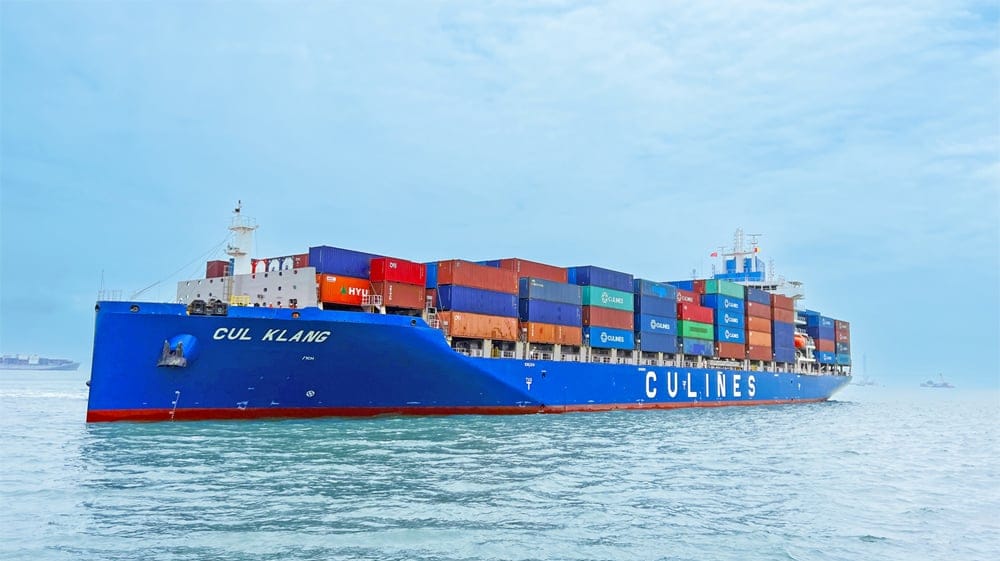
There were reports of a new incident in the southern Red Sea early on Wednesday, October 7, although the details are unclear and there were no claims of responsibility. It comes as fighting is intensifying along the coast of Yemen as Saudi and government forces are clashing with the Houthis while attempting to reclaim areas lost in the recent fighting.
MSCIO, the EU-sponsored Maritime Security Centre Indian Ocean, received reports of a small boat harassing a passing containership. The vessel said that shots had been fired by a small craft while it was transiting the southern Red Sea in the area north of the Bab el-Mandeb. The small craft was reported to have subsequently moved away from the area, and the containership was continuing its northbound passage through the Red Sea. The crew was uninjured.
The ship is being identified by security consultants as the Singapore-flagged CUL Klang (35,300 dwt). Delivered in 2024, the ship is operated by the Chinese CUL Lines, which maintains routes to the Mediterranean, Middle East, and intra-Asia. The vessel has a container capacity of 2,433 TEU and is displaying a message on its AIS that reads “China owned&CHN crew.”
In the past, reports have indicated that some of the small boats might be fishing boats in the region and simply acting to protect their boats and fishing nets. The Houthis have said they would be only targeting ships linked to Saudi Arabia, further raising doubts that they would target a Chinese container vessel. Their forces are also engaged in a series of clashes with Saudi-backed forces and those aligned to the internationally recognized government of Yemen.
Yemen’s Homeland Shield Forces, a pro-government military faction, had announced that it was part of a “large-scale offensive” in the area around al-Waziya in the mountainous Taiz region. Other reports of fighting were along the coast south of Mocha. There were reports of strong fighting around Dhubab, located to the south of Mocha and near the Bab al-Mandeb.
The Sudi forces reported on Tuesday they had retaken Mocha and key parts of the coastline. They claimed to once again be in control of the Bab el-Mandeb, but today there are conflicting reports, with both sides claiming to have retaken strategic parts of the coastline.
The Houthis claimed to have also launched a series of missile attacks into Saudi Arabia. There were confirmed reports of strikes at or near the airports in Abha and Riyadh. Associated Press reports that three people were killed at the two airports and a total of at least 30 people were injured.
Saudi forces claimed to have downed additional missiles launched toward Saudi Arabia. They also said they had struck a launching platform in Sana, Yemen.
If it was an organized attack by the rebels on shipping, it would be the first confirmed incident in days. UK Maritime Trade Operations received a report from a tanker on October 4 of multiple explosions near the vessel while it was sailing south of the Bab el-Mandeb in the Gulf of Aden. There were several other reports in the Gulf of Aden earlier in September, but the last report of an incident in the Red Sea dates to late August, when a tanker was struck off the Saudi port of Yanbu.
Saudi Bypass Pipeline Quickly Rebounded After Attack, Export Data Shows
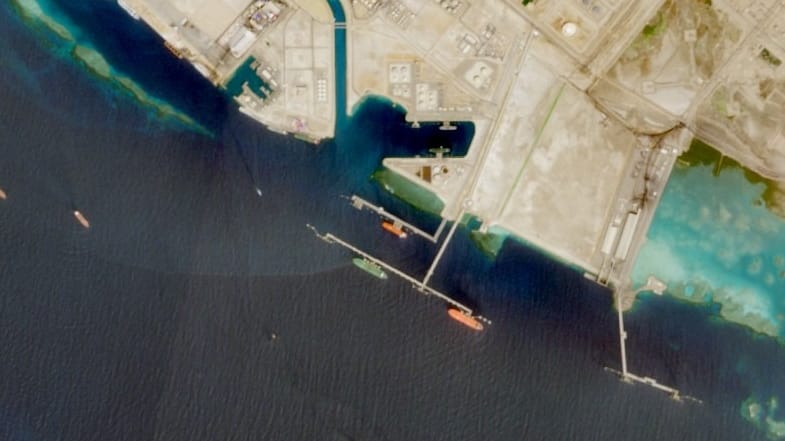
Operations at Saudi Arabia's Red Sea loading terminals have rebounded more swiftly than expected, according to a new analysis from Kpler. The consultancy found that with the East-West Pipeline restored to service, loadings from the two main Aramco terminals on the Red Sea came in at about 45 million barrels in total from September 17 through October 4 - an average of about 2.5 million barrels per day over the period.
Tstrong showing reflects Aramco's ability to rapidly circumvent or repair damaged pumping stations on the pipeline route. Three stations were hit in a suspected Iraqi militia strike on September 11, temporarily disabling the line. But the line was reactivated in less than a week, and flows are already back up to 5.8 million barrels per day, Saudi Energy Minister Prince Abdulaziz bin Salman told an audience at the Energy Intelligence Forum, per Kpler Mideast chief Amena Bakr. This volume approaches the 7 million bpd average that Aramco sustained in the months prior to the attack, and it would be sufficient to supply Saudi Red Sea refineries and export terminals alike.
The rebound at Yanbu is key to Saudi Arabia's success in restoring its oil trade, despite the Iranian blockade of the Strait of Hormuz. According to Standard Chartered, Saudi oil exports hit nearly 7 million barrels per day in September, up from 2.5 million bpd the month before. In addition to the volume shipped through the pipeline, Aramco substantially increased tanker loadings at its core Arabian Gulf terminals, dispatching more crude through the strait despite security concerns.
Iran has substantially accelerated its campaign of attacks on energy shipping in the strait, and has hit 12 tankers and gas carriers in the last seven days alone. Still, despite the deteriorating security environment, tanker operators have been moving about 10-14 million bpd of petroleum out of the Strait of Hormuz alone in recent days, Vitol CEO Russell Hardy said at the EI Forum on Tuesday. That supply is critical for pricing, he said. "Without it, you do have that $200 per barrel scenario," he told Reuters.
No comments:
Post a Comment