Zelenskyy hits out at 'gifts to Putin' after Trump announces deal for Russian diesel
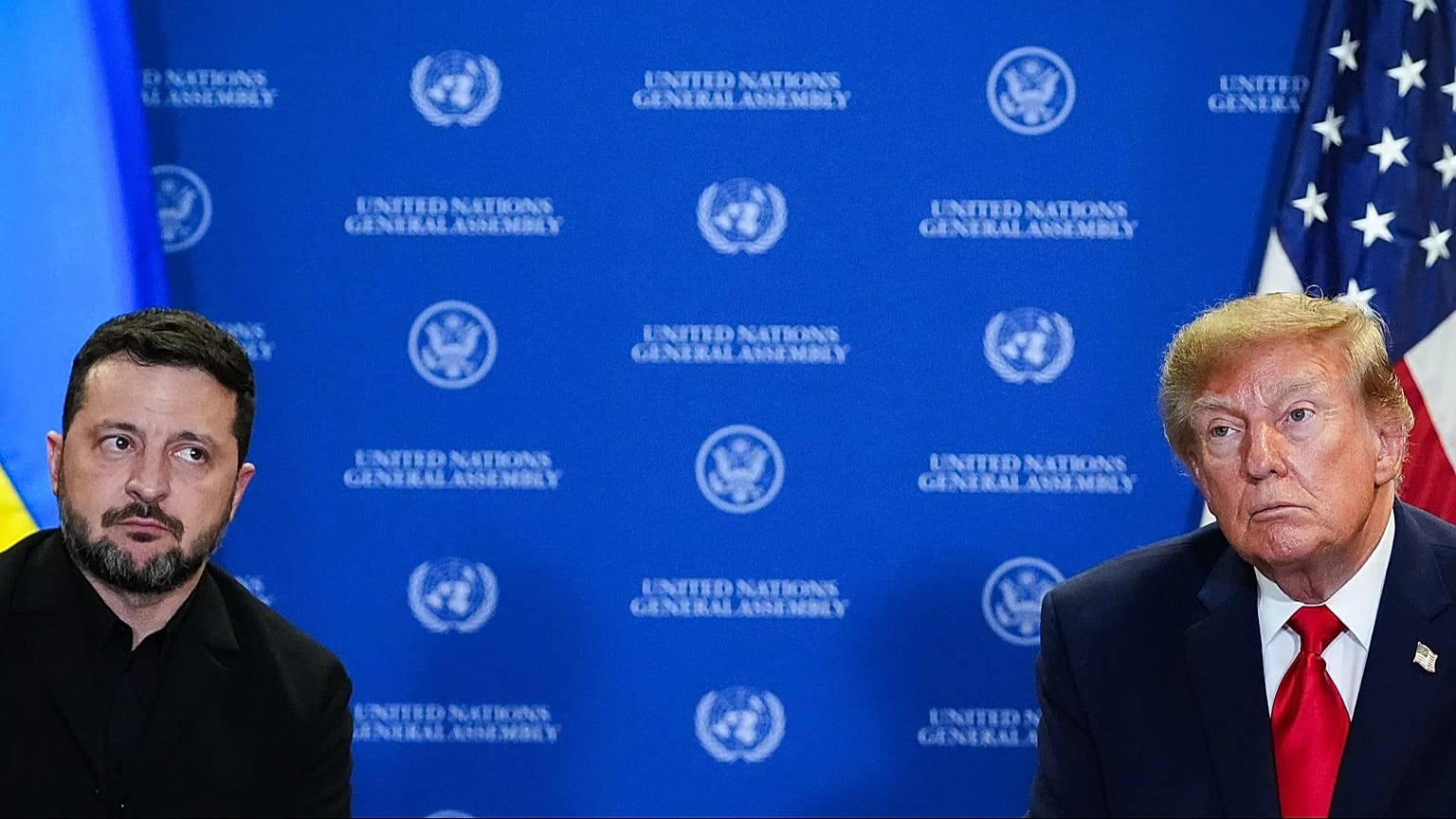
US President Donald Trump said on Friday that Russian leader Vladimir Putin had agreed to release diesel into US and global markets.
Ukrainian President Volodymyr Zelenskyy has hit out at what he called "gifts to Putin" after the US announced a deal to buy Russian diesel.
US President Donald Trump said on Friday that Russian President Vladimir Putin had agreed to release diesel into US and global markets, a move he said would help ease soaring energy costs amid the war with Iran.
"Russia will immediately supply over 300,000 tons of Diesel Fuel to the American and Global Marketplace, another 500,000 tons during the month of November," Trump said following talks with Putin.
Responding to the announcement in a post on X, Zelenskyy wrote: "Gifts to Putin will not bring peace or any benefit to the civilized world."
"Allowing Russia to sell petroleum products is an investment in a war that must be ended, not prolonged. What is needed is real de-escalation with Russia on a reciprocal basis," he added.
The US Treasury Department also said it was issuing a temporary licence allowing Russian diesel to enter global markets.
The White House did not immediately clarify who would pay for the Russian diesel or when supplies under the agreement would become available. It also did not say whether further deliveries expected next month would arrive before the 3 November midterm elections.
Trump's announcement comes just a month after he signed sweeping sanctions against Russia aimed at targeting its energy sector and other industries helping finance its war in Ukraine.
The move raises questions over whether the White House will impose further sanctions on Russia this month, as required by bipartisan legislation targeting major importers of Russian oil and gas.
Trump made no mention of the sanctions or Russia's war in Ukraine, instead saying: “Lower prices for Americans, especially our Great Farmers, Ranchers, and Truckers, is my Greatest Priority.”
Russian presidential envoy Kirill Dmitriev reposted the Treasury Department’s announcement on X Friday and said that “Russia-US cooperation on diesel and energy will benefit the world.”
Trump strikes diesel deal with Putin, reversing years of pressure on Russia over Ukraine war
US President Donald Trump said Friday that Russia had agreed to immediately supply more than 300,000 tonnes of diesel to US and global markets in an effort to cut fuel prices before November's midterm elections. The move marks a stunning change of policy after the US and its allies hit Russia with waves of sanctions over its invasion of Ukraine.
Issued on: 09/10/2026 -
By:FRANCE 24

US President Donald Trump said that he has struck a deal to obtain diesel from Russia, a stunning reversal of years of US pressure on Moscow over its war with Ukraine and an attempt to address high fuel prices ahead of the US midterm elections.
Trump said on social media on Friday that he struck the deal with Russian President Vladimir Putin in a phone call in which he was expected to discuss a suspected case of plague in Russia. Instead, Trump announced that Russia will immediately supply more than 300,000 tonnes of diesel, followed by an additional 500,000 tonnes in November and 1 million tonnes “immediately thereafter.” Russia will deliver another 3 million tonnes “within a short period of time” after that, he wrote.
Trump’s shocking announcement comes after he signed a sweeping Russia sanctions law last month that aimed at clamping down on Russia’s energy economy, among other areas, that fuel its war against Ukraine.
His move casts doubt on the likelihood of the White House imposing sanctions on Russia this month, given that a bipartisan law passed by Congress directs the administration to target the top importers of Russian oil and gas.
Trump, in his announcement, did not address the sanctions or Russia’s war but said, “Lower prices for Americans, especially our Great Farmers, Ranchers, and Truckers, is my Greatest Priority.”
The White House did not immediately respond to questions about who was paying for the diesel from Russia and when the fuel being supplied under the agreement would become available. It also did not clarify whether subsequent supplies of Russian diesel set to come next month would be supplied prior to Election Day on November 3.
Russian presidential envoy Kirill Dmitriev reposted the Treasury Department’s announcement on X Friday and said that “Russia-US cooperation on diesel and energy will benefit the world”.
The law Trump signed last month envisions sanctions on Russian officials, banks and a shadow fleet of tankers and bans all new US investment in Russia and the handling of sovereign debt.
It also directed Trump to impose tariffs of up to 100% on the top five importers of Russian oil or natural gas, with an exception for countries that import less than 15% of Russia’s natural gas exports and have taken significant steps to reduce those imports.
The US has not imported Russian oil or gas since 2022, when the Biden administration banned them because of Moscow’s invasion of Ukraine, according to the US Energy Information Administration.
Shortly after Trump made the announcement, the Treasury Department said it was immediately issuing a temporary license allowing Russian diesel to be supplied to the global market.
Gas prices globally have surged as the war in Iran upends the energy sector. The national average for a gallon of diesel in the US was $6.23 on Friday, according to AAA, after hitting a record $6.52 on September 22.
(FRANCE 24 with AP)
EU paid €7.9bn for Russian Arctic LNG amid record imports
Continued Russian LNG imports undermine the credibility of the EU’s promise to sever its energy ties with Moscow, particularly as Russia continues its war against Ukraine.
Europe paid around €7.88 billion for liquefied natural gas (LNG) from Russia’s Arctic energy project in the first nine months of 2026 despite Brussels’ efforts to phase out gas from Moscow, according to the campaign group Urgewald.
The figures, compiled by Urgewald using data from the market intelligence firm Kpler, expose just how reliant the EU remains on Russian energy, with a record of 12.18 million tonnes reaching European ports between January and September this year.
The EU has been trying to wean itself off Russian energy for a while, and this year introduced a number of measures to end its reliance on Moscow. Brussels introduced a ban on new Russian energy contracts at the beginning of 2026, with a complete ban on Russian LNG taking effect on 1 January 2027.
Meanwhile, the Trump administration recently announced the Lindsey Graham Act, giving the US the power to sanction Russian LNG deliveries to Europe before the EU's import ban kicks in.
This comes at a time when Europe's gas storage levels are at a record low, and the bloc faces a brutal energy crisis, leaving Brussels increasingly vulnerable to decisions from Washington, the EU's major LNG supplier.
European LNG imports from the Russian Yamal project rose 9.5% year-on-year between January and September, with EU ports receiving 85% of Yamal’s recorded deliveries.
France received nearly three-quarters of September’s EU deliveries, with the Dunkirk and Montoir ports receiving 571.716 million tonnes of Arctic LNG, according to Kpler.
The Netherlands imported 146.461 million tonnes of LNG and Portugal 74.263 million tonnes. No cargoes were recorded in Spain or at Belgium’s Zeebrugge terminal.
The persistence of the Arctic LNG trade into Europe shows the difficulty of translating a long-term phase-out commitment into an immediate commercial break.
Ineffective short-term bans
The figures also raise questions about the effectiveness of the EU’s initial restrictions on Russian LNG.
A ban on imports under existing short-term contracts took effect on 25 April, but September deliveries reached 792,440 tonnes, slightly above the level a year earlier.
The EU’s full ban on Russian LNG under eligible existing long-term contracts is scheduled to take effect on 1 January 2027.
Until then, continued purchases generate revenue for Russia's war against Ukraine and expose the limits of restrictions that target some contracts without immediately stopping the wider trade.
"We have always assumed that the impact would not be particularly significant, since most of the export capacity is tied up in long-term contracts anyway," Sebastian Rötters, energy campaigner at Urgewald, told Euronews.
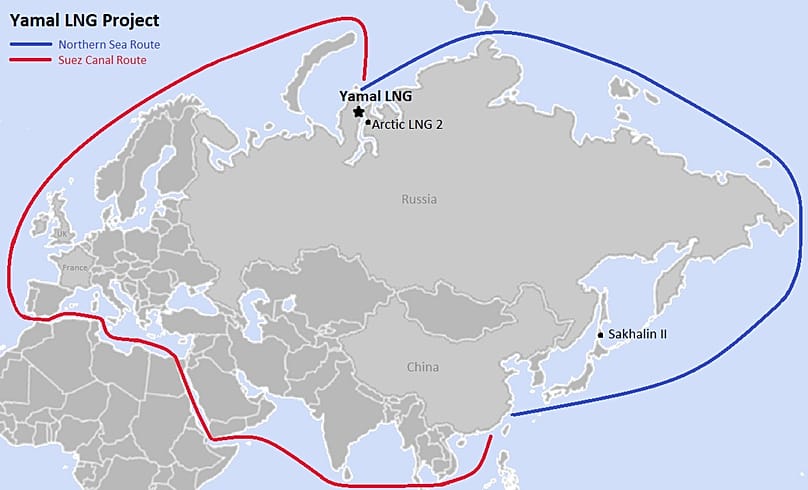
"In addition, export volumes are generally lower in the summer due to maintenance work at the terminal and LNG shipments to Asia via the Northern Sea Route," Rötters added.
The real litmus test for Yamal will be the EU’s phase-out starting in 2027, Rötters said, noting it may lead to noticeable reductions in exports due to the increased logistical challenges
Call to strengthen 22nd sanctions package
The German-based NGO Urgewald is calling for the upcoming 22nd EU sanctions package to close loopholes, particularly those supporting the specialised Arc7 ice-class tanker fleet needed to transport LNG from the Arctic.
Yamal’s reliance on specialised vessels makes its export system vulnerable to restrictions on transport and associated services.
European ports are also geographically convenient destinations, allowing tankers to unload and return to the project relatively quickly.
Urgewald argues that disrupting those logistics could pile pressure on Russia’s ability to sustain Arctic LNG exports.
"The EU should not wait passively for the 2027 embargo to take effect. The next sanctions package should close the remaining loopholes, above all those that keep the indispensable Arc7 LNG tanker fleet operating. Washington, meanwhile, now has the power to sanction this trade at any time before then,” reads Urgewald's statement.
However, such measures would require political coordination among the EU and its member states and could complicate European gas procurement before the import ban takes effect and ahead of an unpredictable winter season.
The data provided does not establish how much of the trade could be redirected to other buyers or what the consequences would be for European gas prices, but any additional trade disruption on top of the loss of LNG from the Middle East would have an impact.
Trump gains another lever over the EU’s energy security
US sanctions under the Lindsey Graham Act could disrupt trade before the EU's ban on Russian LNG takes effect, forcing European governments and buyers to respond.
The US administration faces an 18 October deadline for its first review under the law. However, the deadline should not be mistaken for an automatic ban on Yamal deliveries, Urgewald say, as the law’s practical impact depends on how the administration exercises its powers.
"The US President must compile a list of ships transporting Russian LNG by October 18. These ships will then be subject to sanctions unless Trump issues so-called waivers. This is possible and, given Trump’s track record regarding Russia, not unlikely," Rötters told Euronews.
EU imports from Yamal will depend on the goodwill of the US President from 18 October until the final embargo takes effect in 2027, Rötters stressed.
US sanctions have already severely restricted Russia’s Arctic LNG 2 project and the Northern Sea Route, while Yamal LNG continues to supply Europe.
Data from Kpler shows that 706.473 million tonnes of LNG were destined for China, South Korea and Taiwan in September this year.
No comments:
Post a Comment