Historian preps for disaster scenario as Trump plans to do 'what losers do'
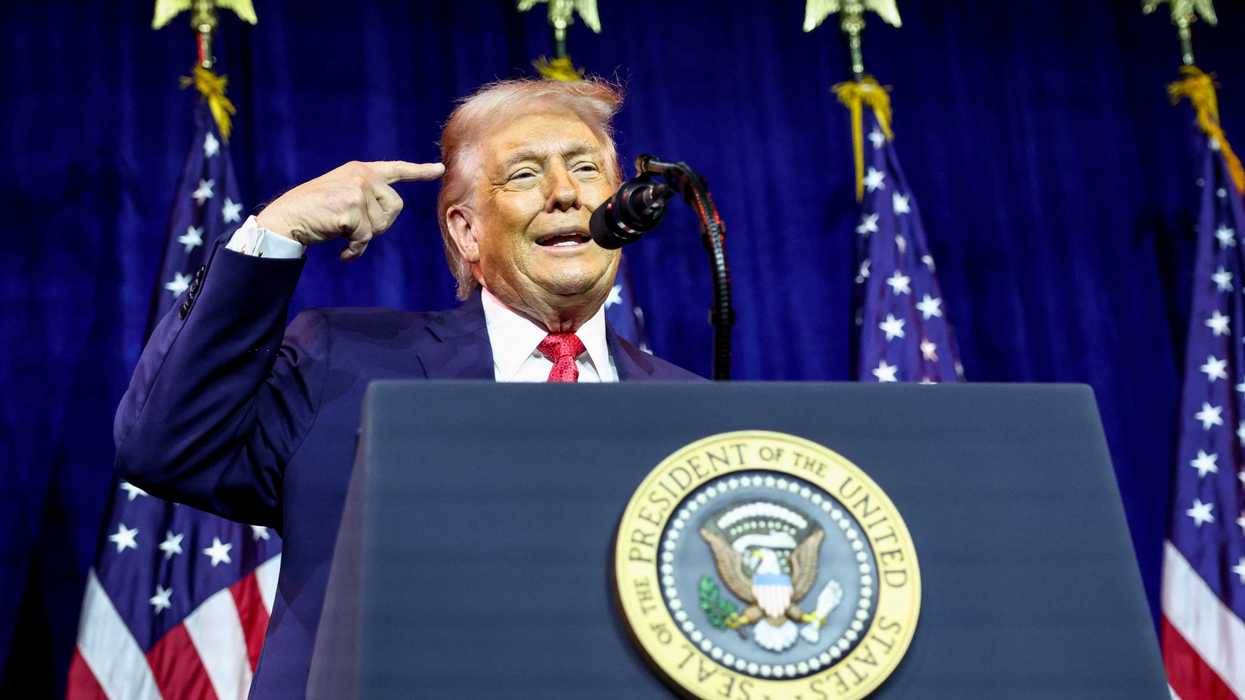
U.S. President Donald Trump addresses House Republicans at their annual issues conference retreat, at the Kennedy Center, in Washington, D.C., U.S., January 6, 2026. REUTERS/Kevin Lamarque
October 09, 2026
ALTERNET
Historian Timothy D. Snyder knows what is likely coming on the evening of Nov. 3 and it's allegations that the election was "rigged." He wants Americans ready and prepared to respond quickly, if not before he makes the claim.
Speaking to former GOP strategist Steve Schmitt, Snyder said he doesn't want to think of it as first you vote and second you act.
"The other part is being prepared to win," he said, "because I agree with you completely in your forecast. I think this is going to be overwhelming. I think it's going to be bigger than people think basically. And I think, if anything, the Democrats are scared to imagine how big their victory is going to be because if it's big they're going to have to take responsibility for stuff. So, part of it is not just voting and being like, 'oh, what is Trump going to do?' But think, you know what? The people I'm voting for are going to win. And I'm willing to take action along those lines, which means telling people how I voted, telling people what I expected, doing your own media work."
The other thing it means, he said, is that Americans must "call the shot in advance," a pool metaphor for calling which ball will go into which pocket.
"However we think it's going to go, your scenario is very plausible, probably I have some other ideas of what they might do," he continued. "But whatever they do, it's what losers do. And you have to get that out ahead of time and you have to be ready to laugh at it. Like every trick that Trump can play has been played by Viktor Orban, or has been played by somebody else in the last couple of years. You have to get out in front of people and say, look, when they do that, like when Trump claims that he won, that's what he did because he lost, right? And it's the kind of thing that losers do."
In the media space, he said that Democrats must come out ready to tell their story about why they won and how they intend to use that win to deliver on the top issues like the affordability crisis, gas prices and corruption.
"Morning of Nov. 4th we should be thinking about money out of politics, end of corruption. We should be thinking about things that are good that could happen," Snyder said.
Doing that will inoculate everyone against Trump's idea that he really won and that it was all rigged.
"Trump going on TV and saying, well, you know, I'm raising my hand to say that by the way they stole the election again, it will seem a little archaic and silly," Snyder explained. Especially "if you can put it in the context of, 'Hey, we actually have a moment of hope.'"
He warned that letting Trump frame the narrative gives him a better chance of being taken seriously. Instead, he wants Democrats and those around them to frame it as "we're going to start doing really important and transformative stuff, I think that makes the setting much harder for Trump to do the kind of thing that you're describing."
One of the disaster scenarios that conservative retired Judge Michael Luddig warned about is that Republicans could refuse to seat any of the Democratic lawmakers elected. Snyder thinks Trump has likely already had that conversation, along with every other possibility.
"We should deny that Trump is omnipotent, because he's not. And the things that he might wish to happen still depend on other people fulfilling his wishes, and whether they fulfill his wishes are going to depend on how big the Democratic victory is, whether those people think that they might go to prison for what they're doing and also the overall atmosphere."
Trump physically and mentally lost as rallies put decline on full display
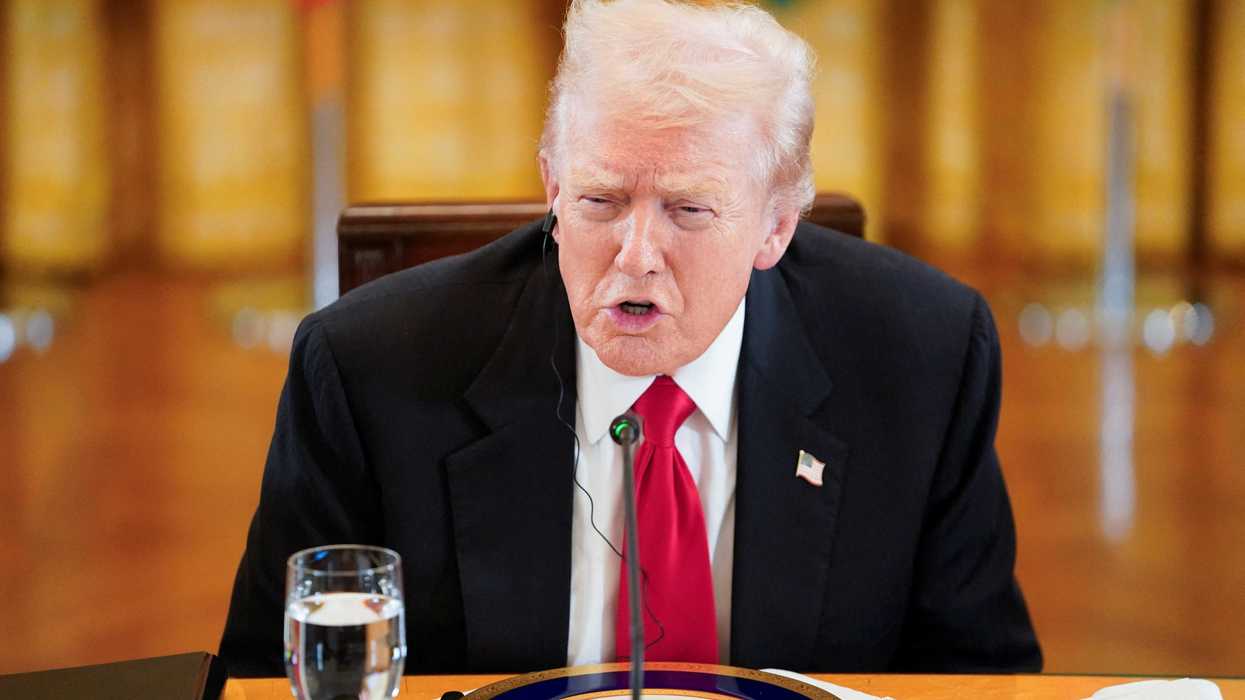
U.S. President Donald Trump speaks during a dinner with the leaders of the C5+1Central Asian countries of Kazakhstan, Kyrgyzstan, Tajikistan, Turkmenistan, and Uzbekistan, in the East Room of the White House (REUTERS)
October 11, 2026
ALTERNET
One of the biggest drawbacks of President Donald Trump on the campaign trail is that he puts his health on full display for the American people.
The Daily Beast Substack pointed to photos and videos of Trump traveling around the U.S., "slumped, with eyes drooped, and his body sagging."
As psychiatrists, body language experts, a neurologist and a geriatric expert have noticed, his mind appears to be slipping.
"He has become confused during on-stage rants, mixing up the names of people he is attacking or losing the thread of what he was talking about," the Beast pointed out.
At the Friday night rally, convicted abuser Mike Tyson stood on stage with Trump as he spiraled down his dream of winning eight Nobel Prizes and taking over Greenland.
The Beast pointed out that convincing the world that Trump "is still lucid" will be a heavy lift for the new press secretary.
At one point at a Nebraska event, Trump appeared to "get lost" trying to leave the stage. This came after Trump mixed up Brazil with India.
He then flashed his jacket open, showing that despite years of railing against overseas manufacturers, it turns out Trump is wearing one. Instead of tailored suits made with the highest quality for a billionaire, Trump was sporting Jos. A. Bank. Even "Saturday Night Live" mocked the brand as cheaper than paper towels in a fake commercial a few years ago.
This week he also had a meltdown over the crowd sizes at his rallies. Despite claiming that the place was filled to the brim with excited supporters, photos and videos show that Trump couldn't fill all of the seats at the Butler High School gym in Vandalia, Ohio.
"Of course, he meant to fill empty seats, but his dilapidated logic was dwarfed by the sheer hysteria and venom of receiving such a sad crowd," wrote former conservative Jennifer Rubin for The Contrarian this week.
When he then appeared at his campaign stop in Mobile, Alabama, he complained about the New York Times reporting on the lackluster rally sizes, saying that he'd "MAXED OUT" the crowd in Ohio.
Psychologist Dr. John Paul Garrison has been doing his own analysis based on his observations of the president from the rallies. Known as "Dr. G." on social media, Garrison frequently analyzes nonverbal communication, detailing social and physical cues that alert him to possible health concerns.
Garrison said in a video this week that these impulse control issues are "the physical manifestations of [Trump's] decline."
Trump giving Canada the excuse to pull trigger on plans they've had for years
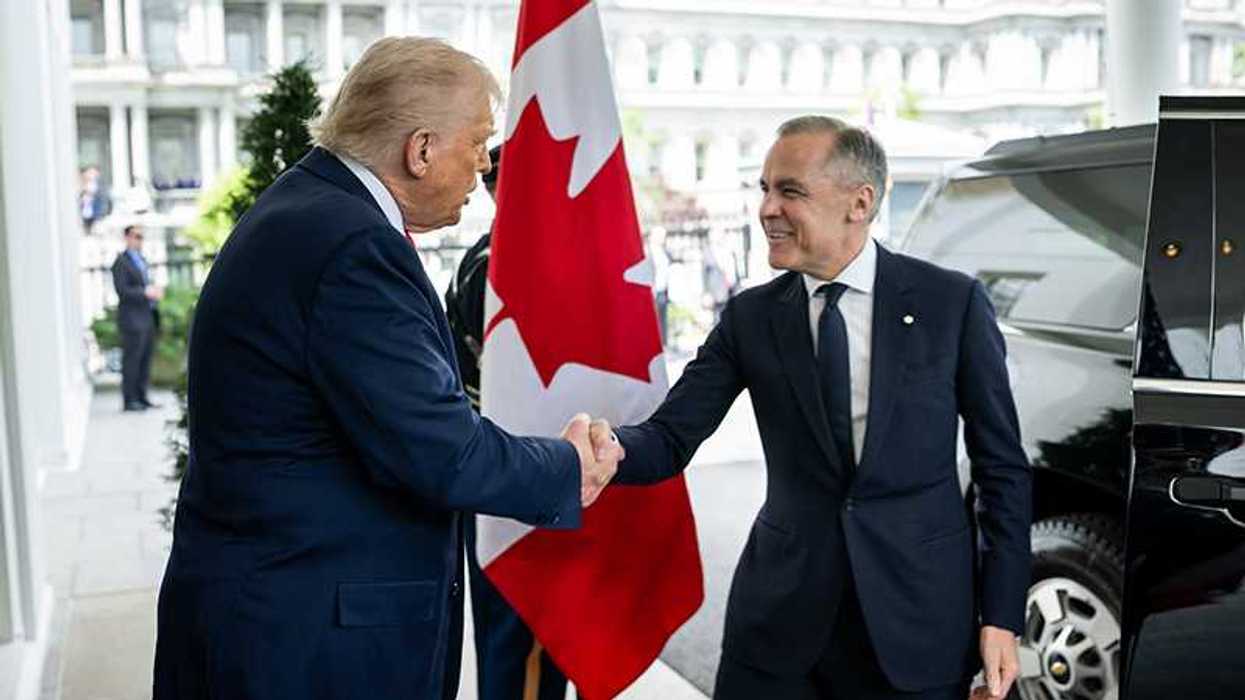
President Donald Trump greets Prime Minister of Canada Mark Carney, Tuesday, May 6, 2025, at the West Wing entrance of the White House. (Official White House Photo by Daniel Torok)
October 11, 2026
ALTERNET
President Donald Trump has developed a heated rivalry with his counterpart across the border, Prime Minister Mark Carney. Yet according to a new report, Carney is taking America's unexpected turn against Canada with cool calculation — allowing the northern democracy to implement policies it had been longing to do anyway.
"Canada’s last breakup, with Great Britain, took roughly 100 years of painstaking and piecemeal constitutional reform to accomplish," reported The New Republic's John Last on Sunday. "This time, things are moving a little faster. Since President Donald Trump launched his trade war against his closest neighbor shortly after taking office a second time—leveling tariffs of up to 50 percent on hundreds of goods—relations have been icy, and keep getting icier."
Last proceeded to describe how Carney, who previously worked as a highly successful banker, has utilized his skills and connections to appeal to modern European countries. From the European Union to individual nations like the United Kingdom and France, Canada has long identified more closely with the culture and politics across the pond, in particular their more robust social safety nets and outspoken advocacy for diversity.
As characterized by Last, now Carney is urging European nations to develop trade relationships with the world's second largest nation by area, one with vast untapped natural resources in oil, agriculture and rare minerals. The situation is cast one in which other countries could be vastly enriched because they more closely align Canada's center-left political values than the increasingly far right United States.
"The answer to that question is hard to discern while Trump continues blustering from the White House," Last wrote. "Canadians, Carney likely may have an inclination to lean away from America anyway—from its increasingly crass politics, debased culture, and unrestrained greed. Canadians may be more American than they like to admit, but they are not as American as America is now. Another few years of accelerating decay may simply be too much to come back from. For now, at least, Canada is exploring its options—and it doesn’t seem inclined to wait around."
He concluded, "Jilted lovers seldom do."
Speaking with AlterNet in August, Dr. Richard D. Wolff — professor emeritus of economics at the University of Massachusetts Amherst — contextualized Canada's shifting of economic and political relationships away from America as existing within a large pattern.
Our government is busy strong-arming people around the world in every way that it can, militarily, economically, politically, and discovering time after time to their amazement, if you take them seriously, that the folks are going to resist," Wolff said. "And that's what's going to happen."
Linking the US-Canada trade war and the US-Iran war, Wolff added that "Israel and the United States thought they could bomb Iran June 2025, and that was a 12-day war because they couldn't get them to bend over and surrender. So they went to work, tried it again February 28th of this year. And they're not doing it. And so now you discover, gee, the people of Canada being threatened in this way and that way by the tariffs are not bending and are putting pressure on their leaders to find a way other than capitulation."
As Catholic Convert Vance Casts Doubt on Execution Livestream, Lead US Bishop Says Plan Promotes ‘Culture of Death’
“The public execution even of one who has done grave harm will only further undermine the moral fabric of our nation and be a blight on the conscience of its people,” Archbishop Paul Coakley.
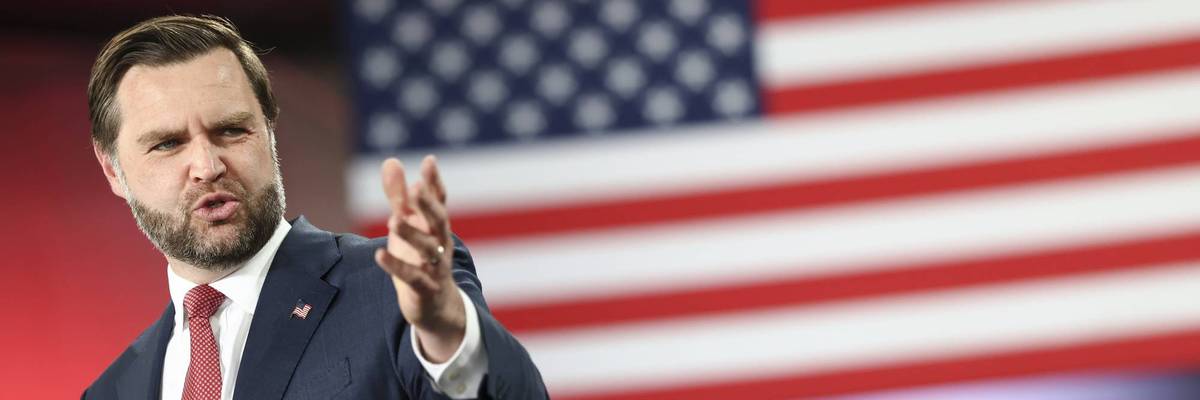
US Vice President JD Vance speaks during a midterm campaign rally on October 1, 2026 in Lakeland, Florida.
(Photo by Kevin Lamarque-Pool/Getty Images)
Jessica Corbett
Oct 09, 2026
COMMON DREAMS
While US Vice President JD Vance—a Catholic convert—suggested on Friday that the administration may not actually livestream a firing squad execution at a military base in December, the church’s top bishop in the country denounced the widely decried plan.
US Secretary of Defense Pete Hegseth pledged this week to make the execution of Fort Hood mass shooter Nidal Hasan “public,” and officials said that would mean a livestream. As Religion News Service noted, the Pentagon chief is an evangelical Christian who has often spoken about his faith and “attends a church led by Pastor Doug Wilson, a self-described Christian nationalist.”
On Friday, the vice president—who recently published a book about his religious experiences, including his conversion to Catholicism—told reporters that despite those statements about a livestream, “I don’t know that that’s actually gonna happen.”
Vance argued that Hasan, a former Army major and doctor, committed “the worst terrorist attack on American soil outside of 9/11,” but also said that “if it’s ultimately livestreamed, I’m not gonna be watching it.”
Meanwhile, using President Donald Trump’s preferred term for the Department of Defense, Archbishop Paul Coakley, president of the US Conference of Catholic Bishops, said in a statement that “it is with shock and great sorrow that I have learned of the Department of War’s decision to publicly livestream the execution of Nidal Hasan.”
“Our God is the God of life. In no way can Hasan’s actions be condoned, but this decision is a barbaric promotion of a culture of death and must be reconsidered. The word of God exhorts us: ‘Do not repay anyone evil for evil’ (Romans 12:17),” declared Coakley, a “conservative culture warrior” elected to his leadership role last year.
“The public execution even of one who has done grave harm will only further undermine the moral fabric of our nation and be a blight on the conscience of its people,” he added. “I pray for the intercession of Our Lady of Good Counsel that we as a nation may always choose life even in the most trying times and circumstances.”
Coakley joined a growing chorus of critics who have condemned the Pentagon plan, including the Office of the United Nations High Commissioner for Human Rights, which said Friday that “the livestreaming of an execution is tantamount to a public execution and would breach the absolute prohibition of torture.”
American Immigration Council senior fellow Aaron Reichlin-Melnick, who had blasted the livestream decision on Thursday, called the archbishop’s statement a “strong response from the Catholic Church.”
James Martin, a Jesuit priest and editor at large of America Magazine, explained that “the Catholic Church teaches that the death penalty is ‘inadmissible,’ primarily because every human being has God-given dignity, even a murderer, even a mass murderer. The televising of an execution is barbarism of the worst kind, offering up death as entertainment.”
“Some Catholics still reject Pope Francis’ magisterial pronouncement on the death penalty, which is now included in the Catechism,” he noted. “But opposition to the death penalty, grounded in the respect for all human life, is not a brand new doctrine. Rather, it is one that took time to develop, as the church came to understand more deeply the innate dignity of every human life.”
Sharing Coakley’s comments on social media Friday, journalist Paul Blest wrote that “this happening so soon after the botched Tennessee execution is creating the conditions for real momentum against the death penalty.”Tennessee last week botched two attempts to kill Christa Pike with injections of pentobarbital, after which she was rushed to the hospital. Pike’s legal team said Thursday that she “continues to experience cognitive challenges” but is taking “limited steps” with assistance. While Republican Gov. Bill Lee has responded by halting executions and ordering a probe, the incident has fueled fresh calls for the US to outlaw the death penalty at the state and federal level.The Vatican’s secretary of state, Cardinal Pietro Parolin, also weighed in on the livestream plan, saying Friday that “it is truly incomprehensible that anyone would want to use this method in this day and age. I do not know for what purpose. It is certainly unacceptable to turn death into a spectacle. However guilty the person may be, there are other ways.”“The church’s position is one of total opposition to the death penalty. It is incompatible with human dignity and does not serve as a deterrent,” Parolin said, acknowledging Coakley’s comments and pledging that “there will be a statement from the Holy See.”As the Catholic leaders and others from various faiths spoke out against the Defense Department plan, Robert Jeffress, a Texas-based American Southern Baptist pastor and televangelist, wrote on social media that “I support the Pentagon’s decision to livestream the execution of mass murderer Nidal Hasan. Capital punishment is commanded by God in Genesis 9:6 to remind people of the sanctity of human life. The more people that can see that truth illustrated through a public execution, the better.”Christa Brown, a former lawyer, sexual abuse survivor, and author of the memoirs This Little Light and Baptistland, responded: “Livestreaming an execution is barbaric. And no amount of Bible verses will change that.”
‘Abolish ICE,’ Say Potential 2028 Candidates AOC and Khanna After Latest Shooting in NYC
“No child should have to sit and watch while masked officers open fire on his father.”

US Rep. Alexandria Ocasio-Cortez (D-NY) speaks to the media outside of the US Capitol on August 31, 2026 in Washington, DC.
(Photo by Finn Gomez/Getty Images)
Julia Conley
Oct 09, 2026
COMMON DREAMS
Two top progressive Democratic leaders were among those demanding an end on Friday to the 23-year-old federal agency that has provoked outrage and fear across US communities over the past 21 months under Trump administration—most recently on Thursday night, when a US Immigration and Customs Enforcement agent fired seven shots into a car being driven by an immigrant in New York City, while his 5-year-old son sat in the back seat.
“ICE’s already unwelcome presence in our city has been growing more escalatory and dangerous by the day. Today’s shooting is a grave development that requires a swift and immediate response to protect the safety of all New Yorkers,” said US Rep. Alexandria Ocasio-Cortez (D-NY), whose district lies near Marble Hill, the site of the shooting of 28-year-old Oscar Belgal.
Belgal was taken to a nearby hospital and treated for injuries to his neck before ICE agents took him away in an unmarked vehicle. His son was physically unharmed and was in the care of relatives on Friday, but a number of Democratic officials, including New York City Mayor Zohran Mamdani, condemned the agency for leaving the child “traumatized and terrified.”
“ICE is a rogue, lawless paramilitary and surveillance agency,” said Ocasio-Cortez, who has been named as a potential 2028 presidential candidate or a contender for US Senate in New York, where Senate Minority Leader Chuck Schumer (D-NY) is up for reelection in 2028.
“It does not belong in New York City and it should not exist in the United States of America,” said Ocasio-Cortez. “Abolish ICE.”
Rep. Ro Khanna (D-Calif.), another potential candidate for president in 2028, joined the congresswoman in calling for ICE to be abolished—a demand once dismissed as a fringe viewpoint, but now shared by about half the country, including 77% of Democratic voters and 52% of independents.
Khanna said that Democrats in Congress must take action after the midterm elections, which are widely expected to put them in control of at least one if not both chambers of Congress.
“No child should have to sit and watch while masked officers open fire on his father,” said Khanna. “House Democrats have a duty when we take the majority. Get ICE agents off our streets. Keep them away from our children. Abolish ICE.”
A federal judge in New York City ordered ICE not to deport Belgal, an immigrant from the Dominican Republic, while the court considers an emergency petition requesting his release from detention.
Agents approached Belgal when he was parked in front of a fire hydrant on West 225th Street. The officers were dressed in construction vests and had face masks on, and one was wielding a long gun on the busy street where children were walking home from school.
Rep. Yassamin Ansari (D-Ariz.) noted that ICE’s use of “disguises and masks” was not an isolated incident in Marble Hill, with some posing “as electricians in Phoenix last month to arrest a man in his own home.”
Belgal was reportedly pulling away when an officer shot at him. It is against Department of Homeland Security policy to shoot into a moving vehicle, with limited exceptions.Rep. Ayanna Pressley (D-Mass.) called on President Donald Trump and Secretary of Homeland Security Markwayne Mullin to “hold rogue ICE agents accountable.”“What type of president and country not only allows, but causes, our children to be traumatized?” said Pressley. “Abolish ICE NOW.”
'News to me': Zelenskyy blindsided by Trump's surprise warfare announcement
Alexander Willis
October 11, 2026
RAW STORY

FILE PHOTO: Republican presidential nominee and former U.S. President Donald Trump and Ukraine's President Volodymyr Zelensky meet at Trump Tower in New York City, U.S., September 27, 2024. REUTERS/Shannon Stapleton/File Photo
President Donald Trump raced to Truth Social Sunday to announce the brokering of a new ceasefire between Russia and Ukraine — an announcement that stood for mere minutes before it was contradicted by Ukrainian President Volodymyr Zelenskyy, according to Axios’ Barak Ravid.
Trump claimed that “effective immediately,” a ceasefire had been agreed to by Russia and Ukraine to halt strikes on energy infrastructure. Moments later, however, Ravid claimed to receive conflicting information after speaking with Zelenskyy by phone.
“The announcement about the ceasefire was news to me,” Zelenskyy said, according to Ravid.
Trump has made similar claims before. In September, he announced that Russia and Ukraine had agreed to stop striking energy targets, only for Ukraine to hit a major Moscow-area oil refinery days later.
Nevertheless, Zelenskyy said that if Russia did agree to pause striking energy targets, Ukraine would follow suit.
“But if the Russians agree to a ceasefire in the energy sector, Ukraine will also agree,” he said, according to Ravid. “If President Trump agreed to this with Putin — please let us know when the ceasefire begins. We are ready and will agree to it.”
Disbelief as Trump’s ceasefire crumbles within hours: ‘What can you even say’
Alexander Willis
October 11, 2026
RAW STORY
President Donald Trump was ridiculed en masse Sunday after the purported ceasefire he claimed had been brokered between Russia and Ukraine fell apart within hours.
“What can you even say,” wrote investigative journalist and writer Ilya Lozovsky in a social media post on X.
Sunday morning, Trump took to social media to claim that an agreement had been reached between Russia and Ukraine to halt attacks on energy infrastructure.
“Effective immediately, there is an ENERGY CEASEFIRE in the War between Russia and Ukraine,” he wrote. “Both parties have agreed. Do not break it!”
Moments later, Ukrainian President Volodymyr Zelenskyy said of the purported agreement, “the ceasefire was news to me,” but said he would agree to halt attacks on Russian energy targets if Moscow followed suit.
Hours later, Zelenskyy said that Russian strikes on Ukrainian energy sites had continued despite Trump’s claim.
“There were strikes, unfortunately, with aerial bombs,” Zelenskyy said during his nightly video address, according to Reuters. “There were strikes on our energy infrastructure. Just now, there was a strike on the joint power and heating plant in the city of Kharkiv — hitting Kharkiv’s energy system.”
Former Republican congressman Adam Kinzinger sarcastically expressed shock that Trump’s purported agreement had proven to be false.
“What??? Trump lied???” Kinzinger wrote.
And Anne Applebaum, Pulitzer Prize-winning historian and journalist, issued Trump an especially harsh condemnation.
“Trump announces an energy ceasefire. Ukrainians learn about it from social media. Immediately, there are more Russian strikes on Ukrainian energy infrastructure,” Applebaum wrote. “The president lives in a fantasy world of his own construction.”
'Compromised': Trump torched for blaming foreign leader for his own crisis
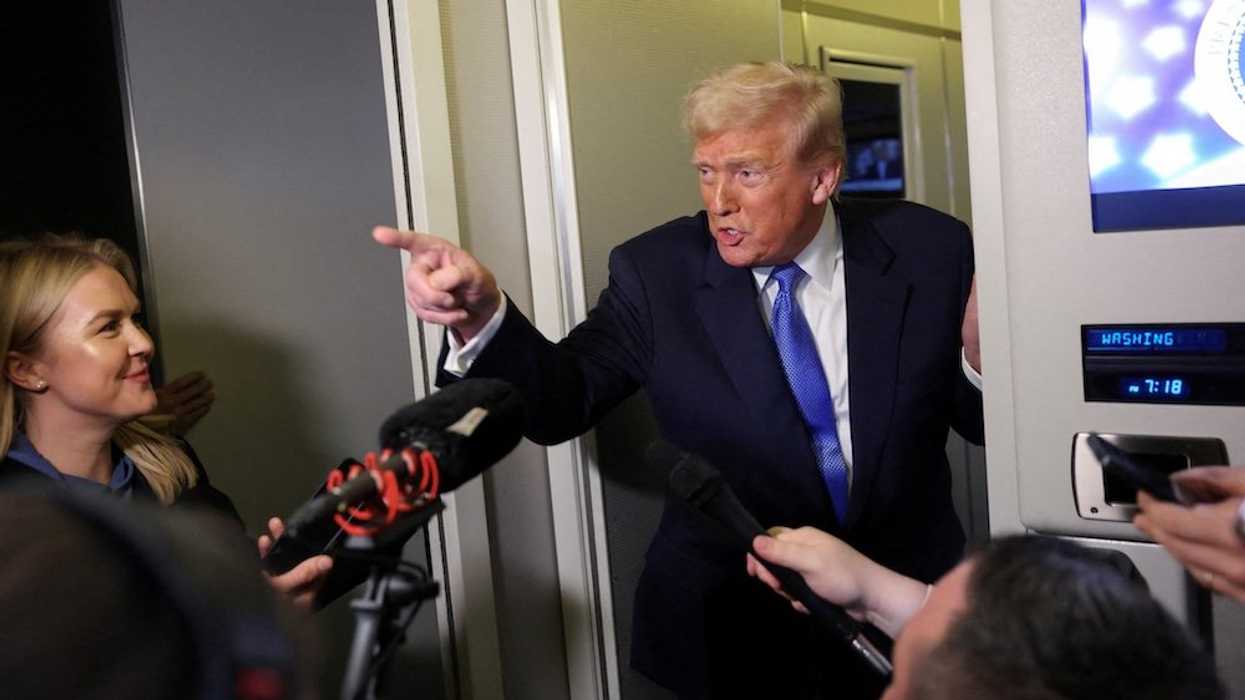
President Donald Trump speaks to reporters aboard Air Force One on his return to Washington, D.C., March 9, 2025. REUTERS/Kevin Lamarque
October 10, 2026
ALTERNET
President Donald Trump once again lashed out and blamed a foreign leader for his own soaring inflation issue, prompting observers and commentators to rip into him for the slight and accuse him of being "compromised."
As Trump stares down major GOP midterm losses thanks in large part to the ongoing cost-of-living crisis, and in recent weeks, his war with Iran has begun making the issue much worse. As the conflict spirals on with no real end in sight, diesel prices have begun to reach historic average highs, putting a tight financial squeeze on farmers and the transportation industries, creating a ripple effect as higher fuel costs are passed on to consumers for nearly every product in the economy.
With no meaningful solution in sight, Trump has recently taken to blaming Ukrainian President Volodymyr Zelensky and his nation's ongoing war with Russia for the issue, given the Ukrainian military's many strikes on Russian oil refineries. In a press conference outside the White House on Saturday, Trump once again ripped into Zelensky over the issue and argued that Ukraine should get a new leader.
"He wants to make problems for the world. He wants to make problems for our farmers, our ranchers, with diesel fuel," Trump said.
As clips from the press conference began to circulate on social media, numerous observers took aim at Trump, lambasting him for appearing to take Russian President Vladimir Putin's side in the conflict and comparing his own approval ratings to Zelensky's.
"Your daily reminder that there is a non-zero chance our President is compromised by Putin," moderate anti-Trump conservative commentator Brian Mistrot wrote in a post reacting to the president's remarks.
In a post reacting to Trump claiming Ukraine needs a new leader, independent political commentator Adam Schwarz noted that Trump's approval rating currently sits around 32 percent, while Zelensky's sits at 54 percent. With that in mind, many observers turned Trump's words around on him, insisting that the U.S. needed a new leader instead.
"Let's do that here instead," anti-Trump conservative commentator Rick Wilson wrote.
"I suggest that [Americans] should get a new leader who is not such a vacuous, venal fool," historian Roger Moorhouse posted.
"There will be considerable satisfaction in Moscow tonight," Russia-based reporter Brian McDonald explained. "Trump has now openly progressed from urging Ukraine to accept a peace deal to suggesting it find another president... willing to do so. Trump’s frustration with Zelensky is no longer a matter for diplomatic interpretation, particularly after renewed Ukrainian attacks on Russian oil facilities (in Rostov last night), despite Washington’s requests to stop them, he's announcing it to the world now."
"I thought he said HE could end the war on 'day one' though," popular liberal commentator Joanne Carducci posted.
"This is absolutely unacceptable. The President of the United States is now openly siding with the murderous dictator of Russia," Fred Wellman, a Democratic candidate for Congress in Missouri, posted.
"I see he is playing the game 'how appalling can I be' again," journalist Luke McGee posted.
Trump Strikes ‘Deal With the Devil’ for Russian Diesel as High Prices Hinder GOP in Midterms
“He’s helping fund Russia’s war machine, while our allies pay the price,” said one congressional Democrat.
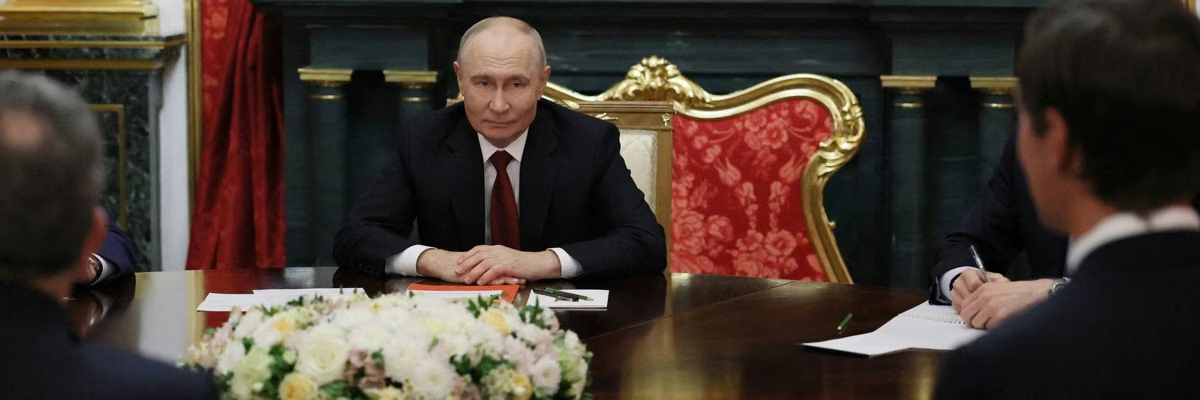
Russian President Vladimir Putin attends a meeting with US President Donald Trump’s special envoy Steve Witkoff and son-in-law Jared Kushner in Moscow on September 5, 2026.
(Photo by Mikhail Metzel /Pool/AFP via Getty Images)
Jessica Corbett
Oct 09, 2026
COMMON DREAMS
Democrats in Congress and Ukrainian President Volodymyr Zelenskyy on Friday swiftly condemned US President Donald Trump’s plan to secure diesel from Russia in hopes of combating fuel prices that have skyrocketed due to his illegal war on Iran.
“I have just concluded a highly successful discussion with President Vladimir Putin, of Russia, wherein it was agreed that Russia will immediately supply over 300,000 Tons of Diesel Fuel to the American and Global Marketplace, another 500,000 Tons during the month of November, and 1,000,000 Tons immediately thereafter,” Trump wrote on his Truth Social platform, with the US midterm elections just weeks away, and voters frustrated by the country’s affordability crisis.
“Additionally, based on the condition of their Diesel Refineries, Russia will then deliver, within a short period of time, 3,000,000 Tons of Diesel Fuel,” Trump said. “Between our TOTAL CONTROL of the Strait of Hormuz, and this great announcement on Russian Energy, Diesel Prices for Americans and, indeed, the World, will be COMING DOWN, IN RECORD NUMBERS, AND FAST! Lower prices for Americans, especially our Great Farmers, Ranchers, and Truckers, is my Greatest Priority. This is a very big and important announcement. Additionally, it must be understood, that Iran will not have a Nuclear Weapon!”
After Trump’s post, the Department of the Treasury’s Office of Foreign Assets Control issued a general license “authorizing transactions related to the sale, delivery, offloading, and importation of diesel” from Russia—which launched a full-scale invasion of neighboring Ukraine in 2022. In response, Congress has appropriated over $170 billion to help Ukraine.
The Associated Press pointed out that Trump announced the deal with Putin after “he signed a sweeping Russia sanctions law last month that aimed at clamping down on Russia’s energy revenues,” and as “his envoy Steve Witkoff and son-in-law Jared Kushner were meeting with Ukrainian officials in Miami to discuss a proposal to try to end the Russia-Ukraine war.”
In a lengthy statement, the Ukrainian president warned Friday that “any easing of sanctions against Russia without a clear and lasting de-escalation agreement with Russia is an obvious weakness. It plays into Russia’s hands—allowing it to kill more, wage war for longer, have even less respect for America, and inflict even greater losses and damage on the world.”
US Senate Minority Leader Chuck Schumer (D-NY) declared that “Trump is doing a deal with the devil to try to help his flailing political fortunes from the shockingly high diesel prices caused by his own reckless, illegal war in the Middle East. This filthy deal will only aid and abet the same Putin who is helping the Iranians to target and try to kill American troops in the Middle East and who illegally and viciously invaded our ally Ukraine.”
According to an online tracker launched by Brown University’s Costs of War Project, since Trump started bombing Iran without congressional authorization in February, Americans have paid over $130 billion more for fuel—$71.74 billion for gasoline and $58.56 billion for diesel—or nearly $1,000 per household.
Several other Democratic lawmakers from both chambers of Congress—which Democrats hope to reclaim from Trump’s Republican Party in November—were also critical, including Sen. Richard Blumenthal (D-Conn.), who said that striking a deal “with a murdering dictator” to lift sanctions “is an embarrassment and makes us complicit in Putin’s war against Ukraine.”
“This poorly concealed attempt to mitigate the havoc caused by Trump’s illegal war in Iran will only benefit the Chinese and Russian economies, and lead to the slaughter of more innocents in Ukraine,” he argued. “The president should rescind this agreement immediately. To the American companies considering taking Putin’s blood money: Congress is watching.”
Denouncing Trump’s announcement as “a disgrace,” Sen. Elizabeth Warren (D-Mass.) said: “You know how Trump could bring down gas and diesel prices? By ending his illegal war with Iran. Instead, he’s going to help fund Putin’s war machine.”
Sen. Andy Kim (D-NJ) described Trump’s approach as “desperate and shortsighted,” adding: “Trump ran on America First but has no idea how to actually deliver for the American people. We wouldn’t be in this mess without his wasteful war with Iran. We need to build opportunity for Americans with our foreign policy, not Putin. End this war and not a single dime to Russia.”
House Foreign Affairs Committee Ranking Member Gregory Meeks (D-NY) also slammed the president’s reversal on sanctions against Russia, stressing that “instead of putting economic pressure on Putin for his invasion of Ukraine, Trump continues to appease him. His disastrous Iran War has sent gas and diesel costs soaring, and Americans are paying the price.”
Congresswoman Madeleine Dean (D-Pa.) similarly said: “Desperate to escape the consequences of his failed Iran war, Trump is preparing to stab Ukraine in the back and buy diesel from Putin. He’s helping fund Russia’s war machine, while our allies pay the price.”
Trump’s US Meets the Textbook Definition of an Oppressive Regime
The distinction between “oppressive regime” as a concept in a textbook and “oppressive regime” as the texture of ordinary life—for millions of people living in this country right now, citizens and noncitizens alike—has ceased to exist.
Foreign Policy In Focus
Political scientists have a fairly dry checklist for what makes a regime oppressive: It silences dissent, it turns state power against its own people, it treats international law as optional, and it punishes anyone—institution or individual—who tries to hold it accountable. Read as a list, it sounds abstract or like something that happens elsewhere, in a dictatorship in a Third World country maybe.
For Americans, such a definition no longer feels abstract anymore.
Let’s start with the silencing. Since the war on Gaza escalated, human rights groups and journalists have documented, for years now, a pattern of pro-Palestinian content—protest footage, on-the-ground reporting, even the straightforward accounting of civilian deaths—being throttled, flagged, or removed from major platforms. Meanwhile, incitement and dehumanizing rhetoric spreads with far less friction. Independent researchers have called it out repeatedly. Platforms deny doing it on purpose.
Regimes like this have ended before, usually because enough ordinary people refused to stop saying what they saw.
The silencing isn’t limited to algorithms, either. Last month, the White House revoked press credentials for CNN, MS NOW, and Politico, physically barring their reporters from the building over what the president called unfavorable coverage. A federal judge has since ordered access temporarily restored, calling the move a likely violation of due process, but the message had already landed: Cover this administration the wrong way and you can be locked out of the room where the decisions get made. A press freedom advocate called it part of a broader pattern meant to intimidate journalists and deter critical reporting. When the people paid to tell the public the truth are the ones getting the door closed in their faces, “free press” starts to feel like a technicality rather than a guarantee.
Then there’s the gap between what the government does and what the country actually wants. This summer, Rep. Thomas Massie (R-Ky.) forced a vote to strip billions in US military funding to Israel. This was no fringe gesture but a real floor fight that split both parties and forced members to go on the record. It lost. But the fact that it happened at all, that a sitting Republican congressman felt he had to make Washington answer for the money it kept sending regardless of what constituents were saying, is itself the story. Institutions are moving in one direction while public sentiment visibly pulls in another, and the institutions are winning anyway.
And there’s the reach outward. When the International Criminal Court issued warrants tied to the Gaza war, Washington didn’t argue the law. It sanctioned the court itself, freezing officials’ bank accounts, cutting off their email, warning American staff they’d be arrested for traveling home. A body created specifically to stand outside any one government’s control got treated like an adversary for doing its job. If that’s what happens to an international court, it’s not hard to imagine what happens to an ordinary citizen who speaks too loudly.
Actually, it’s not hard to imagine because it is happening on a daily basis, especially for those who protest the Trump administration’s immigration policy. Last month, Donna Ganger—the mother of Renee Good, a US citizen shot and killed by an Immigration and Customs Enforcement (ICE) agent in Minneapolis in January—testified on Capitol Hill that she’s a registered Republican who voted for Donald Trump because she believed that these agents were there to protect citizens, not to treat her own family like the threat. She didn’t get an apology. “This is madness,” she concluded.
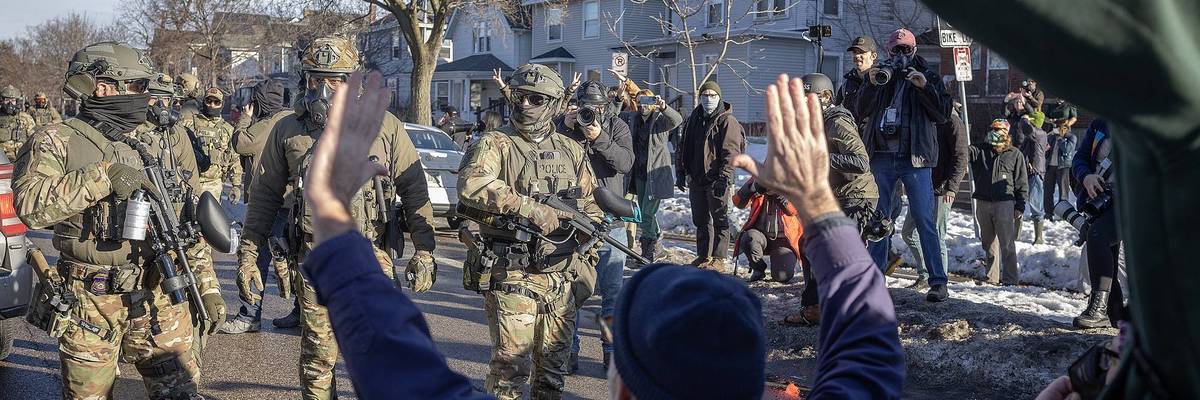
Protesters and Immigration and Customs Enforcement agents face each other near the area where Renee Good was killed by a federal immigration agent the previous week, in Minneapolis, Minnesota, on Tuesday, Jan. 13, 2026.
(Photo by Elizabeth Flores/The Minnesota Star Tribune)
Every day, millions of people in America live the reality of a police state. They are afraid to leave their houses for fear of being detained by ICE, thrown into horrific holding centers, and sent back home to civil war or family abuse or even deportation to a third country they know nothing about. ICE has become something closer to a domestic enforcement arm than an immigration agency, and “wrong place, wrong time” is a real category of harm now, not a hypothetical one.
What does it mean to raise a child in a country where simply existing in the wrong neighborhood at the wrong moment carries risk? Where even a global court gets its accounts frozen for trying to hold power accountable?
It’s a strange kind of irony that at the United Nations last month, Trump denounced “the fanatical Iranian regime” for spreading “carnage and chaos” and called for its “complete economic isolation” over how it treats its own people. He’s not wrong that repression deserves condemnation. He’s just describing, almost point for point, the pattern playing out here at home—press outlets barred from covering their own government, citizens shot by agents meant to protect them, and dissent treated as the threat rather than the right.
The distinction between “oppressive regime” as a concept in a textbook and “oppressive regime” as the texture of ordinary life—for millions of people living in this country right now, citizens and noncitizens alike—has ceased to exist. Describing the disappearance of that distinction—calmly, specifically, without exaggeration—feels like the first form of resistance available to someone who isn’t a lawyer, a lawmaker, or a judge.
Regimes like this have ended before, usually because enough ordinary people refused to stop saying what they saw. That’s the piece I want to hold onto, even on the days when fear wins out.
© 2023 Foreign Policy In Focus
Macela Carmo Dos Santos
Macela Carmo dos Santos is a multilingual humanitarian advocate and patient care coordinator based in New York. She holds a degree in foreign trade from Brazil and a BA in psychology from Queens College, CUNY, and previously served as vice president of development at IMPACTability, a youth empowerment NGO. She writes on humanitarian issues at macelasantos.com.
Full Bio >
‘He’s Desperate’: AIPAC Begins Spending Against Abdul El-Sayed to Boost Mike Rogers
“You know Mike Rogers is in trouble when he begs AIPAC to start spending against me,” said Abdul El-Sayed, Rogers’ Democratic opponent.
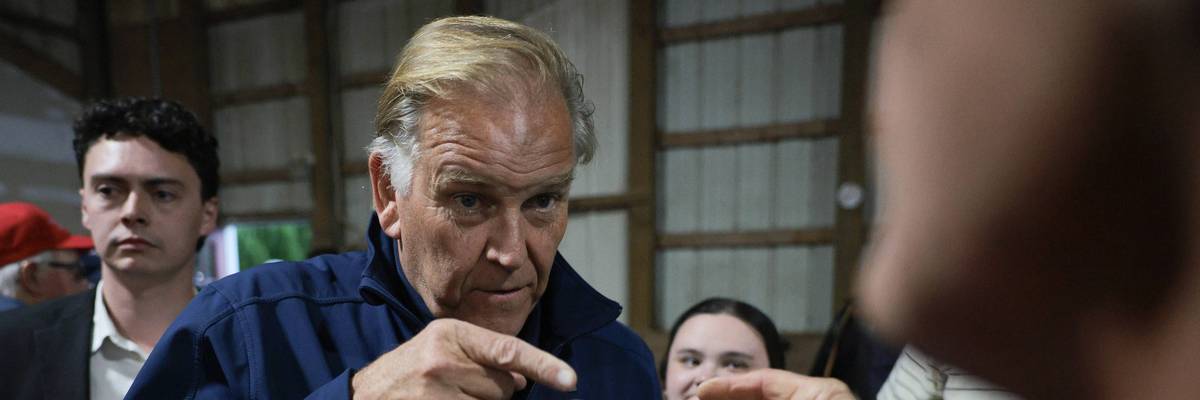
Michigan Republican Senate candidate Mike Rogers talks with supporters on October 9, 2026 in Highland Township, Michigan.
(Photo by Chip Somodevilla/Getty Images)
Jake Johnson
Oct 10, 2026
COMMON DREAMS
A campaign finance report filed on Friday revealed that the American Israel Public Affairs Committee’s super PAC, the United Democracy Project, has resumed spending on Michigan’s US Senate race, dropping $95,000 on mailers opposing Democratic nominee Abdul El-Sayed in a bid to help Republican Mike Rogers weeks ahead of the key midterm contest.
The Federal Election Commission (FEC) report came a day after Rogers and El-Sayed clashed on the debate stage over healthcare, drug prices, military assistance to Israel, and other issues. Asked during the debate whether he would accept AIPAC’s support in the race, Rogers said, “Anybody that wants to help my campaign stop [El-Sayed]... I’ll take all of that help.”
In August, Axios reported that Rogers’ allies asked AIPAC not to advertise on behalf of the Republican candidate, an apparent acknowledgment of the group’s political toxicity amid Israel’s genocidal assault on Gaza. Rogers himself spoke with AIPAC’s chair in August, according to Axios, and the group subsequently “shelved an already-cut video ad targeting” El-Sayed.
In response to the FEC report, El-Sayed wrote on social media that “you know Mike Rogers is in trouble when he begs AIPAC to start spending against me.”
“Why do they hate me?” he added. “Because I want to keep your tax money here to spend on your kids rather than spend it to kill kids somewhere else.”
AIPAC’s United Democracy Project (UDP), which has spent aggressively against progressive Democrats across the country in recent elections, poured tens of millions of dollars into El-Sayed’s Democratic primary contest against Rep. Haley Stevens (D-Mich.). The group signaled after El-Sayed’s victory that it was prepared to spend heavily on Rogers’ behalf.
While the new spending on mailers marks UDP’s first financial intervention in the Senate race’s general election, Rogers has attended several fundraising events hosted by AIPAC.
Speaking to reporters at a campaign stop on Friday, Rogers downplayed UDP’s mailer spending and falsely attacked El-Sayed as antisemitic.
“He is so anti-Jewish that one mail piece sends him into orbit,” said Rogers.
The American Prospect’s David Dayen wrote Friday that Rogers “was right when he dissuaded this the first time,” referring to AIPAC campaign spending.
“But he’s desperate now,” Dayen added.
Watch: Bernie Sanders Explains Why El-Sayed ‘Won Last Night’s Michigan Senate Debate’
“I think he did great because it’s impossible for Republican Mike Rogers to defend the most dangerous, reckless, and extreme president in the history of the United States.”
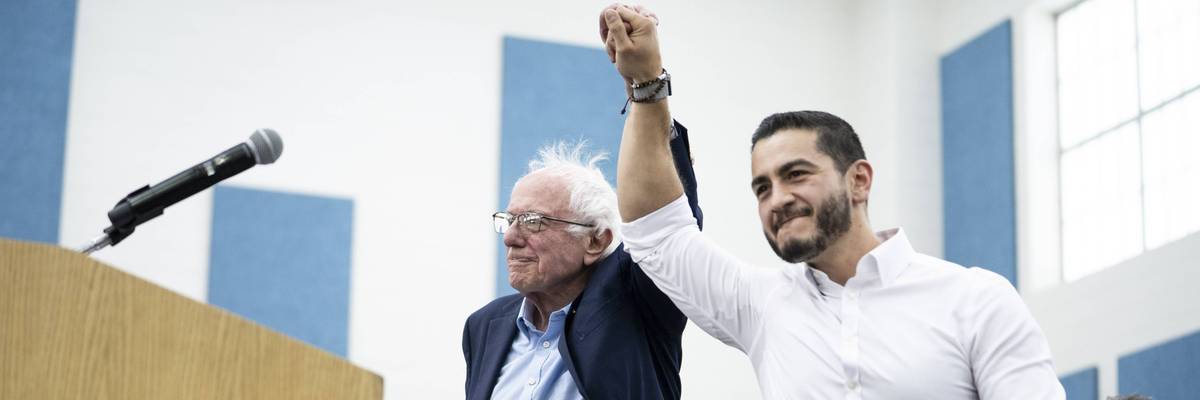
US Sen. Bernie Sanders (I-Vt.) is introduced by Senate candidate Abdul El-Sayed at Mumford High School on May 3, 2026 in Detroit, Michigan.
(Photo by Sarah Rice/Getty Images)
Stephen Prager
Oct 09, 2026COMMON DREAMS
Sen. Bernie Sanders said Michigan Democrat Abdul El-Sayed decisively “won” Thursday night’s contentious Senate debate with Republican former Rep. Mike Rogers, whom he leveled with attacks on his support for President Donald Trump’s unpopular war with Iran and tariff regime.
Two public polls taken after the debate by the Detroit Free Press and WOOD-TV both show three-quarters of voters agreeing that El-Sayed prevailed.
During an interview with CNN’s Kaitlan Collins following the debate, Sanders (I-Vt.), who has enthusiastically backed El-Sayed’s bid for the Senate, argued that there was a simple reason why.
“I think Abdul did great,” Sanders said. “I think he did great because it’s impossible for Republican Mike Rogers to defend the most dangerous, reckless, and extreme president in the history of the United States.”
Watch the full clip below:
The Michigan race is among the most closely watched for the November midterm elections, in which Democrats are trying to reclaim majorities in both the Senate and House of Representatives.
.jpg)


.JPG)