
Viktor Orban at rally April 10. / mti.hu
By IntelliNews April 10, 2026
The opposition Tisza Party appears to have the momentum in the final leg of Hungary's election campaign, putting it on track for a potential two-thirds parliamentary majority, according to the latest Median poll which has a long track record of getting the outcome right.
Other surveys also underscore a shift in public sentiment as the fear-based messaging of Fidesz seems to have lost its effectiveness. Hungary's gerrymandered electoral landscape and its single-member district system mean that even a narrow opposition victory (2-3pp) in the popular vote may not translate into a parliamentary majority. Votes cast abroad and by mail will be counted days after election night, potentially delaying the final result and adding further uncertainty in a close contest.
Hungary's strongman Viktor Orban is facing the toughest election of his career and risks not only his supermajority rule but his long-standing grip on power, according to most independent polls.
After being ousted in 2002, he returned to power with a landslide victory in 2010 and set about cementing his position permanently. As he reportedly remarked in a private discussion in the election campaign 16 years ago: "We need to win only once, but we need to win big."
With a two-thirds majority, Fidesz took control of the judiciary, rewrote the constitution, and fostered a wealthy elite loyal to his party. By buying up media and turning state media into a mouthpiece, Fidesz has won every vote since the local government election in the autumn of 2006 and has sealed every parliamentary election with a supermajority. However, corruption, democratic backsliding and economic stagnation have eroded Orban's support since the pandemic, following the suspension of EU funds.
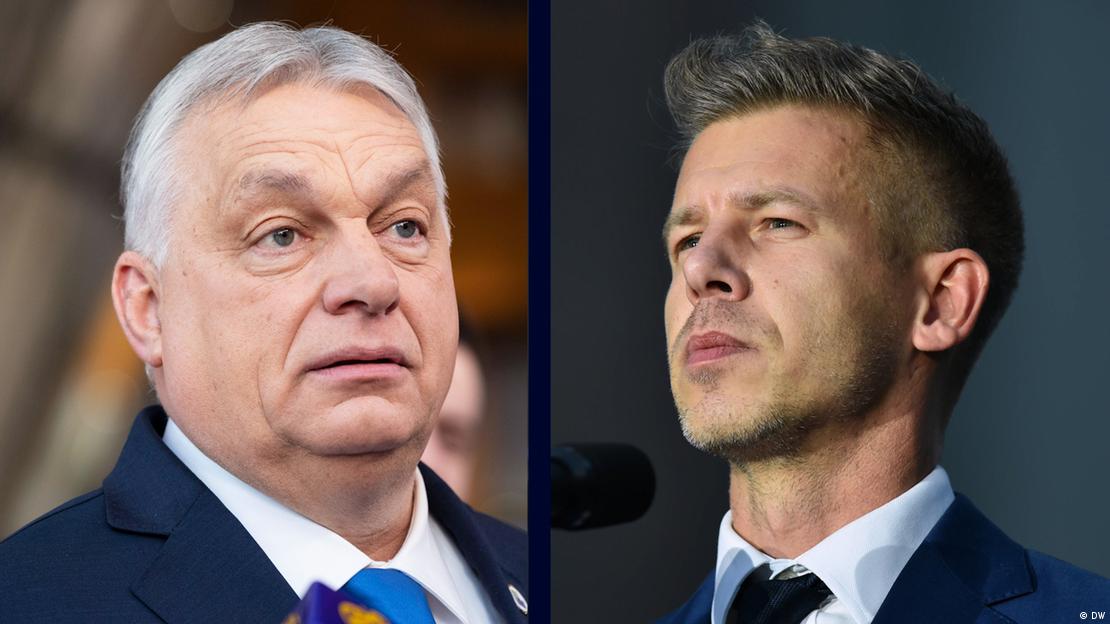
The "Clemency scandal" in February 2024, leading to the resignation of the president and the justice minister, marked the start of Peter Magyar's career in Hungarian politics. The former Fidesz insider, who had grown disillusioned with the ruling party, founded the grassroots movement that, over two years, has grown into Hungary's largest political bloc. He successfully channelled long-building public frustration, anger, and in some cases apathy, into a powerful political force.
Tisza’s campaign is largely focused on domestic issues, presenting Magyar as a pro-European, anti-corruption alternative who aims to tackle Hungary’s economic and moral challenges. He has effectively drawn attention to the cost of living, economic stagnation, and the deteriorating state of public services such as education and healthcare.
Its election programme includes joining the European Public Prosecutor’s Office and unlocking EU funds that were previously suspended over rule-of-law concerns and allegations of high-level corruption. Combating corruption and restoring access to EU funding are central priorities of his proposed government, which he argues would help revitalise the economy.
He expressed confidence that restoring legal certainty would help attract investment and bring capital back to Hungary, and helping to unleash entrepreneurial activity.
These funds will be much needed to cover wide-ranging election promises and alleviate Hungary's strained fiscal position. These include, amongst others, cutting VAT on healthy food items and prescription medicine, raising the minimum pension, and providing the elderly with a HUF200,000 (€531) voucher that can be used to buy food and health services. At the same time, Tisza is also promising to maintain, and even expand, Fidesz's welfare measures, including generous family tax allowances and personal income tax exemptions.
Tisza would set up a national asset recovery authority with extensive powers. It would launch retroactive wealth investigations going back up to 20 years, including senior politicians and their families, and introduce a wealth tax on billionaires. Magyar vowed to review major state investments, such as the expansion of Paks, to stop the sale of state assets.
Magyar has pledged a firm stance on immigration, a position that some view as a strategic move to appeal to Fidesz voters during the campaign.
In foreign policy, the party advocates normalising relations with key European and NATO allies, abandoning Fidesz's veto-driven politics to regain credibility
Magyar told the AP that he would pursue a "constructive but critical" relationship with the bloc. At the same time, he opposes sending arms to Ukraine and resists accelerating Kyiv's EU membership, on which there will be a referendum according to the party's election manifesto.
Magyar’s position on Ukraine is also aimed at countering Fidesz’s accusations that he is aligned with Ukrainian interests or acting under external influence. Over the past months, he has rejected these claims, insisting that his approach is driven by Hungary’s national interests and a pragmatic foreign policy rather than any external agenda. He has sought to present himself as independent of both Kyiv and Moscow, stressing that his objective is to restore Hungary’s credibility within the EU while maintaining a balanced, sovereign foreign policy.
Magyar has campaigned tirelessly, criss-crossing the country in what he calls the "most important tour in Hungarian history", holding 6-7 rallies in the final stretch of the campaign. From Budapest to the smallest villages, he has held packed rallies with a simple yet powerful message: rebuild Hungary, clean up corruption, strengthen democracy, and reconnect with Europe.
"We are on the verge of a regime change, and the election will decide whether the country becomes a developing European state or drifts away from the European Union, or even chooses Huxit, which could be a real possibility with a coalition between Fidesz and the radical right," he warned.
While Viktor Orban has held rallies in closed arenas for selected supporters, Magyar has been touring the countryside ever since the EP campaign, appearing in public before packed crowds. In the final stretch of the campaign, self-labelled as the most vital country tour. Since the party's foundation, Magyar has visited more than 500 municipalities across Hungary and held more than 700 campaign events. These are predominantly in rural Hungary, once the bastion of Fidesz and neglected by the old opposition.
"You will be making history with your votes. April 12 will be in the history books," he is heard telling his young supporters, many of whom are below the voting age. After the speeches, Magyar is asked for photos and autographs, displaying the flair of a rock star.
"For those who have not lived in a real democracy, this will be an enormous relief," he said, referring to the incoming regime change. The Tisza Party says that Hungary needs a regime change, which is more than a change of government, and that this period has closed since the democratic transition.
Magyar has every reason to be confident. Based on the latest polls, the ruling party retained its advantage in villages and small settlements, but its lead has eroded, as Péter Magyar has noted on the campaign trail. Magyar, in his rallies, said the Hungarian countryside has revolted against the corrupt ruling elite, and people no longer fear supporting the opposition openly for fear of retaliation.
The polls suggest that Tisza is on the verge of a historic victory. Median puts Tisza's lead among likely voters at 18pp (48% to 30%), while 15% remain undecided. It projects a largely two-party parliament, with smaller parties such as Our Homeland (4%), the Democratic Coalition (2%), and the Two-tailed Dog Party (1%) unlikely to play a major role.
The main political divide is along age and education lines. Tisza dominates among younger voters, winning around three-quarters of those under 30 and 63% of those aged 30-40, while Fidesz retains a strong advantage among pensioners. It has strong support among secondary school and university graduates, while Fidesz performs better among less educated voters. Geographically, Tisza has expanded its support into smaller towns and rural areas, making inroads into Fidesz's strongholds.
Fidesz's campaign, on the other hand, is solely building on the narrative of keeping voters on edge with fearmongering. The ruling nationalists successfully rallied supporters four years ago with baseless claims that the opposition would send soldiers to Ukraine. The Fidesz campaign team chose to shy away from covering domestic issues, instead focusing on keeping Ukraine on the agenda, spiced up with disinformation and AI-generated campaigns against the opposition spread across its vast media network.
The ruling party's main narrative is that Ukraine is colluding with the EU to install a puppet government in Hungary. Once Tisza takes power, it will succumb to pressure from Brussels to support Ukraine's EU membership and send weapons and money to the war-torn country.
The campaign is hammering home the message, reflected in the slogan "The Safe Choice," that Orban is the only guarantor of peace and stability, who can defend the country in times of trouble. "National unity and experienced leadership are essential for Hungary to remain outside the war in Ukraine," Orban said in a recent interview.
Orban has portrayed Kyiv and its policies as potential threats to Hungary's security and economic interests as bilateral relations have sunk to historic lows. As analysts put it, Orban has a vested interest in escalating the conflict to shore up his base, which has become mostly pro-Russian through the constant hate campaigns against Ukraine.
The final months of the election campaign have brought unprecedented scandals, including the seizure of the Ukrainian gold convoy, the release of wiretapped conversations between Hungary's Foreign Minister and his Russian counterpart, and the revelation of intelligence operations against Tisza.
The shifting sentiment in support of Tisza is reflected in the fact that many are stepping up to speak out about direct political influence on policy, from defence forces and competition officials to police officers, economists and businessmen, who are now openly siding with the opposition.
Fresh research by Policy Research shows that the Hungarian electorate may have grown tired of constant fear-based messaging. Public concern over Hungary being drawn into armed conflict has dropped from roughly 60% in 2023 to 30% today.
What proved effective in the 2022 campaign is no longer working, as voters want concrete answers to scandals rocking the country since, such as the abuse of children at foster homes, the health hazards of battery factories, or the loss of at least €1bn central bank foundations.
Economic sentiment remains largely negative, with just 20% of Hungarians expecting their financial situation to improve in the next 12 months, while most foresee stagnation or deterioration.
The same survey indicates that Peter Magyar’s party is widely seen as more capable of delivering economic growth, with an 18-point advantage over Fidesz. The perception of Tisza as the party best able to ensure competent governance has grown across various demographics, including urban and educated voters, which does not bode well for the ruling party.
The survey also revealed that a narrow majority of voters now believe Tisza could win the 2026 parliamentary elections, a shift from previous months when many doubted that Fidesz could be defeated. This bandwagon effect” could be crucial in winning over undecided voters.
In a recent interview, Magyar said that, out of the 106 individual constituencies, Tisza holds a comfortable lead in about 50 of them. In a further 10-15 districts, the party leads by around 4-5 percentage points, while in another 15 the race is within the margin of error. Fidesz appears to have an advantage in roughly 25 districts, but none of them has a lead exceeding 3-4%.
Viktor Orban enjoys the support of far-right parties and leaders across Europe and within the EU, and he is viewed as a model for the illiberal approach: a blueprint for weakening liberal democracy and maintaining political power through a skewed electoral and institutional framework.
The MAGA movement and its international allies see the upcoming Hungarian election as Europe's most important vote this year, which could represent a potential turning point in the contest of political ideas, as Anne Applebaum recently wrote in The Atlantic.
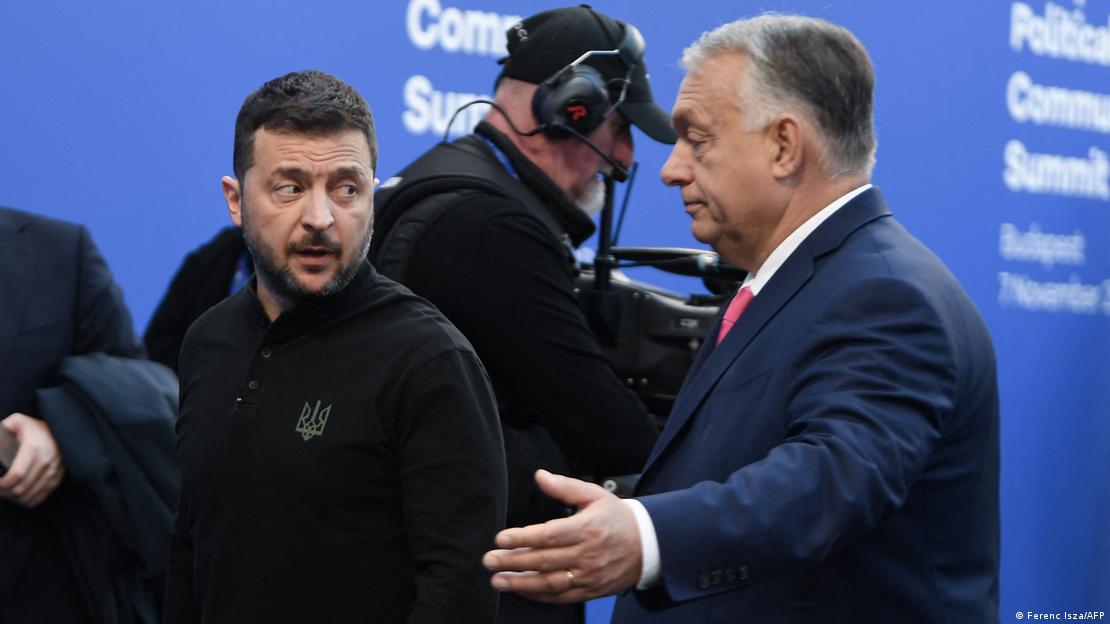
Hungary’s longest-serving prime minister is leading a groundbreaking, "post-reality" political campaign with AI-generated, often surreal and provocative imagery, targeting opposition figures and foreign leaders like Ukraine's Volodymyr Zelensky with disinformation and character attacks. If Orban wins, he is paving the way for others; if he loses, then that is the end of an era, she adds.
As one Hungarian analyst put it, Orban's biggest fear is losing power just as European far-right parties, including his peers in the Patriots for Europe grouping, are on the verge of a breakthrough.
The pivotal Hungarian election is also being closely watched across European capitals, where many hope for Orban's defeat and, with it, the normalisation of relations between Budapest and the EU in the event of a Tisza victory.
Orban has faced growing criticism for repeatedly using his veto power to block key decisions, particularly on support for Ukraine and sanctions against Russia. Recent wiretapped recordings of Hungary's Foreign Minister Péter Szijjártó showed alarm and indignation, underscoring what was already widely known: that Hungary has been acting as a Trojan horse for Russia. These incidents will likely deepen Hungary's isolation within the bloc if Orban remains in power.
The EU has also raised concerns about rule-of-law issues in Hungary, including judicial independence, media freedom, and corruption. In 2022, billions of euros in funding were frozen for Budapest. To unfreeze the funds, Orban has vowed to torpedo the EU's next seven-year budget.
EU leaders are also working on a Plan "B" if Orban remains in power. The EU could reduce the number of issues that require a unanimous vote, allowing measures to pass with a simple majority of the 27 national leaders, who together represent roughly two-thirds of the bloc's population.
The April 12 election could become the EU's first rigged vote, with major implications for democratic integrity and decision-making, according to Daniel Hegedüs, the deputy director of the Institut für Europäische Politik, in an analysis published on The Insider. EU stakeholders are urged to prepare for such a scenario, while Hungarian civil society and opposition forces are expected to mount sustained protests to counter potential manipulation. Prime Minister Viktor Orban may adopt strategies used by incumbents in Georgia and Serbia, both seen as his allies in weathering protests with persistence and external support.
Hegedus opines that a Ukrainian-style revolution is unlikely and that, in the case of fraud or a constitutional crisis, months of peaceful demonstrations are expected. Such movements could restore Hungary's democratic path only if they are sustained, show strong popular legitimacy, and are backed by EU pressure.
Pro-Orban media in recent days have run stories claiming that a Ukrainian NGO is recruiting paid provocateurs to work in Hungary right after the elections, which, according to Russian expert Andras Racz, could be used to cover a possible false flag operation by Russia to destabilise the country. The presence of foreign agents could potentially fuel accusations of external interference.
Geopolitical analyst Csaba Kancz, in his blog, argues that a change in government in Budapest would mean Moscow losing a strategic partner within the EU, which had helped influence foreign policy decisions and support its narratives in debates on sanctions and Ukraine. Hence, the election's outcome would have major geopolitical implications for Russia’s influence in the EU.
As Hungary’s National Election Office confirmed on April 9, cc. 92-95% of national list votes and 94-97% of constituency votes will be counted on election night. Votes cast abroad and by mail will be counted days a few days after the election, potentially delaying the final result and adding further uncertainty in a close contest.
Political Capital analyst Robert Laszlo said a situation could emerge in which Tisza wins the popular vote, yet Fidesz still obtains a parliamentary majority due to the gerrymandered electoral system. He noted that this could happen with a margin of just 2-3pp, potentially triggering a prolonged constitutional and political crisis.
The April 12 election is shaping up to be a historic one. The victory by the oppostion could put an end 16 years of entrenched Fidesz rule, a chance to reclaim Hungarian democracy, and reverse the illiberal model that has inspired populist leaders across Europe.
Legal scholar Zoltán Fleck, who served as an advisor for the united opposition four years ago, stated that over the past 16 years, Hungary's illiberal leader has developed an increasingly authoritarian system, where democratic institutions appeared to function but were effectively hollowed out. He noted that dismantling this system would be a significant challenge, but institutional reforms would be more achievable if Tisza were to secure a two-thirds supermajority.
Many argue that a Fidesz victory could push Hungary further toward a Belarus-style authoritarian system, as Orban has shown little willingness to make concessions, perceived by him a sign of weakness.
A narrow victory for Tisza would come with major challenges, as Orban's influence over the judiciary, media, and state institutions could allow him to block reforms.
Hungarian election: Orbán accuses opposition of plotting unrest
10.04.2026, DPA

Photo: Beata Zawrzel/ZUMA Press Wire/dpa
Two days before Hungary's parliamentary election, Prime Minister Viktor Orbán has accused the conservative opposition led by Péter Magyar of planning unrest in the event of his populist party's defeat.
"Our opponents will stop at nothing," Orbán said in a video message "to all Hungarians" posted on his Facebook page on Friday.
"They are cooperating with foreign intelligence services. Even now, before your votes have been counted, they are organizing protests and unrest," Orbán said, without providing evidence for his claims.
"This is an organized attempt to cast doubt on the decision of the Hungarian people through chaos, pressure and international defamation," he added.
Orbán, a far-right populist who has governed Hungary for 16 years, faces a difficult election on Sunday, with polls suggesting his party could be defeated.
All major polling institutes currently show Magyar’s Tisza Party ahead of Orbán's Fidesz.
Ahead of the vote, Magyar has promised a break with Orbán's semi-authoritarian style of governance. He previously belonged to Fidesz but split from the party just over two years ago.
Orbán has maintained close ties with Russia under President Vladimir Putin. Reports have also suggested coordination with Moscow on some EU policy positions.
Within the European Union, which Hungary joined in 2004, Orbán has repeatedly used his veto power to block aid for Ukraine.
Magyar urges calm
Magyar responded to Orbán's remarks in a Facebook video, urging supporters not to be provoked and to remain peaceful.
He said Orbán would be voted out on Sunday by millions of Hungarians who once supported him but now feel "let down and betrayed," and called on the outgoing prime minister to accept the result "with composure and dignity."
Expert: Echoes of Russian disinformation narratives
Security expert and former intelligence officer Péter Buda said in a Substack post that claims of opposition-linked unrest and alleged cooperation with Ukraine have circulated for some time in Russian online networks.
He said fabricated videos have appeared, including material purporting to show Ukrainian soldiers preparing intervention in Hungary.
By adopting such narratives, Buda argued, the government appears to be preparing the public for a potential "provocation" that could later be blamed on the opposition.
'The propaganda machine Orban has built has a massive impact before any election'
As Hungary prepares for parliamentary elections on 12 April, Prime Minister Viktor Orbán’s Fidesz party maintains tight control over much of the country’s media – and concerns are mounting over how free and fair the vote can be.
Issued on: 09/04/2026 - RFI

By: Jan van der Made
RFI spoke with Marius Dragomir, director of the Media and Journalism Research Centre at Spain's University of Santiago de Compostela. Dragomir, an expert on media freedom in Central and Eastern Europe, says that while Hungary’s elections may meet formal standards, the flow of information is heavily skewed by years of government propaganda and control.
RFI: How fair is Hungary's election environment at the moment?
Marius Dragomir: There is no indication that the elections will not be fair. But if you look at the various tactics used by political parties – and especially Fidesz, the party of Orban – they try to do anything to win the elections. Think documented use of fake news, think the use of “the enemy” element before any election...
Fidesz assigns an enemy. Sometimes it is [Hungarian-American billionaire] George Soros, who funded various organisations, including the Central European University [which was forced to move the bulk of its operations from Budapest to Vienna after a 2017 law, widely seen as targeting the university, restricted its ability to operate in Hungary].
Sometimes it is Brussels and the EU. Today, Ukraine is the public enemy and the people who want to bring war to Hungary.
Analysing what Fidesz has done to remain in power over the past 16 years indicates that losing the elections is a major problem for them. They have built a media empire over the past 16 years, because they want to make sure they win every election.
If they lose the election, the whole media infrastructure is going to be dismantled. It is not going to be an easy process. They are going to lose access to public resources, which they use to control all their institutions and to take over media companies. So it's essential for them not to lose the elections. That’s why we can expect anything.

RFI: It's a matter of survival...
MD: It's a matter of survival. I’ve never seen in the European Union a case of financial corruption, where the government has used public resources and often, ironically, EU money to fund projects, with oligarchs then taking over media outlets. It's not only that they will lose access to these resources, but they may be in trouble when some people might judge them for what they did.
RFI: What is the real impact of people being exposed to one-sided media coverage? There are some small independent news outlets such as Direct36, which stand out in their criticism of the government, but how big is the tendency of the larger public to try to find alternatives for the official narrative which they're being fed every day?
MD: When it comes to the impact of the media and the propaganda system that they built, the question is: how effective is it? You have part of the public that is more anti-Fidesz, they are concentrated in large cities, especially Budapest. And then you have all the others, the Fidesz voters, who are very responsive to the nationalistic narrative of the government, that is spread through this propaganda machine, embracing that and voting for them.

According to data that we have collected, given the high percentages with which Fidesz has won so far, this huge propaganda machinery that they have built over the years has had a massive impact before any election.
The system is very well organised. There is a direct link between the prime minister's press office and MTVA, the public media conglomerate that Fidesz reorganised in 2010 when they returned to power. [MTVA is owned and financed by the Hungarian state, through the National Media and Infocommunications Authority, and has as a subsidiary Duna Media, Hungary’s only public broadcaster.]
So this office calls the editor-in-chief in the morning, and they tell them what stories to cover and how, and sometimes they even give them the title to be used. And this is going through the whole country to all the other media companies, which then republish the same content.
The country has been flooded with the [pro-Orban/Fidesz] narrative and has seen that for more than a decade. And they embraced that, especially in rural areas, where people have relied on their local newspaper for many years, and this publisher has been taken over also by the oligarchs.
Of course, you have the opposition and their voters who are more critical and have access to other sources of information, but generally this narrative [is] dominant all over the place.
RFI: So is this changing now?
MD: During these elections, something new is happening. There is the economic factor. People are starting to suffer economically in Hungary – and when that happens, the ideological and nationalistic narrative is losing ground. There’s also the difference in generations. Younger people are moving away from the government narrative.
A new poll ahead of Hungary's election suggests that most voters want at least minor changes to ties with the EU. But it also found skepticism of financial support for Ukraine, and voters prioritizing domestic issues.
As Hungary's April 12 general election nears, opinion polls continue to point to a slight lead for Peter Magyar, the challenger to longstanding incumbent Viktor Orban, albeit with many voters still undecided and results varying by polling institute.
A poll published by IDEA in Hungary on Thursday found that 30% supported Orban's Fidesz party, 39% supported Magyar's Tisza, while a potentially decisive 21% said they were yet to decide how they would vote.
But another study published on Thursday by the European Council on Foreign Relations (ECFR) suggests that while Orban is not out of the running in his bid for a sixth term as prime minister, even his supporters are prone to disagree with him on some foreign policy points.
It suggests that a majority of voters in the EU and NATO member state — and even around half of the supporters of Fidesz — would like to see changes in the country's antagonistic stance towards the EU. However, it also found voters were skeptical of support for Ukraine against Russia and opposed Kyiv's ambitions to join the bloc.
Approval for the current US administration was split quite clearly along party lines as Washington lobbies for Orban's reelection. Three in four Fidesz supporters called Donald Trump a good leader for the US, while four in five Tisza supporters called him a bad one.
Vance targets EU while campaigning for Orban in Hungary 02:18
The representative poll of 1,001 people conducted between March 26 and April 1 pointed to a majority desire for less friction in ties with the EU — overwhelmingly within Magyar's camp but also across around half of Orban's supporter base.
43% of those polled called for a 'very different approach' to EU relations
Another 25% wanted 'minor adjustments' to the current approach
Only 19% said they wanted to 'keep the current approach'
That figure rose to 44% among Fidesz supporters, but still 45% wanted either major or minor change, with the remainder undecided
A whopping 91% of supporters of Magyar's Tisza wanted a realigned EU relationship
77% of respondents said they supported Hungary's EU membership
66% also said that the country should join the eurozone and adopt the single European currency
Only 15% of respondents voiced distrust in the EU, compared to 47% in Orban and 32% in Magyar
"Despite Viktor Orban's protracted criticism of the European Union, our new survey reveals that two-thirds of Hungarians 'trust' the EU and overwhelmingly support maintaining their country’s membership of the bloc," Pawel Zerka, senior policy fellow and polling lead at the European Council on Foreign Relations, said.
Hungary: Europe or an authoritarian path? 16:57
What were the findings on the Russian invasion of Ukraine?
Orban has made criticism of the EU and of support for Ukraine in its war against Russia into a core campaign point. At last month's EU leaders' summit, the last one before the election, Orban blocked approval of a major loan for Kyiv first agreed last December.
The study found that the government's opposition to support for Ukraine "has cut-through" with the public, which largely opposed Kyiv's desire to join the bloc.77% of Fidesz supporters wanted to keep the current approach to Ukraine, while only 11% of Tisza supporters felt this way
Only 26% of respondents endorsed financial support for Ukraine, but 47% of Tisza supporters did so
56% opposed Ukraine joining the EU; 50% of Tisza supporters endorsed the idea, while 77% of Fidesz supporters 'strongly opposed' it
36% supported the transit of military aid through Hungary to its neighbor, 77% of Fidesz supporters and 30% of Tisza supporters opposed the notion
66% of Tisza supporters want to stop buying Russian oil (Hungary is exempt from EU oil sanctions), but 77% of Fidesz supporters oppose the idea
62% of Fidesz supporters even said they perceived Ukraine as 'an adversary — with which we are in conflict,' while 19% of them saw Russia as an 'ally' and another 57% as a 'necessary partner'
"Hungary's European partners should not expect a complete U-turn on foreign policy matters in the event of a Magyar victory," Piotr Buras, senior policy fellow and head of ECFR’s Warsaw office, said. "Indeed, on the subject of Ukraine, there is division and skepticism among Tisza and Fidesz voter blocs about the merits of future financial packages for Kyiv and approving Ukraine's bid to join the European Union. This suggests that Budapest won't become easily aligned with all the aspects of EU foreign policy, irrespective of Sunday's result."
Which issues were the main priorities for voters in Hungary?
The ECFR's findings also suggested that these stark divisions on foreign policy questions might not prove the decisive factors in Sunday's vote.
Only 6% of respondents, for instance — 10% of Tisza supporters and 2% of Fidesz supporters — considered "relations with the EU" as the single most important issue facing Hungary at present.
Tisza supporters instead pointed to corruption and governance (31%), public services (18%) and the cost of living and inflation (17%) as their top three issues. Fidesz supporters, meanwhile, named energy security (22%) and cost of living and inflation (20%) at the top of the tree.
The poll, just like the Hungarian IDEA survey also released on Thursday, found that roughly one in five people were still undecided. Roughly 60% of this cohort also said that they would definitely turn out to vote on Sunday.
Edited by: Alex Berry
MEPs warn of ‘serious' risks to Hungary election, urge Commission to act

A letter sent to Ursula von der Leyen denounces “potential Russian interference operation” in Hungary and “state-led intimidation,” raising concerns about the fairness of the upcoming vote.
Five senior MEPs responsible for monitoring rule-of-law concerns in Hungary urged the European Commission on Thursday to take "concrete steps" over what they describe as severe threats to the integrity of the country’s parliamentary elections on Sunday
In a letter addressed to Commission president Ursula von der Leyen and Justice Commissioner Michael McGrath, the lawmakers raise "serious doubts" about whether the election "can take place in a genuinely free and fair electoral environment."
They call on the Commission to "publicly assess" whether "the conditions for free and fair democratic competition in Hungary are being undermined by disinformation, foreign interference, state-resources misuse" as well as "intimidation of journalists."
In backing their call for action, they emphasize “a potential Russian interference operation in Hungary” as a covert support of the electoral campaign of the ruling Fidesz party, citing investigative reporting about an operation on behalf of Russia’s military intelligence service.
The letter —signed by Green MEP Tineke Strik and the European People's Party Michał Wawrykiewicz, among others— comes in the wake of several cases of election-related disinformation in Hungary over the past weeks. A network linked to pro-Kremlin actors impersonated major media outlets to spread false claims about Hungarian opposition leader Péter Magyar.
Hungary's close ties with Moscow have become more evident, as new leaked calls show the country's Foreign Minister Péter Szijjártó briefing his Russian counterpart Sergey Lavrov during a key EU summit.
The letter also highlights the role of Szabolcs Panyi, the investigative journalist who exposed the alleged connection and was subsequently targeted in a state-led intimidation “of unprecedented severity."
“The Hungarian government filed criminal charges against him for alleged espionage, accompanied by a public campaign portraying him as a threat to the nation”, the MEPs wrote.
Another concern raised by the letter involves attempts to hack the opposition party Tisza’s IT systems — allegations that have been denounced by Magyar.
Strik and Wawrykiewicz serve as rapporteurs and shadow rapporteurs, respectively, of the EU's Article 7 procedure against Hungary, a process that could ultimately suspend Budapest’s voting rights in the EU for serious breaches of the rule of law.
The other signatories involved in the procedure include Polish Socialist MEP Krzysztof Śmiszek, Belgian Liberal MEP Sophie Wilmès, and Greek MEP Konstantinos Arvanitis of The Left party.
Beyond calling for a public assessment of Hungary’s election integrity, the MEPs urge the Commission to pursue — and, where necessary, expand — infringement actions against Hungary for violations of EU law on media freedom.
Hungary’s parliamentary election on 12 April is shaping up to be the biggest test yet of Viktor Orban’s 16 years in power. For the first time in more than a decade, the prime minister faces a challenger who might turn the tables: Peter Magyar.
Issued on: 08/04/2026

01:29
Much of the election campaign has been defined by a clash of narratives. While Orban warns of instability, war and foreign interference, Magyar is focused on corruption, rising prices and what he says is the capture of the state by a small governing circle.
Independent polls have for months suggested that Magyar’s Tisza movement is ahead, but the result is likely to hinge on turnout – especially in the countryside, where Orban remains dominant and his Fidesz party can still rely on grassroots support.
Media coverage is also a factor, with Orban and Fidesz controlling Hungary's state-owned media.
According to Marius Dragomir, director of the Media and Journalism Research Center at Spain's University of Santiago de Compostela, "the huge propaganda machine that [Orban and Fidesz] have built over the years has had a massive impact before any election".
The campaign has also effectively become a referendum on Hungary’s place in Europe, with Orban casting himself as a defender of sovereignty and peace, maintaining his longstanding scepticism of Brussels and his hard line on the war in Ukraine.
Magyar, in contrast, is presenting Tisza as a conservative but pro-European alternative, promising a reset in Hungary’s relations with the European Union.
Aside from Fidesz and Tisza, the main parties to watch are the far-right Our Homeland Movement; the centre-left, pro-European Democratic Coalition, led by former prime minister Ferenc Gyurcsány and, to a lesser extent, the right-wing Jobbik party.
The incumbent
Orbán was born in Alcsudoboz, Hungary, on 31 May, 1963, and studied law at Eotvos Lorand University in Budapest. He first came to prominence as a young anti-Communist activist.
The long-serving leader of Fidesz, he initially served as Hungary’s prime minister from 1998 to 2002, and has been in office again since 2010 continuously.
He has built a reputation as a nationalist, Eurosceptic strongman, praised by supporters for defending sovereignty and criticised by opponents for concentrating power and weakening democratic checks and balances.

The opposition
Peter Magyar was born in Budapest in 1981 and studied law at Pazmany Peter Catholic University in the Hungarian capital, with an Erasmus year at Humboldt University in Berlin.
He built an early career in law and public administration, working for state institutions and advising on legal and business matters before entering frontline politics.
Magyar is best known for becoming Orban’s most serious challenger after breaking with the ruling Fidesz camp in 2024 and taking over the Tisza Party.
He gained national attention during a corruption scandal surrounding a presidential pardon, which propelled him to the status of prominent anti-establishment opposition figure.

'The Price of a Vote'
The final weeks of the campaign have been rocked by allegations, scandals and controversies.
The release of Hungarian documentary The Price of a Vote has ignited a huge debate, alleging that up to 500,000 votes could be influenced through vote buying, intimidation and coercion – primarily benefiting the ruling Fidesz party.
Produced by the civil group De! Akciokozosseg, the film is based on nearly 60 interviews conducted across 10 counties and paints a concerning picture of electoral practices in some of Hungary’s poorer northern and eastern rural regions.
The documentary claims that vote-buying schemes are not isolated incidents, but part of a larger, systemic pattern that feeds on poverty.
Meanwhile, the Slovakian investigative journalism centre ICJK has revealed a leaked conversation between Hungary's Foreign Minister Peter Szijjarto and his Russian counterpart Sergei Lavrov, in which Szijjarto promises to remove the sister of a Russian oligarch from the EU sanctions list.
Seven months after the talk, the name of the woman disappeared from the list.
No comments:
Post a Comment