Bruce Power to share large reactor experience with SaskPower
_56309.jpg)
The provincial government of Saskatchewan and utility SaskPower announced plans in January to formally evaluate large nuclear reactor technologies for use in the province. Saskatchewan already has plans for the deployment of small modular reactors (SMRs).
In October last year, the Government of Saskatchewan released the Saskatchewan First Energy Security Strategy and Supply Plan, setting out its vision and long-term strategy for electricity in the province. The plan sees the provincial government reiterate its commitments to nuclear power, as communicated in the provincial Growth Plan and the Interprovincial Strategic Plan on Small Modular Reactors. Specifically, it says, the Government of Saskatchewan will continue to examine the feasibility of two SMR units near Estevan, and evaluate the feasibility of large reactors and/or advanced SMRs to meet industry demand for electricity and heat to identify if either can be economically deployed in Saskatchewan.
Crown utility SaskPower has begun the formal process to evaluate large reactor technologies. The technology selection process will take place in parallel with SaskPower's existing SMR project.
The MoU with Bruce Power will "formalise information-sharing, enable alignment on federal and provincial nuclear strategy, and leverage Bruce Power's national leadership in nuclear expertise", Bruce Power said.
The Bruce Power site in Ontario was home to Canada's first commercial reactor, Douglas Point, which operated from 1967 to 1984, and its current fleet of eight Candu pressurised heavy water reactors are being refurbished to operate for several decades to come. Bruce Power is also exploring the option for a Bruce C project and up to 4,800 megawatts of new nuclear on its site. The proposed Bruce C Project is the first new nuclear development in Canada to enter the federal Impact Assessment process.
"We're uniquely positioned to collaborate with SaskPower as it explores new nuclear to power the province with clean energy for the next generation," said James Scongack, Bruce Power's Chief Operating Officer and Executive Vice-President. "We will share what we've learned in 25 years of operating the Bruce site and in planning projects and planning for new nuclear."
Rupen Pandya, President and CEO of SaskPower, added: "The growing demands for reliable, baseload power, not just in Saskatchewan, but across the country, reinforce the vital role that nuclear power will play in the years ahead. Power is a key economic driver in Saskatchewan that's needed to advance critical sectors such as mining, oil and gas and agriculture."
Saskatchewan is home to the largest and highest-grade uranium mines in the world, but does not currently have any nuclear power reactors. It is working alongside the provinces of Ontario, New Brunswick and Alberta on the deployment of SMRs under a joint strategic plan released in 2022.
SaskPower has previously selected GE Vernova Hitachi Nuclear Energy's BWRX-300 SMR for potential deployment in the province in the mid-2030s. It announced in 2024 that it had identified two potential sites for SMR deployment, both in the Estevan area in the south-east of the province. It also signed a memorandum of understanding with Cameco and Westinghouse to explore technical and commercial pathways to deploy Westinghouse's reactor technology, including the advanced AP1000 reactor and AP300 SMR for long-term electricity supply planning.
"Saskatchewan's Energy Security Strategy sets out a pathway to nuclear power generation from both SMRs and large nuclear reactors to prepare for rising electricity demand and future export opportunities, including electricity and critical minerals such as potash and uranium," Minister Responsible for SaskPower Jeremy Harrison said. "Collaboration is key to ensure we make informed, future-focused decisions that benefit our provinces and our country."
Application lodged to build microreactor at US university
_32075.jpg)
The Construction Permit Application (CPA) was submitted on 31 March by The Grainger College of Engineering at the University of Illinois Urbana-Champaign, NANO Nuclear Energy Inc's partner for the KRONOS MMR deployment at the University of Illinois (U of I).
"With this submission, NANO Nuclear becomes the first commercially-ready microreactor developer and the third commercially-ready Generation IV advanced reactor developer to submit a CPA, placing NANO Nuclear among a small group of advanced nuclear companies progressing toward commercial deployment," the company said.
It added: "The preparation of a CPA represents the culmination of years of engineering development, thousands of pages of technical documentation, coordinated input across reactor design, safety analysis, environmental review, and regulatory compliance disciplines, and establishment of a viable supply chain. In NANO Nuclear's partnership with the U of I, the CPA submission builds on an extensive body of work developed through continuous engagement with the NRC, including completion of the readiness assessment, a voluntary but highly rigorous process aimed at ensuring a complete and high-quality application. Importantly, this iterative process reflects a high level of alignment with regulatory expectations and provides strong confidence in the application's readiness for acceptance for docketing and formal NRC review."
"The NRC is reviewing the application to determine whether it is complete," the regulator said. "If accepted, the agency will begin a detailed technical evaluation of the reactor's safety and security and publish a notice of opportunity to request an adjudicatory hearing on the application before the NRC's Atomic Safety and Licensing Board."
It noted that if the construction permit is granted, the university would need to submit a separate operating licence application and receive NRC approval before the reactor could begin operation.
NANO Nuclear acquired the Micro Modular Reactor Energy System technology through its USD85 million acquisition of Ultra Safe Nuclear Corporation's nuclear technology, which was completed in January last year. At that time, NANO Nuclear renamed the technology as the KRONOS MMR. The MMR is a 45 MW thermal, 15 MW electrical high-temperature gas-cooled reactor, using TRISO fuel in prismatic graphite blocks and has a sealed transportable core.
NANO Nuclear signed a strategic collaboration agreement with the University of Illinois Urbana-Champaign in April 2025 to construct the first research KRONOS micro modular reactor on the university's campus. The agreement formally established the University of Illinois Urbana-Champaign as a partner in the licensing, siting, public engagement, and research operation of the KRONOS MMR, while also identifying the university campus as the permanent site for the reactor as a research and demonstration installation.
The university plans to re-power partially its coal-fired Abbott power station with the KRONOS MMR, providing a zero-carbon demonstration of district heat and power to campus buildings as part of its green campus initiative. The project team aims to demonstrate how microreactor systems integrate with existing fossil fuel infrastructure to accelerate the decarbonisation of existing power-generation facilities.
"Through every step of the process thus far, we at The Grainger College of Engineering have worked diligently alongside our partners at NANO Nuclear Energy to ensure our goals in constructing the first KRONOS MMR on the university's campus can become a reality," said Caleb Brooks, Professor and Donald Biggar Willett Faculty Scholar of Nuclear, Plasma and Radiological Engineering at The Grainger College of Engineering. "By submitting the Construction Permit Application to the NRC, we are taking the next step in signifying that the work will be done correctly and precisely. And we continue to look forward to the possibilities of what can become the most advanced nuclear research platform on any US campus."
Growing recognition of nuclear fuel cycle's importance, WNFC hears
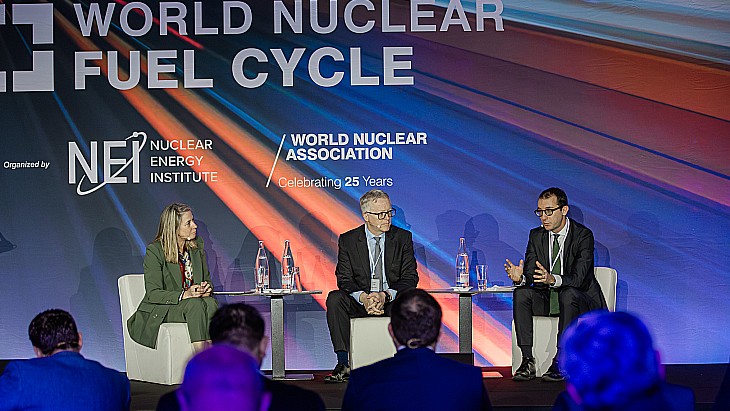
Speakers at the event co-organised by the Nuclear Energy Institute and World Nuclear Association highlighted the challenges and opportunities at a time when geopolitical uncertainty means nuclear energy - underpinned by reliable fuel supplies - is more important than ever.
"Governments all over the world recognise that energy security - and the security of fuel supplies - is more important than ever," World Nuclear Association Director General Sama Bilbao y León said as she opened the conference together with Nuclear Energy Institute Vice President of Technical & Regulatory Services Jennifer Uhle. But she also called for pragmatism.
"Frankly, momentum is building all over the world, over all markets … but much of that progress is still just ambition," Bilbao y León said.
"This really is a moment that demands much more than technical progress and technical expertise. We need to continue to ensure that policies support long-term investment, we need to ensure that finance is aligned with clean energy policies, and we need to ensure that regulation is proportional and risk-informed. We need to remember that ambition by itself will not deliver new reactors, will not mine new fuel, and won't build the supply chains that we need."
Uhle said this was a moment of profound importance for nuclear energy - and especially in times of geopolitical uncertainty, a stable fuel supply lies at its heart. "Nuclear power doesn't run just on technology, but also on trust: trust that fuel will be delivered on time and this global network will remain reliable," she said.
Director General of the nucleareurope trade association, Emmanuel Brutin, and Framatome Senior Senior Executive Vice President Lionel Gaiffe were in agreement that this is a time of change. A shift in sentiment is being seen in European institutions as well as in some countries, Brutin said, calling for support, particularly in terms of policy backing and finance, to foster this.
Now is a "good time to rediscover merits of nuclear energy", Gaiffe said - and not just in terms of new capacity. Existing reactors provide energy stability, low carbon, and grid stability. Framatome is firstly devoted to providing service to existing reactors. And those reactors need support from a reliable - and sovereign - nuclear fuel supply chain, Gaiffe said.
Incentives
Brutin also stressed the importance of having a sovereign - and also diversified - nuclear fuel supply chain. Brussels is realising that Europe is still dependent on imported fossil energy - and that is expensive, he said. "The solution for Europe is home-grown, clean sources of energy," he said.
As a net-zero energy source with a value chain that is entirely based in Europe, nuclear is a "huge asset" to the bloc, he said, and several EU-level initiatives are recognising and providing support for this resiliency. The European Investment Bank - a key EU financial institution - has provided significant loans for fuel cycle projects such as the expansion of Orano's Georges Besse II conversion plant, and having EU financing helps attract other investors. "Even a bit of EU money can go a long way," he said.
The REPowerEU plan, which was adopted by the European Commission in 2022, aims to rapidly reduce EU dependence on Russian fossil fuels. The legislation defining the policy is still to be finalised.
But while nuclear generation is recognised as environmentally sustainable under the EU Taxonomy Regulation - legislation aimed at channelling finance flows towards sustainable activities - the nuclear fuel cycle itself is not yet part of the Taxonomy. Ensuring the fuel cycle is in the EU Taxonomy would help to attract investors, he said.
Policy support would incentivise fuel cycle capacity, Gaiffe said, but would need to be balanced and "realistic" to ensure capacity grows at a suitable pace to meet demand and avoid a situation of overcapacity.
On-time and on-budget delivery remains the main focus for politicians, Brutin said, but building stakeholder trust in projects is an important factor to drive nuclear fuel cycle growth. "There is this new momentum for nuclear - let's use it," he said.
Kashiwazaki-Kariwa 6 resumes commercial operation
_73044.jpg)
The 1,356 MWe Advanced Boiling Water Reactor (ABWR) in Japan's Niigata Prefecture, which had been offline since March 2012, was restarted in the evening of 21 January. Tepco aimed to return the reactor to commercial operation on 18 March. However, shortly after midnight on 22 January, "an alarm was triggered in the control rod operation monitoring system for one control rod during the control rod withdrawal operation, causing the withdrawal operation to be suspended". The unit's restart was subsequently suspended while an investigation into the cause of the alarm was carried out.
After replacing parts, the reactor was again restarted on 9 February. It was taken offline between 20 and 24 February for inspections as part of procedures for its full-scale restart. The unit was taken offline again in mid-March after a damaged electric conductor was discovered.
A comprehensive load performance test was carried out on Tuesday, observed by the Nuclear Regulation Authority (NRA).
"Today, following the issuance by the Nuclear Regulation Authority of a pre-operational confirmation certificate and a certificate of passing for the pre-operational inspection for Kashiwazaki-Kariwa Nuclear Power Station Unit 6, Tepco recommenced commercial operation at 4:00pm [local time]," Tepco said.
The seven-unit Kashiwazaki-Kariwa plant was unaffected by the March 2011 earthquake and tsunami that damaged Tepco's Fukushima Daiichi plant, although the plant's reactors were previously all offline for up to three years following the 2007 Niigata-Chuetsu earthquake, which caused damage to the site but did not damage the reactors themselves. While the units were offline, work was carried out to improve the plant's earthquake resistance. All units have remained offline since the Fukushima Daiichi accident.
Although it has worked on the other units at the Kashiwazaki-Kariwa site, Tepco is concentrating its resources on units 6 and 7 while it deals with the clean-up at Fukushima Daiichi. These 1,356 MWe ABWRs began commercial operation in 1996 and 1997, respectively, and were the first Japanese boiling water reactors to be put forward for restart. Tepco received permission from the NRA to restart units 6 and 7 in December 2017. Restarting those two Kashiwazaki-Kariwa units - which have been offline for periodic inspections since March 2012 and August 2011, respectively - would increase the company's earnings by an estimated JPY100 billion (USD633 million) per year.
Since the Fukushima Daiichi accident, 14 Japanese reactors have gradually resumed operation.
Bulgarian minister wants fixed price for Kozloduy 7 and 8
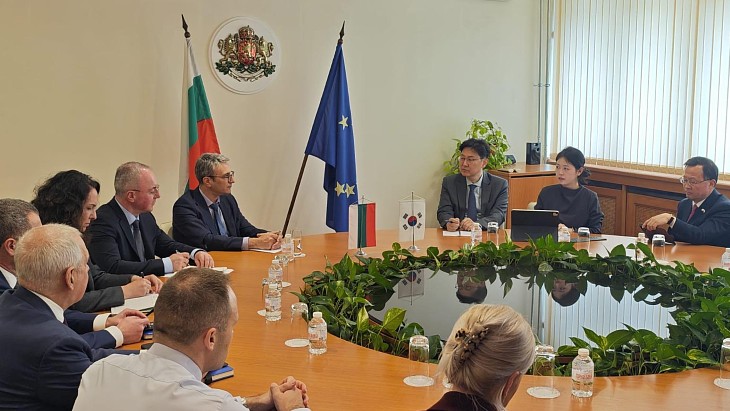
Traykov was speaking during a meeting with South Korea's Ambassador to Bulgaria, Dong-bae Kim, and representatives from Hyundai Engineering and Construction, which included a discussion on progress.
According to the Ministry of Energy report, Traykov "welcomed the commitment of the Korean side to assign 30% of the activities to Bulgarian companies. According to him, Bulgaria's expertise and long-term experience in the operation of nuclear power plants make it a safe and reliable partner in the implementation of such large-scale projects".
The engineering contract for the construction of the two new units was signed in November 2024. During the discussions, the two sides agreed on the terms of its extension "so that work on the project is not interrupted".
Traykov, who is energy ministry as part of the caretaker government in place ahead of elections this weekend, was reported by the ministry to have said "we have traumatic experience from other similar projects, where endless extension and lack of control over the price ultimately lead to failure" and emphasised "the need for the new capacities at the Kozloduy NPP to be built at fixed prices".
Background
Kozloduy units 1-4 were VVER-440 models which the European Commission classified as non-upgradeable and Bulgaria agreed to close them during negotiations to join the European Union in 2007. Units 5 and 6 feature VVER-1000 reactors that were connected to the grid in 1987 and 1991, respectively. Both units have been through refurbishment and life-extension programmes to enable extension of operation from 30 to 60 years. The country's two operable reactors generate about one-third of its electricity.
Westinghouse's AP1000 has been selected as the technology for the two proposed new units and in November 2024 Hyundai Engineering & Construction, Westinghouse and Kozloduy NPP-New Build signed an engineering contract for the new capacity, with ministers saying that signing the contract meant that schedule and finance details would be firmed up for the new capacity. The Ministry of Energy and the USA's Citi bank agreed on a partnership in July last year to secure funding for the construction of the new units, and site location applications were submitted.
In December Kozloduy NPP-New Build EAD and a consortium comprising Laurentis Energy Partners, its subsidiary Canadian Nuclear Partners SA (CNPSA) and BWXT Canada, signed an owner’s engineer contract to advance the two new AP1000 units.
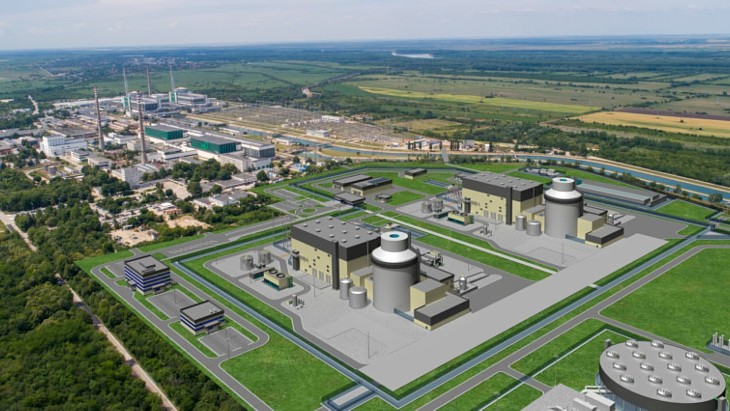
The aim is for the first new Westinghouse AP1000 unit - unit 7 at Kozloduy - to be operational in 2035 and the second one - unit 8 - to be operational in 2037. The 2,300 MWe capacity of the two new units would exceed the 1,760 MWe capacity of the closed first four units. The Bulgarian government has also said that further units will be needed to replace units 5 and 6 by 2050. It has also been considering the deployment of small modular reactors in the country.
Grohnde nuclear fuel transfer completed
_92736.jpg)
Grohnde was shut down on 31 December 2021. PreussenElektra - a subsidiary of EOn Group - applied for approval to decommission and dismantle the 1,360 MWe pressurised water reactor in October 2017. In December 2023, the Lower Saxony Ministry for the Environment, Energy and Climate Protection issued the first decommissioning and dismantling permit to PreussenElektra for the Grohnde plant, with dismantling work beginning in the following month.
To achieve fuel-free status, a total of 694 fuel assemblies have been transferred from the plant's storage pool into CASTOR used fuel storage casks since 2023.
On 7 April, the last CASTOR container was successfully loaded, removed from the reactor building, and transferred to the Grohnde interim storage facility for used fuel elements.
"This means that the radioactive core of the plant has been completely removed – and with it, over 99% of the radioactivity," PreussenElektra said.
Plant manager Jörg Bornemann said: "The elimination of nuclear fuel is an important milestone in the decommissioning of our plant. It forms the basis for further technical and organisational adjustments. Now we can shut down and dismantle further systems and reduce staffing levels. Their valuable expertise is urgently needed elsewhere – for example, for the dismantling of the reactor pressure vessel internals, which will begin at the end of this year."
PreussenElektra noted that in order to carry out the fuel transfer operation, various components and plant parts had to first be removed from the area of the emptied used fuel pool to create the necessary storage, handling, dismantling, and packaging areas. The newly constructed transport preparation hall is now available for receiving the low- and intermediate-level radioactive waste from the decommissioning process. The Lower Saxony Ministry for the Environment, Energy and Climate Protection granted the necessary permit for the storage of radioactive waste and residues at the beginning of April.
Decommissioning of the Grohnde plant is scheduled for completion by 2039. Afterwards, the plant site will be available for redevelopment. About 500 people are currently employed at the site.
PreussenElektra is responsible for the decommissioning of eight nuclear power plants in Germany. Isar 2 was the last of the PreussenElektra plants to cease operations on 15 April 2023. The Brokdorf and Grohnde plants were shut down on 31 December 2021. With the already decommissioned Isar 1, Stade, Unterweser and Würgassen plants, all of PreussenElektra's nuclear facilities are now in various phases of decommissioning and dismantling. The company's goal is to dismantle its power plant fleet by 2040.
Outer dome installed at Changjiang unit 4
_19070.jpg)
The dome - measuring 52 metres in diameter, 12 metres in height and weighing about 415 tonnes - was hoisted into place on top of the containment building using a 4,000-tonne crawler crane on 13 April. The process of raising the outer dome into position took two hours.
China National Nuclear Corporation (CNNC) said the installation of the outer dome of unit 4 "marks the entry of the second phase of the Changjiang Nuclear Power Plant civil construction project into the final stage".
_eff2fee6.jpg)
(Image: CNNC)
The Hualong One reactor design features a double-layered containment building, the main function of which is to ensure the integrity and leak tightness of the reactor building, and it plays a key role in the containment of radioactive substances.
Construction of the unit is being undertaken by CNNC subsidiary CNNC 22nd Engineering Co Ltd. "This installation was the result of a series of systematic innovations and collaborative efforts in the fields of technology and management," CNNC said. "The CNNC 22nd Engineering Co Ltd project team adopted several groundbreaking measures to build a comprehensive support system for the installation task."
_bd20c114.jpg)
(Image: CNNC)
The entire hoisting process utilised 3D modeling technology, CNNC noted. A full-size digital model of the outer dome was constructed in advance, allowing for precise simulation and collision detection of the hoisting path and key connection points, thus mitigating potential risks from the outset. Based on the 3D model, multi-level technical briefings and construction simulations were conducted, providing solid technical support for the successful one-time hoisting of the outer dome.
Two Hualong One reactors are being constructed in the second phase of the Changjiang plant. First concrete was poured for the base slab of unit 3's nuclear island in March 2021, with that of unit 4 being poured in the December of that year. Changjiang Phase II - units 3 and 4 - represents a total estimated investment of CNY40 billion (USD5.9 billion), according to China Huaneng, which holds a 51% share in the project. The construction period is expected to be 60 months. Both units are scheduled to be fully operational in early 2027.
_e0134194.jpg)
(Image: CNNC)
"After completion, the annual power generation [by Changjiang units 3 and 4] will reach 18 billion kilowatt-hours, which is equivalent to saving 6.326 million tonnes of coal and reducing carbon dioxide emissions by 11.68 million tonnes per year," China Huaneng said.
The Changjiang nuclear site is already home to two operating CNP-600 pressurised water reactors (PWRs) - Changjiang 1 and 2 - which entered commercial operation in 2015 and 2016, respectively. In 2021, CNNC also began construction of a demonstration ACP100 small modular reactor at the site. The multi-purpose 125 MWe PWR - also referred to as the Linglong One - is designed for electricity production, heating, steam production or seawater desalination. It is currently undergoing pre-commissioning tests.
The island province of Hainan is China's southernmost point. Energy policies published in 2019 by Hainan Province Development and Reform Commission specify that nuclear power will become the primary source of electricity for the island, which has a population of close to 10 million.
No comments:
Post a Comment