‘Makes No Sense’: NATO Allies Bash Trump’s Strait of Hormuz Blockade as Oil Rises Above $100 a Barrel
“It’s one more episode in this whole downward spiral into which we’ve been dragged,” said Spain’s foreign minister.
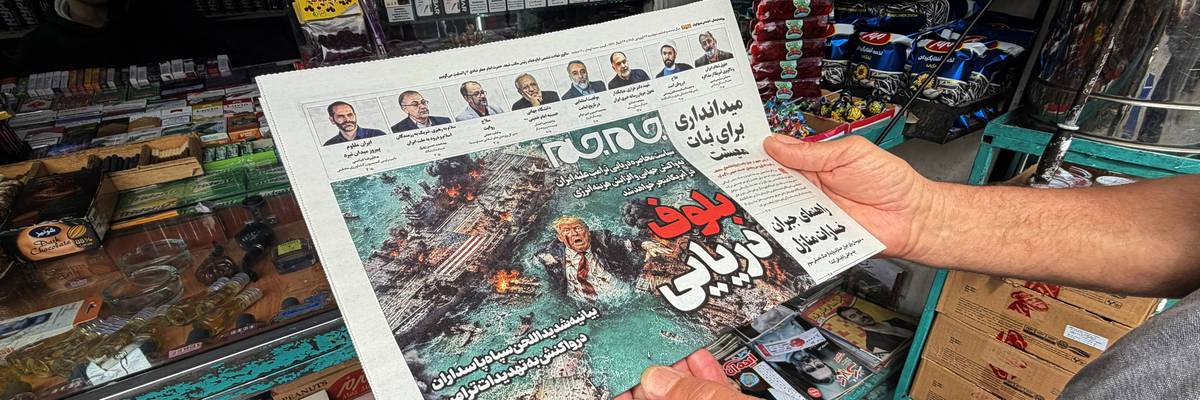
A man looks at the front page of the Jam Jam newspaper on sale at a newsstand, featuring a cartoon of US President Donald Trump drowning in the Strait of Hormuz with the headline “Marine Bluff,” in Tehran on April 13, 2026.
(Photo by Atta Kenare/AFP via Getty Images)
Julia Conley
Apr 13, 2026
COMMON DREAMS
Contrary to President Donald Trump’s claim that “other countries will be involved” in imposing a blockade on the Strait of Hormuz after ceasefire talks ended over the weekend without a deal with Iran, North Atlantic Treaty Organization member countries on Monday made clear they did not plan to join Trump’s effort as the news of the blockade sent global oil prices skyrocketing once again.
“We are not supporting the blockade,” British Prime Minister Keir Starmer told the BBC Monday before the closure began at 10:00 am Eastern time. “It is in my view vital that we get the strait open and fully open, and that’s where we’ve put all of our efforts in the last few weeks, and we’ll continue to do so.”
Turkish Foreign Minister Hakan Fidan called for the Strait of Hormuz to be reopened through diplomatic means, while Spanish Defense Minister Margarita Robles told Al Jazeera that Trump’s decision to block ships “entering or departing Iranian ports and coastal areas” in the strait “makes no sense.”
“It’s one more episode in this whole downward spiral into which we’ve been dragged,” said Robles, who along with Spanish Prime Minister Pedro Sánchez has vehemently condemned the US and Israel’s decision to go to war with Iran and has refused to involve Spain’s military assets in the conflict.
Starmer called the closure of the strait “deeply damaging” and said that this week the UK and France will convene a summit “to advance work on a coordinated, independent, multinational plan to safeguard international shipping when the conflict ends.”
US Central Command said Monday that US forces “will not impede freedom of navigation for vessels transiting the Strait of Hormuz to and from non-Iranian ports,” appearing to step back from Trump’s original Sunday statement, which he reiterated Monday on Fox News, that he would impose a “complete blockade” on the key trade waterway.
The news of the blockade came after Iranian negotiators accused Vice President JD Vance of acting in bad faith in the high-level ceasefire talks and Vance claimed Iran would not comply with US demands regarding nuclear development.
The two-week ceasefire deal that was announced last Tuesday—just before a deadline Trump had imposed, saying the US would obliterate Iran’s “whole civilization” unless the government struck a deal—sent oil and gas prices tumbling blow $100 per barrel, but prices rose again after Trump’s new threat of a blockade.
Brent crude prices were at $102.52 per barrel on Monday, a 7.7% increase, while US crude also rose nearly 8% to $104.02. The UK’s wholesale gas contract for the month of May rose by 11.7%.
About 20% of global oil and liquefied natural gas supplies passed through the Strait of Hormuz before Iran effectively closed the waterway after the US and Israel began the war, as well as major shipments of fertilizer.
Priyanka Sachdeva, a senior market analyst at the broker Phillip Nova, told The Guardian that “the market reaction” to Trump’s threat “underscores a simple but powerful reality: Hormuz risk is not theoretical; it is structural, and it is real.”
“In today’s environment, every barrel of risk added to oil markets carries an inflation price tag for the global economy,” Sachdeva said.
Trump’s threat of a blockade included any ship that has paid Iran a toll to pass through the strait since the Middle Eastern country began its blockade, with the president accusing Iran of “extortion.”
At Responsible Statecraft, Kelley Beaucar Vlahos wrote on Sunday that under Trump’s threat, the US is now planning to block “major allies.”
“The Philippines is a treaty ally and gets 98% of its energy resources through the strait,” Vlahos wrote. “A Japanese vessel carrying liquefied natural gas reportedly passed through the strait two weeks ago.”
Sarang Shidore, director of the Global South program at the Quincy Institute for Responsible Statecraft, said the US blockade “is another step toward a might-makes-right world.”
“Illegalities are being heaped on top of illegalities. The attack on Iran that started this war was compounded by Tehran’s seizure of the Strait of Hormuz. Washington’s blockade of the strait has further upped the ante,” said Shidore.
An adviser to Iranian Supreme leader Mojtaba Khamenei said that Iran has “large, untouched levels” to fight back against a US blockade, while Mohammad Bagher Ghalibaf, the speaker of the Iranian Parliament, said that Americans will soon “be nostaligic for $4-$5 gas.”
At The Conversation, international law professor Donald Rothwell of Australian National University wrote that Trump’s blockade would “certainly” imperil the fragile temporary ceasefire while roiling international markets.
“In purely legal terms, if the US imposes a blockade then the ceasefire is over and hostilities have resumed,” wrote Rothwell.
“It’s one more episode in this whole downward spiral into which we’ve been dragged,” said Spain’s foreign minister.
A man looks at the front page of the Jam Jam newspaper on sale at a newsstand, featuring a cartoon of US President Donald Trump drowning in the Strait of Hormuz with the headline “Marine Bluff,” in Tehran on April 13, 2026.
(Photo by Atta Kenare/AFP via Getty Images)
Julia Conley
Apr 13, 2026
COMMON DREAMS
Contrary to President Donald Trump’s claim that “other countries will be involved” in imposing a blockade on the Strait of Hormuz after ceasefire talks ended over the weekend without a deal with Iran, North Atlantic Treaty Organization member countries on Monday made clear they did not plan to join Trump’s effort as the news of the blockade sent global oil prices skyrocketing once again.
“We are not supporting the blockade,” British Prime Minister Keir Starmer told the BBC Monday before the closure began at 10:00 am Eastern time. “It is in my view vital that we get the strait open and fully open, and that’s where we’ve put all of our efforts in the last few weeks, and we’ll continue to do so.”
Turkish Foreign Minister Hakan Fidan called for the Strait of Hormuz to be reopened through diplomatic means, while Spanish Defense Minister Margarita Robles told Al Jazeera that Trump’s decision to block ships “entering or departing Iranian ports and coastal areas” in the strait “makes no sense.”
“It’s one more episode in this whole downward spiral into which we’ve been dragged,” said Robles, who along with Spanish Prime Minister Pedro Sánchez has vehemently condemned the US and Israel’s decision to go to war with Iran and has refused to involve Spain’s military assets in the conflict.
Starmer called the closure of the strait “deeply damaging” and said that this week the UK and France will convene a summit “to advance work on a coordinated, independent, multinational plan to safeguard international shipping when the conflict ends.”
US Central Command said Monday that US forces “will not impede freedom of navigation for vessels transiting the Strait of Hormuz to and from non-Iranian ports,” appearing to step back from Trump’s original Sunday statement, which he reiterated Monday on Fox News, that he would impose a “complete blockade” on the key trade waterway.
The news of the blockade came after Iranian negotiators accused Vice President JD Vance of acting in bad faith in the high-level ceasefire talks and Vance claimed Iran would not comply with US demands regarding nuclear development.
The two-week ceasefire deal that was announced last Tuesday—just before a deadline Trump had imposed, saying the US would obliterate Iran’s “whole civilization” unless the government struck a deal—sent oil and gas prices tumbling blow $100 per barrel, but prices rose again after Trump’s new threat of a blockade.
Brent crude prices were at $102.52 per barrel on Monday, a 7.7% increase, while US crude also rose nearly 8% to $104.02. The UK’s wholesale gas contract for the month of May rose by 11.7%.
About 20% of global oil and liquefied natural gas supplies passed through the Strait of Hormuz before Iran effectively closed the waterway after the US and Israel began the war, as well as major shipments of fertilizer.
Priyanka Sachdeva, a senior market analyst at the broker Phillip Nova, told The Guardian that “the market reaction” to Trump’s threat “underscores a simple but powerful reality: Hormuz risk is not theoretical; it is structural, and it is real.”
“In today’s environment, every barrel of risk added to oil markets carries an inflation price tag for the global economy,” Sachdeva said.
Trump’s threat of a blockade included any ship that has paid Iran a toll to pass through the strait since the Middle Eastern country began its blockade, with the president accusing Iran of “extortion.”
At Responsible Statecraft, Kelley Beaucar Vlahos wrote on Sunday that under Trump’s threat, the US is now planning to block “major allies.”
“The Philippines is a treaty ally and gets 98% of its energy resources through the strait,” Vlahos wrote. “A Japanese vessel carrying liquefied natural gas reportedly passed through the strait two weeks ago.”
Sarang Shidore, director of the Global South program at the Quincy Institute for Responsible Statecraft, said the US blockade “is another step toward a might-makes-right world.”
“Illegalities are being heaped on top of illegalities. The attack on Iran that started this war was compounded by Tehran’s seizure of the Strait of Hormuz. Washington’s blockade of the strait has further upped the ante,” said Shidore.
An adviser to Iranian Supreme leader Mojtaba Khamenei said that Iran has “large, untouched levels” to fight back against a US blockade, while Mohammad Bagher Ghalibaf, the speaker of the Iranian Parliament, said that Americans will soon “be nostaligic for $4-$5 gas.”
At The Conversation, international law professor Donald Rothwell of Australian National University wrote that Trump’s blockade would “certainly” imperil the fragile temporary ceasefire while roiling international markets.
“In purely legal terms, if the US imposes a blockade then the ceasefire is over and hostilities have resumed,” wrote Rothwell.
Alexander Willis
April 14, 2026
RAW STORY
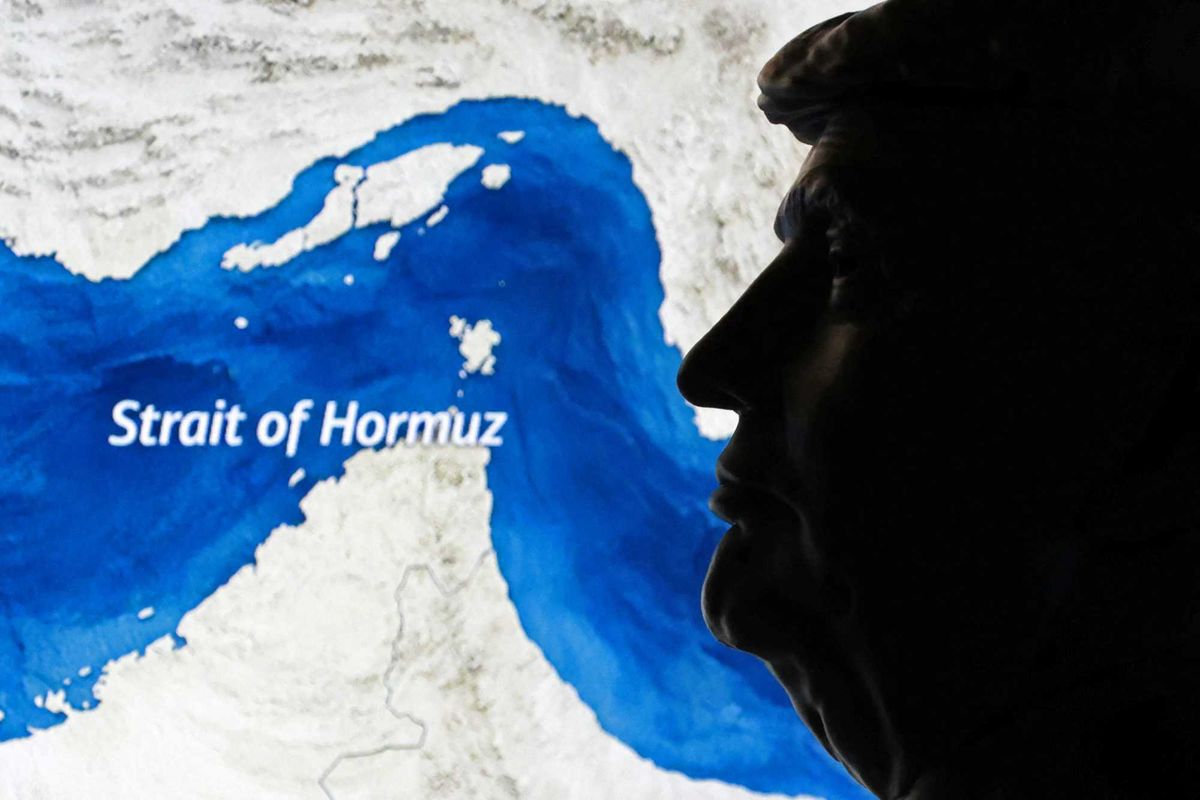
A map showing the Strait of Hormuz and a 3D-printed miniature model depicting U.S. President Donald Trump are seen in this illustration taken March 23, 2026. REUTERS/Dado Ruvic/Illustration
A U.S. naval blockade of the Strait of Hormuz went into effect Monday at 10 a.m. EST at the direction of President Donald Trump, but in a matter of hours, the blockade was breached without incident by at least four Iran-linked vessels, BBC reported Tuesday.
On Monday, Trump said that he had instructed the U.S. Navy to “seek and interdict every vessel in international waters that has paid a toll to Iran,” and the U.S. military later said that the “blockade will be enforced impartially against vessels of all nations entering or departing Iranian ports and coastal areas.”
However, ship tracking data analyzed by BBC Verify revealed that at least four Iran-linked vessels “crossed the Strait of Hormuz” without incident; two on Monday, and two overnight.
“The Rich Starry, a tanker that is sanctioned by the United States under a different name, sailed through the strait overnight Monday,” CBS News reported, with the outlet having also analyzed ship tracking data. “The Elpis, another sanctioned tanker, sailed through the strait after the blockade began, having apparently come from the Iranian port of Bushehr, according to tracking data.”
The Rich Starry is a U.S.-sanctioned Chinese oil tanker, and was the first vessel to breach the blockade since its implementation Monday morning. The Chinese government called the United States’ blockade "dangerous and irresponsible,” with Chinese President Xi Jinping warning that the world must not be allowed to “revert to the law of the jungle,” NBC News reported.
Despite news organizations having analyzed tracking data, the outlets could not confirm whether or not the Iran-linked vessels had broadcasted false location reports using a tactic called "spoofing," which CBS News describes as a method to conceal a vessel's true location.
Trump’s decision to respond to Iran’s partial blockade of the Strait of Hormuz with another blockade has baffled experts, including Karen Young, a senior scholar at the Center on Global Energy Policy at Columbia University, who told CNN on Sunday that Trump’s blockade would only exacerbate the increasing scarcity of oil.
A map showing the Strait of Hormuz and a 3D-printed miniature model depicting U.S. President Donald Trump are seen in this illustration taken March 23, 2026. REUTERS/Dado Ruvic/Illustration
A U.S. naval blockade of the Strait of Hormuz went into effect Monday at 10 a.m. EST at the direction of President Donald Trump, but in a matter of hours, the blockade was breached without incident by at least four Iran-linked vessels, BBC reported Tuesday.
On Monday, Trump said that he had instructed the U.S. Navy to “seek and interdict every vessel in international waters that has paid a toll to Iran,” and the U.S. military later said that the “blockade will be enforced impartially against vessels of all nations entering or departing Iranian ports and coastal areas.”
However, ship tracking data analyzed by BBC Verify revealed that at least four Iran-linked vessels “crossed the Strait of Hormuz” without incident; two on Monday, and two overnight.
“The Rich Starry, a tanker that is sanctioned by the United States under a different name, sailed through the strait overnight Monday,” CBS News reported, with the outlet having also analyzed ship tracking data. “The Elpis, another sanctioned tanker, sailed through the strait after the blockade began, having apparently come from the Iranian port of Bushehr, according to tracking data.”
The Rich Starry is a U.S.-sanctioned Chinese oil tanker, and was the first vessel to breach the blockade since its implementation Monday morning. The Chinese government called the United States’ blockade "dangerous and irresponsible,” with Chinese President Xi Jinping warning that the world must not be allowed to “revert to the law of the jungle,” NBC News reported.
Despite news organizations having analyzed tracking data, the outlets could not confirm whether or not the Iran-linked vessels had broadcasted false location reports using a tactic called "spoofing," which CBS News describes as a method to conceal a vessel's true location.
Trump’s decision to respond to Iran’s partial blockade of the Strait of Hormuz with another blockade has baffled experts, including Karen Young, a senior scholar at the Center on Global Energy Policy at Columbia University, who told CNN on Sunday that Trump’s blockade would only exacerbate the increasing scarcity of oil.
No comments:
Post a Comment