Barrick’s seized Mali mine restarts under state management

Operations restarted at Barrick Mining Corp.’s massive gold mine in Mali for the first time in more than nine months, after a state administrator took over the asset in June, according to people familiar with the matter.

Barrick shuttered the Loulo-Gounkoto complex in January after the West African nation blocked exports, seized gold and detained senior employees. The dispute with the military-led government reached its lowest point four months ago when a court appointed Soumana Makadji, an accountant and former health minister, to manage the mine for at least six months.
Production activity resumed at the site late last week, two of the people said, asking not to be identified discussing information that’s not been made public. That came after a deal to restart payments to contractors, which had been suspended when Barrick halted operations, according to one of the people.
Mali’s Mines Minister Amadou Keita said in June that the provisional management team would “restart operations, produce, pay the workers’ wages, but also produce gold for the national economy.”
Makadji didn’t respond to calls and a text message seeking comment. A Barrick spokesperson declined to comment.
A spokesman for the mining ministry said he’s not aware if operations at Loulo-Gounkoto have restarted. The mine is managed by the court-appointed interim administration and the ministry isn’t involved in operations, he added.
Maxam Corp., Sandvik Group and Etasi & Co. Drilling are among the subcontractors impacted by the recent stoppage. Maxam and Etasi, which provide drilling and blasting services at the mine, didn’t respond to requests for comment. Sandvik declined to comment.
Loulo-Gounkoto – which produced 723,000 ounces of gold in 2024 – is one of Barrick’s most important assets. The temporary seizure of the mine has meant the Canadian firm has been unable to fully capitalize on bullion’s record-breaking 60% rally this year.
Barrick initiated arbitration proceedings against Mali at the start of the year. The company’s lawyers have also filed appeals with a court in the country’s capital, Bamako, challenging the detention of four employees since November. Barrick has denied the junta’s allegations against those staff of money laundering and financing terrorism.
Shortly after the mine was put under state control, government agents arrived at Loulo-Gounkoto in helicopters and left with a ton of gold. Barrick says it’s still waiting for information on the whereabouts and “the intended fate” of the seized bullion.
The standoff between Barrick and Mali around alleged back taxes and new mining legislation dates back to 2023. Other gold miners, including Allied Gold Ltd. and B2Gold Corp., have resolved similar disputes by concluding agreements with the government.
Barrick has denied owing unpaid taxes to the government and said its local subsidiaries possess binding conventions that protect them against certain legal and regulatory changes.\
(By Katarina Höije and William Clowes)
Congo rebels loot $70M in gold from Twangiza mine
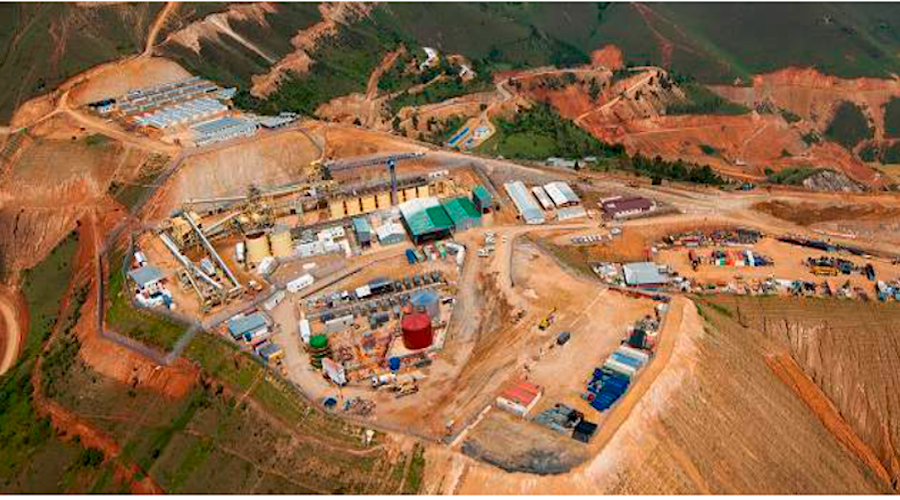
Rebels occupying Twangiza Mining’s gold concession in eastern Democratic Republic of Congo (DRC) have reportedly looted at least 500 kilograms of bullion, worth about $70 million at current prices, the company said.
Twangiza claims that some of its own employees have helped the M23 rebel group transport gold from the site shortly after the mine was seized in May.
“With the help of some employees, they transported the first batch of more than 50 kg of gold out in a very short time,” Twangiza Mining told Reuters. ”Since the occupation, they have obtained at least 500kg of gold and secretly transported it through underground channels.”
The gold mine, located in South Kivu province, fell under M23 control five months ago after weeks of escalating conflict in the region. Twangiza says it has lost more than 100 kg of gold a month since then, along with $5 million worth of equipment and materials. The company has declared force majeure and plans to file complaints with Congolese authorities and international arbitration bodies.
A drone strike on October 15 destroyed the mine’s power infrastructure. Responsibility for the attack remains unclear.
The M23 group, an ethnic Tutsi-led militia allegedly backed by Rwanda, launched a major offensive early this year, seizing key cities including Goma and Bukavu. Congo’s government says more than 7,000 people were killed in eastern DRC just in the first half of 2025.
The mineral-rich region remains a flashpoint in the long-running rivalry between Congo and Rwanda. DRC is the world’s largest cobalt producer, Africa’s leading copper exporter, and a major source of tantalum, tin, tungsten and coltan, all of which are critical to global electronics and green technologies.
Behind the peace deal
A US-led peace initiative between Rwanda and the DRC, inked in June, aimed to stabilise eastern Congo and attract Western mining investment. But a new report released Tuesday suggests the deal is less about peace and more about securing US access to Congolese minerals.
Researchers from California-based the Oakland Institute found found that Rwanda’s tantalum exports to the US rose 15-fold between 2013 and 2018, despite Rwanda’s limited production capacity. This surge followed Washington’s decision to lift sanctions after the 2012 M23 rebellion. The study argues that the latest agreement legitimises smuggling routes through Rwanda while strengthening US-backed infrastructure projects such as the $553 million Lobito Corridor.
The corridor is a 1,700-kilometre railway from Angola’s Atlantic port of Lobito to the DRC’s mining hub of Kolwezi, with an extension planned into Zambia’s Copperbelt province. The US has framed the corridor as a strategic alternative to Chinese-backed infrastructure across Africa.
Several mining deals along these two routes are already being negotiated by a number of US firms, including some backed by high-profile billionaires like Bill Gates and figures tied to the US military and intelligence community, the report says.
It also warns that the arrangement enriches US corporations and Rwandan elites while leaving Congolese communities to absorb the environmental and human costs. More than 1,000 civilians have been killed since the deal’s signing, raising doubts about its effectiveness.
Rwanda and Congo missed an August deadline to ratify the accord, blaming each other for the delay. Both sides agreed last week to create a monitoring mechanism for an eventual ceasefire.
No comments:
Post a Comment