EIB seeking critical minerals investments in Australia, exec says
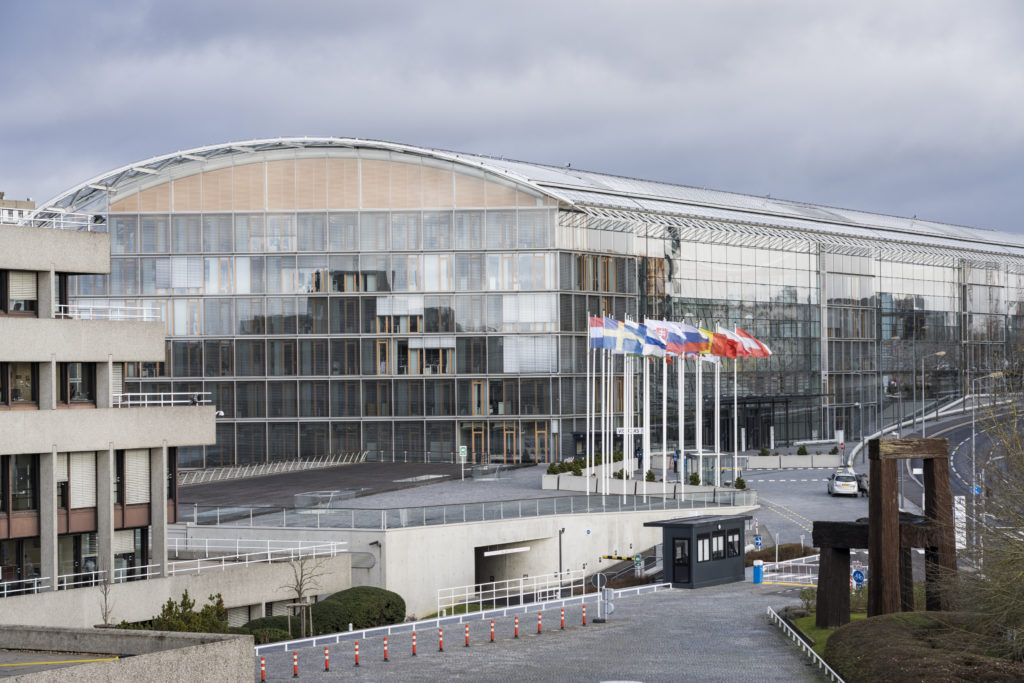
The European Investment Bank (EIB) is seeking critical minerals investments in Australia and will look to partner with Australian companies in Europe, Vice President Nicola Beer said on Tuesday.

“We are capable to take risk … we use our capital very efficiently to go for the right projects,” Beer said at a mining conference in Sydney.
(By Melanie Burton; Editing by Tom Hogue)
Saudi Arabia is ramping up efforts to deepen ties with Australia — a country with which it has traditionally done limited business — as the kingdom seeks to capitalize on fresh momentum from deals in metals, mining and finance.
Officials from both countries will meet this week in Riyadh at the Saudi-ANZUK Forum to discuss trade, deals and investment. New Zealand and UK delegates are also slated to attend, with all four states looking to diversify trade channels amid tariff friction.
The two-day event aims to build on a budding relationship between Saudi Arabia and Australia, with mining magnate Gina Rinehart’s Hancock Prospecting and Saudi state-backed Maaden recently winning the right to dig for metals together in the kingdom — a country that estimates it has $2.5 trillion in minerals underground.
Macquarie Asset Management also recently signed an agreement with Saudi Arabia’s nearly $1 trillion sovereign wealth fund to pursue investments and set up in Riyadh, one of the strongest signals yet of Australian financial heavyweights expanding into the desert nation.
“The relationship is still young but developing quickly,” said Sam Jamsheedi, president of the Saudi-Australia Business Council and founder of the Trademark Group of Companies, which is hosting the Riyadh event. “We’re seeing strong interest from Australian companies, particularly in mining, agribusiness and healthcare.”
In many ways, the relationship seems like a natural fit. Both are G20 nations heavily geared toward natural resources and trying to diversify their economies.
For Saudi Arabia, its Vision 2030 transformation agenda calls for drawing in foreign investment, companies and knowledge so it can build new industries in which it has little expertise — all in the name of weaning the economy off of oil.
Australian mining companies including Hancock currently only account for 10% of the 70 overseas businesses exploring for Saudi resources, according to Khalid Al-Mudaifer, Saudi Arabia’s vice minister of industry and mineral resources for mining affairs.
“We are building a new sector almost from scratch. Where better to go than Australia?,” he said in an interview in Sydney on Tuesday. “Australia has what we need in terms of know-how and capacity building.”
In Australia’s case, its economic base is more diversified than Saudi Arabia, but the country is heavily dependent on exports of iron ore and primarily to one market: China.
Canberra has been pushing to expand potential export markets to ease some of that dependence. Prime Minister Anthony Albanese struck a deal with the US this week, for example, to ship more critical minerals and Australia also this month officially entered into a free-trade agreement with the United Arab Emirates.
While Saudi Arabia and Australia may eventually pursue their own FTA, both are likely to benefit from the UAE deal as the country is a re-export hub to the Gulf.
Bilateral trade between Australia and Saudi Arabia has been steadily increasing over the years, climbing to A$2.1 billion ($1.4 billion) in fiscal 2024 compared to about A$1.9 billion five years earlier. Australia exports education services, beef, and barley, while Saudi Arabia is a significant energy supplier.
“There is a lot of complementarity between the Australian and Saudi markets,” said Anas Iqtait, a lecturer in economics and political economy of the Middle East at the Australian National University.
But for all that complementarity, there is still little in the way of investments. Saudi Arabia didn’t make Australia’s list of top 20 destinations for investment in 2024 and likewise didn’t appear on the roster of countries injecting money.
Iqtait sees the potential for important decisions or agreements at the Saudi-ANZUK forum, which could pave the way for those investment flows to grow.
Australia and Saudi Arabia also stand to grow closer diplomatically after the former’s decision to break with key ally the US and recognize a Palestinian state.
Saudi Crown Prince Mohammed bin Salman has long advocated for the recognition of a Palestinian state and has recently grown closer to leaders that have made that recognition, including French President Emmanuel Macron.
“This convergence on a critical issue demonstrates growing diplomatic coordination between the two countries,” said Amnah Mosly at the Gulf Research Center in Jeddah. That creates “opportunities for joint initiatives in peace building and diplomacy.”
(By Yassmin Jabri, Michael Heath and Angus Whitley)
By Reuters
LONDON, Oct 21 (Reuters) - Private equity firm Appian Capital Advisory and the International Finance Corporation (IFC) have launched a $1 billion fund to invest in critical minerals projects in Africa and Latin America, the companies said on Tuesday.
The fund, anchored by an initial $100 million commitment from IFC, a member of the World Bank Group, will focus on nickel, copper, cobalt and rare earths, all essential for the energy transition and digital technologies.
The new vehicle is IFC's first fund in partnership with a private mining investor, reflecting growing interest by development finance institutions to attract private capital into mining projects.
"They're (IFC) trying to deploy more capital to work in our space, but it's a very difficult and challenging sector," Michael Scherb, Appian's founder and CEO, told Reuters, adding that Appian has already worked with the IFC in rare earth and gold projects across Africa.
"This is a much more formalised partnership."
Appian, which manages around $5 billion in assets, will oversee the fund's investments, co-investing alongside its existing and future funds.
The fund's first investment will be in Atlantic Nickel's Santa Rita mine in Brazil, a nickel-copper-cobalt open pit mine that the parties will also develop underground, expected to produce 30,000 metric tons of nickel a year for 34 years.
As governments and companies race to secure supplies of critical minerals, the fund will seek to strengthen supply chain resilience and support sustainable industrialisation in developing economies.
Scherb said that the fund is also looking into building a downstream refinery for its Santa Rita mine in Brazil.
Appian, which produces graphite in Brazil, already has a graphite downstream refiner in the United States, for example, to which the U.S. Department of Energy (DOE) has just given a $125 million grant, Scherb said.
"We have expertise in upstream and downstream, and you could see us partnering with governments more on that basis," he said.
But, as Ivory Coast prepares for another election on Saturday, peace activists here say they've hit on a way to prevent further bloodshed.
Reporting by Clara Denina; Editing by Susan Fenton
Our Standards: The Thomson Reuters Trust Principles.
No comments:
Post a Comment