CU
Anglo-Teck deal clears Canada’s national security test, Globe reports
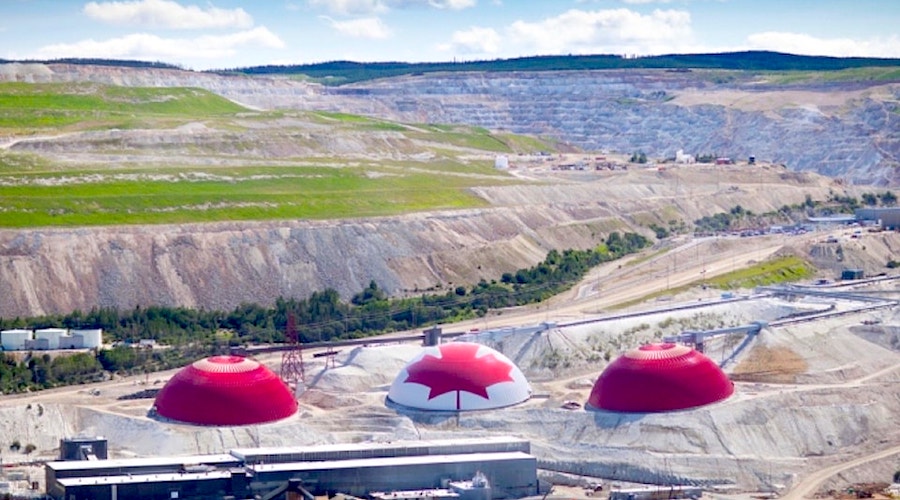
The Canadian government has cleared Anglo American Plc’s proposed takeover of Teck Resources Ltd. on national security grounds, the Globe and Mail reported, removing one hurdle for the two companies to combine.

The government’s initial security review period for assessing whether proposed foreign takeovers of Canadian critical minerals companies has lapsed without an extension, meaning the deal by default has been cleared on that basis, the Globe reported, citing a person it didn’t identify.
A message left with the office of Canadian Industry Minister Melanie Joly wasn’t immediately returned. Ottawa still has the power to block the takeover if it fails to clear a net economic benefit review. Shareholders of Anglo and Teck are scheduled to vote on the deal on Dec. 9 at meetings in London and Vancouver.
(By Doug Alexander)
Panama to release first Cobre Panama audit results in December
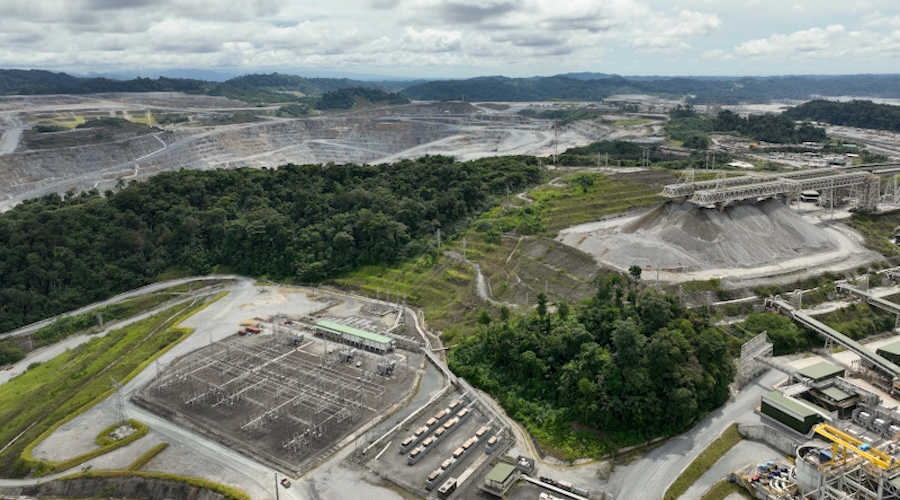
Panama could publish initial findings from the sweeping audit of First Quantum Minerals’ (TSX: FM) Cobre Panama copper mine as soon as next week, with the final report due by the end of February and expected to guide the government’s next steps for the stalled operation.
The independent review, led by SGS Panama Control Services, examines environmental compliance, legal and labour issues, tax matters, operational processes and potential environmental liabilities. Authorities say the results could shape any future negotiations over the mine’s future.
Alfredo Burgos, National Director of Mineral Resources at the Ministry of Commerce and Industries, told local media on Thursday that auditors must file monthly progress updates and that the process remains on schedule. He cautioned that any restart will take time because mine teams have been inactive for about 18 months.
First Quantum halted Cobre Panama in November 2023 after the contract was ruled unconstitutional following massive protests.
The company says reactivating an operation of this scale would take six to nine months to restore production and longer to return to its nameplate capacity of 100 million tonnes a year. About 2,000 workers are currently assigned to the audit and safety plan.
Once the final report is complete, the government will assess the concession, technical findings and environmental results before deciding whether the mine will restart, be modified or remain closed under new conditions.
Economic pillar
Before its shutdown, Cobre Panama stood among the world’s biggest copper operations, producing 350,000 tonnes in 2022 and accounting for about 5% of Panama’s GDP. First Quantum says that if the mine had stayed online, it would have delivered $1 billion to the treasury and $2 billion to local suppliers.
In a recent conversation with MINING.COM at the company’s London offices, CEO Tristan Pascall acknowledged the scale of the challenge facing the operation and said the company’s priority is to secure a resolution that serves its stakeholders, the government and the people of Panama.
Lenders line up for Chile copper smelter in bet glut won’t last
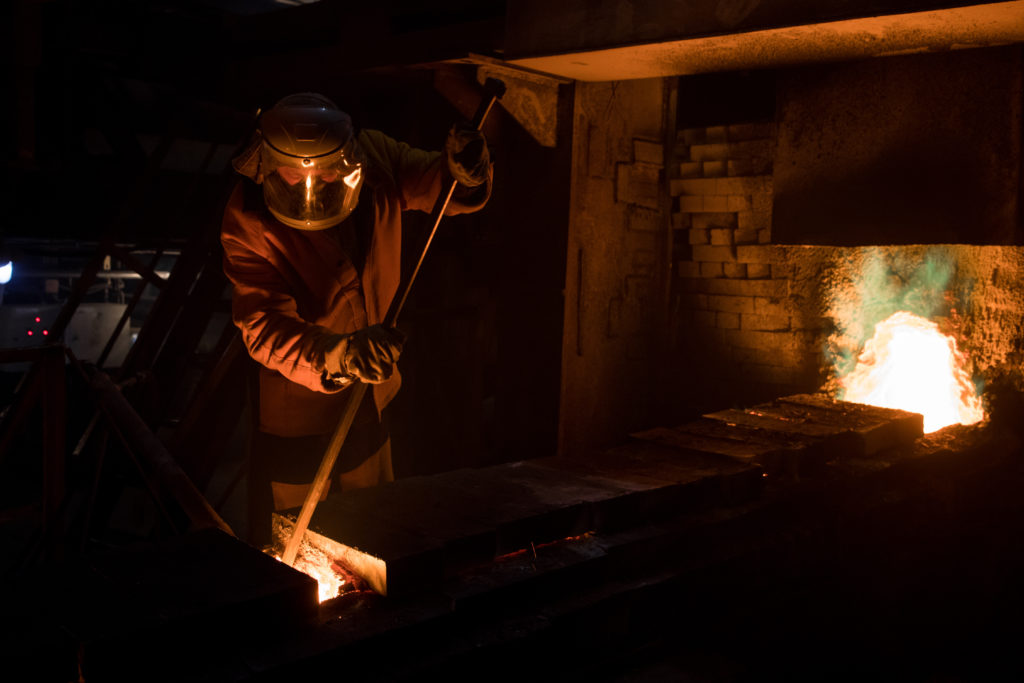
Chile’s Enami said it has received various financing offers for a $1.7 billion copper smelter and will name the banks to structure the deal as early as next week, even as the market remains depressed.
The state mining company has received “very encouraging” preliminary financing proposals, chief executive officer Ivan Mlynarz said in an interview. Enami is also analyzing six indicative offtake bids out of 17 companies that expressed interest in buying the finished copper and financing the project.
Would-be participants in a project to build a new smelter and refinery on the site of a shuttered plant in northern Chile are taking a long-term view given the current excess of smelting capacity led by China. Mlynarz spoke from Shanghai during the Asia Copper Week conference, where miners and smelters are negotiating rock-bottom fees for turning imported ore into metal.
“The imbalance is in China, but the copper concentrate is in Chile and Peru,” he said by telephone. “Our proximity to deposits and the geopolitical factors at play are key. Current market conditions are temporary.”
The six indicative offtake proposals vary widely in size and in the share of future production they are willing to take, he said. Financial institutions, which are being evaluated separately, have offered structures that could include full-package financing mandates.
“We’re likely to appoint not just one structuring bank, but two, because the offers are strong and we don’t want to leave anyone out,” he said.
Enami will retain full ownership of the project, which is designed to process 850,000 metric tons of concentrate a year and recently secured environmental permits. The project still needsthe copper commission Cochilco to sign off on it before the board can make a final investment decision. Mlynarz said he still hopes to begin early works before the current government leaves office on March 11.
“That’s what we’re working toward, but everything depends on the resolution of Cochilco,” he said.
Enami is negotiating supply deals with small, medium and large miners in the Atacama region of northern Chile, where private sector mines are estimated to generate 1.5 million tons of concentrate a year by the time the smelter starts up.
On lithium, the CEO said Enami’s Altoandinos venture with Rio Tinto Group is progressing despite the Anglo-Australian miner’s recent decision to shelve a hard-rock project in Serbia. Updated resource estimates for Altoandinos are expected to be published in late December or early January.
“The Altoandinos project continues to advance,” he said. “There is no condition that would require stopping it.”
(By James Attwood)
China ‘firmly opposes’ negative copper treatment charges
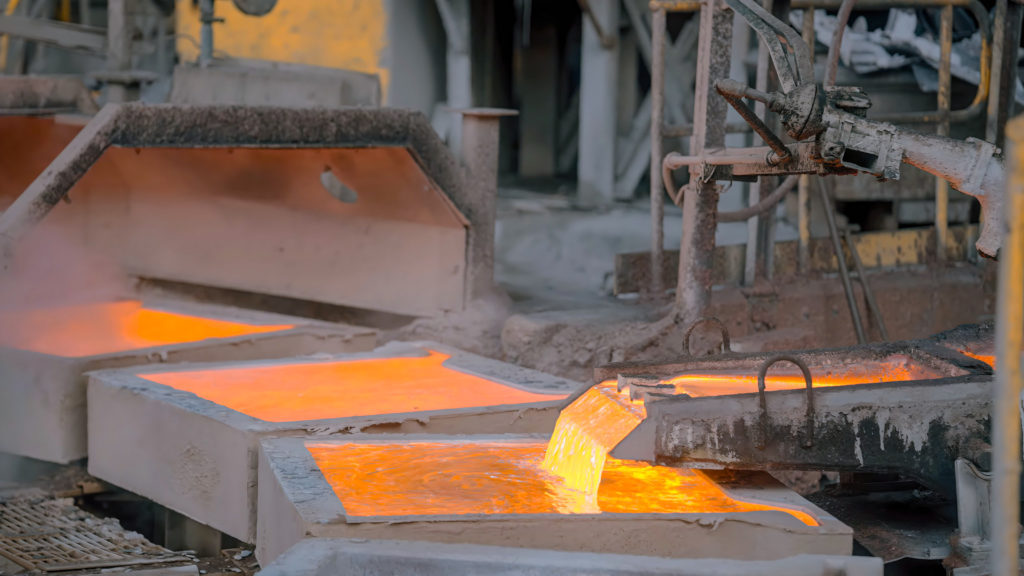
China “firmly opposes” zero or negative processing fees for copper smelters and is urging the global industry to confront a “structural contradiction” that has upended the market for the industrial metal.
Treatment and refining charges – the fees earned by smelters for processing ore into metal – have plunged to record lows this year due to a scarcity of raw materials. Rapid growth in China’s smelting capacity, by far the world’s largest, has collided with a series of mine outages around the world.
A negative TC/RC effectively means that a smelter is paying to process copper concentrate – a highly unusual situation that has called into question the long-standing industry pricing benchmark. Spot charges have fallen as low as minus $60 per ton this year.
“Such practices severely undermine the interests of the global copper smelting industry, including China,” Chen Xuesen, vice president of the China Nonferrous Metals Industry Association, said in a presentation to an industry conference in Shanghai on Wednesday.
“CNIA firmly opposes any zero or negative TC/RCs in processing of copper concentrate,” he said. “We urge the global copper industry to confront this unsustainable structural contradiction and foster collaboration among relevant nations and stakeholders.”
The low fees have impacted copper smelters worldwide. Japan’s JX Advanced Metals Co. this year announced an output cut running into the tens of thousands of tons, while Glencore Plc received a government bailout to keep its Mount Isa smelter and refinery in Australia running for another three years.
Chinese smelters also suffer from low TC/RCs – but they benefit from their ownership of some mines, as well as the surging price of refined copper and sulfuric acid, a byproduct. Copper prices rose to a record high above $11,200 in late October.
China is taking steps to manage its copper smelting capacity, drawing on its similar experiences with aluminum, Chen said. The country has already curbed over-expansion by halting some 2 million tons of illegal capacity that was either under construction or in planning, he said.
In the coming years, China will also favor new smelting capacity that would run on scrap rather than imported copper concentrate. “We will be able to see the effects from the copper supply-side reform in two to three years,” Chen said.
No comments:
Post a Comment