Karnalyte touts 70-year potash mine in Canada
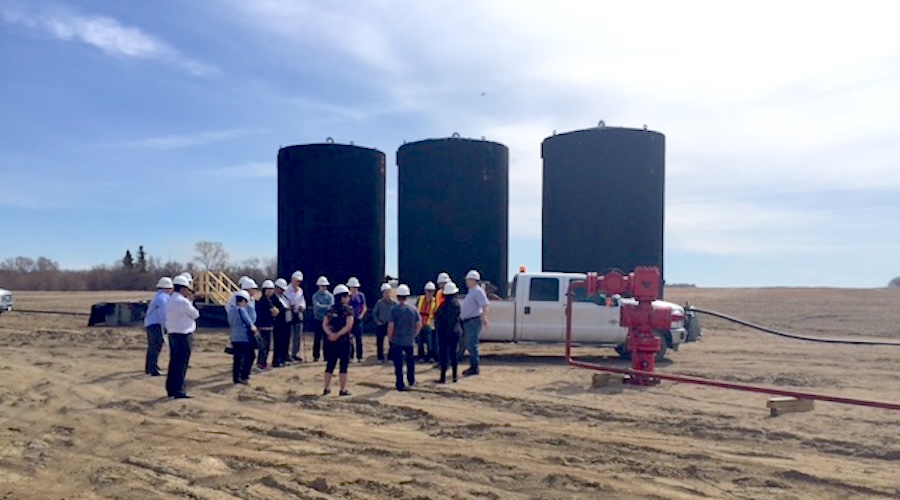
Karnalyte Resources (TSX: KRN) has released an updated feasibility study for its Wynyard potash project in Saskatchewan, Canada, that outlines a 70-year mine life and stronger economics as the company aims to advance development in step with rising demand in North America and India.

The study estimates an after-tax net present value of about C$2 billion ($1.4 billion) using an 8% discount rate, a 12.5% internal rate of return and an 8.8-year payback period. Karnalyte says it will file the technical report within 45 days.
The project sits 175 km east of Saskatoon and is designed to produce 2.2 million tonnes of potash a year at full buildout, along with 104,000 tonnes of hydromagnesite, an industrial fire-retardant material. Total output over the mine life is projected at 142.2 million tonnes of potash and 7 million tonnes of hydromagnesite.
Chief executive Danielle Favreau said the results confirm the deposit’s longevity and the company’s ability to push the project forward. She noted potash’s role in food security and said favourable market conditions support long-term value creation. Favreau also pointed to strong demand for high-purity hydromagnesite in North America and abroad as global supply remains tight.
Initial capital costs total C$4.2 billion, including C$4 billion for the three-phase potash processing facilities and C$231 million for the hydromagnesite plant. Sustaining capital over the mine life is forecast at C$7.62 billion. Operating costs are estimated at C$134.01 per tonne of potash and C$318.04 per tonne of hydromagnesite.
Measured and indicated resources total about 2.95 billion tonnes across the Patience Lake, Belle Plaine and Esterhazy members. The carnallite-rich deposit allows production of both potash and magnesium products, giving Karnalyte room to pursue additional magnesium commodities such as magnesium chloride brine, magnesium hydroxide and magnesium oxide.
Phased-development
An offtake agreement with major shareholder Gujarat State Fertilizers and Chemicals covers 350,000 tonnes a year from Phase 1 and 250,000 tonnes a year from Phase 2, with an option for up to 400,000 tonnes a year from Phase 3. The deal could secure as much as 1 million tonnes a year once all phases are running.
The company expects the project to generate 244 permanent jobs and about 1,100 construction jobs. Phase 1 has had environmental approval since 2013, and the company plans to file amendments to include Phases 2 and 3.
The feasibility study highlights opportunities in magnesium chloride brine sales for dust control and de-icing, greater access to the US Corn Belt market and a chance to supply the constrained synthetic hydromagnesite sector. Key risks include hydromagnesite plant performance, competition in the potash market and potential changes to magnesium royalties.
Port controversy
The project update comes amid increasing tension in Canada’s potash landscape. Nutrien (TSX, NYSE: NTR,) the country’s largest potash and fertilizer producer, has decided to bypass the Port of Vancouver in British Columbia in favour of a port near Vancouver, Washington.
BC Premier David Eby said the move does not make sense for a Canadian resource industry and warned that exporting through a US port leaves a Canadian product at the mercy of the US administration.
“Puts Saskatchewan’s resources in a precarious place, and denies BC a port expansion,” Eby told Global News. Nutrien said it evaluated about 30 criteria for its expansion plans and concluded that Longview, Washington, was the best fit.
Karnalyte says its Wynyard project is construction-ready, with engineering complete and permits secured, but advancement will hinge on financing and stable potash prices.
No comments:
Post a Comment