It’s possible that I shall make an ass of myself. But in that case one can always get out of it with a little dialectic. I have, of course, so worded my proposition as to be right either way (K.Marx, Letter to F.Engels on the Indian Mutiny)
Sunday, November 23, 2025
ANOTHER DEPT of WAR FAILURE
U.S. Coast Guard Sees No Drop in Cocaine Boat Traffic After Lethal Strikes
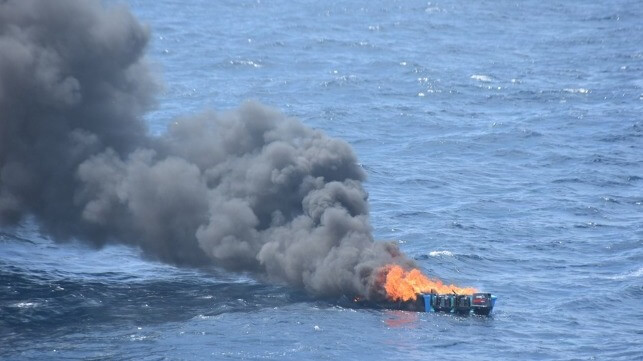
A drug boat stopped and destroyed by USCGC Stone, one of 15 the cutter has intercepted since September (USCG)
New drone strikes on drug smuggling boats have not been holding back the Coast Guard's performance in daily cocaine seizures, according to a top USCG commander for the region. If anything, the numbers have been going up, as demonstrated by the new record set by USCGC Stone's crew over the last few months. The volumes captured are better than ever; if smugglers are deterred by the threat of a lethal strike, it hasn't yet affected boat traffic, the service suggests.
"The drugs you see here on [USCGC] Stone — most have been seized in September, October and even early in the month of November" - all after the start of the drone strike campaign, Coast Guard Atlantic Area Commander Adm. Nathan Moore told CBS. "So business is good for us and we are continuing to enjoy success."
The U.S. Drug Enforcement Agency sees a different view. Whether because of the lethal strikes or the increased Coast Guard seizures, drug prices in Central American and Caribbean transshipment areas are on the rise, DEA Administrator Terry Cole told the network. In this region, where smuggling boats land and offload drugs for onward transport to the U.S. or to Europe, cocaine prices are going up, he said. Cole explained that smugglers are having to pay more for crewmember wages, boats and engines due to the intercepts, and have to increase prices accordingly.
Concerns remain about the legality of the lethal strikes, and reports of isolated objections within the military command structure continue to percolate out. Multiple senior officials, including U.S. Southern Command's top officer, have announced their departure since the start of the campaign. NBC reports that the top lawyer for U.S. Southern Command, Marine Corps Col. Paul Meagher, previously warned commanders that the boat strikes would amount to unlawful extrajudicial killings, potentially exposing U.S. servicemembers to prosecution.
If delivered as reported, this opinion would align with the views of the UN High Commissioner for Human Rights, who warned in October that the operation was equivalent to "extrajudicial killing of people aboard these boats." But the Pentagon denies that Southern Command's Col. Meagher made any such a conclusion, or that any other military lawyers have objected formally. Spokesman Sean Parnell said Thursday that NBC's story "is 100% fake news."
The Trump administration believes that the individuals aboard the boats are "narco-terrorists" and may be killed without trial in international waters. While that definition is in use within U.S. Southern Command, the Coast Guard continues to arrest live suspects in the manner of a law enforcement agency, making smugglers' fates dependent upon which agency they encounter: elimination if intercepted by the U.S. Air Force, or detention if intercepted by the U.S. Coast Guard.
DEA director Cole suggested that the two approaches are compatible. "We're going to apply every single tool to stop the narcotics from coming into the United States and killing American citizens," Cole told CBS.
Colombian Navy Seizes 200 Kilos of Cocaine From a Ship's Sea Chest
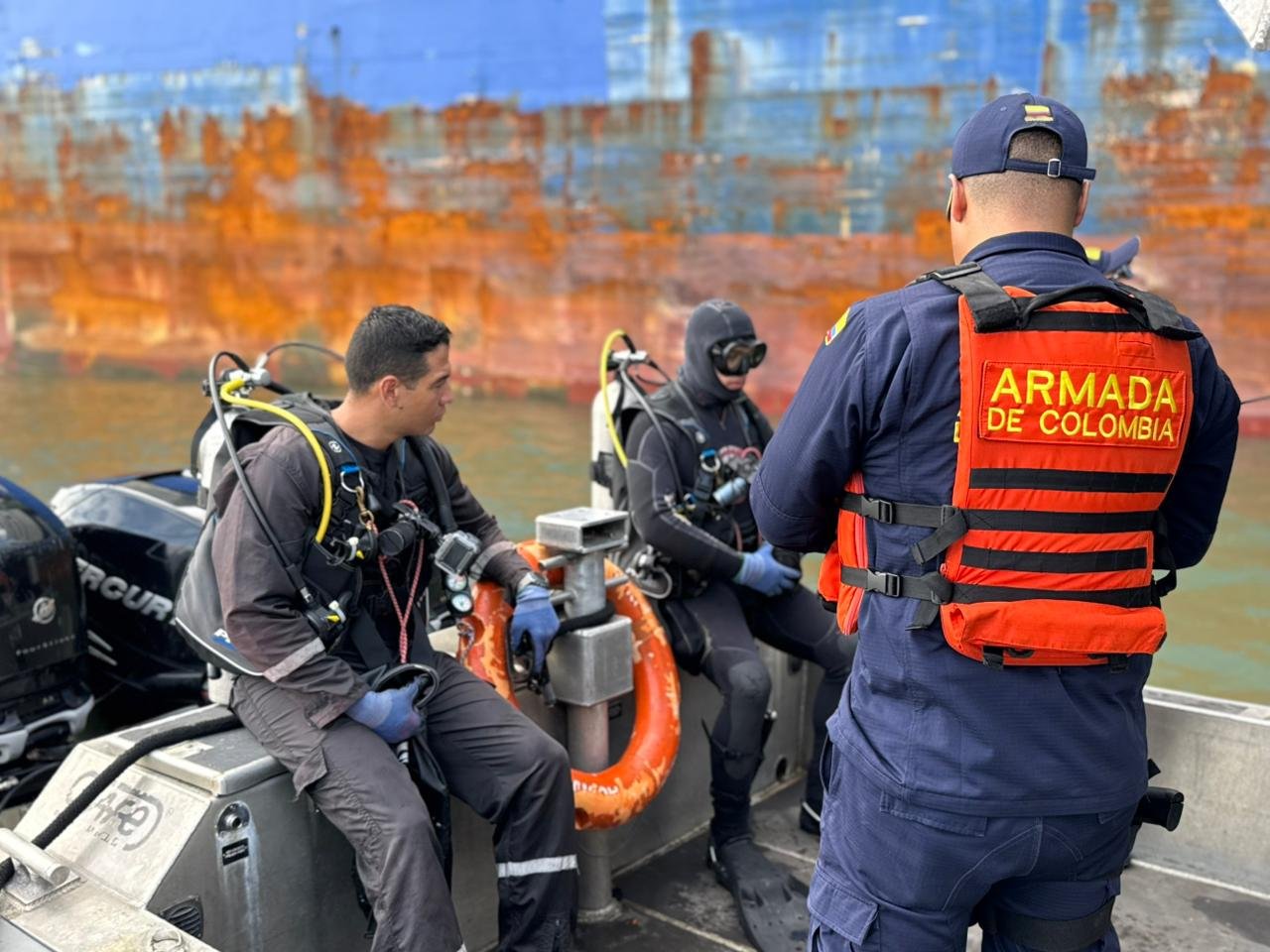
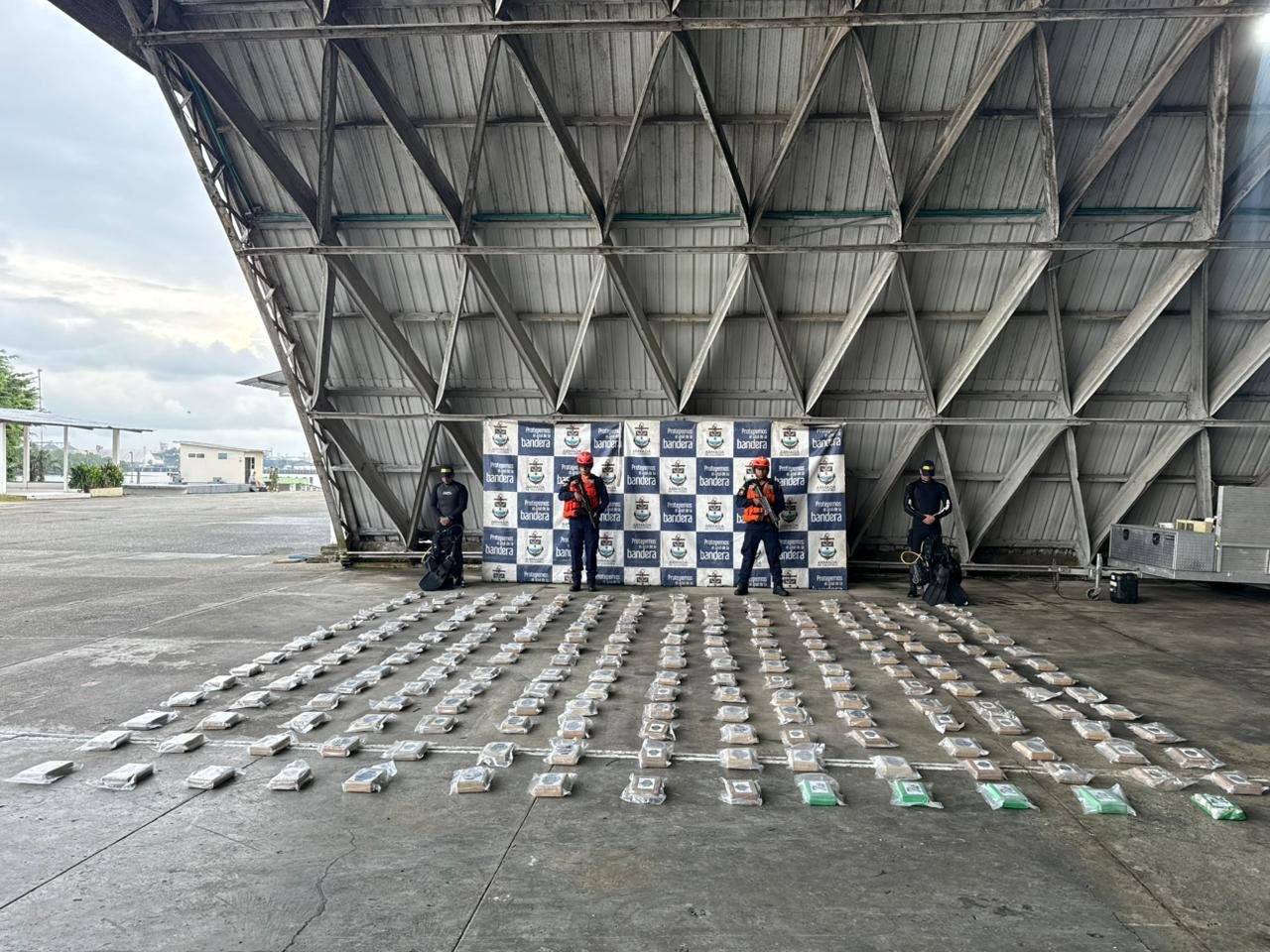
Colombian Navy forces have seized more than 200 kilos of cocaine in a dive inspection of a merchant ship at the port of Buenaventura, the largest port complex on the nation's Pacific coast.
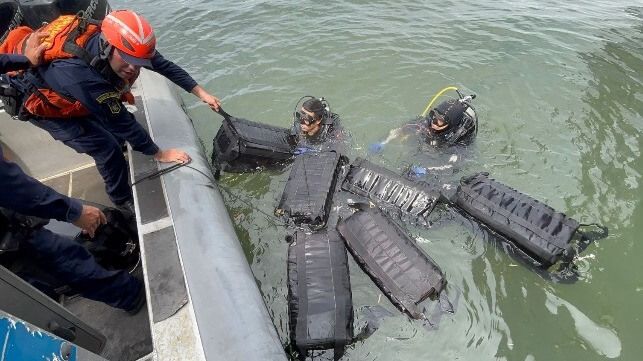
An underwater inspection by divers from the Buenaventura Coast Guard Station revealed seven large black bags in the ship's sea chest. They were pulled up to the surface, and sealed bricks were found inside. A rapid test revealed that the bricks were cocaine.
"With this seizure, the [navy] prevented the commercialization of more than 521,000 doses of narcotics . . . [and] affected the entry of more than $10 million into the criminal finances of drug trafficking organizations," the service said in a statement.
Courtesy Armada de Colombia
Colombia is the world's leading producer of cocaine, and a long series of political developments have contributed to soaring drug production and falling prices. The drug is exported in ever-increasing volumes to consumers in Europe, North America and Australia, the highest-earning destination markets. Europe may become an increasingly desirable export market because of the U.S. airstrike campaign against northbound drug boats in the Pacific and the Caribbean.
The Colombian Navy is the closest maritime force to the source of the drug flow, and plays a leading role in interdiction, often with outsize, multi-tonne busts. In the latest example, on November 13, the service announced the seizure of 7,000 kilos aboard two go-fast boats and a semisubmersible. The service also participates in operations to target the upstream and midstream cocaine supply chain, taking down coca production labs on land in cooperation with Colombia's army and police forces. In September and October alone, it joined raids on 34 illegal labs.
USCG Cutter Stone Sets New Record for Cocaine Busts in One Deployment
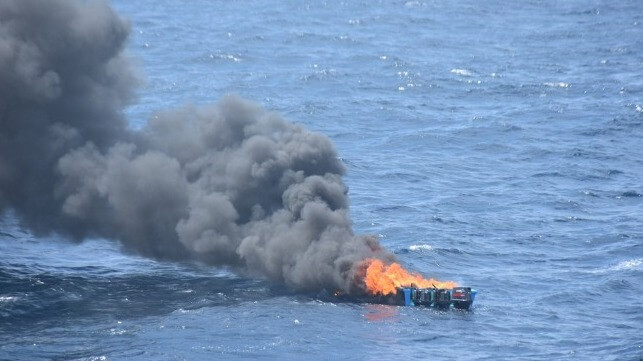
A captured smuggling boat burns after an interdiction. The suspected smugglers were removed before its destruction (Courtesy USCG)
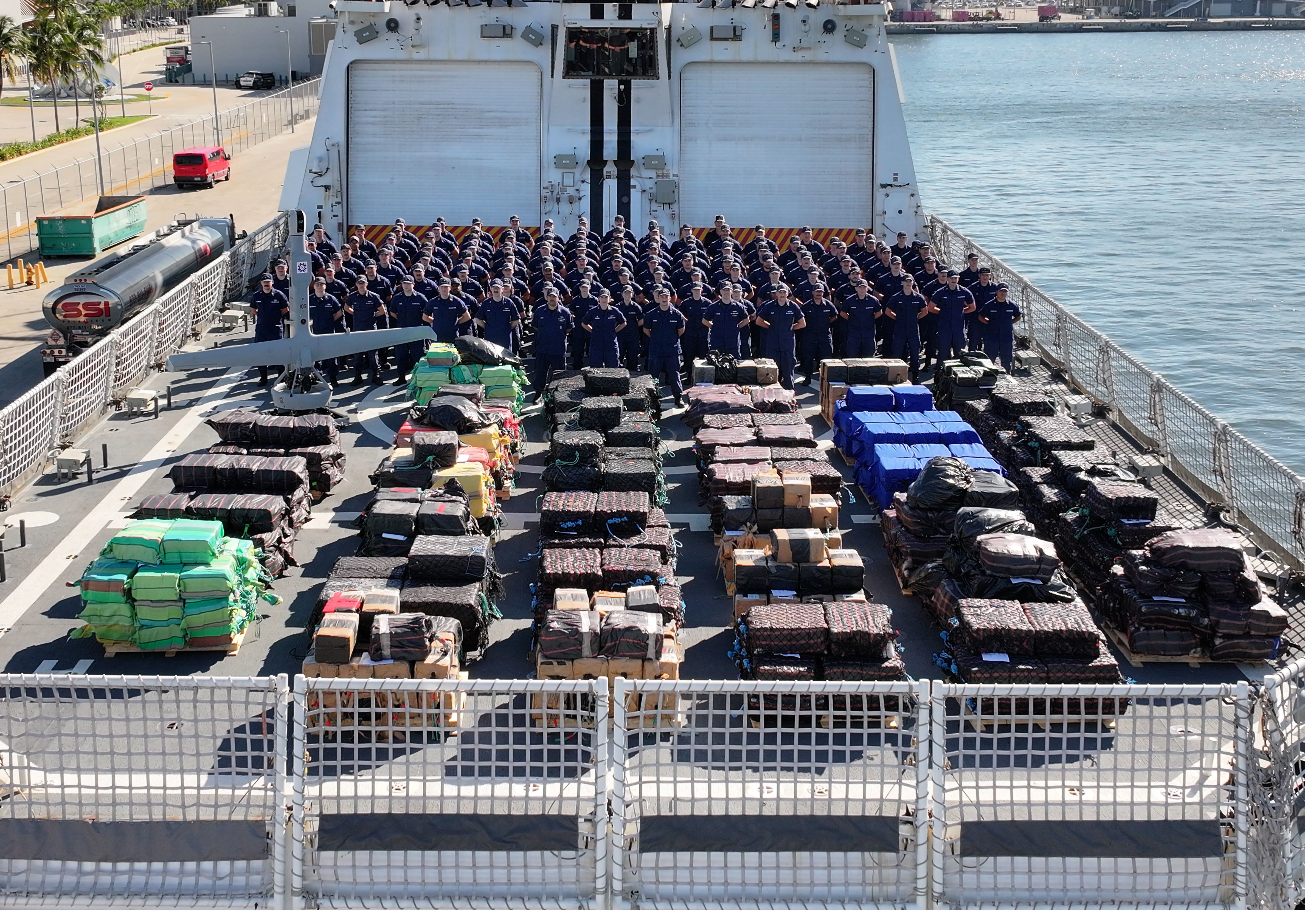
The U.S. Coast Guard cutter USCGC Stone has made Coast Guard history by catching 49,000 pounds of cocaine in a single deployment, more than any other cutter ever.
The seized contraband came from 15 interdictions in the busy smuggling corridor of the Eastern Pacific Ocean. The intercept count exceeds the number of military airstrikes on drug boats in the same region. That Stone found so many cocaine boats suggests that cocaine trafficking continues at pace in the region, despite the threat of a lethal response from U.S. forces.
Crew of the Stone destroying a smuggling boat after an interdiction (USCG)
Stone offloaded her cargo of cocaine on a pier at Port Everglades on Wednesday. The total haul was worth $362 million, according to the service.
“I am extremely proud of the crew’s incredible performance during this deployment,” said Capt. Anne O’Connell, commanding officer, Coast Guard Cutter Stone. “This offload demonstrates our increased posture and continued success in the fight against narco-terrorism and transnational criminal organizations. The Coast Guard, in conjunction with our inter-agency and international partners, continues to patrol areas commonly associated with drug trafficking in the Eastern Pacific, denying smugglers access to maritime routes by which they move illicit drugs to our U.S. land and sea borders.”
No comments:
Post a Comment