Issued on: 26/11/2025 - FRANCE24
Play (16:56 min)
In an exclusive interview with FRANCE 24, Iranian Foreign Minister Abbas Araghchi said Iran was still "ready to negotiate" with the US on its nuclear programme, but claimed that the Americans were "not really keen for a negotiation". He also announced that the exchange of French prisoners Cécile Kohler and Jacques Paris for an Iranian citizen is expected to take place "over the next one or two months". Finally, on Israel, he asserted that "Iran emerged victorious" from the deadly 12-day war in June.
Play (16:56 min)
In an exclusive interview with FRANCE 24, Iranian Foreign Minister Abbas Araghchi said Iran was still "ready to negotiate" with the US on its nuclear programme, but claimed that the Americans were "not really keen for a negotiation". He also announced that the exchange of French prisoners Cécile Kohler and Jacques Paris for an Iranian citizen is expected to take place "over the next one or two months". Finally, on Israel, he asserted that "Iran emerged victorious" from the deadly 12-day war in June.
‘We must return to diplomacy’: IAEA's Grossi on Iran, Ukraine and his UN ambitions
Video by:
Jessica LE MASURIER
INTERVIEW
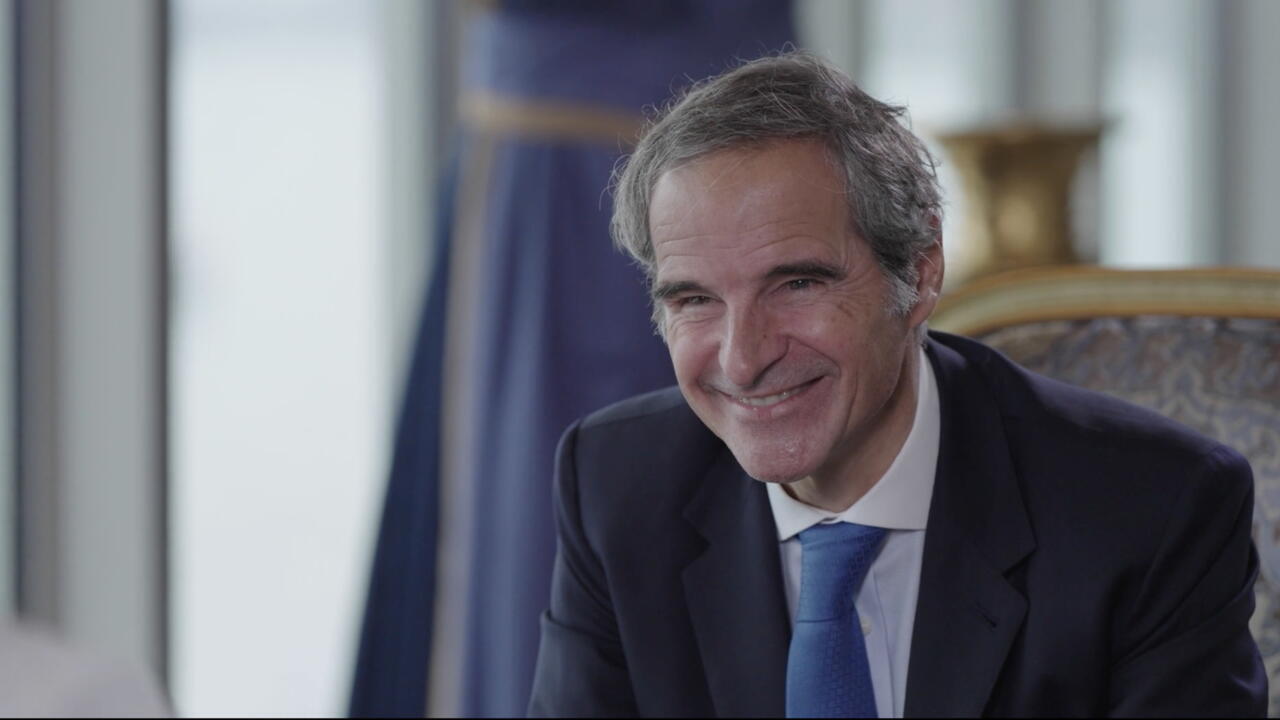
The head of the UN's International Atomic Energy Agency (IAEA), Rafael Mariano Grossi, told FRANCE 24 that Iran still has enough highly enriched uranium – and the necessary knowledge – to develop nuclear weapons, despite recent attacks on its nuclear facilities. He also discussed Ukraine and his bid for the top job at the UN.
Issued on: 26/11/2025
By:
Jessica LE MASURIER/
Pamela FALK/
Yves SCHAEFFNER
The head of the UN's International Atomic Energy Agency (IAEA), Rafael Mariano Grossi, told FRANCE 24 that Iran still has enough highly enriched uranium – and the necessary knowledge – to develop nuclear weapons, despite recent attacks on its nuclear facilities. He also discussed Ukraine and his bid for the top job at the UN.
Issued on: 26/11/2025
By:
Jessica LE MASURIER/
Pamela FALK/
Yves SCHAEFFNER
Video by:
Jessica LE MASURIER
Rafael Mariano Grossi © Jessica Le Masurier, FRANCE 24
08:32
IAEA chief Rafael Mariano Grossi said that Iran’s nuclear programme was “severely damaged” by the Israeli and US strikes on its key enrichment sites – Natanz, Isfahan and Fordo – in June, but warned that Tehran still holds enough highly enriched uranium and technical know-how to build nuclear weapons at some point in the near future.
“To reconstruct that industrial technological base, Iran would need time,” Grossi said, noting that experts have estimated Iran would need a year or more.
Iran's nuclear material, which mostly remains at the sites that were targeted, “would allow them to manufacture a few nuclear weapons”, he said.
Grossi said the US and Israeli strikes on Iran marked a dramatic turn “from diplomacy to the use of force” and were a reversal of years of negotiations. He urged a return to dialogue, calling diplomacy “the only path toward a durable solution”.
Since the June attacks, Grossi said, “We haven't been able to return. Iran has passed domestic legislation saying that they should limit their cooperation with us.” Nevertheless, the IAEA is still negotiating with Tehran.
Grossi dismissed claims that an IAEA report provided justification for the strikes, saying it contained “nothing new” and had been unduly “politicised”. He also rejected suggestions that artificial intelligence (AI) influenced the agency’s findings, stressing that “our conclusions are made by human inspectors, not machines”.
Although he said the IAEA uses AI to help process some data, it does not use such systems to make compliance judgments, denying speculation about the agency's use of predictive programmes like Palantir’s Mosaic.
The IAEA Board of Governors declared Iran in non-compliance with its nuclear obligations on June 12. The resolution was passed due to Iran's consistent failure to provide credible explanations for the presence of undeclared nuclear material at multiple sites.
The IAEA says it needs to “resume its crucial verification activities in Iran, including its stockpile of more than 400kg of highly enriched uranium, which agency inspectors last verified a few days before the military conflict began”.
Situation at Europe's largest nuclear plant 'extremely volatile'
Grossi was in New York at UN headquarters to present the IAEA's annual report to the General Assembly.
Turning to Ukraine, Grossi warned that the situation at the Zaporizhizhia nuclear plant – Europe’s largest – remains “extremely volatile”. He said he recently mediated a truce between Russia and Ukraine to allow vital powerline repairs, averting a potential nuclear accident.
“Had we not been able to broker this agreement between the two sides, then the possibility of these emergency generators running out of petrol or fuel could be there and you could have a radiological accident,” he said.
To conclude the deal, Grossi met personally with both Russian President Vladimir Putin and Ukrainian President Volodymyr Zelensky.
Noting that Zaporizhizhia lies near the front line of the Ukraine war, he stressed that the IAEA needs to remain active and engaged since it is the only international organisation independently operating in the combat zone.
Football for diplomats
Grossi also spoke about his run for the top job at the UN – secretary general – and said football can teach diplomats some useful lessons.
The Argentine diplomat, who has Italian roots, is a candidate to take over as UN secretary-general for a five-year term beginning in 2027.
Asked about calls for there to be a female secretary-general for the first time, Grossi says the choice should be based solely on merit. “It’s about who can lead effectively in a time of crisis.”
But he highlighted his efforts to push for more equality in nuclear diplomacy, explaining that women now make up 52 percent of IAEA staff, up from 28 percent when he took office.
“It’s not about having a man or woman at the top – it’s about what you do,” he says.
Known for his steady diplomacy and his passion for football – he coaches youth teams in Vienna – Grossi says both fields share common ground:
“Team work, responsibility and strategy – that’s diplomacy too.”
He joked that if he becomes UN secretary-general, he might take on coaching the UN correspondents’ football team.
With a wry smile, Grossi pulled up his shirt cuff to reveal a couple of bracelets. “This is from the 2022 FIFA World Cup final – France-Argentina – which was an incredible experience,” he said. “I never take them off.”
In that match, his native Argentina beat France in a dramatic penalty shootout.
08:32
IAEA chief Rafael Mariano Grossi said that Iran’s nuclear programme was “severely damaged” by the Israeli and US strikes on its key enrichment sites – Natanz, Isfahan and Fordo – in June, but warned that Tehran still holds enough highly enriched uranium and technical know-how to build nuclear weapons at some point in the near future.
“To reconstruct that industrial technological base, Iran would need time,” Grossi said, noting that experts have estimated Iran would need a year or more.
Iran's nuclear material, which mostly remains at the sites that were targeted, “would allow them to manufacture a few nuclear weapons”, he said.
Grossi said the US and Israeli strikes on Iran marked a dramatic turn “from diplomacy to the use of force” and were a reversal of years of negotiations. He urged a return to dialogue, calling diplomacy “the only path toward a durable solution”.
Since the June attacks, Grossi said, “We haven't been able to return. Iran has passed domestic legislation saying that they should limit their cooperation with us.” Nevertheless, the IAEA is still negotiating with Tehran.
Grossi dismissed claims that an IAEA report provided justification for the strikes, saying it contained “nothing new” and had been unduly “politicised”. He also rejected suggestions that artificial intelligence (AI) influenced the agency’s findings, stressing that “our conclusions are made by human inspectors, not machines”.
Although he said the IAEA uses AI to help process some data, it does not use such systems to make compliance judgments, denying speculation about the agency's use of predictive programmes like Palantir’s Mosaic.
The IAEA Board of Governors declared Iran in non-compliance with its nuclear obligations on June 12. The resolution was passed due to Iran's consistent failure to provide credible explanations for the presence of undeclared nuclear material at multiple sites.
The IAEA says it needs to “resume its crucial verification activities in Iran, including its stockpile of more than 400kg of highly enriched uranium, which agency inspectors last verified a few days before the military conflict began”.
Situation at Europe's largest nuclear plant 'extremely volatile'
Grossi was in New York at UN headquarters to present the IAEA's annual report to the General Assembly.
Turning to Ukraine, Grossi warned that the situation at the Zaporizhizhia nuclear plant – Europe’s largest – remains “extremely volatile”. He said he recently mediated a truce between Russia and Ukraine to allow vital powerline repairs, averting a potential nuclear accident.
“Had we not been able to broker this agreement between the two sides, then the possibility of these emergency generators running out of petrol or fuel could be there and you could have a radiological accident,” he said.
To conclude the deal, Grossi met personally with both Russian President Vladimir Putin and Ukrainian President Volodymyr Zelensky.
Noting that Zaporizhizhia lies near the front line of the Ukraine war, he stressed that the IAEA needs to remain active and engaged since it is the only international organisation independently operating in the combat zone.
Football for diplomats
Grossi also spoke about his run for the top job at the UN – secretary general – and said football can teach diplomats some useful lessons.
The Argentine diplomat, who has Italian roots, is a candidate to take over as UN secretary-general for a five-year term beginning in 2027.
Asked about calls for there to be a female secretary-general for the first time, Grossi says the choice should be based solely on merit. “It’s about who can lead effectively in a time of crisis.”
But he highlighted his efforts to push for more equality in nuclear diplomacy, explaining that women now make up 52 percent of IAEA staff, up from 28 percent when he took office.
“It’s not about having a man or woman at the top – it’s about what you do,” he says.
Known for his steady diplomacy and his passion for football – he coaches youth teams in Vienna – Grossi says both fields share common ground:
“Team work, responsibility and strategy – that’s diplomacy too.”
He joked that if he becomes UN secretary-general, he might take on coaching the UN correspondents’ football team.
With a wry smile, Grossi pulled up his shirt cuff to reveal a couple of bracelets. “This is from the 2022 FIFA World Cup final – France-Argentina – which was an incredible experience,” he said. “I never take them off.”
In that match, his native Argentina beat France in a dramatic penalty shootout.
No comments:
Post a Comment