Trafigura secures funding to keep Australian smelters running
ALL CAPITALI$M IS STATE CAPITALI$M
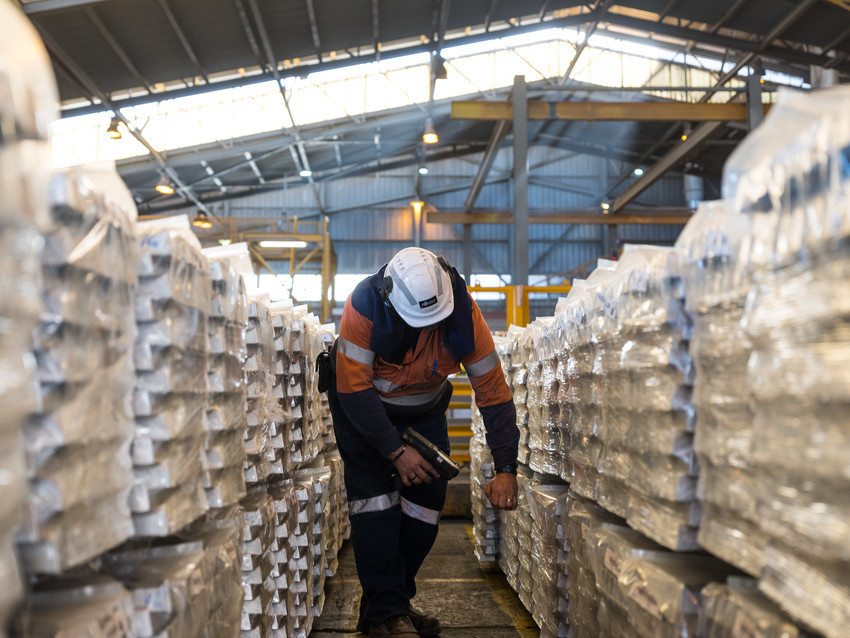
The Australian government will provide a further A$105 million ($73.68 million) to support Nyrstar Australia in progressing modernization studies at its South Australian and Tasmanian smelting operations, the industry minister said on Wednesday.

The support is in addition to the previous amount of A$135 million ($87.4 million) announced in August last year, as part of Australia’s strategy to become a key supplier of critical minerals to Western allies.
The funding will support Nyrstar, a unit of the trader Trafigura, in maintaining operations at both smelters in 2026, while it completes studies to produce critical minerals. It previously said it would look at producing germanium and indium in Hobart, in the country’s south, and antimony and bismuth from Port Pirie in South Australia.
“The move highlights ongoing pressure on global smelters from high costs and weak processing fees, while underscoring the strategic importance of maintaining domestic metals processing capacity,” BMO analysts said in a note Wednesday.
Nyrstar shipped its first antimony earlier this year.
Australia’s metal smelters have been under strain owing to high power and labour costs, and cheaper rivals elsewhere.
Modernizing the country’s ageing fleet will require significantly more capital, potentially testing the resolve of the government and taxpayers.
($1 = 1.4251 Australian dollars)
(By Melanie Burton; Editing by Rashmi Aich)
Larvotto Resources inks gold offtake deal with Glencore
Australia’s Larvotto Resources (ASX: LRV) has signed an offtake agreement with Glencore (LON: GLEN) for its 100%-owned Hillgrove gold-antimony project in New South Wales.
The agreement covers gold concentrate production during the first seven years of mining operations, with expected annual offtake being approximately 15,000 dry metric tonnes, Larvotto said in a press release on Tuesday.
The agreement is structured on a mine-gate basis, with Glencore responsible for all logistics from the mine to the final customer destination.
Together with the antimony concentrate offtake with Wogen Resources, the agreement completes the company’s key concentrate marketing strategy for Hillgrove’s primary concentrate products, it said.
“As we move closer to first production at Hillgrove, securing a globally recognized offtake partner for our gold concentrate is another important milestone in the transition from development to operations,” managing director Ron Heeks stated in the press release.
“As expected with the strength in the gold price, there was a high level of interest for the offtake during the tender process from all major commodity houses.”
Last year, the company reported 90% tungsten recovery with a 16X increase in feed grade delivered in metallurgical testwork, which it said also indicates a simple and cost-effective processing circuit would produce a saleable tungsten concentrate.
“Metallurgical testwork continues for the potential production of a tungsten concentrate by-product from Hillgrove, with offtake discussions expected to progress as development activities advance,” Heeks said.
First production at Hillgrove remains on time and budget, with commissioning expected in August this year, the company said.
Larvotto’s stock traded flat on Tuesday. The company has a A$690.3 million ($485 million) market capitalization.
Northern Star rejects Elliott push to sell company
Australia’s largest gold miner Northern Star Resources (ASX: AU) has rejected a proposal from activist investor Elliott Investment Management to explore asset sales or a potential takeover, arguing the timing is wrong as the company works through operational challenges and a leadership transition.
Northern Star chair Michael Chaney said Wednesday the board does not support launching a sale process despite Elliott’s recent call for a strategic review after building a stake estimated at between 3% and 4%. Elliott’s proposal followed a series of guidance cuts over the past year as processing mill issues at Kalgoorlie contributed to the company’s underperformance relative to peers.
“With reference to Elliott’s suggestion that the board should run a sale process for the company, we do not consider that this is the right time to do so,” Chaney said in the letter to shareholders.
Chaney said Northern Star has previously considered takeover and merger approaches but concluded the proposals were not in shareholders’ best interests. “We had investment banks propose a spin-off of assets and we separately had our financial adviser review those options,” he said. “For now, we are comfortable holding the assets we do but this is a matter that will remain under regular review.”
The dispute comes at a sensitive time for the company. Elliott’s campaign to refresh the board and review strategy emerged days after CEO Stuart Tonkin announced plans to step down after nearly a decade in the role. Northern Star has begun searching for a successor as it seeks to restore investor confidence and improve operational performance.
Elliott’s mining track record
Elliott managed about $79.8 billion at the end of 2025 and has become one of the mining sector’s most closely watched activist investors. Last year, it disclosed a large stake in Toronto-based Barrick Mining (NYSE: B) (TSX: ABX) as the world’s third-largest gold producer struggled to capitalize on a rally in bullion prices.
The firm has also campaigned against BHP Group, pushing the miner to spin off its oil and gas business and simplify its dual-listed structure. Elliott previously targeted Kinross Gold, a campaign that resulted in a $300-million share buyback.
Northern Star faces pressure from aging pits, rising costs and recent guidance downgrades. UBS said in March the company could benefit from selling lower-margin, shorter-life mines, while Elliott argued a strategic review would allow the board to weigh a potential transaction against the risks of a multi-year turnaround.
The developments highlight growing pressure on mining companies to unlock shareholder value after periods of operational underperformance. Activist investors have increasingly targeted large resource companies, pushing for asset sales, spin-offs and strategic reviews when production setbacks or missed targets weigh on valuations.
No comments:
Post a Comment