Tuesday, October 13, 2026

China's Auto Exports Explode as Domestic Demand Craters


New data released by the China Passenger Car Association earlier on Monday show that China's peak car-buying season hit the brakes, with September passenger-vehicle retail sales plunging 28% from a year earlier as manufacturers increasingly relied on overseas buyers to cushion soft domestic demand.

The CPCA said in the report that retail sales fell to 1.62 million vehicles, marking a 12th consecutive monthly decline from a year earlier. Sales rose 5% from August.

The report showed that electric cars and plug-in hybrids accounted for a whopping 67% of passenger-car sales last month. Even so, retail sales of these new-energy vehicles tumbled 17% from a year earlier to 1.08 million units, underscoring the breadth of the domestic market slowdown.

"Overall sales volume was under significant year-on-year pressure, with limited month-on-month recovery; structural differentiation was amplified to the extreme, with accelerated contraction of fuel vehicles and resilient leadership of new energy vehicles becoming the main market theme, and high oil prices continuing to accelerate the pace of 'oil-electric substitution,'" the report stated.

Exports provided relief to domestic manufacturers as these cheap cars flooded international markets.

Overseas passenger-vehicle shipments, including knock-down kits, surged 73.7% to 917,000 units, accounting for 36% of manufacturers' sales, up from 19% a year earlier. The CPCA noted that exports now represent more than half of sales at some auto manufacturers, with a growing number approaching 70%.

But the sustainability of export demand came into question early Monday amid expectations that Europe would cap Chinese hybrid vehicle imports at 350,000 per year. These vehicles remain banned in the US market.

The CPCA also noted, "The surge in memory and chip prices driven by AI and tight supply have resulted in a slower increase in new energy vehicle sales recently."

"Industry inventory remained low, with high oil prices significantly impacting fuel vehicles, dealers being more cautious in purchasing new cars, and most dealers believing that the 'Golden September and Silver October' peak season effect was significantly weaker than in previous years, resulting in significant survival pressure and a lack of confidence among dealers. However, the current downturn in the car market is a temporary phenomenon resulting from the combination of short-term policy disruptions and a high base, rather than a sign that the fundamentals of car ownership have peaked," the report stated.

By Zerohedge.com

Ørsted to Take Full Control of UK Offshore Wind Farm for £15 Million

Danish offshore wind developer Ørsted has agreed to acquire full ownership of the Gunfleet Sands 1 & 2 offshore wind farm in the UK, exercising an existing buyback right to purchase its investment partners' 49.9% stake for approximately £15 million ($20 million).

The transaction, expected to close in November 2026 subject to customary conditions, will increase Ørsted's ownership from 50.1% to 100% of the 172-megawatt facility located approximately seven kilometers off the Essex coast.

The acquisition will give Ørsted greater control over the wind farm's operations and long-term investment decisions, including the possibility of extending its operating life.

Gunfleet Sands 1 & 2 has been generating electricity since 2010 and currently produces enough renewable power to supply more than 125,000 UK households annually, according to the company.

With the project now more than 16 years old, Ørsted is evaluating options to maximize its remaining economic value, including a potential operational lifetime extension. However, the company has not announced a formal decision on extending the facility's lifespan.

The transaction stems from a buyback provision included in the project's original partnership agreements rather than a newly negotiated acquisition.

Ørsted said it would continue evaluating similar opportunities across its portfolio individually, based on the financial and operational merits of each asset.

The move also reinforces the company's established position in Britain's offshore wind industry. Ørsted currently operates 12 offshore wind farms in the UK, which collectively generate approximately 7% of the country's electricity, according to company figures.

Globally, the Danish energy company has 11 GW of installed offshore wind capacity and another 7.2 GW under construction. Its total installed renewable energy capacity exceeds 19 GW, spanning offshore and onshore wind, solar, energy storage and other energy assets.

The acquisition highlights the growing importance of managing aging offshore wind infrastructure as Europe's earliest commercial projects approach decisions over continued operation, refurbishment or eventual decommissioning.

For Ørsted, securing full ownership of Gunfleet Sands could provide additional flexibility in determining whether continued investment in the existing facility offers better long-term returns than alternative end-of-life options.

By Charles Kennedy for Oilprice.com


Trump Curbs Farmers’ Access to Funding for Energy Projects


  • The Trump administration is tightening access to USDA rural energy grants, discouraging solar and wind projects on farmland.

  • Farmers must now complete projects before applying for funding, potentially putting energy-saving investments beyond the reach of cash-strapped farmers.

  • Farmers’ unions and environmental groups have filed lawsuits, arguing the changes unfairly restrict access to affordable energy and undermine rural businesses.


The Trump Administration is restricting access to a federal rural energy program for farmers in another move against renewable energy. But the major change to the Department of Agriculture’s Rural Energy for America Program (REAP) that eliminates upfront funding would make energy efficiency projects and cheaper energy for farmers inaccessible to many of them, analysts say.

The USDA’s new rules, unveiled at the end of September and effective October 16, aim to eliminate taxpayer funding for “unreliable energy sources”, protect farmland from oversized solar arrays, and reduce imported components from adversaries.

“For too long many applicants have prioritized unreliable energy sources and have not fully delivered on their stated goals, as of today that ends,” Secretary of Agriculture Brooke Rollins said.

Apart from cutting red tape, the changes to the REAP protect “productive American farmland from oversized solar developments and ensuring taxpayer-supported energy investments don’t put components from foreign adversaries on American farms,” said Under Secretary for Rural Development, Glen Smith.

“REAP should work for rural America, not foreign supply chains or projects that take good farmland out of production.”

The changes include Secretary Rollins’ direction “to disincentivize solar photovoltaic and wind energy systems on cropland.”

More importantly, projects must be fully built, operational, and should be able to demonstrate the project’s actual documented output, energy savings, costs, and system performance before applying for funding.

Under the previous rules of the program launched in the 2000s, funding could cover up to 50% of the costs of the energy project, and farmers were able to apply for it before construction began.

REAP invested almost $4.8 billion in projects across the country between 2012 and 2025, making it the agency’s second-largest business program, according to USDA-Rural Development.

Since the program was created, over two-thirds of REAP’s grants have gone to districts currently represented by Republicans. The districts receiving the highest total funding are largely clustered in the Midwest, where the majority of projects are also located, the Brookings Institution said in a report last year.

This year, there has been no funding from REAP because USDA halted applications pending the rule review.

The new rule – requiring operational projects with proven energy savings before application – would put energy-saving projects of any kind out of reach for many farmers, according to analysts.

The new rule would also be another hit to farmers who want to cut on utility bills and energy costs, according to the National Sustainable Agriculture Coalition (NSAC). America’s farmers have been reeling from record-high diesel prices and from the Trump Administration’s trade policies.

“For a lot of farmers, that just simply won’t be possible, especially with these times already being so financially uncertain,” Richa Patel, policy specialist at NSAC, told Reuters.

Environmental organizations and farmers’ unions took the U.S. Administration to court over the new rule that significantly restricted access to funding for energy projects.

The Environmental Law & Policy Center (ELPC) and Earthjustice have filed a lawsuit against the USDA challenging USDA’s efforts to write solar energy out of the Renewable Energy for America Program (REAP).

Importantly, the Iowa Farmers Union and other farmers have joined the lawsuit, which argues that “More farmers and rural small businesses who would like to access the benefits of solar energy systems, but who cannot afford the upfront costs of installation without the support of a REAP grant or loan guarantee are also harmed by the policy.”

“As finances get tighter and margins thinner, we cannot pull the rug out from the people who grow our food,” said Alex Beld, Communications Director at RENEW Wisconsin, which is also part of the group of plaintiffs.

“REAP is supposed to help farmers keep their energy costs low. Instead, the USDA has blocked solar, an incredibly affordable source of energy, and made the change retroactive—leaving farmers with bills they were told the government would cover.”

By Tsvetana Paraskova for Oilprice.com

 Black Sea Oil Shipping Insurance Costs Surge to $2.5 Million

Insurance costs for ships transporting oil across the Black Sea have surged from approximately $200,000 to $2.5 million per vessel in recent months, increasing crude transportation costs and putting additional pressure on fuel prices in Bulgaria, according to the manager overseeing Lukoil's operations in the country, local media reported. 

Evgeni Simeonov, Lukoil's special commercial manager in Bulgaria, told Bulgarian National Television on Monday that the increase reflects mounting risks to commercial shipping following repeated attacks on vessels and port infrastructure.

The figures represent a 12.5-fold increase in the quoted insurance cost, equivalent to an additional $2.3 million per vessel as described by Simeonov.

London's marine insurance market had already expanded its Black Sea high-risk reporting requirements in September to cover the entire basin. Voyages within the territorial waters of neighboring countries, including Bulgaria, Romania, Georgia and Turkey, remain exempt from notification requirements. Reuters reported that war-risk premiums were adding hundreds of thousands of dollars to shipping costs for seven-day voyages.

The threat is also expanding into Bulgaria's exclusive economic zone. On October 6, drones struck two commercial vessels, sinking the Togo-flagged Alfa Watan and damaging the Palau-flagged Able. All 18 crew members aboard the Able were rescued, according to the Associated Press.

Bulgarian authorities have not established who carried out the attacks. The sinking prompted Syria to request an independent investigation after ten crew members, including nine Syrians, went missing.

Shipping costs were already rising before the October attacks. Bloomberg reported in August that benchmark daily tanker earnings on the Novorossiysk-to-Augusta route had reached a record $440,948, based on 135,000-ton crude shipments. The assessment had increased 140% since early July.

Bulgaria's Burgas refinery has continued receiving crude shipments. Simeonov said the facility had not experienced any cancelled deliveries and had secured supplies through the beginning of December.

He also defended Bulgaria's decision to lift restrictions on diesel exports, arguing that preventing the refinery from selling surplus production abroad could force it to reduce crude processing as storage facilities fill.

Simeonov said the refinery produces more diesel than Bulgaria consumes and that restrictions on diesel exports could consequently reduce production of gasoline, aviation fuel and other petroleum products.

By Michael Kern for Oilprice.com


Bulgaria Reports One Ship Sunk, One Damaged in Latest Drone Strike

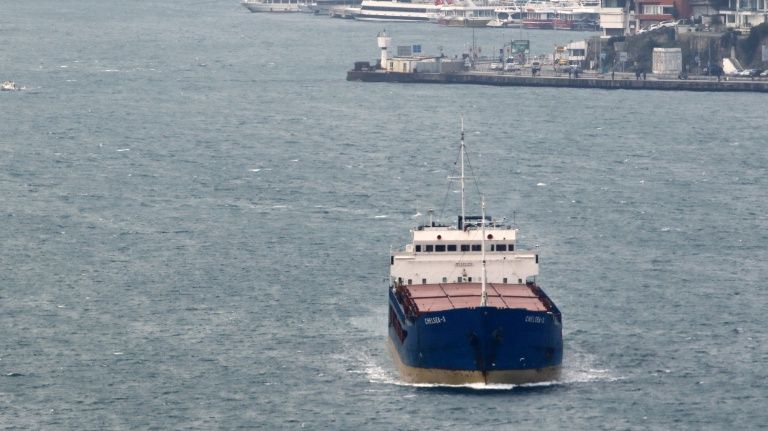
The small freighter Chelsea 3 at Istanbul, 2016 (Cengiz Tokgoz / VesselFinder)

Early Tuesday, two more vessels were hit by suspected Russian drone strikes off the coast of Bulgaria, injuring five and sinking one ship. The attacks were the latest in a long string of strikes on Black Sea merchant shipping, dating back to early 2022 and increasingly employed by both sides of the conflict.

Bulgarian Prime Minister Rumen Radev announced the news of the latest attacks in a statement Tuesday. The vessels were hit outside of the nation's territorial seas, he claimed.

At about 0130 hours local time, the Ukrainian-operated coastal freighter Chelsea 3 made a distress call, reporting that it had been hit three times by aerial drones. The 15 crewmembers were evacuated and taken to the port of Varna, Radev said. Five of the seafarers were injured and needed medical care.

Additionally, Radev said that his ministers had been informed of a second vessel strike at a position about 17 nautical miles off Krapets. The as-yet-unnamed ship was sunk, he said. Only one crewmember from this vessel had been rescued at the time of his announcement early Tuesday. 

Just last week, a suspected Russian drone strike sank a merchant ship off the Bulgarian coast, leaving all 12 crewmembers lost at sea. Another ship sustained serious damage but remained afloat. Russia has denied involvement in these earlier attacks. 

While Bulgaria has denounced the kinetic strikes and has called for a cessation of the violence, its leaders have stopped short of naming a suspect just yet. "We do not have clear and conclusive evidence to attribute responsibility to either side. However, as I have already stated, the logic suggests that the outcome benefits the Russian Federation. I will therefore summon the Russian Ambassador for a meeting today," said Radev on Tuesday.

Last week, Bulgarian President Illiana Iotova called for greater cooperation on drone defense at sea among the three NATO members most affected - Romania, Bulgaria and Turkey. She has also suggested that other NATO member states should provide assistance in the form of maritime surveillance and counter-drone technologies to help defend the alliance's easternmost shores.  

Top image: Chelsea 3 at Istanbul, 2016 (Cengiz Tokgoz / VesselFinder)


Bulgaria Sends Frigate to Search for Evidence in Attack on Vessels

Bulgarian frigate Verni
Bulgaria sent its frigate Verni to the site on Thursday and Friday searching for evidence (USN file photo)

Bulgarian officials confirmed on Friday, October 9, that teams have been searching the area where the two cargo ships were struck this week for evidence. The teams boarded the abandoned, drifting cargo ship and also renewed a search in the Black Sea.

According to the reports, two members of the Bulgarian armed forces were able to spend approximately 30 minutes aboard the bulker Able on Friday to search for evidence. Military officials said the team was tasked with searching for drone debris, collecting any fragments, and photographing the wreck. He said the team was able to enter the ship despite extensive fire damage from what was termed an “extremely intense fire.”

Unfortunately, the team reported it was unable to locate any debris or fragments aboard the vessel or in the water. Bulgaria’s Minister of Defense said without evidence they would not speculate on the origins of the drone. He noted that both Ukraine and Russia have denied attacking the two vessels early on October 6. 

Initially, Bulgaria had said it would not continue the search after declaring the 10 crewmembers from the cargo ship Alfa Watan missing. However, reports are that Syria, which had nine crewmembers aboard the missing vessel, has called for an independent investigation involving both Bulgaria and the International Maritime Organization. Bulgarian media also reported that officials in the European Union told the country that it had to do more if it wants to push for sanctions as a result of the attacks.

The frigate Verni was sent to the site on Thursday to locate the Able and determine the condition of the vessel. Maritime officials had speculated that the ship was very likely to sink, but it was located approximately 55 nautical miles northeast of Cape Emine. The Palau-flagged ship, which is 114 meters (approximately 374 feet) in length and 7,400 dwt, is reported stable. It is down by the stern after taking water through a breach in the hull. Officials said they assume the engine room is at least partially flooded.

The team from the Navy and Air Force returned to the ship on Friday with the frigate. They reported extensive fire damage aboard, but they were able to confirm the vessel was carrying wheat. At this point, they said it was impossible to determine if the ship would sink or continue to drift. 

Bulgaria said it would continue to monitor the wreck, but it is still declining to identify the source of the attack.

Burgas Media is quoting a maritime expert who checked the details of the lost Alfa Watan. He said records showed the vessel loaded salt in Egypt, which was going to Romania. It was then going to load grain for a return trip to Egypt. The ship was 3,160 dwt and owned by Turkish interests.

IMF Warns Middle East War Could Derail Global Economic Growth

The energy crisis sparked by the war in the Middle East remains the biggest risk for the global economy, but investment in artificial intelligence provides grounds for optimism, the International Monetary Fund has said, expecting global growth of 3.4% next year.

“The global economy has been resilient, but that resilience is reaching its limits, so we need to move from just coping to rebuilding,” the institution’s chief economist, Silvana Tenreyro, told the media, as quoted by Reuters. “We need to restore fiscal space. We need to rebuild supply-side resilience,” Tenreyro also said.

The Middle East war has fueled inflation through soaring prices for energy commodities that are spilling over the broader economy. However, government action to cushion the blow has worked to curb the risks of major pain, according to another IMF official. IMF deputy research director Petya Koeva Brooks told Reuters in an interview that measures such as oil reserve draws and diversification of suppliers have had an effect, helped by demand destruction due to the higher prices.

Countries that are active in the AI space have a better outlook than those that are not, according to the IMF. The lender noted especially countries involved in AI hardware development, including South Korea, Malaysia, Thailand, and Mexico. The U.S. economy will also get support from AI exposure, and so would European economies in the EU, according to the IMF.

On the other hand, countries most vulnerable to the effects of the energy crisis are facing difficult times. According to the IMF, Saudi Arabia will book a GDP contraction of 3.3% this year, which is a serious downgrade from an earlier forecast, which saw the kingdom’s economy grow by 1.7%.

Other Gulf states are also struggling, with the institution seeing Iran, Iraq, Kuwait, the UAE, and Qatar all post GDP contractions this year, with Iraq, Kuwait, and Qatar faring especially badly, with contractions of above 15%.

By Irina Slav  for Oilprice.com


Trump's Grid Security Order Could Backfire on America's AI Boom

  • Chinese imports dominate US battery supply, but not traditional grid equipment.

  • New restrictions could threaten battery supplies for AI and data center expansion.


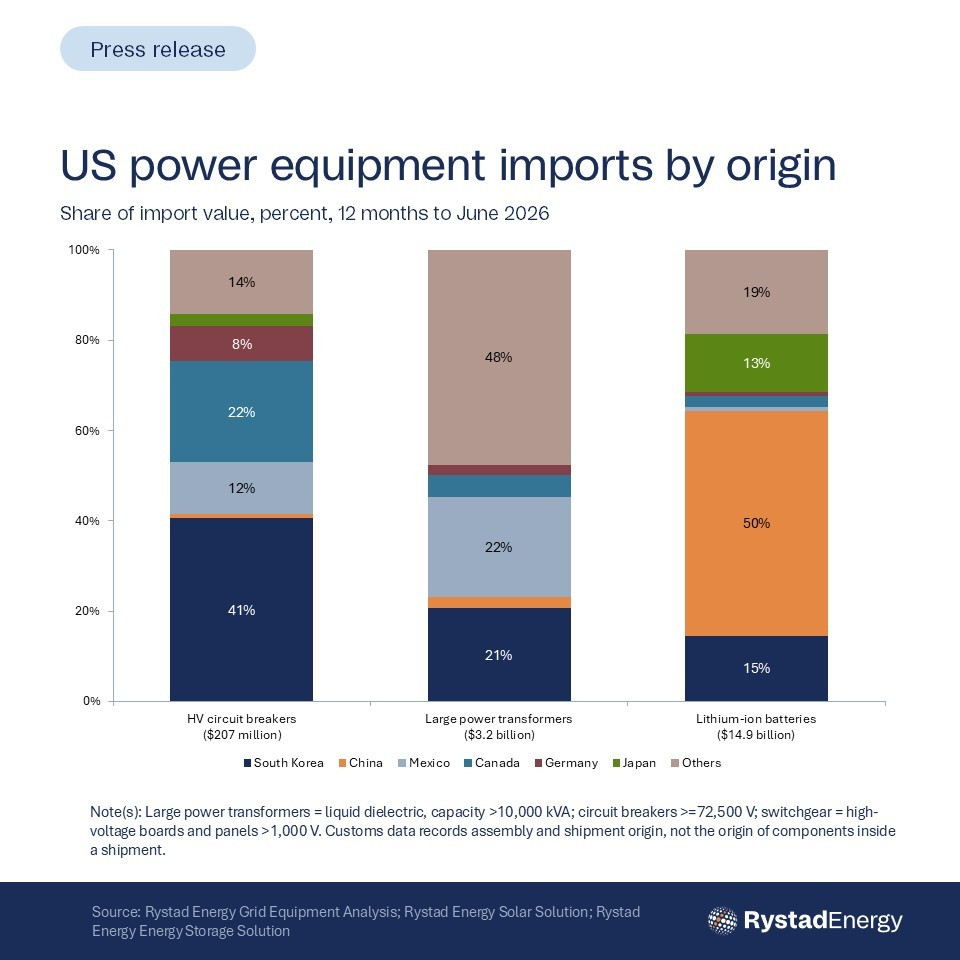
A White House executive order designed to secure the US power grid from Chinese-made equipment is more likely to disrupt battery storage supply chains than the transformers and switchgear it aims to target, according to new Rystad Energy analysis. Executive Order 14421, signed by President Donald Trump on 26 August 2026, names substation transformers, grid-connected inverters, battery energy storage systems, high-voltage circuit breakers and generation turbines as covered equipment. Rystad Energy finds that US reliance on Chinese transformers and inverters has already fallen substantially, leaving limited practical exposure in those categories. However, battery storage paints a more vulnerable picture: China supplied 50% of US lithium-ion battery imports by value in the 12 months to June 2026, and no alternative origin comes close to matching that scale. The order explicitly names the growth of data centers and artificial intelligence as the reason a supply disruption now carries national security consequences. 

The order is written around the grid, but the supply chain problem it creates falls most squarely on battery storage. Transformers and breakers have low Chinese import exposure today because the market shifted before this order arrived. Battery storage has not made that transition yet, and there is no alternative origin that can absorb a 50% Chinese share at the volumes data centers and AI infrastructure now require.

Geoffrey Hebertson, Senior Analyst, Renewables and Power

Power equipment imports

For transformers and high-voltage circuit breakers, the order arrives after the market has largely already moved. China supplied just 3% of US transformer imports and under 1% of breaker imports by value in the 12 months to June 2026. South Korea, Mexico and Canada collectively account for 74% of breaker imports and 48% of transformers. Hyosung Heavy Industries disclosed $285.3 billion of ultra-high-voltage transformer contracts with two US hyperscalers on 15 September, confirming that Korean suppliers are winning on the strength of their US manufacturing plants rather than on the order’s exclusions alone. For inverters, the retreat from Chinese supply was already underway. China’s reported export value to the US fell 34% between 2022 and 2025 as the US 45X advanced manufacturing production credit pulled inverter assembly onshore. US inverter capacity is set to reach 126 gigawatts by 2028. 

The fuller picture on battery storage turns on rulemaking due by 24 December 2026. The order covers battery energy storage systems and expressly includes uninterruptible power supply systems supporting critical infrastructure, extending its reach into the behind-the-meter battery systems data centers use for power resilience. South Korea follows China at 15% of US lithium-ion battery imports and Japan at 13%, with no single alternative capable of absorbing displaced Chinese volume at scale. A critical open question is how broadly the rulemaking defines Covered Foreign Entity ownership. If the Secretary of Energy draws that definition to capture suppliers assembling in South Korea or Mexico using Chinese-controlled components or capital, origins the market currently prices as solutions would themselves become covered, leaving the US short across multiple equipment categories at once.

The December rulemaking is the order’s most consequential moment. If ownership is drawn broadly enough to follow Chinese capital into South Korean or Mexican assembly plants, the supply chain the tech industry is currently relying on to keep AI infrastructure buildout on schedule becomes part of the problem. That outcome is not a certainty, but it is a plausible reading of the text, and procurement teams at hyperscalers should be modelling it now.

Geoffrey Hebertson, Senior Analyst, Renewables and Power

By Rystad Energy


Heat Pumps Are Coming for Coal’s Industrial Heat Market

  • Fraunhofer ISE tested heat pumps on a lab rig at 320 degrees Fahrenheit, producing hot water and steam for industrial use.

  • The test data is meant to help manufacturers design heat pumps and heat exchangers for high temperatures, large loads and shifting conditions.

  • The target is coal-fired heat in hard-to-abate sectors, a tougher job than the low-temperature building heat pumps that get most of the attention.

A new breakthrough in high-temperature heat pumps could provide a critical pathway toward relieving global reliance on fossil fuels in industrial contexts. A team of scientists at the Fraunhofer Institute for Solar Energy Systems ISE (Fraunhofer ISE) in Germany tested heat pumps at 320 degrees Fahrenheit and proved that they can produce hot water and steam, showing promise for replacing coal in hard-to-abate industrial sectors.

“Data collected from the test rig could allow manufacturers to design heat pumps and heat exchangers for high temperatures, large loads, and changing conditions,” states a recent report from Interesting Engineering. 

The scientists at Fraunhofer ISE are testing the rig in a number of different contexts, including with varying heat sources. Heat pumps can source thermal energy in many different ways. According to the International Energy Agency’s definition of a heat pump, the technology can extract heat from sources including (but certainly not limited to) “the surrounding air, geothermal energy stored in the ground, or nearby sources of water or waste heat from a factory.” The pump “then amplifies and transfers the heat to where it is needed.” 

The anatomy of a heat pump includes a compressor, which propels a refrigerant through a closed loop, and a heat exchanger, which extracts thermal energy from a given heat source. Then, another heat exchanger moves that thermal energy to a heat sink. In the model being tested by Fraunhofer ISE, the refrigerant being used is butane. 

Heat pumps have garnered increasing attention in recent years as a low-cost, resource-efficient part of the decarbonization puzzle. However, most of the buzz around heat pumps has been related to models that operate at much lower temperatures and which would be used in residential and commercial buildings, rather than in industrial applications. These heat pumps would be used to make heating and cooling – a major source of greenhouse gas emissions globally – far more energy efficient. Not only that, they are remarkably cost-effective.

“We’ve come to see climate solutions like paper straws as being something worse than what we’re used to. But there are some places where everyone benefits, and I think heat pumps are a good example of that,” Alexander Gard-Murray, PhD, a political economist at Brown University and co-author of 3H Hybrid Heat Homes: An Incentive Program to Electrify Space Heating and Reduce Energy Bills in American Homes, was quoted by The New York Times earlier this year. “They’re quieter. They offer more control. And at the same time, they’re going to reduce our energy demand and our greenhouse gas emissions. So it’s not just savings. It’s a quality-of-life improvement.”

Indeed, heat pumps are so effective, and the energy cost of heating and cooling homes and buildings is so high, that by some estimates residential heat pumps could cut the United States’ energy consumption in half. As of 2023, some figures suggest that heat pumps had already prevented 8 million tonnes of carbon dioxide emissions in Europe alone. And as the World Economic Forum wrote in a report from the sidelines of COP27, which heavily featured the potential of heat pumps as an answer to climate change, “the greenest energy is the energy we don’t use.”

This logic holds true for industrial applications of high-temperature heat pumps as well – especially when you consider that the energy that these technologies would be replacing largely comes from coal, the world’s dirtiest fossil fuel. The data being produced at Fraunhofer ISE could help refine a new generation of safe, cost-effective, and low-emissions industrial processes at a time when decarbonization is sorely needed. Targeting hard-to-abate manufacturing processes is one of the trickiest parts of the decarbonization puzzle, and one that we’re now one step closer to solving. 

By Haley Zaremba for Oilprice.com 

Global Coal Demand Rises as LNG Shortage Deepens


  • Persian Gulf LNG flows remain severely disrupted, pushing Asian LNG prices above $26/MMBtu and European gas prices above €81/MWh.

  • Coal is roughly 80% cheaper than LNG, encouraging Asian and European buyers to increase coal imports ahead of winter.

  • Global coal demand could hit a record high in 2026, while Indonesian export restrictions threaten to tighten supplies during peak heating season.

Liquefied natural gas flows from the Persian Gulf are still over 75% lower than they were before February 28th. Yet heating demand is rising ahead of winter. In Europe, the November natural gas benchmark contract is trading at over 81 euros per MWh. In Asia, the spot market LNG price topped prices for Europe, drawing cargoes eastward. Meanwhile, coal is 80% cheaper than LNG.

Coal has been the target of much climate-related regulation on the basis that it emits the most carbon dioxide plus pollutant gases and particulate matter. Yet coal has remained a fixture of the global energy system because of its affordability, availability, and reliability. Even so, global oil exports have recently been on the decline, driven lower by the abovementioned regulation, which has made it more expensive to generate electricity from coal in many parts of the world—but then the U.S. and Israel attacked Iran, starting a war that has wreaked havoc on gas trade.

In September, the International Energy Agency said it expected demand for coal this year to rise to an all-time high—despite the net-zero push that the IEA is very much in favor of, despite the surge in LNG export and import capacity, and despite the closure of many coal power plants in Europe and North America. Coal-buying is set for an especially strong fourth quarter of the year, as peak demand season begins.

Until this month, coal exports globally were on track for an annual decline, Reuters’ Gavin Maguire wrote last week, but the current quarter could change this. In fact, it is almost certain the current quarter will change this: Australian thermal coal is trading at a discount of 80% to LNG for delivery in Asia, where the spot price for November cargoes topped $26 per million British thermal units, up from$25.25 per mmBtu earlier this week.

“Asian demand remains price-sensitive, with Chinese buyers particularly unlikely to chase spot cargoes unless prices mean revert, and that is currently unlikely,” Davenport Energy managing partner Toby Copson told Reuters earlier this month.

The reason this is not likely to change is that LNG cargoes out of the Strait of Hormuz are still much fewer than they were before the war started. While tanker-tracking outlets report an improvement in LNG flows out of the Middle East in September, even improved, the flows are much lower than pre-war averages.

In September, 21 LNG cargoes are estimated to have exited the Strait of Hormuz, the highest monthly number since the Iran war began, yet down from over 60 before the war, shipping data compiled by Reuters and released earlier in October. The reason, besides the extended force majeure that QatarEnergy has in place for its LNG industry, is the increased frequency of tanker attacks in the waterway. Over the last two weeks alone, there have been as many as 20 attacks on vessels in the Persian Gulf, most of them tankers, including LNG carriers.

Coal, meanwhile, is not anyone’s target. Australian benchmark coal is trading at the equivalent of $5.40 per mmBtu, which would make any government reconsider its energy transition plans favoring liquefied natural gas, which is trading at $26 per mmBtu—as long as that government has not shut down its coal power plants, of course.

This is especially true of the world’s biggest energy importers, namely Japan, South Korea, and China. Reuters’ Maguire reports, citing Kpler data, that these three imported a collective 122 million tons of coal during the third quarter of this year. Third-quarter demand for coal is driven by summer heat and cooling demand, but heating demand trumps that: Japan, China, and South Korea were importing coal at a rate of 143 million tons per quarter in both the last three months of 2024 and of 2025—and that was before the war.

Yet coal imports are also rising in the most anti-coal part of the world: Europe. With the war driving gas prices to highs last seen in 2022, and with the European Union reducing its choice of suppliers with its ban on Russian energy commodity imports, coal imports into the bloc that covers most of the continent have risen strongly this year, with the June total, for instance, up by 43% on the year.

It was at this point in time that the world’s largest coal exporter, Indonesia, decided to pursue production quotas and policy tweaks in coal that saw its exports drop by as much as 23% in August. The IEA expects the country’s coal production to decline this year by over 12 million tons, citing lower production quotas and political discussions about revenue-sharing arrangements with mine operators and the possibility of moving export control to a single state-owned entity. This could drive coal prices higher during peak demand season, but here’s the thing: coal prices are quite unlikely to ever come close to LNG prices.

By Irina Slav for Oilprice.com