It’s possible that I shall make an ass of myself. But in that case one can always get out of it with a little dialectic. I have, of course, so worded my proposition as to be right either way (K.Marx, Letter to F.Engels on the Indian Mutiny)
Tuesday, October 13, 2026
Glencore sees electrification trend driving strong uptake for Australia listing
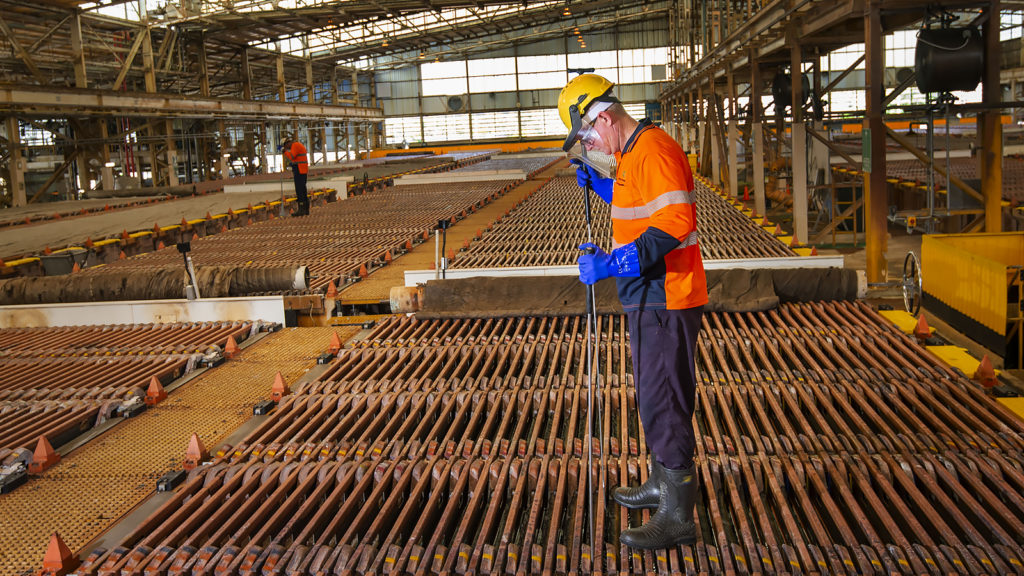
The Townsville refinery produces up to 300,000 tonnes of copper cathode a year. Credit: Glencore
Glencore expects strong demand from investors seeking exposure to trend toward electrification when it lists in Australia next week, CEO Gary Nagle said on Friday, adding that a deeper local presence may yield business opportunities although it has no set buyout list.
The London-listed miner and trader has seen “very strong” interest from potential investors as well as existing ones limited by overseas mandate restrictions, Nagle told reporters ahead of its October 14 secondary listing on the Australian Securities Exchange.
Nagle has said he believes the $88 billion company can achieve inclusion in Australia’s benchmark S&P/ASX 200 index within 12 months, but analysts see momentum behind the stock potentially propelling it into the top indexes in half that time.
Glencore’s exposure to copper, a key material in the shift to electrification, makes it particularly attractive to investors. Analysts estimate that copper could account for 50% of Glencore’s earnings in 2030 if its assets are developed on time, up from around 30% currently.
It is also among the world’s top thermal coal producers, which in previous years may have hindered uptake due to mandate restrictions, but Nagle said investors’ views have changed.
“The idea that thermal coal is going to disappear overnight seems to be a fallacy and everyone seems to recognise that,” Nagle said, adding that recent energy crises have highlighted the importance of diverse energy supply.
“The world is energy short: it needs power, it needs electricity and it needs to be able to conduct that electricity,” he said.
“So copper is good, and all sources of electricity production are good, including thermal coal.”
Glencore also offers Australian investors commodity trading exposure, in becoming only ASX-listed company that has a metals and energy trading business, which is another draw, Nagle said.
That business has helped Glencore blow past profit expectations. It said last week it expects its 2026 marketing-adjusted operating profit to exceed $5 billion, well above its earlier long-term guidance range of $2.3 billion to $3.5 billion. The company’s earnings from commodity trading have leaped as conflict in the Middle East creates constraints across global energy markets.
As a way to mitigate rising geopolitical risks, commodity trading was one of the appeals of Glencore’s business for Rio Tinto (ASX: RIO) CEO Simon Trott, when the companies discussed a potential $240 billion tie-up earlier this year, which Rio Tinto ultimately rebuffed.
Analysts and investors speculated that Glencore’s decision to list in Australia could acclimatise investors who had not seen value in a deal for another approach.
“The decision to list here had nothing to do with any sort of M&A activity or ideas that we have around deals,” Nagle said. “Of course, if having a listed security here provides any additional optionality, it’s certainly of benefit.”
(Reporting by Melanie Burton; Editing by Kevin Buckland)
US agency to do more equity investing in Africa, official says
The US International Development Finance Corp plans to increase direct equity investments, including in Africa and the critical minerals sector, the agency’s Africa head said, as the US steps up efforts to counter China’s dominance of key supply chains.
Critical minerals have become a focal point of global competition, with the US and other major economies seeking to secure supply chains for electric vehicles and renewable energy, while reducing dependence on China.
The DFC, the US government’s main investment arm, said in September it would invest up to $155 million in African digital infrastructure provider WIOCC, its largest ever equity commitment.
DFC Regional Managing Director for Africa Vibhuti Jain told Reuters that, where strategically significant, “you will see us deploy equity in addition to or in place of other instruments”.
“There are a number of projects in our equity pipeline right now, including in Africa, (and) including in the critical minerals sector,” said Jain, without providing details.
She said the DFC would continue to provide more debt financing, credit guarantees and political risk insurance than equity investments for the foreseeable future.
“But I think as the agency continues to grow, we will do more equity investments,” she added.
Attention on critical minerals sector
Jain said the DFC has more than $14 billion of investment commitments across Africa and that critical minerals projects, or projects linked to the sector, are a major driver of new investments.
More than $3 billion of those commitments are in critical minerals, the DFC said.
“So really, this is a sector to which we’re paying close attention,” Jain said.
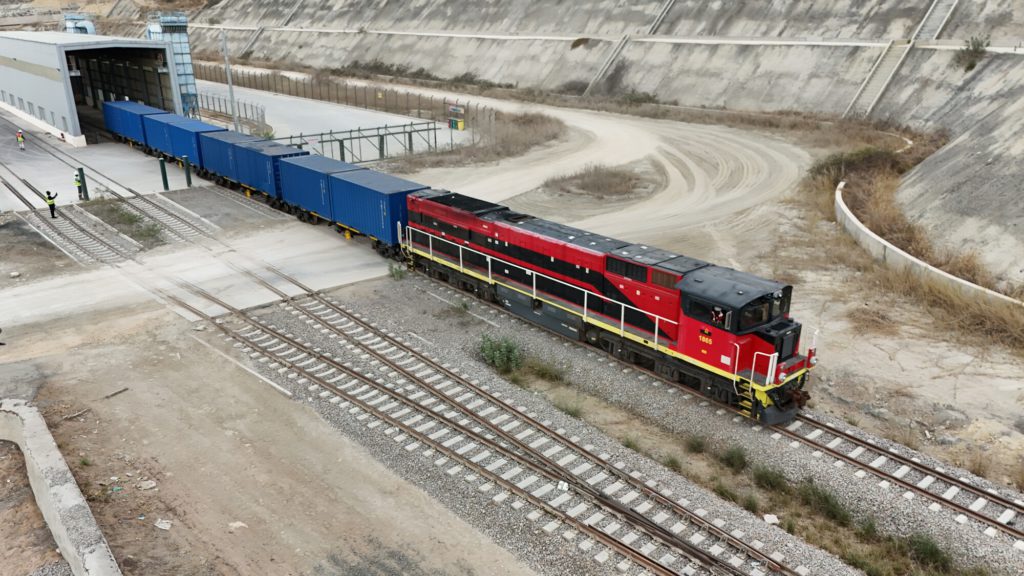
In addition to financing a pipeline of African critical minerals projects, including rare earths developments and a graphite mine in Mozambique, the DFC is backing the rehabilitation of the Lobito minerals transport corridor linking African copper and cobalt mines to the Atlantic coast.
(Reporting by Olivia Kumwenda-Mtambo. Editing by Mark Potter)
Zambia says it is negotiating US minerals deal after ‘decoupling’ from health pact
Zambia is negotiating a critical minerals deal with the US government after “decoupling” it from a separate health funding agreement it signed on Thursday, its foreign minister said.
“There was this (Memorandum of Understanding) on health and another on critical minerals, and we were saying that these need to be decoupled, and this has been done,” Mulambo Haimbe said at a signing ceremony for the health pact, which will see the US provide $1.5 billion in funding.
Asked for more details about the minerals deal, the minister said it was “still being negotiated” but declined to elaborate.
Zambia had resisted an agreement with the United States that would directly link funding for its health sector with allowing greater US access to minerals.
The minister did not specify which minerals Zambia is considering granting the US access to.
The Southern African country is the second-largest copper producer in Sub-Saharan Africa after the Democratic Republic of Congo.
(Reporting by Chris Mfula; Additional reporting by Anathi Madubela in Johannesburg; Writing by Sfundo Parakozov; Editing by Alexander Winning)
Ghana to replace draft mining bill with revised version, sources say
Kwame Nkrumah Memorial Park, Accra, Ghana. Stock image.
Ghana is expected to replace a draft mining bill before Parliament with a revised version that restores a maximum 20-year mining lease term and clarifies provisions that have raised concerns among miners, three people familiar with the matter said.
Reuters reported last month that the Minerals and Mining Bill, 2026, published by Parliament would limit new mining leases to 15 years, or the projected life of the mine, whichever is shorter, compared with up to 30 years under current law. It would also give the minister power to require mining companies to issue the state a special share.
Two senior government officials and a mining executive told Reuters that a revised bill is expected to replace the lease provision with a maximum 20-year term, in line with a policy position outlined by the mines minister in July.
“There was a mistake with the document that eventually went to Parliament and that will be corrected,” a mines ministry official said, speaking on condition of anonymity because he was not authorised to comment publicly. The sources did not say when the revised bill would be reintroduced.
The expected changes follow concerns raised by industry. The Ghana Chamber of Mines said on Thursday that the minister’s power to require a mining company to issue the state a special share already exists under the Minerals and Mining Act, 2006, and is largely being carried over into the draft bill, albeit with tougher penalties for non-compliance.
Ken Ashigbey, chief executive of the chamber, said discussions with the authorities had produced “good compromise positions,” including the proposed 20-year lease term. He said the remaining issues would be taken up with Parliament.
The mines ministry and the Minerals Commission did not immediately respond to requests for comment.
(Reporting by Christian Akorlie and Maxwell Akalaare Adombila. Editing by Mark Potter)
Au
Banks head for $5 billion gold trading windfall in record year
Precious metals traders at the world’s top banks made record profits in the first half of this year, putting them on track for their best-ever annual result as surging investor interest and sharp price swings generate huge opportunities for dealers.
Top player JPMorgan Chase & Co. earned about $700 million from trading and handling gold, silver and other precious metals in the first half of 2026, people familiar with the matter said, asking not to be identified discussing private information. The bank had its highest full-year gain from the business in 2020, making just over $1 billion.
Several other major banks have also made hundreds of millions of dollars from precious metals trading, other people said, bringing renewed competition to a market that’s long been dominated by JPMorgan. The desk at Deutsche Bank AG — which has made a high-profile push back into bullion trading — has brought in more than $200 million so far this year, according to a person familiar with its performance.
Globally, banks are set to make approximately $5 billion from the business this year, the most on record in a series compiled by financial services analytics provider Crisil Coalition Greenwich.
Energy and metals have become a major driver of earnings at Wall Street firms including Goldman Sachs Group Inc, Bank of America Corp. and Morgan Stanley as trading desks are able to profit from price swings and dislocations caused by global conflicts and trade tensions. Precious metals have been especially lucrative, with a frenzy of speculative buying sending gold and silver prices to all-time highs earlier this year.
Financial instruments such as short-dated options and leveraged exchange-traded funds surged in popularity during the rally, with investors seeking high-octane ways to boost returns. Trading desks also made huge profits flying bars around the globe, capitalizing on pricing disconnects that have emerged between global trading hubs.
“Most people I’ve spoken to here had a very good year, a record year” said Greg Frith, senior precious metals trader at Centalion Group, the global trading house previously known as Gunvor, during a panel discussion at the London Bullion Market Association conference in Italy this week.
To capitalize on the growing opportunities in the market, several banks are also looking to join the small group of firms providing the vaulting and clearing services that underpin the gold market in London, the world’s biggest bullion-trading center, people familiar with the matter said. Citigroup Inc. became the first new entrant in a decade earlier this year, joining JPMorgan, UBS Group AG, HSBC Holdings Plc and ICBC Standard Bank Plc.
Deutsche Bank is also seeking to join, according to people familiar with the matter, as is Morgan Stanley, Bloomberg has previously reported.
Spokespeople for JPMorgan and Deutsche Bank declined to comment.
Banks’ global revenue from precious metals trading had already reached an all-time high last year, and the gains have continued to climb, “supported by elevated volatility and strong investor participation across both gold and silver markets,” said Angad Chhatwal, head of fixed income, currencies and commodities at Coalition.
January was especially profitable for precious metals trading desks, as speculators around the world piled into gold and silver, propelling them to unprecedented levels. Prices have since eased, as the outbreak of war in the Middle East sent energy prices spiraling higher, and revived expectations for monetary tightening. But spot gold and silver remain at more than double their levels at the start of 2024.
To be sure, dramatic price dislocations and heightened volatility can cut both ways, creating the potential for greater losses when banks are caught on the wrong side of a trade.
At the LBMA’s gathering in Italy, the general mood among traders, refiners and executives was upbeat, following multiple years of double-digit price gains and a surge of interest in their markets. There’s also reason for caution though.
“It’s been a record year for us, and lots of other traders,” Centalion’s Frith said. “But it’s no time to be complacent because, you know, if you’re caught napping on the job, it’s all gone in a flash.”
(By Jack Ryan, Jack Farchy and Yihui Xie)
Ethiopia launches its first gold refinery, Prime Minister says
Ethiopia has launched its first gold refinery, a $50 million joint venture aimed at turning the East African nation into a regional processing hub for precious metals, Prime Minister Abiy Ahmed said over the weekend.
Gold exports are one of Ethiopia’s main sources of foreign exchange, earning the country $5.6 billion last year, according to government data.
Abiy said the new refinery would process gold from Ethiopia and elsewhere.
“It enables neighbouring countries and regional mining companies to bring their gold to Ethiopia for advanced refining, certification, value addition, and sale, eliminating the need to export it outside the continent,” Abiy Ahmed said in a post on social media platform X on Saturday.
The refinery will provide services including melting, testing, refining, casting, bar minting and die-making.
The initial investment in the refinery is $50 million, with state-owned Ethiopian Investment Holdings taking a majority stake, Abiy said.
(Reporting by Dawit Endeshaw; Editing by George Obulutsa, Kirsten Donovan)
SigraFi raises $35M to connect artisanal gold to institutional markets
Artisanal gold miners in the Democratic Republic of Congo. (Image by Robert Carruba, Deutsche Gesellschaft für internationale Zusammenarbeit (GIZ) GmbH – The Extractive Industries Transparency Initiative (EITI), Flickr.)
UK-headquartered gold offtake company SigraFi said Thursday it has secured a $35 million credit facility to finance gold supply.
The facility is provided by a consortium of British and UAE investors led by UAE-based Ronin Commercial Brokers LLC and provides SigraFi with the capital to expand current operations with its contracted suppliers in the DRC, Zambia and South America, and to contract new cooperatives and aggregators.
SigraFi purchases gold under multi-year contracts from organised artisanal and small-scale gold mining (ASGM) cooperatives and is partnered with PeaceGold in the eastern DRC, working with 11 cooperatives representing 25,000 miners in Ituri Province.
PeaceGold was established in 2013 with the local nonprofit Conflict Resolution Center to help formalize artisanal mining and reintegrate former combatants into regulated work, including gold mining, as a way to reduce conflict.
Under the agreement, PeaceGold acts as an aggregator and export partner for its participating cooperatives, while SigraFi provides guaranteed offtake agreements at competitive pricing, giving cooperatives a greater share of the value of their gold.
The golden gap
Global mined gold production is likely to plateau over the next few years, according to the World Gold Council, while ASGM already accounts for at least 20% of newly mined gold. Its organised producers are held back by a lack of compliance capability and remain cut off from the capital, export corridors and offtakers that serve the rest of the industry. SigraFi was founded to help close this ‘Golden Gap’, it said.
“Artisanal miners produce one in every five ounces of new gold, yet most are shut out of the formal market, without the capital, compliance support or buyers that the rest of the industry takes for granted,” SigraFi executive chairman Stefan Allesch-Taylor said in a news release.
“That leaves the door open to illicit buyers and exploitative practices. This facility empowers cooperatives that have done the hard work of organising, and gives them a direct, traceable route to the world gold market,” Allesch-Taylor said. “We have moved fast because the demand is there on both sides: cooperatives want a legitimate route to market, and refiners want traceable supply.”
Coal’s revival is creating divisions in Canada’s energy heartland
Grassy Mountain is on the site of an old mine that closed about 50 years ago. (Image courtesy of Northback Holdings.)
At the top of Grassy Mountain, some 6,700 feet above sea level, seams of coal are baked into the mountainside, visible through mining in this stretch of the Rocky Mountains in southwestern Alberta from the early to mid-1900s. This and other former mines dot the picturesque mountain towns on the eastern side of the continental divide, the industry having moved out of the region decades ago after plummeting prices and demand made mining here unprofitable.
But Grassy still has more coal to give — much more. It’s now the center of a yearslong battle pitting nearby towns’ economic interests against environmental worries from downstream communities and ranchers. And this time, it’s being driven not by demand to heat homes in Canada, but to feed steelmakers in China, Japan, South Korea, India and other Asian countries.
Nearly 60 years after this site closed, locals are once again pinning their hopes for an economic revival on this windswept mountainside. Northback Holdings Corp., a division of Australian billionaire Gina Rinehart’s Hancock Prospecting Pty., is working to reopen the former mine.
This is Hancock’s second attempt after an earlier application was rejected by a joint federal and provincial review panel in 2021 over concerns about the impact on the nearby water ecosystem. Northback Chief Executive Officer Brad Johnston believes the company can address the deficiencies in its first application and go further in restoring the mountain, including much of the unreclaimed former mine site.
Hancock has spent more than a decade and over C$150 million ($105 million) on a project that faces stiff opposition and is still at least four years from opening. It’s promising to scale back its original plans by around 40% to produce 2.5 million metric tons a year instead of 4 million, boost reclamation efforts during the course of mining, build a water treatment plant and stick around for years after production ceases.
The company is persistent because its forecasts show an undersupply in the global market within the next decade and pricing levels far beyond what it costs to extract the coal.
The proposal and others like it have struck a nerve in Alberta, a region traditionally friendly toward resource development, both in terms of public support and government policy. Country music star Corb Lund led a petition campaign this year to stop coal mining in the eastern slopes of the Rockies, attempting to force a provincial vote on the issue this month, unsuccessfully. A recent survey found a majority of the public would have supported his position in a referendum.
The fight over the project also reveals a little-known fact about Canadian coal. Within the country, it has been on a long decline, as governments moved to reduce coal used for power production. But at the country’s western ports, coal is still king of commodity volumes. About 39.9 million metric tons were exported from Vancouver last year, compared to 30 million tons of petroleum products.
While the province of British Columbia now accounts for the majority of coal production, Alberta has seen a number of proposals in recent years and the province recently approved an expansion of the Vista Coal Mine in Hinton, near Jasper National Park, that will make it the largest thermal coal mine in North America.
About 70% of the world’s steel supply depends on metallurgical coal and Canada is the fifth-largest global supplier, accounting for roughly C$9 billion in exports.
Northback isn’t the only such new proposal in the Rockies. Northwest of Calgary, Valory Resources Inc. is pitching Blackstone, an underground metallurgical mine in Clearwater County, and another one called Mine 14 near the town of Grande Cache.
In BC, Conuma Resources Ltd. reopened a mine near Tumbler Ridge in 2024 and a sister project was included in the province’s recent deal book marketed to global investors. Glencore Plc is also seeking to expand its Fording River site to maintain the mine’s 10 million metric tons of annual production.
Johnston, who took over as Northback’s CEO in July, says any coal mined at Grassy Mountain will all be for export off the west coast of Canada, largely out of the ports of Vancouver and Prince Rupert. The company’s projections, he says, show it can be profitable over the course of its projected 25-year lifespan due to strong Asian demand for steel-making coal, listing Japan, South Korea, Vietnam, Malaysia and India as possible customers.
The type of coal here is also high-quality enough for European steel producers. “The world wants this coal, it needs it,” he says.
The proposal would be a major employer for the five historic mining communities near Grassy Mountain. He cites the roughly 400 full-time jobs needed to operate it and the C$2.2 billion ($1.5 billion) in government revenue the mine will generate over its lifetime, according to a report prepared for the company by EY.
The company has already been sponsoring local organizations and has hired locals for its preparatory work, including a First Nations security contractor. Johnston says he is aiming to file another application in the coming months, with a potential target of opening in late 2030 if it receives regulatory approval.
He acknowledges the company’s first application did not sufficiently deal with concerns over its environmental impact. A joint federal-provincial review panel found the project was “not in the public interest” and would harm the nearby population of westslope cutthroat trout. He believes their new proposal is improved enough to meet regulatory hurdles, but knows there’s widespread opposition to coal.
“There are some people that are opposed to what we do, no matter how well we do it, or whatever systems of controls we propose to put into place,” he says. The company is always willing to answer questions about environmental management, he says, and local support “doesn’t come unconditionally, and their expectation is that we’re going to provide jobs and economic benefit, but we’re going to do so in an environmentally responsible way.
There’s been more public backing in Canada for energy projects since US President Donald Trump’s administration began pressuring the country on trade, says Heather Exner-Pirot, director of energy, natural resources and environment at the Macdonald-Laurier Institute. That attention has largely been around oil and gas, and hasn’t necessarily translated to coal.
“I think most people, even in Canada, don’t appreciate that metallurgical coal is our biggest export by volume out of the Port of Vancouver and the Port of Prince Rupert, and that by revenue, after gold, it’s usually our top-producing mineral product,” she says.
She points out the towns closest to the proposed mine are largely in favor and people further away are opposed. In Crowsnest Pass, the municipality nearest Grassy Mountain, more than 70% voted to support the mine in a 2024 plebiscite. But municipal councils downstream, including in Lethbridge, Alberta’s fourth-largest city, have been staunchly opposed.
While Prime Minister Mark Carney’s federal government has been encouraging “nation building” projects to spur economic activity and build stronger interprovincial connections, the coal in western Canada won’t be going to the steel factories of southern Ontario and Quebec. The cost to ship by rail across the country makes it too expensive for the steel factories to use.
Instead, demand is driven by Asian countries and interest in Canada as a conscientious steward in producing coal. “If you are a Japan or a Korea, you may be willing actually to pay a premium for that better environmentally and socially responsible product,” Exner-Pirot says.
Source: Bloomberg News.
Steel is “ubiquitous” in products ranging from batteries to large-scale energy infrastructure, said Ian Lange, a professor at the Colorado School of Mines. Demand for steel and therefore metallurgical coal can be a proxy for economic activity around the world. Alberta is one of the most attractive places for natural resource extraction given its friendly regulatory environment and ease of getting to Pacific ports, he says, and miners have been making greater efforts to ensure environmental protection.
But he says “it’s really hard to say with certainty that this won’t be a problem 30, 40 years down the line.”
The environmental pushback to increased mining in the Rockies can point to substantial levies against operators in recent years. Coal mines in BC faced C$60 million in federal fines in 2021 for water contamination breaches, and another C$16 million in fines from the province in 2023. And as recently as this past July, Glencore-owned Elk Valley Operations Ltd. was fined an additional C$269,000 as part of a larger C$3.6 million ruling over delaying construction of water treatment facilities and 171 water quality breaches related to selenium.
Concerns over water quality extend south of the border. A 2024 study from the US Geological Survey found evidence of selenium pollution as far as 350 miles away from Elk Valley’s mine along the Columbia River and contamination in other cross-border waterways.
Lund is a fourth-generation Albertan, his family settling in the early 1900s on ranch land they still own near the Montana border. He spearheaded a petition to have a referendum on banning some new coal mining that garnered more than 170,000 signatures earlier this year, though the question did not get put on the ballot for voting day on Oct. 19.
He says he was drawn into the issue after rancher friends of his worried about the potential impacts on downstream water from selenium and other contamination. The amount of water used and the air quality are other concerns.
“As far as I can tell, it’s a bad deal and it’s going to ruin our water and our ranch land, and there’s nothing in it for Albertans,” he said. “And I think it’s a foreign billionaire coming here to take our coal and make all the money and leave us with the mess.”
His family’s land isn’t threatened by the mine reopening, but his residence in Lethbridge is served by the watershed from around Grassy Mountain. He says he’s seen the issue resonate across political lines in the largely conservative, pro-resource development province. Many Albertans view the Rocky Mountains as “the soul of the province, and that includes a good chunk of the conservative base who are hunters and fishermen and ranchers and irrigating farmers,” Lund says. “So it’s not just a left-right issue. It’s very close to a lot of people’s hearts here.”
He’s “been in this fight for almost seven years now, and we’ve outlasted two premiers” as well as “multiple CEOs from the coal companies” and they will do everything they can to stop new mining in the nearby Rockies.
Lucas Michalsky, a cattle rancher about 20 minutes east of Grassy Mountain, has a different take on the mine’s impact. “We are the forgotten corner of Alberta,” says Michalsky, whose family worked in nearby coal mines after moving from Poland in the early 1900s.
The Grassy Mountain proposal has already brought more hope to local residents about the prospect of higher-quality jobs. “Northback has put in tens of millions of dollars,” into the area, he says. “All the people that are against coal haven’t put a dime into our community.”
Some local residents work in Glencore’s coal mines across the BC border, or see their children move to work in northern Alberta’s oil sands. The draw for Michalsky is seeing his kids close to home where they might “have a job as a millwright or a welder or an electrician at Northback, and come home every night so they can run cattle.”
He believes the environmental impact is overstated by opponents, who are largely not from the immediate towns that will benefit from the mine. “This is a blue-collar community. It always has been. And we’ve lost our logging. We’ve lost our oil and gas. Mining is the only thing we have left, because we never really had much of the first two.”
(By Iain Boekhoff, Michael McKee and Arielle Schwartz)
Hertha Metals breaks ground on $100M US plant for magnet-grade iron
Hertha Metals announced Monday it has broken ground on Hertha Chalyx, its first commercial plant in Conroe, Texas, designed to produce about 10,000 metric tons a year of steel-grade and magnet-grade high-purity iron combined.
Built next to Hertha’s Pi100 pilot plant, Chalyx forms the first modern iron and steel innovation complex in the US, where the company said it will develop and scale its process for making primary iron and steel.
The plant will run on domestic iron ore, primarily from Minnesota’s Iron Range, and Texas natural gas, the company said.
The roughly $100 million plant is funded by Hertha’s $133.65 million Series A, which included a $65 million equity investment from the US government.
“This investment today in Hertha Metals shows what economic defense looks like in practice: moving early against a strategic choke point, crowding in private capital, safeguarding our taxpayer resources through a disciplined equity structure and building domestic capacity before supply chain disruption becomes a crisis,” Jennifer Jett, Chief of Staff to the Under Secretary of War, Economic Defense Unit said in a statement.
The Houston- based startup is aiming to fill a critical gap in the US rare earth magnet supply chain as new domestic sourcing requirements approach and policymakers seek to reduce reliance on China for strategic materials.
The company is developing what it calls FLEXHERS, short for flexible fuel hydrogen electric reduction smelting, a process that combines electric arc furnace technology with natural gas or hydrogen to produce iron and steel.
Chalyx’s first priority is high-purity iron for U.S. rare earth magnet manufacturers. NdFeB magnets are about 70% high-purity iron by weight and go into electric vehicles, wind turbines, data centers, robotics and defense systems. An estimated 94% of the high-purity iron for those magnets is made in China.
In August, Hertha reached 99.95% purity at Pi100, the specification top magnet manufacturers require, and is in active supplier qualification with major U.S. rare earth magnet producers.
“Over the last two years, our team has worked relentlessly to prove the promise of our technology through production,” CEO Laureen Meroueh said in a news release. “
“With Chalyx, we take the next step: proving the business and demonstrating that our technology can deliver commercially. We’re starting with high-purity iron to fill a critical gap in the domestic rare earth magnet supply chain,” Meroueh said. “Successful commercial operations here will lay the foundation for our first 500,000-ton-per-year steel mill.”
Chalyx is expected to come online in late 2027, with magnet-grade high-purity iron production beginning in early 2028.
Governments turn mining data into billions in revenue
The Porgera gold mine is located in the Enga Province of Papua New Guinea. (Image courtesy of Porgera Joint Venture.)
Mining transparency rules are increasingly translating into billions of dollars in protected public revenue, tougher scrutiny of licences and renegotiated resource deals as governments compete for a greater share of mineral wealth, according to a new global review.
The Extractive Industries Transparency Initiative (EITI) said its reporting framework covers 56 countries and about 3,900 entities. Governments have disclosed $3.6 trillion in extractive-sector revenue through the initiative since its establishment in 2003.
The findings show transparency moving beyond the publication of mining payments and into decisions over ownership, licensing, taxation and major project agreements. EITI data has helped governments flag suspect licence applications, scrutinize potentially undervalued transactions and forecast revenue from major mining developments.
The shift is gaining importance as competition for copper, lithium, nickel and other critical minerals accelerates. Resource-rich governments face the challenge of attracting investment while capturing sufficient public revenue and ensuring communities share in the benefits, making access to reliable project and ownership data increasingly important to negotiations and oversight.
Revenue leverage
Some of the clearest financial effects cited by EITI come from Africa, where governments have used disclosed data and financial modelling to reassess major mining agreements.
In the Democratic Republic of Congo, an EITI-commissioned study identified deviations from the original Sicomines copper-cobalt agreement, including unfulfilled infrastructure commitments and changes in profit allocation.
The DRC expanded that approach in 2025. Fiscal modelling of four large copper-cobalt projects identified billions of dollars in potential revenue risks, prompting authorities to extend project-level modelling to operations representing about 80% of mining fiscal revenue.
Ghana used similar analysis after proposing in 2020 to sell a 49% interest in Agyapa Royalties, backed by future gold royalties, for an estimated $500 million to $750 million. An EITI-commissioned model using production and royalty data valued the shares at as much as roughly $1.5 billion.
The transaction was suspended in 2021. Subsequent analysis estimated Ghana preserved $270 million to $300 million as gold prices climbed.
In Guinea, modelling of the giant Simandou iron ore project estimates it could generate $850 million to $1.7 billion in annual government revenue before 2035, giving policymakers a basis for managing the expected windfall.
Transparency has also influenced how mining wealth is divided. EITI reporting on Papua New Guinea’s Porgera gold mine informed negotiations that increased the government and landowners’ interest in the project to 51% from 15%.
Research cited by EITI suggests the effects could extend beyond individual projects.
A 2026 study covering 83 developing countries found EITI implementation increased natural-resource revenue, with significant benefits persisting for as long as a decade after countries joined. Separate research linked participation to stronger foreign direct investment, particularly in countries that started with relatively low transparency.
Mining scrutiny
Ownership and trade disclosures are also exposing potential losses and governance risks before mineral wealth reaches government coffers.
Cameroon reported just 22.3 kg of gold exports in 2023, while the United Arab Emirates recorded imports of more than 15 tonnes from the country that year. The discrepancy prompted enforcement measures and a presidential investigation into gold trafficking.
A separate study estimated Burkina Faso lost $4.9 billion through illicit mining-related financial flows between 2012 and 2021.
Beneficial-ownership records are increasingly influencing mining licence decisions. Armenia rejected a geological exploration application after authorities cross-checked ownership information and found unreliable disclosures. Ghana declined to renew a mining licence after analysis identified beneficial owners with criminal records in Australia, while Colombia has incorporated ownership checks into mining licensing due diligence.
The transparency push is extending into critical-minerals policy. Chile’s strategy identifies EITI as a framework for disclosure across the mining value chain. With Chile participating, more than half of global copper production and nearly one-third of lithium output fall within the scope of EITI reporting, according to the organization.
But greater disclosure does not necessarily produce better governance. A 2025 study covering 50 countries found EITI membership significantly increased transparency without delivering a measurable improvement in perceptions of corruption, underscoring the importance of political commitment, enforcement capacity and institutions willing to act on the information disclosed.
EITI also acknowledged that evidence of its broader impact remains uneven and that reforms generally cannot be attributed to transparency requirements alone. Its next test is whether increasingly accessible mining data consistently translates into government action as the global scramble for critical minerals raises the financial stakes for producing countries.
Li
EnergyX inks 10-year, $2B lithium offtake deal with Trafigura
Energy Exploration Technologies (EnergyX) announced Monday it has signed a binding, definitive lithium offtake agreement with global commodities trading giant Trafigura, for the purchase of 100,000 metric tons of battery-grade lithium products over a 10-year term.
Based on current market prices of approximately $20,000 per metric ton, the agreement represents more than $2 billion in revenue for EnergyX over its term, the company said.
The deal covers lithium products from both of EnergyX’s first two flagship projects with lithium carbonate supplied from Black Giant in Chile and lithium hydroxide from project Lonestar in Hooks, Texas.
In March, EnergyX commissioned Lonestar, a demonstration plant capable of producing 250 metric tons per year of lithium carbonate equivalent (LCE), located in the Smackover formation — a lithium-rich brine resource that stretches from Florida to Texas— and the plant is the first DLE facility in the state to process locally sourced brine.
The facility is designed to demonstrate improvements in extraction efficiency, recovery rates and cost competitiveness — key factors that have historically limited the viability of lithium refining outside China.
Currently, China dominates an estimated 70–75% of global lithium chemical conversion capacity, creating a major bottleneck in the global battery supply chain. This concentration has left the US reliant on foreign processing.
In July, EnergyX secured a $225 million investment from Italian energy company Eni SpA for a minority stake in the Black Giant lithium project in Chile’s Antofagasta region. Black Giant has planned capacity to produce up to 52,500 metric tons of lithium carbonate per year across the first two phases. The company also received a $690 million Letter of Intent from the U.S. EXIM Bank to provide debt financing for the project.
A significant share of the lithium offtake will be directed to the US battery supply chain, CEO Teague Egan told MINING.COM in a call.
“Lonestar has been operating longer than Black Giant, however there’s been more engineering done towards a commercial plant at Black Giant, and has been funded by the EMI investments.”
“Target commercial Phase 1 production for Black Giant is 2028, where Lonestar is 2029,” Egan said.
“Offtake agreements are among the most important steps in taking a lithium project from development to production,” Egan said in Monday’s release.
“A long-term purchase commitment from a counterparty of Trafigura’s scale and credit quality shows that the market wants EnergyX’s product. It also gives lenders and investors the revenue visibility they need before committing capital to commercial construction.”
Production will be powered by its proprietary GET-Lit direct lithium DLE refining technology platform, which is covered by more than 150 patents.
“We are pleased to support EnergyX as it develops its lithium projects in Chile and the US. Long-term offtake is an important step in moving projects into production, and this agreement reflects our ability to help bring strategic critical minerals projects online and build secure, diversified supply chains,” Daniel von Arx, Head of Battery Metals at Trafigura, said in Monday’s release.
“Drawing on our logistics network and market expertise, we look forward to supplying these battery-grade lithium products to customers, supporting supply chains for the US automotive and energy storage industries.”
Zimbabwe says no justification to delay lithium export ban
The Arcadia lithium mine in Zimbabwe, which began production in 2023. (Image courtesy of Huayou Cobalt.)
Zimbabwe said there’s no reason to delay a ban on exports of lithium concentrate that’s scheduled to come into effect in January.
The southern African nation halted shipments of lithium concentrate in February to promote domestic processing of higher value products and curb illegal shipments of the metal that’s used in the production of electric vehicle batteries. Zimbabwe relaxed the export restrictions in April and the ban is now due to be implemented at the start of 2027, though producers have asked for more time to prepare.
“Zimbabwe’s lithium producers have had ample time to prepare for the January 2027 beneficiation deadline,” Secretary for Information Nick Mangwana said Friday on his X account. “There is no justification for further extensions.”
Like other African countries, Zimbabwe is seeking to derive more value from its natural resources.
Zimbabwe’s supply outlook is being closely watched as it has become a major supplier of lithium feedstock following a surge of investment by Chinese companies. The southern African nation accounted for about 10% of global mined production last year, according to the US Geological Survey.
Chinese investors in Zimbabwe’s lithium sector include local units of Sinomine Resource Group Co., Chengxin Lithium Group Co. and Sichuan Yahua Industrial Group Co. Sinomine and Yahua are building facilities capable of making lithium sulfate, an intermediate material used to make battery-grade chemicals, while Huayou already commissioned its own plant.