Trump's last resort: Inside his four-part plan to topple American democracy


March 19, 2026
ALTERNET
Many of you are justifiably worried that Trump will interfere in the midterm elections. He’s worried he’ll lose Congress: His polls continue to plummet. The economy is worse than ever. Prices are rising. Few new jobs are being created. And his war in Iran is going badly.
We also know he has no qualms about trying to overturn elections. He’s tried before. In February, he stated he would only respect the results of the 2026 midterms “if the elections are honest” — echoing his dangerous threat from 2020. He’s also kicked off a redistricting war and called for elections to be “nationalized.”
He continues to make the baseless claim that noncitizens are voting in our elections, but multiple investigations and fact-checks by election officials from both parties have repeatedly confirmed it is exceedingly rare.
Hence, it’s important now — eight months before the midterms — to “harden” our election systems and be vigilant against what he’s likely to do.
So today I’d like your thoughts on what he’s most likely to do and where the biggest threats lie.
I’m most concerned about Trump interfering in one of these ways:
1. Enacting a federal law requiring proof of citizenship (birth certificate or passport) and an exactly matching current photo ID, in person, to vote.
These requirements are in the SAVE America Act, which the House passed last month and is now under consideration in the Senate. It would disqualify an estimated 21 million people from voting, most of them Democrats, because they can’t afford the cost or hassle of finding their birth certificates — including married women who have changed their names.
The act also threatens election officials with imprisonment if they fail to uphold the bill’s strict voter documentation requirements, and it makes it harder to cast mail-in ballots (throwing into chaos eight states where vote-by-mail is currently the primary method of voting).
The act is a risk, to be sure, but Trump can’t get this measure through the Senate, because Democrats are sure to filibuster it. The only way it has a prayer is if almost every Senate Republican voted to abolish the filibuster. But this is doubtful because some Senate Republicans fear that without the filibuster, Democrats would be able to pass laws that Republicans abhor when Dems are next in the majority.
2. Stationing ICE and Border Patrol agents at polling places.
Some worry that Immigration and Customs Enforcement and Border Patrol agents will be deployed at polling locations during the midterm elections. The intent would obviously be to intimidate voters, especially in immigrant communities and communities of color, and create fear at the ballot box.
This is also a risk, but (for what it’s worth) the Department of Homeland Security says it won’t happen. Heather Honey, who serves as deputy assistant secretary for election integrity at DHS, told a group of secretaries of state that “any suggestion that ICE will be present at any polling location is simply not true.”
Meanwhile, measures to restrict federal agents from operating at or near election-related locations have been introduced in more than half a dozen states. Plus, a federal law dating to the end of the Civil War already bans sending the military or other “armed men” to polling places, except to repel armed enemies of the United States. Finally, the U.S. Constitution also gives states — not the president or federal government — the responsibility for running elections.
3. Seizing ballots and voting machines.
Tulsi Gabbard, director of national intelligence, has been working for months on an investigation into foreign election interference in U.S. voting machines, which could become a pretext for the regime’s seizing them to protect “national security.” Gabbard and the FBI induced Puerto Rico to turn over some of its voting machines and software images for analysis last year.
Gabbard was also on hand on January 28 in Fulton County, Georgia, when the FBI — acting on a search warrant that relied on debunked claims about the 2020 race — seized hundreds of boxes of ballots from a government warehouse. And the Department of Justice has issued lawsuits against dozens of states for copies of their voter rolls that include sensitive personal information.
It’s not hard to imagine the FBI or Justice Department trying to seize ballots while the 2026 midterm votes are being counted. Trump demanded as much in 2020, although his then attorney general rejected that as unlawful. Pam Bondi, the current attorney general, has shown herself willing to do whatever Trump asks, regardless of what the law says.
But the federal courts are unlikely to allow this. A president doesn’t have the authority to regulate elections, which the Constitution assigns to the states.
4. Getting pro-Trump forces to take over state and local voting systems.
Pro-Trump forces in swing states are trying to change election rules and take over local voting systems.
In recent months, Republicans in Michigan, Arizona, and North Carolina have sought changes in election rules that would hobble likely Democratic voters. They want to alter the places and times of voting to disadvantage Democrats, require high levels of proof of citizenship, and challenge the certifications of Democratic winners. Republicans in more than half of state legislatures have introduced legislation to restrict mail-in ballots.
But many of these initiatives have already been struck down by state and federal courts, and voting rights lawyers tell me that others will be challenged on First and 14th Amendment grounds.
Few state proposals to restrict mail-in ballots are under active consideration, presumably because Republicans worry that the restriction may hurt them as much if not more than Democrats. (Ditto for a bill now before Congress to ban mail-in ballots.)
Hence, today’s Office Hours question: Which is Trump’s most likely threat to the integrity of the midterm elections?
Robert Reich is a professor of public policy at Berkeley and former secretary of labor. His writings can be found at https://robertreich.substack.com/.
Many of you are justifiably worried that Trump will interfere in the midterm elections. He’s worried he’ll lose Congress: His polls continue to plummet. The economy is worse than ever. Prices are rising. Few new jobs are being created. And his war in Iran is going badly.
We also know he has no qualms about trying to overturn elections. He’s tried before. In February, he stated he would only respect the results of the 2026 midterms “if the elections are honest” — echoing his dangerous threat from 2020. He’s also kicked off a redistricting war and called for elections to be “nationalized.”
He continues to make the baseless claim that noncitizens are voting in our elections, but multiple investigations and fact-checks by election officials from both parties have repeatedly confirmed it is exceedingly rare.
Hence, it’s important now — eight months before the midterms — to “harden” our election systems and be vigilant against what he’s likely to do.
So today I’d like your thoughts on what he’s most likely to do and where the biggest threats lie.
I’m most concerned about Trump interfering in one of these ways:
1. Enacting a federal law requiring proof of citizenship (birth certificate or passport) and an exactly matching current photo ID, in person, to vote.
These requirements are in the SAVE America Act, which the House passed last month and is now under consideration in the Senate. It would disqualify an estimated 21 million people from voting, most of them Democrats, because they can’t afford the cost or hassle of finding their birth certificates — including married women who have changed their names.
The act also threatens election officials with imprisonment if they fail to uphold the bill’s strict voter documentation requirements, and it makes it harder to cast mail-in ballots (throwing into chaos eight states where vote-by-mail is currently the primary method of voting).
The act is a risk, to be sure, but Trump can’t get this measure through the Senate, because Democrats are sure to filibuster it. The only way it has a prayer is if almost every Senate Republican voted to abolish the filibuster. But this is doubtful because some Senate Republicans fear that without the filibuster, Democrats would be able to pass laws that Republicans abhor when Dems are next in the majority.
2. Stationing ICE and Border Patrol agents at polling places.
Some worry that Immigration and Customs Enforcement and Border Patrol agents will be deployed at polling locations during the midterm elections. The intent would obviously be to intimidate voters, especially in immigrant communities and communities of color, and create fear at the ballot box.
This is also a risk, but (for what it’s worth) the Department of Homeland Security says it won’t happen. Heather Honey, who serves as deputy assistant secretary for election integrity at DHS, told a group of secretaries of state that “any suggestion that ICE will be present at any polling location is simply not true.”
Meanwhile, measures to restrict federal agents from operating at or near election-related locations have been introduced in more than half a dozen states. Plus, a federal law dating to the end of the Civil War already bans sending the military or other “armed men” to polling places, except to repel armed enemies of the United States. Finally, the U.S. Constitution also gives states — not the president or federal government — the responsibility for running elections.
3. Seizing ballots and voting machines.
Tulsi Gabbard, director of national intelligence, has been working for months on an investigation into foreign election interference in U.S. voting machines, which could become a pretext for the regime’s seizing them to protect “national security.” Gabbard and the FBI induced Puerto Rico to turn over some of its voting machines and software images for analysis last year.
Gabbard was also on hand on January 28 in Fulton County, Georgia, when the FBI — acting on a search warrant that relied on debunked claims about the 2020 race — seized hundreds of boxes of ballots from a government warehouse. And the Department of Justice has issued lawsuits against dozens of states for copies of their voter rolls that include sensitive personal information.
It’s not hard to imagine the FBI or Justice Department trying to seize ballots while the 2026 midterm votes are being counted. Trump demanded as much in 2020, although his then attorney general rejected that as unlawful. Pam Bondi, the current attorney general, has shown herself willing to do whatever Trump asks, regardless of what the law says.
But the federal courts are unlikely to allow this. A president doesn’t have the authority to regulate elections, which the Constitution assigns to the states.
4. Getting pro-Trump forces to take over state and local voting systems.
Pro-Trump forces in swing states are trying to change election rules and take over local voting systems.
In recent months, Republicans in Michigan, Arizona, and North Carolina have sought changes in election rules that would hobble likely Democratic voters. They want to alter the places and times of voting to disadvantage Democrats, require high levels of proof of citizenship, and challenge the certifications of Democratic winners. Republicans in more than half of state legislatures have introduced legislation to restrict mail-in ballots.
But many of these initiatives have already been struck down by state and federal courts, and voting rights lawyers tell me that others will be challenged on First and 14th Amendment grounds.
Few state proposals to restrict mail-in ballots are under active consideration, presumably because Republicans worry that the restriction may hurt them as much if not more than Democrats. (Ditto for a bill now before Congress to ban mail-in ballots.)
Hence, today’s Office Hours question: Which is Trump’s most likely threat to the integrity of the midterm elections?
Robert Reich is a professor of public policy at Berkeley and former secretary of labor. His writings can be found at https://robertreich.substack.com/.
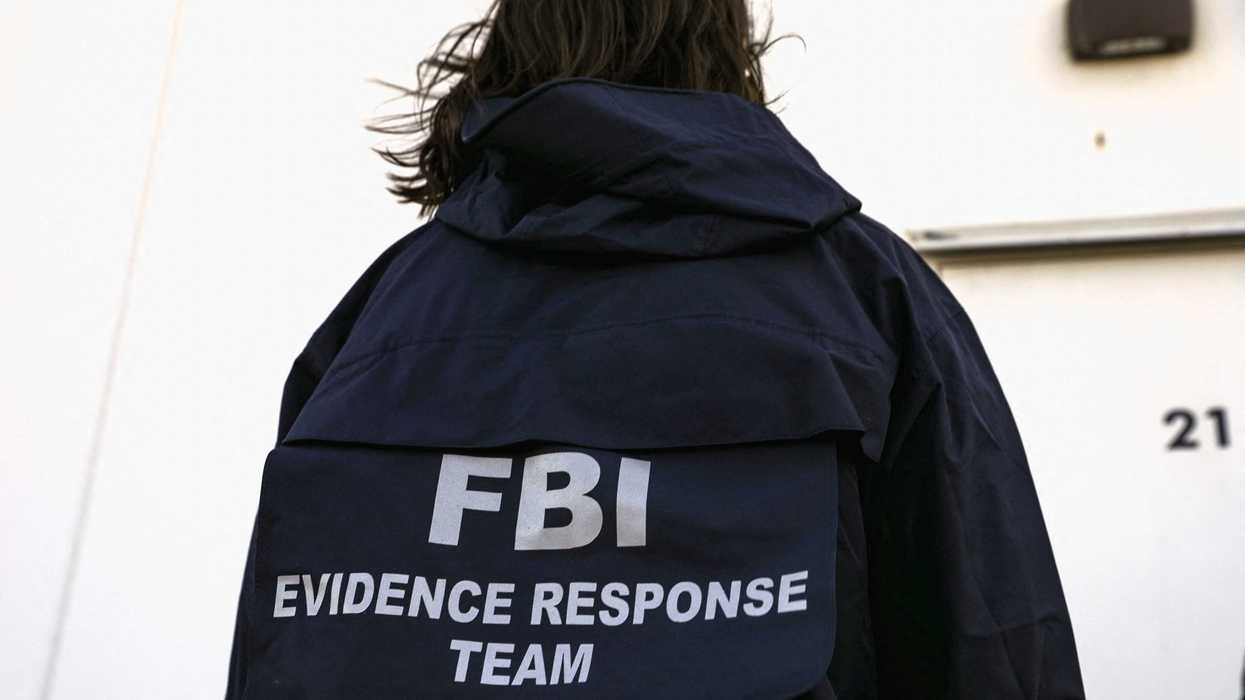
A member of the Federal Bureau of Investigation (FBI) Evidence Response Team prepares to enter the Fulton County Election Hub and Operation Center after the FBI executed a search warrant there in relation to the 2020 election, according to a law enforcement official familiar with the matter, in Union City, Georgia, U.S. January 28, 2026. REUTERS/Alyssa Pointer
ALTERNET
President Trump is trying to steal the 2026 midterm elections in real time, experts say. But his opponents have the power to stop him.
In a recent report for Vox, Eric Levitz broke down the various methods that Trump may use to rig the results in his favor. These include ordering the military to seize voting machines and ballots in key districts before they have been counted, then altering the results so that the House Republicans can reject enough Democrats on the grounds of their “qualifications” to retain control of that chamber.
Levitz also pointed to Trump’s recent baseless raid on Fulton County, Georgia voting machines, with Director of National Intelligence Tulsi Gabbard present, as proof that Trump is considering doing this while claiming to protect national security. Finally Levitz observed that Trump has talked about stationing ICE at polling stations, which could chill voter turnout.
"For anybody who doubted that this administration is laying the foundation to interfere in elections, the deluge of activity over the last two weeks should lay those doubts to rest,” Wendy Weiser, Vice President of Democracy at the Brennan Center for Justice, told Vox. Weiser’s perspective was echoed by Derek Clinger, Senior Counsel at the State Democracy Research Initiative, University of Wisconsin Law School.
"The nightmare scenario used to be that Trump would invoke the Insurrection Act and have the military seize ballots and machines from a swing state on election night,” Clinger said. “But Fulton County suggests a much more plausible scenario: one where the seizure of ballots is conducted with the appearance of a legal process. I think that approach is both more likely to happen and also harder to challenge in real time."
Yet Levitz argues that Trump’s attempts could fail. Although Justin Levitt, a former Justice Department Official and professor at Loyola Law School, told Vox he believes Trump will do things like misuse ICE to deter people from voting, he does not think Trump’s attempts to directly meddle with voting will be upheld by courts.
"I think every magistrate judge in the country would understand the difference between a search warrant to seize materials for an election that happened five years ago and a search warrant to seize election materials from an election in progress,” Levitt told Vox. Referring to the courts upholding Trump’s Fulton County raid, Levitt said that “I understand why people are worried. But it's not remotely the same."
Levitz further added that any military seizure order would face judicial, political and potentially military resistance, with even some of Trump's own party members rebuking his election takeover remarks. Additionally, ICE does not have enough people to blanket large areas, and their presence at voting stations may inspire heavy turnout rather than intimidate voters into not showing up. Indeed, this is exactly what happened in a Minnesota special election following ICE operations.
As a result of Trump’s recent election meddling efforts, such as assigning an FBI Election Executive, House Minority Leader Hakeem Jeffries warned that “what Donald Trump wants to do is try to nationalize the election. Translation: steal it. And we're not going to let it happen.” Elie Mystal of The Nation condemned people who downplay the threat of Trump stealing the elections, arguing “to ignore the threat posed by Trump, to pretend like everything is going to be okay, to assume that upstanding members of the courts will rise to prevent the theft of the election is to stick your head in the sand.”
He added, “Trump and the Republicans have no intention of letting the upcoming midterms (in which Republicans are predicted to lose control of the House) proceed fairly.”
Although Trump claims the 2020 election was stolen from him, the president has a long history of making baseless claims of theft whenever he loses. When “The Apprentice” was snubbed for Emmys, he accused the process of being rigged. After losing the 2016 GOP Iowa caucuses, he claimed Texas Senator Ted Cruz had stolen them. Before the 2016 presidential election against Hillary Clinton, he declared he'd only accept results "if I win." Then, despite winning in the Electoral College against Clinton, Trump falsely alleged millions voted illegally to explain his vote loss in the popular vote. When he lost in both the Electoral College and popular vote to former President Joe Biden in the 2020 presidential election (despite trying to throttle mail-in votes by jamming up the Post Office), he filed dozens of lawsuits — losing 59 cases out of 60 cases that were rejected by over 90 judges, including many of his own appointees. Even Trump's then-Attorney General, William Barr, found no evidence Trump lost through fraud.
President Trump is trying to steal the 2026 midterm elections in real time, experts say. But his opponents have the power to stop him.
In a recent report for Vox, Eric Levitz broke down the various methods that Trump may use to rig the results in his favor. These include ordering the military to seize voting machines and ballots in key districts before they have been counted, then altering the results so that the House Republicans can reject enough Democrats on the grounds of their “qualifications” to retain control of that chamber.
Levitz also pointed to Trump’s recent baseless raid on Fulton County, Georgia voting machines, with Director of National Intelligence Tulsi Gabbard present, as proof that Trump is considering doing this while claiming to protect national security. Finally Levitz observed that Trump has talked about stationing ICE at polling stations, which could chill voter turnout.
"For anybody who doubted that this administration is laying the foundation to interfere in elections, the deluge of activity over the last two weeks should lay those doubts to rest,” Wendy Weiser, Vice President of Democracy at the Brennan Center for Justice, told Vox. Weiser’s perspective was echoed by Derek Clinger, Senior Counsel at the State Democracy Research Initiative, University of Wisconsin Law School.
"The nightmare scenario used to be that Trump would invoke the Insurrection Act and have the military seize ballots and machines from a swing state on election night,” Clinger said. “But Fulton County suggests a much more plausible scenario: one where the seizure of ballots is conducted with the appearance of a legal process. I think that approach is both more likely to happen and also harder to challenge in real time."
Yet Levitz argues that Trump’s attempts could fail. Although Justin Levitt, a former Justice Department Official and professor at Loyola Law School, told Vox he believes Trump will do things like misuse ICE to deter people from voting, he does not think Trump’s attempts to directly meddle with voting will be upheld by courts.
"I think every magistrate judge in the country would understand the difference between a search warrant to seize materials for an election that happened five years ago and a search warrant to seize election materials from an election in progress,” Levitt told Vox. Referring to the courts upholding Trump’s Fulton County raid, Levitt said that “I understand why people are worried. But it's not remotely the same."
Levitz further added that any military seizure order would face judicial, political and potentially military resistance, with even some of Trump's own party members rebuking his election takeover remarks. Additionally, ICE does not have enough people to blanket large areas, and their presence at voting stations may inspire heavy turnout rather than intimidate voters into not showing up. Indeed, this is exactly what happened in a Minnesota special election following ICE operations.
As a result of Trump’s recent election meddling efforts, such as assigning an FBI Election Executive, House Minority Leader Hakeem Jeffries warned that “what Donald Trump wants to do is try to nationalize the election. Translation: steal it. And we're not going to let it happen.” Elie Mystal of The Nation condemned people who downplay the threat of Trump stealing the elections, arguing “to ignore the threat posed by Trump, to pretend like everything is going to be okay, to assume that upstanding members of the courts will rise to prevent the theft of the election is to stick your head in the sand.”
He added, “Trump and the Republicans have no intention of letting the upcoming midterms (in which Republicans are predicted to lose control of the House) proceed fairly.”
Although Trump claims the 2020 election was stolen from him, the president has a long history of making baseless claims of theft whenever he loses. When “The Apprentice” was snubbed for Emmys, he accused the process of being rigged. After losing the 2016 GOP Iowa caucuses, he claimed Texas Senator Ted Cruz had stolen them. Before the 2016 presidential election against Hillary Clinton, he declared he'd only accept results "if I win." Then, despite winning in the Electoral College against Clinton, Trump falsely alleged millions voted illegally to explain his vote loss in the popular vote. When he lost in both the Electoral College and popular vote to former President Joe Biden in the 2020 presidential election (despite trying to throttle mail-in votes by jamming up the Post Office), he filed dozens of lawsuits — losing 59 cases out of 60 cases that were rejected by over 90 judges, including many of his own appointees. Even Trump's then-Attorney General, William Barr, found no evidence Trump lost through fraud.

No comments:
Post a Comment