Mission Impossible: Trump’s Iran campaign faces mounting setbacks as asymmetric tactics bite
.jpg)
Iran's elite IRGC troops and mountain villagers joined forces in a manhunt for a down US pilot on April 3 after Iran shot down a F-15 jet fighter over its territory. The US flew in special forces who were on Iranian territory for the first time since the war began in February in a search and rescue operation that extracted another two airmen who had been shot down flying a helicopter and a refuelling plane.
This is not how the script was supposed to play out. The US has destroyed most of the Iranian air force, and the defensive technology in its advanced fighter jets and Black Hawk helicopters is supposed to be the best in the world — far in advance of anything the supposedly backward Iran has. The country has been under extremely harsh sanctions for decades. Yet in just two days over the weekend Iran hit multiple aviaiton targets:
- 1× F-15E Strike Eagle shot down (one pilot rescued, one crew member still missing)
- 2× HH-60W Jolly Green II rescue helicopters hit by Iranian fire (crews safe, some wounded)
- 2× A-10 Warthogs hit (one crashed into the Persian Gulf — pilot rescued; another made emergency landing with one engine out)
- 1× F-16 declared emergency, landed safely
- 1–2× KC-135 tankers also declared emergencies
- 1x US jet (unidenitified) down near Qeshm island in strait of Hormuz
It turns out the reality is a little more complicated.
The war in Iran is starting to look like a “mission impossible”. US President Donald Trump’s expectation of crushing Iran in a few days and forcing a capitulation in the first week has backfired. The Iranian Revolutionary Guard Corps (IRGC) rapidly adapted, adopted highly effective asymmetrical defence tactics, scattered its forces over 31 resistance cells that are ensconced in impenetrable mountainous caches and now Iran is rolling out never-seen-before, highly sophisticated “shoot and scoot” missiles that can bring down a US F-35 stealth fighter, that were supposed to be invisible to surface-to-air air defences.
The most embarrassing result is that after bragging about the power of the US navy, the Strait of Hormuz remains closed after a month of fighting and Iran is not only in total control but is now operating a toll system that will earn it an estimated $100bn of income this year. The strait is open – but only for Iran’s “friendly countries”. In the meantime the rest of the world is suffering from “the worst energy disruption in history”, according to the International Energy Agency (IEA). Even the cost of gas in the US is soaring as the result of the commodities price contagiousness effect: high commodity prices in one market push up prices in all markets.
The strait, through which roughly a fifth of global oil supply typically flows, has effectively been rendered impassable by Iranian drones and missiles that line its coast. At the same time, Iran’s downing of US aircraft has introduced a new and more unpredictable dynamic. The US has air superiority, but not air dominance, changing the military dynamic in the war.
Trump is also becoming increasingly isolated in a world he believes the US dominates thanks to its powerful military and economic power. Frustrated by the failure of the navy to open the strait, as they deemed it “too dangerous to traverse”, he called on Nato allies to join his armada in the Gulf, only to be rebuffed. Now EU leaders are starting to openly call Trump out and criticise the war, for which they are being rewarded with permits-for-passage through Hormuz. This weekend the first French container ship was allowed through after French President Emmanuel Macron openly criticised both the war and Trump personally. Macron said forcing passage would “take forever and would expose all those crossing the strait to risks” of Iranian attack. UK Prime Minister Keir Starmer has been equally vocal – a dramatic change after Europe has been tiptoeing around Trump for a year, trying to keep him on board with supporting Ukraine. Those efforts seem to have been abandoned now.
Trump is at the end of a dead-end road. His efforts to de-escalate have faltered. He said last week that he was in “strong” talks with the “right people” and floated a 15-point plan, but Iranian Speaker of Parliament Mohammad-Bagher Ghalibaf publicly denied negotiations were under way. Iran's Supreme Leader Mojtaba Khamenei set out his own conditions on March 21 with a three-point list of demands that the US will reject out of hand. A compromise proposal from China and Pakistan in a five-point list of concessions has similarly failed to gain traction. There is no diplomacy at the moment as the conflict threatens to drag on, possibly for years.
Hormuz chokepoint highlights limits of naval power
Despite overwhelming US naval capability, analysts say a combination of geography and tactics have neutralised the US navy's power. The US has already destroyed what little of Iran’s surface navy there was, but Iran has banked on its superior cost-to-kill ratio – the thousands of cheap but effective drones that can simply overwhelm the US battleships. The US navy doesn’t dare enter the straits and stood 1,500km off from the conflict for fear of being destroyed by a $20,000 drone – the one that gets through the US’ otherwise formidable defences.
And the IRGC has long prepared for this war. The Qeshm Island that commands the narrowest point of the passage is a staging ground for IRGC units. When Houthi rebels in Yemen launched similar attacks in the Red Sea, disrupting another major global trade artery, the Bab al-Mandab strait, the US also launched a $1bn missile and naval campaign to dislodge them and failed. And the IRGC is a lot better prepared than the Houthis.
Air losses expose new vulnerabilities
The more significant shift has come in the air. On April 3, Iran shot down US aircraft including an F-15E fighter jet and an A-10 attack plane after more than 13,000 sorties had been flown with minimal losses.
It comes after a week after Iran downed a fifth generation F-35 stealth fighter – the first time the elite US plane has ever been downed by hostile fire in combat. Its stealth capabilities were supposed to make it impossible to shoot down, but with Chinese help, Iran has developed a guidance system that locks in on the heat for the F-35’s exhaust plume that cannot be shielded.
The previous weekend, Iran hit multiple airbases in the Gulf, including the Prince Sultan Air Base (PSAB) in Saudi Arabia. Iran struck with six ballistic missiles and 29 drones, targeting the aviation logistical support for US fighter jets. Multiple refuelling aircraft and an E-3 Sentry Airborne Warning and Control System (AWACS) surveillance aircraft that cost $270mn each were destroyed.
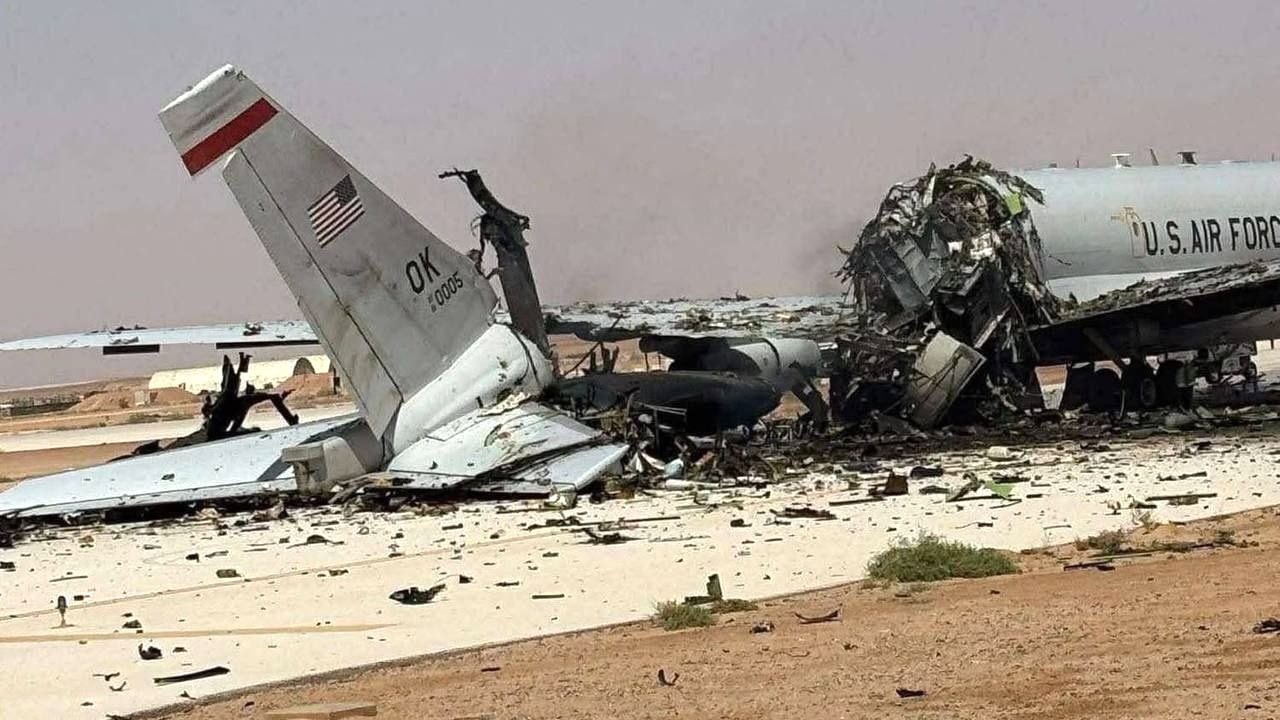
The destruction of the AWACS was particularly painful as the US only has 16 left after the same amount have been decommissioned in recent years and the plane, which is key to coordinating attacks by tracking multiple targets and fighter jets, is no longer in production.
Two aerial refuelling tankers were reportedly among the planes damaged in the strike. And two of the world’s last operational EC-130H Compass Call aircraft, deployed at the base, were also damaged. The EC-130H is a specialised US Air Force aircraft designed for electronic warfare, specifically to disrupt and disable enemy communications and radar systems.
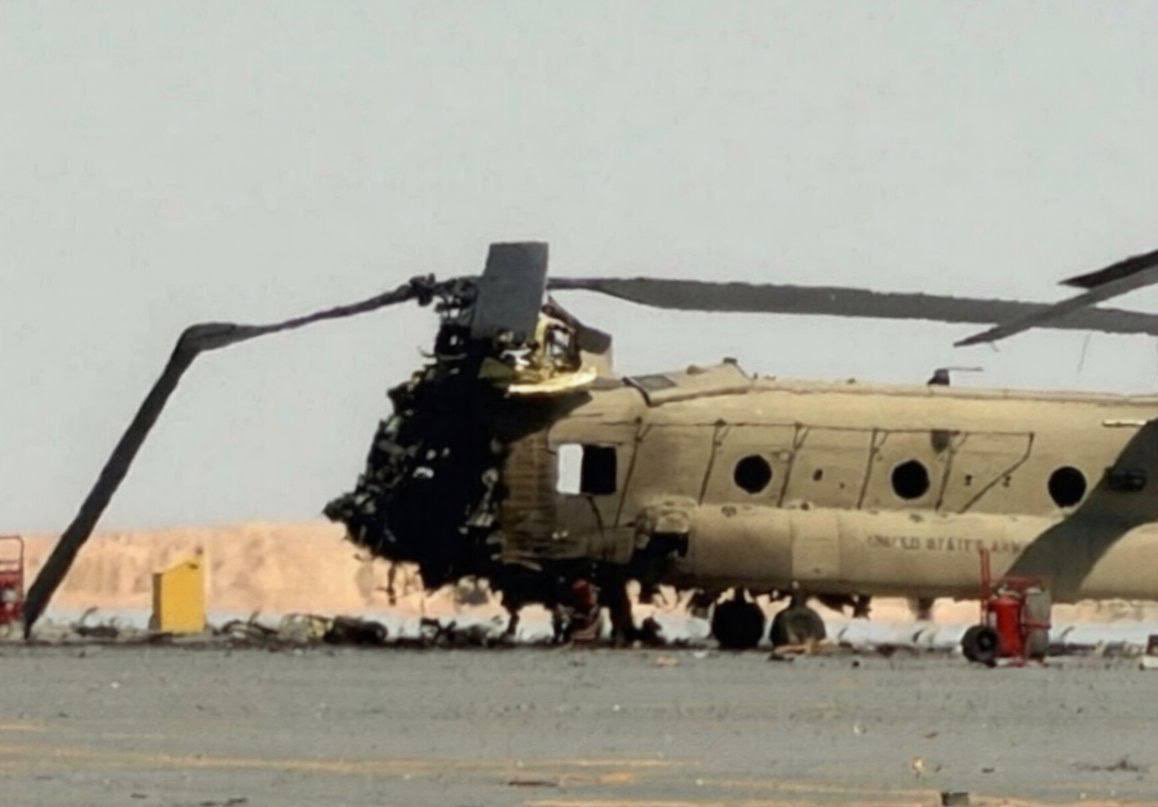
In a seperate attack, a US Army CH-47F Chinook dual-rotor transport helicopter suffered significant damage to its cockpit and front rotor in an Iranian one-way drone attack on Camp Buehring in Kuwait in the last few days.
On the first day of the war Iran fired hundreds of cheap low-tech drones at US bases and Israel, forcing them to burn through their expensive interceptor drones. However, the missiles fired at US bases and THAAD radar stations were amongst its best. From the first days of the war, Iran has deliberately targeted the infrastructure that supports US aviation with great effect.
The downing of the F-15E was equally embarrassing. The plane’s two crew members were rescued. The weapons co-pilot was eventually extracted after a dramatic special forces operation over the weekend - the first time US troops were on Iranian soil since the war started.
Two Black Hawk helicopters engaged in the search for the missing pilot were hit by Iranian fire but made it out of Iranian airspace withe pilot, the two US officials told Reuters.
A-10 Warthog hit by enemy fire during the rescue mission, the pilot nursing the damaged aircraft out of Iranian airspace and into Kuwait before ejecting and was later recovered.
The attacks on US aviation have been a big PR win for the Islamic Republic. Local TV followed the hunt for the downed pilots on live TV and called on locals to scour the countryside of the men.
Ghalibaf wrote on social media: “This brilliant no-strategy war they started has now been downgraded from ‘regime change’ to ‘Hey! Can anyone find our pilots?’ Wow. What incredible progress. Absolute geniuses.”
At first local TV told searchers to shoot the men on site, but as the propaganda power of capturing the airmen became clear the authorities changed their tune and asked for them to be brought in alive and offered a “precious prize” in exchange.
Decentralised defence sustains Iranian resistance
The US-Israeli coalition has been caught out by arming themselves for the wrong war. The IRGC triggered its Decentralized Mosaic Defence doctrine (DMD) within a few days of the war starting, scattering their forces into 31 cells that can operate independently, based on standing orders issued long ago. That was in anticipation of the decapitation of the government which happened almost immediately on March 2, with the killing of Supreme Leader Ayatollah Ali Khamenei and much of the Islamic Republic elite.
That was quickly followed by missile attacks that destroyed or badly damaged all 13 US Gulf military bases that has forced the Pentagon to withdraw many of its troops and a large number of its military personnel from the region. At the same time all four of the $1bn-plus irreplaceable THAAD radar stations were destroyed, which left the US forces largely blind to incoming Iranian balletic missiles. The US army has been forced to dismantle some of the remaining four THAAD radar stations in the Pacific region and ship them to the Middle East.
As the US-Israeli coalition and their Gulf partners run out of air defence ammo, the skies over the Gulf states and Israel are increasingly open. The barrage of inbound Iranian drones and missiles has slowed after the first days, but now Iran is rolling out never seen before sophisticated ballistic and hypersonic missiles developed with Russian and Chinese help that can also avoid even the lauded Patriot PAC-3 interceptors and rained down a weekend of destruction a week ago. Not only has the US navy been neutralised, but Israel’s famed Iron Dome is now also proving ineffective against Iranian missiles.
Now with its airpower also looking to be neutralised, the US-Israeli coalition has been attacking the mountainous caches of drones and missiles, but as the even the biggest US bunker busting bomb can only penetrate up to 50m of rock, and the redoubts were built some 400m underground in the heart of granite mountains, the coalition is powerless to destroy Iran’s extensive arsenal. A real-life game of whack-a-mole is unfolding where the coalition can do little else than collapse the entrances. According to reports cited by The New York Times, Iranian teams have restored damaged facilities within hours.
Another target has been Iran’s launchers. The IRGC has a stock of somewhere between 2,000 and 10,000 missiles, many they have developed themselves and others with the help of the CRINK alliance, but it only has some 200-400 launchers, without which the missiles are useless. Despite US claims that it has taken out most of the launchers, independent assortments put the total destroyed at somewhere between 10% and 50%.
Escalation risks widen as conflict drags on
The lack of military progress means both Israel and the US are increasingly turning to industrial targets in an attempt to collapse the Iranian economy. Trump threatened to bomb Iran “back into the stone ages” last week.
Israel has already hit Iran’s South Pars gas complex and last week followed up by partially destroying Iran’s three main steel mills, Mobarakeh, Esfahan and Khuzestan, the biggest revenue earner outside of the oil and gas business. This weekend the allies struck Iran’s petrochemical hub in southern Mahshahr region on April 4 that will have knock on effects for the global and packaging sectors.
And Trump is holding the most devastating for last: the power sector. Trump has threatened to do “irreversible damage” to Iran’s grid if the Strait of Hormuz is not reopened by April 6. The IRGC has threatened to retaliate in kind and destroy the power sector in the entire region if Trump carries through on his threats. That would have devastating consequences for the entire Gulf as most of the counties in the region rely on desalination plants for their fresh water and taking out the power will take out the water. A mass exodus from many of the countries would ensue, except for Iran, where, thanks to its mountains, desalination only makes up 3% of its drinking water.

No comments:
Post a Comment