Oil Wars Accelerate the End of Oil
March 27, 2026
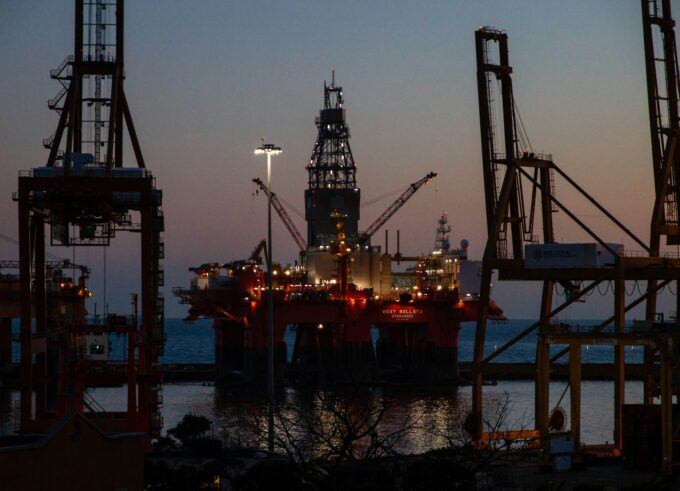
Image by Maria Lupan.
Solar panel prices do not rise when the Persian Gulf gets bombed, whereas oil prices do. The space between tells you all there is of the world we are in and where we must go.
On February 28, 2026, the United States and Israel attacked Iran to assassinate Supreme Leader Ayatollah Sayed Ali Khamenei in Tehran and 2 girls’ schools in Minab. In seven days, the crude oil had soared to $116 a barrel, up 65 per cent and landing at the petrol pumps of all earthly consumers. In the meantime, a typical 400-watt commercial solar panel was still priced around $300. Oil prices went through the roof courtesy of war. It made no difference to the price of sunlight.
This is not a coincidence. It is the gist of why the ongoing war, devastating as it is, could be the final spectacular shock that will push the global energy system beyond the point of no return to renewables. Eight decades of American foreign policy have rested on a single premise: control the oil, control the world. This was realised when Franklin Roosevelt clandestinely visited Saudi King Ibn Saud on the USS Quincy in 1945, trading American military protection for the right to Arabian oil. The transaction that ensued, also known as solidification, dictated all the wars, all the coups, all the sanction regimes that the United States has devised ever since in the Middle East. This is not the end of that history reflected in the February 28 strikes. They are its logical end.
The victors are who you would expect. According to the Financial Times, Exxon, Chevron, and Occidental will reap a $63 billion windfall on average should crude be trading at an average of $100 a barrel in 2026. They hold domestic supplies. They pay no war surcharge. They are not passing through the Strait of Hormuz with their tankers. Russia was temporarily sanctioned, with a US waiver to restart oil sales, mainly to China and India, in an effort to stabilise energy markets. The term temporary waiver is subject to examination. All the things that were temporary in the history of oil geopolitics tend to become permanent once they serve the right interests. In the meantime, Russia receives an estimated $ 10 billion more per month at higher prices. The money finds its way to a war chest, killing Ukrainians. Effectively, the United States has constructed a financial pipeline linking its war finance to that of Vladimir Putin.
The degenerates are, as usual, just who you think. The US Pentagon estimated that the initial six days of bombing cost American taxpayers $11.3 billion. Increased inflation and increased food prices affect consumers in Europe, Asia and the Global South, as the prices of fertilisers are based on energy prices. Fracking down the drain: further fracking, further oil-sands mining in Canada, further heavy-oil refining, further toxic dumping into water streams. But it is the people of Iran who bear the brunt of it; they are killed, displaced, their infrastructure is destroyed, and they did not start the war.
Why the attack on February 28 was coordinated in this manner remains unclear. There has not been a stated objective. Even more likely is the most damaging interpretation: the strikes were aimed at diminishing Iranian oil exports, increasing American and Russian sales, and breaking the will of NATO in relation to Ukraine. Then this is indeed a market share war that the US has fought under the guise of security policy. When Donald Trump declared that higher oil prices are a very small price to pay for peace and then explained that the US is the largest oil producer in the world and that we make a lot of money when oil prices go up, he had spilt the beans. He did not have it wrong with the math. He was only wrong about the subject of the “we”. Exxon makes money. Drivers do not.
What is more dangerous is the eventuality of the spread of the conflict. A fifth of the world’s oil and liquefied natural gas products were supplied daily through the Strait of Hormuz alone. Saudi Arabia is able to make a diversion of part of its supply overland to Yanbu on the Red Sea – approximately 6 million barrels per day. Other Gulf states cannot. The primary oil storage facility in Kharg Island, Iran, has been storing 90 per cent of Iranian exports, the majority of which goes to China. A strike there would outweigh the ecological havoc of the 1991 Gulf War that spewed an estimated 450 million gallons of oil. The Iran-Qatar South Pars- North Dome gas field, the largest natural gas reservoir in the world, has been struck once. Trump has threatened to blow up the field in a massively retaliatory manner, unless Iran halts further retaliation against the Qatari LNG infrastructure. In retaliation, Iran has threatened to destroy the Gulf energy installations permanently. These are not bargaining positions. They are accounts of a system having no kill switch.
The only way out of this cycle is to abandon oil. The highest importers of petroleum know this best. China, India, Japan, South Korea, and Australia – the top consumers of Gulf oil – are observing their energy security being held hostage by a war that they had no hand in creating and which they have no control over. Ireland already hurried to renewable energy action straight away in reaction to price shocks. Germany and Spain are providing fuel allowances and tax rebates. They are emergency measures. The ultimate solution is to be out of the system completely.
This argument in favour of that independence is now overwhelming. In a world where new energy installations exceed 20,000 a year, in 2025, 85 per cent of all new installations will be renewables. Grid storage is expanding. Networked microgrids, household batteries, and peer-to-peer energy trading are eliminating the standard objection to solar and wind, the intermittency problem. The magnitude of investment is remarkable: a 60-gigawatt project to build a green hydrogen electrolyser in Texas, a one-trillion-euro offshore wind farm in the North Sea, and a 2-gigawatt photovoltaic farm in India. China currently takes half of the new electric vehicles sold. Each of these projects dilutes the power of oil-producing states – and those armies that guard their pipelines – over the rest of the world.
The USA is not setting the pace of this change. It is obstructing it. The Trump administration’s energy policy is drill, baby, drill, a creed that has led to historic domestic oil production without taking any steps to protect American consumers against price spikes triggered by events 8,000 miles distant. China, on the other hand, controls the production of solar panels, wind turbines, and battery storage around the world. It leads the way as the biggest producer and the biggest market of electric vehicles. American industrial policy has given this ground virtually away. The nation which had spent the past 8 decades in a battle to establish oil dominance is seeing itself being replaced by another.
The 1945 Roosevelt-Ibn Saud meeting established the conditions of the following century of American might. It was an oil deal with a security deal. The thing February 28 strikes demonstrate is that this deal is not working out. Its security was never absolute and never peaceful. What was to be protected by the oil is the same that is causing the instability it was meant to safeguard. The change in power is not only an environmental requirement. No carrier strike group is needed to carry out its foreign policy. There is no way that the fastest-moving countries will merely reduce their emissions. They will no longer finance the wars of other humans.

No comments:
Post a Comment