Tuesday, April 07, 2026


'We are all connected': France hosts summit linking health and environment


The One Health summit, being held over two days in Lyon, brings together scientists and decision-makers to find integrated solutions to issues connecting health and the environment.


Issued on: 07/04/2026 - RFI

The World Health Organization is participating in the One Health summit being held in Lyon, France. 
REUTERS - Denis Balibouse

"If we want to sustainably improve human health, we must improve the health of our planet," the Élysée Palace said ahead of the event, which opened on Monday, marking World Health Day.

Since 2017, President Emmanuel Macron has organised One Planet summits to address environmental issues at an international level. This is the first dedicated to health-related topics.

Macron will participate in a meeting on "reforming the global health architecture" with the World Health Organization (WHO), and will address the summit on Tuesday afternoon.

The agenda has three main themes: to improve international cooperation and the sharing of data and research; to combat infectious diseases of animal origin, brought to the fore by the Covid-19 pandemic, and to focus on combating diseases to which the lived environment can contribute, such as diabetes and cardiovascular problems.

The leaders of Botswana, Cambodia, Ghana and Mongolia are in attendance, alongside ministers from some 20 countries who will participate in themed discussions on Tuesday.

'A vicious cycle that exhausts bodies and minds': the human cost of climate change

"By bringing together all disciplines and areas of expertise, we have laid the foundations for a truly integrated approach to health, capable of meeting contemporary health challenges," French Minister of Research, Philippe Baptiste, said in a statement.

Sylvie Briand, chief scientist at the WHO, told RFI that human health is intimately tied to the health of animals, plants and the environment, saying: "We are all connected."

According to the WHO, three-quarters of infectious diseases that affect humans – including Covid-19, Ebola and Mpox – now come from wild animals.

While this phenomenon has always existed, it has increased in recent years. Briand says this is in part due to changing lifestyles and mobility, with more opportunities for infections to spread in urban contexts.

Viruses such as Covid-19 have also learned to adapt to their human hosts, making contagion all the more likely, she said.
Funding deficit

Another key topic being addressed by the summit is the overuse of antibiotics, in both humans and animals.

According to veterinarian and epidemiologist François Moutou, formerly of the French Agency for Food, Environmental and Occupational Health & Safety, the message to doctors should be to "prescribe antibiotics when necessary and not indiscriminately".

By lowering consumption of antibiotics for farm animals, "we lower the risk of developing new resistant bacteria and this is in the public interest," he added.

WHO members reach accord 'in principle' over how to tackle future pandemics

The primary challenge for the One Health summit is funding, which has decreased around the world in recent years – most notably from the United States, which has withdrawn support for the WHO under President Donald Trump.

The Élysée Palace said: "The budgetary context is very complicated... [but] this summit is not at all inconsistent. Politically, we are here. Financially, we are trying to continue to be here."

With newswires and partially adapted from the original version in French.

GOOD NEWS

Spain breaks jobs record with 22 million Social Security contributors

FILE: Workers work at a construction site in Madrid, Spain, 3 December 2013.
Copyright Copyright 2013 AP. All rights reserved.


By Rafael Salido
Published on 

Spain's Social Security enrolment hit an all-time high in March, boosted by Easter Week, after more than 211,000 jobs were added and unemployment edged lower.

Spain has exceeded 22 million Social Security contributors for the first time in its history, new labour market data published Monday showed, as Easter demand and growth in the services sector pushed employment to a record high.

The seasonally adjusted figure — which strips out the calendar effect — put the number of contributors at 22,010,532, after 80,274 jobs were added in March.

In average terms, enrolment reached 21.88 million following the addition of 211,510 employed persons, the largest increase ever recorded for a month of March.

In the unadjusted series, enrolment also marked an all-time high, with over 21.8 million people registered with Social Security.

The government said the number of contributors has risen by almost 3.4 million since 2018, with record female employment approaching 10.4 million. It also pointed to growth in permanent contracts and in higher-skilled sectors such as information, science and technology.

Prime Minister Pedro Sánchez pre-empted the official figures with a brief post on social media — simply writing "22" — before later sharing a video to mark the milestone.

"You are the ones who raise the shutters, take care, teach and build this country," he said. "We are a team that is making history."

The labour market also showed improvement on unemployment. The jobless total fell 0.9% in March to 2.42 million, the lowest figure for this month since 2008, and has dropped by more than 160,000 over the past year.

Second vice-president and employment minister Yolanda Díaz said female and youth unemployment were at historic lows and attributed the results to labour reforms implemented in recent years.


AI, drones, quantum: the EU’s new AGILE plan targets future warfare

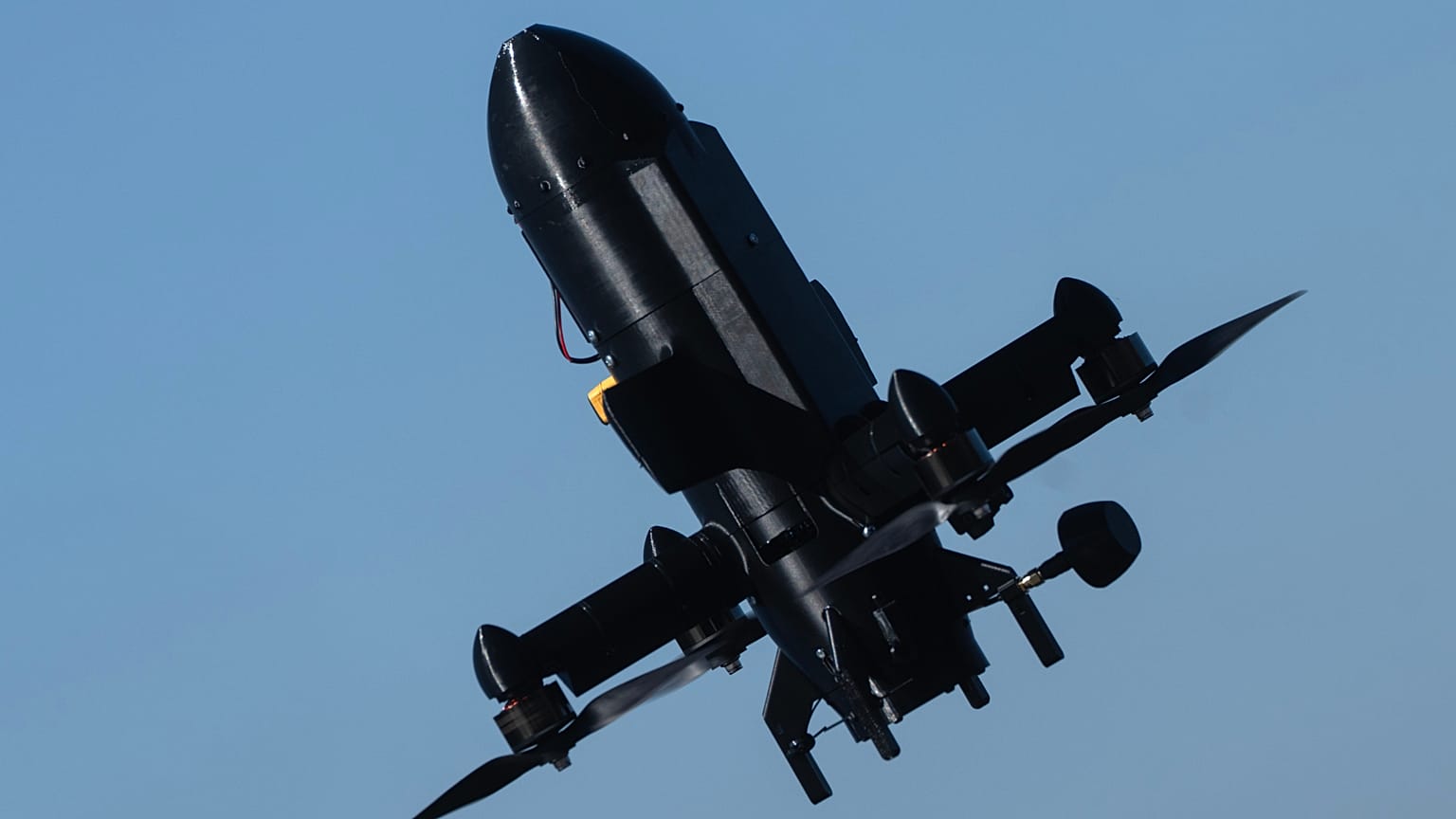
An anti-air interceptor drone designed to destroy Russian attack drones from the Ukrainian company General Cherry is seen during a demonstration in Kyiv region,
Copyright AP Photo/Efrem Lukatsky


By Elisabeth Heinz & Leticia Batista Cabanas
Published on 

The Iran war has become the ultimate testbed for next-generation military technology. Russia’s war on Ukraine laid bare the deadly cost of obsolete arsenals. Artificial Intelligence, drone swarms, and precision systems dictate the outcome of conflicts. Technology is now the battlefield.

Facing growing vulnerability, the European Union wants to step up efforts to keep pace with the evolving landscape of war technology. Brussels is pushing to accelerate the leap from research labs to real-world deployment, demanding faster, more flexible innovation to confront a new era of security threats.

The newest proposal, the Programme for Agile and Rapid Defence Innovation (AGILE), would invest €115 million in disruptive defence technologies like AI, quantum technologies, and drones. If adopted, it would mark a clear break from the EU’s slow defence funding model by prioritising speed, risk-taking and rapid deployment of new technologies.

The EU has poured resources into the European Defence Fund and satellite systems for secure communications and Earth observation. Yet these efforts have fallen short, dismissed as too slow and too rigid for the demands of modern warfare.

Average timeline for European defense startups

What is AGILE?

Proposed in March 2026 by the European Commission, AGILE is a fast-track funding tool to move defence technologies from development to deployment way faster than existing EU programs.

Under its current form, it will finance projects that are already relatively advanced, focusing on technologies that can be tested, validated and used by armed forces within one to three years. For example, mission-driven AI systems for military decision-making, situational awareness, or autonomous systems, or projects involving quantum computing. It will also support projects dealing with advanced robotics and drones.

The program promises to finance both the technical development phase and the transition to real-world use, including prototyping, field testing and initial production. It will introduce shorter application and evaluation timelines, with funding decisions expected within months rather than years.

Unlike traditional EU schemes, it allows single companies to apply, removing the requirement to form large multinational consortia. Funding can cover up to 100% of eligible costs, reducing financial risk for companies. It also allows retroactive funding, meaning companies can be reimbursed for work already carried out.

AGILE is expected to allocate at least €115 million in its initial pilot phase, for around 20 to 30 projects. Individual projects are likely to receive between €1 million and €5 million, depending on their scope and maturity. The funding will come directly from the EU budget.

The primary targets are startups, SMEs and scale-ups working on dual-use or defence technologies. These companies will have faster funding cycles, reduced administrative burden and a clearer path from product to market. But larger defence companies may also benefit indirectly, by integrating these innovations into their systems or partnering with smaller firms. Meanwhile, armed forces in EU member states are expected to gain earlier access to new capabilities, improving operational readiness.

For EU citizens, the impact is indirect; it includes stronger security, increased technological sovereignty and new economic opportunities in high-tech sectors such as AI, robotics and space.

The programme still requires approval by the European Parliament and the Council before it can be formally launched. If adopted, the initial proposal calls are expected to begin around 2027, with funded projects starting shortly after.

AGILE joins previous initiatives like the European Defence Fund and the EU Defence Innovation Scheme to support innovation. These programmes helped fund research and collaborative projects across member states. However, they were largely focused on long-term development and large consortia and have been criticised for being too slow and complex to support rapid, high-risk innovation.

Urgent need for agile SMEs

There is a mismatch between the speed of technological change and the pace of EU defence systems. In the war between Iran and the US, for example, low-cost drones are redesigned and redeployed in a matter of weeks. Meanwhile, AI-driven targeting and cyber tools are updated continuously on the battlefield (like Iran’s drone swarms at Kuwait International Airport, or the US’ AI-focused ‘Project Maven’).

By contrast, traditional European procurement and funding processes can take several years from approval to deployment. This creates a gap where technologies exist but are not delivered in time to be operationally relevant.

Many of these innovations come from startups and SMEs, which often lack the resources or administrative capacity to navigate complex EU funding schemes. As a result, solutions stall, are commercialised elsewhere, or fail to reach defence users altogether.

One case was the Eurodrone (MALE RPAS) project, a joint effort by Germany, France, Italy, and Spain. Originally conceived in 2014, it was a twin-turboprop, medium-altitude, long-endurance drone intended to revolutionise the military sector. However, it faced so many delays that it is now scheduled for a 2031 release.

The Chief of Staff of the French Air and Space Force recently described it as "yesterday's drone that we can get tomorrow". Subsequently, France formally notified partners of its intent to withdraw from the programme in October 2025.

Because of these delays, European nations must rely on American MQ-9 Reapers and Israeli Herons, remaining dependent on outdated technologies while adversaries move forward with faster innovation cycles. This allows other global powers, like China and the US, to set the pace in key areas, including AI, cyber, and autonomous systems.

Funding secured and its uses by firm size

How has the EU boosted defence innovation so far?

ReArm Europe and the EU Defence Industry Transformation Roadmap are the bloc's 2025 flagships towards defence innovation and autonomy by 2030. Over €800 billion will accelerate time-to-market, boost scale-ups and empower new defence innovators for a borderless, more responsive EU defence market.

The European Defence Fund (EDF) is the EU’s primary innovation plan. It supports companies with €7.3 billion in funding for 2021-2027 to develop disruptive defence technologies. €2.7 billion is allocated to research and development (R&D) for defence capabilities, while €5.3 billion is allocated to skills development.

Grants target critical future military domains, such as AI, cyber, space defence, and drone systems. For 2026, the Commission mobilised €1 billion for R&D in specific defence equipment: endo-atmospheric interceptors, battle tanks, multiple rocket launchers, and semi-autonomous vessels.

With €1.5 billion for 2025-2027, the 2025 European Defence Innovation Scheme (EUDIS) lowers entry barriers into the defence market for smaller innovators and SMEs. It finances a new generation of defence companies, supporting them throughout their life cycle until they become key players in defence innovation.

Between 2026 and 2027, the European Defence Industry Programme (EDIP) allocates €1.5 billion to member states’ defence procurement cooperation, manufacturing skills, and production gaps. EDIP also supports Ukraine’s defence industry with an additional €300 million.

The Defence Equity Facility (DEF) allocates €500 million to the private fund ecosystem investing in European companies developing defence innovations. It targets venture capital, private equity funds and private debt funds.

The 2025 Security Action for Europe (SAFE) mobilises €150 billion in loans to boost member states’ defence readiness. By scaling up joint procurement capability, the plan acts as a temporary emergency financial support for the national defence bases.

The European Defence Agency (EDA) supports the Commission's goals through the Hub for European Defence Innovation (HEDI). It translates defence innovation from the lab to the field, accelerating cooperation among member states.

Investments are growing, but the EU is still lagging behind

Member states’ defence R&D rose from 6 per cent in 2023 to 20 per cent in 2024, reaching €13 billion. Investments increased by an additional €4 billion in 2025, according to ongoing EDA estimates.

Likewise, defence research and technology (R&T) investments hit €5 billion in 2024, up from €3 billion in 2023.

Latest EU Commission data show that between 2021 and 2024, the EDF has funded an average of around 60 research and development defence projects per year, with a record of 62 in 2024.

Among the fund’s categories covering key defence domains, “Innovation and SMEs” has received the most investment since 2021. Member states with the largest defence base markets dominated EDF projects.

Leading European research institutes, universities, government bodies, and major national defence industries benefited the most from EDF investments. France was the frontrunner with 167 eligible entities, followed by 144 German, 139 Italian, and 130 Spanish entities. Slovakia and Croatia registered only 9 entities. France, Spain, Greece and Italy coordinated most of the projects.

Despite the growing trend in member states’ defence R&D, the US and China still outpace Europe.

Research, Development, Test, and Evaluation (RDT&E) represent 16% of the US defence budget, compared to 4% in the EU. In 2024, US RDT&E hit €138 billion, registering a 2 per cent decrease in nominal terms in 2025. Between 2023 and 2024, China’s estimated defence R&D spending reached $44 billion, with a focus on AI, hypersonic, and quantum tech.

Space defence: How is the EU boosting its military space capabilities?


By Inês Trindade Pereira 
Published on 

Europe is officially levelling up its orbital armour, yet while major defence upgrades are planned by 2030, the road to total independence from global superpowers remains costly.

Europe is stepping up efforts to build up its military space assets, driven by Russia's war in Ukraine and its decision to distance itself from its longstanding dependence on the US in the space domain.

Today, European governments, armed forces and societies make heavy use of space-enabled services, including satellite communications.

Yet, for years, it was perceived as a useful addition rather than an essential strategic asset. This perspective has only changed since the KA-SAT satellite network cyberattackin February 2022, just before Russia's full-scale invasion of Ukraine.

The targeted attack on Viasat's US-operated network disrupted telecommunications, energy infrastructure, and internet access across Europe, leaving Ukrainian public authorities and citizens offline and silencing them at a critical moment as Russian soldiers poured into the country.

At the beginning of 2026, during the European Space Conference, European Union Commissioner for Defence and Space, Andrius Kubilius, called for the 27 member states to come together to work towards space independence.

However, greater European autonomy in space-based military capabilities is still a long way away, according to a new study from the defence and security think-tank International Institute for Strategic Studies (IISS), possibly reaching beyond the late 2030s.

Which countries are investing in space defence?

Nevertheless, European countries are set to invest at least €95.46 billion ($109bn) in space capabilities by 2030.

Germany has committed to invest €35bn in space assets by 2030 and published its Space Safety and Security Strategy in November 2025, while France has increased its space defence budget to €10.2bn during the same period.

At the EU level, the European Commission plans to invest €10.6bn in the new EU secure satellite constellation, to be delivered by 2030.

European Space Agency members have also pledged €1.2bn to its new dual civil-military-use European Resilience from Space programme.

But closing the gap with the United States won't be easy: sharing the defence burden in space could require at least an additional €8.67bn, and achieving full autonomy may need a further €21.67bn.

In addition, both figures exclude most ground-segment infrastructure, personnel, training, cyber resilience and broader programme overheads.

Experts claim that full autonomy would also require even more time, extending well into the late 2030s at the earliest.

"These investments are not structured around a coherent strategy to close the most consequential capability gaps within a decade", the IISS said.


Over 180 dead or missing in Mediterranean in last 10 days, UN migration agency says

Italian Coast Guard rescue boat at dock in the southern island of Lampedusa, disembarks those rescued from a dinghy at about 80 nautical miles from Lampedusa, 1 April 2026
Copyright AP Photo


By Gavin Blackburn
Published on 


The IOM has previously highlighted the Central Mediterranean as the deadliest migration corridor in the world.

More than 180 people are feared dead or missing in shipwrecks in the Mediterranean since 28 March, the United Nations said on Tuesday, with nearly 1,000 deaths tallied since the start of 2026.

The UN's International Organisation for Migration (IOM) said that so far this year, around 765 people had died in the Central Mediterranean, an increase of over 150% compared with the same period last year.

And "across the Mediterranean as a whole, at least 990 deaths have been recorded in 2026," the IOM said, adding that it was "one of the deadliest starts to a year since 2014," when it began collecting this data.

The agency said that since 28 March alone, at least 181 people had died or gone missing in five separate shipwrecks.

In the latest incident on Sunday, the agency said more than 80 migrants had gone missing when their boat capsized in the Central Mediterranean after departing from Tajoura in Libya, with around 120 people on board.

"The vessel took on water in rough weather before overturning," the IOM said.

Thirty-two survivors were rescued by a merchant vessel and a tugboat and later brought to Lampedusa by the Italian coastguard, it said, adding that two bodies had been recovered.

In an earlier shipwreck on 1 April, at least 19 migrants were found dead aboard a vessel off Lampedusa, the agency said, adding that 58 people, including women and children, had been rescued, with several in critical condition.

Survivors said that boat had left Zuara in Libya overnight between 28-29 March.

"After three days at sea, the vessel was left adrift due to engine failure, fuel shortages and lack of food as weather conditions deteriorated," the IOM said, adding that initial testimonies indicated "many victims died before rescue operations, possibly due to hypothermia."

Also on 1 April, at least 19 other migrants died in the Aegean Sea near Bodrum in Turkey, after a rubber boat capsized en route to Greece, the agency said, adding that "several" people had been rescued.

The IOM also listed a shipwreck on 30 March near Sfax in Tunisia that left 19 dead and around 20 missing, and another on 28 March, in which at least 22 people died off Crete after departing eastern Libya.

"These tragedies show, once again, that far too many people are still risking their lives on dangerous routes," IOM chief Amy Pope said in the statement.

"Saving lives must come first. But we also need stronger, unified efforts to stop traffickers and smugglers from exploiting vulnerable people, and to expand safe and regular pathways so no one is ever forced into these deadly journeys."

The IOM has previously highlighted the central Mediterranean as the deadliest migration corridor in the world.

Between 2014 and the end of 2025, more than 33,000 migrants died or went missing in the Mediterranean, according to the IOM's Missing Migrants Project.


Hardt, Michael. Multitude: war and democracy in the Age of Empire /. Michael Hardt and Antonio Negri. p. cm. Sequel to: Empire. Includes index. ISBN 1-59420 ...

Empire / Michael Hardt and Antonio Negri. p. cm. Includes bibliographical ... 4.3 The Multitude against Empire. 393. Notes. 415. Index. 473. Page 11. PREFACE.


BLACK FASCIST

Kanye West blocked from travelling to UK by government - Wireless Festival has been cancelled

Kanye West blocked from travelling to UK by government
Copyright AP Photo

By David Mouriquand
Published on 

Controversial American rapper Kanye 'Ye' West has been blocked from entering the UK to perform at the Wireless music festival after a mounting backlash over his planned summer headline slot. Now, the 2026 edition of the Wireless Festival has been axed.

The pressure was too strong...

Following the UK’s Wireless Festival being criticised over the booking of Kanye ‘Ye’ West, and growing backlash over the controversial rapper’s planned headline set this summer, the UK government has blocked the controversial rapper’s permission to travel to Blighty.

The Home Office confirmed the ban to the BBC; the government has discretion to ban foreign nationals from the UK if their presence is not considered "conducive to the public good".

Responding to the news, the Wireless Festival issued the following statement: "The Home Office has withdrawn YE's ETA, denying him entry into the United Kingdom. As a result, Wireless Festival is cancelled and refunds will be issued to all ticket holders."

It continued: "As with every Wireless Festival, multiple stakeholders were consulted in advance of booking YE and no concerns were highlighted at the time."

"Antisemitism in all its forms is abhorrent, and we recognise the real and personal impact these issues have had. As YE said today, he acknowledges that words alone are not enough, and in spite of this still hopes to be given the opportunity to begin a conversation with the Jewish community in the UK."

Upon hearing the news that West's entry into the UK had been denied, the Campaign Against Antisemitism (CAA) had urged sponsors to continue boycotting the event, following the likes of Pepsi, Diageo, PayPal and Rockstar Energy all stepping away.

A spokesperson for Campaign Against Antisemitism said in a statement: "The Government has clearly made the right decision here. For once, when it said that antisemitism has no place in the UK, it backed up its words with action.”

"Someone who has boasted of making tens of millions of dollars from selling swastika t-shirts and who released a song called Heil Hitler just months ago clearly would not be conducive to the public good in the UK.”

The statement concluded: "Wireless Festival, in its desperate quest for profit, defended the invitation until the end. That is shameful, and its sponsors should continue to stay away."

No need to boycott, as the festival's 2026 edition is now no more...

Previously, Melvin Benn, the managing director of Festival Republic, which co-promotes Wireless alongside Live Nation, had issued a statement defending West, calling his past comments “abhorrent” but pleading for “forgiveness” and “giving people a second chance”.

West even made a statement, saying he had been "following the conversation around Wireless and want to address it directly".

"My only goal is to come to London and present a show of change, bringing unity, peace, and love through my music," he said, offering to meet members of the Jewish community in person "to listen". He added: "I know words aren't enough - I'll have to show change through my actions. If you're open, I'm here."

However, those comments weren’t enough and West will not be heading to London this summer.

Kanye West AP Photo

West’s anti-Semitic remarks began in 2022, when he made a series of offensive comments on social media which ended up getting him booted off both X and Instagram. The musician was dropped by his talent agency and fashion brands like Adidas and Balenciaga also distanced themselves from West

West went on to post a picture of KKK robesrescind his previous apology to the Jewish communitydeclare himself “a Nazi” and assert that he has“dominion over his wife”.

In February 2025, West started selling swastika t-shirts, and in May, he released a song titled ‘Heil Hitler’, which praised the Nazi leader. This led him to be stripped of a visa to enter Australia and faced with immediate arrest in Brazil.

West has since apologised for his actions and took out a full-page ad in the Wall Street Journal earlier this year in order to apologise for his past antisemitic comments, reflecting on a "four-month-long manic episode of psychotic, paranoid and impulsive behaviour" and saying that he “lost touch with reality.”

Still, many questioned the timing of his apology, considering the recent release of his new album ‘Bully’, and his past comments have led to various countries banning his performances.

The mayor of the southern city of Marseille, France's second-biggest city, recently stated he does not want West anywhere near his city.

Kanye West’s last UK performance was his Glastonbury headline set in 2015.


Kanye West backlash escalates in UK as festival organiser defends booking - West issues statement


By David Mouriquand
Published on 

Wireless Festival organiser has defended the booking of Kanye 'Ye' West for this summer’s headline slot, while more sponsors drop out of the festival. Questions remain over whether the controversial rapper will be able to enter the UK. West has now issued a statement of his own.

The Wireless Festival in the UK has come under huge pressure over the booking of Kanye ‘Ye’ West, and the backlash is intensifying.

The controversial American rapper was announced last week as the three-night headliner of this year’s festival in London’s Finsbury Park in July – despite the musician’s past anti-Semitic remarks.

The booking has prompted widespread criticism, including from Prime Minister Keir Starmer, who said it is “deeply concerning that Kanye West has been booked to perform at Wireless despite his previous anti-Semitic remarks and celebration of Nazism”.

His comments were echoed by various groups and politicians, who expressed further concern and indignation at the booking of West for the festival.

London mayor Sadiq Khan criticised the booking, stating: “We are clear that the past comments and actions of this artist are offensive and wrong, and are simply not reflective of London’s values”.

A series of festival sponsors have cut their ties with Wireless as a result, including main sponsor Pepsi and drinks giant Diageo.

Sajid Javid, the former Home Secretary and current chair of the Holocaust Memorial Day Trust, praised their action.

Now both PayPal and Rockstar Energy have distanced themselves from Wireless – with PayPal no longer allowing its branding to be used on promotional material for the festival and Rockstar Energy reportedly pulling out.

As the pressure mounts for the festival to take action, Melvin Benn, the managing director of Festival Republic, which co-promotes Wireless alongside Live Nation, has issued a statement defending the headliner.

“I am a deeply committed anti-fascist and have been all my adult life,” said Benn. “I lived on a kibbutz for many months in the 1970s that was attacked on October 7th, am pro Jew and the Jewish state, while being equally committed to a Palestinian state.”

He continued: “Having had a person in my life for the last 15 years who suffers from mental illness, I have witnessed many episodes of despicable behaviour that I have had to forgive and move on from. If I wasn’t before, I have become a person of forgiveness and hope in all aspects of my life, including work.

“What Ye has said in the past about Jews and Hitler is as abhorrent to me as it is to the Jewish community, the Prime Minister and others that have commented and – taking him at his word – to Ye now also.”

“Ye’s music is played on commercial radio stations in this country. It is available via live streams and downloads in this country without comment or vitriol from anyone and he has a legal right to come into the country and to perform in this country. He is intended to come in and perform. We are not giving him a platform to extol opinion of whatever nature, only to perform the songs that are currently played on the radio stations in our country and the streaming platforms in our country and listened to and enjoyed by millions.”

He concluded: “Forgiveness and giving people a second chance are becoming a lost virtue in this ever-increasing divisive world and I would ask people to reflect on their instant comments of disgust at the likelihood of him performing (as was mine) and offer some forgiveness and hope to him as I have decided to do.”

UPDATE: In a statement, West said he has been "following the conversation around Wireless and want to address it directly".

"My only goal is to come to London and present a show of change, bringing unity, peace, and love through my music," he said, offering to meet members of the Jewish community in person "to listen". He added: "I know words aren't enough - I'll have to show change through my actions. If you're open, I'm here."

West’s anti-Semitic remarks began in 2022, when he made a series of offensive comments on social media which ended up getting him booted off both X and Instagram. The musician was dropped by his talent agency and fashion brands like Adidas and Balenciaga also distanced themselves from West.

West went on to post a picture of KKK robesrescind his previous apology to the Jewish communitydeclare himself “a Nazi” and assert that he has“dominion over his wife”.

In February 2025, West started selling swastika t-shirts, and in May, he released a song titled ‘Heil Hitler’, which praised the Nazi leader. This led him to be stripped of a visa to enter Australia and faced with immediate arrest in Brazil.

West has since apologised for his actions and took out a full-page ad in the Wall Street Journal earlier this year in order to apologise for his past antisemitic comments, reflecting on a "four-month-long manic episode of psychotic, paranoid and impulsive behaviour" and saying that he “lost touch with reality.”

Still, many questioned the timing of his apology, considering the recent release of his new album ‘Bully’, and his past comments have led to various countries banning his performances. The most recent is France, as the mayor of the southern city of Marseille, France's second-biggest city, stated he does not want West anywhere near his city.

Kanye West and his partner Bianca Censori at the 67th annual Grammy Awards - Sunday 2 Feb. 2025
Kanye West and his partner Bianca Censori at the 67th annual Grammy Awards - Sunday 2 Feb. 2025 AP Photo

It remains to be seen whether West will be able to enter the UK, as his right to do so is reportedly under government review.

UK Ministers have the power to ban foreign nationals from entering the country if their presence is not considered “conducive to the public good”.

Kanye West’s last UK performance was his Glastonbury headline set in 2015.