BBC fails to mention Israel during a report of Lebanese hospital missile strikes
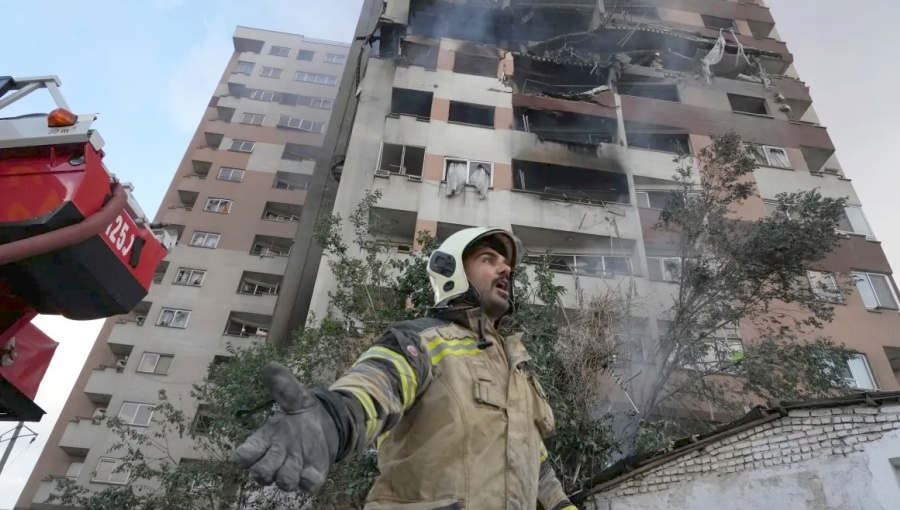
In the latest sign of Western bias, the BBC failed to mention the word “Israel” at all when reporting Israeli missiles targeted at least 20 Iranian hospitals and medical centres on March 23. An Iranian strike on one of Israel’s main hospitals last week got significantly more coverage.
Israel has been accused of adopting tactics similar to those it used in Gaza, where it destroyed virtually all of the medical centres and hospitals, causing countless civilian deaths, including three babies that starved to death after a hospital was evacuated in December 2023. Now it has adopted the same strategy in Iran, threatening to cause a humanitarian crisis, say, aid workers.
The western press has been complicit in playing down Israel’s actions, illegal under the Geneva convention, afraid of an Israeli backlash and accusations of anti-Semitism. The BBC has been particularly sensitive to these charges. Following the launch of a major invasion of Lebanon, the BBC reported on the Israeli “push in Lebanon” to seize key border positions, whereas it regularly reports on Russia’s “invasion” of Ukraine.
The European response to the war in Iran and Lebanon has been muted, but some leaders have become more outspoken recently. The European Nato members have universally rebuffed US President Donald Trump’s call to send their navies to help with his efforts to reopen the Strait of Hormuz, refusing to be dragged into “not our war.”
Criticism of Israel is an especially sensitive topic, both for historical reasons and because of the White House’s close relationship with Tel Aviv and Brussels’ desire not to do anything to upset the Trump administration.
In the summer of 2024, European Commission President Ursula von der Leyen’s entire staff – some 800 people – released an open letter criticising what they called her “bias” for Israel due to her silence in condemning Israel’s bombing of civilians in Gaza that killed an estimated 75,000 people, mostly women and children. Israeli Prime Minister Benjamin Netanyahu has been indicted by the International Criminal Court (ICC) and an arrest warrant for his arrest on “war crime” charges has been issued.
Similar one-sided reporting has also been common in covering the polarised Ukrainian story. When Ukrainian far-right football “ultras” trapped several hundred Russian football fans in the Trade Unions House in Odesa in May 2014 and deliberately set it on fire, burning 48 people to death, many of the initial reports were written using the passive voice in a deliberate attempt to avoid blaming Ukrainians for the killings.
Similar questionable reporting surrounds the “snipergate” incident, where members of the Ukrainian far-right opposition have been blamed for randomly shooting demonstrators on Maidan in 2014 in a false flag operation. That story was barely reported by the English-language press, but well covered by the German-language press, and the details have since been fleshed out by academic studies.
Israel has been striking residential areas in both Tehran and Beirut with missiles hitting multiple locations – something that Russia has been widely condemned for in the Ukrainian conflict, albeit at a much larger scale. In Beirut, at least 12 people were killed and 27 wounded in a strike last week, according to Lebanese authorities, in an escalation beyond the southern suburbs into central Beirut on March 18. The Lebanese health ministry said that 968 people, including at least 111 children, have been killed since March 2.
On March 16, Israel targeted a residential building near the government quarter in central Beirut that completely collapsed, causing some to comment that the scene “resembled Gaza,” the BBC reported in a story headlined: “Destruction in Beirut after overnight strikes,” again missing out the word “Israeli.”
Israel continues to target central Beirut, sometimes with prior warnings, and sometimes without, according to local reports, in what appear to be targeted assassinations including at least two strikes on hotels.
Civilians are frequently killed in these attacks, including in “double-tap” strikes – a tactic used frequently by Russia in missile strikes against residential areas in the Ukraine conflict.
As in Gaza, Israeli authorities claim medical facilities were being used by militants posing as refugees but have presented no evidence to support the claim. The same claim was made in the bombing of Gaza, but on several occasions, both local and international journalists debunked those claims and even showed that Israel’s IDF forces had manufactured evidence to support the claims.
Under the Geneva Convention, attacks on medical facilities are a war crime, unless it can be conclusively demonstrated that they are being used for military operations.
The human costs of targeting hospitals have become part of Israel’s standard scorched-earth strategy to make life in Lebanon intolerable. The government in Tel Aviv has said that the approximately one million Lebanese civilians displaced by the conflict will not be allowed to return to their homes.
In Iran, figures cited in regional reporting indicate that Israeli strikes have destroyed 236 healthcare centres, 9,218 commercial units and 67,414 homes in Iran as of March 22.
Iran’s Islamic Revolutionary Guard Corps (IRGC) warned that it would respond in kind to further escalation. “We are determined to respond to any threat to the same extent, such that it creates deterrence,” the IRGC said in a statement, threatening to expand its retaliatory strikes to include vital infrastructure including water.
“The lying, terrorist, and child-killing president of the United States has claimed that the IRGC intends to target desalination plants in the region and cause hardship for the people of regional countries,” the statement said, rejecting allegations that it had targeted civilian water infrastructure.
“First, it is the aggressive and anti-human US army that began this war by killing children, including the deaths of 180 elementary school children, and has so far targeted five water infrastructure sites, including the desalination facility on Qeshm Island. The IRGC has not carried out such actions.”
The statement added: “You struck our hospitals, we did not do the same. You struck our emergency centres; we did not do the same. You struck our schools; we did not do the same. But if you strike electricity, we will strike electricity. And victory is only from God, the Almighty, the Wise.”
France urges Israel ‘to refrain’ from seizing south Lebanon zone
FALLING ON DEAF EARS
By AFP
March 24, 2026
Copyright AFP Thomas SAMSON
Delphine Touitou
Israel should “refrain” from sending in forces to take control of a zone in south Lebanon, France’s foreign minister told AFP on Tuesday, warning that such a move would have “major humanitarian consequences”.
“We urge the Israeli authorities to refrain from such ground operations, which would have major humanitarian consequences and would exacerbate the country’s already dire situation,” Jean-Noel Barrot said in an interview with AFP.
His comments came after Israel earlier said its military would take control of south Lebanon up to the Litani River, around 30 kilometres (20 miles) from the border.
Lebanon was pulled into the Middle East war when the Tehran-backed Hezbollah militant group began firing rockets into Israel on March 2 to avenge the killing of Iran’s supreme leader Ayatollah Ali Khamenei.
Israel has since launched strikes across Lebanon, killing at least 1,072 people and displacing more than a million others in more than three weeks of fighting. It has also sent ground troops into the country’s south.
Barrot, who visited Lebanon and Israel last week, called on Israel to seize a “historic opportunity” for dialogue with Lebanon’s government, saying that Beirut was “turning its words into action” to counter Tehran’s interference in the country.
He noted that during his visit to Lebanon on March 19, President Joseph Aoun called for a truce and the opening of negotiations with Israel to stop the war between it and Hezbollah.
“There is a moment to seize, it is historic, and that moment is now,” Barrot said, calling for “high-level political dialogue” with the Lebanese government.
Lebanon’s government has acted against Iranian interests and withdrew its approval of the Iranian ambassador’s accreditation on Tuesday, a decision Barrot hailed as “courageous”.
Iranian ambassador Mohammad Reza Sheibani was told to leave Lebanese territory by Sunday.
“I wish to commend the statements and actions of the Lebanese government…which this morning took a courageous decision by expelling the Iranian ambassador,” Barrot said.
Hezbollah strongly objected to the move, calling on the government to reverse it.
It was “no small matter” that Lebanon’s government had also expelled “a number of representatives of the Revolutionary Guards” in the country, Barrot said, referring to the Islamic republic’s ideological army.
Beirut has accused Iran’s Revolutionary Guards of commanding Hezbollah’s operations in its war against Israel, having decided on March 5 to ban all activity by the organisation in the country.
The government also took the unprecedented step of imposing a ban on Hezbollah military activities and called on the group to hand over its weapons to the state.
Israel Defense Minister Deploys ‘Gaza Model’ in Lebanon, Ordering Destruction of Villages
One expert called the policy “an open admission of intent to commit ethnic cleansing.”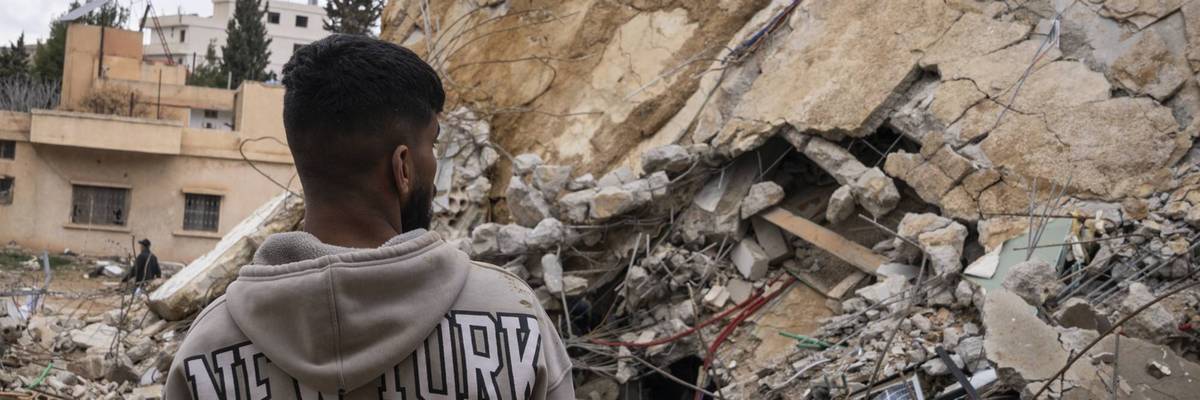
A man walks amongst the wreckage following an Israeli airstrike on March 23, 2026, in Baalbek, Lebanon.
(Photo by Adri Salido/Getty Images)
Stephen Prager
Mar 23, 2026
COMMON DREAMS
Israel is planning to use Gaza as a “model” for its expanding assault on Lebanon, its defense minister said on Sunday as he pledged to begin the demolition of homes in border villages.
In a statement Sunday, Defense Minister Israel Katz said he and Prime Minister Benjamin Netanyahu had ordered the Israel Defense Forces to “immediately destroy all the bridges over the Litani River that are used for terrorist activity, in order to prevent the passage of Hezbollah terrorists and weapons southward.”
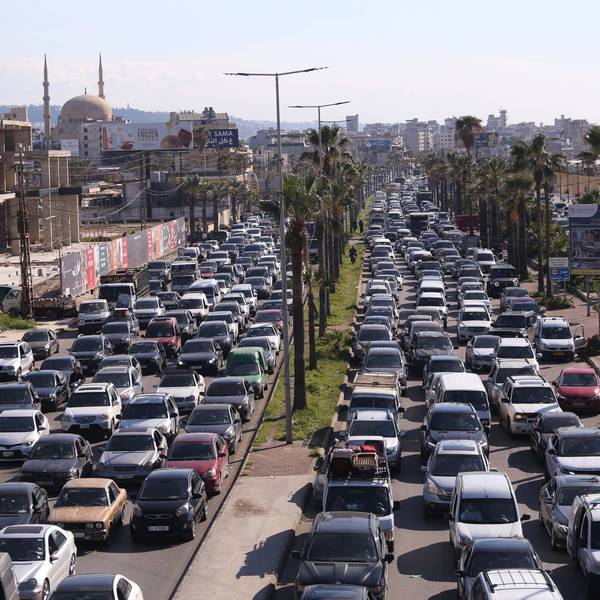
Israel Gives ‘Mass Expulsion Order’ to Civilians as It Invades Southern Lebanon
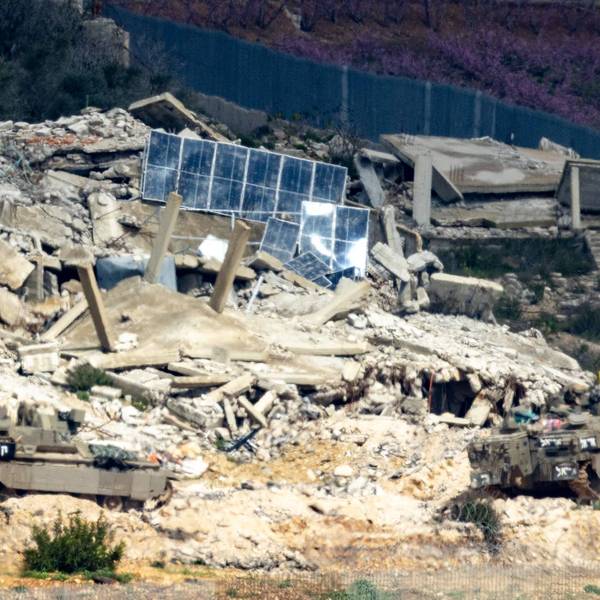
Israel Says IDF Will Stay in Lebanon for Months as It Expands Ground Invasion in South
He also said he’d ordered the military to “accelerate the destruction of Lebanese homes in the border villages in order to thwart threats to the Israeli settlements—in accordance with the Beit Hanoun and Rafah model in Gaza.”
Dylan Williams, the vice president for government affairs at the Center for International Policy, described the invocation of this “Gaza model” as “an open admission of intent to commit ethnic cleansing” in Lebanon.
The two cities Katz referred to were largely wiped off the map during the Gaza genocide.
Beit Hanoun, a city on the northeastern edge of the Gaza Strip, which once had a population of more than 50,000 people, had nearly all of its structures totally “flattened” by Israel’s bombing and was totally depopulated, according to the Israeli newspaper Haaretz in mid-2025. The far-right in Israel has pushed for Jewish Israeli settlers to move in and build settlements on the territory.
Rafah has been similarly devastated, with nearly 70% of the structures “wiped out” according to an October 2025 investigation by the Center for Information Resilience.
At the time that Israeli forces moved into Rafah in mid-2024, it was the last refuge for more than 1 million Palestinians who’d been displaced from their homes elsewhere in the strip. UN experts described the attack on Rafah as a culmination of a monthslong campaign to “forcibly transfer and destroy Gaza’s population,” with more than 800,000 people being forced to flee.
Human Rights Watch said on Monday that Katz’s announcement demonstrated “an intent to forcibly displace residents, destroy civilian homes, and conduct strikes that could target civilians” in Lebanon as well.
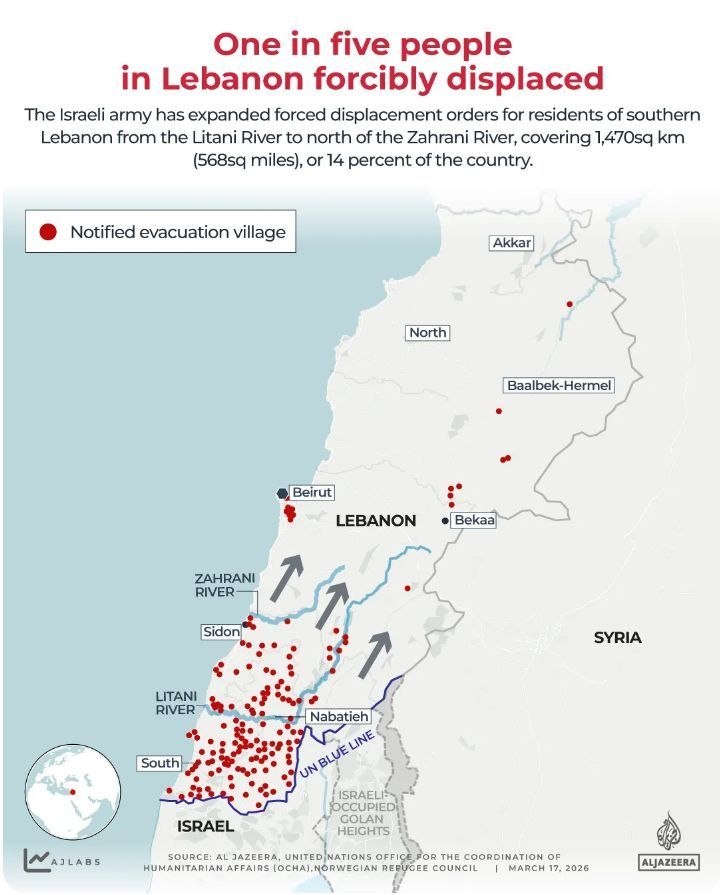
Already, more than 1 million civilians in Lebanon, from the area south of the Litani River and in Beirut’s southern suburbs, have become displaced following orders from the Israeli military to evacuate their homes.
Katz has said hundreds of thousands of Shiite civilians will be forbidden from returning from their south of the Litani “until the safety of Israel’s northern residents is guaranteed,” and he has said Israel “will not hesitate to target anyone who is present near Hezbollah members, facilities, or means of combat.”
Human Rights Watch has said these indefinite displacements raise the concern that Israel is perpetrating the war crime of forced displacement and doing so based on religion.
“The Israeli military does not get to decide when civilians lose protections afforded by international law, nor should it be allowed to prevent displaced residents from returning to their homes based on some undefined ‘safety’ standard,” said Ramzi Kaiss, Lebanon researcher at Human Rights Watch. Deliberately targeting civilians, civilian objects, and others protected under international law would be a war crime, and countries supplying Israel with weapons need to realize they are risking complicity in war crimes too.“
Since the latest outbreak of hostilities at the beginning of March following the launch of the US-Israeli war against Iran, at least 1,024 people in Lebanon have been killed in Israeli attacks, including 79 women and 118 children, according to a report from Lebanese authorities this weekend.
Last week, the United Nations Human Rights Office reported that Israeli airstrikes in Lebanon have “destroyed hundreds of homes and civilian infrastructure, including healthcare facilities.”
“For over two years, Israel’s allies and European states that purport to support and uphold human rights have buried their heads in the sand as atrocities continue in Lebanon, as in Gaza,” Kaiss said. “Atrocities flourish when there is impunity, and other countries should no longer stand by as they continue.”
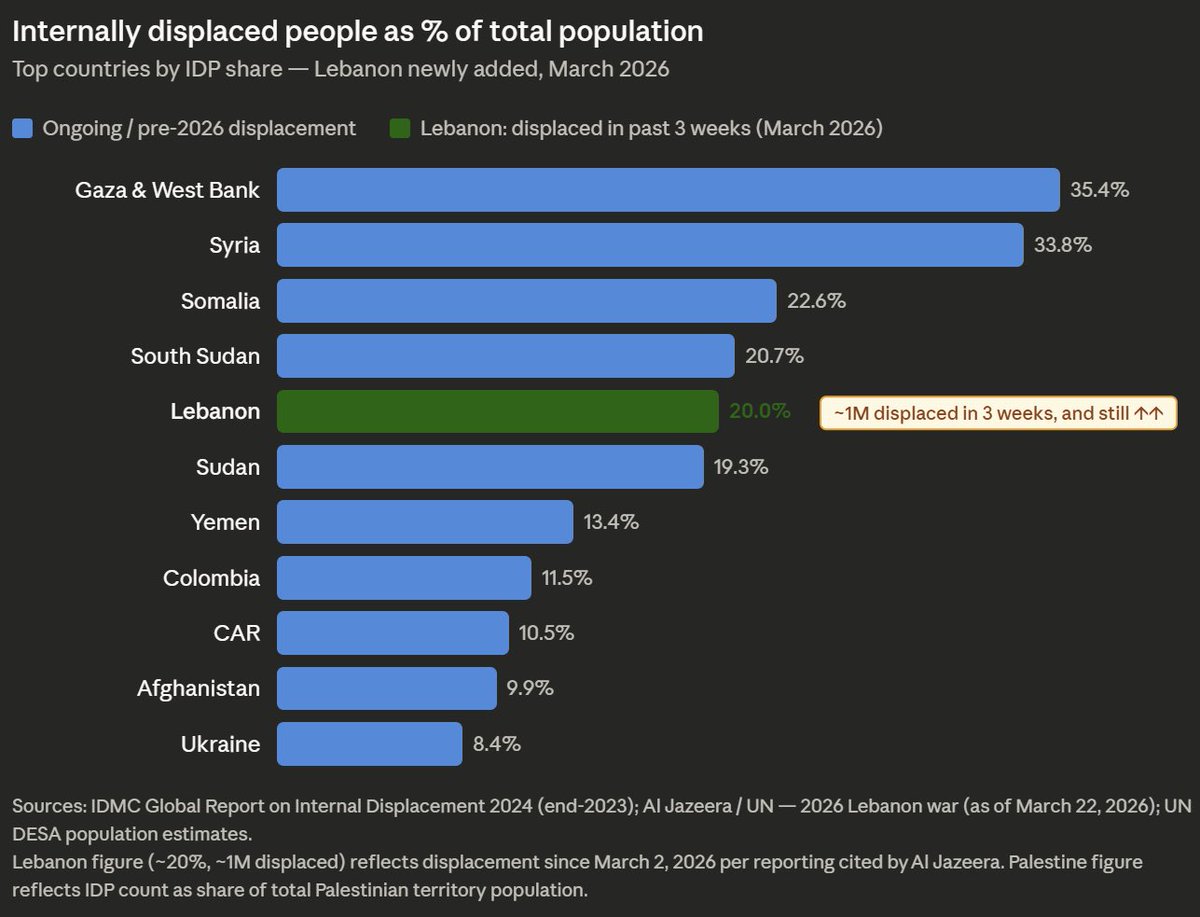
One in five Lebanese displacement in three weeks by Israel’s invasion
Lebanon is facing a humanitarian crisis after one in five Lebanese have been displaced following Israel’s invasion of the south of the country in the fastest displacement in recent history.
Israel is preparing to seize a third of Lebanon and annex it to the Golan Heights, which it annexed from Syria.
The head of the Knesset Committee on Internal Affairs and the Environment, Yitzhak Kroyzer, said about Lebanon: "There is no other choice but to expel and clear the entire territory up to the Litani River, to cleanse it of Lebanese civilians... Sovereignty and settlement."
Gaza, Syria, Somalia and South Sudan have all seen larger displacements, ranging from 20% of the population in South Sudan to 35% in Gaza, but Israel has displaced around a million Lebanese, or 20% of the population in just three weeks since the war in Iran broke out three weeks ago, according to figures compiled from UN and IDMC data and cited by Al Jazeera.
“Israel has pushed Lebanon into the ranks of the world’s worst displacement crises almost overnight,” according to reporting shared with Middle East Eye. “Syria and Somalia took years to reach this level. Israel did this in three weeks.”
Tel Aviv launched a ground operation after Hezbollah joined in the fray in the first few days following the assassination of Supreme Leader Ayatollah Ali Khamenei on March 2 and says it wants to take permanent control of the south of the country up to the Litani River.
The surge follows intensified military activity that has expanded beyond southern border into more densely populated areas, triggering widespread civilian movement and straining already fragile infrastructure. Aid agencies have warned that a humanitarian is looming as Lebanon’s capacity to absorb further displacement is limited.
Regional spillover risks are also rising, as neighbouring countries monitor the potential for further population flows and instability. Analysts note that the size of the displacement in Lebanon is unusual even by recent Middle Eastern conflict standards, where mass internal movements typically build over extended periods.

No comments:
Post a Comment