.jpg)
April 8, 2026
Gateway House
By Coomi Kapoor
With Iran in the news, the Parsi community in India is finding that their peripheral connection to the country evokes interest. Iran is the land of their very distant ancestry. Parsis are the followers of the prophet Zarathustra, who preached the ancient Persian faith, considered the world’s oldest monotheistic religion. It exercised a profound influence on later religions such as Judaism, Christianity and Islam on issues such as heaven, hell and the Day of Judgement.
Parsis see themselves as inheritors of the glorious traditions of two great Persian empires, the Achaemenid (550-330 BCE) and the Sassanid (224-651 CE). The ruins of Persepolis, standing majestically atop a hill, an architectural marvel of the ancient world, are a reminder of the legacy of the mighty Persian empire founded by Cyrus the Great was fortified by Darius the First. A replica of the `Cylinder of Cyrus’ from 539 BC is preserved in the United Nations building in New York and is acknowledged as the world’s first bill of human rights. The Old Testament refers to Cyrus, King of Persia, who conquered Babylon and set free the Jews who had lived in captivity for 70 years, allowing them to return to Jerusalem. The Book of Ezra refers to Cyrus as “Anointed of “The Lord”, a term normally reserved for Jewish prophets.
The Parsis fled Persia for India about a century after the Sassanid empire collapsed and Persia came under Arab control following the Battle of Nahavand in 642 CE. India and Persia were two ancient civilisations with a deep connection and similar roots. Their early dialects, Vedic Sanskrit and Avestan, are sister languages with many common words, sometimes with opposite meanings. Their religions have several common concepts, including the deification of fire. The commonalities between the two countries continue. The most obvious is an extensive vocabulary of familiar words: khush, jabardast, hafta, sal, pyar mohbat, muskeelian, meherbani, tehzeeb, etc.
Persian was the official language for the Indian courts, administration and literature under the Mughal emperors and even early British rule. The fabled mosques and palaces of Persia, with their brilliant colours and delicate workmanship, was the inspiration for India’s Mughal monuments. Great Persian poets like Firdosi, Omar Khayam, Hafez, Rumi and Sa’di had a huge impact on Indian literature. Despite their theocratic state, the Iranians have remained proud of their pre-Islamic heritage, whether it is Persepolis or the Tomb of Cyrus. The winged Farohar, symbol of the Zoroastrian deity Ahura Mazda, can be seen on some Islamic houses and across tourist shops in the country.
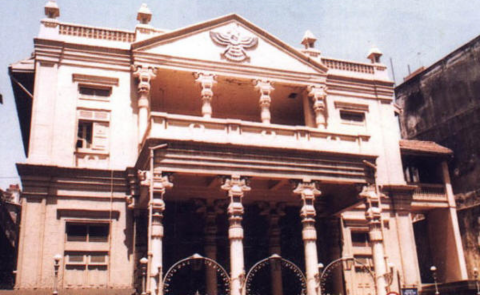
Anjuman Atash Bahram, Mumbai, with the winged Farohar symbol at the top. Image credits: Heritage India
Iranians constantly emphasised that they were Persian Aryans as opposed to being of Arabic origins like most of West Asia. Many Iranians steadfastly continue to celebrate the ancient spring festival of Navroze with flowers and fruit decorations despite the disapproval of hardline Muslim clerics.
The Persian civilisational journey is a contrast with that of Pakistan, which inherited the famous cradle of civilisation, Mohenjo Daro, in Sindh. Few Pakistanis visit this glorious site; the locals feel little ancestral connection to the site, preferring to trace their roots to West Asia and not to Mohenjo Daro, despite being of sub-continental ethnicity.
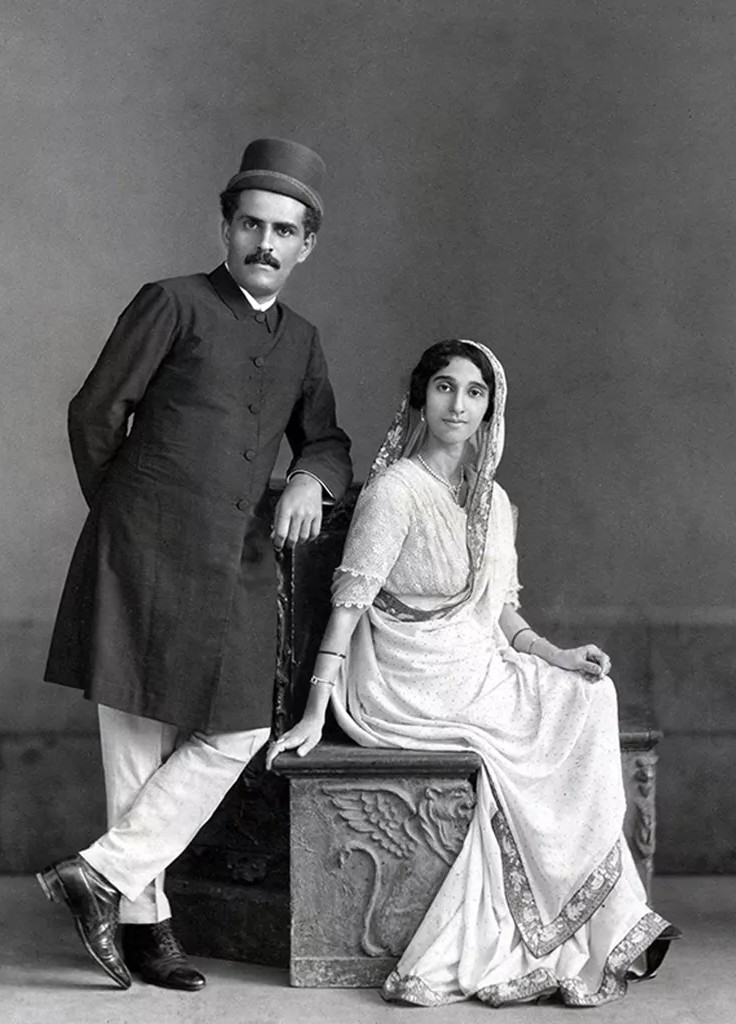
Persia and India’s impact on each other go back to antiquity. But the extent of the Persian influence on the Parsi identity is more difficult to quantify. Till the 19th century, and even today for formal occasions, the Parsis have elements of Persian style in their dress code, including covering their heads. Men still wear long, stiff, lacquered black pagris or black prayer caps to the fire temple. Parsi women took to the sari early, but Persian elegance with bold colours and refined design is seen in their Chinese-style embroidered gharas. Their success in cultivating fruit orchards, usually chikoos or mangoes. is often attributed to their Persian heritage.
Iranians constantly emphasised that they were Persian Aryans as opposed to being of Arabic origins like most of West Asia. Many Iranians steadfastly continue to celebrate the ancient spring festival of Navroze with flowers and fruit decorations despite the disapproval of hardline Muslim clerics.
The Persian civilisational journey is a contrast with that of Pakistan, which inherited the famous cradle of civilisation, Mohenjo Daro, in Sindh. Few Pakistanis visit this glorious site; the locals feel little ancestral connection to the site, preferring to trace their roots to West Asia and not to Mohenjo Daro, despite being of sub-continental ethnicity.
Persia and India’s impact on each other go back to antiquity. But the extent of the Persian influence on the Parsi identity is more difficult to quantify. Till the 19th century, and even today for formal occasions, the Parsis have elements of Persian style in their dress code, including covering their heads. Men still wear long, stiff, lacquered black pagris or black prayer caps to the fire temple. Parsi women took to the sari early, but Persian elegance with bold colours and refined design is seen in their Chinese-style embroidered gharas. Their success in cultivating fruit orchards, usually chikoos or mangoes. is often attributed to their Persian heritage.
Wedding photograph of a Parsi couple in traditional attire from the 1900’s. Image credits: Chitravali
Rock icon Freddie Mercury, though a Parsi who consciously tried to hide his identity, in an unguarded moment admitted that his flamboyant persona was because he was a “Persian Popinjay”.

Rock icon Freddie Mercury, though a Parsi who consciously tried to hide his identity, in an unguarded moment admitted that his flamboyant persona was because he was a “Persian Popinjay”.
Farrokh Bulsara, aka Freddie Mercury (centre), with his father, Bomi, and mother, Jer Bulsara, who were a part of the Parsi community from Bulsar (present-day Valsad), Gujarat. Image credits: Mid-Day
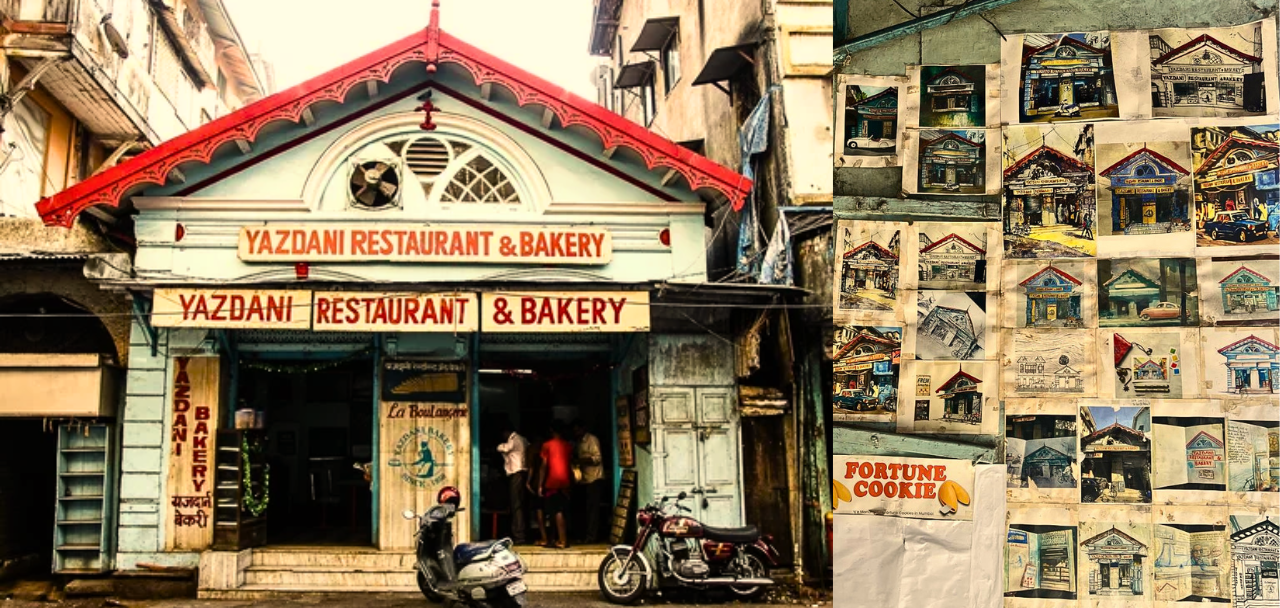
Persian influence is also glimpsed in Parsi food, where fruit and nuts are common embellishments in savoury dishes. The later Zoroastrian immigrants, the Iranis, who arrived in India in the 19th and 20th centuries looking for better opportunities, set up several bakeries and cafes in Mumbai in the style of those back in Iran. Most familiar Parsi names, such as Meher, Feroze, Hormaz, Darius, Jamshed, Dinshaw, Rustom, Sorab, Niloufer, Roxana et al., continue to be popular not just in Iran but all over West Asia. The names are from Avestan times and appear in Zoroastrian folklore and history.
Persian influence is also glimpsed in Parsi food, where fruit and nuts are common embellishments in savoury dishes. The later Zoroastrian immigrants, the Iranis, who arrived in India in the 19th and 20th centuries looking for better opportunities, set up several bakeries and cafes in Mumbai in the style of those back in Iran. Most familiar Parsi names, such as Meher, Feroze, Hormaz, Darius, Jamshed, Dinshaw, Rustom, Sorab, Niloufer, Roxana et al., continue to be popular not just in Iran but all over West Asia. The names are from Avestan times and appear in Zoroastrian folklore and history.
Yazdani Bakery, 73 years old, is one of Mumbai’s iconic Iranian bakeries. Much loved by locals, it has been cherished through paintings and artworks, as seen on the left.
Despite this deep cultural connect, however, Parsis do not identify with Iran as the mother country. They left for India in the eighth century after more than a 100 years of religious persecution following the Arab invasion of Persia and assimilated completely with India, even while rigidly maintaining their own identity and religion. The local people named the new arrivals Parsis since they came from the Pars region in Iran. Zoroastrians who left Iran, however, retained ties with their co-religionists back home over the centuries through messages known as Rivayats. But while initially it was the Indian side which deferred to the spiritual advice from their fellow believers in Iran, gradually the tables turned as the Parsis became more prosperous and influential and the Iranian Zoroastrians more marginalised.
For instance, when the Iranian Zoroastrians pointed out the inaccuracies in the Parsi calendar, with spring falling in August, many Parsi scholars declined to own their mistake in calculation. While back in Iran and much of Central Asia, modern-day Navroze and spring are ushered in on the basis of the vernal equinox and not calendars. Orthodox Parsis stick dogmatically to their own calendar. They did eventually reach a compromise – but only to dub the new equinox festival as Jamshedji Navroz.
In the mid-nineteenth century, prominent Parsis, enlisting the help of the British government, sought to alleviate the lot of their Zoroastrian brethren in Iran by getting the jizya tax – levied for centuries by the Muslim rulers on all non-Muslim communities such as Jews, Christians and Zoroastrians was abolished by 1882, encouraging them to settle in India with their assistance.
The 20th century’s self-anointed Iranian monarchs, Reza Shah Pahlavi and his son Mohammed Reza Shah II, impressed with the achievements of the progressive Parsis in India, attempted to persuade them to return to Iran. Though Parsis often referred approvingly to II as “apro Shah” (Our Shah) since his family has assumed the title Pahlavi from pre-Islamic Persia and he celebrated the 2,500-year anniversary of Cyrus’s dynasty with jaw-dropping extravagance, he could not be enticed to leave India. The Shah, by playing up Persia’s ancient glory, only further alienated the Muslim theocracy and may have contributed to the Islamic revolution.[1]
In 19th-century British Raj India, Christian missionaries who converted a Parsi boy taunted the Parsis, suggesting that they recited their prayers by rote without understanding them. This motivated the Parsis to take renewed interest in learning the dead languages of Persia, in which their scriptures are written. The generations of Parsi boys were made to study the language of their liturgical texts in Avestan, the extinct Persian language dating back to 1500 BCE.
It has similarities to Vedic Sanskrit and Pahlavi spoken from the 3rd to the 7th century CE. Today, Zoroastrianism and the early Persian language are taught in a few educational institutions in India, such as the K.R. Cama Oriental Institute in Mumbai and the Bhandarkar Oriental Research Institute, Pune, and some centres in the West, such as SOAS in London, are funded by Parsi trusts. But in present-day Iran, there seems to be little interest in learning this ancient language.
Despite this deep cultural connect, however, Parsis do not identify with Iran as the mother country. They left for India in the eighth century after more than a 100 years of religious persecution following the Arab invasion of Persia and assimilated completely with India, even while rigidly maintaining their own identity and religion. The local people named the new arrivals Parsis since they came from the Pars region in Iran. Zoroastrians who left Iran, however, retained ties with their co-religionists back home over the centuries through messages known as Rivayats. But while initially it was the Indian side which deferred to the spiritual advice from their fellow believers in Iran, gradually the tables turned as the Parsis became more prosperous and influential and the Iranian Zoroastrians more marginalised.
For instance, when the Iranian Zoroastrians pointed out the inaccuracies in the Parsi calendar, with spring falling in August, many Parsi scholars declined to own their mistake in calculation. While back in Iran and much of Central Asia, modern-day Navroze and spring are ushered in on the basis of the vernal equinox and not calendars. Orthodox Parsis stick dogmatically to their own calendar. They did eventually reach a compromise – but only to dub the new equinox festival as Jamshedji Navroz.
In the mid-nineteenth century, prominent Parsis, enlisting the help of the British government, sought to alleviate the lot of their Zoroastrian brethren in Iran by getting the jizya tax – levied for centuries by the Muslim rulers on all non-Muslim communities such as Jews, Christians and Zoroastrians was abolished by 1882, encouraging them to settle in India with their assistance.
The 20th century’s self-anointed Iranian monarchs, Reza Shah Pahlavi and his son Mohammed Reza Shah II, impressed with the achievements of the progressive Parsis in India, attempted to persuade them to return to Iran. Though Parsis often referred approvingly to II as “apro Shah” (Our Shah) since his family has assumed the title Pahlavi from pre-Islamic Persia and he celebrated the 2,500-year anniversary of Cyrus’s dynasty with jaw-dropping extravagance, he could not be enticed to leave India. The Shah, by playing up Persia’s ancient glory, only further alienated the Muslim theocracy and may have contributed to the Islamic revolution.[1]
In 19th-century British Raj India, Christian missionaries who converted a Parsi boy taunted the Parsis, suggesting that they recited their prayers by rote without understanding them. This motivated the Parsis to take renewed interest in learning the dead languages of Persia, in which their scriptures are written. The generations of Parsi boys were made to study the language of their liturgical texts in Avestan, the extinct Persian language dating back to 1500 BCE.
It has similarities to Vedic Sanskrit and Pahlavi spoken from the 3rd to the 7th century CE. Today, Zoroastrianism and the early Persian language are taught in a few educational institutions in India, such as the K.R. Cama Oriental Institute in Mumbai and the Bhandarkar Oriental Research Institute, Pune, and some centres in the West, such as SOAS in London, are funded by Parsi trusts. But in present-day Iran, there seems to be little interest in learning this ancient language.
[1] Avesta.org. “The Persian Rivayats.” Edited by Ervad Bamanji Nusserwanji Dhabhar.
https://www.avesta.org/rivayats/rivayats.htm
About the author:
Coomi Kapoor is the author of The Tatas, Freddie Mercury and Other Bawas: An Intimate History of the Parsis.
Source: This article was written for Gateway House: Indian Council on Global Relations.

No comments:
Post a Comment