Op-Ed: An Urgent Need for Quicker and Cheaper Naval Procurement
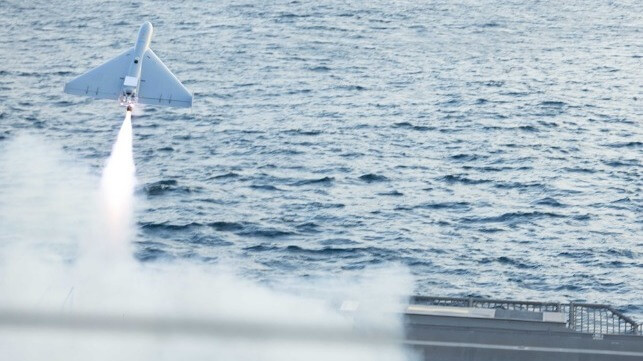
Conflict in Ukraine, over the last several years in the Near East, and now over Iran, has done nothing to undermine a truth established in warfare for centuries: success cannot be achieved unless the winning side has sailors who are well-trained, tenacious and skillfully led, this moral and human component to fighting capability often being overlooked.
But at the same time, recent experience in particular demonstrates that the ability to innovate technically – at a pace faster than one’s enemy – is up there alongside the moral and human component as a key battle-winning ingredient. Technical innovation comes both in the form of new weapons systems, but also in the ability to field defenses against whatever novel capability your enemy is deploying.
In the Black Sea, Ukrainian sea and air drones have swept the surviving units of the Russian Black Fleet out of the Crimea - from where they threatened Odesa - to far-away Novorossiysk, allowing merchant traffic to resume from Ukrainian ports. On land, drones constantly overhead for a depth of up to 50 miles behind the frontline are preventing the Russians from resupplying forward positions, and are breaking up assault formations even before they get near assembly areas. In the deep strike zone, Ukrainian Flamingo FP-5 cruise missiles, now in volume production, are systematically destroying Russia’s western oil and gas export terminals. These are all new systems, domestically produced, at low cost and in a hurry.
With the Houthis having conducted an extended proof of capability demonstration, providing years of warning of what such systems were capable of by drastically reducing merchant traffic through the Red Sea, their Iranian sponsors are using the same drones and missiles systems to close down the Strait of Hormuz. Iran is damaging not only forward U.S. naval and ground force locations but is also causing serious damage to the critical infrastructure in GCC countries. Years were squandered not deploying cheap and effective counter-measures to defeat these systems, whose capabilities and survivability were well-advertised; the Iron Dome counter-battery system showed that there are technical solutions to the problem, but very few – some now the victims of Iranian aggression – have responded to the capability deficit with any urgency.
Lulled by decades of relative peace, speed and urgency of capability deployment is a recurring issue. Both the United Kingdom and the United States navies have been working on remote mine clearance technologies for many years. Both withdrew their minesweeper flotillas from the Gulf in the weeks before the outbreak of the current conflict, but before the new technology had been procured and deployed. Why is it taking so long to deploy the new technology, and who permitted these glaring capability gaps to emerge against well-known and escalating threats?
Both the United Kingdom and the United States have a similar ‘taking forever’ approach to drone capability flying off ships, having been conducting trials for years. The United Kingdom in particular could have ameliorated the shortage of F-35s and airborne early warning and made their two carriers credible platforms by getting drones into service. Instead, the Italians and Turks have demonstrated how - with will, drive and vision - the TB-3 drone can be brought into naval service quickly, delivering in this instance both strike and persistent surveillance capability. It is a similar story with groundbreaking sea mine clearance technology being developed by firms such as ZeroUSV and sea drones by MGI Engineering: procurement is being drawn out and stymied by every conceivable bureaucratic obstacle.
Traditional well-established military powers are being outclassed and outgunned by nations with less sclerotic procurement systems – either nations with drive and ambition, or those motivated by pressing national security issues, such as Azerbaijan, Israel, Ukraine – and of course Houthi-controlled Yemen and Iran. The Chinese are likely to be a much more demanding competitor, and likely to be a lot less forgiving of any adversary who falls behind in the technology race.
European nations in particular need to do better. With support from the United States much less certain, there is particular need to speed up both the scale and the innovative character of defense procurement. Armin Papperger, CEO of Germany's Rheinmetall AG, recently disparaged the pioneering value of Ukraine's “housewife-built” drone-related technology – which has successfully fended off Russian aggression and is now eagerly being snapped up by Gulf states. This can be taken as a warning that defense procurement should not be left solely in the hands of the traditional military-industrial complex. Disruptors and innovators are needed to speed delivery, introduce technical innovation and to lower costs.
There are signs that the requirement for urgency is being understood, not the least in the horrified reaction to the message from Rheinmetall. The UK Ministry of Defence’s Nightfall program - launched in January - seeks to have three competitors test-firing new low-cost 300 mile-range tactical ballistic missiles before the end of this year, as a precursor to production for Ukraine. If the Nightfall program succeeds, it will be a wake-up call for the European armaments industry and a pathfinder for a new style of rapid procurement.
The opinions expressed herein are the author's and not necessarily those of The Maritime Executive.
On-Demand Manufacturing: A New Direction for Marine & Energy Parts Sourcing
For decades, global supply chains operated with predictable lead times and stable delivery expectations. End users ordered parts from OEMs, who built and delivered them within an agreed timeframe.
Over the past decade, marked by COVID-19 disruption and rising geopolitical tension, the fragility of traditional supply chains has been exposed. Under increasing pressure from end users, OEMs are now being forced to consider alternative production models.
In the maritime and energy sectors assets are built to last, with many now exceeding 20 years of age. Continuing safe and efficient operation often relies on the availability of legacy parts which may be difficult to source as OEMs discontinue production in favour of newer components.
When lead times extend beyond operational tolerance, buyers are forced into difficult decisions. The alternative is often the “gray market,” non-genuine parts that may carry significant risk but offer faster availability. Price is often not the issue; when a vessel must sail, the cost of waiting can far exceed the cost of the part itself. While OEMs can attempt to mitigate this through pre-stocked inventory, this approach is capital-intensive and inherently inflexible.
At the same time, expectations are evolving. Shipyards are increasingly requiring suppliers to provide digitised designs for parts - particularly for systems used for handling energy. However, many OEMs lack the internal capability to meet these requests.
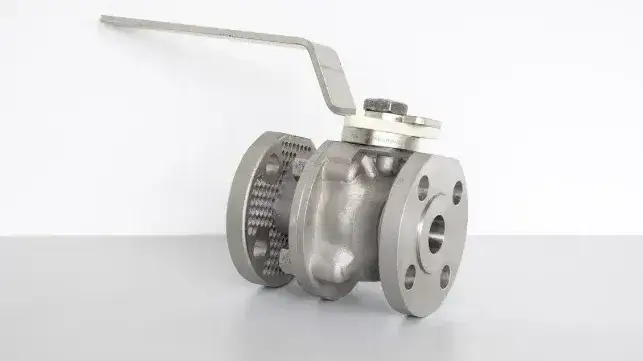
A different model is now emerging. On-demand manufacturing, enabled by digital inventories, allows parts to be produced closer to the point of need, reducing lead times while maintaining control over quality and specification. Rather than relying solely on centralized production and physical stock, OEMs can digitize parts and access distributed manufacturing capacity when and where it is required.
Providers such as Pelagus enable this model through secure digital inventories of both current and legacy parts, combined with access to a global network of verified manufacturing partners. This approach allows OEMs to retain control of design, quality and traceability, while significantly improving responsiveness.
If, for example, a company in Brazil urgently requires a replacement pump, but the OEM cannot meet the end-user’s delivery schedule, the OEM can request that a manufacturing supplier based in South America fulfils the order. Using the digitized design, that supplier can seamlessly create the part to the OEM’s exact specifications, with its rapid delivery made possible through a global logistics supply chain.
Manufacturing partner must-haves
For this model to succeed, trust is critical. OEMs must have confidence that their intellectual property is protected, that manufacturing partners meet the required technical and regulatory standards, and that every part can be fully traced from design through to delivery.
This requires engineering expertise to define and digitise parts correctly, alignment with classification societies to ensure certification readiness, and full accountability across manufacturing, testing and inspection. Once a part has been digitised and validated, repeat production can be executed with minimal intervention, enabling consistent quality alongside reduced lead times.
Traceability underpins the entire process. Digital files must be approved and controlled by the OEM, and every stage of production must be documented to ensure compliance with industry requirements. The objective is not simply faster production, but controlled, repeatable and certifiable manufacturing at scale.
Oversight continues beyond manufacturing with rigorous testing and inspection to ensure that the finished part meets or exceeds the required quality standards.
We believe that adoption will follow the precedent set by CNC machining in the 1990s: slow initially, then accelerating as early adopters report the benefits. Where marine and energy equipment parts are concerned, the technology to change the game is here and proven. For OEMs, it presents an opportunity to reduce lead times, maintain control, and respond more effectively to the realities of critical assets in operation.
Haakon Ellekjaer is CEO of Pelagus, a joint venture built upon the industrial expertise of Wilhelmsen and thyssenkrupp.
The opinions expressed herein are the author's and not necessarily those of The Maritime Executive.

No comments:
Post a Comment