The Iran War Has Finally Exposed Japan’s Achilles Heel
- Energy crises expose structural vulnerabilities: like Germany’s past reliance on Russian gas, Japan is now highly exposed due to heavy dependence on Middle Eastern oil via the Strait of Hormuz.
- The disruption has hit Japan hard, triggering market declines, slower economic growth, rising energy costs, and forcing emergency measures like reserve releases and increased coal use.
- Japan is scrambling to adapt by diversifying oil imports, investing in U.S./Alaskan supply, and accelerating renewables and nuclear power to reduce long-term dependence.
Global energy crises often act as severe stress tests that expose deep, structural fragilities in global supply chains that are erstwhile ignored. Such crises reveal weaknesses that extend far beyond fuel availability, causing systemic disruptions to industrial manufacturing, trade routes and food security. A good case in point is Germany, which effectively boxed itself into a corner with its decades-long energy policies.
Before the 2022 Russian invasion of Ukraine, successive German governments pursued an energy policy that significantly increased the country's dependence on Russian oil and gas, primarily driven by economic considerations, cheap energy needs, and the belief in driving political change through economic cooperation. Germany’s Energiewende focused on a dual phase-out of nuclear and coal while rapidly expanding renewables. By 2021, Germany imported 55% of its natural gas from Russia, making it highly vulnerable to energy supply shocks.
And now Japan is facing a similar fate. For decades, the country’s strategy of deeply embedding itself in the Gulf's energy system in a bid to secure ample domestic supplies for the resource-poor nation worked like a charm, thanks to the region’s abundant and cheap fossil fuel resources. Prior to the conflict, Japan imported over 90% of its crude oil and about 11% of its LNG from the Middle East, with Saudi Arabia and UAE its top suppliers. Unfortunately, this meant that the vast majority of Japan’s crude supply imports passed through the Middle East. In fact, Japan was even more reliant on Middle Eastern energy commodities than Germany and Europe were on Russian gas before the war. The de facto closure of the Strait of Hormuz by Iran and its allies has effectively blocked the route for ~95% of Japan’s Middle Eastern oil, a five-alarm fire that has thrown its economy and financial markets into a tailspin.
The Nikkei 225 has borne the brunt of the war, tumbling in double digits within the first few weeks of the conflict while business confidence in Japan's services sector has sunk to its lowest level since the pandemic. The IMF has projected that Japan’s economy will only expand by 0.8% in 2026, with a potential 3% contraction if the fuel crisis persists. Meanwhile, household electricity bills are projected to increase by ¥15,000 (USD $95) from April 2026 due to higher LNG import costs.
On the energy front, Japan has adopted several measures to cope with the ongoing crisis. The government began releasing oil from its national and private reserves on March 16, with plans to release up to 90 million barrels, or enough for roughly 45-50 days of domestic supply. That marks the largest release from the country’s strategic reserves. The government has also resumed state subsidies to stabilize gasoline prices and cap gasoline prices at ¥170 per litre after prices surged to a record-high of more than ¥190 per liter in mid-March. Further, Japan is reducing its immediate reliance on oil-fired power generation. The country has increased the utilization rate of coal-fired thermal power plants, securing coal supplies from Australia and Indonesia. The government has even given the greenlight for older, less efficient coal-fired equipment to operate for one year starting in April 2026.
Meanwhile, the Japanese government and private oil companies are frantically trying to secure alternative sources, including oil from outside the Middle East to bypass the Strait of Hormuz. Japan is reaching out to suppliers in Central Asia, South America and Canada while negotiations with Venezuela, a former supplier, are currently underway. Following high-level discussions with the U.S., Japan is exploring a joint effort to boost Alaskan oil production. Japan plans to invest in Alaskan oil infrastructure, including investing in loading facilities to facilitate the transport of Alaskan crude, as part of a broader $550 billion bilateral investment program between the two countries. Oil from Alaska takes about 12 days to reach Japan, compared to over 20 days from the Middle East.
Over the long-term, Tokyo is adopting several measures to lower dependence on the Middle East. First off, there is renewed pressure to accelerate the transition to renewable energy sources, including offshore wind and solar, in a bid to boost energy self-sufficiency. Last year, the government set an ambitious goal for renewable energy to reach up to 50% of the electricity mix by 2040. A major policy shift now allows for offshore wind development in Exclusive Economic Zones (EEZs), aiming to boost wind's share of electricity from 1% to 8% by 2040. At the same time, subsidies for large-scale, ground-mounted solar power are scheduled to be phased out from fiscal 2027 to encourage rooftop solar and address land-use concerns.
Finally, Tokyo is also focusing on boosting nuclear energy use, a complete 180 from its previous stance. Under the new 7th Strategic Energy Plan, Japan is shifting from reducing nuclear dependency to maximizing its use, including extending reactor lifespans beyond 40 years and developing next-generation reactors. In January, Tokyo Electric Power Company (TEPCO) restarted Unit 6 of the Kashiwazaki-Kariwa Nuclear Power Station, the world's largest nuclear plant, following a 15-year shutdown triggered by the 2011 Fukushima disaster. The restart of this single unit is expected to boost electricity supply to the Tokyo area by roughly 2% and displace significant liquefied natural gas (LNG) imports. Japan has now successfully restarted about half of its 33 operable reactors, with the government introducing new funding schemes to speed up the process.
By Alex Kimani for Oilprice.com
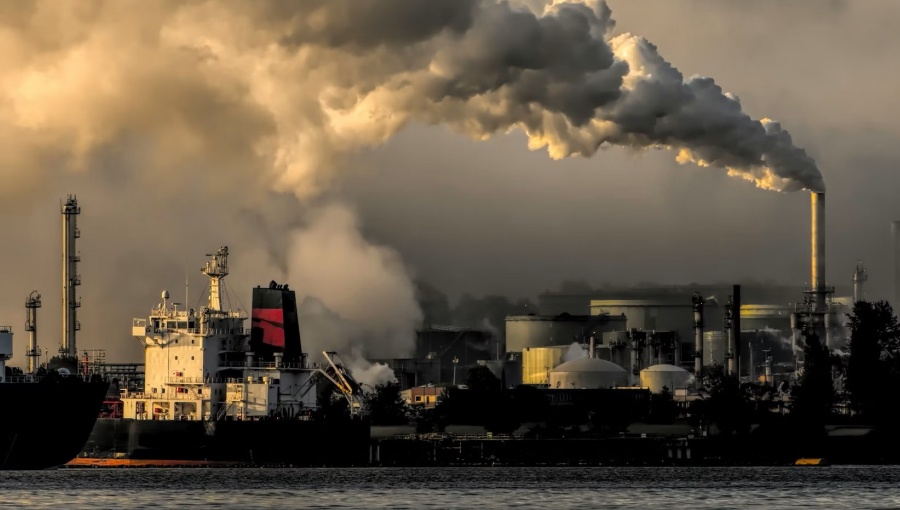
The war in Iran has delivered a systemic shock to global energy markets, but few regions have felt the strain as acutely, or quite as quickly, as Southeast Asia. With the region being highly exposed to Middle Eastern supply routes and structurally dependent on imported hydrocarbons to supply power and fuel cars and trucks, Southeast Asia now finds itself grappling with a volatile mix of LNG shortages, oil supply disruptions and subsequent rising fuel prices. The result is a policy scramble across regional capitals that blends short-term crisis management with longer-term efforts at recalibration of energy policy.
At the heart of the disruption lies the effective closure of the Strait of Hormuz, through which roughly 20% of global oil and a significant share of the planet’s LNG flows – notwithstanding recent deals by a number of regional governments with the Iranian regime to permit limited numbers of vessels through the Strait.
For Asia, the dependency on the Strait is so pronounced that a full 84% of crude oil and 83% of LNG transiting the Strait in 2024 was bound for the region. The consequences of this chokepoint disruption have been immediate – and far reaching. Brent crude has surged to around $110 per barrel at times, well above the $70–85 range that prevailed through much of the past two years, and should Tehran refuse to abide by the conditions laid down in a Trump White House effort at peace talks by 8pm EDT on March 7, the $110 number could be left behind as prices rise again.
For Southeast Asia, thousands of miles east of the Strait, the shock is amplified by structural vulnerability. While countries such as Malaysia and Indonesia are themselves producers of LNG at least, and a limited amount of oil, the region as a whole has become increasingly import-dependent as domestic reserves decline and demand rises. This imbalance has translated into acute exposure to both price volatility and physical shortages.
Nowhere is this more evident than in the region’s LNG markets – just at a time Asia was moving closer to the once-widespread belief that LNG is the ideal transitional fuel as the world moves to a future goal of all-out renewables use.
Asian LNG prices have surged by around 85% since the onset of the conflict, at one stage exceeding even the peaks seen during the 2022 global energy crisis. In some cases, the increase has been even more dramatic with broader estimates suggesting that spot LNG prices in Asia have risen by more than 140% in places following disruptions to Qatari supply.
The knock-on effects are being felt across Southeast Asian economies. Governments from Thailand to the Philippines have introduced wide ranging conservation measures such as remote work policies, reduced operating hours and in some cases, fuel rationing. In the Philippines, oil reserves have fallen to roughly 45 days of supply according to local reports, while hundreds of petrol stations have shut amid tightening availability. Airlines across Asia have cut routes, and industrial users are curbing output as rising diesel and jet fuel costs cut into profits.
The surge in global oil benchmarks has already filtered into domestic fuel markets, pushing up the cost of gasoline and diesel in most countries across the region. In import-dependent economies, this has then translated into broader inflationary pressures, particularly in the transportation and food sectors with fertiliser costs which are linked to both natural gas and oil, also increasing. This in turn is threatening agricultural output in high population countries such as Vietnam and Indonesia.
Faced with these pressures, most Southeast Asian governments have adopted a three-pronged response of diversification coupled to substitution and intervention.
Diversification has been the most immediate lever, with Middle Eastern supplies constrained as Southeast Asian countries have en-masse turned to alternative sources, notably the Atlantic Basin. Imports of Brazilian fuel oil more than doubled to over 1mn tonnes in March which is helping to ease some shortages in trading and bunkering hubs such as Singapore and Malaysia. Indonesia too has sought to diversify crude imports, reaching out to Africa and the US.
Substitution, however, has been more controversial. In looking for readily available power sources as the warmer summer months approach, a number of Asian economies, including several in Southeast Asia, as well as those in Northeast and South Asia, have switched back to coal-fired generation to help offset LNG shortages. While effective in the short term, this shift risks undermining long-standing climate commitments. Crucially, it also reflects the limited flexibility of energy systems that have for so long been working to go green but still remain heavily dependent on imported fuels.
Intervention meanwhile, has taken the form of subsidies and price caps, with governments attempting to shield consumers from the full impact of rising gasoline and diesel prices. In some countries though, fiscal constraints are already seen as limiting the sustainability of such measures.
The scale of the disruption on global power supply, described by the International Energy Agency in recent days as the most severe energy problem in history, means that even aggressive policy responses can only partially offset the shock, however. As a result, industrial activity in the region and elsewhere around the world is already being curtailed. Financial markets have reacted sharply, with regional equities shedding billions in value and yo-yoing each time Donald Trump makes a speech or looks to be approaching a deal under which the fighting will cease and the Strait will reopen.
To this end, the broader economic implications are significant. Analysts have already estimated that the energy shock could shave up to 1.3% off growth in developing Asia.
Yet the crisis may also prove catalytic as the disruption has exposed the risks of over-reliance on a single geographic supply corridor and is likely to accelerate efforts to diversify energy sources regardless of when the war ends.
Investment in renewables will rise as regional power grids and domestic energy infrastructure investment gains momentum. But this all takes time.
For now, Southeast Asia remains in reactive mode. The combination of LNG and oil shortages coupled to rising gasoline and diesel prices is testing both economic resilience and policy flexibility everywhere. If and when Southeast Asia emerges more secure power-wise depends on how quickly it can shift the current power crisis into adaptation then longer-lasting change.

No comments:
Post a Comment