COMMENT: The US and Israel ostracised by the global community
For most of the first year of the Trump administration, America's so-called western allies spent most of their time flattering, toadying and attempting to manipulate the US President's ego in a vain effort to rescue the fast decaying transatlantic "special relation." They even agreed to more than double their military spending from 2% of GDP to 5% at the Nato summit in the Hague on the implicit understanding that most of this money would be spent on US-made arms.
Now they have given up. Things have spun out of control to the point where global leaders, not just those in Europe, have reached a tipping point and are actively trying to break away from any dependency on the US.
President Donald Trump's heavy-handed, indiscriminate use of military force and decapitation schemes, his aggressively bullying tactics, and his crass rhetoric have become unbearable.
He told Saudi Arabia's Crown Prince Mohammed bin Salman (MbS), one of his strongest allies in the Gulf, that he could "kiss my ass" after he had the audacity to sign a defence pact with Ukrainian President Volodymyr Zelenskiy without asking the White House permission. The next day, MbS said he would no longer buy US weapons. "Those days are over," the prince said. More recently, Trump went further to threaten that "everyone in Iran will die" if the Islamic Republic didn't comply with his demand to open the Strait of Hormuz again.
Italian Prime Minister Giorgia Meloni also lambasted Trump over remarks directed at the Pope. Trump had said, "The Pope is weak against crime and he is not doing his job well. He is terrible for foreign policy."
Meloni responded that such comments were "unacceptable", defending the role of the head of the Catholic Church. "The Pope is the head of the Catholic Church and it is right and normal for him to call for peace and to condemn every form of war," she said, the first sitting prime minister to publicly challenge Trump over his comments on the Pope.
Trump is coming across as increasingly delusional and incompetent. The preparations for the Iran war were reportedly minimal. Now his demonstrable failure to win is leading to the break-up of the decades old western alliance. What has changed is that America's so-called allies have lost their fear of Trump and are openly defying the White House.
Europe has been flattering Trump with copies of old maps and portraits for over a year. The EU's top brass were happy to ignore the nonsense the US commander-in-chief regularly spouts, and European Commission President Ursula von der Leyen submitted to a humiliating one-way street trade deal and a "delusional" energy deal. The head of Nato even called him "Daddy" in a press conference. The leaders would do anything if they thought it would ensure transatlantic security and weapons supplies for Ukraine.
Those efforts have come to nought. Instead Trump has unleashed the largest military conflict since the end of WWII and the "worst oil crisis in history" according to Goldman Sachs.
But now he is losing the war to a heavily sanctioned and nominally backward Iran, the Global North elite has run out of patience. The global economy is now infected with a crisis-virus and is unstoppable, even if the war stops tomorrow. It spreads down the supply chains, and Trump is floundering in his efforts to halt it. International leaders' displeasure with Trump has graduated from mere disdain to "enough is enough."
And it's not just the Europeans. As images come in of the 168 Minab school children slaughtered by a US Tomahawk missile strike – however, that happened – or Israel's wanton flattening of every residential building it can find in southern Lebanon, condemnation of Trump has become loud and explicit. International leaders have called for his arrest. Domestic politicians are calling for his impeachment.
Israel's full-scale invasion of Lebanon and Israeli Prime Minister Benjamin Netanyahu's immediate refusal to participate in the two-week ceasefire deal and the murderous bombing of civilians in Beirut the very next day have crystallised sentiments.
Condemnation of the Iranian war was to be expected by his rivals in Russia and China, and it clearly wasn't going to be welcomed by the main customers for Gulf state oil and gas in Asia, but the surprise is that the criticism of the US-Israeli coalition has become almost universal.
For most of the first year of the Trump administration, America's so-called western allies spent most of their time flattering, toadying and attempting to manipulate the US President's ego in a vain effort to rescue the fast decaying transatlantic "special relation." They even agreed to more than double their military spending from 2% of GDP to 5% at the Nato summit in the Hague on the implicit understanding that most of this money would be spent on US-made arms.
Now they have given up. Things have spun out of control to the point where global leaders, not just those in Europe, have reached a tipping point and are actively trying to break away from any dependency on the US.
President Donald Trump's heavy-handed, indiscriminate use of military force and decapitation schemes, his aggressively bullying tactics, and his crass rhetoric have become unbearable.
He told Saudi Arabia's Crown Prince Mohammed bin Salman (MbS), one of his strongest allies in the Gulf, that he could "kiss my ass" after he had the audacity to sign a defence pact with Ukrainian President Volodymyr Zelenskiy without asking the White House permission. The next day, MbS said he would no longer buy US weapons. "Those days are over," the prince said. More recently, Trump went further to threaten that "everyone in Iran will die" if the Islamic Republic didn't comply with his demand to open the Strait of Hormuz again.
Italian Prime Minister Giorgia Meloni also lambasted Trump over remarks directed at the Pope. Trump had said, "The Pope is weak against crime and he is not doing his job well. He is terrible for foreign policy."
Meloni responded that such comments were "unacceptable", defending the role of the head of the Catholic Church. "The Pope is the head of the Catholic Church and it is right and normal for him to call for peace and to condemn every form of war," she said, the first sitting prime minister to publicly challenge Trump over his comments on the Pope.
Trump is coming across as increasingly delusional and incompetent. The preparations for the Iran war were reportedly minimal. Now his demonstrable failure to win is leading to the break-up of the decades old western alliance. What has changed is that America's so-called allies have lost their fear of Trump and are openly defying the White House.
Europe has been flattering Trump with copies of old maps and portraits for over a year. The EU's top brass were happy to ignore the nonsense the US commander-in-chief regularly spouts, and European Commission President Ursula von der Leyen submitted to a humiliating one-way street trade deal and a "delusional" energy deal. The head of Nato even called him "Daddy" in a press conference. The leaders would do anything if they thought it would ensure transatlantic security and weapons supplies for Ukraine.
Those efforts have come to nought. Instead Trump has unleashed the largest military conflict since the end of WWII and the "worst oil crisis in history" according to Goldman Sachs.
But now he is losing the war to a heavily sanctioned and nominally backward Iran, the Global North elite has run out of patience. The global economy is now infected with a crisis-virus and is unstoppable, even if the war stops tomorrow. It spreads down the supply chains, and Trump is floundering in his efforts to halt it. International leaders' displeasure with Trump has graduated from mere disdain to "enough is enough."
And it's not just the Europeans. As images come in of the 168 Minab school children slaughtered by a US Tomahawk missile strike – however, that happened – or Israel's wanton flattening of every residential building it can find in southern Lebanon, condemnation of Trump has become loud and explicit. International leaders have called for his arrest. Domestic politicians are calling for his impeachment.
Israel's full-scale invasion of Lebanon and Israeli Prime Minister Benjamin Netanyahu's immediate refusal to participate in the two-week ceasefire deal and the murderous bombing of civilians in Beirut the very next day have crystallised sentiments.
Condemnation of the Iranian war was to be expected by his rivals in Russia and China, and it clearly wasn't going to be welcomed by the main customers for Gulf state oil and gas in Asia, but the surprise is that the criticism of the US-Israeli coalition has become almost universal.
Spain steps out
Spanish Prime Minister Pedro Sánchez has emerged as the star of the show. Spain had already closed its airspace to US military supply flights bound for the Middle East and barred vessels carrying weapons to Israel from docking in Spanish ports.
At the same time, Sánchez has imposed an arms embargo on Israel and said Spain will veto any Nato involvement in operations linked to the Strait of Hormuz.
"Spain won't applaud those who set the world on fire just because they then show up with a bucket," Sánchez said, in a direct rebuke to Washington.
But he has gone well beyond the normal rhetoric and called for Israeli Prime Minister Benjamin Netanyahu's immediate arrest by the International Criminal Court (ICC) for the 70,000 deaths in Gaza and the murderous airstrikes at the weekend in Beirut.
"No one should be above the law," he said. "Netanyahu launched the worst possible, unjustified attack against Lebanon. His contempt for life and international law is intolerable. He is a criminal who must be arrested immediately."
"There is a difference between defending your country and bombing hospitals or starving innocent children," he added.
The response from Israel was immediate. Netanyahu announced a break in diplomatic relations on April 12, accusing Spain of having an "obsessive anti-Israel bias" and warning that "no country" would be allowed to act against Israel without consequence. "I do not intend to allow any country to wage a diplomatic war against us without paying an immediate price," he said, going on to add veiled threats of physical violence against Spain.
His comments were welcomed with country-wide applause, and top officials joined the PM in the assault. Spanish Health Minister Mónica García described Israel's actions as "war crimes against humanity".
"This man is committing genocide, he committed one of the biggest genocide operations of our time, killing 70,000 civilians in Palestine, more than 20,000 of them are children, and the destruction of southern Lebanon," she said.
When Israel struck back, accusing her of slander, she retorted: "We are not slandering you. We are defining you."
Spain was expelled from the US' Civil-Military Coordination Center (CMCC) in Kiryat Gat, the base helping implement Trump's Gaza peace plan, due to the country's "obsessive anti-Israel bias," according to a government statement. It responded by reopening its embassy in Tehran. In a YouGov poll last month, 66% of Spaniards had an "unfavourable" view of the US, even more than the 45% before Trump's second term began.
Trump has poured fuel on the genocide accusations fire, threatening that, "a whole civilization will die tonight, never to be brought back again" if no deal was struck in the run up to the ceasefire talks on April 11.
In what may prove to be the most significant change as a result of this row, Spain has announced it will buy oil from Iran but pay in Chinese yuan, striking at the heart of the petrodollar system that has been in place for decades and a major source of US power. Indeed, among Iran's demands is to keep control of the Strait of Hormuz, but less well reported is that from now on it will only accept payment in yuan and cryptocurrencies.
Russia and China have long since changed to payments in their national currencies and India is also paying for Russian oil in rupees or rubles. Large regions of non-dollar oil trading have appeared in the last few years, but the Iran war is going to accelerate their spread. This comes at a time when US debt has reached an all-time high of $39 trillion and interest payments are now eating up 15% of US budget spending – more than it spends on defence. It is set to hit 25% in the coming years if nothing changes.
Spanish Prime Minister Pedro Sánchez has emerged as the star of the show. Spain had already closed its airspace to US military supply flights bound for the Middle East and barred vessels carrying weapons to Israel from docking in Spanish ports.
At the same time, Sánchez has imposed an arms embargo on Israel and said Spain will veto any Nato involvement in operations linked to the Strait of Hormuz.
"Spain won't applaud those who set the world on fire just because they then show up with a bucket," Sánchez said, in a direct rebuke to Washington.
But he has gone well beyond the normal rhetoric and called for Israeli Prime Minister Benjamin Netanyahu's immediate arrest by the International Criminal Court (ICC) for the 70,000 deaths in Gaza and the murderous airstrikes at the weekend in Beirut.
"No one should be above the law," he said. "Netanyahu launched the worst possible, unjustified attack against Lebanon. His contempt for life and international law is intolerable. He is a criminal who must be arrested immediately."
"There is a difference between defending your country and bombing hospitals or starving innocent children," he added.
The response from Israel was immediate. Netanyahu announced a break in diplomatic relations on April 12, accusing Spain of having an "obsessive anti-Israel bias" and warning that "no country" would be allowed to act against Israel without consequence. "I do not intend to allow any country to wage a diplomatic war against us without paying an immediate price," he said, going on to add veiled threats of physical violence against Spain.
His comments were welcomed with country-wide applause, and top officials joined the PM in the assault. Spanish Health Minister Mónica García described Israel's actions as "war crimes against humanity".
"This man is committing genocide, he committed one of the biggest genocide operations of our time, killing 70,000 civilians in Palestine, more than 20,000 of them are children, and the destruction of southern Lebanon," she said.
When Israel struck back, accusing her of slander, she retorted: "We are not slandering you. We are defining you."
Spain was expelled from the US' Civil-Military Coordination Center (CMCC) in Kiryat Gat, the base helping implement Trump's Gaza peace plan, due to the country's "obsessive anti-Israel bias," according to a government statement. It responded by reopening its embassy in Tehran. In a YouGov poll last month, 66% of Spaniards had an "unfavourable" view of the US, even more than the 45% before Trump's second term began.
Trump has poured fuel on the genocide accusations fire, threatening that, "a whole civilization will die tonight, never to be brought back again" if no deal was struck in the run up to the ceasefire talks on April 11.
In what may prove to be the most significant change as a result of this row, Spain has announced it will buy oil from Iran but pay in Chinese yuan, striking at the heart of the petrodollar system that has been in place for decades and a major source of US power. Indeed, among Iran's demands is to keep control of the Strait of Hormuz, but less well reported is that from now on it will only accept payment in yuan and cryptocurrencies.
Russia and China have long since changed to payments in their national currencies and India is also paying for Russian oil in rupees or rubles. Large regions of non-dollar oil trading have appeared in the last few years, but the Iran war is going to accelerate their spread. This comes at a time when US debt has reached an all-time high of $39 trillion and interest payments are now eating up 15% of US budget spending – more than it spends on defence. It is set to hit 25% in the coming years if nothing changes.
Western allies pull back
Across the Western alliance, the pattern is consistent: distance, hedging, and in some cases outright refusal. When Trump called on European Nato allies to send their navies to open the Strait of Hormuz, they all refused. Now Trump has called for a naval blockade of Iran, and they have refused to participate in that, too.
The UK and France have called for any ceasefire framework to include Lebanon, which is a direct rebuke of Israel's continued lethal bombing campaign there and its attempt to annex the lower half of the country as part of a "Greater Israel" project. The decades-long stigma of openly criticising anything that Israel does wrong has been broken – except by the US, which is now being tarred by association.
Australia has rejected participation in naval operations in the Gulf. "We need peace that lasts. And we need stable fuel prices. We don't need wars," Prime Minister Anthony Albanese said.
These tensions are leading rapidly to the potential break-up of Nato. Trump's disappointment at Europe's reluctance to support his naval campaign in the Gulf led him to suggest that he would pull the US out of Nato on at least two occasions. Europe is increasingly taking the line: bring it on.
The Netherlands' Chief of Defence confirmed publicly last week that Europe is now actively constructing an independent military capability specifically designed to operate without American participation. The architecture is being built around advanced, lower-cost technology. Suddenly Ukraine and its state-of-the-art drone technology that has proven highly effective in the war with Russia is in demand, while American sophisticated technology has failed in Iran to protect bases and allies in the Gulf. The European move is a deliberate attempt to reduce the dependency on US hardware procurement that has defined Nato logistics for three-quarters of a century. The alliance has not broken, but in anticipation, Europe is quietly installing a second door.
Across the Western alliance, the pattern is consistent: distance, hedging, and in some cases outright refusal. When Trump called on European Nato allies to send their navies to open the Strait of Hormuz, they all refused. Now Trump has called for a naval blockade of Iran, and they have refused to participate in that, too.
The UK and France have called for any ceasefire framework to include Lebanon, which is a direct rebuke of Israel's continued lethal bombing campaign there and its attempt to annex the lower half of the country as part of a "Greater Israel" project. The decades-long stigma of openly criticising anything that Israel does wrong has been broken – except by the US, which is now being tarred by association.
Australia has rejected participation in naval operations in the Gulf. "We need peace that lasts. And we need stable fuel prices. We don't need wars," Prime Minister Anthony Albanese said.
These tensions are leading rapidly to the potential break-up of Nato. Trump's disappointment at Europe's reluctance to support his naval campaign in the Gulf led him to suggest that he would pull the US out of Nato on at least two occasions. Europe is increasingly taking the line: bring it on.
The Netherlands' Chief of Defence confirmed publicly last week that Europe is now actively constructing an independent military capability specifically designed to operate without American participation. The architecture is being built around advanced, lower-cost technology. Suddenly Ukraine and its state-of-the-art drone technology that has proven highly effective in the war with Russia is in demand, while American sophisticated technology has failed in Iran to protect bases and allies in the Gulf. The European move is a deliberate attempt to reduce the dependency on US hardware procurement that has defined Nato logistics for three-quarters of a century. The alliance has not broken, but in anticipation, Europe is quietly installing a second door.
The ballot box verdict
The political toxicity of the Trump brand is now measurable at the ballot box, and the results are unambiguous. Trump personally endorsed Viktor Orban twice this year and dispatched Vice President JD Vance to Budapest in the final days of the Hungarian campaign. According to local pollsters, the visit cost the incumbent prime minister three percentage points. Orban was crushed regardless.
The pattern has repeated itself across three continents. In Romania, the pro-Trump candidate George Simion went into election day as the strong favourite and lost by a landslide. In Australia, the centre-left won after conservatives were successfully branded as Trumpian. In Canada, the Liberals were headed for a historic defeat until Trump's tariff threats and annexation rhetoric around Canadian sovereignty flipped the race entirely, producing one of the most dramatic reversals in that country's recent political history.
Even within European domestic politics, association with Washington is becoming a liability. Right-wing parties that previously aligned with Trump — including France's National Rally and Germany's Alternative für Deutschland — are softening those links as polling turns against the Donald. Surveys suggest 64% of Europeans now view Trump negatively, with support for US alignment in core EU states falling into single digits. The far right, with its reliable instinct for self-preservation and the popular mood, has concluded that Washington has become too toxic to touch.
US Vice President JD Vance endorsed Hungarian Prime Minister Viktor Orban's re-election, a move that knocked 3% off his approval rating, according to local pollsters.
The political toxicity of the Trump brand is now measurable at the ballot box, and the results are unambiguous. Trump personally endorsed Viktor Orban twice this year and dispatched Vice President JD Vance to Budapest in the final days of the Hungarian campaign. According to local pollsters, the visit cost the incumbent prime minister three percentage points. Orban was crushed regardless.
The pattern has repeated itself across three continents. In Romania, the pro-Trump candidate George Simion went into election day as the strong favourite and lost by a landslide. In Australia, the centre-left won after conservatives were successfully branded as Trumpian. In Canada, the Liberals were headed for a historic defeat until Trump's tariff threats and annexation rhetoric around Canadian sovereignty flipped the race entirely, producing one of the most dramatic reversals in that country's recent political history.
Even within European domestic politics, association with Washington is becoming a liability. Right-wing parties that previously aligned with Trump — including France's National Rally and Germany's Alternative für Deutschland — are softening those links as polling turns against the Donald. Surveys suggest 64% of Europeans now view Trump negatively, with support for US alignment in core EU states falling into single digits. The far right, with its reliable instinct for self-preservation and the popular mood, has concluded that Washington has become too toxic to touch.
US Vice President JD Vance endorsed Hungarian Prime Minister Viktor Orban's re-election, a move that knocked 3% off his approval rating, according to local pollsters.
Canada: leaving, not drifting
Canada is shifting more structurally. Prime Minister Mark Carney told parliament his country is also ending longstanding US defence procurement. He argued that Washington is "beginning to monetize its hegemony" and said of the decades of military spending, "Those days are over." The announcement drew a standing ovation — a rare political signal for what is, in effect, strategic decoupling. For decades, Canada directed roughly 70 cents of every defence dollar to the US.
A recent poll found that nearly 60% of Canadians now support their country becoming a full member of the EU – the last bastion of the liberal rules-based order that Canada shares. That number would have been unthinkable three years ago. Canada is not drifting away from the US. It is leaving.
Canada is shifting more structurally. Prime Minister Mark Carney told parliament his country is also ending longstanding US defence procurement. He argued that Washington is "beginning to monetize its hegemony" and said of the decades of military spending, "Those days are over." The announcement drew a standing ovation — a rare political signal for what is, in effect, strategic decoupling. For decades, Canada directed roughly 70 cents of every defence dollar to the US.
A recent poll found that nearly 60% of Canadians now support their country becoming a full member of the EU – the last bastion of the liberal rules-based order that Canada shares. That number would have been unthinkable three years ago. Canada is not drifting away from the US. It is leaving.
Embraces in the Global South
The Global South was never convinced of the US' self-proclaimed right to be "leader of the free world," but they went along with it as the US has the most powerful military in the world and remains the biggest consumer market on the planet.
Those calculations have altered now. Under the previous regime the US stuck to trade regimes and, provided you didn't cross the White House politically, the rest of the world's second tier "emerging markets" were largely left to their own devices. Under Trump, now an innocent country that was previously an ally like Greenland can suddenly find itself a target because the Trump administration wants to acquire its raw material bounty for "national security" reasons.
Trump has ditched international law and ignores the 1945 UN charter that guarantees the sovereignty of nations. He believes the only morality there is "is in my head." In the Global South, the US is increasingly seen as a belligerent loose cannon.
Countries that have circled in the US orbit as a useful counterweight to the local superpowers like Russia and China are now abandoning efforts to flirt with Washington. Azerbaijan has reopened its embassy in Tehran. Ireland has formally recognised the state of Palestine. Brazil has cancelled a $134mn arms deal with Israel.
"I want to say this loudly and clearly," President Luiz Inácio Lula da Silva told reporters. "The Israeli president is committing genocide against women and children. This is a historical fact," in a bald condemnation of Israel that would have been unthinkable as little as a month ago.
Russia and China have been vocal, if predictably so. "As long as China, Russia and Iran exist," Vladimir Putin said, "it is impossible for anyone to behave like a global ruler."
Pakistan has raised the temperature to an altogether different register, issuing an explicit nuclear warning: "If Israel uses a nuclear bomb, Pakistan will respond with a nuclear strike on Israel." North Korea has announced it will "punish Israel" in any scenario involving an attack on Iran. And Pyongyang's threats carry weight as it holds an estimated 50 nuclear warheads and its longest-range ICBMs can fly a theoretical 10,000km – enough to reach Israel.
The Global South was never convinced of the US' self-proclaimed right to be "leader of the free world," but they went along with it as the US has the most powerful military in the world and remains the biggest consumer market on the planet.
Those calculations have altered now. Under the previous regime the US stuck to trade regimes and, provided you didn't cross the White House politically, the rest of the world's second tier "emerging markets" were largely left to their own devices. Under Trump, now an innocent country that was previously an ally like Greenland can suddenly find itself a target because the Trump administration wants to acquire its raw material bounty for "national security" reasons.
Trump has ditched international law and ignores the 1945 UN charter that guarantees the sovereignty of nations. He believes the only morality there is "is in my head." In the Global South, the US is increasingly seen as a belligerent loose cannon.
Countries that have circled in the US orbit as a useful counterweight to the local superpowers like Russia and China are now abandoning efforts to flirt with Washington. Azerbaijan has reopened its embassy in Tehran. Ireland has formally recognised the state of Palestine. Brazil has cancelled a $134mn arms deal with Israel.
"I want to say this loudly and clearly," President Luiz Inácio Lula da Silva told reporters. "The Israeli president is committing genocide against women and children. This is a historical fact," in a bald condemnation of Israel that would have been unthinkable as little as a month ago.
Russia and China have been vocal, if predictably so. "As long as China, Russia and Iran exist," Vladimir Putin said, "it is impossible for anyone to behave like a global ruler."
Pakistan has raised the temperature to an altogether different register, issuing an explicit nuclear warning: "If Israel uses a nuclear bomb, Pakistan will respond with a nuclear strike on Israel." North Korea has announced it will "punish Israel" in any scenario involving an attack on Iran. And Pyongyang's threats carry weight as it holds an estimated 50 nuclear warheads and its longest-range ICBMs can fly a theoretical 10,000km – enough to reach Israel.
Israel in the spotlight
Opposition to the US-Israeli campaign is no longer fragmented or confined to traditional adversaries. It is converging, and it is acquiring a quality of simultaneity that is new.
Israel just lost its strongest supporter in Europe – Hungarian Prime Minister Viktor Orban, who was blocking attempts to condemn or sanction Israel for atrocities it has committed in Gaza in return for Israel's influence in the US. However, amongst the first things Hungary's new Prime Minister Peter Magyar has done is to call for Hungary to rejoin the International Criminal Court (ICC), which has an arrest warrant out for Israeli Prime Minister Benjamin Netanyahu on war crimes charges.
Relations with Turkey, Israel's rival in the region, have also been rubbed raw. Following the indictment by Turkish prosecutors of 35 senior Israeli officials over Israel's interception of a Gaza-bound flotilla in October 2025, President Recep Tayyip Erdoğan delivered an unvarnished rebuke of the government in Tel Aviv, although contrary to several reports he did not go as far as to threaten an invasion.
The Israeli response was immediate and unrestrained. Foreign Minister Israel Katz dismissed Erdoğan as a "paper tiger." National Security Minister Itamar Ben-Gvir, himself among the 35 officials targeted by Turkish prosecutors, responded with a two-word expletive. Netanyahu accused Erdoğan of harbouring Hamas and massacring his own Kurdish citizens. In televised remarks Netanyahu defended the IDF as the "most moral army in the world," and threatened Erdoğan with "punishment" for disrespecting the Israeli military.
In the war of words that has broken out, Turkey's Foreign Ministry replied that Netanyahu was "the Hitler of our time" and that he had "no moral values or legitimacy to preach to anyone." Israel has since announced the closure of its embassy and consulates in Turkey. A relationship that was already strained has now collapsed entirely — and with it, one of the last bridges between Israel and a major Muslim-majority Nato member.
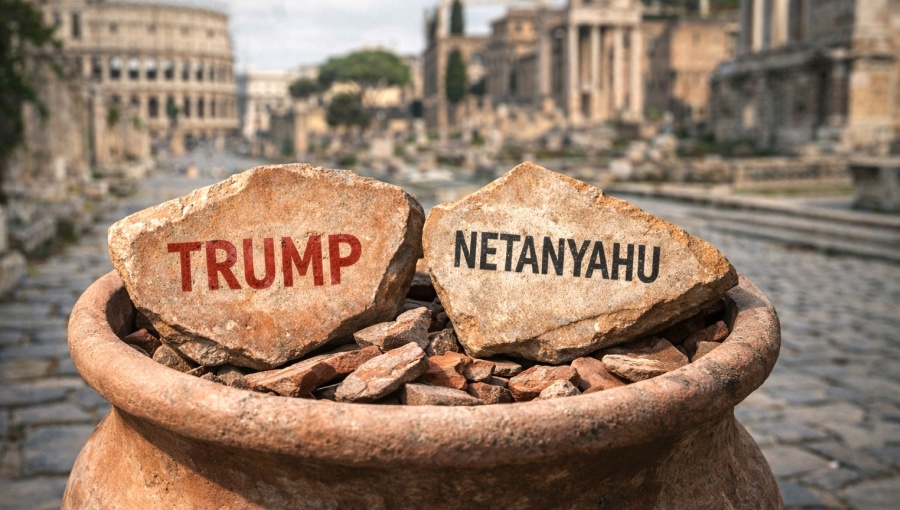
With their aggressive rhetoric and cavalier abuses of what were allies, both Netanyahu and Trump are painting themselves into a corner of isolation and opprobrium by the international community, from which they will not easily recover.
Edited 08:30 UTC
Opposition to the US-Israeli campaign is no longer fragmented or confined to traditional adversaries. It is converging, and it is acquiring a quality of simultaneity that is new.
Israel just lost its strongest supporter in Europe – Hungarian Prime Minister Viktor Orban, who was blocking attempts to condemn or sanction Israel for atrocities it has committed in Gaza in return for Israel's influence in the US. However, amongst the first things Hungary's new Prime Minister Peter Magyar has done is to call for Hungary to rejoin the International Criminal Court (ICC), which has an arrest warrant out for Israeli Prime Minister Benjamin Netanyahu on war crimes charges.
Relations with Turkey, Israel's rival in the region, have also been rubbed raw. Following the indictment by Turkish prosecutors of 35 senior Israeli officials over Israel's interception of a Gaza-bound flotilla in October 2025, President Recep Tayyip Erdoğan delivered an unvarnished rebuke of the government in Tel Aviv, although contrary to several reports he did not go as far as to threaten an invasion.
The Israeli response was immediate and unrestrained. Foreign Minister Israel Katz dismissed Erdoğan as a "paper tiger." National Security Minister Itamar Ben-Gvir, himself among the 35 officials targeted by Turkish prosecutors, responded with a two-word expletive. Netanyahu accused Erdoğan of harbouring Hamas and massacring his own Kurdish citizens. In televised remarks Netanyahu defended the IDF as the "most moral army in the world," and threatened Erdoğan with "punishment" for disrespecting the Israeli military.
In the war of words that has broken out, Turkey's Foreign Ministry replied that Netanyahu was "the Hitler of our time" and that he had "no moral values or legitimacy to preach to anyone." Israel has since announced the closure of its embassy and consulates in Turkey. A relationship that was already strained has now collapsed entirely — and with it, one of the last bridges between Israel and a major Muslim-majority Nato member.
With their aggressive rhetoric and cavalier abuses of what were allies, both Netanyahu and Trump are painting themselves into a corner of isolation and opprobrium by the international community, from which they will not easily recover.
Edited 08:30 UTC

No comments:
Post a Comment