Friday, April 17, 2026


Is Iran War Another Vietnam for the US? No, It’s Even Worse

It will not be a localized loss in a specific theater of the American Imperium, like Vietnam and Iraq and Afghanistan were. It will be the defeat on a global scale of the Imperium itself.



Soldiers of the United States Army 9th Infantry Division 3 Battalion, armed with M16A1 rifles, as they walk through long grass during a patrol in Tan An, South Vietnam, 23rd January 1970.
(Photo by Bettmann Archive via Getty Images)

Robert Freeman
Apr 17, 2026


Twenty-two years ago this week, I published an article in this space, “Is Iraq Another Vietnam?” It proved prescient, for the Iraq War was, inevitably, lost. Part of the reason—and this was the burden of that article—was that the US hadn’t learned the obvious lessons from Vietnam, the first war America had ever lost. Nor has it, since.


Because of that, Iran, too, will prove another Vietnam: not the first or even the second or third war America ever lost, but certainly the most consequential. It will not be a localized loss in a specific theater of the American Imperium, like Vietnam and Iraq and Afghanistan were. It will be the defeat on a global scale of the Imperium itself. It’s worthwhile understanding why this has happened.

The contexts for Vietnam and Iran are different, but they bear haunting similarities; situations the US couldn’t stay out of, but conflicts it couldn’t win, either. That is the working definition of “quagmire.”

Vietnam became a US challenge in the most perilous years of the Cold War. India had joined the Soviet camp when it gained independence, in 1947. China went communist in 1949. The Korean War ended in 1953 but was only fought to a draw. The Vietnamese defeated the French at Dien Bien Phu in 1954. The US was clearly losing the Cold War, at least in Asia.

By its actions, the US has explicitly, unambiguously repudiated its legitimacy as the global leader. It is taking care of itself, and to hell with everybody else.

In the middle of all that, Vietnam declared that it wanted to detach from the US orbit and align itself with the Soviet Union. If successful, it would be a model to the scores of other nations in Africa and Asia that were then fighting Western imperial powers to become free, themselves, from centuries of colonial bondage.

Where it ended, nobody could tell. President Dwight D. Eisenhower saw dominos falling from Vietnam through Cambodia, Thailand, Burma, all the way to the Persian Gulf and the world’s greatest supply of oil. It had to be stopped.

Because of this, there was no way the US could stay out of Vietnam. But neither would it ever be able to win. Why?

Ho Chi Minh had approached Harry Truman in 1946 asking for US help in ejecting the French who had occupied his country as a colony since 1870. Truman not only didn’t help Vietnam, he sided with the French. That was the “original sin” that made it impossible for the US to ever “win the hearts and minds” of the Vietnamese people, and, therefore, to ever win the war.

Iran: fraught with the seeds of defeat

The stage, today, is no longer the Cold War but the global transition to multipolarity. The Global South wants to end the unipolar era of US dominance and replace it with a more equitable, peaceful, collaborative, sovereignty-respecting global order. The US doesn’t want that. It wants to retain its position as global hegemon. But it is faltering, badly.

It lost its war in Iraq. It lost its war in Afghanistan. It isn’t announced, yet, but it has lost its war against Russia, through its proxy, Ukraine. The US destroyed incalculable moral stature through its lusty, broad-spectrum support of Israel’s genocide of the Palestinians. It’s hard to fathom more rapid, self-inflicted imperial damage.

As for its economy, the US is actuarily bankrupt. It deindustrialized in the 1980s and 1990s, moving its manufacturing base to low-cost countries. That forced it to have to borrow $38 trillion in the past 45 years (almost $1 trillion a year). It will never be repaid. If foreign countries do not help fund the US’ $2-odd trillion per year budget deficit (in a good year), the lights will go out. That’s not hysteria. It’s accounting.

Meanwhile, China has blown by the US, lifting more people out of poverty in a shorter period of time, than has any country, ever. It became the largest economy in the world, in 2014. China dominates the planet in all manner of manufacturing, trading, exports, and development assistance to other countries. It is the global economic powerhouse of the 2020s that the US was in the 1950s.

The US strategy to deal with this epic, decades-long decline is to try to seize control of the world’s oil and use that control to extort wealth from all the other countries of the world, especially China. It is pure banditry masquerading as muscular strategy.

That’s what the destruction of Libya and Iraq were all about. It’s what the attack, via Ukraine, against Russia was about. It’s what the piracy of seizing Venezuela’s oil was about. It’s what this illegal, unprovoked attack on Iran is about. Control the oil. The US doesn’t have a Plan B to regain its privileged perch atop the global order. It has to try to make this strategy work.

But, as was the case in Vietnam, the US will not be able to win, here, either. The reasons are eerily similar.

In 1953 (the same time the US was helping the French fight the Vietnamese), the US staged a coup d’etat against Mohammed Mossadegh, the democratically elected leader of Iran. It installed a brutal dictator, the Shah Reza Pahlavi, who ruled until he was deposed in the Islamic Revolution of 1979.

In 1980, in retaliation for Iranians taking back control of their own government, the US had its local proxy, Iraq, under Saddam Hussein, attack Iran. The Iran-Iraq War lasted until 1988 and killed an estimated 500,000 Iranians. Since then, the US has imposed a harsh regimen of sanctions against Iran designed to foster domestic discontent and undermine the Iranian state.

So, just as it had done to the 35 million Vietnamese, the US has unified 93 million Iranians into a visceral, unshakable compact against it. That unification was solidified when, in February, President Donald Trump tried to decapitate the Iranian leadership. That gambit backfired, spectacularly, unifying the county even more.

So, that’s the context. As was the case with Vietnam, the US can’t afford to stay out. But it won’t be able to win, either. Again, that is the definition of “quagmire,” the essential, fateful trap of the US in Vietnam.

What about strategy?

In both wars, the US relied on overwhelming force to bring the enemy to submission. In Vietnam, it dropped 12,000,000 TONS of bombs, four times the tonnage dropped in all theaters in all of World War II, combined. Did it work? Obviously not.

The US lost the war, including 58,000 soldiers killed and another 300,000 wounded. It spent $450 billion, or $3 trillion in today’s dollars. It wrecked its economy, inflicted traumatic civic pain on itself, and grievously damaged its reputation in the world.

Against such overwhelming force, Vietnam’s strategy was enervation: Stay alive and sap the foe of its will to fight. Knowing the superiority of US fire power, the North Vietnamese army avoided direct conflicts. It fought opportunistically, when odds favored it, and melted away when necessary, to preserve men, ammunition, and weapons. Did this work? Obviously, it did.

Even though the US inflicted 9 casualties for each 1 it incurred, it couldn’t sustain those losses in its war-fighting context. As more and more boys came home in body bags, the American people demanded the war be ended. The Vietnamese watched this seething, swelling discontent and waited the Americans out. Ho Chi Minh commented, “Eventually, the Americans will tire of their losses and will have to go home.” He was right.

Iran’s strategy reflects many learnings from Vietnam, mainly the learning of resilience. It knew it could not match US firepower. It had to do only two things. It had to survive a withering first attack. And it had to have deep enough resources to deliver a devastating counterattack. It has done this, brilliantly.

Within 48 hours of the US first strike, Iran took out almost all US radar installations in the Persian Gulf, leaving the US largely sightless. Then, it waited while the US fired off thousands of offensive missiles and defensive interceptors, gravely depleting its finite inventories. Then, it began its counterattack.

It decimated more than a dozen US bases in the Persian Gulf, including the Al Udeid airbase in Qatar, the largest air base in the Middle East. Al Udeid is and was the headquarters of the US’ Combined Air Operations Center, which manages US air assets from North Africa to South Asia.

It dealt extensive damage to the Manama Naval Base in Bahrain, the headquarters of the US Fifth Fleet responsible for naval activities in that part of the world. It has destroyed more than 40 US aircraft and billions of dollars worth of other military assets. It drove the USS Gerald Ford aircraft carrier, the largest military ship ever built, from the field of battle.

With both the US and Israel having fired a huge share of their existing stocks of missiles in the expectation of a quick decapitation, they are left gravely exposed. Iran has declared “missile dominance” over Israel, easily choosing the time, place, and nature of the attacks it now freely rains down.

Similarly for the US in the Persian Gulf. Its open-aired military assets with radars destroyed are becoming defenseless against sustained fusillades of Iranian drones and missiles. The US has proven unable to protect its Gulf allies—Kuwait, Bahrain, Qatar, UAE, Oman, and Saudi Arabia—against Iranian attacks. Hundreds of billions of dollars of their economic assets have been destroyed, recompense for their providing staging areas for US attacks on Iran.

This is why Iran is not intimidated by Trump’s or Pentagon Secretary Pete Hegseth’s childish, simian-like chest beating about “bombing them back to the Stone Age.” By the way, it was Curtis LeMay, head of the US Air Force in Vietnam, who, in response to North Vietnam’s resilience, issued the original threat to “bomb them back to the Stone Age.” Who won that face-off?

The tactic of asymmetric warfare

In Vietnam, the Viet Cong had infiltrated US operations, from military bases and fuel depots to armories, staging yards, and more. A single mole—one individual—so placed, could tip off the enemy about US forces’ planned activities, exposing potentially thousands of soldiers to ambush and death. The asymmetry of such effect is almost impossible to register, or counter. It’s a major reason Vietnam won the war, defeating “the greatest military power the world had ever known.”

In Iran, the asymmetry lies with its control of the Straits of Hormuz through which 20% of the world’s oil flows. It needs only threaten to attack ships and all shipping is stopped. With little more than a feint, a bluff, a head fake, it has inflicted hundreds of billions of dollars of damage on the world through higher oil prices.

Most of the world blames that on the US, since the Strait was open before the war, and Iran had announced it would close the Strait if it was attacked, which the US did, unprovoked. At virtually no cost to itself, Iran can inflict hundreds of billions of dollars of damage, which falls to the discredit of the US in the eyes of the world. That is asymmetry exponentiated. Iran has played it masterfully.

A final word about Vietnam and Iran’s allies.


Vietnam’s allies were the Soviet Union and, to a lesser extent, China. In Iran, they are Russia and China. The difference is that in Vietnam, the Soviet Union and China were nowhere close to being able to challenge US power. In the early 1960s, they even became adversaries, making them still less effective in standing up to US aggression.

Today, Russia has shed its inefficient communist past and crushed US weapons, its proxy, and strategy in Ukraine. China, too, abandoned communism and has crushed US manufacturing, technology, and commerce throughout the world. The two now work more closely than ever to provide a new, non-US-centric paradigm for global organization, one that honors civilizational differences, respects national sovereignty, and promotes collaborative frameworks for national development. Most of the world is lining up behind it.

Where does all this leave us?

The context, strategy, tactics, and alliances in the war all weigh heavily against the US, just as they did in Vietnam. That’s why the US has not achieved any of its objectives. It hasn’t achieved regime change. It hasn’t seized the enriched uranium. It hasn’t deterred Iran from enriching more uranium, nor going for a nuclear weapon. It hasn’t stopped the missile and drone attacks. It hasn’t opened the Strait. It hasn’t undercut Iran’s support of its regional allies: Hezbollah; the Houthis; the Islamic Resistance in Iraq; etc. These things matter, greatly. Here’s why.

The most important public goods a global leader must provide to earn its legitimacy in the eyes of the world are peace, respect for the rule of law, and an economic environment that makes possible prosperity for all. With its nakedly illegal, unprovoked attack on Iran, the US has delivered exactly the opposite: the hottest war in decades, piracy as policy, and a global economic environment that, through higher oil prices, reliably syphons wealth and, therefore, prosperity from every country in the world.

By its actions, the US has explicitly, unambiguously repudiated its legitimacy as the global leader. It is taking care of itself, and to hell with everybody else.

Russia and China, on the other hand, however imperfectly, form an able and ready replacement for the US as the organizing locus of the global community. The world sees the destruction attendant on the US hegemonic model: economic extortion, resource banditry, military thuggery, and diplomatic blackmail. Nobody wants it anymore. Even US allies are distancing themselves from it.

Iran will prove the catalytic event where US primacy in the world was taken down, where it was defeated militarily, broken economically, isolated diplomatically, and humiliated strategically. Had it better learned from its errors in Vietnam, instead of repeating them, again, and again, and again, it might have enjoyed a more graceful, self-directed descent. That is the fatal cost of arrogance, immaturity, and stupidity.

Our work is licensed under Creative Commons (CC BY-NC-ND 3.0). Feel free to republish and share widely.


Robert Freeman

Robert Freeman is the Founder and Executive Director of The Global Uplift Project, a leading provider of educational infrastructure for the developing world. He is the author of The Best One Hour History series whose titles include World War I, The Cold War, The Vietnam War, and many others.
Full Bio >



Trump Admission Proves ‘Saving the Iranians’ Was Never the Goal

The US and Israel’s indiscriminate bombing of schools, hospitals, universities, a synagogue shows the truth of the war’s aims. And it’s not to help the people of Iran.


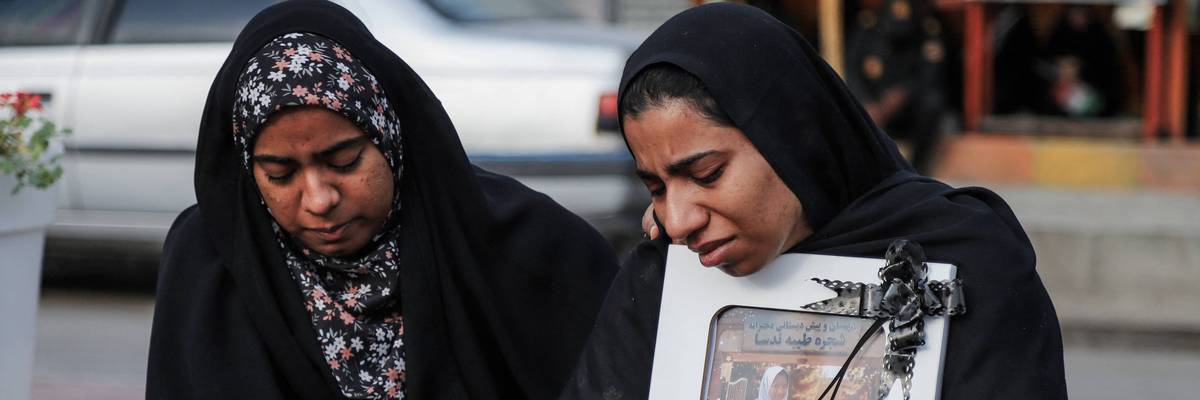
In this picture obtained from Iran’s ISNA news agency, mourners attend the funeral of children killed in a reported strike on a primary school in Iran’s Hormozgan province, in Minab on March 3, 2026.
(Photo by Amirhossein Khorgooei / ISNA / AFP via Getty Images)

Peter F. Crowley
Apr 16, 2026
Common Dreams

Some right-wingers, centrist Democrats, and independents defend the Iran War by citing the Iranian regime’s mass killing of protesters in late 2025 and early 2026. But it doesn’t add up.

The most reliable numbers from the Human Rights Activists News Agency stand around 7,000 people killed, of which over 200 were security forces. The Western media salivated over these numbers, in contrast to the well-documented genocide in Gaza, with some claiming the death toll at 30,000. President Donald Trump has offered no evidence whatsoever to claim 45,000 people were killed. However, the media correctly note that this latest government clampdown was indeed the largest number of protesters killed in the history of the Islamic Republic.

Trump warned that if the Iranian government didn’t stop violence against the protesters, the US would attack Iran. Not too long after, when protests had somewhat died down, the United States launched a second war against Iran during peace negotiations. The stated reasons were all over the place but they can be summed up as follows:

a) Israel was going to attack Iran, Iran would therefore attack US positions, so US attacked first.

b) To diminish Iran nuclear and missile capabilities.

c) To protect Israel from future Iranian attacks.

Last, but not least, this one seemed to stick in people’s minds:

d) Protecting Iranians from their own government.

In the past few weeks, reports confirmed what many had already surmised, completely throwing the “saving Iranians” argument for war out the window. The US was involved in fueling the violence by sending weapons through Kurdish intermediaries to arm Iranian protesters.

The results bore fruit, as intended. The Iranian expert Trita Parsi explained on Democracy Now! that the organized armed elements within the protests attacked civilian infrastructure, mosques, and government forces. This resulted in hundreds of government forces being killed. In response, a far larger number of protesters were killed than in past Iranian protests. The Iranian government is repressive, but this level of violence against protesters indicated something else was at work.

It was the CIA with a tried-and-true method of overthrow and internal political machinations. It called to mind 1953, when Iran was a democracy under Prime Minister Mohammed Mossadegh. Due to his attempts to nationalize the country’s oil, the CIA’s Kermit Roosevelt hatched a plan for a successful coup d’etat after failing a first attempt days earlier.

The CIA paid Iranians to topple statues of the Shah. Pro-democratic Iranians joined in, creating a sense of anarchy. Mossadegh chose not to act against these actions for a day and pro-Shah elements, supported by the US, came into the street shouting “Death to Mossadegh!” Under this contrived sense of disorder, Iranian Colonel Nasiri placed Mossadegh under arrest and the Shah, Mohammed Reza Pahlavi, took power. During the 1970s the Shah became increasingly oppressive (and staunchly backed by the US), leading to the 1979 Islamic Revolution. It was a revolt against historic outside intervention in Iranian politics by the US and Great Britain.

In 1953, the CIA deposed a nationalist democratically elected leader that the US and Great Britain didn’t approve of to get the more pliable ruler. This winter, the US attempted to create a real-life stage play that depicted a fairly oppressive regime that suddenly appeared unrestrained in its use of mass violence against its citizens. The script showed this regime going off the deep end in killing protesters in the thousands within a relatively short period of time. But within this legitimate protest movement, the Kurds (at the behest of the US) distributed weapons that were used to shoot and kill government forces. Imagine, for a second, China arming a US protest movement and hundreds of US police, national guard officers, or ICE members were killed. How would the government respond? 

With smile emojis?

Last week, the rich, historic Iranian civilization that Donald Trump was supposedly at war to protect, he threatened to annihilate. Well before threatening war crimes against Iran, for Americans to believe that a brutal, unjust war was for the wellbeing of the Iranian people was wildly naïve. As if conducting mass violence and indiscriminate attacks against a people and their society would save them. The Secretary of War said as much, stating clearly that the US would not be concerned about “stupid rules of engagement,” which is pretty much a direct admission to war crimes subsequently committed.

The US and Israel’s indiscriminate bombing of schools, hospitals, universities, a synagogue shows the truth of the war’s aims: to crush any opposition to US empire and Israeli regional hegemony, regardless of civilian mass deaths and infrastructure damage incurred. Just as the 1953 coup of Mossadegh put perceived US imperial interests front and center, so did the fueling of violence in the Iranian protests to paint a picture of an Iranian regime gone mad in its violence towards civilians.

So, to the naïve among us, when your government tells you it is killing people to help them, maybe this time think twice.


Our work is licensed under Creative Commons (CC BY-NC-ND 3.0). Feel free to republish and share widely.


Peter F. Crowley

As a prolific author from the Boston area, Peter F. Crowley writes in various forms, including short fiction, op-eds, poetry, and academic essays. His writing can be found in Pif Magazine, New Verse News, Counterpunch, Middle East Monitor, Galway Review, Digging the Fat, Adelaide’s Short Story and Poetry Award anthologies (finalist in both), and The Opiate. He is the author of the poetry books Those Who Hold Up the Earth and Empire’s End, and the short fiction collection That Night and Other Stories.
Full Bio >
It’s No Accident That Trump’s Iran War Steals Money From Healthcare and Education

Trump is currently asking for a $1.5 trillion military budget—a 64% increase in military spending since last year—which provides the budgetary pressure needed to justify gutting necessary programs that have been on the books for decades.


A demonstrator holds a placard in front of the White House in Washington, DC.=, the United States, on April 7, 2026.
(Photo by Li Rui/Xinhua via Getty Images)

Ben Luongo
Apr 16, 2026
Foreign Policy In Focus


Ronald Reagan’s budget director, David Stockman, spoke candidly years ago about why Republicans like tax cuts so much. In his 1986 book, The Triumph of Politics: Why the Reagan Revolution Failed, he confided that tax cuts served the purpose of creating budget deficits that could then be used to justify spending cuts on government programs. Typically, administrations only cut spending for a program if it’s no longer necessary, and the resultant surplus may then be used as a tax cut to stimulate the economy. However, Stockman turned this on its head by using the tax cuts to create a budgetary crisis that would then require cuts in spending regardless of whether the programs were necessary or not.

In other words, Stockman used tax cuts to create a revenue problem that the Reagan administration could then mask as a spending problem. This is known as “starving the beast.” The administration starves the beast—important government services—of important tax revenues in order to slash government spending.

Stockman himself admitted the failure of this strategy since budget deficits during the Reagan administration did not bring down public spending in a meaningful way. This failure, however, didn’t stop the next generation of conservatives from making it a key part of their larger political project. In 2001 and 2003, for instance, George W. Bush pushed through massive tax cuts meant to impose a “fiscal straitjacket” on Congress. This then prompted Bush’s Deficit Reduction Act of 2005 to gut government programs.

Republican lawmakers attempted this again after they took control of the House of Representatives during the Obama administration in 2010. At the time, the US economy was struggling through the Great Recession, which congressional Republicans blamed on government profligacy and “out of control spending.” Not only did they hold the debt ceiling hostage to prevent future spending, but they urged more tax cuts to stimulate the economy. In general, starving the beast has become a more common, and outright underhanded, stratagem by which lawmakers have gone about cutting federal spending.

What happens when conservative lawmakers want to cut more government spending in healthcare or education? Will they manufacture a national security crisis to justify cuts in those social programs?

This strategy has also functioned as a form of class politics: Wealthy elites are often the main beneficiaries of the tax cuts financed by cuts in social services on which the average American is more likely to depend. For instance, Reagan’s 1981 Economic Recovery Tax Act slashed top marginal tax rates from 70% to 50%, a rate that only the top 2% of Americans paid (those rates dropped even further to 28% in 1986). This cut was largely paid for with reductions in Aid to Families with Dependent Children, food stamps, Medicaid funding, student loans, and other social services. The Bush tax cuts of 2001 and 2003 served the same agenda. According to research by the Institute on Taxation and Economic Policy, the richest 20% received 65% of the benefits of those tax cuts, while the top 5% received 38%. Spending was then cut under the Deficit Reduction Act by targeting Medicaid, Medicare, the Migrant and Season Farmworkers Program, literacy programs, and others.

The American public is now far more aware of who has, and who has not, benefited from cuts in taxes and spending, and public opinion makes it harder for lawmakers to starve the beast. New polling shows that only 19% of Americans support the idea of cutting taxes on the wealthy, while 58% say the wealthy should be paying more (this number rises to 63% when asked about large businesses and corporations). At the same time, the majority of Americans want the government to maintain spending on the kinds of programs that are usually targeted, such as Medicaid and food stamps, medical and cancer research, federal childcare programs, or the arts in public schools. In other words, Republican lawmakers are going to have a harder time gutting these programs by further cutting top marginal tax rates.

That is why they are finding new ways to starve the beast. The latest strategy has been to leverage the heavy cost of national security issues.

Nowhere is this more evident than through the US and Israel’s joint war with Iran. The bombing of Iran has proven to be even more expensive than the initial stages of the wars in Afghanistan and Iraq, with the daily burn rate averaging around $1-2 billion a day. Shortly after launching the war in late February, President Donald Trump sought an additional $200 billion from Congress to fund it. The GOP is now using that price tag to plan massive cuts to important government programs.

In early April, for instance, Republicans proposed a reconciliation bill they claim would save $30 billion but would also drive up the out-of-pocket premium costs and increase the number of people without health insurance. Later that week, Trump candidly spoke of his intentions to slash government spending against the backdrop of a budgetary crisis caused by the war:
We’re a big country. We have 50 states. We have all these other people, we’re fighting wars […] Medicaid, Medicare, all these individual things. They can do it on a state basis. You can’t do it on a federal [level]. We have to take care of one thing: military protection—we have to guard the country. But all these little things, all these little scams that have taken place, you have to let states take care of them.

Trump’s claim that the United States can’t afford these programs are patently false. Programs like Medicare and Medicaid are planned spending that are not responsible for budget deficits.

However, the president’s comments make sense when contextualized against his longer-term plans to rein in federal spending. Through the creation of DOGE, Trump attempted to usher in an era of “government efficiency,” which included sharp reductions in several programs including Medicare and Medicaid. Although technically still operational, DOGE is largely seen as a failure as it never achieved its goal of major spending cuts (in fact, government spending increased 6% in 2025).

The Iran war can complete the job that DOGE couldn’t. Trump is currently asking for a $1.5 trillion military budget—a 64% increase in military spending since last year—which provides the budgetary pressure needed to justify gutting necessary programs that have been on the books for decades. In doing so, Trump is essentially reviving the starve-the-beast strategy by fitting it into a large military project.

Although the strategy to starve the beast has changed, the class politics remains the same. Those affected will be those most reliant on programs designed to provide healthcare, education, and food. However, in this case the consequence are no longer restricted to the American taxpayer. The increase in military expenditures will be used to inflict harm upon vulnerable populations abroad. The strikes in Iran have already killed thousands of people and displaced over a million civilians.

The horrifying reality is that this carries the very real danger of becoming a common finance strategy. What happens when conservative lawmakers want to cut more government spending in healthcare or education? Will they manufacture a national security crisis to justify cuts in those social programs? Trump’s war in Iran establishes just such a dangerous precedent. For this reason, the American people must realize that their livelihood at home requires placing greater controls on what a president can do abroad.


© 2023 Foreign Policy In Focus


Ben Luongo is an assistant professor of political science at Union Commonwealth University.
OPINION

The Terrifying Ridiculous Spectacle


America’s insane inept commander-in-chief
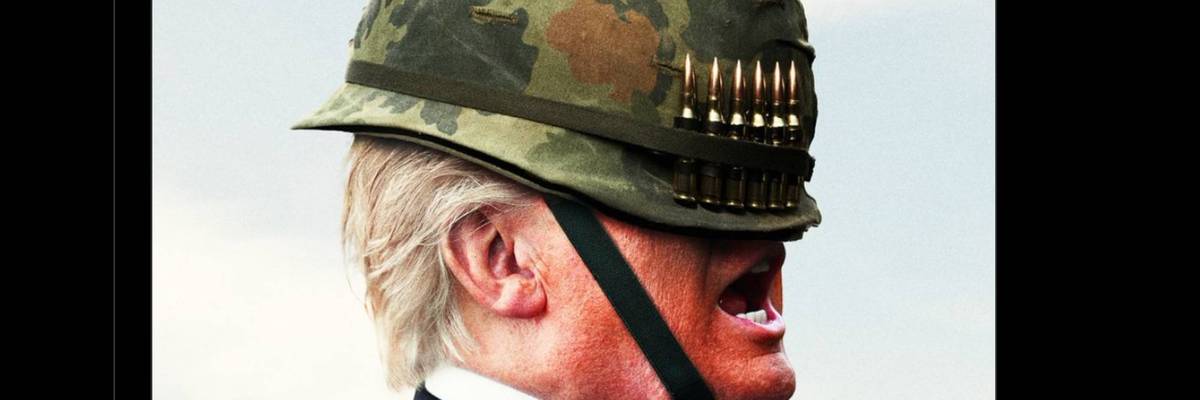
Image from cover of Germany’s Der Spiegel


Abby Zimet
Apr 13, 2026
COMMON DREAMS
FURTHER

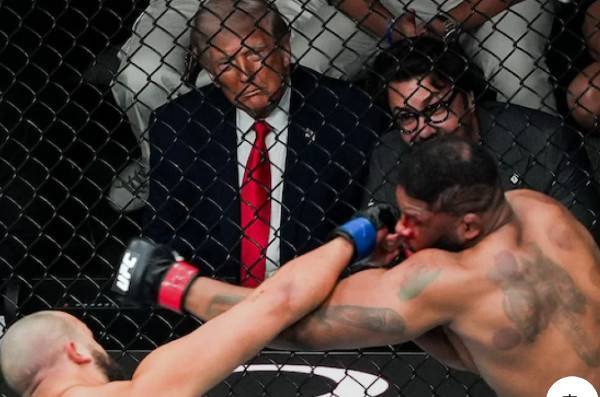
Whew. It’s been a time: “Open the Fuckin’ Strait,” “A whole civilization will die,” puerile threats, boundless botches and cover-ups, deranged lurches into ballrooms, auto-pens, Davy Crockett, and a media sanewashing it all. And when their slapstick “ceasefire” and “peace talks” imploded, our Supreme Leader was at a UFC cage match watching men batter each other bloody for fun and profit. Then he depicted himself as Jesus, with a hotel on the moon. Breaking: “The president has lost his mind.”

It’s a historic given that the final act of any narcissist is inevitably a descent into psychosis. Thus are we now witnessing - and struggling to survive - the mayhem of “history’s dumbest madman,” a toddler with a gun, a Dunning-Kruger president with a brain of moldering oatmeal as supremely confident as he is utterly ignorant, leading to dazzling insights like, “I’ll know the war is over when I feel it in my bones.” A criminal braggart and loathsome human being, he is above all extraordinarily stupid, giving rise to the first time in history you can post, “He’s an idiot,” and 90% of the world knows who you’re talking about. It may also be the first time aggrieved, enraged citizens regularly say of their purported leader, “Die as soon as possible, you child-raping worthless fuck.”

Today, we find ourselves mired in “the worst-run war in US history,” a witless war conducted mostly by thumb by “a depraved idiot“ with no plan, no map, no clue, inexorably morphed into the ”Worst. Ceasefire. Ever.“ In his staggering stupidity, Trump has done more damage to American status, power and respect in weeks than any adversary did in decades, experts say, empowering and enriching Russia, China and Iran while endlessly, mindlessly declaring, Baghdad-Bob-like, ”victory“ over ”obliterated“ enemy forces. Abetted by a cabal of inept sycophants whose ”collective incompetence is unprecedented,“ a demented old crook who relishes carnage has rendered America a rogue state lacking all credibility, a beleaguered world’s preeminent villain and laughingstock.

In the lead-up to his illegal war, the chaos begun on Day One had already wildly escalated, blunders coming fast and lethal. He gutted measures to reduce civilian casualties, decommissioned minesweepers, fired judge advocate generals who keep military action within international law, did no planning for the economic fallout, stupefyingly ignored warnings about Iran closing the Strait of Hormuz - universally deemed by anyone who’s glanced at a map or history book the key vulnerability in Middle East geopolitics. The result: A Wild West lack of accountability that on the first day saw a US strike slaughter some 175 Iranian schoolgirls, an atrocity first met with lies and denials, then silence and as yet no apology from any American representative.

We’ve since seen a flood of senseless, trash-talking claims, threats and whiplash deadlines that sound either like a rabid 10-year-old schoolyard bully, a pissed-off late-night text to a mob sweetheart who hasn’t called back, or a ransom note in crayon: “If they don’t make a deal, I am blowing up everything,” “Watch what happens to these deranged scumbags today,” “WE DO NOT NEED THE HELP OF ANYONE!”, “If it goes well we’ll settle, otherwise we’ll keep bombing our little hearts out,” “TAKE THE OIL & MAKE A FORTUNE,” “48 hours before all Hell will reign (sic) down,” “We will bomb Iran back into the Stone ages (sic).” They’re so dumb Iran trolls him online: When he claimed (fictional) “good and productive talks,” they echoed him with a smiley face and, “To the president of peace.”

They, and the world, were less amused when he went full genocidal and proclaimed, “Power Plant Day and Bridge Day, all wrapped up in one. Open the Fuckin’ Strait, you crazy bastards,” with a jeering, “Praise be to Allah,” and then the more bonkers, “A whole civilization will die tonight, never to be brought back again.” Still-spineless legacy media translated that into, “Mr. Trump issued a new ultimatum.” For Easter, Jonathan Larsen noted the day would be “commemorated with the traditional threatening of the war crimes (with the) ritual repetition of deadlines and horrific consequences...(The) incantation was followed (by) the miracle of the levitating oil prices. They were risen.” The Strait, Iran officials asserted, “will not be opened through the ridiculous spectacle (of) the president of the United States.” His name, they wrote, “will be etched in history as a supreme war criminal.”

Another deadline shuffled, the madness by “a dangerous delinquent idiot” went on. At a surreal Easter Egg Roll, he ranted about Iran’s fighters beside a bewildered Easter Bunny, babbled to the assembled, equally baffled kids about Biden’s auto-pen, insisted bombing was good for Iranian children, and silently stared down a reporter who asked about war crimes, stonily turning away with, “What else?” He gave a droopy, gibberish speech about America’s “overwhelming victories on the battlefield,” though there haven’t been any battles and “the whelmingest victory” was against a girls’ school. It was rote stale lies, noted Colbert: “All the stuff you’ve heard before, delivered by a narcotized turtle” who’d disastrously “started a 1,000-piece jigsaw puzzle” and then walked away.

Online, amidst a war, he’s ceaselessly spewed batshit claptrap: He raged at Somali Americans, wondered if Jasmine Crockett is related to Davy Crockett, trashed Bill Maher and “dried-up old prune” Springsteen (LOL), obsessed over his ballroom and Hitler-esque arch. He said “we can’t take care of daycare” or Medicaid/ Medicare “little scams” because we need more war; speaking of, he posted a bizarre, pre-Bonespurs photo of himself in military garb. He danced, partied as tankers burned, danced again: “Young man, there’s no need to feel down!” Letting his homicidal freak flag fly, he fundraised off images of dead soldiers - him in his fucking baseball cap - and lied their families urged the war on. One non-fan: “He has the empathy of a serial killer.”

He’s also brazenly saber-rattled - the US military can do “whatever it wants in the world” - and blasphemed - God supports the war because He/She “wants to see people taken care of.” Umm. Add the “heretical Christianist gibberish” of bombastic ghoul Drunk Pete - who’s giddily celebrated “death and destruction from the sky,” urged war-crimey “no quarter” against enemies, and prayed for “overwhelming violence against those who deserve no mercy” - and even devoutly apolitical church leaders have protested, “There are no new crusades. If God is present in this war, He is among those who are dying.” Noted Pope Leo, “Jesus, King of Peace, does not listen to the prayers of those who wage war, saying: ‘Even though you make many prayers, I will not listen: Your hands are full of blood.’”

Following in a long, grim American tradition, the regime’s hands may prove more bloody than we know. Despite an “investigation” into the massacre of Iranian schoolgirls, there’s been no accountability and many deem it unlikely there will ever be. Meanwhile, multiple reports suggest a series of cover-ups by officials seeking to hide the deadly cost of a catastrophic war nobody wants. A new report accuses military leaders of a “casualty cover-up,” charging they’re issuing “low-ball and outdated figures” of U.S. casualties of up to 750 Americans killed or wounded. Unsurprisingly, the chest-thumping, out-of-his-depth, lying- his-way-out-of-sexual-assault-charges Drunktank Pete is often at the center of reported deceptions, with angry soldiers themselves calling them out.

Survivors have disputed his account of a deadly March 1 Iranian drone attack in Kuwait that killed six U.S. soldiers and wounded dozens, with almost 40 hospitalized. Soldiers describe a grisly scene with many head wounds, perforated eardrums and shrapnel hits to abdomens and limbs; The Great Empathizer infamously shrugged off the carnage with, “That’s the way it is.” Hegseth claimed the drone was a “squirter,” an anomaly that “squeaked through” a well-fortified operations center. But survivors call bullshit, saying they were left “unprepared to provide any defense.” “Calling it a squirter is a falsehood,” said one, citing “a bunch of little tin buildings” unprotected from the sky, in “a deeply unsafe area” not just within range of Iran’s missiles but a known potential target. On the degree of fortification, he said, “I would put it in the ‘none’ category.”

A new WaPo story also disputes Hegseth claims about Iran’s losses that fail to line up with intel and reality. Despite his persistent boasts that Tehran’s military might has been “decimated” by U.S. forces’ “complete control of Iranian skies” in now-“uncontested airspace,” experts say Iran still has over half its missile launchers and thousands of medium- and short-range ballistic weapons that can be repaired or pulled from underground facilities. They also say his focus on the number of Iran’s missile launches is “a dumb metric” that ignores what matters: Not their volume, but their precision, or “hit rates,” which are increasing as their strategy evolves. In another nod to his cluelessness, they note the downing of an F-15 and subsequent rescue of its airman - itself a suspected cover-up of a failed mission - is “what happens when you have air superiority but not air supremacy.”

Finally, many have suggested a cover-up of possible sabotage on the USS Gerald R. Ford aircraft carrier, the Navy’s $13 billion crown jewel, which has morphed into a sort of McHale’s Navy “Voyage of the Damned” for a war-weary crew of about 4,500 sailors stuck in a record-breaking 11th month of deployment. “It’s on fire. It’s heading to Greece. And the toilets don’t work,” runs one succinct summary of its series of mishaps, from the breakdown of over 600 toilets - also suspected as sabotage - to a laundry-room fire that raged for 30 hours, caused far greater damage than initially reported, and left some 600 sailors sleeping on floors and tables before the ship limped to Greece for repairs. The Navy is now investigating whether the fire was deliberately set,

Between lies, blunders, mutinies against mindless wars and an addled Commander Bonespurs who doesn’t know how batteries work, some WH officials have reportedly “raised concerns” - thanks legacy media - if lackeys are “explaining the evolving complexity of the conflict” to him. Seriously? The guy claims he invented the word “groceries,” thinks migrants come from insane asylums, and gets his daily info from a two-minute video of “stuff blowing up” (which has never ended a war, except in Hiroshima) so what are the odds? This weekend, he again displayed his strategic acumen by railing against a (female) reporter who asked about the Strait. “We win, no matter what,” he snapped. “We’ve defeated their military, it’s all at the bottom of the sea (with sharks!), their leaders are dead. With all that, lets see what happens. But from my standpoint, I don’t care.”

Neither, apparently, do the whip-smart, deeply knowledgeable “negotiators” - a corrupt slumlord, clueless golf bro and creep who fucks couches - who just went to Pakistan for “peace talks.” Less than shockingly, they gave up in under 24 hours and fled home empty-handed. According to Iran’s Foreign Minister Abbas Araghchi, the Ugly Americans “derailed” the talks with “maximalist demands and shifting goalposts” just as the two sides were “inches away” from an agreement. “Zero lessons learned,” Araghchi wrote. “Good will begets good will. Enmity begets enmity.” Profoundly weirdly - and aptly for this timeline - at the same moment J.D. was announcing their failure, Trump, slathered in clown makeup, was entering Miami’s Kaseya Center to watch two men beat up each other, or pretend to, in a UFC cage match.

With Kid Rock blaring and accompanied by assorted bottom-feeders - UFC’s Dana White, rapper Vanilla Ice, a few of his evil spawn and a hammered-looking, dead-eyed Marco Rubio who bafflingly skipped seeking peace, which is kinda his job, for this - Trump strutted into his last MAGA chud safe space, a symptom of the decline of Western civilization and a tacky haven for people who get off on watching other people get hurt. Last year, Trump was loudly cheered here; this year, he was cheered and booed, not a good sign for his shot at the UFC Peace Prize. Amidst our many crises, people mulled why Rubio was there. One sage: “He makes Trump look tall.” Others: “This ain’t a cabinet. It’s a junk drawer,” “This is not serious leadership. It’s amateur hour,” and “What a circus.”

Trump, a fat, clumsy, longtime manosphere wannabe, watched the fighting intensely from ringside, occasionally dodging blood and spit, oblivious to the madness of attending a fucking cage match as the world burns. Ever-dazzled by celebrity, he went gaga for Brazil’s Paulo Costa when the fighter came over to shake his teeny, rotting hand. “You’re a beautiful guy,” Trump crooned. “You could be a model, you look so good.” Filmmaker Jeremy Newberger: “This montage of dueling events” - UFC vs. war and peace - “would be the denouement of The Godfather Part VII: Corleone Nights, a straight to video release by a second cousin of Francis Ford Coppola’s tax attorney.” We are adrift in a dumpster-fire idiocracy, wading through Trump’s opus, I Really Don’t Care, Do U?

The next day, he announced a blockade to block the blockade that’s blocking the Strait of Hormuz that wasn’t blocked before he caused it to be. “Any Iranian who fires at us, will be BLOWN TO HELL!” he bellowed. “We are fully ‘LOCKED AND LOADED.’” He went on Fox, babbling about the Gulf of Trump and stunning into wide-eyed silence Maria Bartiromo when she asked if he thought gas prices would be lower by the midterms. “I hope so. I mean, I think so. It could be,” he yammered. “It could be or the same or maybe a little bit higher.” Online, he (again) trashed Pope Leo, who’s “weak on crime,” for being against war. Rep. Ted Lieu, who earlier reminded the military not to obey illegal orders, added, “If you receive an illegal order to attack the Vatican, you will also disobey that order.”

In a social media frenzy, he rage-posted 12 times through Sunday night. He posted an AI image of a Trump Hotel on the moon. Then he posted an image of himself cosplaying as Jesus healing a sick man, who if things weren’t weird enough many thought looked like Epstein. Cue flags, eagles, jets, angels, widespread outrage even from MAGA world - most charged “blasphemy,” not insanity - who maybe should’ve seen this coming? Taken aback by the uproar, he sputtered it “had to do with red cross as a red cross worker,” but took it down. Still, America’s eyes hurt. The consensus: “This man is not well.” And, said John Brennan, “The 25th Amendment was written with Donald Trump in mind.” Aaron Rupar sent out the image as a plea. “I’m not sure it has broken through to the general public that the president is a megalomaniac crazy person,” he wrote. “Hopefully posts like this help.” Or not.


Trump watches guys maul each otherImage from Bluesky


This man is not well.Image from Truth Social

Three Winners at the Latest DNC Meeting: Israel, Ethnic Cleansing, and Genocide

Why did pro-Israel groups voice so much pleasure and praise—not only for the sidelining of pro-human-rights resolutions but also for the process that sidelined them? Because, of course, the sidelining worked.


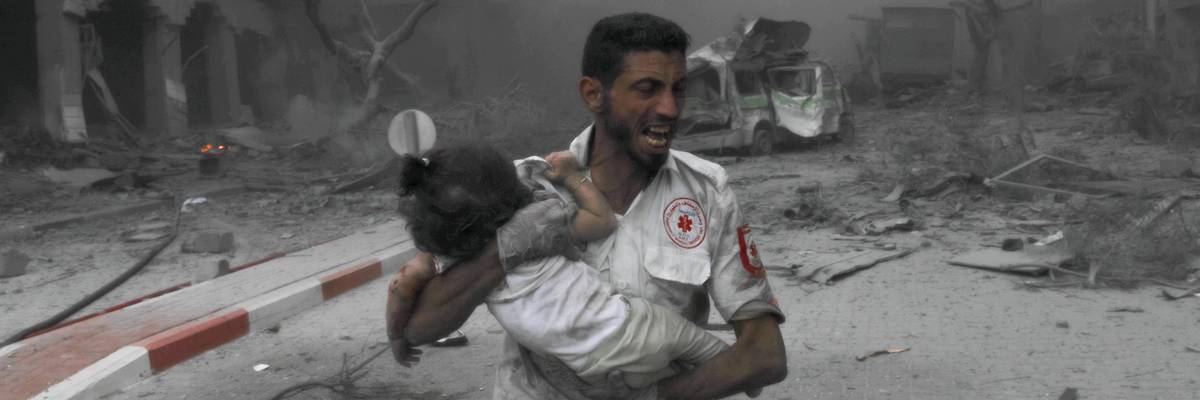
A medical worker rushes a child to the ambulance for treatment after Israeli airstrikes destroy buildings in Gaza City, Gaza on October 09, 2023.
(Photo by Belal Khaled/Anadolu Agency via Getty Images)

Norman Solomon
Apr 16, 2026
Common Dreams

In the aftermath of last week’s big meeting of the Democratic National Committee in New Orleans, supporters of the US-Israel alliance have been quite content. “We’re pleased that the DNC Resolutions Committee rejected a set of divisive, anti-Israel resolutions,” the president of Democratic Majority for Israel said. The CEO of the Jewish Democratic Council of America, a former national security advisor to Kamala Harrisexpressed gratitude to the DNC’s leadership.

Why did pro-Israel groups voice so much pleasure and praise—not only for the sidelining of pro-human-rights resolutions but also for the process that sidelined them? The answer has to do with the DNC’s mechanism that thwarted changes in positions on Israel. A panel named the Middle East Working Group gummed up all efforts to align the DNC with the views of most Democratic voters, even while supposedly hard at work.

Last Friday, the transparent thinness of the pretense caused Politico to headline an article this way: “Inside the DNC’s Middle East (Not) Working Group.” But the not-working group had been functioning quite well—as a charade for delay and obfuscation.

The day before the derisive headline appeared, the DNC Resolutions Committee dispensed with a resolution about events in Gaza and the West Bank. Its provisions included a declaration that the DNC “supports pausing or conditioning US weapons transfers to any military units credibly implicated in violations of international humanitarian law or obstruction of humanitarian assistance.”

Given the crystal-clear polling, the failure of the Democratic Party leadership to oppose military aid to Israel threatens to seriously damage the turnout needed to defeat Republicans at election time.

That resolution critical of Israel went nowhere, which is to say it went to the so-called working group, also known as a “task force.”

Assisting the diversion as chair of the Resolutions Committee was political strategist Ron Harris, described in his home state of Minnesota as a “longtime Democratic Party insider.” He made false claims during the meeting: “I know that the task force has met once a month since it was created…. I have the confidence that work is happening…. These are people working really really hard over a very thorny issue…. They are doing their work…. They’re hearing from experts and all sorts of things.”

The falsehood that the task force had met “once a month,” when actually it had scarcely met, was enough reason for me to contact Harris and ask where he’d gotten that (mis)information. He replied that it was “according to the DNC staffer coordinating the process.”

The basic problem with the working group is not only that it hasn’t done much of anything in the nearly eight months since DNC Chair Ken Martin announced it with great fanfare. The underlying hoax is that it was set up not to reflect the views of registered Democrats nationwide.

Polling is clear. Three-quarters of Democrats agree that “Israel is committing genocide,” and a large majority are more sympathetic to Palestinians than to Israelis by a 4-to-1 margin. But only a minority of the Middle East Working Group’s eight members has a record of supporting Palestinian rights, while several are firm supporters of Israel. The oil-and-water mix seems destined for stalemate or mere platitudes. But stalemate and platitudes appear to be just fine from here to the horizon for DNC leadership.

Such stalling mechanisms and scant real representation are as old as the political hills. In this case, an unfortunate boost has come from James Zogby, who for decades bravely worked inside the Democratic Party and elsewhere to advocate for the human rights of Palestinians, in sharp contrast to US foreign policy.

As the most prominent person in the Middle East Working Group, Zogby has hailed it as an important step forward. Aligning himself with Martin’s approach from the outset, he said that the new chair’s move to set it up was “politically thoughtful.”

Zogby can remember when, in the 1980s, party leaders did not want to hear the “p-word”—Palestinians. He has portrayed the current sparse intra-party discussion related to Israel as major progress. “Don’t count me among those who left New Orleans complaining of defeat,” Zogby wrote in an April 14 piece for The Nation.

After that article appeared, I spoke with Zogby, and he summarized his approach this way: “I have a tendency to feel like sometimes there are little victories, and I latch onto them. Moving to catch up to where Democrats are.”

Compare that approach to this assessment days ago from Mike Merryman-Lotze, the American Friends Service Committee’s director of Just Peace Global Policy: “The failure of the DNC to take even minimal action in the face of ethnic cleansing and genocide is shameful.”

When my RootsAction colleague India Walton loudly interrupted the DNC’s business as usual during its general session a week ago, she was challenging a political culture of conformity that has ongoing deadly consequences. The context involves a simple and crucial choice—between excessive patience or urgency that’s grounded in life-and-death human realities. Those realities exist very far away from the transactional atmosphere of entrenched political institutions.

All this matters for at least two profound reasons: One is that, on the merits, silent or euphemistic complicity with Israel’s methodical policies of ethnic cleansing and genocide is abhorrent.

And given the crystal-clear polling, the failure of the Democratic Party leadership to oppose military aid to Israel threatens to seriously damage the turnout needed to defeat Republicans at election time (as polls have shown was the case with Kamala Harris’s 2024 campaign for president). “Eight-in-10 Democrats and Democratic-leaning independents currently have an unfavorable view of Israel, up from 69 percent last year and 53 percent in 2022,” the Pew Research Center reported last week.

In these exceedingly dystopian times, when realism is more important than ever, it’s a grave mistake to let rose-colored glasses distort vision and substitute undue patience for vital urgency.


Our work is licensed under Creative Commons (CC BY-NC-ND 3.0). Feel free to republish and share widely.


Norman Solomon

Norman Solomon is the national director of RootsAction.org and executive director of the Institute for Public Accuracy. The paperback edition of his latest book, War Made Invisible: How America Hides the Human Toll of Its Military Machine, includes an afterword about the Gaza war.
Full Bio >

‘You Are Out of Touch’: Schumer Faces New Calls to Step Aside After Israel Weapons Vote


“It’s well past time for him to step aside for leaders who actually represent the views of the party’s base.”


Senate Minority Leader Chuck Schumer (D-NY) speaks during a news conference in the US Capitol on April 14, 2026.
(Photo by Bill Clark/CQ-Roll Call, Inc. via Getty Images)

Jake Johnson
Apr 16, 2026
COMMON DREAMS

Sen. Chuck Schumer faced fresh calls to step aside as the Senate Democratic leader on Wednesday after he broke with the overwhelming majority of his caucus and voted against a pair of resolutions aimed at preventing the Trump administration from selling more US bombs and bulldozers to Israel.

“Mr. Schumer, you are out of touch with the base of this party, and with your own caucus,” Rep. Ro Khanna (D-Calif.), who first called on Schumer to resign as Democratic leader last year, said in a short video posted to social media following Wednesday’s votes. “Step aside.”

The two resolutions, led by Sen. Bernie Sanders (I-Vt.), called for halting the sale of around $450 million worth of bulldozers, 1,000-pound bombs, and related military equipment to the Israeli government, which has repeatedly used American weaponry to commit war crimes in the illegally occupied Palestinian territories, Lebanon, and Syria.

Despite facing record support from the Senate Democratic caucus—with 40 votes to block the sale of bulldozers and 36 votes to block the sale of bombs—the resolutions failed to pass, as Senate Republicans united against them.

But strong Democratic opposition to new US weapons sales to Israel was seen as evidence that the party is slowly catching up to its base, which overwhelmingly supports restricting American military aid to Israel.

“The fact that 40 of 47 Democratic senators voted to withhold military hardware from Israel is a new high-water mark in holding Israel accountable for violating US and international law,” said Dylan Williams, vice president for government affairs at the Center for International Policy.

Williams went on to rebuke Schumer, who has led the Senate Democrats for nearly a decade, for opposing the resolutions “against the supermajority of his own caucus and Democratic voters.”

“It’s well past time for him to step aside for leaders who actually represent the views of the party’s base,” said Williams.

Beth Miller, political director of Jewish Voice for Peace Action and a New York City resident, said Schumer and Sen. Kirsten Gillibrand (D-NY)—who also voted against both resolutions—“are betraying their constituents and woefully out of line with the Democratic voter base.”

“Instead of sending the bombs that Israel uses to commit war crimes, the people of New York want our representatives to invest in lifesaving policies here at home,” said Miller. “We need to stop arming Israel so that the people of Palestine, Lebanon, and Iran, and across the region, can live. Millions of lives depend on it.”

The votes on the Israeli arms measures came after the Senate rejected another war powers resolution aimed at withdrawing US forces from the illegal assault on Iran, which President Donald Trump launched without congressional approval—and in partnership with Israeli Prime Minister Benjamin Netanyahu—in late February.

Schumer vocally supported the Iran war powers resolution. But one of his colleagues, Sen. Ed Markey (D-Mass.), said the efforts to end the US-Israeli war on Iran and the push to halt weapons sales to Israel are interconnected.

“A vote to approve arms sales to Israel at this time would be seen as a message of approval for Trump and Netanyahu’s disastrous war against Iran. I will not send that message,” Markey said in a statement late Wednesday. “Why would we send American military weapons that could prolong, escalate, or worsen this horrible situation in the Middle East? I say no more.”

J Street, the pro-Israel liberal advocacy organization, similarly connected the two fights following Wednesday’s votes.

“We continue to oppose Trump and Netanyahu’s war of choice against Iran, and applaud those senators whose principled stand in today’s vote reflects the American public’s strong opposition to both the Iran war and to Israel’s actions in Lebanon, Gaza, and the West Bank that undermine efforts for peace in the region,” said Jeremy Ben-Ami, the group’s president.
In Third Boat Strike This Week, US Kills 3 People in ‘Entirely Make-Believe’ Armed Conflict Against Cartels


Customs and Border Protection data offers little evidence that the killing of at least 177 people in recent months has stopped drugs from reaching the US.


Julia Conley
Apr 16, 2026
COMMON  DREAMS

As Republicans and several Democrats in the US Senate gave the go-ahead for the US to send more bombs and military equipment to Israel for its attacks on Gaza and Lebanon on Wednesday, the Trump administration was continuing what it claims is an effort to rid Latin American countries of drug traffickers—killing three people aboard a vessel in the eastern Pacific Ocean in the US military’s third boat bombing in three days.

The US Southern Command posted a video on social media of the bombing, which it said targeted a boat that was “transiting along known narco-trafficking routes in the Eastern Pacific and was engaged in narco-trafficking operations.”

As with the 50 previous attacks on boats in the Pacific and the Caribbean Sea, the military did not publicize any evidence that the boat was carrying drugs or that its passengers were “narco-terrorists.”


A small number of the at least 177 victims of the Trump administration’s boat bombings have been identified. The Associated Press reported in November that Robert Sánchez, who was killed in the Caribbean, was a 42-year-old fisherman who made $100 per month and had started helping cocaine traffickers navigate the sea due to economic pressures. Juan Carlos Fuentes was an out-of-work bus driver who also worked as a “drug runner” to make ends meet.

The families of at least two victims have filed legal complaints over the killings of their family members, saying they were fishermen.

Adam Isacson of the Washington Office on Latin America has compared the boat bombings, assuming they have targeted people involved in the drug trade at all, to “straight-up massacring 16-year-old drug dealers on US street corners.”

On Wednesday, Isacson noted that while Trump, Defense Secretary Pete Hegseth, and Secretary of State Marco Rubio have defended the boat bombings as attacks that will protect Americans from the flow of drugs like cocaine and fentanyl into the US—with the president informing Congress that the White House views the country as being in an “armed conflict” with drug cartels—data from US Customs and Border Protection (CBP) shows little evidence that the strikes are stopping drugs from reaching the US.

“CBP’s seizures of fentanyl at the US-Mexico border had been declining, often sharply, since mid-2023. But since early 2025, the declines stopped,” said Isacson. “Halfway into fiscal 2026, seizures are almost exactly half of 2025’s full-year total: a flat trendline.”


Following Wednesday’s bombing, at least 14 people have been killed in boat strikes in five days.


Brian Finucane of the International Crisis Group emphasized Wednesday night that “despite the administration’s rhetoric and bogus legal theories, the supposed armed conflict with ‘narco-terrorists’ appears to be entirely make-believe.”

Under international law, drug trafficking is treated as a crime, with US law enforcement agencies in the past intercepting boats suspected of smuggling drugs and arresting those on board. A coalition of rights organizations sued the Trump administration in December, demanding documentation of the White House’s legal justification for the boat bombings and arguing that for any organization to be considered part of “armed conflict” with the US, it must be an “organized armed group” that is engaged in “protracted armed violence” with the country.

“Murder,” said Finucane, “is the general term for premeditated killing outside of armed conflict.”