The Islamabad Pivot and the Rise of the Global South’s Diplomatic Order
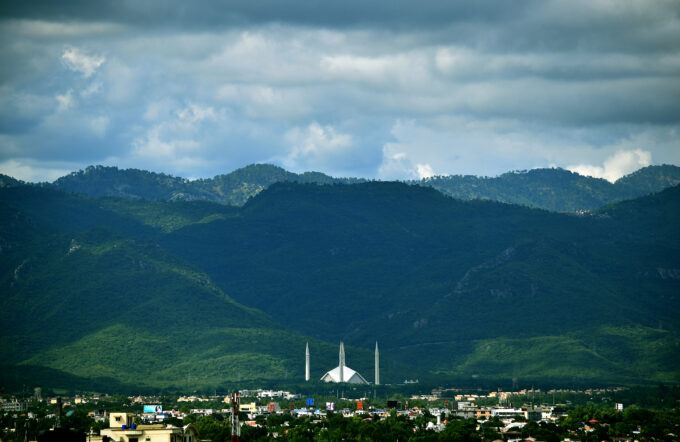
Islamabad’s verdant cityscape merges with the Margalla Hills. Ali Mujtaba – CC BY-SA 4.0
The collapse of the U.S.-Iran talks in Islamabad this week, followed swiftly by Washington’s announcement of a maritime blockade of the Strait of Hormuz, has been widely framed as a return to the familiar patterns of the maximum pressure era. Yet, to view these events solely through the lens of a bilateral failure is to miss a more profound structural shift in global diplomacy. Although the negotiations may have stalled after 21 hours of grueling deliberation between JD Vance and Abbas Araghchi, the venue and the process revealed a significant reality: the center of gravity for international dispute resolution is moving away from the West.
For decades, major diplomatic breakthroughs in the Middle East were synonymous with American soil or European capitals. From Camp David to the Green Tree Accord, the script was predictable: the United States acted as the indispensable mediator, providing the security guarantees and the economic carrots to bring parties to the table. However, the Islamabad talks represent a departure from this historical monopoly. By choosing a South Asian capital as the primary corridor for high-stakes engagement, the international community has effectively recognized a new Islamabad Blueprint defined by Global South mediation rather than Western dictate.
In this current geopolitical climate, the effectiveness of a superpower is no longer measured by its ability to coerce but by its capacity to collaborate. As the Islamabad Blueprint suggests, the future of global stability rests on the shoulders of those who choose the hard work of mediation over the easy path of confrontation. Pakistan’s recent efforts to facilitate a second round of talks underscore this shift. Islamabad is not merely providing a room; it is providing a regional legitimacy that Washington can no longer manufacture on its own.
The failure to reach a deal in Islamabad is being blamed on what Iranian officials describe as excessive demands from the U.S. delegation. Specifically, the insistence on widening the scope of the talks to include non-nuclear regional issues at the eleventh hour suggests a lack of the flexibility required for modern diplomacy. In contrast, the role played by Pakistan, supported quietly by China, Turkey, and Saudi Arabia, focused on a more pragmatic, incremental approach. This group sought to establish a stability anchor based on shared economic interests, particularly the security of energy corridors that are vital to the developing world.
The contrast in methodology is striking. The U.S. approach remains rooted in a zero-sum logic of sanctions and blockades. Within 12 hours of the talks’ dissolution, the White House shifted toward a policy of intercepting vessels. This is a tactic that ignores the changed economic landscape of 2026. Today, a blockade is not merely a military maneuver; it is a direct assault on the energy security of neutral nations across Asia and Africa. By weaponizing the sea lanes, Washington is inadvertently accelerating the very trend it fears most: the transition to a multipolar financial system where the petrodollar is no longer the sole arbiter of trade.
The economic fallout of this rigid unilateralism is already visible. As oil prices climb again toward $100 per barrel following the blockade announcement, the America First strategy is increasingly becoming America Alone. By treating the Strait of Hormuz as a chessboard for containment rather than a global artery, Washington risks alienating the very allies it needs to maintain a coherent international order. The Global South sees this not as a defense of freedom of navigation but as an act of economic piracy that prioritizes tactical leverage over global stability.
China’s role in this evolving landscape is particularly instructive. Unlike the transactional nature of the Western approach, Beijing has spent the last year fostering what it calls a community of shared future. While the United States remains preoccupied with naval destroyers and sanctions lists, China has focused on building infrastructure and technological resilience. The recent deployment of embodied AI for high-risk industrial tasks in the region is a case in point. It serves as a reminder that while one power is looking to close corridors, the other is looking to build the systems that make those corridors more efficient and safe.
This is the essence of the new diplomatic reality. The Islamabad Blueprint signifies that the Global South is no longer content to be a passive theater for great power competition. Countries in the region are now active stakeholders, providing the neutral ground and the creative frameworks necessary for dialogue. Even if the current ceasefire—slated to expire on April 22—is fragile, the fact that the United Staters felt compelled to negotiate in Islamabad, rather than forcing the Iranians to meet in a European capital, is a concession to this new order.
The world is headed toward a pluralistic diplomatic ecosystem. In this new world, the legitimacy of mediators is derived from their ability to provide stability and development, not just their capacity to exert military force. As Washington returns to its toolkit of blockades, it may find that the rest of the world has already moved on, seeking security in the new corridors of the East.
The lesson of the last few days is not that peace is impossible, but that the old ways of achieving it are increasingly obsolete. The Islamabad talks, despite their current impasse, have shown that a new group of mediators is ready to fill the vacuum left by the West’s retreat into unilateralism. For the global community, the task now is to ensure that these new diplomatic pathways are strengthened, providing a much-needed alternative to the cycle of pressure and conflict that has dominated the last century. If the Islamabad Process can survive this week’s naval posturing, it may yet provide the definitive map for a post-unipolar world.
This first appeared on FPIF.
Pakistan: How a regional warmonger came to host US-Iran peace talks
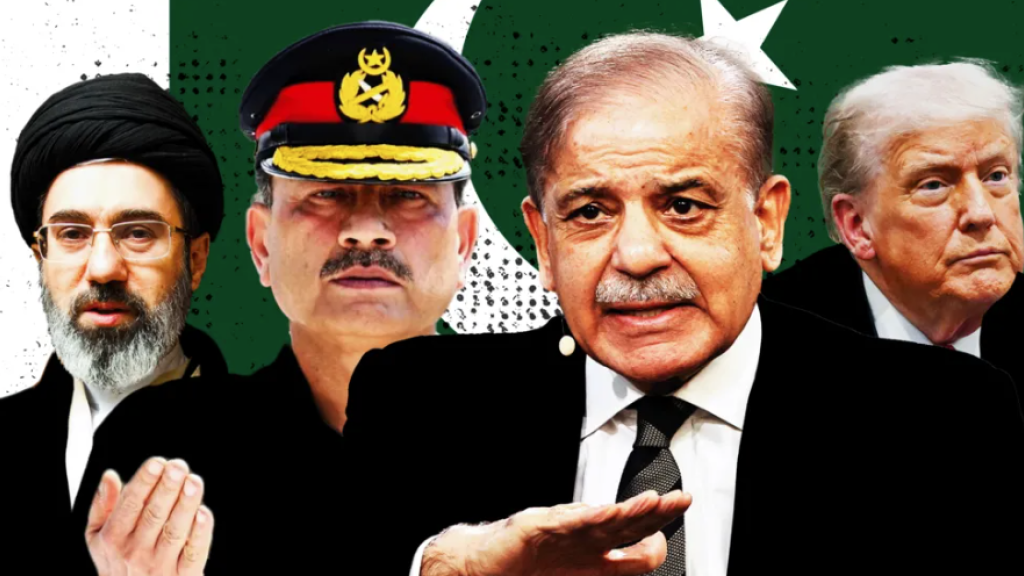
Mainstream Pakistan is basking in (self)glory. As host of the US-Iran negotiations — rumours of a second-round abuzz — Islamabad is upbeat. From talk show hosts to YouTube influencers, the one-dimensional message is clear: Pakistan has finally been assigned the role it deserves in the global hierarchy.
International Relations (IR) academics, otherwise considered irrelevant by the know-all legacy media, are dotting the screens and op-eds. Perhaps one of these IR scholars introduced the media to Giovanni Botero’s 16th century notion of a “middle power.” In any event, the urban middle classes and Twitterrati have enthusiastically embraced Botero’s otherwise vague concept.
That traditional rival India is not just absent in the negotiations but burning with jealousy is the icing on the cake for the media, the chauvinistic middle classes and, of course, the state managers. In my opinion, this is the second most important “moment of glory” for the country’s ruling class, since hosting the Islamic Summit in 1974. However, this time around, it is an event of an even bigger consequence.
The question, however, remains: what has catapulted Islamabad, temporarily at least, to the status of “global peacemaker”, Scandinavian-style? The India-Pakistan conflict in May last year apparently endeared the Pakistani leadership to United States President Donald Trump. Yet, this is an inadequate explanation.
Foreign policy as bread and butter
Pakistan is a country that survives and thrives on foreign policy. The Pakistani ruling class learnt the art of banking on and cashing in geostrategic benefits, whenever an opportunity presented itself, back during the Cold War. Back then, they grasped the diplomatic art of balancing relations between rival powers. For example, Pakistan has friendly relations with China and the US. In 1970, Pakistan facilitated secret Sino-US negotiations, paving the way for diplomatic relations. However, Pakistan has also, on occasions, annoyed both the powers.
Pakistan is hosting the present peace talks only 150 kilometres from Abbottabad, where Osama bin Laden was hunted down on May 2, 2011. Several Taliban commanders and their families, post-9/11, were also residing in Islamabad, a stone’s throw from the US embassy. Beijing has its own grievances against Pakistan. The biggest Chinese resentment, presently, is Islamabad’s attempt to hinder China’s Belt & Road Initiative (BRI) project in Pakistan. The deadly attacks on Chinese nationals employed in huge Chinese projects have at times driven otherwise polite Communist Party of China bureaucrats to publicly reprimand Islamabad.
Likewise, since 1979, Pakistan has managed good relations with Riyadh as well as Tehran. But in each case, irritants and disagreements persist. Tehran has been unhappy over state-patronage lent to anti-Shia militant outfits, responsible for mass violence against Pakistan’s Shia citizens (there was spillover in Afghanistan too). In January, Iran fired missiles and sent drones to attack Pakistan’s Balochistan province. Pakistan, before announcing a truce, repaid in kind.
Mohammed bin Salman, likewise, was incensed by Islamabad’s refusal to dispatch Pakistani troops to fight in the “jihad” against “Houthi rebels” in 2015. Yet, on April 16, Pakistan’s prime minister, Shahbaz Sharif was warmly received by MBS. Shahbaz Sharif speaks broken-Arabic, largely to impress domestic audiences. He learnt Arabic when his family was exiled to Saudi Arabia by the military in 2001.
Iranian foreign minister Abbas Araghchi welcomed Pakistan’s military czar Asim Munir to Teheran on April 16. As Pakistan is a garrison state, military chiefs have command over troops and civilian affairs. Munir’s visit received greater coverage in the Pakistani media than Sharif’s trip to Jeddah. There is a reason for this difference. Not unlike economy and politics, foreign policy also falls within the domain of Pakistan Army’s General Headquarters. Most importantly, the military (manpower, technology) is also Pakistan’s most important diplomatic manoeuvre and valuable export.
A clever client
Pakistan is a client state, but a clever one. It is one thing whether their policies benefit Pakistani citizens, but state managers have successfully peddled their international interests. Owing to their ability to stay effective internationally, they have gained and maintained access to global and regional corridors of power. This access can apparently be explained by a lucky mix of history and geography (more below). During the recent Israeli-US war on Iran, they successfully deployed this as self-interest was involved.
For the past several days, there have been power cuts every second hour. This is because electricity is largely produced from imported oil. Sectarian tensions are another headache for the ruling class. The attacks on the US consulate in Karachi on March 1, in the wake of Iranian leader Ali Khamenei’s assassination, and the large-scale unrest in Gilgit-Baltistan have made global headlines. However, the sectarian aspect went missing in the global and local coverage, for understandable reasons. The attack on the US Consulate was mounted by Shia youth, while Gilgit-Baltistan is a Shia-dominated region (though not all Shia belong to the Ithna Ashari branch).
Given a near-universal anti-Americanism and widespread dislike for Israel, support for Iran during the month-long invasion cut across the sectarian divide. Field Marshal Munir summoned top Shia clerics to warn against any further agitation. His advice to clerics who preferred Iran over Pakistan’s national interests was to “migrate to Iran”. Though his advice was justifiably censured, Munir’s warning was indicative of the ruling elite’s worries.
Meantime, every missile Iran fired at the Gulf sheikhdoms unnerved Islamabad. While Pakistan cannot annoy Tehran, it can hardly afford the wrath of Arab Sultans either. After China, the Gulf states (collectively) are Pakistan’s largest lenders, if one takes into account Pakistan’s bilateral debt. Equally important are the millions of Pakistanis working in the Gulf states, who constitute the largest source of remittances. This diaspora in the Arabian Peninsula, often working in slave-like conditions, keeps the Pakistani economy afloat.
Ironically, while Pakistan was playing the role of peacemaker internationally, China was hosting a week-long round of talks between Kabul and Islamabad, and relations with India remain fraught. Pakistan is neither a peace-maker by ideology or necessity. The Pakistani state’s ideological basis rests on an enmity with India. Present tensions with Kabul are partly an extension of this India-centric approach. Islamabad is furious that the Taliban regime has been cosying up to New Delhi (among other factors). Pakistan may seek to play the role of peacemaker globally but regionally it acts as a warmonger.
Roots of cleverness
Balancing powerful global or regional rivals is not a specifically Pakistani achievement. There are other case studies of a client state pleasing competing patrons. However, the specificity of the Pakistani elite is the fact that they manage it all this time. What explains this clever “ability”?
A combination of the following factors has allowed the ruling clique to perform as a clever client.
- The state’s garrison character. In a democracy, even when it is highly flawed, a ruling dispensation can not afford unpopular decisions. Foreign policy makers in Pakistan, however, are not answerable to any electorate.
- Pakistan has a military equipped with nuclear capacity. While Pakistan has sent troops to the Gulf states, its top nuclear scientists have helped Iran and Libya build their nuclear programs.
Pakistan foreign policy scholars usually refer to Pakistan’s geography and the Cold War as an explanation for its foreign policy. On the contrary, the state’s character is the defining factor. A Pakistani state with a different ideology or dispensation would have behaved differently, despite geography.
The claim that Pakistan survives and thrives via its foreign policy is made from the ruling classes’ viewpoint. From the citizens’ perspective, Pakistan’s foreign policy failures are damningly visible when it comes to the neighbourhood. For instance, the post-9/11 policy of running with the hare (Taliban) and hunting with the hound (Washington) turned Pakistan into “Terroristan”. The wave of terror that swept Pakistan after September 11 claimed more than 70,000 lives. The blowback, in the form of the Pakistani Taliban, continues to claim hundreds of lives annually even now.
It is, likewise, a huge failure of diplomacy if a state can not live peacefully with its neighbours, as is Pakistan’s case. While peace with all four neighbours is vital and desirable, it is not on the horizon in the case of India (and Afghanistan) for two reasons. First, as highlighted above, Pakistan identifies itself ideologically as India’s nemesis. Pakistan has no plans to shed this identity anytime soon. Second, the Hindu fundamentalist BJP presently ruling India, with an almost unchallenged hegemonic hold over Indian society, also thrives on anti-Muslim and anti-Pakistan politics. Hence, the outlook is not optimistic for the foreseeable future.
Most importantly, by facilitating these peace talks, the hybrid regime in Pakistan is no doubt building itself a good image that will help legitimise it, even if it was a product of rigged elections. The better image it has internationally, the more repressive it is likely to be domestically.
Farooq Sulehria is the editor of Pakistan’s Foreign Policy and Strategic Relations in the Twenty-First Century, forthcoming for Palgrave Macmillan.

No comments:
Post a Comment