Young Communists Grow Older
April 13, 2026
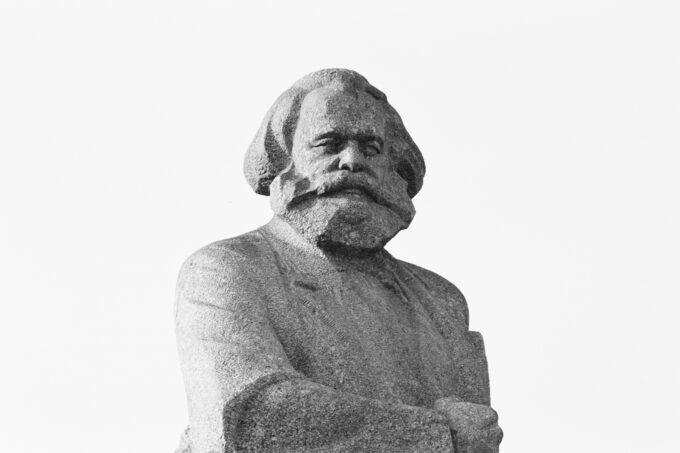
Image by Hennie Stander.
Red Lives: Our Years in the US Communist Party Volume One, Coming of Age in the Communist and Labor Movements. Edited by Jay Shaffner, Paul Friedman, Cindy Hawes, Geoffrey Jacques, Timothy Johnson, Carol Pittman, Donna Ristorucci, Daniel Rosenberg, Jackie Saindon, and others, with an Introduction by Robin D.G. Kelley. New York: Punctum Press, 2026. 406pp, $27.00 (download free).
+++
If the Popular Front of the 1930s Wartime and the alliance of the US with Russia marked the high point of Communist activity and influence in the US and in much of the rest of the world, the Cold War and the revelations of Russia under Stalin’s rule seemed likely to finish off the comparatively weak CPUSA. But not quite. Pockets of highly skilled veterans and determined loyalists remained, even when alienated by a split in 1957 that left hard-liner Gus Hall in charge on his return from prison two years later. These hardy survivors would be found, especially, in support movements for peace and racial equity. They were admired locally in many places. for their expertise and determination. They continued to play a valuable leadership role in a handful of unions, more quietly.
From at least the early 1960s onward, as the Cold War eased and the Cuban Revolution triumphed, scatterings of young people on campuses and elsewhere found themselves close to the CP and the happier parts of its complicated history.
Who were they, these several thousand who mostly did not join the New Left? Many carried on the work of the parents, even when dad, mom or grandparents had been forced into silence by the persecution of the FBI. More than a few set themselves to blue-collar life around workplaces and remained there, something unusual for a generation that, by the thousands, left the campus determined to organize, but found themselves unable to sustain the effort.
Here is one part of the special status for contributors to this volume: the Popular Front mode of pushing liberalism to the Left, within the Democratic Party. This remained the singular way forward when more dramatic and overtly radical efforts failed. No matter how bad the leadership or politically reactionary the Democrats at any level, the vision of “peace and freedom” continued to have a lot to offer. The Global South struggle, meanwhile, held hope for a different, better world. Something that looked like a potential successor to the Popular Front revived hopes. Young Communists, whatever their failings, were on the job.
Red Lives, Volume One is the first by activists who grew up, so to speak, within, around, and just beyond the orbit of the CPUSA. The larger project helps to point up a curiosity or seeming inconsistency from the standpoint of outsiders. Historians, political scientists, and journalists who devoted many volumes to the CPUSA largely judged its leadership and formal views. They seemed to have had little understanding or interest in the lifeblood of the movement, the mostly ethnic networks of working-class groups that existed in fraternal societies, unions, and other associations, and did much of their good work in those circles. They also rarely appreciated the community impact of the Popular Front within the lower-middle class, disproportionately Jewish population, especially in the New York City metropolitan area, or sections of minority neighborhoods, or on almost every aspect of popular entertainment, music, theater, and film.
The stories in this volume stand in notable contrast to the memoirs of New Left leaders, who mostly became college professors. These reflect more mundane, often largely unseen political work, even when the work includes the Daily People’s World. The contributors’ activity is marked by highlights in their own lives, many captured in little black-and-white photos charming in their Retro feel. Nearly all reflect lives in and around the labor movement.
The lead essay, by poet and journalist Geoffrey Jacques, tells the story of a young African-American, raised in Detroit as a Catholic, finding his way to Global Books, a store run by Party supporters and full of literary treats. Global shared a neighborhood with the local version of Bohemia just south of Wayne State University. Jacques became a staff writer for the Wayne State student paper, discussed ideas with friendly professors, and fellow radicalized students. Writing on jazz, becoming part of the throng around current music, he celebrated with most of Detroit the election of Coleman Young as mayor in 1973. Old Communists still on the scene became his willing guides, as so much of the Movement collapsed in upon itself.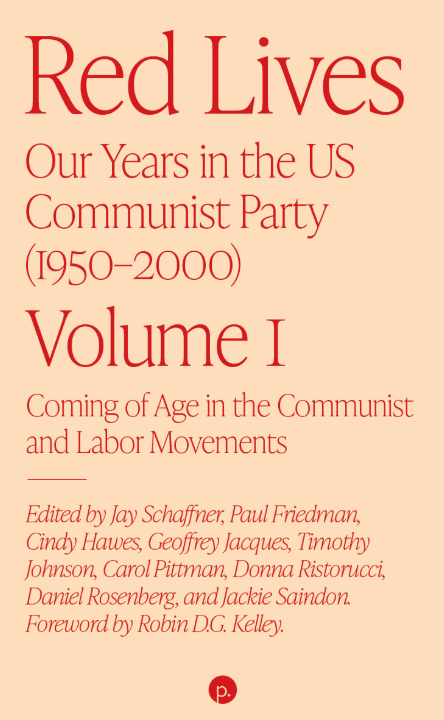
By the end of the 1970s, Jacques found himself involved in vibrant activities, with the occasional, gloomy glimpse of the Party leadership. By the early 1980s, joining the staff of the People’s World in New York offered a way….to leave Detroit! You might say that most other memory-stories here have that bildungsroman sense of growing up, learning about life, and, most of all, finding new worlds beyond home surroundings. A striking number, however, saw no need to leave New York: it had everything for them, most of all a place for their kind of labor Left.
For others, it might be leaving Philadelphia for Antioch and then Los Angeles. Thus, the story of Marian Gordon, whose father had been a steadfast Communist. Or like Joseph Harris, leaving Queens for Berkeley. Or Dave Cohen, learning about the Left only in college at UMass, mainly learning in factories where Communist expectations of “industrial concentration” had ceased, but life went on, especially for a youngster within the always-left United Electrical Workers.
Judy Atkins also came from “outside,” but within a New England where the CP maintained intermittent influence, thanks mainly to the helpful influence of oldtimers, no thanks to national Party leadership. Chris Townsend, an outsider to Party history and culture, drifted into the melange of old and young in Florida, where in the 1970s so many old-time Communists had retired. Shifting to New York State, determined to rebuild the Party “west of the Hudson,” she finally became the UE representative in DC.
Others gathered in, or remained within, their background: Greater New York. Here, they had a leg in with several unions, most importantly the health union 1199, for decades one of the brightest spots in labor. Thus, Marilyn Albert, one of the best-known of younger Communists, found her role within 1199 before its merger into SEIU in 1999.
Paul Friedman grew up in Queens, joining Student SANE in Flushing, New York, but found his destiny listening to MLK’s famous address to the crowd of a quarter million in DC. A decade later, working at Columbia University’s sprawling Medical Center, he struggled for unionization and finally joined 1199 as an organizer of the White Collar Division. Rafael Pizarro,by virtue of his father’s membership and then his own, may be the only contributor to announce that he rejoined the CP after a period of absence.
James Williams, the only one here to have been an early leader of SDS, is a particular sufferer from the downside of top CP leadership, having been the much-frustrated editor of Labor Today, a sometimes-monthly tabloid seeking to coordinate the remnants of CP influence in the labor movement. Terrible advice (or orders) from on high, because labor issues signalled so much importance (or prestige) drove him out. A frustrated Williams quit, becoming a social worker and one more ex-CPer personally bitter, not at the Party or its members… but only at its leadership.
Jay Shaffner, the lead editor of the volume, grew up within a corner of the Chicago Left that moved to the suburbs—in this case Skokie—without losing the sense of what being active in the Left really meant. (So did Paul Soglin, a non-communist son of a blacklisted Chicago teacher, and destined to become the progressive mayor of Madison for most of the fifty years after 1972). Schaffner grew up politically, within various causes and the Du Bois Clubs and the Young Workers Liberation League, increasingly aware of the Party’s self-damaging sectarianism. In 1974, he ran for the University of Illinois Board of Trustees on the CP ticket, speaking on nearly every campus, gathering more than 20,000 votes. He went onward to assorted roles, within the US and internationally, as the CP wound down.
Frank Emspak, the best-known contributor to the volume, was, in his college years, a leader of the short-lived National Committee to End the War in Vietnam, later a notable labor activist and thinker, and, in his last years, the founder-director of a national labor radio project. After his passing, the mayor of Madison, Wisconsin, declared a Frank Emspak Day in town.
Excuse the reviewer for his own experience, from the 1970s to the first years of the current century. On the Brown University campus, one of its flagship settings, the YCL made little effort to publicize itself but did excellent work for peace candidates and within local Latino labor support groups, working within coalitions, taking no apparent credit as Communists. They may also have been the only successfully integrated political group on campus: Jewish, African American, and Latino.
We could ask for more, and presumably it is coming with the next two volumes. To take one example: Freedomways (1961-85), the most influential magazine or institution connecting the nonwhite community to the milieux around the CP, does not yet appear here, perhaps because it primarily involved older veterans. Much more could be made of the political world around Angela Davis, easily the most influential member of CPUSA from the 1960s to her departure in 1991. What we do have here, however, is rich enough for any history of the US Left. We await more.


No comments:
Post a Comment