Thursday, April 23, 2026


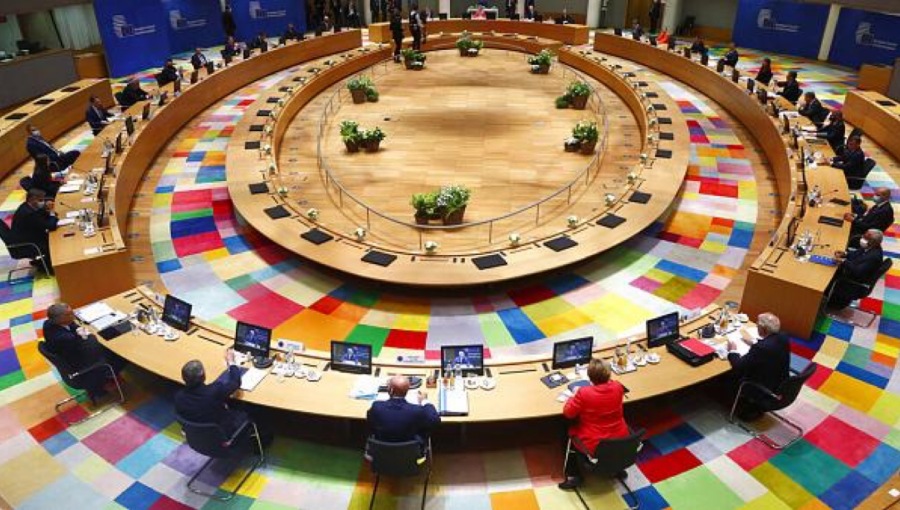
EU unlocks €90bn Ukraine loan and toughest Russia sanctions yet — with a crucial caveat

EU unlocks €90bn Ukraine loan and toughest Russia sanctions yet — with a crucial caveat
The twentieth sanctions package targets Greek shipowners, Russia's Arctic LNG fleet and 600-vessel shadow fleet, but the maritime oil ban awaits G7 coordination as Iran war complicates Europe's energy calculus. / bne IntelliNewsFacebook
By Ben Aris in Berlin April 23, 2026

The European Union voted on April 22 to simultaneously unlock its long-delayed €90bn EU loan for Ukraine and adopt the stalled twentieth sanctions package against Russia, in a diplomatic double act that had been blocked for months by Hungary and Slovakia — both of which finally stood aside once the first Russian oil began flowing again through the repaired Druzhba pipeline.

EU ambassadors meeting in Brussels launched a written procedure, giving member states up to 24 hours to register any objections. Cyprus, which holds the rotating presidency of the EU Council, said the procedure was expected to conclude by the afternoon of April 23.

The vote has been long delayed by vetoes from Hungary and Slovakia due to the Druzhba row. Former Hungarian Prime Minister Viktor Orban, who agreed to approve the loan at the EU summit in December, reversed his position after a drone attack on the Soviet-era pipeline cut off oil deliveries to Hungary from Russia. Kyiv dragged its heels on repairs as part of its strategy to starve the Kremlin of oil and gas revenues. “No oil, no money” Orban told Kyiv.

However, everything changed after newly installed Hungarian Prime Minister Peter Magyar landslide victory ousting Orban last weekend. Magyar also insisted that the oil flows resume before approving the loan, which happened on April 22 just before the vote.

Slovak Prime Minister Robert Fico also threatened to continue the veto ahead of the vote but has also climbed down. Slovakia also received assurances from Kyiv that the Druzhba pipeline would be functioning again by the time of the vote. Slovak Foreign Minister Juraj BlanĂ¡r said his country was also ready to support the twentieth sanctions package once Russian oil was physically delivered.

Diplomats said both Budapest and Bratislava would wait for physical confirmation that Druzhba oil had arrived in their territory before formally clearing the path — meaning final approval was unlikely before the morning of April 23.

The money is desperately needed in Kyiv, which is running out of money and faces a macroeconomic collapse within a month if the fresh funding is not released immediately.

The €90bn loan, originally agreed by all 27 EU member states in December, will provide Ukraine with two tranches of €45bn each in 2026 and 2027, with €28bn per year reserved for military spending and €17bn for general budget needs — covering roughly two-thirds of Ukraine's financing requirements over the period. Hungary, Slovakia and the Czechia secured exemptions from participating in the joint EU borrowing that will fund the package.

The saga highlights the growing disunity in the EU and underscores the emerging Eurosceptic-lite policies emerging amongst more and more EU members, where they put national interests ahead of wider EU policy goals dictated by the European Commission (EC) executive, like sanctioning Russia.

Inside the sanctions package

Embarrassingly, the twentieth sanctions package was supposed to be released on the fifth anniversary of the start of the war on February 24 but was flummoxed by vested interests in the EU – not just Hungary and Slovakia. Greece and Malta were also instrumental in blocking the latest package which targets Russia’s shadow fleet of oil tankers, to which both nations contribute heavily in a lucrative business exploiting loopholes in the sanctions. Greek tankers, flying an EU flag and subject to EU regulations, make up a fifth of Russia’s shadow fleet.

The new package originally banned all EU vessels from working for Russia, but according to reports, that clause has been removed from the latest draft. At the same time, sanctions on buying Russian oil introduced at the end of 2022 have also been eased as a result of the oil shock unfolding as a result of the Iran war.

In parallel, the US has already eased sanctions on buying Russian oil already at sea last month, stored in tankers, by issuing a 30-day waiver to India to alleviate upward price pressure on oil. That waiver expired last week, but was almost immediately renewed by the US Treasury Department after a two-week ceasefire failed to reopen the Strait of Hormuz. On April 22, US President Donald Trump unilaterally extended the ceasefire indefinitely as he struggles to find a way to end the conflict. In the meantime, Tehran remains in complete control of the passage of tankers through the Strait.

Billed as the most ambitious expansion of Russia's sanctions regime since the invasion, the reality is that the twentieth package will have little effect on Russia’s oil exports or revenues, which are expected to enjoy a windfall from the soaring oil prices.

Like most EU sanctions, the key element has been fudged in an effort to please everyone. The centrepiece measure — a complete prohibition on the provision of services related to the maritime transportation of Russian oil and petroleum products — has been agreed in principle but will not take effect until Brussels reaches agreement with the G7.

Brussels concluded that activating an additional squeeze on Russian oil supplies without coordinating with Washington — which has no interest in further oil price rises — would be both economically reckless and politically unworkable.

The measures that do take effect immediately are directed at Russia's Arctic LNG industry, which has so far been the most significant gap in the sanctions architecture. While imports of Russian oil have been banned for three years already, LNG was exempted as there is no viable alternative supply. That shortfall has only been made worse by the halt of Qatari LNG exports by the closure of the Strait of Hormuz.

On paper the EU has vowed to ban the import of Russian LNG completely by the start of 2027. In practice, the volumes of LNG imports continue to rise and the EU remains Russia’s top LNG customer. Europe bought every single shipment of LNG produced by Russia's Yamal LNG plant in February and would have bought more if Russia had produced it as a gas crisis starts to unfold in Europe thanks to the low level of gas storage ahead of the next heating season.

Some LNG restrictions are slated to come into effect before the January 1, 2027 deadline for a complete ban. From April 25, the provision of technical, financial and brokerage services related to Russian icebreakers and gas carriers is prohibited. The EU has also banned Russian LNG imports in January 2026 for short-term contracts effective from the same date. From January 1, 2027, the ban extends to foreign icebreakers and gas carriers operating in Russia's interests that are aimed at the Yamal Arctic LNG-2 project operated by Russia’s Novatek.

Of the 15 Arc7 ice-class LNG carriers built for Novatek and capable of navigating the Arctic Northern Sea Route independently, 11 are owned or managed by European companies. In 2025, these firms facilitated more than 70% of LNG shipments between Yamal and Europe. The Yamal fleet's Arc7 carriers are serviced and repaired in European yards, and the service ban is designed to cut off that maintenance lifeline. However, the phased implementation — and wording that means foreign-operated vessels have until 2027 — gives a significant portion of the fleet time to complete servicing before the door closes.

A separate measure directly targets the Yamal project's corporate structure. The direct and indirect provision of terminal services to LNG projects in which Russian entities own more than 50% is prohibited — a measure that catches Novatek, which holds a 50.1% stake in Yamal LNG. European Commission President Ursula von der Leyen said the new measures would "go beyond previous rounds by targeting the maritime backbone of Russia's LNG trade."

It remains unclear how the EU will supply itself with natural gas if it cuts itself off from Russian LNG imports completely. Russia used to send some 140bn cubic metres (bcm) to Europe a year pre-war. Since the invasion of Ukraine, the piped gas imports have fallen to near zero, but LNG imports soared to a post-war record in 2025 of circa 20bcm, or about 14% of its total gas imports at a cost of €7.2bn. Including the piped gas to Central Europe and Russia still accounts for 12% of the EU’s total gas imports, down from 40% in 2021.

The US has become Europe’s largest LNG supplier, accounting for around 56% of the LNG market, but question mark now hangs over the reliability of US supplies as Europe now finds itself in competition with Asia that is willing to pay higher prices, after the Qatari supplies stopped due to the Gulf war. Several tankers bound to Europe have already been diverted to Asia after Europe was outbid by Asian buyers.

Shadow fleet and financial crackdown

Another element of the twentieth package is a further crackdown on individual vessels: 46 vessels will be added to the EU shadow fleet blacklist, bringing the total to more than 600 — a list that now encompasses a substantial proportion of the tanker fleet Russia relies on to move crude to Asian buyers outside the price cap framework.

The idea of targeting individual ships and shipping companies, rather than relying on a price cap mechanism or restrictions on maritime insurance was pioneered to great effect by the Biden administration with its harshest ever oil sanctions in January 2025.

Crucially, the twentieth package also introduces a ban on direct sales and resale of tankers to Russian companies, with all contracts required to include relevant clauses — an attempt to choke off future fleet expansion at source, as Russia has built up its own fleet by buying end-of-service-life tankers, particularly from Greek shipping companies.

On the financial side, 120 individuals and legal entities will be added to the sanctions list, including 20 banks and financial intermediaries, among them institutions that have been facilitating sanctions evasion in Armenia, Kyrgyzstan, Azerbaijan and Laos. Transaction bans will apply to the ports of Murmansk and Tuapse, seven Russian oil refineries — Ryazan, Komsomolsk, Angarsk, Achinsk, Tuapse, Afipsk and Usinsk — as well as the oil companies Bashneft and Slavneft.

Notably, Gazprombank — which has never appeared on the EU's own sanctions list despite being sanctioned by the US in November 2024 — is again absent from the twentieth package, even as the volume of Russian gas it processes for EU buyers shrinks toward zero ahead of the 2027 import ban.

Kyrgyzstan faces specific punishment for its role in routing sanctioned goods, including through the A7 cryptocurrency platform: the export of metalworking machine tools and telecom equipment to the country will be banned.

The package also expands the EU's legal toolkit against Russian asset expropriation. European companies will now be able to file claims in the EU for damages suffered as a result of third-country court decisions enforcing Russian court rulings — a measure designed to protect Western firms whose assets have been seized in Russia from finding themselves without legal recourse.

What comes next

With Hungary's blockade lifted, Brussels expects to return to a more regular rhythm of sanctions packages. The 21st package of sanctions is already in preparation, according to EU foreign policy chief Kaja Kallas. Officials also note that broader package sanctions do not exclude targeted individual measures — including the prospect of entry bans on participants in the war against Ukraine.

The sequencing of the maritime oil services ban remains the most consequential outstanding question. Its activation depends on whether the G7 — and specifically the United States — judges that global oil market conditions have stabilised sufficiently to absorb a further tightening of Russian supply. As long as Iranian oil exports remain disrupted and the Strait of Hormuz contested, that judgment is unlikely to be made in a hurry.


Fireworks factory blast kills 13 in southern India

In the second such incident in the country in recent days

Fireworks factory blast kills 13 in southern India
/ Suhash Villuri - UnsplashFacebook
By IntelliNews April 23, 2026

In the second such incident in the country in recent days, an explosion at a fireworks factory in the southern Indian state of Kerala, killed at least 13 people and injured more than 40 on April 21, 2026, Deccan Herald reported.

The factory where the blast happened was a temporary production facility and was making firecrackers for the locally important Thrissur Pooram festival.

The blast occurred roughly around 3:30pm local time with a substantial number of the workforce present in the factory during the disaster and thus becoming its casualties.

The fire was not limited to the initial explosion as several secondary ones reportedly kept complicating rescue efforts, as well as the factory's remote location near rural agricultural fields with paddy crops in the way, in conjunction with sparse road connectivity limited the speed with which authorities and local emergency services such as the fire department could respond with specialised equipment.

The recovered bodies of the victims were put through DNA testing as they had become unrecognisable after being severely burned. Several of the injured pulled from the fire were also reportedly in critical condition in local medical facilities.

Purportedly the facility was operated by the Thiruvambady temple committee, one of the two principal participants in the festival's celebrated fireworks displays. However it is unclear to what level the facility was regulated by local authorities and how strict the safety norms and practices were in its day to day operations.

As is often the case with major accidents and disasters, India's central government announced ex-gratia payments of INR200,000 ($2,144) to families of the deceased and INR50,000 to the injured from India's Prime Minister's National Relief Fund. However, away from the pattern for similarly sized incidents, Kerala's state government declared the incident a state disaster and sanctioned INR50mn for immediate relief through the Thrissur District Collectorate, and ordered a judicial probe under a one-member commission.

The Kerala State Police also reportedly constituted a Special Investigation Team(SIT) under the Thrissur City Police Commissioner, with the exact cause of the blast to be determined. The accident followed a fatal explosion at another fireworks manufacturing facility in another southern state of India Tamil Nadu just days earlier, thus making the Kerala blast the second such incident within a week.

Firework manufacturing is regulated by both the central and state governments in India and routinely inspected for safety practices by local law enforcement, however low wages, corruption and the use of informal setups, banned and highly volatile chemicals such as potassium chlorate make it one of the most risky enterprises in the country.

Mars Rover Detects Never-Before-Seen Organic Compounds In New Experiment


NASA's Curiosity Mars rover took this selfie at a location nicknamed "Mary Anning" after a 19th century English paleontologist. This was the site of the chemical experiment uncovering diverse organic molecules on Mars, in the Glen Torridon region, which scientists believe was a site where ancient conditions would have been favorable to supporting life, if it ever was present. CREDIT: NASA/JPL-Caltech/MSSS


April 22, 2026 
By Eurasia Review


NASA’s Curiosity Mars rover uncovered a diverse mix of organic molecules on Mars, including chemicals widely considered building blocks for the origin of life on Earth.

The findings, which come from a chemical experiment performed for the first time on another world, reveal that the Martian surface can preserve the kinds of molecules that could serve as signs of ancient life. However, this experiment cannot distinguish between organic compounds from potential past life on Mars and those formed through geologic processes or delivered by meteorites.

Definitively identifying signs of past life would require returning rock samples to Earth.

The study was led by Amy Williams, Ph.D., a professor of geological sciences at the University of Florida and a scientist on the Curiosity and Perseverance Mars rover missions. Curiosity landed on Mars in 2012 to find evidence that ancient Mars had conditions that could support microbial life billions of years ago; the Perseverance rover, which landed in 2021, was sent to look for signs of any ancient life that might have formed.

“We think we’re looking at organic matter that’s been preserved on Mars for 3.5 billion years,” said Williams, who helped develop this chemical experiment. “It’s really useful to have evidence that ancient organic matter is preserved, because that is a way to assess the habitability of an environment. And if we want to search for evidence of life in the form of preserved organic carbon, this demonstrates it’s possible.”


Williams and an international collaboration of researchers published their findings in the journal Nature Communications.

Among the 20-plus chemicals identified by the experiment, Curiosity spotted a nitrogen-bearing molecule with a structure similar to DNA precursors — a chemical never before spotted on Mars. The rover also identified benzothiophene, a large, double-ringed, sulfurous chemical often delivered to planets by meteorites.

“The same stuff that rained down on Mars from meteorites is what rained down on Earth, and it probably provided the building blocks for life as we know it on our planet,” Williams said.

Led by NASA’s Jet Propulsion Laboratory, Curiosity Mars landed in Gale crater, in a former lake bed, in August 2012. The rover conducted the experiment in 2020 in the Glen Torridon region of the crater, an area rich in the clay minerals that indicate the area once contained water. Those clays can hold on to and preserve organic chemicals better than other minerals, making them a prime target for uncovering these compounds.

The experiment was conducted by the instrument suite known as the Sample Analysis at Mars, or SAM. Led in part by Jennifer Eigenbrode, Ph.D., an astrobiologist at NASA’s Goddard Space Flight Center and co-author of the new study, SAM has been responsible for many of the mission’s most important discoveries about organic chemistry, atmosphere and habitability on Mars.

Using a chemical known as TMAH, the experiment broke apart larger organic molecules so they could be analyzed by onboard instruments within SAM. With only two cups of the TMAH chemical onboard Curiosity, success required careful planning and choosing the most favorable location to sample.

The promising results come as future missions — including the Rosalind Franklin mission to Mars and the Dragonfly expedition to Saturn’s moon Titan — plan to bring the TMAH test onboard to search for organic compounds.

“We now know that there are big complex organics preserved in the shallow subsurface of Mars, and that holds a lot of promise for preserving large complex organics that might be diagnostic of life,” Williams said.

Rethinking State Control Over Hindu Temples In India – OpEd

April 22, 2026 
By Kritant Mishra


The Union Government of India’s recent submission before the Supreme Court of India marks an important moment in the evolving debate over the governance of Hindu temples. By clearly stating that it does not seek “control” over temples, particularly in matters of faith, rituals, or doctrine, the government has aligned itself with a constitutional interpretation that privileges institutional autonomy over bureaucratic oversight. This position strengthens long-standing arguments for freeing temples from excessive state intervention, while still acknowledging the limited regulatory role permitted under law.

At the heart of this debate lie Articles 25 and 26 of the Constitution of India, which guarantee not only freedom of religion but also the right of religious denominations to manage their own affairs in matters of religion. While the State may regulate secular aspects (such as financial administration or public order), the constitutional framework does not envisage permanent or intrusive control. The Union Government’s assertion that ‘constitutional provisions cannot be seen through a religious lens’ is, in this context, a reaffirmation of secular governance rather than a justification for administrative overreach. It suggests that neutrality requires distance, not dominance.

Historically, Hindu temples were self-sustaining institutions embedded deeply within the socio-economic fabric of Indian society. They were not merely places of worship but centres of education, charity, art, and local governance. Temple economies supported entire ecosystems such as priests, artisans, scholars, farmers, and traders – creating decentralised models of community welfare. This historical autonomy was disrupted during the colonial period, when administrative control mechanisms were introduced, many of which continued post-independence through state-level legislation. The persistence of such frameworks has led to concerns that temples are being treated less as independent institutions and more as public bodies subject to prolonged state management.

Recent controversies have further intensified calls for reform. The widely discussed Tirupati Laddu Ghee Controversy surrounding the Tirumala Venkateswara Temple raised questions about procurement processes, quality control, and administrative oversight in one of the world’s richest temples. The episode underscored a broader concern: that excessive bureaucratic layers can sometimes dilute accountability rather than strengthen it. Similarly, in Tamil Nadu, debates have persisted over the use of revenues from Hindu religious institutions under the Hindu Religious and Charitable Endowments Department. There are instances where temple funds or assets were reportedly channeled toward state-managed welfare activities or administrative expenditures, raising questions about whether such diversions align with the intended religious and charitable purposes of these institutions. These examples are often cited to argue that prolonged state involvement may blur the line between regulation and appropriation.

Advocates for freeing temples argue that such control often leads to inefficiencies, diversion of resources, and erosion of institutional accountability to devotees. In contrast, several examples demonstrate that temples can function effectively and often more efficiently, when managed through autonomous or trust-based structures. The Shri Mata Vaishno Devi Temple is frequently cited for its professional administration and robust infrastructure – all achieved without direct political control over its religious functioning. Similarly, the Shri Siddhivinayak Temple has leveraged its trust-based governance model to fund extensive charitable initiatives, including hospitals and educational programmes.

These cases suggest that autonomy, when combined with transparency and modern management practices, can produce outcomes that align with both religious and public interests. Importantly, such models also restore accountability to the devotee community rather than to shifting political authorities. This shift is central to the broader argument: that religious institutions should be governed by those who are organically connected to them, not externally administered as extensions of the State.

Therefore, the Union Government’s stance can be interpreted as a step towards correcting a historical imbalance. By distancing itself from the idea of ‘control’, it implicitly acknowledges that long-term state management may not be consistent with either constitutional intent or institutional efficiency. The emphasis on limiting the State’s role to secular aspects, without encroaching upon religious autonomy, opens the door for rethinking existing legal frameworks governing temple administration across states.

Critically, freeing temples does not imply the absence of accountability. Rather, it calls for a restructured model where independent boards, audited trusts, and community oversight mechanisms ensure transparency and prevent mismanagement. The objective is not deregulation, but appropriate regulation – one that respects the distinct nature of religious institutions while safeguarding public interest.

In conclusion, the current discourse reflects a gradual but significant shift towards restoring autonomy to Hindu temples. The challenge ahead lies in translating constitutional principles into institutional reforms that reduce state overreach while strengthening internal governance. If implemented thoughtfully, such a transition could revive the historical role of temples as vibrant socio-cultural centres that are self-governed,
 accountable, and deeply rooted in the communities they serve.


Kritant Mishra is a Public Policy Consultant and head of an NGO (Anurudra Seva Foundation). He is interested in Health Policy, Socio-Anthropology, and Digital Health.


Relatively Simple Habitat Management Can Help Protect Genetic Diversity Of Animal Populations
A herd of wild asses in the Negev desert CREDIT: Naama Shahar


April 22, 2026 
By Eurasia Review


Relatively simple habitat management can influence population genetics, providing conservation managers with the opportunity to support genetic resilience not only through breeding programs or translocations, but also by changing how essential resources are distributed in the wild, thereby avoiding more invasive methods that may harm populations.

A Ben-Gurion University of the Negev research team has demonstrated how resource distribution across a landscape can shape mating structure, reproductive success, and genetic diversity in wild populations, and have presented a practical framework for managers to use resource management to influence genetic diversity non-invasively.

Their findings were published in the journal Ecological Applications this month.

Dr. Shirli Bar-David, Prof. Amos Bouskila and their PhD student Noa Yaffa Kan-Lingwood demonstrated the principle through a case study of the Asiatic wild ass (Equus hemionus) population in the Negev Desert, Israel, which exhibits a resource-defense polygyny mating system, in which reproducing males establish territories near water sources to gain access to females, making water sources particularly important for mating.

“We found that increasing the number of available water sources from one to three led to a substantial increase in territorial, reproducing males, from 16%–18% before management to 42%–48% afterward,” explains Kan-Lingwood.

This was also associated with a significant increase in the population’s variance effective population size (Nev), an important indicator of genetic diversity, from 34.9 to 38.4.

“New reproducing males were observed mainly near the new water sources, suggesting new territorial establishment and indicating that changes in resource distribution can rapidly reshape mating opportunities and improve the genetic representation of individuals in the population,” says Kan-Lingwood.

Dr. Shirli Bar-David adds, “The principle extends to other social species threatened by low population sizes that rely on limited resources. It is an important and encouraging finding in the context of climate change and ongoing species decline.”
Milk Production Carbon Footprint May Be Larger Than Thought


April 22, 2026 
By Eurasia Review


Livestock farming causes a significant share of the world’s greenhouse gas emissions. According to a new study, the carbon footprint of milk may be considerably larger than commonly calculated when carbon released from the soil is also considered.

When discussing the climate impact of milk, attention usually falls on cow methane emissions. Changes in the carbon stored in soil organic matter rarely factor in farm-level carbon footprint assessments, because a standardized calculation method is still subject to debate. A study by the University of Helsinki and the Finnish Meteorological Institute shows that changes in the soil organic carbon stock can play a key role in the carbon footprint of milk production.

The study examined how changes in the soil organic carbon stock affect the total carbon footprint of milk production at the University of Helsinki’s Viikki research farm, on fields of grass and cereal crop rotation. The calculations used life cycle assessment, a method that calculates a product’s environmental impact by examining every step of its creation, from growing cattle feed to manure management.
Calculation method decisively affects carbon footprint

Researchers compared three distinct ways of calculating soil carbon changes and found that each produced very different results. The simplest method, the IPCC Tier 1 default, clearly underestimated emissions compared with more detailed field measurements and carbon models.

The study identified a feature specific to the northern climate. Repeated freeze–thaw cycles during winter damaged the grass, which weakened growth and reduced the amount of carbon sequestered in the soil. Climate change is expected to bring more unpredictable impacts such as freezing and drought, which may further weaken the ability of fields to act as carbon stores.


On grassland, when the grass growth was weakened, the amount of carbon released from the soil to the atmosphere was significant. Yet when the grass was converted to cereal crop, the loss grew to nearly five times as much. When soil emissions were included in the total figures for milk production, the carbon footprint measured 41 percent higher than in assessments that ignored soil carbon changes.

“Grassland used as cattle feed can either sequester carbon in the soil or release it into the atmosphere. The belowground biomass of grass is an important source of carbon input to promote soil carbon sequestration. This is why the carbon balance of a field is part of the carbon footprint of milk, even though it is usually left out of calculations,” says Postdoctoral Researcher Yajie Gao from the Faculty of Agriculture and Forestry at the University of Helsinki. “The soil is a living carbon bank, and without accounting for it we cannot make an honest assessment of the climate impact of food production,” continues Gao.

“A multidisciplinary approach combining soil science, atmospheric measurements and environmental assessments is essential for an honest account of our food system’s impact. The study enables farmers to move from generic sustainability claims towards data-driven management,” says Research Coordinator Marja Roitto from the Faculty of Agriculture and Forestry at the University of Helsinki. “When the true ‘carbon cost’ of the soil is known, site-specific solutions that reduce emissions can be developed,” adds Roitto.
Recordings Of Local Forest Soundscapes Help To Improve Wellbeing


April 22, 2026
By Eurasia Review


Listening to one-minute-long audio recordings of forest soundscapes has positive effects on people’s short-term wellbeing, new research finds. Improvements to wellbeing were found to be more significant when soundscapes came from local temperate forests, compared to more exotic tropical forests.

Researchers from the University of Surrey and the German Centre for Integrative Biodiversity Research (iDiv) investigated the impact different forest soundscapes have on the wellbeing of individuals.

Previous research in this area has uncovered positive associations between exposure to green areas, and natural soundscapes, on mental wellbeing. However, scientists do not fully understand how the diversity of animal sounds in green areas impacts upon wellbeing, nor whether familiar forest sounds are more beneficial than unfamiliar forest sounds.

Dr Melissa Marselle, Lecturer in Environmental Psychology, at the University of Surrey, said: “Being outside and in nature undoubtedly improves our mood and sense of calm. The ambience of the forest environment, in particular the sounds we hear, birds singing and leaves rustling, plays a role in this. However, despite this we know very little about diversity and complexity of bird song and the positive effect it ignites – do forest soundscapes with more variability in bird and insect sounds make people feel better?

“It is important that we understand this deeply, as the UK bird population is in decline whilst cities and urban areas continue to grow, reducing access to forests and green areas and opportunities to hear the sounds of nature. Conservation of forests and bird species may be important for our own wellbeing, as well as good for nature.”

The researchers recruited 195 participants, who listened to two one-minute-long audio clips of forest soundscapes that differed in two ways. How many bird and insect sounds they contained (few vs. many species), and
 
Whether they came from local temperate (forests that experience four distinct seasons) or from exotic tropical forests.

Participants then answered questions about how they felt, how stressed they were and how well they could focus before and after listening. They also rated how pleasant and familiar the sounds seemed and estimated how many different animals they could hear.

Researchers found that, listening to one-minute recordings of forest sounds made people feel better as they reported more positive emotions, better focus, and less stress. In addition, the strongest effects came from local temperate forests. Recordings from local forests were rated as more familiar, pleasant and more restorative, and they also triggered stronger feelings of awe than sounds from tropical forests.

It was also discovered that forest sounds with more bird and insect species increased feelings of awe when people listened to local forest recordings – but not the more exotic forest sounds. Interestingly, researchers also uncovered what mattered more was what people thought they heard. For example, when participants believed they could hear more bird and insect species, they felt better overall and less negative.

Dr Marselle added: “What we have found is that acoustic diversity is not uniformly beneficial. The greatest effects can be seen when an individual is familiar with the environment and the animal sounds they hear. A possible explanation for this is that being more familiar with a place could trigger feelings of nostalgia and awe in a person, leading to a sense of calm.

“With more people reporting problems with their mental health our findings show the potential of natural soundscapes being beneficial for nature-based public health interventions such as social prescribing programmes.”

Professor Aletta Bonn, Research Group Head at the UFZ, iDiv, and the University of Jena, said: “Our findings show that it is not just about how many species are out there. Sounds that remind people of forests they know like the birds they hear on a walk close to home seem to have a much stronger positive effect. This provides amazing new insights into the complex ways in which biodiversity and mental wellbeing are connected.”
Water Security And Africa’s Strategic Role In Global Stability In 2026 – OpEd


April 22, 2026
By Deki Kurniawansyah


Water is no longer just a development issue. In 2026, it has become a strategic concern that shapes economic resilience, public health, and long-term stability. Across Africa, the growing emphasis on water security reflects a broader shift in how basic resources are understood, not as isolated challenges, but as essential foundations for sustainable growth.

The decision by the African Union to prioritize water and sanitation this year is far from symbolic. It signals a recognition that without reliable access to clean water, progress in other sectors remains fragile. Education systems suffer when children spend hours collecting water. Health systems are strained by preventable diseases. Economic productivity declines when communities lack even the most basic infrastructure.

The scale of the challenge remains significant. Hundreds of millions of people across Sub-Saharan Africa still lack access to safe drinking water, while an even larger number live without adequate sanitation. These conditions do not only affect daily life; they shape the structural limits of development. In regions already vulnerable to climate variability, water scarcity intensifies existing pressures, making communities more exposed to shocks.

At the same time, progress is visible. Investments in water infrastructure, from community wells to regional distribution systems, are beginning to reshape daily realities. In parts of East and West Africa, improved access has reduced the time spent collecting water, allowing children to return to school and adults to engage in more productive activities. These changes may seem incremental, but their cumulative impact is substantial. Water access quietly transforms social and economic dynamics.

What makes water security particularly relevant in 2026 is its intersection with climate change. Irregular rainfall, prolonged droughts, and shifting weather patterns are no longer distant concerns. They are current realities. In this context, water becomes a stabilizing factor. Where access is reliable, communities are better equipped to adapt. Where it is not, the risk of displacement, food insecurity, and social tension increases.

This is where water security connects directly to broader questions of stability. It is not that water scarcity alone causes conflict, but it can intensify existing vulnerabilities. Competition over limited resources, especially in rural or border regions, can place additional strain on already fragile systems. Conversely, effective water management can ease these pressures and support cooperation.

International actors have increasingly recognized this dynamic. Institutions such as the World Bank have expanded their support for water-related initiatives, acknowledging their central role in sustainable development. At the same time, external partners, including China, continue to invest in large-scale infrastructure projects, from dams to urban water systems. These initiatives are not purely technical; they carry strategic implications that shape regional connectivity and long-term partnerships. However, infrastructure alone is not enough. One of the key lessons in recent years is the importance of governance and local ownership. Projects that integrate community participation tend to be more sustainable over time. In many African contexts, women and young people play a central role in managing water resources, ensuring that systems remain functional well beyond initial implementation.

This local dimension is often underestimated in global discussions, yet it is essential. Water security is not achieved through infrastructure alone, but through consistent management, accountability, and community trust. When these elements come together, the benefits extend far beyond access. They strengthen institutions, support local economies, and enhance resilience. Africa’s focus on water in 2026 also carries broader global implications. As international debates increasingly center on climate adaptation and sustainable development, the continent’s experience offers practical lessons. It demonstrates the importance of addressing basic needs as part of a wider strategy for stability.

Demographic trends add further urgency. With a rapidly growing population, demand for water will continue to rise. Meeting this demand will require not only expanded infrastructure, but also long-term planning, regional cooperation, and technological innovation. The decisions made today will shape the continent’s trajectory for decades. At the same time, a more strategic narrative is emerging. By prioritizing water security, Africa is not simply responding to internal challenges. It is positioning itself as an active participant in shaping global development approaches. Engagement with international partners and regional frameworks reflects a more assertive and forward-looking policy direction.

In this sense, water becomes more than a resource. It becomes a lens through which broader transformations can be understood. It connects local realities with global dynamics, linking everyday needs to long-term strategic outcomes.

As 2026 unfolds, the challenge will be maintaining this momentum. Policy commitments must translate into consistent implementation. Investments must be matched with effective governance. Most importantly, communities must remain at the center of these efforts.

In an increasingly uncertain global environment, the ability to secure basic resources is becoming a defining factor of stability. Africa’s focus on water offers an important reminder: sustainable development does not begin with complex solutions, but with reliable access to essentials. Ensuring water security is not only about meeting immediate needs. It is about shaping a more stable, resilient, and interconnected global future.


Deki Kurniawansyah is an undergraduate student of International Relations at Universitas Sriwijaya, Indonesia.
Africa: A New Market For Russian Business – OpEd

April 22, 2026 
By Kester Kenn Klomegah


On April 11, the presentation of the book “Africa: a new market for Russian business” took place, which aroused lively diverse interests among business representatives, entrepreneurs and employees of federal structures of Russia. The event was dedicated to discussing the prospects of Russian companies entering the African market and became a platform for the exchange of views and experiences.

Participating guests, packed in the small hall, included:representatives of business circles,
entrepreneurs interested in new directions of development,
employees of federal agencies curating foreign economic activity.

The presentation was held in a constructive and friendly atmosphere. The author of the book, Serge Fokas Odunlami, detailed the key ideas and conclusions presented in the publication. Particular attention was paid to the practical aspects of operating in the African market, as well as the analysis of opportunities and risks for Russian companies.

During the lively discussion, participants asked questions, shared their experiences and made suggestions for developing cooperation with African countries. This format allowed not only to get acquainted with the content of the book, but also to discuss topical issues of expanding business relations.

Meaning of the book: The publication, “Africa: a new market for Russian business” offers readers not only analytical, but also practical recommendations on investment and market trends, and how to enter the African market. The book will be a useful tool for those considering Africa as a promising destination for investment and business development.

The presentation of the book became a significant event for the Russian business community interested in expanding cooperation with Africa. Serge Fokas Odunlami introduced the participants to the new edition, the comprehensive business guide gives an impetus for dialogue and implementation of joint entrepreneurial projects and corporate initiatives across Africa.


Kester Kenn Klomegah is an independent researcher and a policy consultant on African affairs in the Russian Federation and Eurasian Union. He has won media awards for highlighting economic diplomacy in the region with Africa. Currently, Klomegah is a Special Representative for Africa on the Board of the Russian Trade and Economic Development Council. He enjoys travelling and visiting historical places in Eastern and Central Europe. Klomegah is a frequent and passionate contributor to Eurasia Review.


Turmoil In Angola: Ghost Of Wagner Or Politics Of Survival? – Analysis

April 23, 2026 
Observer Research Foundation
By Samir Bhattacharya

The unfolding controversy in Angola over alleged Russian interference by two Russian political consultants, Igor Ratchin and Lev Lakshtanov, is no longer a matter of legal issue. It reflects broader geopolitical anxieties about a proxy war, domestic political rivalries, and, most importantly, the battle of narratives. Currently on trial, these two Russians are accused of orchestrating anti-government protests, spreading disinformation, and attempting to influence Angola’s next presidential election. However, the real question is not only whether there was foreign interference, but also whether these claims are being used for political purposes.

Angolan prosecutors argue that these two Russians were acting on behalf of Africa Politology. This covert network appeared to have emerged from the remnants of the Wagner Group following the death of its founder, Yevgeny Prigozhin, in 2023. This network, according to whistleblower Yalike-Ngonzo, has built a sophisticated disinformation architecture across Africa, designed to weaken Western influence, discredit multilateral institutions, and strengthen Russia’s geopolitical foothold.

Prima facie, these allegations against African Politology make sense. Ratchin and Lakshtanov, on behalf of the organisation, engaged several key political figures in the country, including General Higino Carneiro of the ruling Popular Movement for the Liberation of Angola (MPLA) and opposition leader Adalberto Costa JĂºnior of the National Union for the Total Independence of Angola (UNITA), and both were offered lucrative financial and strategic support in exchange for political influence. This modus operandi is reminiscent of the Cold War-era hybrid interference.

However, the accusation is far from being proved. Both the accused and their legal team deny any links to Africa Politology, insisting instead that their activities were limited to cultural cooperation, including plans to establish a “Russian House” in Luanda. For example, the alleged mastermind of the disinformation campaign, Maxim Shugalei, known for his successful spying operation on behalf of Prigozhin in Libya, was detained in Chad during the operation. In Libya, he successfully gathered information and prepared a strategy to support Seif al-Islam Gaddafi, the son of former leader Muammar Gaddafi. His escape from a Libyan prison later became a trilogy of action TV films, seemingly sponsored by Prigozhin. However, given the timing of his detention, there is serious doubt over his alleged involvement in Angola.


This incoherence raises questions about the Angolan government’s willingness to use the spectre of Russian interference as a scapegoat for regime survival. Since assuming power in 2017, President JoĂ£o Lourenço has gradually reoriented Angola’s foreign policy away from its traditional alignment with Moscow toward closer ties with Washington. This shift was symbolically reinforced by Joe Biden’s visit to Angola in 2024, during which the ambitious Lobito Corridor project, a strategic infrastructure initiative linking mineral-rich regions of Central Africa to Atlantic export routes, was unveiled.

This westward pivot has not been without consequences. Russian economic interests in Angola have already been curtailed, with companies such as Alrosa and VTB Bank being forced to withdraw due to severe international sanctions following the Ukraine war. Diplomatic engagement has also been scaled down. Lourenço has not met Vladimir Putin since 2019. Against this backdrop, portraying Russia as a destabilising force could serve Angola’s double purpose. It legitimises internal crackdowns under the pretext of national security while putting the blame on Russia for influence operations aligning with Western narratives of Russian interference.


Indeed, the domestic political developments of Africa further elucidate this point. As Angola approaches a critical electoral cycle, questions over succession loom large. And like many other African leaders, Lourenço may also seek to extend his tenure through constitutional manoeuvring. In this context, the marginalisation of rivals becomes a necessary political objective. General Higino Carneiro, though from the same ruling MPLA party, has cross-party appeal and is seen by many as a potential successor. However, in recent times, he was falsely accused of several corruption charges that were later dismissed. His re-emergence as a political contender has been met with renewed accusations, raising a familiar African picture of a crackdown on opposition by the incumbents.

The timing of these developments is also telling. The recent wave of protests in Angola, which was initially triggered by a peaceful taxi strike, eventually escalated into nationwide unrest. While the government claim that foreign actors orchestrated the demonstrations, many journalists and civil society actors insist that the grievances were organic, rooted in economic hardship and governance deficits. The heavy-handed response by security forces, which resulted in multiple deaths and mass arrests, has only deepened scepticism toward the official narrative.

In this light, blaming Africa Politology appears a convenient scapegoat, deflecting attention from internal discontent while consolidating political control. It also allows the government to frame opposition figures as potential collaborators with foreign interests, thereby undermining their legitimacy.

Yet it would be equally naĂ¯ve to dismiss the possibility of genuine Russian involvement. The Wagner Group and its successor networks have demonstrated a clear capacity and motivation to engage in political influence across Africa. And even though Russia is not directly involved, these operations ultimately benefit the Kremlin. Therefore, any mild response regarding the detention of its citizens may fuel the perception of tacit complicity. In the realm of information warfare, silence is often interpreted as a deliberate action.


Ultimately, the Angolan case illustrates the increasingly blurred boundaries between external interference and internal politics. The broader implication is scary. Angola’s trajectory reflects a wider trend in which African states are becoming arenas for renewed great-power competition. The convergence of resource politics and influence operations evokes uncomfortable parallels with the ideological warfare of the Cold War. As Angola deepens its engagement with the United States (US) while distancing itself from Russia, it risks becoming a frontline state in an emerging proxy war.

Whether Africa Politology represents a genuine threat or an exaggerated one, its use signals a deeper crisis, the growing entanglement of African politics with global rivalries. And in such a landscape, the line between propaganda and power becomes ever harder to discern.


About the author: Samir Bhattacharya is an Associate Fellow at the Observer Research Foundation.


Source: This article was published by the Observer Research Foundation.

ORF was established on 5 September 1990 as a private, not for profit, ’think tank’ to influence public policy formulation. The Foundation brought together, for the first time, leading Indian economists and policymakers to present An Agenda for Economic Reforms in India. The idea was to help develop a consensus in favour of economic reforms.

Baloch Strike After Talks Stall: Gwadar’s Security Crisis Deepens – OpEd

Gwadar city, Balochistan, Pakistan. Photo Credit: Shayhaq Baloch, Wikipedia Commons


April 22, 2026 
By Ashu Mann


Strategic projects are supposed to be measured in decades. Roads take years to build. Ports take longer to fill. Diplomatic relationships require sustained investment over time. China, better than most, has been willing to play the long game in Balochistan — absorbing setbacks, extending timelines, and repeating that CPEC and Gwadar remain strategic priorities. April 2026 has tested that patience in two distinct and serious ways.

The China-mediated trilateral talks between Pakistan and Afghanistan, held in Urumqi from April 1 to 7, concluded without a ceasefire or any verifiable commitments on the TTP. Both sides exchanged diplomatic language — pledging to “refrain from actions that escalate the situation” and to “explore a comprehensive solution” — but the fundamental disagreement remained intact: Pakistan demanding verifiable Taliban action against TTP militants operating from Afghan soil, the Taliban refusing any arrangement that implies external oversight of its territory.

China described the process as “substantive” and said it would continue, but the talks produced no mechanism for enforcement and no agreement on the core issue. Then, on April 12, BLA fighters using a speedboat attacked a Pakistan Coast Guard patrol boat on a routine patrol near Jiwani, killing all three personnel on board.

The BLA claimed the operation under its newly announced naval wing, the Hammal Maritime Defence Force — a formal declaration that the insurgency has extended its theatre from land and air into the sea. It was the first maritime attack of its kind in the region. Both events strike directly at Gwadar’s viability: one cutting at the diplomatic foundations of the port’s regional purpose, the other introducing a new military threat to the waters surrounding it.

The long game China has been playing requires certain conditions to hold. Regional stability, at least at a functional level, is one. Some degree of Pakistani state capacity to manage the security environment is another. Progress, however slow, in Baloch-Pakistan relations is a third. None of these conditions are being met adequately right now. Pakistani-Afghan relations are at their worst point in years, frozen by the February strikes and the failure of the Urumqi talks to produce any binding thaw. Pakistani security forces are capable but stretched, now confronting a threat that has extended from land through the air — the BLA launched a drone unit earlier this year — and now to sea.

Baloch communities remain alienated from CPEC’s development model, and the group that channels that alienation into violence has just demonstrated a significant expansion of its operational reach. For Beijing, recalibrating timelines is manageable. Recalibrating the fundamental strategic logic is harder. The Urumqi outcome is worth dwelling on, because it exposes something about Chinese regional influence that BRI’s promotional literature tends to obscure. China’s economic leverage over Pakistan is substantial and real. But leverage is not unlimited.

When Islamabad attends talks in Xinjiang, it does so partly because Beijing asks and partly because Pakistan genuinely wants the TTP issue resolved — the two objectives align. That alignment has limits, however: Pakistan cannot accept an arrangement that provides only symbolic progress on TTP, because symbolic progress has not reduced violence in the past. China’s leverage over the Taliban is weaker and more transactional. Beijing is one of the few governments maintaining economic engagement with Kabul, and that provides some influence. But the Taliban’s primary audience is Afghan domestic opinion, and conceding to Pakistani demands under Chinese pressure is politically toxic in Kabul. No amount of Chinese economic inducement can easily change that calculus. The talks stalled because the conditions for a durable agreement do not currently exist, and Chinese mediation — however well-resourced — cannot manufacture conditions it cannot control.

The maritime attack changes the threat calculus in a specific and lasting way. Before April 12, the security challenge around Gwadar was serious but bounded: a land-based insurgency attacking infrastructure and personnel, supplemented more recently by drone strikes, requiring a defined land-and-air security response. That response was expensive and imperfect, but it had a recognisable shape. The BLA’s new naval wing changes that. Maritime insurgency requires maritime counterinsurgency — different equipment, different training, different intelligence architecture.

Pakistan does not have these in place for this environment. Building them takes time and resources that are already strained. In the interval before adequate maritime security capacity exists, the waters around Gwadar are operating in a threat environment without an adequate response. With diplomacy producing process but not outcomes, and the BLA demonstrating that its reach now spans land, air, and sea, Gwadar is under pressure from multiple directions simultaneously. The port’s future depends on conditions that none of the relevant parties are currently in a position to deliver.

Ashu Mann is an Associate Fellow at the Centre for Land Warfare Studies. He was awarded the Vice Chief of the Army Staff Commendation card on Army Day 2025. He is pursuing a PhD from Amity University, Noida, in Defence and Strategic Studies. His research focuses include the India-China territorial dispute, great power rivalry, and Chinese foreign policy.