Showing posts sorted by date for query Medicare reform. Sort by relevance Show all posts

Wednesday, December 03, 2025

‘We Must Stop Tinkering Around the Edges’: Van Hollen Makes Case for Medicare for All Amid ACA Fight

“Yes, let’s extend the ACA tax credits to prevent a huge spike in healthcare costs for millions,” said Sen. Chris Van Hollen. “Then, let’s finally create a system that puts your health over corporate profits.”


US Sen. Chris Van Hollen (D-Md.) speaks during a news conference on October 29, 2025 in Washington, DC.
(Photo by Chip Somodevilla/Getty Images)

Jake Johnson
Dec 02, 2025
COMMON DREAMS

Democratic US Sen. Chris Van Hollen on Monday became the latest lawmaker to champion Medicare for All as the best solution to the country’s healthcare woes as tens of millions of Americans face soaring private insurance premiums.

In a social media post, Van Hollen (D-Md.) said that “we must stop tinkering around the edges of a broken healthcare system,” pointing to massive administrative costs and poor health outcomes under the for-profit status quo.


Medicare for All Backers Argue It’s a Better Solution Than Whatever Trump Is Cooking Up


Trump Healthcare Payment Proposal Sparks Fresh Medicare for All Demands to Fix ‘Broken’ Healthcare System

“Yes, let’s extend the [Affordable Care Act] tax credits to prevent a huge spike in healthcare costs for millions,” said Van Hollen. “Then, let’s finally create a system that puts your health over corporate profits. We need Medicare for All.”

Van Hollen’s remarks came as lawmakers continued to negotiate a possible deal to extend enhanced ACA subsidies that are set to lapse at the end of the year, an outcome that would further drive up healthcare costs for millions.

Politico reported late Monday that most senators “believe the chances for a bipartisan breakthrough” before a planned vote next week “are roughly zero.”


“Instead, the most likely outcome is that Senate Democrats put up a bill that has little GOP support for a vote, if any, while Republicans offer a competing bill of their own,” the outlet noted. “And even those partisan proposals remained in flux as lawmakers returned to Washington from a weeklong recess.”

Neither side of the negotiations is offering much more than a Band-Aid on a gaping wound. Democratic leaders want a clean extension of the subsidies to avert catastrophic cost increases, while President Donald Trump and Republican lawmakers are demanding new restrictions on the ACA that would make the system worse.

A handful of progressive lawmakers have used the worsening US healthcare crisis to make the case for a fundamental overhaul, one that would replace the for-profit model with a Medicare for All system that guarantees coverage to everyone for free at the point of service—and at a lower overall cost than the current system.

Van Hollen is the newest Senate cosponsor of the Medicare for All Act, formally backing the legislation led by Sen. Bernie Sanders (I-Vt.) just last month.

Rep. Pramila Jayapal (D-Wash.), the lead sponsor of the Medicare for All Act in the House, expressed “100%” agreement with Van Hollen’s Monday post.

“Thank you, Chris Van Hollen!” Jayapal wrote.


New Face of GOP Healthcare Fix Is Senator Linked to Largest Medicare Fraud Scheme in US History

Sen. Rick Scott is warning fellow Republicans of a “slow creep” toward single-payer healthcare if they don’t craft an alternative to the Affordable Care Act.


Sen. Rick Scott (R-Fla.) talks with reporters after the Senate luncheons in the U.S. Capitol on Tuesday, December 2, 2025.
(Photo: Tom Williams/CQ-Roll Call, Inc. via Getty Images)

Jake Johnson
Dec 03, 2025
COMMON DREAMS

US Sen. Rick Scott, former CEO of the company that was at the center of the biggest Medicare fraud scheme in American history, has emerged as the most vocal Republican proponent of healthcare reform, warning his fellow GOP lawmakers that continued refusal to engage with the issue risks a “slow creep” toward single-payer healthcare.

On Thursday, according to Axios, Scott (R-Fla.) is “convening a group of House and Senate conservatives on Capitol Hill to pore over fresh polling to develop GOP alternatives to the Affordable Care Act.”


Medicare for All Backers Argue It’s a Better Solution Than Whatever Trump Is Cooking Up

Trump Healthcare Payment Proposal Sparks Fresh Medicare for All Demands to Fix ‘Broken’ Healthcare System

Late last month, Scott unveiled his own proposal titled the More Affordable Care Act, which would keep ACA exchanges intact while creating “Trump Health Freedom Accounts” that enrollees could use to pay for out-of-pocket costs. Scott’s plan, as the health policy group KFF explained, would allow enhanced ACA tax credits to expire and let states replace subsidies in the original ACA with contributions to the newly created health savings accounts.

“Unlike ACA premium tax credits, which can only be used for ACA Marketplace plans, the accounts in the Scott proposal could be used for any type of health insurance plan, including short-term plans that can exclude people based on preexisting conditions,” KFF noted. “States could also waive certain provisions of the ACA, including the requirement to cover certain benefits.”

“While ACA plans would still be required to cover people with preexisting conditions under the Scott proposal,” the group added, “it is likely that the ACA marketplace would collapse in states that seek a waiver under his approach.”

Last month, amid the longest government shutdown in US history, Scott leapt at the opportunity to champion possible Republican alternatives to the healthcare status quo, despite his ignominious record.

In 2003, the US Justice Department announced that the hospital chain HCA Inc.—formerly known as Columbia/HCA—had agreed to pay hundreds of millions of dollars in penalties and damages to settle what the DOJ characterized as the “largest healthcare fraud case in US history.”

Scott resigned as CEO of Columbia/HCA in 1997, days after federal agents raided company facilities as part of the sweeping fraud probe. The federal government and company whistleblowers said the hospital giant “systematically defrauded” Medicare, Medicaid, and other healthcare programs through unlawful billing and other ploys.

“In 2000, Scott invoked the Fifth Amendment 75 times in a deposition as part of a civil case involving his time leading the company,” Florida Phoenix reported last year. A former HCA accountant accused Scott, who was never directly charged in the case, of leading “a criminal enterprise.”

Scott later served two terms as governor of Florida and is now one of the wealthiest members of Congress, and he maintains he was the victim of a politically motivated DOJ investigation.

“The Clinton Justice Department went after me,” Scott complained during his 2024 Senate reelection campaign.

It’s unclear whether Scott’s healthcare ideas will gain sufficient traction with President Donald Trump and Republican lawmakers, who have seemed content to bash the existing system without proposing anything concrete or viable to replace it. Trump was supposed to unveil his own healthcare proposal last month, but the White House pulled the plug amid GOP pushback.

Some members of the Democratic caucus, meanwhile, are making the case for the very system Scott is warning his colleagues about.

“Let’s finally create a system that puts your health over corporate profits,” Sen. Chris Van Hollen (D-Md.) said earlier this week. “We need Medicare for All.”


Saturday, November 22, 2025

UTA study probes status of rural health care, hospitals


Researchers analyze how the Rural Emergency Hospital model is shaping access to care in vulnerable Texas communities


University of Texas at Arlington


New research from The University of Texas at Arlington examines the widening health care gap between rural and urban communities and how the Centers for Medicare and Medicaid Services’ Rural Emergency Hospital (REH) program, launched Jan. 1, 2023, is helping address the crisis.

“We need to continue to spotlight the challenges faced by our rural communities so that these persistent problems can be addressed,” said Suzanne B. Daly, assistant professor of research at UT Arlington.

Dr. Daly, along with UTA nursing professor Elizabeth Merwin and statistician Wei You, published their findings in The Journal for Rural Health. The study highlights the severity of the rural health crisis: 111 rural hospitals have closed nationwide since 2005. Texas, home to the nation’s largest rural population, about 3 million residents, has seen 20 closures during that time, and 13% of the state’s 159 remaining facilities are at “immediate” risk of closing, according to the Center for Healthcare Quality and Payment Reform.

“Many rural hospitals close due to serious financial challenges,” Daly said. “The driving idea for the REH program is that the REH model will provide rural hospitals with financial stability while also ensuring rural communities have access to basic health care via the emergency department and certain outpatient services.”

Under the REH program, rural hospitals eliminate inpatient care and focus solely on emergency and outpatient services. Participating hospitals must have been open and licensed Medicare providers on Dec. 27, 2020, maintain a transfer agreement with a Level I or Level II trauma center, and meet specific emergency department staffing requirements.

The model still faces obstacles. Eliminating inpatient services can be a barrier for some rural hospitals, particularly in areas with older populations where the local hospital is often the only inpatient provider. Transportation also remains a significant hurdle for patients in remote regions.

In Texas, five hospitals have converted to REH status, but one closed entirely just nine months after making the switch.

“A lot of this comes down to funding, and, unfortunately, rural communities generally have less funding,” Daly said.

She added that more research is warranted to understand the REH program’s impact.

“We really need a true understanding of what is happening in the new Rural Emergency Hospitals and the communities they serve,” Daly said. “Are we seeing access-to-care issues? What is happening with transportation? What is happening with the hospitals themselves? Are they financially stable or do they continue to experience problems? What is driving hospital leaders’ decisions to convert or not convert?

“There are many unknowns with this program. We need more time and in-depth research to determine its effects on rural communities and health care access.”

Journal

DOI

Article Title

Monday, November 17, 2025

Could the Destruction of the ACA Force Democrats to Champion Medicare for All?

After caving on the shutdown and letting the GOP gut the Affordable Care Act, Democrats must chart a new health policy.

November 17, 2025

People join in a "Hands Off!" protest against the Trump administration on April 5, 2025, in Riverside, California.David McNew / Getty Images

After the longest government shutdown in U.S. history, Senate Democrats faltered and ended their standoff with their Republican colleagues. Democrats had initially dug in for the funding fight, they said, to protect subsidies for the Affordable Care Act (ACA). These government tax credits, set to expire at the end of the year, keep health insurance affordable for the millions of Americans who are covered through the ACA.

In the end, the only concession Democrats extracted from Republicans was a “promise” to hold a vote on the ACA subsidies — a vote that is almost certain to fail. Ultimately, seven Democrats and one independent — Sen. Angus King (I-Maine), who caucuses with the Democrats — broke ranks with their party and voted to approve the Republican-backed budget. Why these Democrats chose to cave, and why they did so at this juncture, has mystified observers and fellow party members.

To begin with, Democrats saw some of their strongest electoral results of either Trump era on Election Night, sweeping gubernatorial contests and winning important victories across the country. There should have been a strong sense that momentum was on the party’s side. At the same time, polling showed that Democrats were winning the messaging battle over the shutdown, with more voters blaming Republicans than Democrats for the standstill. Trump’s approval rating had also fallen to the lowest point of his second term, even dipping below the lowest moments of his first term. Among the Democratic base, fighting for the ACA subsidies was popular, with more than 80 percent of Democrats backing the standoff, even as Republicans ratcheted up public pressure by ending SNAP benefits and canceling flights.


It is a searing indictment of the U.S. health care system that more than 20 million people can lose coverage overnight based on the decisions of just 100 elected officials.

With so much seemingly working in their favor, why did Democrats abruptly cave? Sen. Jeanne Shaheen (D-New Hampshire) publicly cited a sense of intractability — that there was no clear path to ending the shutdown without one side conceding. Shaheen reportedly led a group of moderate Democratic senators who worked with Republicans to bring the standoff to an end. Meanwhile, Senator Tim Kaine of Virginia surely felt pressure from his constituents to reopen the government and end furloughs for federal workers, given that Northern Virginia is home to hundreds of thousands of federal employees.

For other Democrats, however, the rationale is far murkier. Theories abound: some observers point to a general lack of strategy within the caucus, while others blame Minority Leader Chuck Schumer (D-New York) for a failure of leadership. More partisan voices have argued that Democrats simply could not stomach watching Republicans inflict so much pain on SNAP recipients, federal workers, and the public at large. There is also speculation that some senators worried that forcing Republicans to eliminate the filibuster might have set a precedent that moderate Democrats feared could later empower their own party’s progressive flank.

Related Story

6 in 10 Americans Back Medicare for All — Poll
The poll's results stand in stark contrast to Trump's “Big Beautiful Bill,” which cuts federal health care spending. By Chris Walker , Truthout July 11, 2025


In bailing Republicans out, though, Democrats have created more problems for themselves. First, outrage is growing within the party’s own ranks, taking particular aim at Schumer. This internecine discord is unlikely to die down anytime soon. And, with insurance subsidies still likely to expire for more than 20 million people in the U.S., the party now partially owns the forthcoming health care crisis. If Democrats had won real concessions from Republicans or had forced the GOP to overturn the filibuster to unilaterally reopen the government, they would have kept themselves insulated from the consequences. Instead, they now bear partial responsibility for the looming ACA catastrophe.

While the government shutdown disrupted many aspects of U.S. life, its most lasting legacy may be the harsh light it once again cast on the fragility of the U.S. health care system. It is a searing indictment of the U.S. health care system that more than 20 million people can lose coverage overnight based on the decisions of just 100 elected officials.

This moment naturally raises the question of whether Democrats are prepared to pursue more permanent and decisive action to guarantee health care for all people in the U.S. The party currently sits in the minority in Congress and does not control the White House. Yet with Trump’s favorability cratering and the 2025 election results hinting at potential Democratic gains in the midterms, the party may soon regain significant governing power. The question, then, is what Democrats would do to address the health care crisis if they were once again tasked with legislating.

In 2020 — the last competitive Democratic presidential primary — support for Medicare for All was a major issue. While proposals under that label vary, most involve establishing a single-payer national health insurance program in which the federal government covers all health care costs for everyone in the U.S.

If millions lose health care coverage heading into the 2026 midterms, Democrats may rediscover the appeal of a bold, populist policy guaranteeing universal coverage.

Bernie Sanders made Medicare for All central to both his 2016 and 2020 campaigns, popularizing the idea that “health care is a human right.” At one point, as many as 10 Democratic presidential hopefuls expressed initial support for Medicare for All. Some later retreated from that stance: Kamala Harris backtracked after having supported it in the Senate, while Pete Buttigieg shifted to “Medicare for All Who Want It,” which would have left the private insurance system largely intact. Ultimately, firm support for a true Medicare for All system remained strongest on the party’s left flank, represented by Sanders and Elizabeth Warren.

If Republicans allow ACA subsidies to expire, however, health care reform is almost certain to return to the political forefront. Single-payer, universal health care bills introduced this session in both chambers of Congress have struggled to gain support from even half of their respective Democratic caucuses. Until now, though, Democrats could rely on the ACA as cover for not backing more comprehensive health care reform. But if Republicans genuinely begin dismantling Barack Obama’s signature domestic policy achievement — something they have long threatened — Democrats could suddenly find themselves without that shield. And if millions lose health care coverage heading into the 2026 midterms, Democrats may rediscover the appeal of a bold, populist policy guaranteeing universal coverage.

Still, the barriers to passing anything resembling Medicare for All remain steep. The Democratic Party is deeply divided on the issue, and with over $7 million in PAC spending from the health insurance industry during the 2024 cycle alone, that sector’s influence continues to present a formidable obstacle. Yet the collapse of the ACA subsidies — and Democrats’ complicity in that collapse — may force a reckoning. The question now is whether the party is prepared to meet the health care crisis it helped create with the sweeping solutions the moment demands.


This article is licensed under Creative Commons (CC BY-NC-ND 4.0), and you are free to share and republish under the terms of the license.


Sam Rosenthal is the political director at RootsAction and serves on the Democratic Socialists of America’s National Electoral Committee. He was formerly a staffer at Our Revolution and lives in Washington, D.C.


Sunday, November 16, 2025

As Dr. Oz Helps Prove ‘There Is No Republican Health Care Plan,’ Democrats Have Solution Most Refuse to Embrace: Medicare for All.

“Healthcare is becoming unsustainable under Trump,” says one progressive politician running for US Senate. “Medicare for All would fix it.”


Sen. Bernie Sanders (I-VT) speaks during a news conference to announce the re-introduction of the Medicare For All Act of 2023, outside the U.S. Capitol May 17, 2023 in Washington, DC. On the House side, the proposal will have 112 co-sponsors from the House Democratic caucus, more than they have ever had at the introduction of the bill.

Photo by Drew Angerer/Getty Images

Jon Queally
Nov 16, 2025
COMMON DREAMS

The Trump administration came under fire on Sunday after sending Dr. Mehmet Oz, the Administrator of the Centers for Medicare and Medicaid Services, onto CNN‘s weekend news show to try to explain the Republican Party’s elusive “solution” to the nation’s healthcare crisis, a topic of much interest in recent weeks amid the longest government shutdown in the nation’s history and growing fears over massive premium increases or loss of coverage for tens millions of Americans.

Asked during his appearance to explain what Republicans are considering to address the surging cost of healthcare, Oz talked about direct cash payments—something Trump himself has floated in recent weeks—as well as the idea of health saving accounts (or HSAs) which allow for personalized accounts set up to help pay for out-of-pocket medical needs, though not premium payments.


Trump Healthcare Payment Proposal Sparks Fresh Medicare for All Demands to Fix ‘Broken’ Healthcare System


CNBC Host Doesn’t Know How to Fix Runaway Healthcare Costs. Ro Khanna Says: Medicare for All

“If you had a check in the mail, you could buy the insurance you thought was best for you,” Oz stated without explaining in what way that is different from people who received tax credits to purchase plans on the insurance exchanges established by the Affordable Care Act signed into law by former President Barack Obama.

Pushing such empty ideas while claiming them as viable solutions to soaring costs is partly what led critics like Sen. Patty Murray (D-Wash.) this week to issue a public service announcement which stated flatly: “There is no Republican health care plan”—despite repeated claims to the contrary by GOP lawmakers, including Speaker of the House Mike Johnson (R-La.).


“Dr. Oz a few years ago was pitching Medicare Advantage for All—a scheme to put every person on the corporate health insurance plans he used to sell,” said Andrew Perez, a politics editor for Zeteo, in response to the interview. “Now, he’s saying let’s take away insurance from millions and give them a few bucks for their health care instead. Insane.”

In a blog post published last week, Nicole Rapfogel, a senior policy analyst with the Center on Budget and Policy Priorities (CBPP), a nonpartisan policy think tank, explained why expanded HSAs, backed by the government or otherwise, would do little to nothing to improve access or lower costs for healthcare.

“Expanding HSAs has been a consistent theme, including in the House-passed version of the Republican megabill, though those provisions didn’t pass the Senate,” explained Rapfogel. “But these policies are misguided and would do little to preserve access to affordable, comprehensive coverage.”

She further explains that HSAs generally are better for wealthier people who have spare income to direct into such accounts, but of little use to poorer Americans who are already struggling to make ends meet each month. According to Rapfogel:
Most people do not have spare cash to set aside in HSAs; an estimated 4 in 10 people are in debt due to medical and dental bills.

People in lower tax brackets also benefit less from HSA tax savings. For example, a married couple making $800,000 saves 37 cents for each dollar contributed to an HSA, more than three times the 12 cents per dollar a married couple making $30,000 would save.

Further, HSAs do not promote efficient use of health care services. Research has shown that HSAs do not reduce health care spending, but rather shield more of that spending from taxes.

Given that understanding of the well-known limitations of HSAs or other avenues of government backstopping of private insurance, the level of bullshitting or straight up ignorance by Oz on Sunday morning, for many, was hard to take.


It’s “pretty amazing,” said economist Dean Baker on Sunday, “that Dr. Oz doesn’t know that people choose their insurance under Obamacare, but no one ever said Dr. Oz knew anything about healthcare.”

In an interview with Newsmax earlier this month, Johnson—who has argued that the GOP has reams of policy proposals on the topic—accused Democrats of having no reform solutions to the nation’s healthcare crisis other than permanently fighting to save the status quo, including the “subsidizing the insurance companies” which is at the heart of the Affordable Care Act.

Taxpayer subsidies for private insurance giants “is not the solution,” Johnson admitted at the time, though his party has refused to offer anything resembling a departure from the for-profit model which experts have demonstrated is the central flaw in the US healthcare system, one that spends more money per capita than any other developed nation but with the worst outcomes.

Meanwhile, as Republicans show in word and deed that they have nothing to offer people concerned about healthcare premiums in the nation’s for-profit system, only a relative handful of Democratic Party members have matched renewed focus on the nation’s long-simmering healthcare crisis with the popular solution that experts and economists have long favored: a single-payer system now commonly known as Medicare for All.

Sen. Bernie Sanders, the Independent from Vermont who caucuses with the Senate Democrats, made the demand for Medicare for All a cornerpost of his two presidential campaigns, first in 2016 and then again in 2020. On the heals of those campaigns, which put the demand for a universal healthcare system before voters in a serious way for the first time in several generations, a growing number of lawmakers in Congress embraced the idea even as the party’s establishment leadership treated the idea as toxic.

While a 2018 study by the Political Economy Research Institute (PERI) at the University of Massachusetts at Amherst detailed why it is “easy to pay for something that costs less,” people in the United States exposed to the arguments of Medicare for All over the last decade a majority have shown their desire for such a system in poll after poll after poll.

A single-payer system like Medicare for All would nullify the need for private, for-profit insurance plans and the billions of dollars in spending they waste each year in the form of profits, outrageous pay packages for executives, marketing budgets, and administrative inefficiences.

Despite its popularity and the opportunity it presents to show the working class that the Democratic Party is willing to turn its back on corporate interests by putting the healthcare needs of individuals and families first, the party leadership continues to hold back its support.

Lawmakers like Rep. Ro Khanna (D-Calif.), who served as national co-chair to Sanders’ second presidential run, has been arguing in recent weeks, amid the government shutdown fight, that Democrats should be “screaming” their support for universal healthcare “from the rooftops” in order to seize on a moment in which voters from across the political spectrum are more atuned than usual to the pervasive and fundamental failures of the for-profit system.

Rep. Pramila Jayapal (D-Wash.), lead sponsor of the Medicare for All Act in the US House, on Thursday reiterated her support for universal coverage by saying, “Instead of raising premiums for millions, how about we just get rid of them? Medicare for All!!”

As former Ohio state senator and progressive organizer Nina Turner said on Saturday, “This is a moment to mobilize for Medicare for All.”


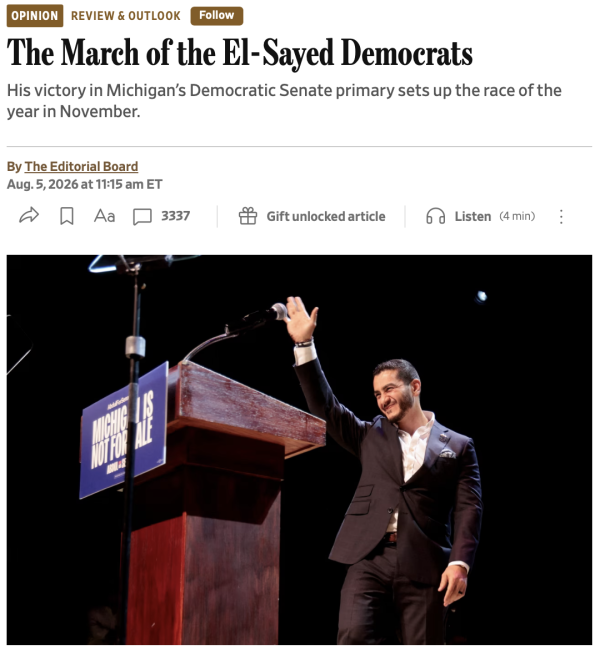
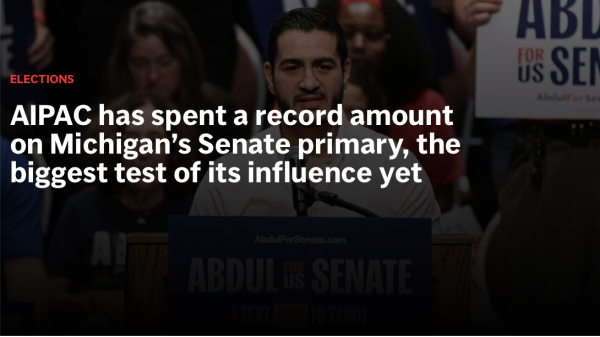
Dr. Abdul El-Sayed, another former Sanders surrogate now running for the Democratic nomination in Michigan’s US Senate race, has been another outspoken champion of Medicare for All in recent weeks.

“While MAGA slowly suffocates our healthcare system, we’re watching corporate health insurance choose profits—and corporate Democrats capitulating,” El-Sayed said last week, expressing frustration over how the shutdown fight came to end. “Who suffers? The rest of us. It’s time for a healthcare system that doesn’t leave our insurance in the hands of big corporations—but guarantees health insurance for all of us.”

Following Dr. Oz’s remarks on Sunday, El-Sayed rebuked the top cabinet official as emblematic of the entire healthcare charade being perpetrated by the Republican Party under President Donald Trump.

“They think we’re dumb,” said El-Sayed of Oz’s convoluted explanation of direct payments. “They know that no check they send will cover even a month of the healthcare Trump bump we can’t afford—but they think we’re not smart enough to know the difference. Healthcare is becoming unsustainable under Trump. Medicare for All would fix it.”

In Maine on Sunday, another Democratic candidate running for the US Senate, Graham Platner, also championed the solution of Medicare for All.


After watching Oz’s peformance on CNN, Tyler Evans, creative director who works for Rep. Alexandria Ocasio-Cortez (D-N.Y.) declared in a social media post: “If we had Medicare for All, you could simply go to the doctor.”

Friday, November 07, 2025

C.R.T. / B.L.M.

Racial disparities in premature mortality and unrealized Medicare benefits across US states


JAMA Health Forum


About The Study: 

Between 2012 and 2022, premature mortality among adults ages 18 to 64 in the U.S. increased by over 27%. During this period, racial disparities in premature mortality widened substantially, with Black individuals experiencing persistently higher and worsening rates compared with white individuals across most states. These results raise concerns about structural inequities within the Medicare entitlement and financing system. Despite contributing to Medicare throughout their working lives, Black individuals in the U.S. are less likely to live long enough to reach the qualifying age for coverage.


Corresponding Author: To contact the corresponding author, Irene Papanicolas, PhD, email irene_papanicolas@brown.edu.

To access the embargoed study: Visit our For The Media website at this link https://media.jamanetwork.com/

(doi:10.1001/jamahealthforum.2025.4916)

Editor’s Note: Please see the article for additional information, including other authors, author contributions and affiliations, conflict of interest and financial disclosures, and funding and support.

#  #  #

Embed this link to provide your readers free access to the full-text article 

 https://jamanetwork.com/journals/jama-health-forum/fullarticle/10.1001/jamahealthforum.2025.4916?utm_source=For_The_Media&utm_medium=referral&utm_campaign=ftm_links&utm_term=110725

About JAMA Health Forum: JAMA Health Forum is an international, peer-reviewed, online, open access journal that addresses health policy and strategies affecting medicine, health and health care. The journal publishes original research, evidence-based reports and opinion about national and global health policy; innovative approaches to health care delivery; and health care economics, access, quality, safety, equity and reform. Its distribution will be solely digital and all content will be freely available for anyone to read.