Thursday, June 19, 2025

 CRIMINAL CAPITALI$M

Arrest of billionaire Karapetyan escalates Armenia’s church-state showdown

Arrest of billionaire Karapetyan escalates Armenia’s church-state showdown

By bne IntelliNews June 19, 2025

The arrest of Armenian-Russian billionaire Samvel Karapetyan has intensified a very public confrontation between Prime Minister Nikol Pashinyan and the Armenian Apostolic Church.

Armenia’s National Security Service (NSS) conducted a search of Karapetyan’s Yerevan residence on June 17, hours after the influential tycoon publicly denounced what he called the government’s “attack” on the church and vowed to intervene if political leaders failed to act.

Karapetyan resides in Russia and heads the sprawling Tashir Group, the owner of several major Armenian assets including the Electric Networks of Armenia and Dalma Garden Mall. He is also known for his philanthropic efforts and has long been a key benefactor of the Church, recently funding the renovation of the Etchmiadzin Cathedral, the first cathedral built in Armenia. 

“If the politicians fail, then we will participate in our own way,” Karapetyan said outside the cathedral, according to a video published by News.am. “What opinion should I have when a small clique, forgetting Armenian history and the thousands of years of our Church, attacks it?”

Within hours, security agents arrived at his property in what Church officials described as politically motivated retaliation. “The persecution being carried out against Mr. Samvel Karapetyan is yet another manifestation of the Prime Minister’s anti-Church actions, aimed at depriving the Armenian Church of the support of its faithful flock through fear and intimidation,” the Armenian Apostolic Holy Church Mother See of Holy Etchmiadzin said in a statement. “We strongly condemn this disgraceful conduct, regarding it as a blow to the reputation and standing of the Republic of Armenia, as well as to the Armenian Church.”

Church-state rift

The arrest follows weeks of public acrimony between Pashinyan and the church, which began when the prime minister used social media to suggest that Catholicos Karekin II, the church’s spiritual leader, had broken his vow of celibacy and fathered a child.

“If it turns out that Karekin II has indeed violated his vow of celibacy and has a child, then he cannot be the Catholicos of all Armenians,” Pashinyan wrote on social media in early June. He claimed the issue represented a threat to both “spiritual security” and “state security”.

The Church responded, accusing Pashinyan of undermining national unity and engaging in a dangerous campaign against one of Armenia’s most revered institutions. “Such actions lead to a split in society, undermine spiritual unity, and weaken the spirit of the nation,” Church leaders said in a statement, though notably did not comment on whether Pashinyan’s claim was true. 

Undeterred, Pashinyan continue to repeat the claim in a flood of posts on social media, and called for the Catholicos’s resignation. 

His inflammatory language and threats aimed at both clerics and their allies on social media have drawn criticism from broad segments of Armenian society. “Why are the whoremongering ‘clergy’ and their whoremongering ‘benefactors’ suddenly so active?” he said in one post on Facebook, going on to threaten to “neutralise them again. This time, permanently.” 

The prime minister also wrote in a Facebook post that it was time to consider nationalising Karapetyan’s Electric Networks of Armenia. 

Military defeat 

The dispute comes at a politically sensitive time for Pashinyan, whose government has faced persistent criticism following Armenia’s defeat in the 2020 Nagorno-Karabakh war and the subsequent loss of the ethnic Armenian enclave to Azerbaijan.

This prompted protests during 2024, as Armenians objected to the handover of land to Azerbaijan. Archbishop Bagrat Galstanyan of the Tavush diocese became a key figure in the protests.

In May 2025, Karekin II spoke at a conference in Switzerland, accusing Baku of ethnic cleansing and calling for the right of return for displaced Armenians. His remarks appeared at odds with Pashinyan’s ongoing efforts to normalise ties with Azerbaijan.

Pashinyan is now under pressure on multiple fronts, and the spat with the church is viewed as an attempt to consolidate power and shift the public focus away from Armenia’s military and diplomatic failures.

As well as domestic criticism over his handling of relations with Azerbaijan, internationally relations with Russia have soured, especially as Yerevan made overtures to the EU. Meanwhile, friendly neighbour Iran is now involved in a new war with Israel that threatens to spill over into a border regional conflict. 

Pashinyan’s “Real Armenia” ideology, outlined to the population earlier this year, calls for a break with traditional narratives and a focus on economic renewal. He has also sought to focus attention on economic growth and rising living standards in the country, helped by the recent economic boom resulting from Russia’s trade reorientation since its invasion its Ukraine. 

Going up against the Armenian Apostolic Church was a gamble for the prime minister. One of the world’s oldest Christian institutions, it has been the nation’s dominant religious body since Armenia became the first country to adopt Christianity as a state religion in the early 4th century.

Despite constitutional guarantees of religious freedom and formal separation of church and state, the Armenian Apostolic Church retains a privileged status and deep social legitimacy. An autumn 2024 poll by the International Republican Institute (IRI) found 84% of the population stated their religion as the Armenian Apostolic Church. A higher proportion of Armenians said they were satisfied with the work of the church than either the prime minister’s office or government ministries — though the share of those satisfied has dropped since 2019. 

Still, Armenia’s military defeats and the recent spat with the church — on top of a separate scandal involving Pashinyan’s wife Anna Hakobyan — have been problematic for the Armenian prime minister 

The fallout from Karapetyan’s arrest could further inflame the situation. The billionaire’s open challenge to the government and close ties to the church raise the stakes for Pashinyan, who has increasingly portrayed dissenting voices as existential threats to state stability.


Bhutan’s Pragmatic Pivot On Tibet – Analysis

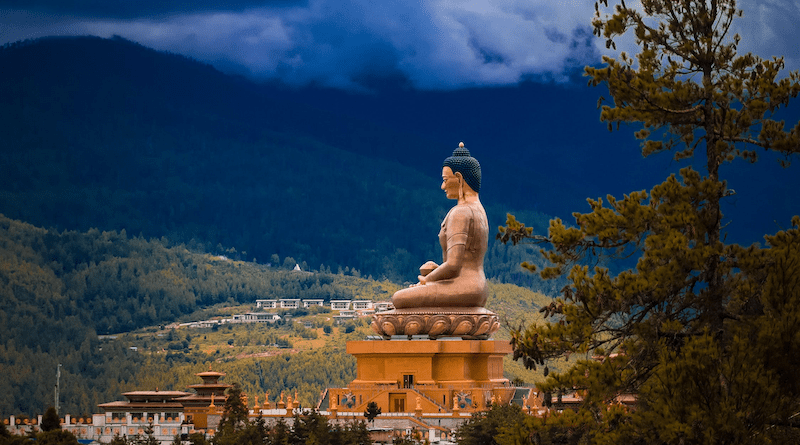
bhutan statue


By 

By Aditya Gowdara Shivamurthy


In March 2025, the Chinese embassy in India, in collaboration with the government of Bhutan, organised Chinese New Year celebrations in Thimphu. Following the event, Bhutan’s Ministry of Foreign Affairs released a statement referring to Tibet as the Xizang Autonomous Region.

The latest development comes at a time when China is facing increasing anxieties about Tibet—particularly the question of the Dalai Lama’s succession and its growing competition with the United States (US) and India. These concerns have shaped Beijing’s outreach to Bhutan over the past eight decades, and  Thimphu, recognising that this time is no different, is bracing for the fallout with utmost pragmatism.

China’s Achilles Heel

Historically, Bhutan and Tibet have shared close cultural and historical ties, with the latter shaping Bhutan’s culture, political institutions, religion, and trade—even amidst political tensions and Tibetan interference in Bhutan’s internal affairs. Bhutan even maintained a representative in Lhasa until  1959 and paid annual tribute to Tibet. While Tibet claimed Bhutan as its tributary state and subordinate, there is little evidence of the same. After India’s independence, the Tibetan government communicated to New Delhi its claims—including some involving Bhutan, since India then guided  Bhutan’s foreign policy. These assertions paved the way for China’s claims over Bhutan following the annexation of Tibet in 1950.

Following the annexation of Tibet, China began to share borders with  Bhutan, with whom its borders had traditionally remained undemarcated. Initially, the Communist Party of China asserted that it would occupy Bhutan. However, later, Beijing toned its rhetoric down and claimed only specific territories within Bhutan. These claims emanated from two sources: Tibetan records and pasturelands used by Tibetan herdsmen. China followed a carrots-and-sticks approach, offering economic incentives even though it released multiple maps that claimed Bhutanese territories between the 1950s and 1960s. These claims, alongside the clampdown on practising Buddhists in Tibet, compelled Bhutan to cancel its trade engagements and withdraw its two officers from Tibet. Subsequently, it turned southward, developing a close and special relationship with India.

This tilt towards India further aggravated Beijing’s anxieties over Tibet and internal security. Some of these concerns were triggered by the US’s financing of the Tibetan rebellion, via Nepal, in the 1950s. Chinese responses have since been twofold: to further its internal hold over Tibet and pressurise Bhutan to close territorial disputes and open up diplomatic relations. This is driven by four calculations: one, to ensure Tibet is safe from separatism and infiltration. Second, to cut down on India’s influence as a regional player and undermine its influence in Bhutan, so that its security and status remain unchallenged. Third, to enforce its credentials as an Asian power, since Bhutan is the only neighbour of China with no diplomatic relations and the only country after India with a non-demarcated border. Fourth, to expand its territories and enhance offensive posturing against Bhutan and India.


Today, two key concerns confront China regarding Tibet: the Dalai Lama’s succession and escalating US-China tensions, exacerbated by growing India-US cooperation and their influence in neighbouring countries such as Nepal and Bhutan. The US’s Tibet Policy Acts of 2002, 2020, and 2024, and India’s hosting of the 14th Dalai Lama and many Tibetans have further fuelled Chinese apprehensions.

China’s latest white paper on national security underscores this paranoia of increasing external interference in the country, especially in the Tibet region. Since August 2023, Beijing has also expressed the need to use the ‘non-colonial’ term Xizang for Tibet in its official documents and references. This has helped Beijing further its legitimacy over Tibet and subsume the Tibetan identity within a Han-centric narrative. It has also urged other South Asian countries to refer to Tibet by its new name and to incorporate it into their one-China policy.

Undemarcated Borders: At the Heart of the Dispute 

Chinese claims witnessed several discrepancies in the initial years. In 1958, China occupied over 300 square miles of Bhutanese territory, likely as part of its crackdown on the Tibetan rebellion. The following year, in 1959, its officials took over eight Bhutanese enclaves in Western Tibet and claimed the entire Tashigang area and the Doklam region.

Since 1984, China and Bhutan have held 25 rounds of negotiations to recognise and demarcate borders. These talks reduced the areas of disputed territory, from 1,128 sq km to 269 sq km in the western part of Bhutan. The disputed regions include: in the north, Pasamlung and Jakarlung valleys; and in the west, Dramana and Shakhatoe, Sinchulungpa and Langmarpo valleys, Yak Chu and Charithang valleys, and the Doklam region.

As these discussions have prolonged, China’s anxieties over Tibet have increased its coercive actions. Since the 1990s, China has continued building roads and settlements in the disputed areas and encouraged Tibetan herders to graze in these regions and clashing with their Bhutanese counterparts. Since 2016, it has built over 22 villages and around 1,000 housing units in these disputed territories. Tibetans are given state subsidies and assistance to settle in these villages. In 2020, China even laid fresh claims to Sakteng Wildlife Sanctuary (part of the Tashigang area), for the first time since the border negotiations began. In some cases, Beijing uses historical records to justify claims; in others, it creates “facts on the ground” through settlements and herders’ use of grazing lands—reinforcing its position, expanding territory, and pressuring Bhutan to accept the status quo during negotiations.

Assuaging Concerns: Bhutan’s Pragmatic Touch

Increasing Chinese pressure has compelled Bhutan to expedite border negotiations since 2020. In October 2023, China and Bhutan held the 25th round of boundary talks in Beijing, where they signed a cooperation agreement on the responsibilities and functions of the joint technical team (JTT) on border delimitation and demarcation. Both countries agreed to accelerate boundary demarcation and establish diplomatic relations during the discussions.  During the meeting, Bhutan assuaged Chinese concerns and assured China that it firmly abides by the one-China principle (no specific reference was made to Tibet, though). In March 2024, a high-level Chinese delegation visited Bhutan to engage with the newly elected government. In August that year, they held the 14th Expert Group Meeting on boundary issues and the implementation of a cooperation agreement on the responsibilities and functions of JTT.

Bhutan has also assuaged Chinese concerns by historically maintaining distance from the Dalai Lama and excluding official contacts with Dharamsala. Even when accepting the refugees in the 1950s, the government was cautious that their loyalty to the Dalai Lama would create new internal challenges and external security issues vis-à-vis China. In 1979, the National Assembly asked the refugees to become Bhutanese citizens or leave the country. The number of Tibetan refugees has thus reduced from 6,300 to just 1,786. Furthermore, unlike previous generations, young Bhutanese are distanced from Tibet and are more welcoming of China.  A recent survey reveals that young Bhutanese see China as a country with whom they enjoy cultural similarities and religious values, indicating how Tibet is a forgotten cause for several Bhutanese.

From the beginning of the century, Bhutanese monks and delegations have also undertaken visits to Tibet that were organised by China. In October 2023, a delegation from Bhutan also participated in China’s Rim of the Himalayas International Cooperation Forum. In March 2025, Thimphu even hosted a Chinese New Year event in collaboration with the Chinese government. The event saw the participation of the Minister of Foreign Affairs and the Minister of Home Affairs, highlighting increasing interactions between the countries. Following the event, Bhutan, for the first time, referred to Tibet as the Xizang Autonomous Region. Furthermore, Bhutan’s economic difficulties and the need to attract Chinese investments—especially in its Gelephu Mindfulness City project—have motivated Thimphu to woo China. Thus, there is an increasinginterest in expanding engagements with Beijing and establishing bilateral ties between the countries.

This pragmatic policy towards Tibet is also likely to influence Bhutan’s response to the issue of the Dalai Lama’s succession. Thimphu realises that the issue of succession could open up multiple possibilities. The lack of global consensus would further Chinese anxieties and coercion, particularly in the case of a fallout between China and the US and India. There is also a possibility that China—with the help of the new Dalai Lama of their choice—could make new claims and justify them with exaggerated historical records. Thimphu thus realises its interests are in assuaging Beijing’s concerns, remaining indifferent to the issue of succession, and furthering its security and interests.


  • About the author: Aditya Gowdara Shivamurthy is an Associate Fellow with the Strategic Studies Programme at the Observer Research Foundation.
  • Source: This article was published by the Observer Research Foundation.\


Observer Research Foundation

ORF was established on 5 September 1990 as a private, not for profit, ’think tank’ to influence public policy formulation. The Foundation brought together, for the first time, leading Indian economists and policymakers to present An Agenda for Economic Reforms in India. The idea was to help develop a consensus in favour of economic reforms.

IMEC: More Than Just A Corridor – Analysis


By 

The proposed IMEC corridor connecting India to Europe through the Gulf can be transformative, helping to reduce risks to the global movement of goods and data. It’s early days yet, and there are gaps to be filled in terms of missing infrastructure and overcoming a diplomatic rift.


By Amit Bhandari and Sifra Lentin

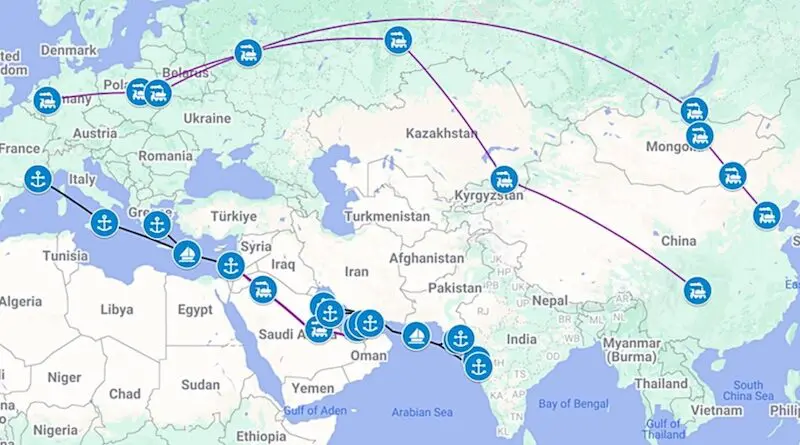
IMEC is a multimodal corridor that originates in India and ends in Europe. Goods from India arrive at ports in the UAE, and are carried on trains that traverse the UAE, Saudi Arabia and  Jordan to Israel’s Haifa Port. From Haifa, it proceeds to ports in Greece, Italy, and France. The objective of IMEC is to provide a faster and safer transit for goods, energy, and data between India and Europe. It is expected to bring down transit time between India and Europe by 30%, and cut, by 40%, the cost of logistics[2]. IMEC also offers a safer trading alternative by bypassing the Red Sea Route.

While the IMEC has been compared to China’s Belt and Road Initiative (BRI), it is remarkably different. BRI is a single-country initiative, whose goal is to create a China-centric global trading network. Launched in 2013, the BRI has seen investments of over $1 trillion so far, much of it debt, from China[3]. It has also run into controversy, with accusations of pushing poor countries into a debt trap, and saddling them with white elephants. In India’s neighbourhood, Pakistan, Sri Lanka and Nepal are held up as examples of this debt trap diplomacy. Many African countries, including Kenya, Zambia, and Angola, are deeply in debt to China through the BRI.

In contrast, the IMEC is a multilateral corridor, with projects along the route being funded locally. For instance, India is investing in upgrading its port infrastructure. Saudi Arabia has pledged $20 billion worth of investments for IMEC by upgrading its domestic rail and port infrastructure[4]. The UAE will build a rail link to the Saudi border, which will connect to the Saudi rail network.

The IMEC corridor is particularly important for Saudi Arabia which is hemmed in by the Houthis in the Red Sea and Iran in the Persian Gulf, through which its primary export, oil, runs. Under its youthful leader Mohammed bin Salman Al Saud, Saudi Arabia has been reforming socially, infrastructurally, and strategically. Economically, tt needs access not only to the Arabian Sea for passage of its oil, to Asia, but also to the Mediterranean, for its European buyers. At home, the country is diversifying its internal economy which will require better connectivity with these markets.


The drop in shipping in the Suez Canal is a financial cost for transporters, whose ships now take the longer route around the Cape of Good Hope. However, this is just a financial cost – while it makes commerce more expensive, it doesn’t stop trade altogether.

For data, however, it is a serious cost. Data, on which modern economies depend, is carried by sub-sea optic fibre cables which cannot be rerouted. Much of the global data cable network passes through the Red Sea and the Suez Canal – and this network is vulnerable to disruption. For instance, a Chinese ship was accused of deliberately damaging sub-sea cables in the Baltic Sea in November 2024, by dragging its anchor along the seabed[5]. Such an action in the Red Sea region can cripple the global digital economy. IMEC offers an alternative: optic fibre cables can be laid on land, along the railway route connecting Jebel Ali to Haifa, reducing vulnerability of the existing infrastructure.

Strategically, IMEC is a corridor built on the foundations of the 2020 Abraham Accords, aimed at normalising ties between Israel and the Arab States. The Abraham Accords were signed during the first Trump administration, between the U.S., UAE, Bahrain, Morocco, Sudan and Israel. Most significant for IMEC was Israel and the U.A.E. establishing diplomatic ties under the Accords in 2020,  with Saudi Arabia,  due to follow. This has been stalled by the Gaza war. India’s participation is through the I2U2, a grouping conceived in 2021 with India, Israel, the U.S. and the U.A.E. as members identifying public-private partnerships for joint investment.

For India, IMEC is a winner all around. It gives India the chance to be part of a global standards infrastructure project. The first port of call is the UAE, India’s fourth-largest trade partner with which it has just signed a comprehensive trade agreement and which hosts 10% of India’s diaspora. It requires a major upgrade in its port infrastructure, which has already begun. The Vadhavan Port which will be India’s largest container port, is one of the origination points of the IMEC along with the Mundra Port in Gujarat. It is part of Prime Minister Narendra Modi’s Sagarmala project, linking up with the geopolitical Mahasagar plan to bring India closer to its maritime neighbours such as Mauritius and Sri Lanka and its closest trading partners like Dubai.

While IMEC appears to be a shiny new plan, it is in fact, not a new route for India. The IMEC corridor predates the old Red Sea route, which became a viable alternative to the well-established Persian Gulf route only after Roman rule in Egypt from 30 BCE ensured security for shipping across the length of the Red Sea channel. [6]

Since the Bronze Age, and till the late 19th century, the main trunk route for Indian trade was the Persian Gulf. This included the Basra-Baghdad upriver route to the Mediterranean, which once passed overland through Petra (Jordan) and Palmyra (Syria) to touch Eastern Mediterranean shores. It also encompassed the ports of ancient Dilmun (Saudi Arabia, Bahrain, Qatar) and Magan (UAE, Oman, and possibly, the Makran coast).

The ancient hinterland had a network of caravan routes across the Arabian Peninsula. Aromatics and elements like frankincense and myrrh[7], gold, diorite, copper, and crystalline semi-precious stones like carnelians were export commodities from this region.Indian merchants known as Meluhans, are mentioned in the Akkadian King Sargon’s cuneiform of 2300 BCE. Indians settled across the littoral of the Persian Gulf and supplied Malabar pepper, spices, cotton cloth, and indigo, from the Subcontinent’s west coast. It is this old network of ports, caravanserai, and traders, that is coalescing to make up the new IMEC.

This rich, established legacy augurs well for the new 21st century corridor, but there are challenges to achieving this goal. Although every country that has signed on to IMEC has assigned an ambassador specially for it, there is no blueprint to follow.  According to Dammu Ravi, Secretary MEA, Economic Relations, the crisis in the Middle East is a test for the project[8]. Right now, IMEC faces three hurdles – the inadequate port infrastructure in India, the missing railway links in West Asia and the diplomatic gap between Saudi Arabia and Israel. A related challenge is ensuring the timely completion of projects and coordination between signatory nations.

The good news is that all-important interoperability of IMEC logistics is already under way. Next step: setting up an IMEC secretariat to ensure that this modern, multi-country corridor  proceeds in physical form, and helps bridge the diplomatic deficit.

About the authors:

  • Amit Bhandari is Senior Fellow for Energy, Investment and Connectivity.
  • Sifra Lentin is Fellow, Bombay History, Gateway House.

This article was written for Gateway House: Indian Council on Global Relations.

References:

[1] https://www.pib.gov.in/PressReleaseIframePage.aspx?PRID=1955921

[2] https://www.pib.gov.in/PressReleasePage.aspx?PRID=2122299

[3]https://english.news.cn/20231229/8c658fa0ef2e4d4fab25a056b2d5c46c/c.html#:~:text=

Over%20the%20past%20decade%2C%20Belt,jobs%20for%20the%20participating%20countries.

[4] https://www.dw.com/en/will-the-hamas-israel-conflict-derail-saudi-arabias-ambitious-plans-for-its-future/a-67223432

[5] https://www.marinetraffic.com/en/maritime-news/15/maritime-security/2025/11670/baltic-sea-cable-damage-linked-to-yi-peng-3-sabotage-suspect

[6] Shipping along the Red Sea route began under the Ptolemaic rule of Egypt from about 300 BCE. Ptolemaic Egypt was a Greek polity founded in 305 BCE by the Macedonian General Ptolemy I Soter, and ruled by his dynasty till the death of Cleopatra VII in 30 BCE. It was Roman rule after 30 BCE that made this a secure route and thereby made it a viable alternative to the Persian Gulf route. See https://www.gatewayhouse.in/the-ancient-precursor-to-imec/#_ftnref4

[7] Incense was sourced from the Southern Arabian Peninsula.

[8] https://www.thehindu.com/news/national/middle-east-crisis-could-pose-an-obstacle-to-india-middle-east-europe-corridor-mea-official/article69655968.ece


Gateway House


Gateway House: Indian Council on Global Relations is a foreign policy think-tank established in 2009, to engage India’s leading corporations and individuals in debate and scholarship on India’s foreign policy and its role in global affairs. Gateway House’s studies programme will be at the heart of the institute’s scholarship, with original research by global and local scholars in Geo-economics, Geopolitics, Foreign Policy analysis, Bilateral relations, Democracy and nation-building, National security, ethnic conflict and terrorism, Science, technology and innovation, and Energy and Environment.