Saturday, August 30, 2025

Citizens of Switzerland Say NO to the Electronic ID (e-ID): And Now the Swiss Government Calls upon them to Vote Again


On 7 March 2021, Swiss citizens voted already on the introduction of the electronic ID (e-ID) and rejected the government’s proposals by a landslide of 64.4% NO, against 35.6% YES.

This was just four years ago. And now the Swiss government puts the proposal again before the people. Not voluntarily. It was presented to both Swiss Parliamentary Houses and accepted, as is often the case, as the Swiss Parliament does not really represent the interests of the people, but the interests of business.

This is a clear signal that Switzerland has converted from a democratic republic to a corporation, with a corporate accounting system, where profit making is the Master, where the common people are the workers, and those at the head of the Corporation, like the Seven gnomes in Bern, are the Swiss Corporate Management, the CEOs so to speak.

Immediately, a referendum was launched against the e-ID, so that the government must present the e-ID proposal again to the Swiss people. This time with better prepared arguments with more lies and misinformation, because the essence of the e-ID remains the same: It would be a major step into full digital control, full digital enslavement of the population.

Just as a reminder, Swiss Parliamentarians absurdly have the right to sit on the boards of as many corporations and financial institutions as they desire. It is the epitome of conflict of interest.

It means we have in Switzerland a built-in lobby, close to unique worldwide, in a country that calls itself the heart of democracy.

Think again.

Now the case of YES or NO e-ID is again presented to the same people, with other arguments and, frankly, misinformation that should make a “yes” vote more palatable. What it really means, the Swiss Government wants to push this e-ID through, come hell or high water. What does that tell you about our government?

Can it be trusted as it pretends and want you to believe?

No way!

Why else would the Government disrespect the will of the people, so clearly expressed with an almost two-thirds voter rejection of e-ID in 2021, just four years ago?

Do not trust the government.

You have not forgotten the Covid scandal, better called Covid-crime — a good reason for disbelieving anything pushed by the Government against the will of the people.

Let us just enumerate a few of the most obvious arguments against an e-ID, arguments valid around the world, not just in Switzerland.

Arguments against e-ID include privacy risks, with legitimate fears of data tracking and exploitation for profiling and marketing by companies or authorities. Just think of the “cookies” you must approve for almost any article you want to read.

Security concerns are issues due to potentially insecure technology and insufficient protection against cyberattacks, i.e., data can be stolen and sold to who knows whom, for example to the so-called Five-plus One Eyes, the Secret Services of the US, UK, Canada, Australia, New Zealand and guess who? Israel’s Mossad.

Data can also simply be used by our government for total control and manipulation of groups or individual citizens who do “not behave.” Digital data can be linked to bank accounts and block bank accounts, if the Master authorities deem it necessary, because a citizen is out-of-line with a corrupted and dictatorial government policy. Digital e-ID is the precursor for a Social Credit System.

Digital exclusion, or discrimination, is another issue as those unfamiliar with digital tools could be disadvantaged or forced out of accessing services. Additionally, there are fears of increasing coercion by companies or authorities to use the e-ID, and the possibility that it could, indeed, enable a social credit system.

Digital e-ID data could be used for blackmailing, either by your own government or by those who have stolen or bought your digital data.

Today, Swiss citizens at home and abroad must use their paper ID card or passport to prove their identity.

That is SAFE.

With digital e-ID, you must download one or various apps on your computer and smartphone to be able to upload a digital ID. Every new App is a new risk.

Like with electronic payment systems – another enslavement horror which unfortunately many people, especially the younger generations, have not yet realized – data on your smart phones can be hacked, and when your phone is lost or stolen, all your security is gone, including banking ID and everything linked to the digital e-ID.

For now, the Swiss Government says the e-ID will remain optional.

Wait a minute: That’s “for now.”  In 2026, the government is planning to introduce a biometric Swiss identity card (ID), a precursor to the e-ID. Have you been told about it?

The Swiss Government is among those governments which push most for an all-digitization of everything, including money. Once a certain level of digitization is reached, the next step to compulsory e-ID is easy. The government simply erases the validity of paper IDs – and what will you do against it?

You are then at the point of no return, digitally enslaved with hardly an escape.

An ALARM, please vote NO on 28 September 2025 on the digital e-ID, make it a resounding NO, against digitization of everything.

Peter Koenig is a geopolitical analyst and a former Senior Economist at the World Bank and the World Health Organization (WHO), where he worked for over 30 years around the world. He lectures at universities in the US, Europe and South America. He writes regularly for online journals and is the author of Implosion – An Economic Thriller about War, Environmental Destruction and Corporate Greed; and  co-author of Cynthia McKinney’s book When China Sneezes: From the Coronavirus Lockdown to the Global Politico-Economic Crisis (Clarity Press – November 1, 2020)  Peter is a Research Associate of the Centre for Research on Globalization (CRG) and is also a non-resident Senior Fellow of the Chongyang Institute of Renmin University, Beijing. Read other articles by Peter.


Who Is Educated?


A Decolonial Inquiry into the Meaning of Learning


Part I: The Mirage of Western Pedagogy

Education, in its dominant form, has become a passport to power—an instrument of conquest cloaked in polished grammar and institutional prestige. The PhD holder, fluent in the Queen’s English, traverses continents not to heal but to dominate, often serving as a cog in imperial machinery that wages war for oil, minerals, and influence.

In contrast, the so-called “primitive man” in the forest communes with creation. He bows to rivers, whispers to trees, and learns from the silent choreography of snakes. His knowledge is not certified by parchment but by reverence, observation, and ancestral transmission.

Who, then, is truly educated?

Part II: The “Been-To” and the Forgotten Tongue

In Ghana, we call them “been-tos”—Africans who have studied abroad and returned adorned in European mannerisms, fluent in French, English, Portuguese, or Dutch, yet estranged from their native tongues. They mimic the colonial master’s lifestyle, often with pride, yet remain disconnected from the spiritual and linguistic roots of their own people.

This is not education. It is mimicry. It is the internalization of conquest.

Part III: The Village as Classroom

As a child in Aburi, I watched my grandmother, a revered fetish priestess, rise before dawn to offer silent prayers to the mountains. In Yawkrom, where my father cultivated cocoa, I saw how death was treated as a sacred transition. Elders beat drums to awaken the spirit of the deceased. If the spirit did not rise, the village fasted. Favorite meals were placed on the tomb for weeks, honoring the soul’s journey.

Our teachers led us into forests and rivers, teaching us the medicinal value of trees. Before harvesting, we prayed to the spirits. We cooked oto—a sacred dish of yam and eggs—and offered it to the river before fishing, ensuring balance and gratitude.

This was our curriculum. Oral, spiritual, ecological. It was not written in books, but etched in ritual and memory.

Part IV: Forest Medicine and Snake Wisdom

In the forest, a man hides for days, watching snakes fight. When one faints, the other retrieves leaves, chews them, and spits them into the fainted snake’s mouth and eyes until it revives. This is how the man learns the antidote to venom—not from a lab, but from nature’s own pharmacy.

This is empirical knowledge. This is science. This is education.

Part V: Reclaiming the Sacred Curriculum

Education is not the memorization of foreign facts. It is the cultivation of wisdom, the honoring of ancestors, the stewardship of land, and the reverence for life. The Western model, while technologically advanced, often lacks soul. It teaches domination, not communion.

Let us reclaim education—not as a tool of empire, but as a sacred covenant between people, planet, and posterity.

Sammy Attoh is a Human Rights Coordinator, poet, and public writer. A member of The Riverside Church in New York City and The New York State Chaplains Group, he advocates for spiritual renewal and systemic justice. Originally from Ghana, his work draws from ancestral wisdom to explore the sacred ties between people, planet, and posterity. Read other articles by Sammy.

Bahri’s Dark Geopolitical Ties


Bahri or National Shipping Company of Saudi Arabia is a giant maritime company in the Middle East. 

But, behind this commercial image, there is a provocative and worrying history of its geopolitical process, especially the means of transporting weapons and the manner in which Saudi Arabia participates in the geo conflict such as in Yemen and Gaza.. Since 2015, Saudi Arabia has been a major component of the Saudi-led coalition in Yemen, which also comprises the UAE, Bahrain, Egypt, Sudan, Jordan, Morocco and Kuwait. This military effort by this coalition has caused high civilian fatality, dislocation of millions of people and in humanitarian terms is one of the worst disasters in the world, as reported by the United Nations. This article will attempt to create an enlightened balanced discussion of these controversies as it gives some background and insight to a novice reader yet with the professional and analytical style.

Bahri Saudi Shipping Company

Bahri, which is a national shipping company of the Saudi Arabia, engages mostly in international marine logistics as well as the transport of crude oil, chemicals and bulk products and general merchandise. It also has big ships in oil products, dry bulk and specialised transportation. In an area of the world where maritime trade is one of the most essential veins, strategically based in the Red Sea and other trade gateways, the location of Bahri activities puts it in the realm of intersections between regional and international political dynamics, and as such, extends its operational being beyond commerce.

Weapons Transport to Israel Amid Gaza Genocide

In August 2025, the Saudi-owned Bahri Yanbu was at the centre of an international outcry after dockworkers in the port of Genoa, Italy, intercepted the ship after suspicions rose that it was carrying a heavy load of weapons bound to Israel. Independent observers and humanitarian organisations reported that among the cargo were Italian produced armed materials like Oto Melara naval guns, armoured vehicles, tanks, ammunition and explosives. The interception came at a time when Israel was actually undertaking heavy handed military actions in Gaza which are generally regarded as genocidal in character. A moral stance on becoming participants in the further crime in Gaza was one of the factors that drove the dockworkers into a blockade.

The consequences of this happening are huge. It brought into the spotlight the secret dealings-or at least acquiescence by Saudi Arabia to supply Israeli war machine despite the fact that Saudi Arabia holds official stands in favour of the Palestinian cause. According to critics, these moves are not only defied to the international humanitarian law, but go further to normalise and entrench the military and economic relations between both nations (Saudi Arabia and Israel). This change belongs to the larger scheme of things in Middle East where traditional enmity towards Iran and strategic interests have muted the old Saudi public opinion on the Palestine case in a silent bid of geopolitical balance.

However, Bahri made a formal refusal to have any relations with supply of arms to Israel. The company made outright claims that it has never ever travelled to Israel in any form and fully complies with the formal policies of the Kingdom of Saudi Arabia in supporting Palestine and the entire international maritime laws. Bahri highlighted that it has strict monitoring and auditing practices that are aimed at striving to comply. Nonetheless, despite the rebuttals, the incident in Genoa has initiated combined efforts to conduct independent operations and exert more investigation to the maritime affairs of Saudi Arabia, which exemplified a cloudy backdrop of the policy regarding Saudi Arabia compared to its ethical statements.

Yemen’s Conflict and Arms Supply

Probably the most sinister one in the recent history of Saudi Arabia foreign policy is the invasion of Yemen that the Saudi Arabia government has been carrying out since 2015. Saudi Arabia is at the forefront of a coalition that has been involved in large volume airstrike campaigns, naval blockade and ground offensives against the Houthi rebels, who have forced the internationally recognised Yemeni government out of big sections of their country. The ongoing conflict in Yemen is viewed by many observes, including the analysts in Al Jazeera and other local media stations as a kind of proxy warring between the majority-Sunni Saudi Arabia and the majority Shia Iran with the two nations, most times, supporting conflicting sides on the ground. Saudi Arabia also supports the Yemeni government of President Abdrabbuh Mansur Hadi that had been recognised by the UN Security Council resolutions in Resolution 2216 (2015).

The maritime activities of Bahri are once more in the limelight as it transports weapons and military equipment to Saudi forces that partake in Yemen. Research carried out by anti-war movements and human rights groups in Europe found out that the Bahri ships are regularly transporting arms to Saudi Arabia including ammunition, explosives and heavy arms through European ports like Antwerp. The CSO estimates by Amnesty international reveal that since the commencement of the war, Bahri has delivered hundreds of millions of euros of American and European, military equipment.

This weapon provision has been closely associated with a high number of the war crime charges charged against Saudi-led coalition such as civilian target attack and starvation weapons used in blocking of the sea by the coalition. The condition in Yemen is termed the worst humanitarian crisis in the world since more than 24 million people approximately 80 percent of the total population are in need of aid and millions have been starved, stricken by diseases, displaced, and basic services are becoming non-functional due to continuous conflict as stated by the United Nations and various humanitarian agencies. The importance of Bahri in this war as a logistic lifeline highlights the corporate aspects of this Saudi war machine and the intense intertwining of the business interests with devastating geopolitics.

Geopolitical Agenda

To appreciate the role of Bahri Saudi Shipping Company in such conflicts, it is important to understand Saudi geopolitical agenda in general. Saudi Arabia is a traditional foe of the occupation policies of Israel but over the past ten years is slowly moving towards an avoidance of confrontation with Israel over mutual fears of allowing Iran to consolidate its influence in the region. In the past, Saudi Arabia has opposed the occupation policies of Israel, but over the last ten years there has been growing signs of it engaging in limited relations with Israel due to a shared worry of Iran and its growing role in the region, especially in Syria, Lebanon, and Yemen (Israel-Saudi Arabia relations).

According to the reports this rapprochement has involved activities such as secret intelligence-sharing at least on the issue of Iranian missile programs, discreet delegations meeting each other in the third nations and initial discussions of prospective technology and trade association. In the example, Wall Street Journal (2025) and Congress.Gov (2025) cover the cases when Israeli and Saudi officials met to align security policies against Iran.

At the same time, Saudi Arabia still tends to regard Yemen as the essential buffer area that must be maintained to ensure access to the important strategic waterways, such as the Bab el-Mandeb Strait, which is essential to overall oil traffic and vital to the regional security. The kingdom views the Houthi movement as a proxy of Iranian policy and a serious direct threat to its southern borders, which influenced the long and violent military operation that is criticised by the international community and labeled as war crimes.

The fact that Saudi Arabia publicly defends Palestinian rights and at the same simultaneously advances its strategic relations with the state of Israel and intensifies its military operations in Yemen presents a complex, at times self-contradictory policy based on the logic of realpolitik, the calculations of regional power interests, and the unification of the domestic and foreign policy of the Crown Prince Mohammed bin Salman.

Conclusion

The controversies surrounding Bahri Saudi Shipping Company reveal much more than a logistics enterprise; they expose a nexus of geopolitical interests, ethical dilemmas, and the harsh realities of Middle Eastern conflicts. The ship interception in Genoa spotlighted Bahri’s alleged role in facilitating arms shipments during an ongoing genocide in Gaza, while its broader operations underpin Saudi Arabia’s war efforts in Yemen, exacerbating one of the world’s worst humanitarian disasters.

While the company officially denies transporting weapons to Israel and asserts full compliance with policies and international law, evidence from protests, investigations, and independent reports portrays a different picture—one of a state and its corporate instruments engaged in complex and controversial power plays with severe human costs.

For novice readers, it is essential to recognise that Bahri operates at the intersection of commerce and conflict, reflecting Saudi Arabia’s evolving and contentious role on the world stage. The ongoing scrutiny of these activities underscores the urgent need for transparency, accountability, and adherence to international humanitarian norms in international shipping—and for the global community to hold such actors to those standards.

Syed Salman Mehdi is a freelance writer and researcher with a keen interest in social, political, and human rights issues. He has written extensively on topics related to sectarian violence, governance, and minority rights, with a particular focus on South Asia. His work has been published in various media outlets, and he is passionate about raising awareness on critical human rights concerns. Read other articles by Syed.

MOVE THE UN FROM THE U$A

France says US should not refuse Palestinians access to UN summit

Under an agreement as host of the United Nations in New York, the United States is not meant to refuse visas for officials heading to the world body.

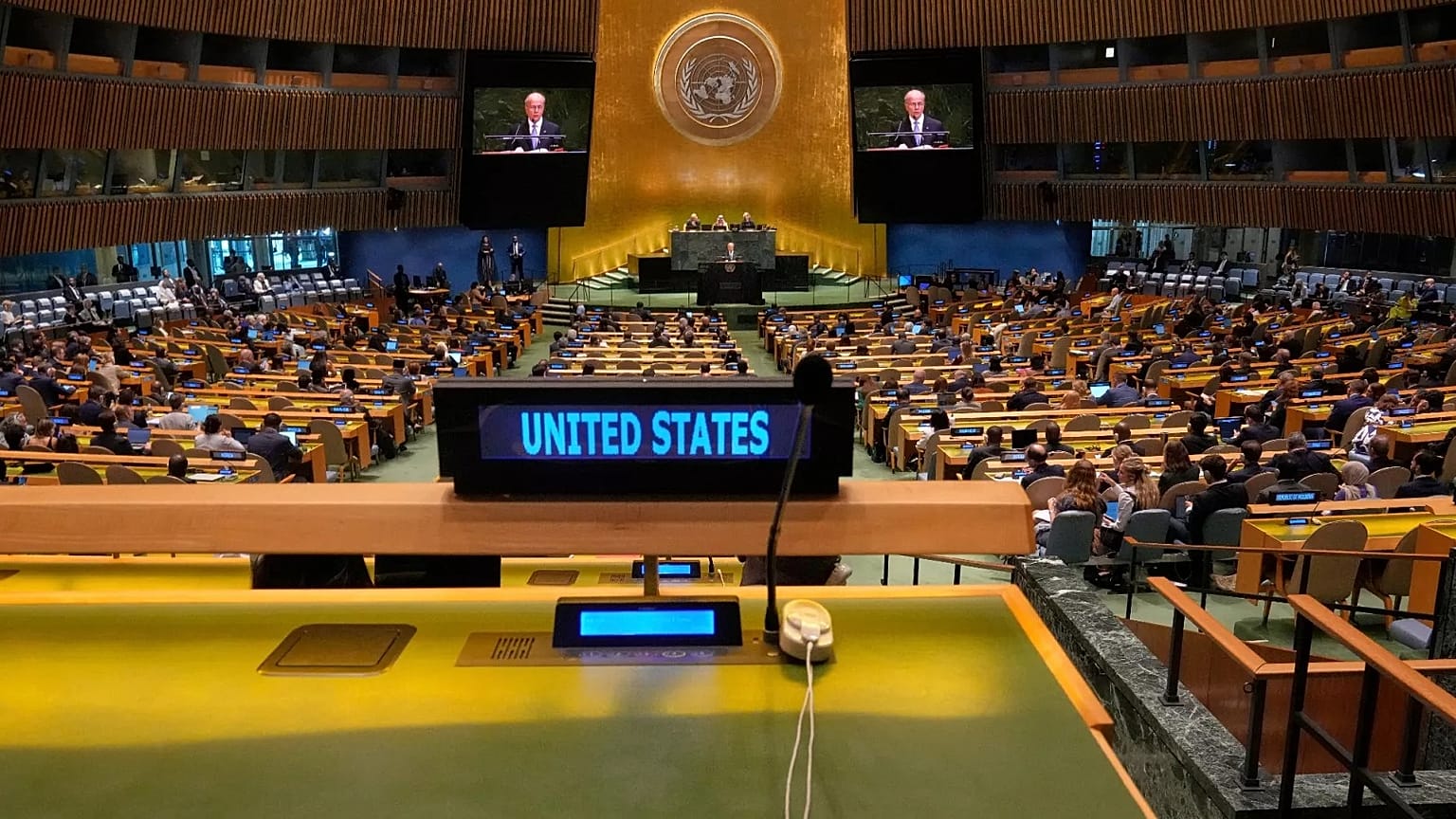
France has insisted there should be no restrictions on access to next month's UN General Assembly, after the United States said it would deny visas to members of the Palestinian Authority. Under an agreement as the host of UN headquarters in New York, the US is not supposed to refuse visas for officials heading to the world body.

Issued on: 30/08/2025 - RFI

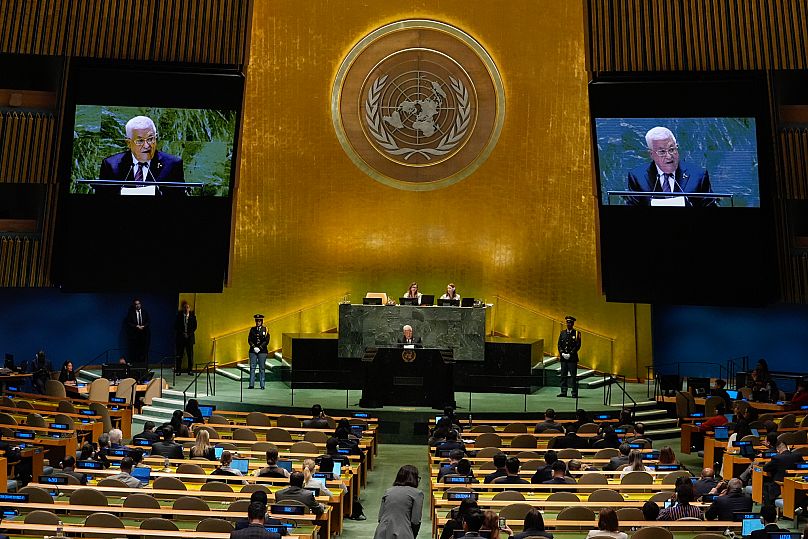
Palestinian President Mahmoud Abbas, addressing the UN General Assembly in 2022, was reportedly intending to attend the upcoming UN meeting in September where nations are expected to vote in favour of a Palestinian state. AP - Julia Nikhinson


"A UN General Assembly meeting... should not be subject to any restrictions on access," French Foreign Minister Jean-Noël Barrot said at a meeting of EU foreign ministers in Denmark on Saturday.

A string of ministers in Copenhagen echoed France's call for the United States to allow access to the Palestinian delegation.

In a statement on Friday, the US State Department said that it was "denying and revoking visas from members of the Palestine Liberation Organization (PLO) and the Palestinian Authority (PA) ahead of the upcoming 80th United Nations General Assembly, which begins on 9 September.

"The Trump administration has been clear: it is in our national security interests to hold the PLO and PA accountable for not complying with their commitments, and for undermining the prospects for peace," the statement said

US to refuse visas to Palestinian officials at UN summit on state

'Clear contradiction to international law'

The extraordinary step by Washington comes as France is leading a global appeal to recognise the Palestinian state at the gathering of world leaders in New York.

The move further aligns US President Donald Trump's administration with Israel's government, which has been waging a war in Gaza since Hamas launched terror attacks on Israeli territory on 7 October 2023.

Israel adamantly rejects a Palestinian state and has sought to conflate the West Bank-based Palestinian Authority with its rival Hamas, which rules Gaza.

Israeli Foreign Minister Gideon Saar, writing on X, thanked the Trump administration "for this bold step and for standing by Israel once again".

Israel slams French plan to recognise Palestinian state as a 'prize for terror'

The Palestinian Authority called for the United States to reverse its decision, which it said "stands in clear contradiction to international law and the UN Headquarters Agreement".

Palestinian Authority president Mahmud Abbas, a veteran 89-year-old leader who once had cordial relations with Washington, had planned to attend the UN meeting, according to the Palestinian ambassador to the UN, Riyad Mansour..

Under an agreement as host of the United Nations in New York, the United States is not meant to refuse visas for officials heading to the world body.

(with AFP)

US urged to reinstate visas of Palestinian delegation heading to UN General Assembly


The EU and the Palestinian president’s office on Saturday urged the Trump administration to reconsider its decision to revoke the visas of Palestinian President Mahmoud Abbas and 80 other officials who had planned to attend next month’s annual meeting of the UN General Assembly in New York.


Issued on: 30/08/2025 -
By: FRANCE 24


In this file photo, United Nations Secretary-General Antonio Guterres addresses the 78th Session of the UN General Assembly in New York City, US, on September 19, 2023. © Mike Segar, Reuters
01:20


The Palestinian president’s office on Saturday urged the US government to reverse its unusual decision to revoke his visa, weeks before he was meant to appear at the UN’s main annual meeting and an international conference about creating a Palestinian state.

The 27-nation European Union asked the Trump administration to reconsider the move, which drew broad criticism.

US Secretary of State Marco Rubio rescinded the visas of Palestinian President Mahmoud Abbas and 80 other officials ahead of next month’s annual high-level meeting of the UN General Assembly, the State Department disclosed Friday, citing national security interests. Abbas has addressed the General Assembly for many years, and generally leads the Palestinian delegation.

“We call upon the American administration to reverse its decision. This decision will only increase tension and escalation,” Palestinian presidential spokesperson Nabil Abu Rudeineh told The Associated Press in Ramallah on Saturday.

“We have been in contact since yesterday with Arab and foreign countries, especially those directly concerned with this issue. This effort will continue around the clock,” he said.

He urged countries to put pressure on the Trump administration to reverse the decision, notably those nations that organized a high-level conference on Sept. 22 about reviving efforts for a two-state solution in Israel and the Palestinian territories. It is co-hosted by France and Saudi Arabia.


© France 24
02:11


French Foreign Minister Jean-Noël Barrot said he “deplores” the US decision.

“The UN headquarters is a sanctuary in the service of peace. It should not be subject to any access restrictions,” he posted on X Saturday after meeting with his counterparts from around the EU.

The EU’s foreign policy chief Kaja Kallas issued a statement about the revoked visas saying: ‘’In light of the existing headquarters agreements between the UN and its host state, we urge for this decision to be reconsidered.”

Abu Rudeineh also called for an end to Israel’s offensive in Gaza and “escalation in the West Bank, because none of this will lead to any solution.”

The move came as the Israeli military declared Gaza’s largest city a combat zone. Israel says Gaza City remains a stronghold of Hamas.

The Trump administration has taken several steps to target Palestinians with visa restrictions.

“It is in our national security interests to hold the PLO (Palestine Liberation Organization) and PA (Palestinian Authority) accountable for not complying with their commitments, and for undermining the prospects for peace,” the State Department said in a statement.

The Palestinian Authority denounced the visa withdrawals as a violation of US commitments as the host country of the United Nations. UN spokesman Stephane Dujarric said the world body would be seeking clarification from the State Department.

(FRANCE 24 with AP)


US to refuse UN summit visas for 80 Palestinians, including Abbas: US official

A US official has said that Palestinian Authority president Mahmoud Abbas is among 80 officials who will be denied visas to attend next month’s UN General Assembly, where France is leading a push to recognise a Palestinian state, AFP reports.

“Abbas is affected by this action along with approximately 80 other PA officials,” a State Department official said in a statement, detailing those impacted by the extraordinary decision announced on Friday by the United States, a key Israeli ally.


US revokes visas of Palestinian officials ahead of UN General Assembly, State Department says

The US delegation seat is unoccupied as Palestinian Prime Minister Mohammed Mustafa addresses the UN General Assembly, 28 July, 2025
Copyright AP Photo

By Gavin Blackburn
Published on 

The State Department also suspended a programme that had allowed injured Palestinian children from Gaza to come to the US for medical treatment after a social media outcry by some conservatives.

US Secretary of State Marco Rubio has revoked the visas of a number of Palestinian Authority and Palestine Liberation Organisation officials ahead of next month’s annual meeting of the UN General Assembly, where the groups previously have been represented.

The State Department said in a statement on Friday that Rubio also had ordered some new visa applications from Palestinian officials be denied.

The move is the latest in a series of steps the Trump administration has taken to target Palestinians with visa restrictions and comes on the same day as the Israeli military declared Gaza City a combat zone.

The State Department also suspended a programme that had allowed injured Palestinian children from Gaza to come to the US for medical treatment after a social media outcry by some conservatives.

The State Department didn’t specify how many visas had been revoked or how many applications had been denied. The department did not immediately respond to a request for more specifics.

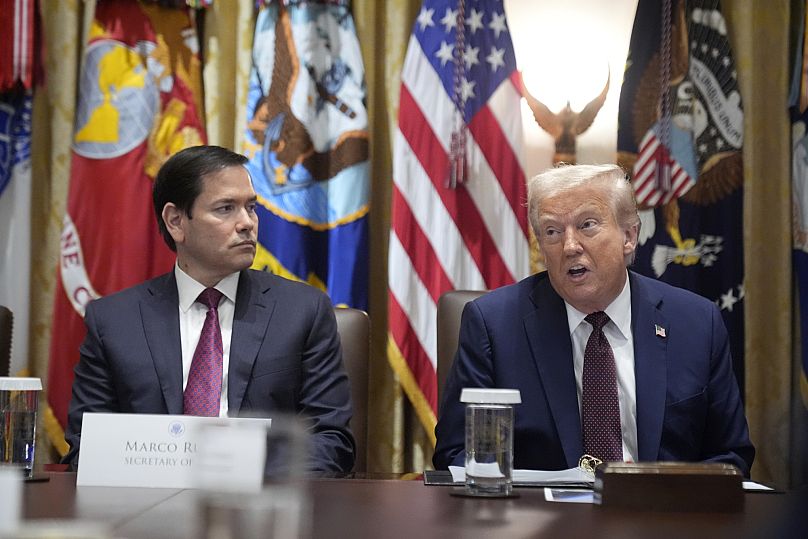
US President Donald Trump speaks during a cabinet meeting in Washington while Secretary of State Marco Rubio looks on, 26 August, 2025 AP Photo

It wasn't immediately clear if Palestinian President Mahmoud Abbas would be affected.

The agency's statement did say that representatives assigned to the Palestinian Authority mission at the United Nations would be granted waivers under the US host country agreement with the UN so they can continue their New York-based operations.

"It is in our national security interests to hold the PLO and PA accountable for not complying with their commitments, and for undermining the prospects for peace," the statement said.

"Before the PLO and PA can be considered partners for peace, they must consistently repudiate terrorism — including the October 7 massacre — and end incitement to terrorism in education, as required by U.S. law and as promised by the PLO.

The Palestinian ambassador to the UN, Riyad Mansour, told reporters on Friday that he had just learned of Rubio's decision and was assessing its impact.

Palestinian President Mahmoud Abbas addresses the 79th session of the United Nations General Assembly, 26 September, 2024 AP Photo

"We will see exactly what it means and how it applies to any of our delegation, and we will respond accordingly," he said.

Mansour said Abbas was leading the delegation to next month's UN meetings and was expected to address the General Assembly, as he has done for many years.

He also was expected to attend a high-level meeting co-chaired by France and Saudi Arabia on 22 September about a two-state solution, which calls for Israel living side-by-side with an independent Palestine.

At the UN, 147 of the organisation’s 193 member states recognise Palestine as a country and at the General Assembly it has had the status of non-member observer state since 2012.


MADAGASCAR

Malagasy families 'turn the dead' with silk and song to honour ancestors

In Madagascar, winter brings with it a unique family gathering. Across the central highlands, communities practise the famadihana – the “turning of the dead”. The ritual, rooted in Austronesian culture and dating back to the 16th century, involves exhuming ancestors, wrapping them in fresh silk shrouds and celebrating them in a lively, joyful ceremony.


Issued on: 30/08/2025 - RFI

Families gather in Ambohidranandriana, in Madagascar’s central highlands, to celebrate their ancestors during the famadihana ritual on Friday, 25 July 2025. © Guilhem Fabry / RFI

In Ambohidranandriana, a village about an hour’s drive south of Antsirabé, in the volcanic Vakinankaratra region, music and laughter rise from a noisy procession weaving between the family tombs.

For Fitahina, 25, the day is deeply personal. She came to honour her grandmother, who died before she was born.

“I am happy to meet her because I never knew her. I have been waiting for this moment for a very long time. I miss her a lot," Fitahina tells RFI.

"When the body comes out of the tomb, I will go closer and talk with her. I will tell her the good and the bad things in my life. I know she can still hear me.”

Nearby, guests share plates of vary be menaka – rice with fatty zebu meat – while men begin to open the vast family tomb, buried under dust.

Meet the tiny tuft-tailed saviour of Madagascar's endangered baobabs

Fitahina's aunt, Claudine, wears an elegant hat for the commemoration of her late mother.

“I am proud that my family is gathered for this famadihana,” she says. “I will pray for my mother and ask her for blessings – health and a long life for my children.”

One by one, the bodies are carried out. Descendants lift them high in their arms as the crowd moves in jubilation.

Alphonse, a neighbour invited like hundreds of others, describes the ritual.

“We wrap the ancestors in a new silk shroud, the lambamena,” he explains. “It is a sign of love and consideration for the good they did for us. This is how we honour them.”

A little toaka gasy – traditional Malagasy rum – is poured on to the fresh silk. Only at nightfall, when dusk settles over the rice fields, are the ancestors returned to their family tombs.

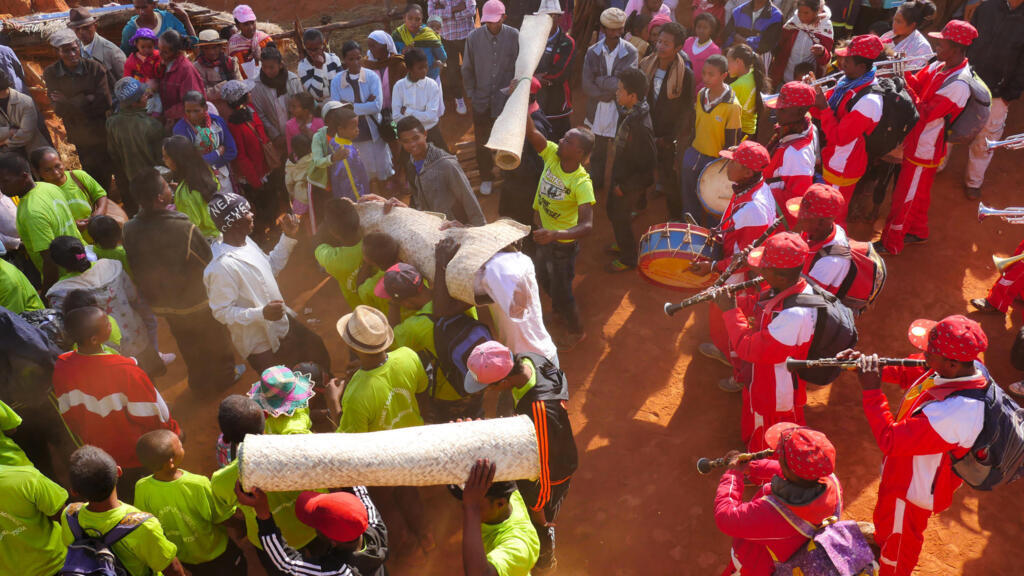
Families dance with remains wrapped in old shrouds as a brass band plays during a famadihana ceremony in Madagascar in 2019. RFI/Sarah Tetaud

Financial pressures

The famadihana usually takes place every five or seven years, depending on a family’s means, but it is a costly event. Food, drink, musicians and services for hundreds of guests add up, and donations rarely cover the full expenses.

The financial demands are pushing some families away from the ritual, anthropologist Annie Raharinirina, from the University of Antananarivo, tells RFI.

“Some families go into debt to organise the famadihana, but young people in the cities do not really practise it any more,” she says.

Others still commit to large-scale celebrations, calling on professional event organisers for their famadihana.

“They invite famous artists, hire catering services. Families save for years. They sell their zebus [humped cattle, a traditional sign of wealth] or use them as food for the guests," Raharinirina says.

"Some sacrifice a lot, and there are even some who go into debt to organise a celebration worthy of the name. Some people say it is better to save and spend money for the living than for the dead.”

Madagascar's master artisans sail through time to revive lost ships


Tradition in transition

However younger generations are increasingly divided over the practice of this centuries-old ritual, Raharinirina explains.

“Young people in the cities no longer really practise the famadihana, but young people in rural areas like the Itasy region or Antsirabé, many still do,” she adds.

For now, in villages like Ambohidranandriana, the tradition remains a major event. Families and neighbours gather in large numbers, carrying out rituals passed down for centuries.

For participants like Fitahina, it is a chance to come face to face with ancestors and speak with them across generations.

This story was adapted from RFI's original version in French